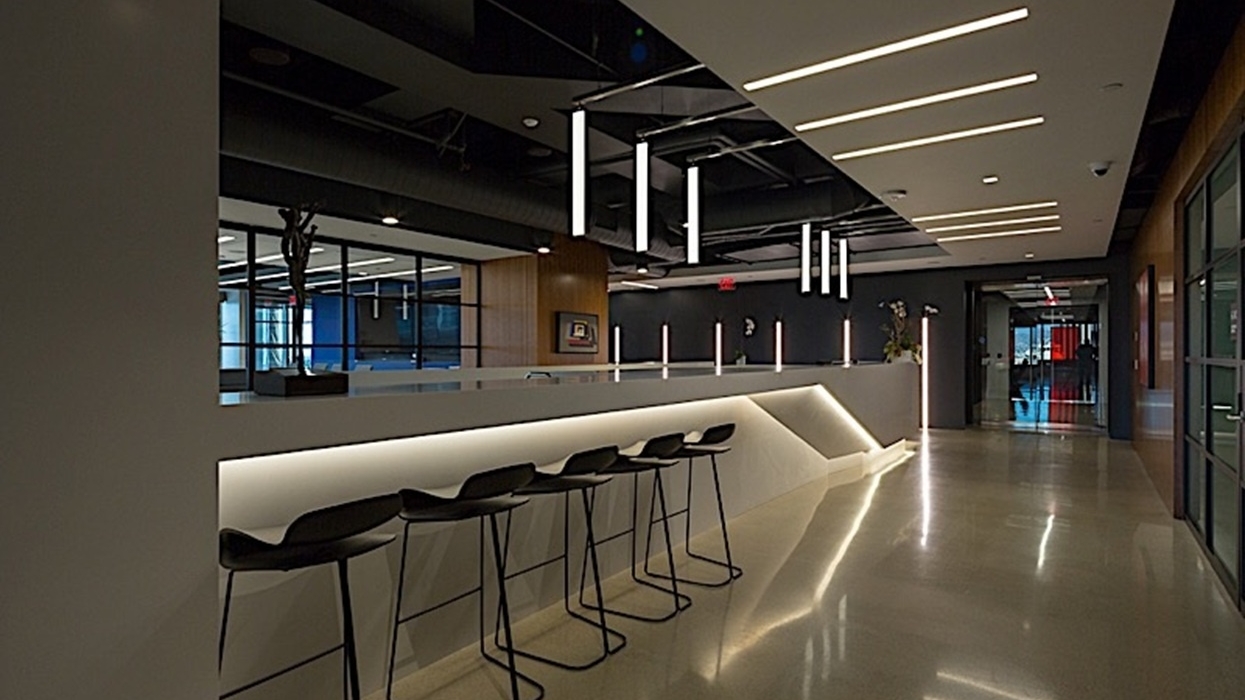

Visual Terrain, a leading lighting design company, has launched a new sustainability initiative led by lighting designer Madeline Miller.
For the company's clients, environmental sustainability is often a key consideration in their project planning. This may be driven by a project’s sustainability goals, such as achieving LEED certification, complying with local energy codes such as Title 24, achieving long-term cost savings, or a commitment to global responsibility.
As such, sustainable design is one of the company's long-established values. The appointment of Miller in 2025 took a further step toward embedding sustainability into its business plan.
See also: Lighting the way: Visual Terrain’s 30 years of creativity & innovation
In-house sustainability champion
Miller was awarded a BFA in Drama with a concentration in Lighting Design and an additional major in Environmental and Sustainability Studies from Carnegie Mellon University, Pennsylvania.
Before joining Visual Terrain, she attended greenloop, blooloop's conference focusing on sustainability in visitor attractions, to assess sentiment in the attractions sector and guide her strategy.

Visual Terrain's lighting designer, Madeline Miller, LEED Green Associate, is leading the company's sustainability initiatives.
Image courtesy of Visual Terrain
"greenloop showed me the trends and trailblazers within the themed environment sustainability sphere, and helped me direct my sustainability education toward the themed entertainment industry," says Miller.
She then obtained her LEED Green Associate certification after joining the company.
Lisa Passamonte Green, Visual Terrain's CEO, tasked Miller with leading the company’s first internal initiative to identify sustainable lighting solutions for all projects, rather than when requested.
Miller's priorities include energy efficiency, responsible sourcing and manufacturing, durability, and safety and comfort for people and wildlife.
Sustainability means living and working to meet our needs today without compromising the needs of tomorrow. Yet, addressing this balance is more challenging than ever.
Professionals across sectors face difficult decisions and trade-offs. Visual Terrain stands among many companies that acknowledge the need to designate a sustainability professional to help navigate these complexities.
Leading the sector
In recent decades, the lighting design industry has experienced a rapid and unavoidable shift toward sustainability.
The advent of LED lighting alone has delivered substantial energy savings for project owners. LEDs require less power and, when compared to incandescent and halogen lighting, produce less heat. This reduces the heat load on a building, resulting in lower cooling costs.
With a longer lifespan, LED fixtures need fewer lamp (bulb) replacements over the lifetime of a building. Less fuel is used to ship those replacements, and there are lower labour costs for replacing those lamps.
Conversely, some manufacturers opt to integrate LEDs into their fixtures. Because the lighting source can’t be swapped out, the entire fixture must be replaced when it fails. That has a net-negative effect, as when fixtures need to be replaced, they are likely to end up in landfill.
"As the climate crisis becomes more acutely felt around the world, codes and culture will evolve, but it’s not enough for Visual Terrain to simply follow this current," says Miller.
"We have the opportunity and obligation to lead with sustainability, and to place the interconnectedness of people and the environment at the very core of our practice."
Sustainability as a core focus
Visual Terrain’s sustainability programme has initially involved working directly with manufacturers, reps, and vendors to create a database of lighting fixture options that accounts for materials, sourcing, lifespan, efficiency, wildlife impact, and end-of-life plans, among other factors.
"By frontloading this research and working with our vendors, we are able to create expressly sustainable designs without passing along a premium to the client," says Miller.
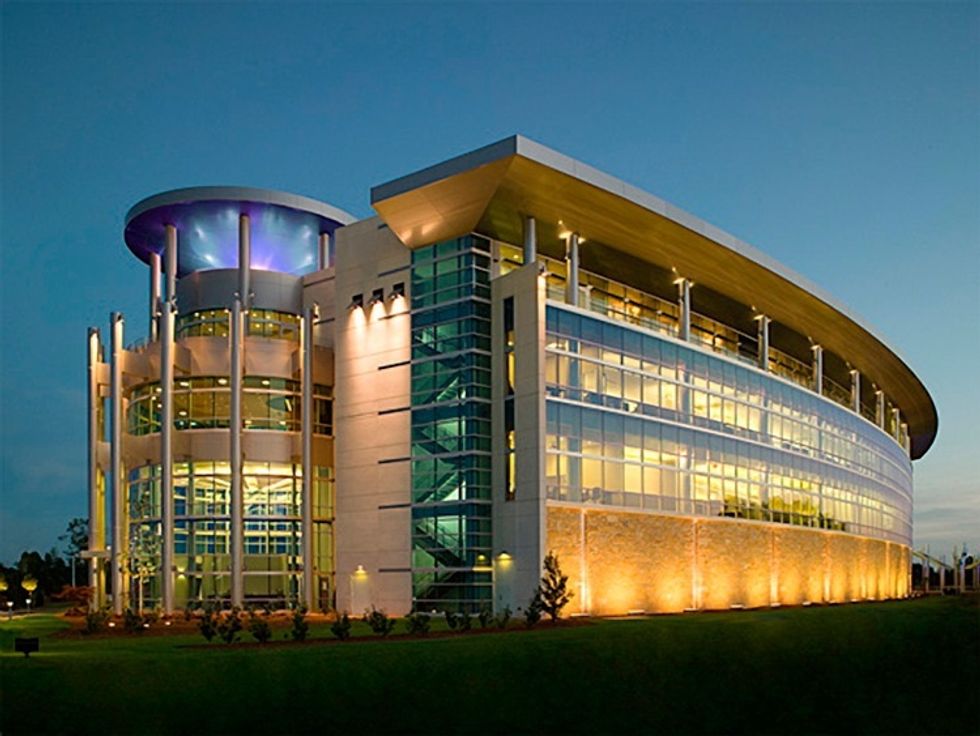 Hubbell Lighting Headquarters holds a LEED Silver certification and is 30% more energy efficient than the average office of this size.Photo by Brian Dressler Photography
Furthermore, internally, Visual Terrain is promoting sustainability by upholding its hybrid workspace approach and fostering forward-looking practices regarding office operations, site travel, and design processes.
By ensuring sustainability is a central focus of its design efforts rather than an afterthought, Visual Terrain aims to help its clients better achieve their sustainability goals and raise the standard of sustainable design across all projects.
"Sustainable design philosophies have always been at the core of our work here at Visual Terrain, but now with Madeline we have an in-house champion who is working even more directly with our internal team, the manufacturers, and our local reps to identify even greater opportunities," says Passamonte Green.
"We are excited to take this next leap forward with our sustainable design goals and bring even more sustainable fixture options and design solutions to our clients’ projects."
Recently, Visual Terrain was part of the creative teams for WishWorks at Make-A-Wish Southern Florida and Universal Epic Universe. Both were honoured with Thea Awards for Outstanding Achievement from the Themed Entertainment Association (TEA).