
Temporary exhibitions and visitor experiences rely on materials that create immersive environments, yet many are used for only a matter of days or weeks before being discarded.
As attractions and events operators place greater emphasis on sustainability, suppliers are increasingly looking at how to keep those materials in circulation for longer.
One area attracting renewed attention is temporary flooring.
Used to define spaces, improve visitor comfort and support wayfinding, carpet is a staple of exhibitions, themed environments, live events and brand activations. However, suppliers say the environmental impact extends far beyond what visitors see on the show floor.
 Many don't reliase the hidden waste behind producing and then disposing of temporary flooring for attractions and exhibitionsImage courtesy of Brumark
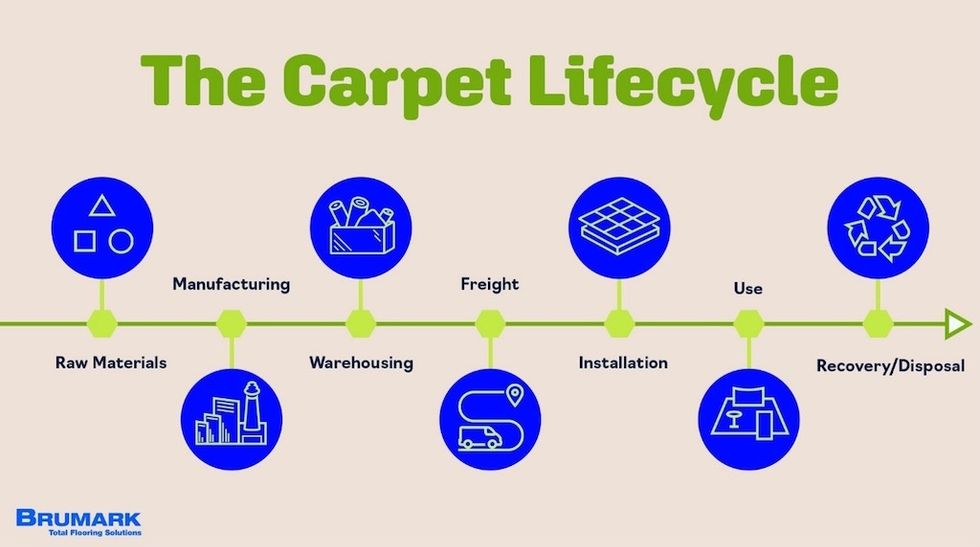
Brumark, a US supplier of total flooring solutions, is encouraging trade show organisers, venues and attractions to take a broader view of the lifecycle of temporary materials, from manufacturing and transport through to installation, recovery and disposal.
The company’s position is that there is a hidden waste stream behind temporary experiences: the materials, logistics, labour, fuel, disposal decisions, and downstream impacts that most guests never see.
A hidden source of emissions
Brumark supports trade shows, exhibits, corporate events, and branded environments with temporary carpet installations. Because these projects often require flooring across large, high-traffic spaces, even a single event can carry a significant environmental footprint.
At the scale of a small trade show, approximately 12,500 square yards of carpet can generate an estimated 62 metric tonnes of CO₂ emissions over its lifecycle.
Because event carpet is often used for only a few days before being removed, much of it has historically ended up in landfill.
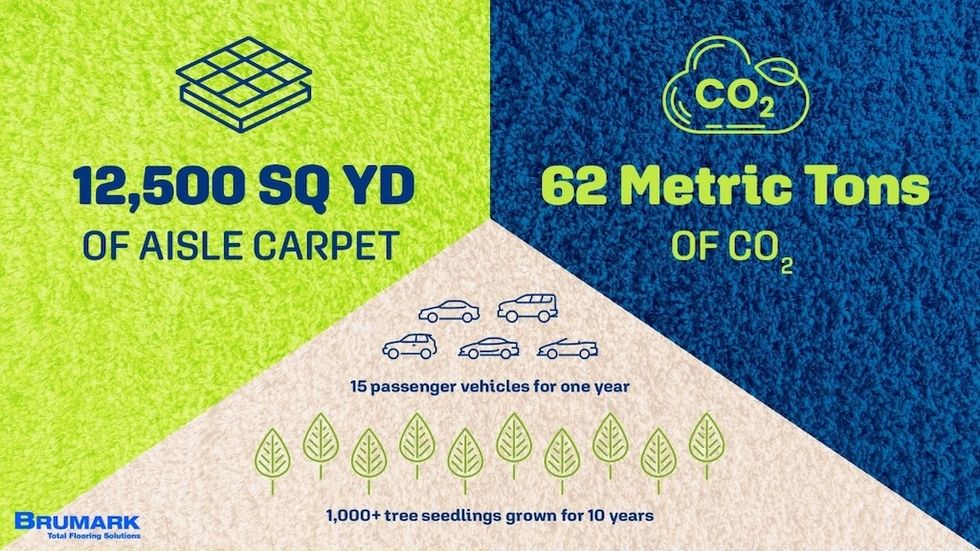 Brumark shares the hidden waste bhind temporary flooring, with 12.500 square yards equal to 62 metric tons of CO₂Image courtesy of Brumark
Brumark believes this highlights the need for considering the full lifecycle of temporary materials, rather than concentrating solely on whether they can be recycled after single-use.
This shift is increasingly relevant for attractions operators, as temporary exhibitions, seasonal experiences and touring installations become a larger share of the visitor economy.
Rather than viewing sustainability as a series of individual purchasing decisions, many organisations are adopting a wider approach, measuring how materials are sourced, transported, recovered and reused.
Brumark emphasises that sustainability is also an all-hands operational effort, presenting opportunities to increase efficiency through the supply chain.
The company’s ongoing sustainability programme diverts used event carpet from landfills by converting it into alternative fuel, offering a second-life use for materials that have historically been hard to recover on a large scale.
A significant impact
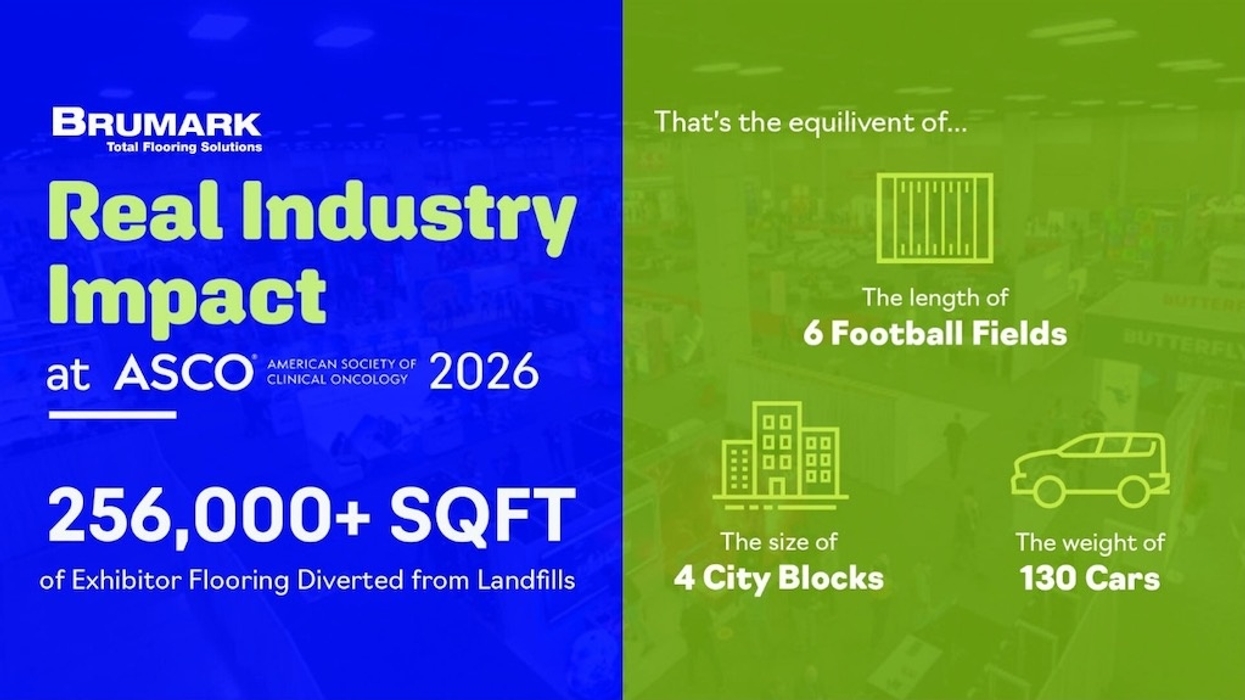
The ASCO Annual Meeting, one of the world's largest medical conferences, saw Brumark divert 257,689 square feet of flooring from landfill, equivalent to about 130 cars.
For a temporary event material that once had few end-of-life options, that kind of diversion shows how a recovery programme can cut waste from temporary setups.
While trade shows have long relied on temporary flooring, the same principles increasingly apply across museums, touring exhibitions, immersive attractions and other visitor experiences, where temporary environments are regularly set up to support evolving visitor economy programmes and seasonal activations.
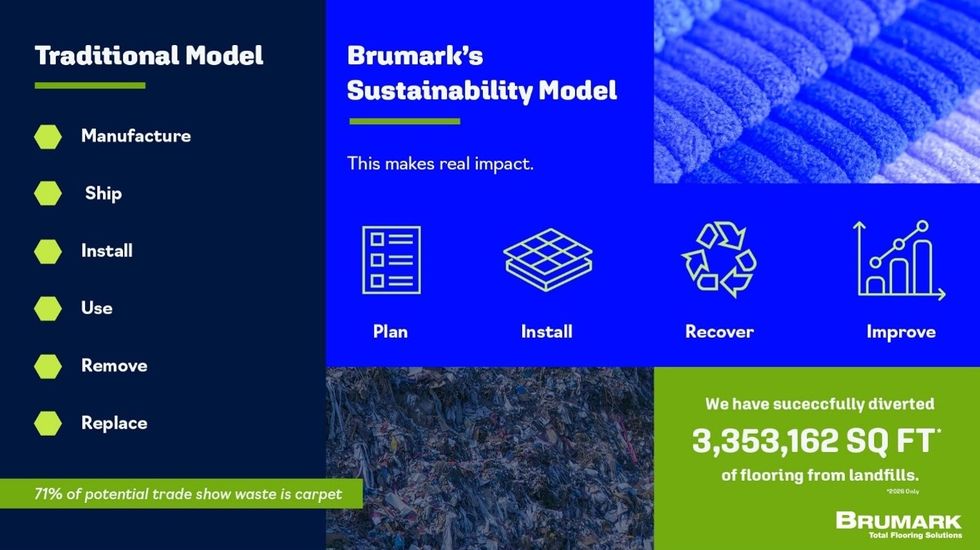 Brumark shares the impact of its sustainability model, compared to traditional temporary flooring approachesImage courtesy of Brumark
As a result, operators are placing greater emphasis on tracking waste, improving material recovery, and using environmental data to steer future projects.
Brumark believes this shows a wider shift across both the events and attractions sectors, proof that thinking around circular economy footprint can become part of the event process.
For Brumark, the future of events and attractions will not be built on the promise to 'be sustainable.' It will be built on the discipline to measure what matters, report what happened, and improve the system every year.
Brumark is a division of Exploring Inc., whose other divisions include ID3 for fabrication, NeoPangea for interactive and immersive media, Exploring Arts & Exhibitions for touring exhibitions, Real Fake Trees, Add Bac, and Exploring Graphics.