- Structural adaptability: Lower your wall heights early in the design to open up thousands of additional global venues.
- Logistical efficiency: Transition from traditional wooden crates to stackable tour carts to slash freight costs and turnaround times.
- Operational documentation: Supply hosts with definitive protocols for power, staffing, and resets to eliminate floor downtime.
- Technical uniformity: Rely strictly on commercial-off-the-shelf components so local technicians can source emergency replacements.
- Future-proofed tech: Program digital assets with hardware abstraction so media can be updated remotely across multi-year tours.
Part 1 of 2: Designing or engineering a touring show? This guide covers modular fabrication and logistics. Looking to host an incoming show at your venue? Read Part 2: How to host a travelling exhibition.
To uncover best practices for production managers, design studios, and IP holders, we gathered insights from five global touring exhibition experts.
Here is their comprehensive guide to modular asset construction, robust operations, practical sustainability, and rapid global workflows.
Our experts
Ulrika Danielsson
Ulrika Danielsson is head of global touring at the Natural History Museum, London. She leads the international development and touring of award-winning exhibitions, sharing the Museum’s collections, science and stories with global audiences. Passionate about cultural engagement, she works to inspire curiosity, environmental awareness and appreciation of the natural world.
Our experts
Susan Parrs
Susan Parrs is director of travelling exhibitions and operations at the American Museum of Natural History in New York. She oversees the planning, logistics, and delivery of exhibitions worldwide. With extensive experience in museum operations, she helps bring scientific content and immersive experiences to global audiences through touring exhibitions and partnerships.
Our experts
Tom Zaller
Tom Zaller is president and CEO of Imagine Exhibitions, a company creating and operating immersive travelling and permanent exhibitions worldwide. He has a wealth of experience in cultural entertainment, museums, and themed experiences. Zaller develops innovative, story-driven exhibitions that combine education and entertainment for audiences across international venues and museum partners sector.
Our experts
Cynthia Brown
Cynthia Brown is a senior leader at Museum EXP, specialising in the development and delivery of travelling exhibitions. She works across international partnerships, managing operations, strategy, and guest experiences. Brown focuses on creating engaging, educational museum content that connects audiences worldwide with science, culture, and interactive storytelling environments.
Our experts
Amy Noble Seitz
Amy Noble Seitz is the founder of Exhibits Development Group, leading the creation and touring of travelling museum exhibitions worldwide. She oversees project development, partnerships, and audience engagement strategies. She also founded culturenut, a sustainable solution that helps cultural institutions and the attractions industry upcycle idle assets, transforming unused inventory into income.
Engineering modularity into the core structural design
The cornerstone of a successful touring exhibition is extreme adaptability.
Exhibition creators and design studios must engineer structural flexibility into the core design from day one to ensure the show can seamlessly fit into vastly different architectural footprints worldwide.
Tom Zaller says that adaptability begins by setting strict physical parameters early in the conceptual design phase.
For example, if a design studio mandates 20-foot walls to tell their narrative, they immediately restrict the exhibition to a very small fraction of available global venues.
However, if the design team can engineer the exhibition to deliver the same emotional impact with 12- or 14-foot walls, the viable market for the tour is dramatically expanded, thereby vastly increasing the project's long-term profitability.
Adaptability is foundational to touring. It begins with setting parameters early. If your story requires 20-foot walls, you accept venue limitations. But if you can deliver the same impact at 12 or 14 feet, you dramatically expand your viable market. — Tom Zaller, Imagine
Ulrika Danielsson says that the physical footprint should be determined by the overarching vision for the tour and the specific types of venue partners the producer hopes to attract.
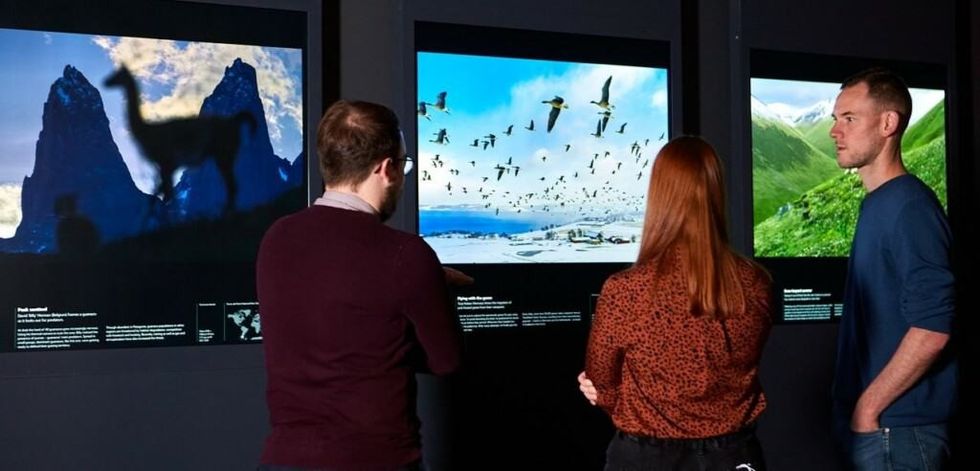
Wildlife Photographer of the Year is an annual highlight of the Natural History Museum's touring exhibition portfolio
Image courtesy of NHM
Her production team frequently engineers around a baseline 600-square-metre footprint that is specifically built to shrink or swell.
Looking at the Wildlife Photographer of the Year exhibition from a builder's perspective, Danielsson highlights its high level of modularity.
This allows the exact same structural content to be scaled down to fit compact 150-square-metre galleries or expanded to seamlessly fill spaces exceeding 500 square metres without looking sparse.
To manage this variable geometry, Cynthia Brown recommends a structured "core kit" model.
Under this engineering framework, the exhibition consists of essential objects, media, and interpretation that form a fixed narrative core, supplemented by templated, modular expansion zones.
This allows the production team to easily scale the physical assets up or down without diluting the central narrative integrity or requiring expensive mid-tour redesigns.
Optimising freight, crate design, and transport logistics
The logistics of moving an exhibition globally dictate much of its commercial viability.
A tour-ready exhibition must have clearly defined physical parameters long before it ever leaves the fabrication shop. Production managers must establish confirmed ceiling heights, loading requirements, engineered truck packs, and highly realistic install and de-install timelines.
Brown says creators must plan for the practical realities of touring.
Design teams often build for an ideal venue with large access points, but in practice, assets must fit through tight loading docks, comply with local union handling rules, and reduce sound bleed between nearby gallery walls.
Zaller points out that this physical flexibility must extend beyond the gallery entirely; producers must consider load-in pathways, elevator weight limits, and corridor access during the structural fabrication phase.
He warns that highly lucrative venues can become completely unfeasible if the built components physically cannot fit through the building's doors.
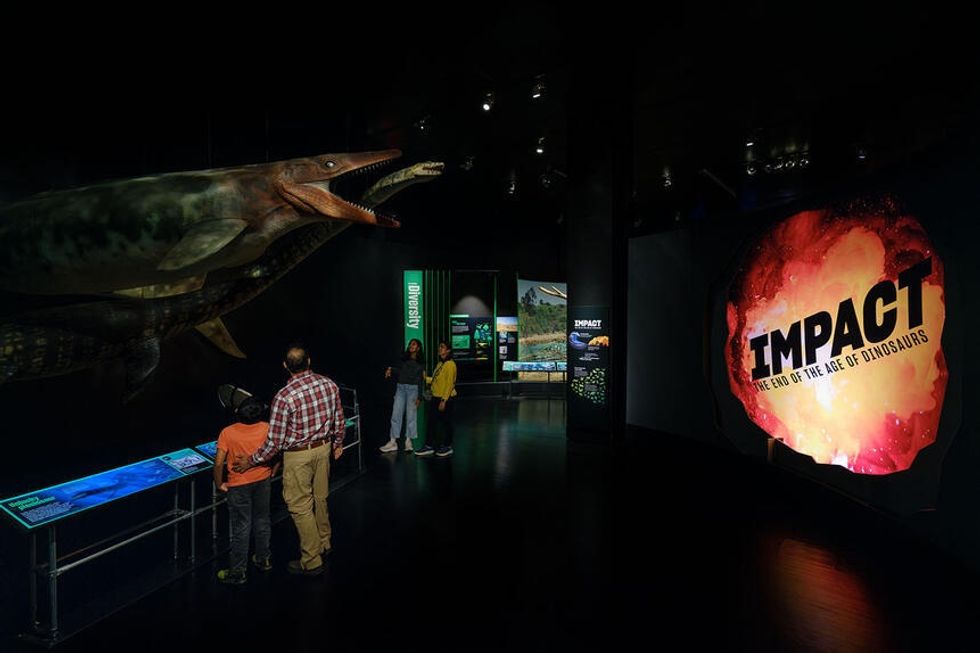
AMNH's Impact: The End of the Age of Dinosaurs features immersive panoramic video, interactives, hands-on games and quizzes, fossil casts, and full-size dioramas and models
Image credit Alvaro Keding/AMNH
Tour readiness includes being able to install an exhibition into a wide array of venues with different conditions, the right crating, efficient truck packs, installation materials and preparation, and above all, making things easy for local teams. — Susan Parrs, American Museum of Natural History
To control these complex operational hurdles, Danielsson says that capping transport volumes for both objects and setworks is an absolute necessity during the engineering phase.
Keeping freight at manageable levels not only controls exorbitant international shipping costs but drastically reduces the time required for installation and exit workflows.
Susan Parrs agrees, saying that highly efficient truck packs, the right crating systems, and meticulously organised installation manuals are non-negotiable elements that make the process seamless and safe for local technical teams handling the assets.
Furthermore, Amy Noble Seitz highlights that logistics can be streamlined by planning strategic geographic routing and moving exhibitions mindfully from region to region rather than crisscrossing continents.
This saves both money and carbon emissions.
Deepening operations and establishing clear maintenance protocols
Building an exhibition is only half the battle; ensuring it can be operated effectively by host staff is equally important.
Brown says that staffing and daily operations are baseline elements that must be structurally considered from the very beginning of the build process.
An exhibition must arrive at a venue with a highly credible, documented operating model. Brown insists that builders must provide venues with declared power and data needs, peak staffing level requirements, supervision ratios, and strict daily reset requirements.
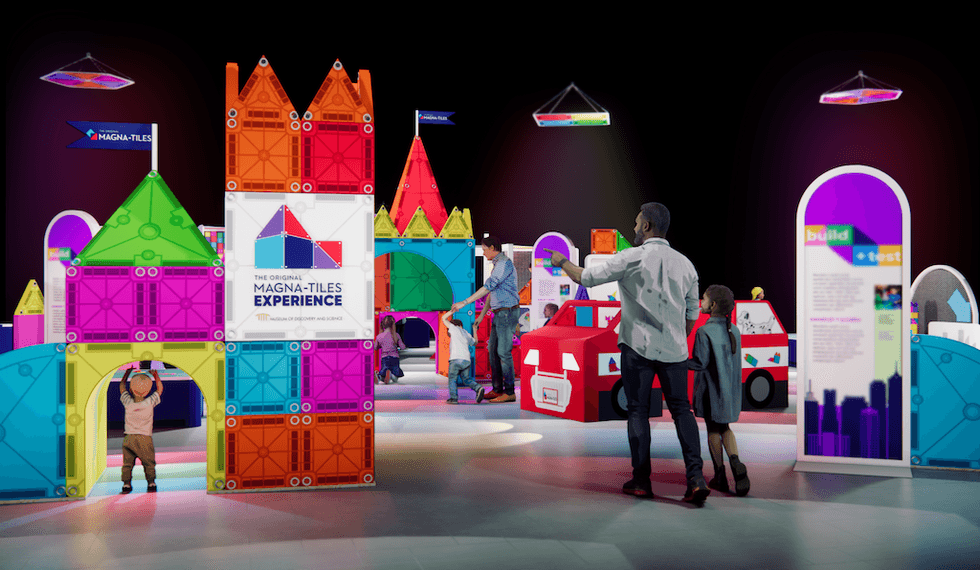
Museum EXP partnered with the Museum of Discovery and Science to launch the MAGNA-TILES Experience, a new travelling exhibition debuting in early 2027
Image courtesy of Museum EXP
When supplying operational manuals to host venues, clear guidelines are essential. For a deeper look at how host venues assess and manage incoming shows, see our companion feature on how to host a travelling exhibition.
Importantly, the production package must outline clear maintenance protocols and establish distinct lines of responsibility when something fails on the floor.
If local venue staff are unsure whether they are permitted to open a casing or reboot a server, the exhibition will suffer prolonged downtime, damaging guest satisfaction and straining the producer-host relationship.
A tour-ready exhibition has clearly defined physical parameters... declared power and data needs, and realistic install/deinstall timelines. It anticipates the realities of touring—loading docks, union rules, sound bleed, varying technical infrastructure—rather than assuming ideal conditions."— Cynthia Brown, Museum EXP
Standardising technical interfaces for rapid installation
When engineering the technical backbone of a travelling exhibition, predictability and ease of maintenance are paramount. A show cannot afford to be grounded because a bespoke component failed in a foreign market.
Brown advises production teams to implement standardised technical interfaces across all modular assets.
By utilising consistent power distribution methods, universal monitor mounting systems, and uniform media playback formats, producers can drastically reduce installation complexity and make on-the-fly component swaps highly feasible for venue staff.
Brown also recommends severely limiting the use of highly customised hardware.
Designing technical systems around readily available, commercial-off-the-shelf components ensures that local venue technicians can simply purchase necessary replacement parts at a regional hardware store, regardless of where the exhibition is currently touring globally.
In addition, for tech-heavy installations, she says, there is a need to engineer "graceful degradation" protocols.
This is a predefined operational plan built into the system that dictates exactly what happens to the visitor experience and how the system safely resets when a key technical element inevitably fails on the road.
Zaller adds that all technical systems—including lighting, projection, and audio arrays—must be inherently versatile, engineered to quickly adapt to varying ceiling heights and unpredictable room configurations.
Embedding practical sustainability into fabrication and procurement
While global touring inherently relies on heavy freight and energy consumption, production managers can achieve meaningful reductions in environmental impact by embedding sustainability directly into the early design and fabrication phases.
Brown recommends using carbon assessment tools during the initial design process to compare different fabrication scenarios before any physical building begins.
She also recommends engineering out the need for air freight, consolidating international shipments into fewer containers, and designing highly reusable, repairable crate systems.
She specifically notes the high logistical and sustainable efficacy of using stackable tour carts instead of traditional wooden crates.
Brown points to Nomad Exhibitions’ Vivienne Westwood showcase as a great example of how meaningful reductions in environmental impact are actively achievable when sustainable engineering is deeply embedded from the project's inception.
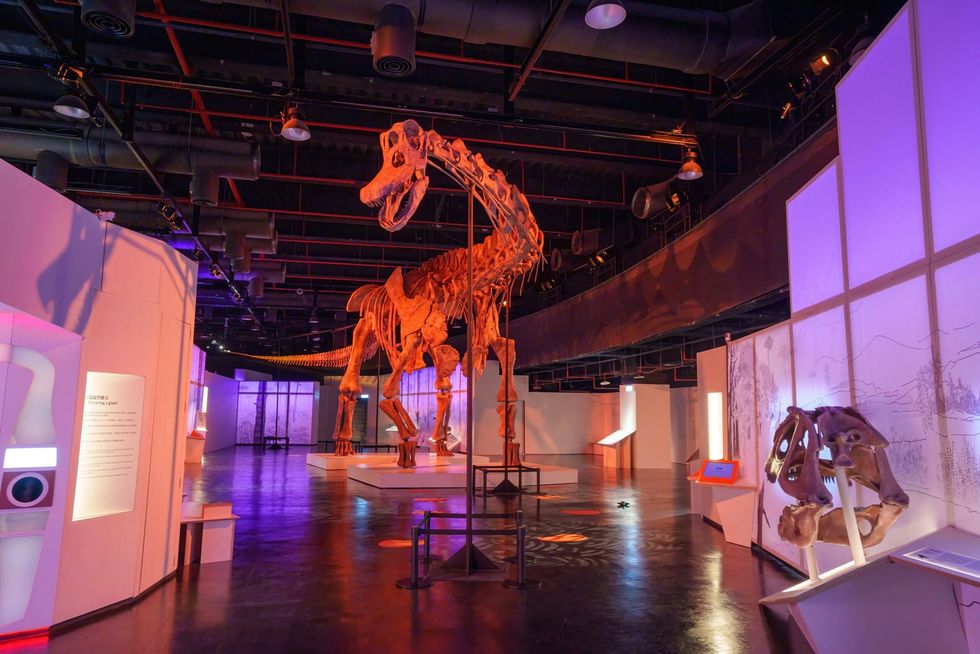
The Natural History Museum's travelling exhibition, Titanosaur: Life as the Biggest Dinosaur
Image © Trustees of the Natural History Museum
However, both Brown and Zaller acknowledge the very real procurement trade-offs involved in sustainable engineering. Materials that are highly durable and capable of surviving multiple rigorous installation cycles often carry a higher upfront embodied carbon footprint.
Furthermore, custom sustainable materials or fabrication processes can dramatically increase upfront capital costs.
Not every client places the same weight on sustainability in procurement, and many are unwilling to pay a premium for it.
Yet, Brown says these decisions pay off in the long run: clients are increasingly willing to invest when sustainable choices are framed as operational resilience and cost control, since highly durable assets result in fewer mid-tour rebuilds and fewer emergency replacement shipments.
Exhibition design is the key area of ensuring sustainability... finding the balance between reality and illusion that enables us to reduce shipping volume of build elements without compromising on the exhibition experience. — Ulrika Danielsson, Natural History Museum
Danielsson says that clever structural engineering can effectively balance durability with sustainability.
She points out that substituting heavy, solid timber or MDF build elements with lighter, tensioned fabrics and canvas can drastically reduce the shipping volume and carbon footprint of an exhibition.
Zaller adds that extending asset life cycles is the most effective sustainability strategy.
He highlights Imagine’s work with artist Thomas Dambo as a prime example of sustainability-led design; the exhibition centres on large-scale sculptures fabricated strictly from reclaimed wood and recycled materials, directly aligning the fabrication method with the storytelling.
Noble Seitz encourages the aggressive use of upcycled materials in scenography.
When an exhibition finally reaches the end of its lifespan, she recommends that producers utilise platforms like culturenut to actively recycle, reuse, and upcycle physical exhibition components.
This ensures valuable structural assets are repurposed by other institutions rather than sent to local landfills.
Future-proofing immersive technology for long-term touring
With artificial intelligence, projection mapping, and immersive media evolving at breakneck speeds, exhibition creators face the complex challenge of future-proofing digital assets for a show that may remain on the road for three to seven years.
Brown argues that the secret to futureproofing actually lies in designing for obsolescence from day one.
She advises design studios to implement strict hardware abstraction—ensuring media content is programmed to work seamlessly across multiple display formats and resolutions—and to explicitly outline a clear lifecycle plan and scheduled mid-tour technology refreshes within the project's capital budget.
She highlights the Becoming Jane exhibition at the National Geographic Museum as a brilliant real-world example of properly deploying technology to enhance storytelling without letting the hardware dictate the show's lifespan.
However, production teams must carefully evaluate the geographic market before over-investing in technology. Noble Seitz observes that while Europe has successfully provided immersive experiences for decades, North America is still in the early stages of adoption and remains somewhat ambivalent about it.
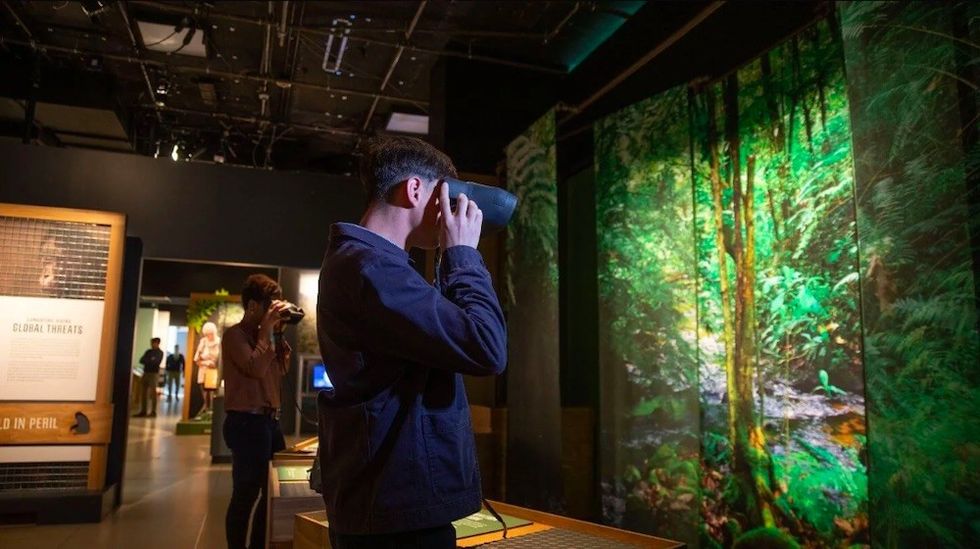
Becoming Jane: The Evolution of Dr. Jane Goodall is a travelling exhibition organised by National Geographic and the Jane Goodall Institute
Image credit Rebecca Hale/National Geographic
The North American museum market remains largely unsure about the efficacy of high-tech immersivity in balancing institutional mission and financial margins.
Test, prototype, perfect and repeat. Technology is a changing beast... Venues will not return to immersive experiences if the technology doesn’t work or deliver intended results."— Amy Noble Seitz, Exhibits Development Group
Noble Seitz cautions production teams that incorporating highly immersive technology is only worth the heavy capital investment if the systems work flawlessly on the road.
She warns that venues will outright refuse to book an IP again if the provided technology is overly complicated to operate or fails to deliver.
To combat this, she insists that production teams relentlessly prototype and stress-test every technical asset before it is crated.
Zaller adds that technology must always serve the underlying story, warning that novelty alone is never enough to sustain an exhibition's relevance.
He notes that if flexible technical backbones are built in from the beginning, software and media can be naturally updated remotely in future host cities.
Finally, Danielsson says that integrating large-scale immersive tech is an ongoing learning curve for the sector, stressing the absolute necessity of transparency and open dialogue among production peers and hardware suppliers to figure out what truly works on the road in the long term.
Read Part 2 of this guide:
How to host a travelling exhibition: the expert guide to maximising footfall and revenue →
We also asked our expert panel to discuss how to host a travelling exhibition.