Commercial readiness: Ensure the incoming show includes turnkey marketing, retail, and operational packages to drive revenue from day one.
Substance over spectacle: Balance high-impact visual environments with deep narrative substance to protect word-of-mouth reviews.
Frictionless visitor flow: Prioritise structurally modular layouts that adapt seamlessly to your local gallery constraints.
Tactile interaction: Deploy group-oriented analogue and physical interactives alongside digital features to manage gallery pacing.
Contract alignment: Mitigate financial risk by establishing transparent cost-sharing and mutually aligned ticket incentives early on.
This is the second part of a two-part series with our experts, exploring how to create a successful travelling exhibition. See also: How to build a travelling exhibition: the expert guide to modular design and global logistics
To successfully select, programme, and monetise a visiting attraction, host venues must carefully balance their own curatorial integrity with stringent commercial strategies.
In a highly competitive location-based entertainment market, the margin for error when booking a show is smaller than ever.
To provide actionable guidance for venues, we consulted five leading figures in the international touring sector. Here is their expert advice on securing the right exhibition, maximising footfall, managing visitor flow, and driving sustainable revenue.
Our experts
Ulrika Danielsson
Ulrika Danielsson is head of global touring at the Natural History Museum, London. She leads the international development and touring of award-winning exhibitions, sharing the Museum’s collections, science and stories with global audiences. Passionate about cultural engagement, she works to inspire curiosity, environmental awareness and appreciation of the natural world.
Our experts
Susan Parrs
Susan Parrs is director of travelling exhibitions and operations at the American Museum of Natural History in New York. She oversees the planning, logistics, and delivery of exhibitions worldwide. With extensive experience in museum operations, she helps bring scientific content and immersive experiences to global audiences through touring exhibitions and partnerships.
Our experts
Tom Zaller
Tom Zaller is president and CEO of Imagine Exhibitions, a company creating and operating immersive travelling and permanent exhibitions worldwide. He has a wealth of experience in cultural entertainment, museums, and themed experiences. Zaller develops innovative, story-driven exhibitions that combine education and entertainment for audiences across international venues and museum partners sector.
Our experts
Cynthia Brown
Cynthia Brown is a senior leader at Museum EXP, specialising in the development and delivery of travelling exhibitions. She works across international partnerships, managing operations, strategy, and guest experiences. Brown focuses on creating engaging, educational museum content that connects audiences worldwide with science, culture, and interactive storytelling environments.
Our experts
Amy Noble Seitz
Amy Noble Seitz is the founder of Exhibits Development Group, leading the creation and touring of travelling museum exhibitions worldwide. She oversees project development, partnerships, and audience engagement strategies. She also founded culturenut, a sustainable solution that helps cultural institutions and the attractions industry upcycle idle assets, transforming unused inventory into income.
Evaluating commercial readiness
When a museum or gallery is evaluating a new temporary exhibition to book, the venue’s procurement team must critically assess whether a project is genuinely prepared for the operational and commercial realities of its specific market.
According to Tom Zaller, tour readiness requires far more than an exhibition being physically built, beautifully designed, and packed into shipping crates.
A truly viable project must arrive at the host venue commercially and strategically prepared to sell tickets from day one.
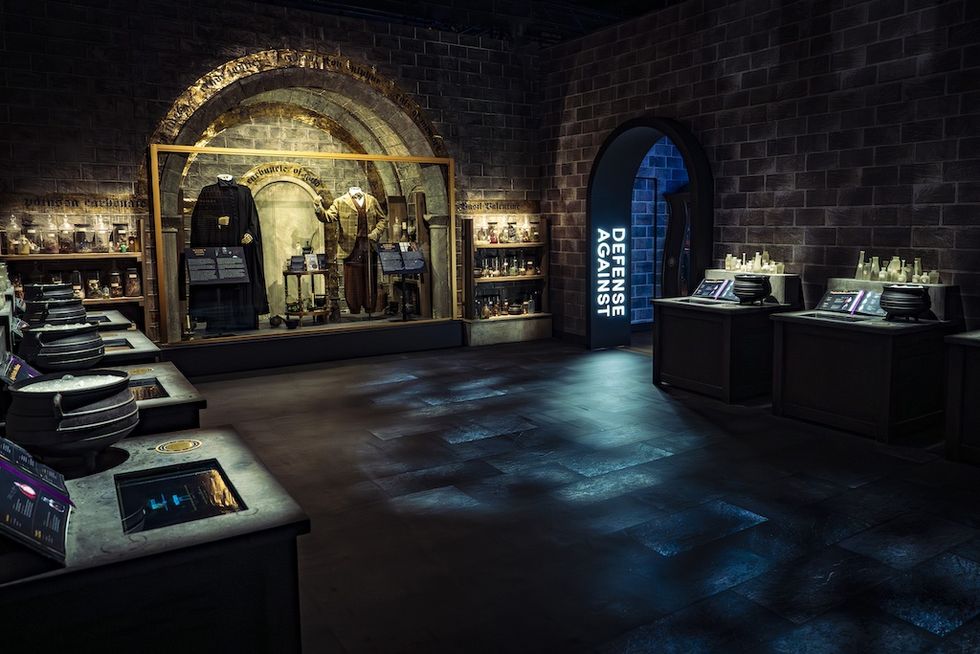
Harry Potter: The Exhibition has welcomed millions of visitors on its global tour
Image courtesy of Imagine
Zaller says that an incoming exhibition must feature comprehensive, high-quality marketing assets, well-defined pricing strategies, robust merchandise planning, and comprehensive operational documentation.
If an exhibition lacks this economic framework, local promoters and venue marketing teams cannot confidently take the attraction to their local market.
Zaller warns that many projects fall short in these exact areas; an exhibition might look creatively compelling in a digital rendering or at its premiere, but it is not truly ready for the road if it does not empower the host venue to drive revenue immediately.
Bottomline is if it can be marketed confidently, operated efficiently, and leave guests satisfied, it’s ready for the road. — Tom Zaller, Imagine
Cynthia Brown adds that from a commercial perspective, host venues and exhibition producers are currently operating in a highly value-sensitive environment.
This is particularly true as staffing levels at many cultural organisations and museums have not yet returned to their pre-pandemic numbers.
Consequently, venues should expect—and actively demand—that visiting exhibitions provide full marketing packages, comprehensive educator toolkits, detailed programming guides, and turnkey retail buildouts.

Exhibits Development Group's Evolution travelling dinosaur exhibition takes visitors back 66 million years to Earth's prehistoric past
Image courtesy of Exhibits Development Group
These ancillary offerings have become essential components that raise the bar for what constitutes a "tour-ready" investment, providing vital support to overextended in-house venue staff who lack the bandwidth to create these materials from scratch.
In addition to these criteria, Amy Noble Seitz says that museums and host venues will naturally be very hesitant to work with producers who lack a long-standing reputation or cannot prove a commercial track record.
She advises that venues look for producers who adhere to rigorous, established industry standards, such as those set by AAM (American Alliance of Museums) and ICOM (International Council of Museums).
Ensuring these standards are met gives the host venue confidence that the exhibition can deliver the expected return on investment.
Noble Seitz says that for a venue, a successful return is not always just pure profit; sometimes it is calculated as a break-even financial proposition that drives an essential, long-term uptick in new institutional memberships and broader audience attendance.
Balancing spectacle with narrative depth
To drive ticket sales and maximise footfall, venues must understand precisely what modern audiences expect when paying for a premium temporary experience.
Susan Parrs says that the fundamental desires of audiences have not actually shifted; visitors still seek to be entertained, wowed, and inspired by awe-inducing stories. What has drastically changed, however, is the sheer explosion of competition.
Museums and traditional exhibition venues are now competing directly for consumer spending against non-museum organisations, highly funded immersive experiences, and narrative virtual reality attractions.
I don’t think that audience expectations have really shifted that much – they have always wanted to be entertained, wowed, and hear stories and information that awe and inspire. What has changed is the explosion of competition, both in content and experience type. — Susan Parrs, American Museum of Natural History
To stand out in this saturated market, host venues must ensure that the exhibitions they book cater to a diverse array of visitor learning styles, from those who prefer reading detailed didactic texts to those who connect strictly through highly visual or physical modalities.
Brown says that modern audiences increasingly expect a thoughtful, finely tuned blend of spectacle, depth, and interactivity.
While visual impact and social discovery play a major role in driving initial attendance, particularly among younger demographics and families, Brown warns venues against booking exhibitions that offer spectacle without substance.
Empty, highly photogenic rooms will feel hollow to increasingly discerning guests, leading to poor word-of-mouth.
Conversely, she notes that heavily text-based experiences lacking sensory engagement will struggle to justify the premium ticket pricing required to cover the venue's hosting costs.
To achieve this critical equilibrium, Brown recommends that venues seek out exhibitions that intentionally choreograph visitor attention, using immersive tools to support—rather than replace—the core scientific or historical substance.
Case study: Bug Lab (Te Papa and Wētā Workshop)
A prime real-world example of this conceptual balance is the highly successful Bug Lab exhibition, co-created by the Museum of New Zealand Te Papa Tongarewa and Wētā Workshop.
The exhibition framework utilises large-scale, intensely immersive environments, but intentionally roots them in rigorous scientific narrative and meaningful physical engagement.
Operationally, the exhibition rejects a standard, wide-open gallery layout in favour of a structured, theatrical journey inspired by a stylised carnival setting.
Instead of allowing guests to skim past assets, the design uses winding, organic "bug chambers" that physically conceal the massive, ultra-detailed 3D-printed insect models, such as a giant orchid mantis or a jewel wasp, from immediate view.
This layout choice deliberately builds anticipation and controls visitor pacing. Guests are tunnelled step by step through specific interactive "adaptation stations" and spatial soundscapes.
This ensures that the high-impact visual spectacle serves as a direct vehicle for deeper biological science, preventing crowd bottlenecks while securing excellent word-of-mouth reviews.
Zaller says that whether a booked exhibition is heavily artefact-based or highly immersive, the key to generating sustained footfall is to deliver exactly what the venue's marketing campaigns promised to guests.
Designing frictionless visitor flow
A fundamental element of hosting a travelling exhibition is ensuring the physical layout promotes a seamless, safe, and engaging visitor journey within the venue's specific architectural constraints.
Brown says that the basics of visitor flow are no longer negotiable; modern audiences expect a frictionless, highly professional experience characterised by functional timed-entry systems, clear wayfinding, and competent crowd management that prevents gallery bottlenecks.
To achieve this, host venues must work closely with producers during the initial booking and planning phases to adapt the floor plan.

TheTrolls: A Field Study travelling outdoor exhibition is the second exhibition in Imagine’s portfolio to showcase the acclaimed Danish artist and sculptor Thomas Dambo
Image credit & artwork, Thomas Dambo. Image courtesy of Imagine
Parrs emphasises the importance of evaluating how an exhibition will flow across different host galleries, addressing common size restrictions, and ensuring the core storyline remains intact even if the physical layout must be significantly altered or split across multiple rooms.
With our touring exhibitions, we want visitors to each partner venue to feel they are in an exhibition designed for that space. — Ulrika Danielsson, Natural History Museum
Ulrika Danielsson notes that while turnkey exhibitions require an element of structural modularity, this adaptation should never feel obvious or disjointed to the visitor.
Instead, the goal is for visitors to feel that the exhibition was bespoke and designed specifically for that host venue's unique space.
Case study: Wildlife Photographer of the Year (Natural History Museum)
Danielsson cites the Wildlife Photographer of the Year exhibition as a textbook example of a highly versatile, structurally flexible touring offering.
To ensure a flawless visitor flow regardless of architectural variables, the Natural History Museum developed a design framework that allows host venues to choose from multiple physical formats based strictly on their spatial and technical capacities.
For major venues with expansive footprints, the premium format utilising large, custom-engineered backlit LED light panels offers a high-impact, immersive experience.
This setup requires roughly 500 square metres of space and a specialised split-batten wall hanging system to support the heavy infrastructure.
Conversely, for tighter, non-traditional, or historical spaces down to 150 square metres, the museum provides a highly compact format featuring crisp, high-resolution prints mounted on lightweight, ultra-durable Dibond aluminium panels.
By providing identical asset packages across wildly different physical footprints, the exhibition allows venues to plan a highly precise, bottleneck-free traffic route that matches their exact room constraints without compromising the display's prestige or storytelling power.
To better tailor the physical journey and adapt the storytelling for regional audiences, Danielsson says venues leverage the self-built intellectual property (IP) package model.
Under this model, host venues do not rent physical walls or cases; instead, they license the exhibition content and the original design drawings.
This grants the venue total flexibility to alter the layout on a sliding scale, from a direct recreation to a completely alternative design vision tailored to their specific audience, spatial flow, and regional community stories.
Leveraging tactile and group interaction
Strategically placed interactive elements are excellent for managing visitor pacing within a gallery and encouraging deeper, longer engagement, which boosts perceived value for money.
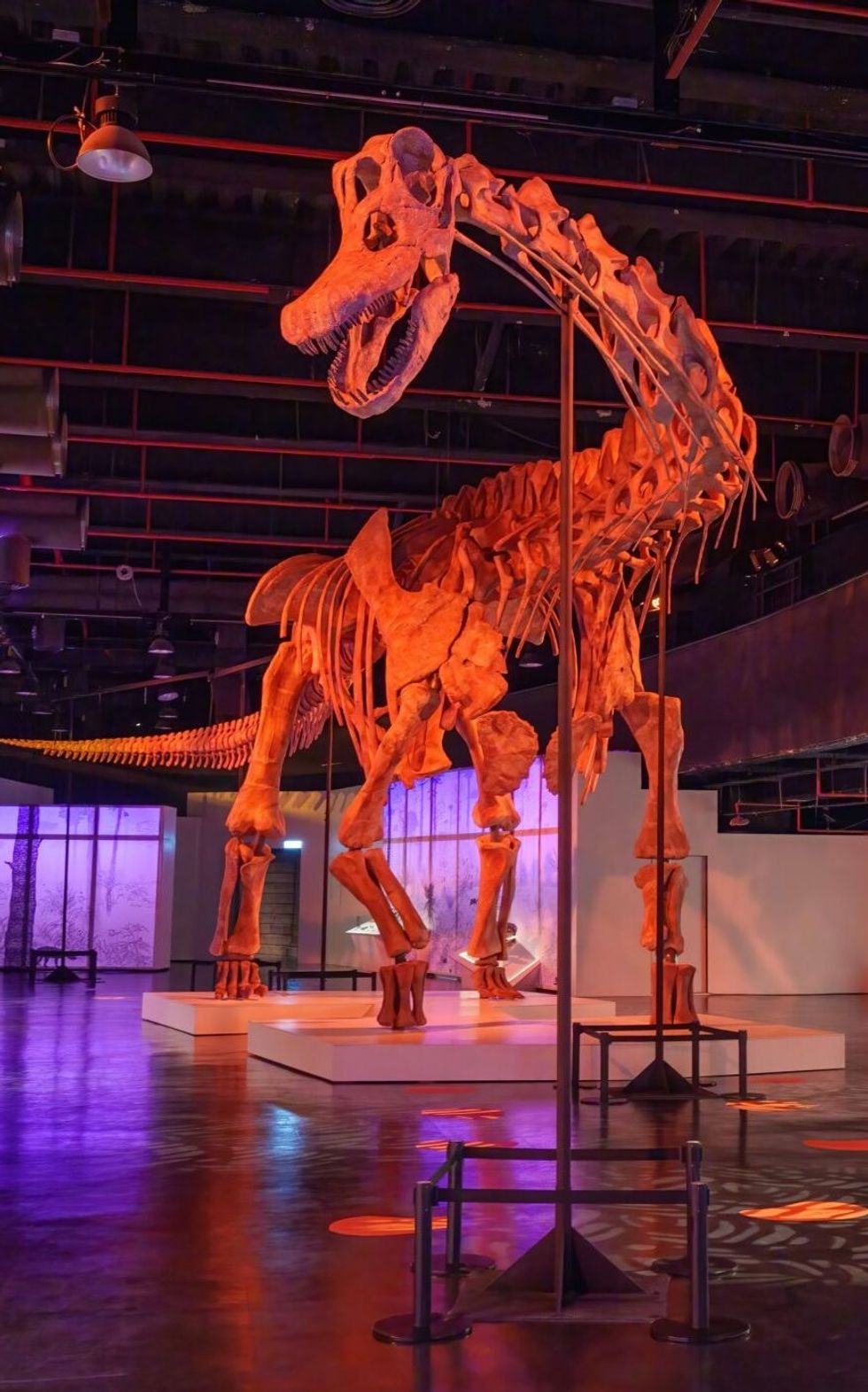
NHM's Titanosaur: Life as the Biggest Dinosaur travelling exhibition
Image © Trustees of the Natural History Museum
Danielsson says there is a strong audience appetite for hands-on, analogue interactives, including mechanical elements, running alongside high-tech digital features.
She highlights the importance of providing moments for visitors to interact as a group, citing the Natural History Museum's Titanosaur: Life as the Biggest Dinosaur exhibition.
To drive group engagement, this exhibition features a massive, analogue interactive where entire families step onto a huge set of mechanical scales together to discover how their combined weight compares to that of a young titanosaur.
While creating highly visual, "Instagrammable" moments is often viewed as a primary commercial strategy for venues, Noble Seitz recommends a much more grounded approach to engagement.
Isn’t everything Instagrammable these days? I travel a lot and no matter the “culture” - people are on their phones too much... I prefer traditional, lo-tech experiences unless it’s immersive. In terms of social media within our projects, I leave it to the consumer, influencers, and experts at the venue. — Amy Noble Seitz, Exhibits Development Group
Noble Seitz says that rather than artificially forcing digital engagement through contrived photo-ops, venues should focus on traditional, high-quality experiences.
Strong exhibition design naturally frames the content beautifully, providing visitors with a memorable experience that they will naturally want to share online.
Mitigating financial risk through aligned contracts
The financial viability of hosting a travelling exhibition depends heavily on the contract models and partnership approaches established between the host venue and the producer.
Zaller says that the most resilient partnerships are those that actively align financial incentives. When both the host venue and the producer are mutually invested in ticket sales, marketing performance, and guest satisfaction, the exhibition inherently performs better.
This requires transparent conversations early in the booking process regarding shared costs, projected local revenues, and clearly divided responsibilities.
However, risk appetite among host venues is changing.
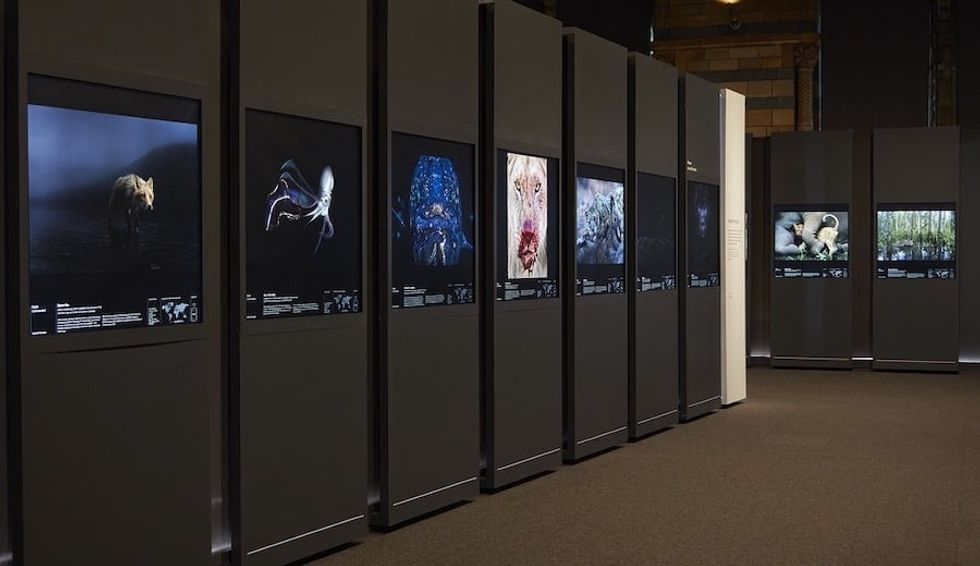
Wildlife Photographer of the Year 57 exhibition on show in 2021 at the Natural History Museum in London
Image courtesy of Natural History Museum
Brown says that while hybrid financial models, such as a minimum financial guarantee paired with a revenue share on backend ticket sales, can effectively balance producer security with upside profit potential for the host, these structures are becoming increasingly rare.
Because of the perceived risk associated, many museums prefer flat-rate financial models for their organisation... of the 100 museums that have responded so far, 84% say that they prefer a flat-rate financial model. — Cynthia Brown, Museum EXP
While flat fees help venues definitively cap their exposure and minimise perceived organisational risk, Brown points out that this strong preference makes it very difficult for producers to balance their financial projections.
This tension highlights a pressing need for the industry to find new ways to encourage deeper co-creation.
Ultimately, Noble Seitz advises that the best way for venues to eliminate financial risk is to ensure there is proven market demand for the exhibition's content before any contract is signed.
Success is most consistently achieved when each party sticks to their core competencies, meaning producers focus on world-class content creation, while host venues leverage their deep local expertise to execute high-level market promotion.
Furthermore, Noble Seitz notes that venues currently facing decreased funding are increasingly adopting the strategy of hosting exhibitions for much longer durations.
This structural change helps stretch their programming budgets, maximises long-term footfall, and significantly reduces both human resources and turnaround costs.