Trivium Interactive, a multimedia design and production studio specialising in interactive and immersive media for attractions, has collaborated with the National Geographic Society to create immersive interactive experiences for three major galleries within its new Museum of Exploration.
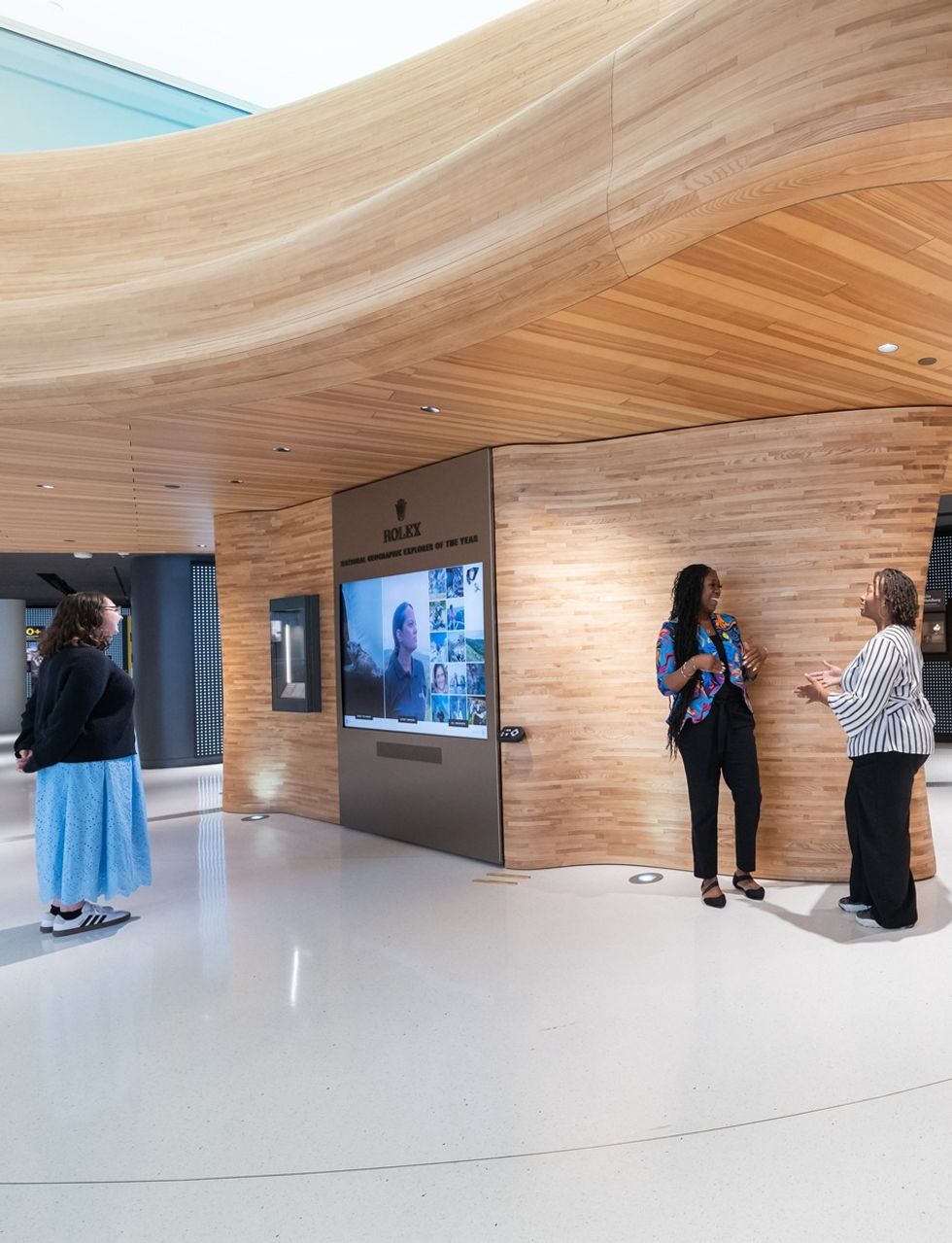
The Rolex Explorers Landing Gallery at the National Geographic Museum of Exploration
Image courtesy of Joy Asico Smith
By blending digital media, physical interactives, and accessible design, its installations for the Learning Launchpad Gallery, 16th Street Lobby Experience, and Rolex Explorers Landing Gallery seek to actively engage with National Geographic's mission.
The $300m Museum of Exploration opened on 26 June 2026 at the National Geographic Society's global headquarters in Washington, D.C., and marks the largest campus expansion in its almost 130-year history.
Inspiring interactives
Guests are introduced to the museum through displays in the 16th Street Lobby Experience, which bring National Geographic's core values of exploration, investigation, storytelling, and wonder to life through synchronised physical and digital effects.
This space features a multimedia show created by Trivium Interactive in partnership with National Geographic's experience team and exhibit fabricator Apogee Exhibits. In this, reproduction artefacts, such as a bioscope, helmet light, and textbook, are animated using hidden mechanical components.
These moments are accompanied by an original audio score produced by Trivium Interactive and bespoke animation, displayed on transparent OLED screens integrated into the exhibit glass.
Combined, these elements transform conventional museum cases into dynamic storytelling experiences that meld physical artisanship with digital media.
In the dedicated Learning Launchpad Gallery, children and school groups are invited to learn about geographic thinking, or examining our planet through a spatial lens.
Exhibits are designed around a range of geographical concepts, such as patterns, time, place, and scale.
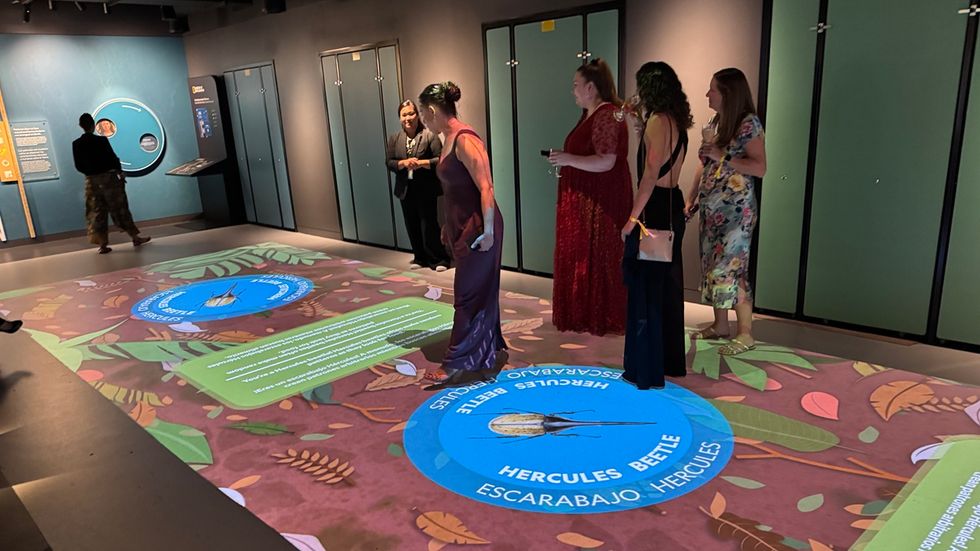 Visitors engaging with an interactive floor at the National Geographic Museum of ExplorationImage courtesy of Trivium Interactive
For these experiences, the studio created an immersive floor projection where visitors follow moving dots on the floor to mimic how animals move in nature.
Its other interactives include a touchscreen game to build beaver dams, which illustrates their effects at different ecosystem scales, and a physio-digital exhibit in which guests explore photos paired with locations on a corresponding physical map.
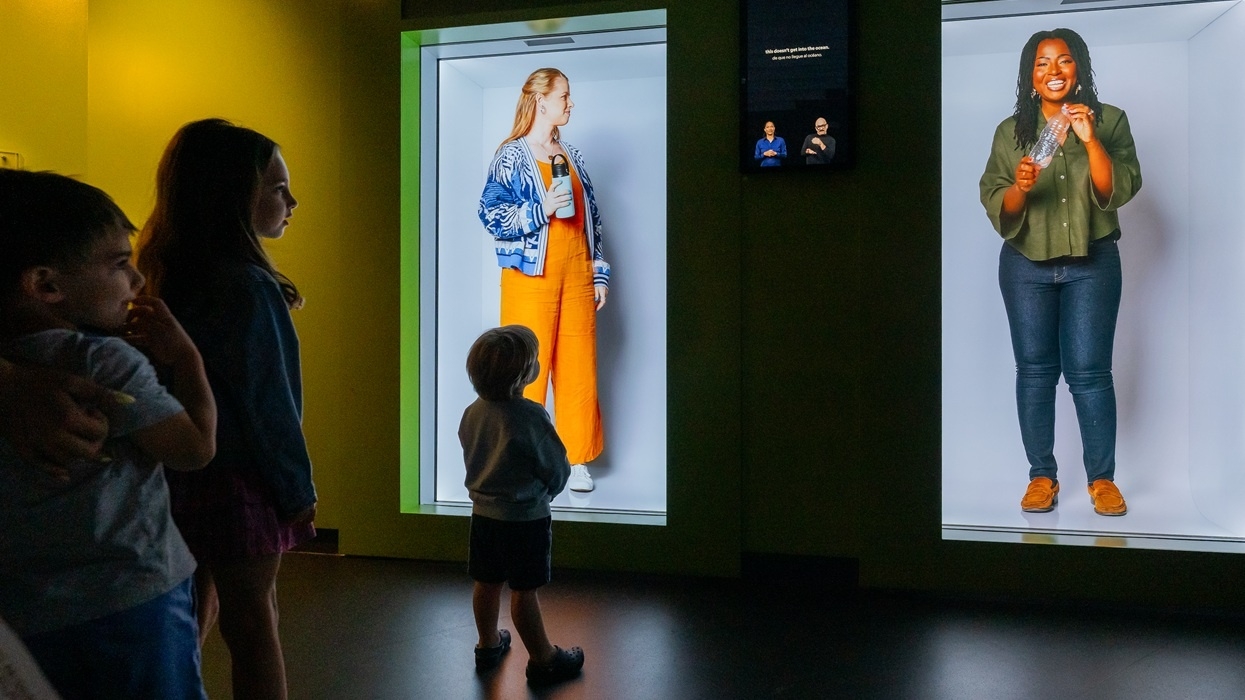
Another experience uses Protobox technology to deliver three 'holograms' of National Geographic explorers who speak directly to guests and invite them to take part in the conversation.
Trivium Interactive’s program plays a series of videos synced across the displays. As the explorers ask questions, guests' gestures are recorded as 'votes' using body-tracking technology.
In the Rolex Explorers Landing Gallery, Trivium Interactive designed a collection of touchscreen kiosks that celebrate National Geographic's international community of over 5,000 explorers. Guests can learn about Explorer of the Year winners or discover fieldwork spanning science, conservation, and archaeology.
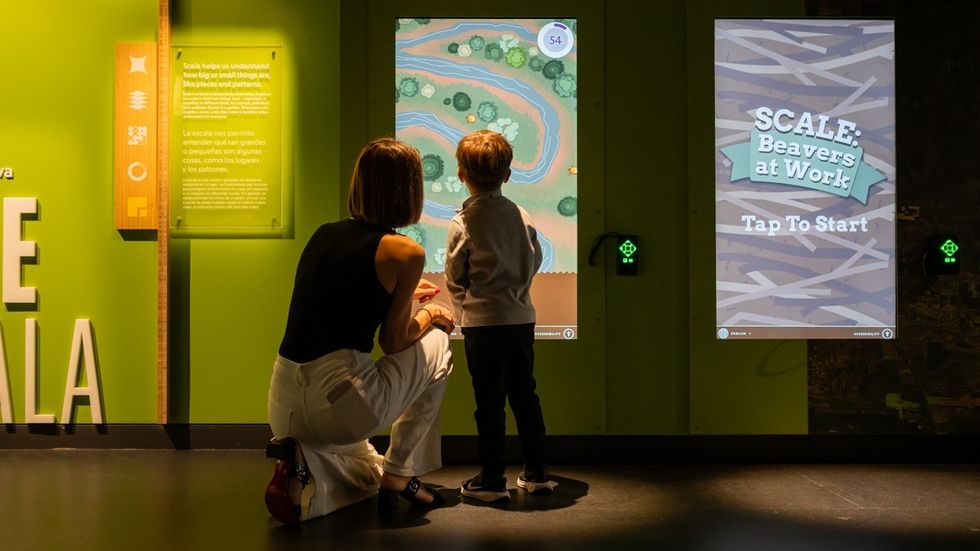 The Learning Launchpad Gallery's beaver themed touchscreen game explores the impact of dam buildingImage courtesy of Joy Asico Smith
A featured interactive follows an explorer in the field. By selecting objects displayed nearby, visitors unlock documentary video, photography, and interpretive content. This explains how the object supports the explorer's work and offers deeper insight into ongoing research and expeditions.
The exhibit was envisaged as a versatile platform that enables National Geographic to update featured explorers and artefacts regularly.
Trivium Interactive also developed a museum-wide video playback platform, which means staff can easily deploy and manage National Geographic's wide collection of documentary media across numerous exhibits.
Customisable, accessible experiences
Accessibility has been integrated throughout all of the experiences. Tactile navigation pads offer text-to-speech support and audio descriptions, and video experiences feature multilingual captions and American Sign Language (ASL).
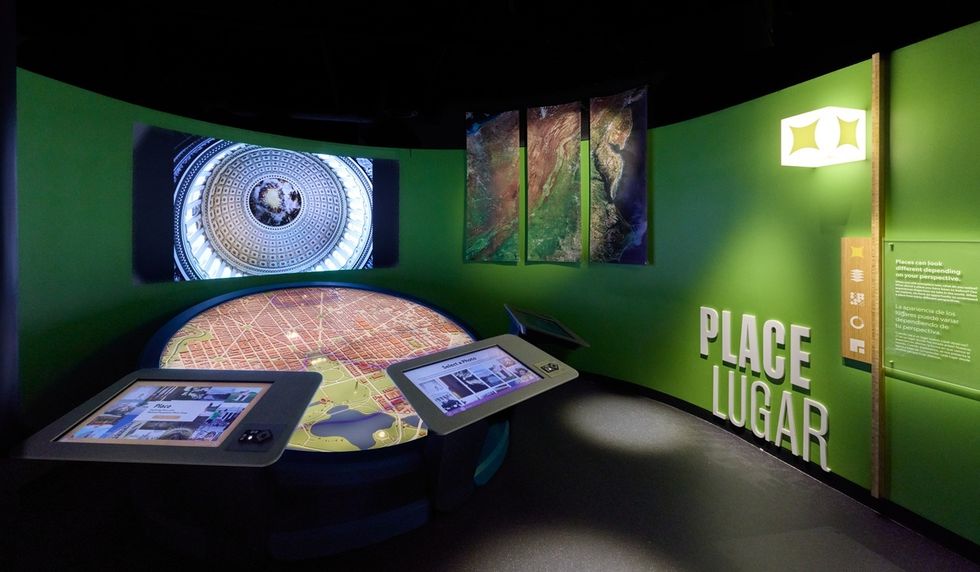 Exhibits include integrated accessibility features, such as customisable text size, screen contrast, and brightnessImage courtesy of Rebecca Hale
At every exhibit, guests can also tailor text size, screen contrast, and brightness through accessibility settings, ensuring the experiences are welcoming and usable for a wide range of audiences.
Trivium Interactive’s partners on this project included Apogee Exhibits, EOS LightMedia, and DillonWorks, as well as numerous National Geographic teams with which the studio worked closely to design accessible, engaging, and unforgettable experiences.
Recently, Trivium Interactive was part of the team that delivered Not Fade Away, a new interactive multimedia experience at the Surf Ballroom Music Experience Center, located right next to the historic Surf Ballroom in Clear Lake, Iowa.