
While we’ve seen many theme parks launch only to quickly trip and fall, some closing within a few years, some within just a few days, there is another similar interesting phenomenon that I’ve seen take place over the years.
This would be when a successful theme park, open for many years, suddenly spirals into the abyss and closes for good.
As strange as it sounds, it has happened many times, and in each case, the circumstances that led to the demise were entirely different.
7.Action Park - Vernon, New Jersey, USA
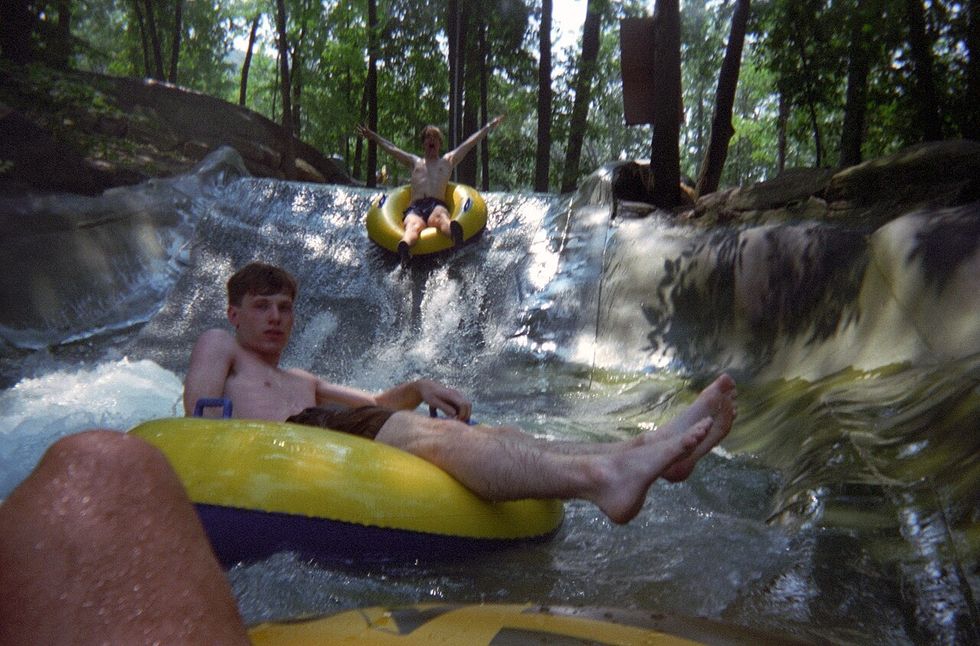
Visitors enjoy a water slide built into the side of a mountain at the now-defunct Action Park in the 1990s
Image credit Joe Shlabotnik from Forest Hills, Queens, USA, CC BY 2.0 via Wikimedia Commons
In the history and legends of attractions, few destinations evoke as much jaw-dropping fascination as Action Park.
Operating in Vernon, New Jersey, from 1978 to 1996, the park became a cultural touchstone by subverting the core tenet of modern theme park design: the illusion of risk. Instead of engineered, predictable thrills, the park’s founder championed total guest autonomy.
This lawless ethos birthed iconic DIY attractions like the infamous Cannonball Loop—a water slide featuring a literal vertical loop that routinely resulted in split lips and loose teeth—and the Alpine Slide, where sleds frequently went airborne off concrete tracks.
In an era before there were ever any industry regulations, Action Park thrived on a hyped-up cocktail of mostly teenage staff, zero oversight, and a guest base eager to push physical limits.
The reputation for “anything goes”, however, that created so many legendary stories about Action Park eventually also served to cause its downfall.
As the industry evolved toward sophisticated risk management, guest safety standards, and fine-tuned engineering protocols, Action Park remained an unsustainable anomaly.
A mounting tally of severe injuries, tragic fatalities, and relentless lawsuits inevitably drew the scrutiny of state regulators and insurers.
By the mid-1990s, the park’s parent company, Great American Recreation, buckled under the financial weight of mounting debt and soaring insurance costs, forcing the park to close its gates in 1996.
Today, the site has found new life after being reimagined as Mountain Creek Waterpark, leaving the original "Class Action Park" legacy behind as a cautionary tale on where the line between daredevil thrills and operational liability must be drawn.
6.Boardwalk and Baseball - Orlando, Florida, USA
A strange hybrid of a concept, this park combined baseball games and typical amusement-park entertainment into a weird mashup, while never quite figuring out its audience. Despite a prime location just outside of Orlando, a few exits just south of Walt Disney World, it just couldn’t compete with nearby giants.
However, the park’s origin and history are even stranger, as it started out as another park concept entirely in 1974 called Circus World, which was started and owned by the Ringling Bros and Barnum & Bailey Circus group, with the intention of being a “winter headquarters” for the traveling circus acts.
Ownership of the park, which changed hands a few times in the years that followed, eventually fell to Harcourt Brace Jovanovich in 1986.
Harcourt was primarily an educational book publisher, who also owned the SeaWorld parks at the time, as well as nearby Cypress Gardens.
In 1987, it decided to change the park's theme by removing the circus and introducing baseball games, rebranding it as Boardwalk and Baseball to better compete with the growing Walt Disney World complex.
The gamble didn’t last very long, and the park closed for good in early 1990.
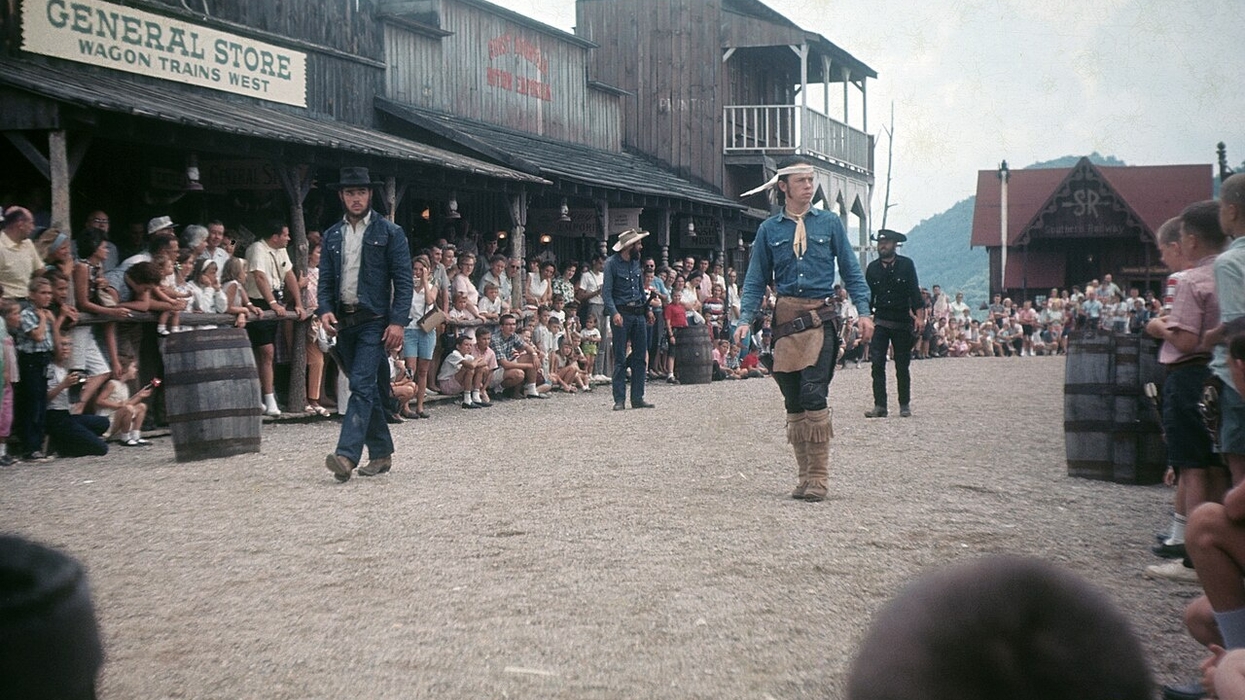
5.Ghost Town in the Sky - Maggie Valley, North Carolina, USA
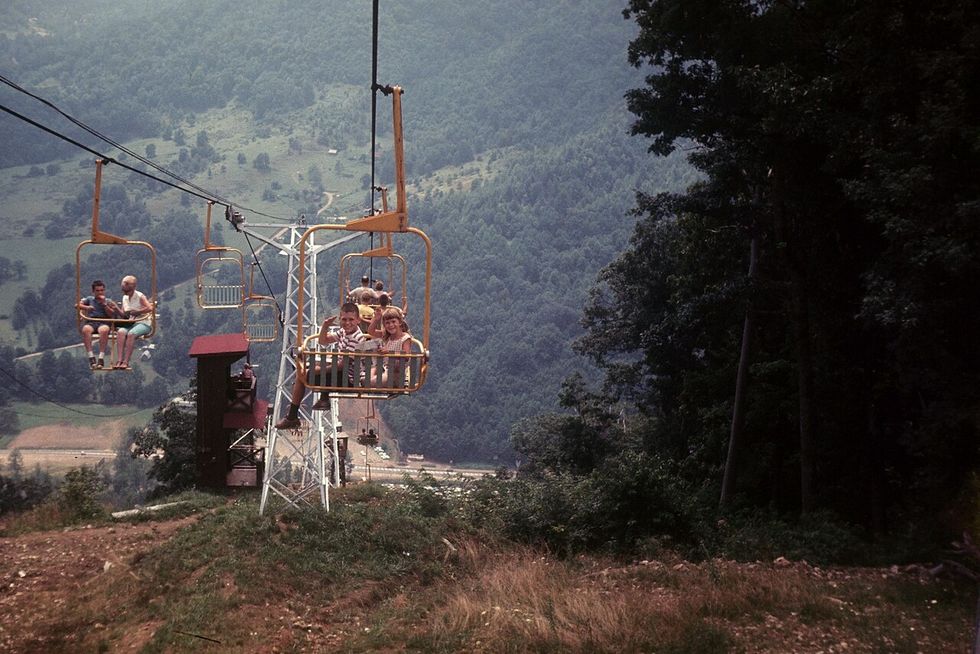
Ski lift carrying tourists to and from Ghost Town in the Sky at the top of Buck Mountain in summer 1964
Image credit Tupelo the typo fixer, CC BY-SA 4.0 via Wikimedia Commons
This unique theme park first opened in 1961, featuring a Wild West-themed world built atop Buck Mountain. Guests would typically ride a chairlift or an inclined railway car to the park from the ground-level parking lot below.
At its peak, Ghost Town in the Sky was regarded as one of the most popular regional theme parks in the South-Eastern US. Unfortunately, this achievement did not last, as the park suffered from mechanical decay over the years due to its isolated location.
If either the chairlift or incline railway broke, it created a bit of a nightmare for guests trying to enter or leave the park, as there really wasn’t any other good way to get down from the park’s 4,600-foot elevation.
This also made it difficult for the park to bring in parts and equipment needed for repairs or improvements, increasing the cost and time required to complete even the simplest projects.
In July 2002, the park suffered a very public chairlift malfunction that left guests stranded in the rain for hours, and the park never really recovered, closing shortly after.
In the 24 years that have followed, the park has been subjected to several attempts to reopen and revive it that just never fully worked out for very long.
Even today, the park remains closed, with the property often caught up in one legal case or another by those seeking to purchase or claim it for one use or another.
Every attempt to reopen the park has been met with terrible struggles in order to update and make needed repairs to the aging property, or they were met with a fresh new disaster, such as in 2010, when retaining walls around the park failed and caused a massive mudslide that caused damage all the way down to sections of the town below.
While stories pop up from time to time about potential new park owners trying to buy it, and a never-ending series of legal squabbles between previous owners who were not able to make it work… Ghost Town in the Sky will likely forever be known as a real-world ghost town.
Meanwhile, as the theme park's rotting remains continue to fall further into disrepair, the decaying park will most likely never reopen and will serve only as a point of interest for trespassing urban explorers seeking a glimpse of what once was.
4.Opryland USA - Nashville, Tennessee, USA
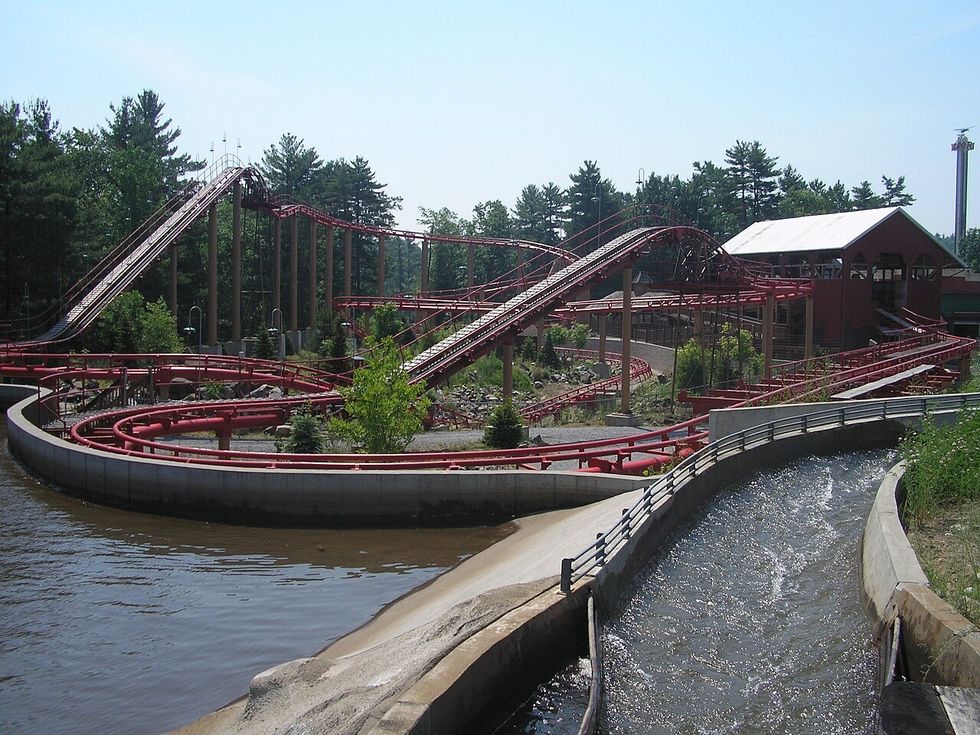
Opryland USA's Rock n' Roller Coaster, now named Canyon Blaster, was moved to The Great Escape in 2003
Image credit Zotdragon at en.wikipedia, CC BY-SA 3.0 via Wikimedia Commons
This particular pill is a big, hard one to swallow because, as a theme park, Opryland USA was extremely successful.
The park opened in 1972 and serves as a local theme park staple for tourists, located right next door to the Grand Ole Opry House performance venue and the Opryland Hotel… now known as the Gaylord Opryland.
In the park’s prime in the 1980s, it was said to have served about 2.5 million guests each year, offering both summer operations and a special Christmas-season winter overlay.
Unfortunately, in the late 90’s, greed seemed to have overtaken better judgment within Gaylord, which decided it would shut down the successful theme park out of the blue in 1997 and instead build the massive Opry-Mills retail mall on the site.
Nashville has never quite been the same since this happened, and you would be hard-pressed to find a Nashville native who, to this day, doesn’t wish that they had the Opryland theme park back in town.
3.Geauga Lake - Aurora, Ohio, USA
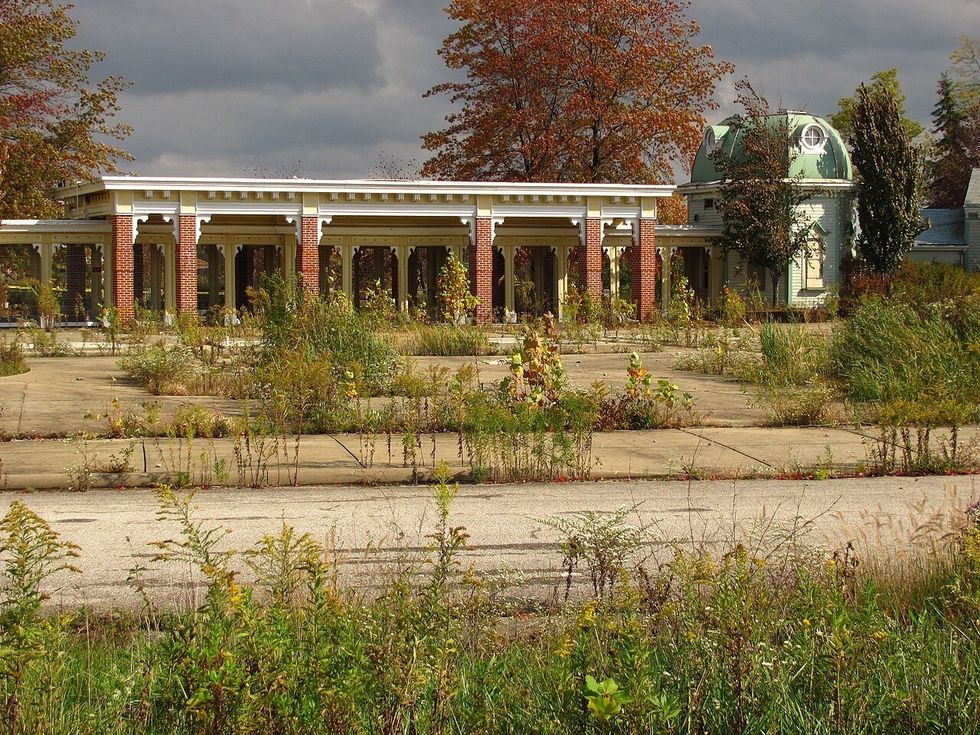
What was left of the Geauga Lake entrance as pictured in 2011
Image credit https://www.flickr.com/photos/rollercoasterphilosophy/, CC BY 2.0 via Wikimedia Commons
The loss of one of America’s oldest theme parks is also a bit of a twisted tale, involving lessons to be learned about over-expansion, attraction mismanagement, and weird things that just happen when a park changes hands too many times.
The original Geauga Lake amusement park opened way back in 1887, creating an amusement attraction on the site of what was already a popular recreational park area along the shore of a small lake. Over the years, the modest park slowly grew, but it was primarily an attraction for the local market.
In 1970, on the opposite shore of the same lake, a second park was built… SeaWorld of Ohio. The two parks offered very different experiences: Geauga Lake focused on being a rides park, while SeaWorld offered only a marine animal experience with no rides; they were able to coexist quite well for decades.
Things started to change in 1995 when Geauga Lake was purchased by a new small but very ambitious theme park group called Premier Parks.
By Spring 1998, it was announced that Premier Parks had purchased Six Flags from Time Warner and in 2000, Geauga Lake was rebranded and relaunched as Six Flags Ohio with a huge expansion that added four new roller coasters to the park in one year.
This wasn’t enough for the new owners, however, who set their sights on the neighboring SeaWorld park across the lake. By this time, the SeaWorld parks had been purchased by Busch Entertainment, which had begun adding more attractions to reduce reliance on animal exhibits.
According to various reports, it was actually Busch Entertainment that reached out to Six Flags about possibly buying the amusement park, only for Six Flags to counter with a $110 million all-cash offer to purchase SeaWorld Ohio instead.
However, while SeaWorld Ohio was no more, Busch took “Shamu”, the Killer Whale, out of the park with it, along with many of the other animals and all the IP trademarks it owned.
It simply left the bare bones of the former marine life park for Six Flags to acquire and merge with Six Flags Ohio, which then rebranded the entire property as Six Flags Worlds of Adventure in 2001. The rapid expansion of the attraction into a single, huge park proved detrimental to both properties across the 750-acre site.
Attendance rose rapidly in 2000 for Six Flags Ohio and grew once again in 2001 as Six Flags Worlds of Adventure, but once the initial curiosity had worn off, attendance quickly began to fall.
Local guests who formerly might have visited each park once a season now knew they could see it all in a single day instead.
Struggling to stay afloat, with attendance falling below 1 million, Six Flags eventually sold the entire property to its biggest local competitor, Cedar Fair, in 2004 for $145 million.
Cedar Fair, which didn’t operate animal attractions, shut down the former marine life side entirely and began transforming it into a new, separate water park called Wildwater Kingdom in 2005, while also returning the original amusement park's identity to Geauga Lake.
Attendance never recovered, and by 2007, Cedar Fair announced that Geauga Lake was no more and would only continue to operate the Wildwater Kingdom water park, which closed after the 2016 season.
Some say that Cedar Fair's purchase and eventual closure of the park were simply a long-term strategic maneuver to remove the threat of competition from its own nearby Cedar Point theme park in Sandusky, Ohio, about a 90-minute drive to the west.
2.Six Flags AstroWorld - Houston, Texas, USA
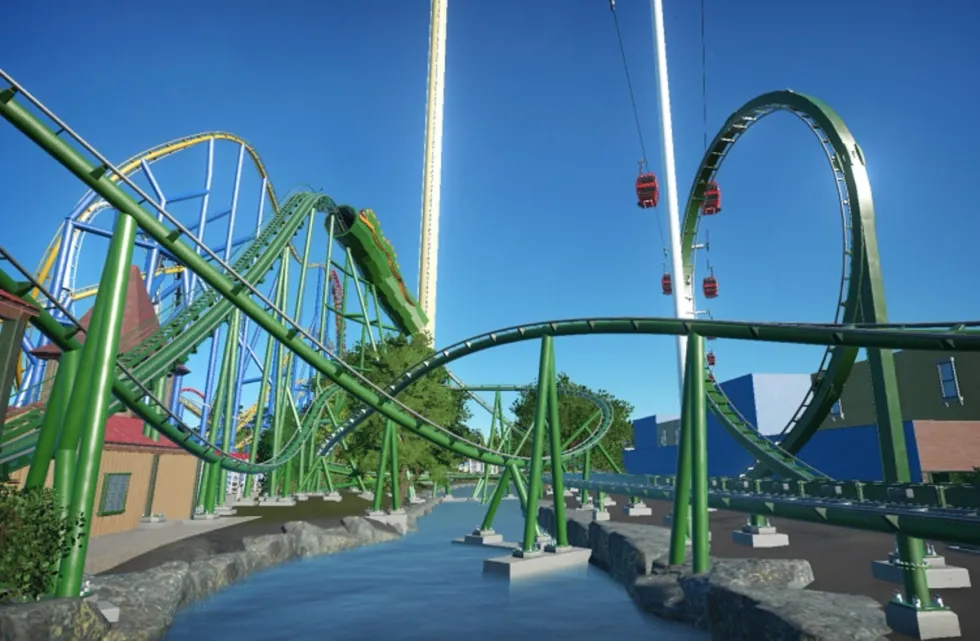
In 2022, AstroWorld briefly returned as a virtual theme park in the metaverse, branded as the 'world’s first theme park built on blockchain'
Image credit AstroWorld
When it opened in 1968, AstroWorld was heralded as another huge attraction for the city, meant to serve as a companion attraction to the nearby Astrodome sports stadium.
The park was quickly purchased by Six Flags in 1975 and quickly began to thrive as one of the best-known theme parks in the region. Along with the original Six Flags over Texas in the Dallas area, the two Six Flags parks quickly became the defining theme park experience for generations of Texans.
Six Flags Astroworld was known for a number of legendary attractions, including the Texas Cyclone (a wooden coaster that sought to recreate the intense pacing of Coney Island’s original Cyclone) and the cutting-edge world’s first Thunder River rapid ride.
AstroWorld wasn't just an amusement park; it was an integral thread in Houston's social fabric for decades.
And yet… the downfall of AstroWorld came suddenly and without merit, and serves today as a poignant industry case study in the volatile economics of urban land valuation and real estate speculation.
By the early 2000s, the park was being suffocated by a number of logistical issues that were beyond its control. Built as a partner attraction to the nearby Astrodome, it also shared the use of the sport complex’s parking lot rather than having a parking lot of its own.
This led to a number of disputes when major events took place at the Astrodome, the biggest headache being the Houston Livestock Show & Rodeo, which only served to throttle operations at Astroworld.
On the other side of the coin, Six Flags as a company changed when the theme park chain was sold by Warner Bros. to Premier Parks in 1998.
The new owner sought to significantly expand the Six Flags brand and spent several years rebranding and upgrading several of its own parks, transforming them into new “Six Flags”- branded parks.
Parks like Six Flags America, Six Flags New England, Six Flags Ohio and so on… and the cost of this kind of rapid expansion had begun to weigh heavily on Six Flags’ balance sheets.
Seeing a prime opportunity to alleviate some of the chain’s multi-billion-dollar corporate debt, Six Flags executives made the polarizing decision to close and demolish Six Flags AstroWorld in 2005, betting that the 100+ acres of real estate would surely sell for a very lucrative price.
This turn of events now sounds hauntingly familiar to the struggles Six Flags is facing today, following an unexpected and rapid expansion of the chain through its merger with Cedar Fair.
In the case of AstroWorld, the gamble backfired spectacularly, with the land sitting vacant for the past two decades as numerous proposed development plans failed to materialize.
This has left a huge void in Houston, where the former park now just sits as a series of empty parking lots, still connected by a bridge over the freeway to the former AstroDome sport complex, now known as NRG Park, that consists of the former Astrodome, NRG Stadium, NRG Arena and the NRG Center exhibit hall.
In the end, the story of AstroWorld remains an unforgettable reminder of the delicate balance between corporate asset management and the preservation of a park's intrinsic intangible and irreplaceable value.
1.California’s Great America - Santa Clara, California, USA
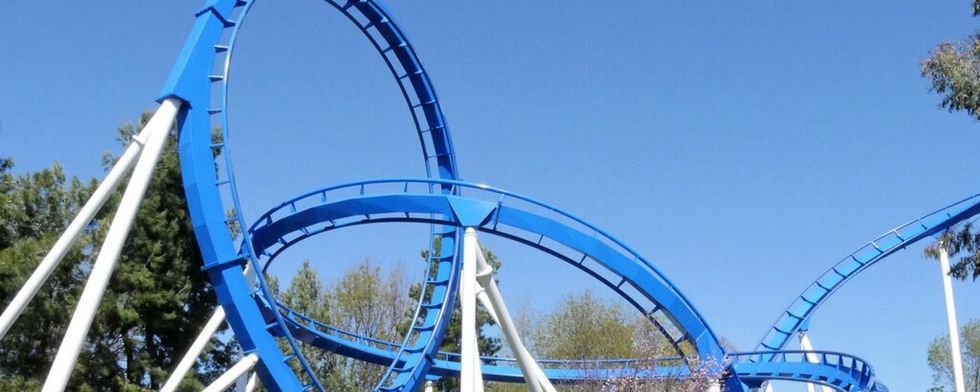
California's Great America could close after 2027 season
This park has had a very long and interesting history, and yet the theme park grim reaper lying in the shadows will claim it very soon.
Originally conceived and opened by the Marriott hotel corporation in 1976 as Marriott’s Great America, the Santa Clara, California, property was designed as an upscale, beautifully landscaped celebration of American history and heritage.
In a rather bold move for the era, Marriott decided to build two nearly identical parks and, in the same year, opened a sister park in Gurnee, Illinois. (Fun fact: A third park was supposed to be built in the Washington, D.C. area, but protests from locals kept it from ever getting built.)
By the mid-80s, Marriott had decided that the theme park industry was not where it wanted to focus its efforts and sold the two Great America theme parks to two very different owners.
The Illinois park was sold to Six Flags in 1984, becoming Six Flags Great America, which continues to operate under that banner today.
As Six Flags had just bought Magic Mountain in Southern California, it did not want the second park, which was instead sold to the city of Santa Clara in 1985.
The city then sold it to the Taft/Kings Entertainment Company in 1989, which later sold its parks to Paramount in 1992. When Paramount wanted out of the industry, it sold the chain to Cedar Fair in 2006, where it became known as California’s Great America.
Over those many years, the park was well known for its major attractions, especially cutting-edge roller coaster designs like Demon, Tidal Wave, Top Gun, Stealth, and, in later years, Gold Striker and RailBlazer.
While year after year the park proved popular with guests in the local market, the real cause of its impending demise lay not with the park itself but just below it.
Built in the epicenter of Silicon Valley, surrounded by silicon tech empires of every make and size, it was the ever-growing value of the 112 acres of land that the park sat on that became the key issue.
This land had been owned by the city for decades and leased to the park, but new California state laws required the city to sell it, and Cedar Fair had the right of first refusal to purchase it, which it exercised in 2019 for $150 million.
However, in a very unexpected move, just three years later, still reeling from the debt and financial burden that the COVID pandemic caused the theme park industry, Cedar Fair took an offer from real estate giant Prologis to sell the theme park site for $310 million.
The contract would allow Cedar Fair to continue operating the theme park for a few more years, then wind down and remove the park’s major attractions before handing over the site to Prologis for future redevelopment.
With that deal clock now ticking, it is expected that the 2027 season will be the park’s last and final operating season.
The unfortunate side effect is that, much like how Houston has never recovered from the loss of AstroWorld, the high-value property in the Santa Clara area will ensure the region likely never sees a new theme park built again, leaving a large void that will never be filled.
After reading about the fall of all of these once great parks, I’m going to leave you on a happier note.
This is a tale about a park that was built at a very high cost, opened with a number of flaws, and overcame these issues to become a major success story. Yes, I’m talking about…
Disney’s California Adventure - Anaheim, California, USA
When this park first opened in 2001, it was heavily criticised by guests for having a lackluster and weak initial attraction line-up, along with minimal theming.
As the legends tell it, this Disney park was built at a low time in the company’s history when the park experience wasn’t as valued as it is today, and Walt Disney Imagineering was instead asked to build a more value-engineered theme park concept instead of what it had originally envisioned as California’s second Disney park.
Upon opening, The Walt Disney Company found that the initial California Adventure experience was rather hard to sell, as it was built on the site of the former parking lot for the original Disneyland park.
With ticket prices about the same for either park, the long-established original Disneyland park has grown into a very attraction-heavy and immersive experience since it opened in 1955.
Meanwhile, Disney California Adventure failed to deliver the expected innovative “Disney”- style attractions and instead featured a number of off-the-shelf-style amusement park rides.
In fact, some of these same attractions were items that the local Southern California visitors had probably already experienced at nearby parks like Six Flags Magic Mountain and Knott’s Berry Farm years prior.
Eventually, Disney essentially admitted defeat here and launched a lengthy, very costly program to reimagine the park experience, adding new, modern-style attractions that Disney’s audience craved.
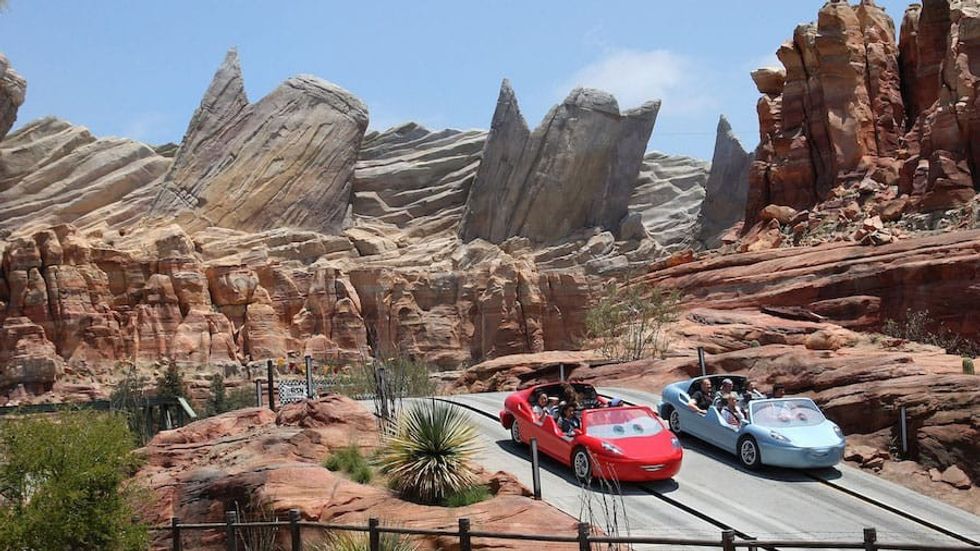
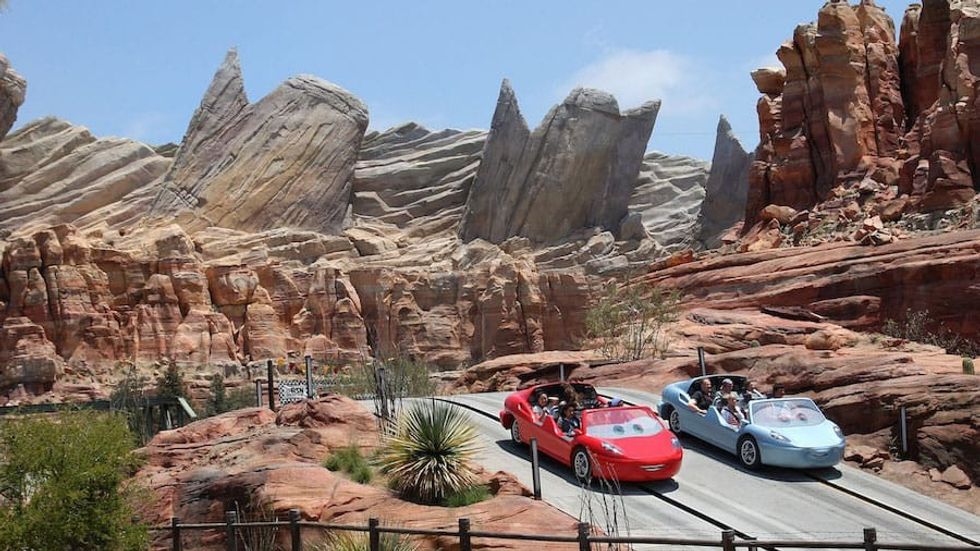 Cars Land is one of the later additions that helped to revitalise Disney California Adventure after a lukewarm initial reaction
Attractions such as the Twilight Zone: Tower of Terror, a Little Mermaid dark ride, and the gigantic Cars Land were added, and the lagoon was filled with the popular World of Color night spectacular.
All said and done, this initial wave of expansion and improvements to the park, which began around 2007, was estimated to have cost about $1.1 billion.
While the exact numbers were never published, it was estimated that Disney’s original launch of the park was done at a very budget-friendly level of $600-650 million.
See also: Tomorrowland today: Disney's futuristic dilemma
At the same time, Disney spent over twice that amount ($1.4 billion) to build the Downtown Disney retail area, including the new Grand Californian Hotel and improvements to the Disneyland Hotel.
Making matters worse, and only pointing out the problem even more, later that same year, the new Tokyo DisneySea theme park opened in Japan to rave reviews, which was reported as costing about 335 billion yen… or about $2.1 billion US dollars.
Even today, the improvement projects are still rolling out to “fix” Disney California Adventure, with things like phase one of the Avengers Campus, a new Avengers-themed dark ride now under construction along with a new dark ride themed to the animated film Coco, and future plans that promise to bring the world of Avatar to life as well.
While Disney may have initially stumbled in building this park, it has finally become a very popular attraction for guests.