In the theme park industry, failure rarely comes cheaply. Building even a modest attraction can cost tens of millions, while the cost of full-scale parks routinely now climbs into the billions. When things go right, the payoff can last decades.
But when they go wrong, the results can become utter and extremely expensive disasters in a very short period of time.
From overhyped mega-resorts, ambitious concepts designed to push the limits of engineering, to well-intentioned niche concepts that never found an audience, let’s take a look at some of the biggest themed attraction failures that took place in North America.
Projects that even today serve as a cautionary tale for an industry built mostly on risk.
8.MGM Grand Adventure Theme Park - Las Vegas, Nevada, USA
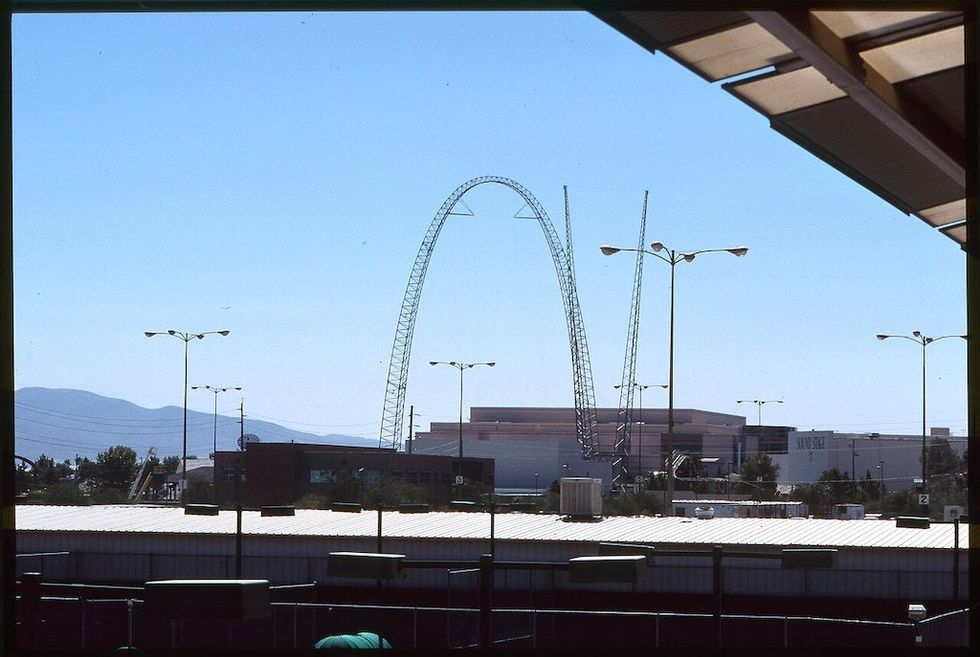
SkyScreamer at MGM Grand Adventure, 1999
Image credit: Iconotheque of the Academy of Architecture, CC BY-SA 4.0 <https://creativecommons.org/licenses/by-sa/4.0>, via Wikimedia Commons
Las Vegas has always catered to a more adult audience, featuring legalized gambling and edgy live entertainment.
With a nickname like “Sin City” and catch-phrases like “What happens in Las Vegas, stays in Las Vegas”, the idea of building a full-scale theme park seems like a bit of a gamble right from the start.
And yet… the Las Vegas attitude of the early to mid 1990’s was one in which many of the major casino owners decided they wanted to try to lure families to the Nevada desert town.
Many casinos suddenly popped up with theme-park-like themes, each serving almost like a different land within one giant park.
You can see the Medieval Knights jousting away at Excalibur, a tropical oasis across the street at the Tropicanna, the hotel towers themed like the New York skyline across the way, complete with a Taxi Cab-themed roller coaster winding through the structure, behind a mini Statue of Liberty.
There was Luxor, the towering, pyramid-shaped hotel, and the pink-and-white tent of Circus Circus, complete with midway games inside, which had just opened a giant pink glass dome with a mini theme park inside.
And then there was the mighty MGM Grand casino, with towering green structures, and even a mild Wizard of Oz theme at times, which decided to build its own outdoor theme park behind the casino, which opened in 1993.
Things did not go well, and as interesting as the small park was, the desert heat proved a bit much for anyone considering a summer visit.
Very few family groups arrived to check it out, and before long, the park was reduced from 33 acres to just 18.8 acres to focus future efforts on more lucrative casino-style projects and hotel rooms.
By September 2000, MGM opted to give up on the park entirely, after just seven short years. Within the same general timeframe, many of the other, more family-oriented attractions at other casinos had also been shut down as well.
This has essentially left the jousting knights show at Excalibur, the rides atop the Stratosphere Tower and the indoor Circus Circus Adventuredome theme park as the main survivors of Las Vegas’s very brief dabble in the theme park wars.
7.Schlitterbahn Kansas City - Kansas City, Kansas, USA
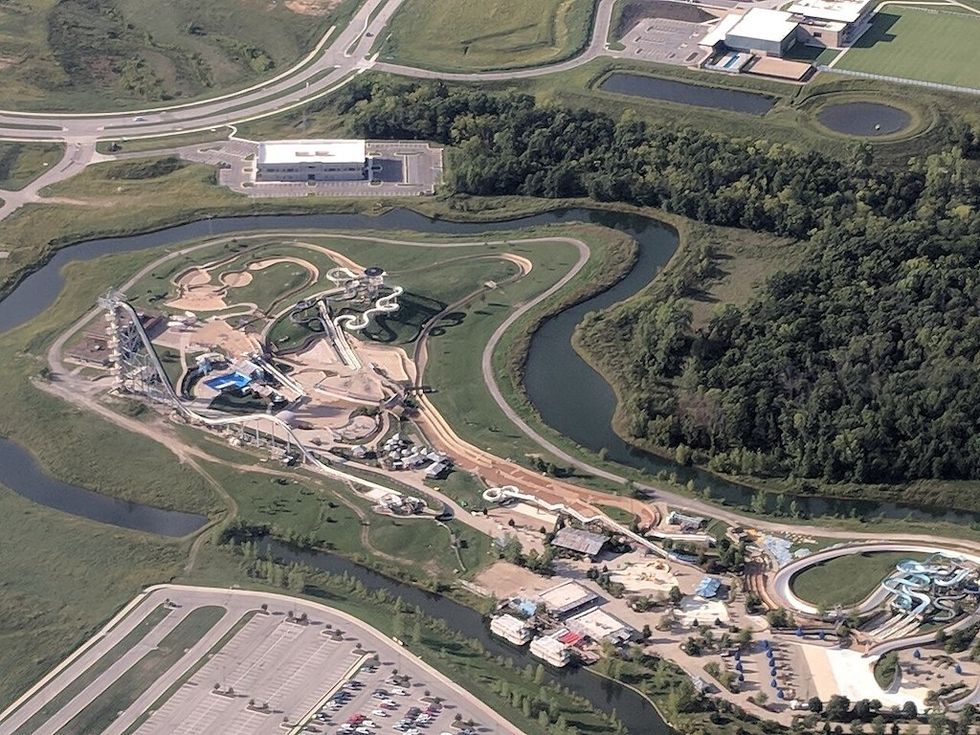
Schlitterbahn Kansas City
Image credit elisfkc from Orlando, FL, United States, CC BY-SA 2.0 <https://creativecommons.org/licenses/by-sa/2.0>, via Wikimedia Commons
This was the first and only planned expansion of the famous Texas Schlitterbahn water park brand outside of the company’s home state.
Experiencing some construction delays, the first phase of the water park did not open until mid-July 2009.
Despite original concept art depicting the water park being built with on-site resort buildings and accommodations, not unlike the Texas original, the Kansas City park never reached such heights.
Instead, an accident in 2016 changed this park's fate forever.
This involved the park’s latest home-brewed creation, a massive waterslide called Verrückt, which stood nearly 169 feet tall (taller than Niagara Falls). When translated from German, Verrückt means “insane”.
Verrückt was announced in 2012, and did not open until late summer 2014 due to numerous delays and complications with the attraction’s design.
The layout was simple: it dropped riders over the edge in a raft, only to send them up and over a speed hill at the bottom before splashing down and coming to a stop.
Numerous modifications were reportedly made during the attraction's brief testing and lifetime, including the addition of “netting” over the top of the slide, because the park was worried that loose objects on the rafts could become airborne and strike a guest below.
In August 2016, tragedy struck when a 10-year-old boy on Verrückt, along with two adult women, became airborne on the raft within the chute on that speed hill and came into contact with the netting and support structure for it.
According to the reports (and resulting lawsuits), the young boy was killed instantly, and the two women also suffered from “severe facial fractures”.
Both civil and criminal lawsuits soon followed, which not only resulted in Verrückt being shut down but also in the entire water park being shut down by the end of the 2018 season.
6.Evermore Park - Pleasant Grove, Utah, USA
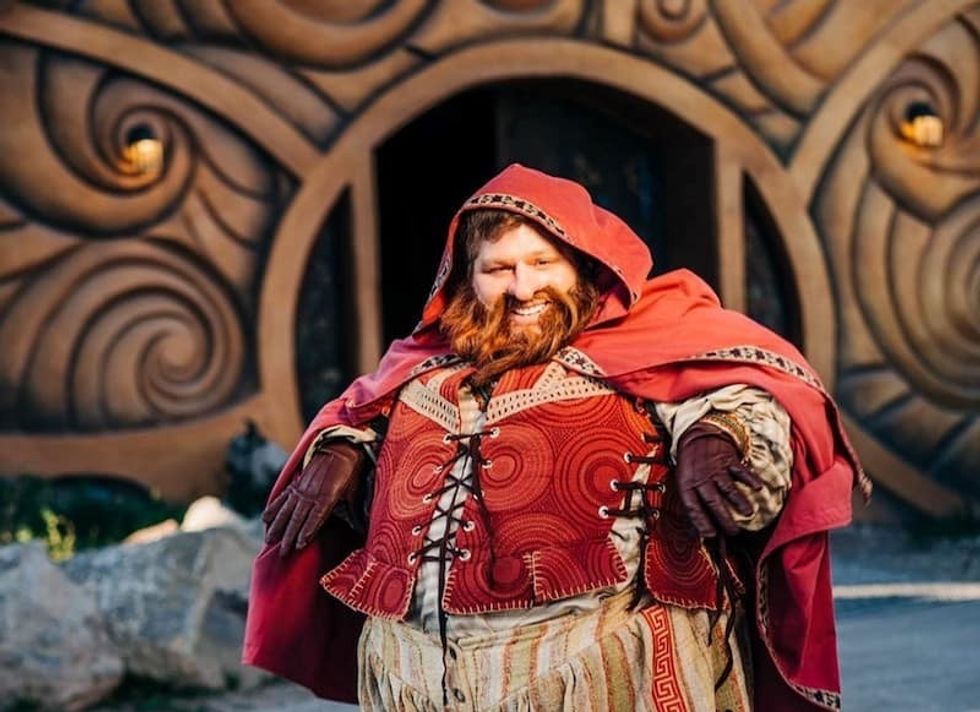
Evermore Park
A bold attempt to create a live-action fantasy world, Evermore leaned heavily into role-playing and improvisational storytelling, while ignoring all the staple attraction types that one might expect to find at a traditional amusement park.
It opened in 2018 with no roller coasters, no flat rides, no dark rides, no big spectacular shows.
With more question marks than clear-cut attractions, many potential guests stayed home because they were not quite sure what kind of experience they would get.
While innovative, inconsistent execution and financial issues led to its closure, raising questions about how far immersion can go before it alienates mainstream audiences.
The park’s founder, Ken Bretschneider, was said to have invested about $37 million into the park concept, and it grew, adding various seasonal festivals and themed special events over the years. The operational costs to keep Evermore Park running began to rise as well.
When the COVID pandemic struck in 2020, it was very bad timing for a struggling, fledgling park concept like Evermore Park. By the time COVID essentially shut down just about everything in mid-2020, the park was already suffering from massive debt, construction liens, and legal action from vendors seeking payment.
The creator/owner of Evermore Park was also a co-founder of The Void, the first really successful free-roaming VR attraction concept that also opened in Pleasant Grove, Utah. The Void became commercially successful very quickly and quickly spread by opening new locations across the globe.
In short, the success of The Void helped start and fund the operation of Bretschneider’s main passion project… Evermore Park. Unfortunately, COVID also claimed The Void as an early victim.
Funding ran out to continue to operate Evermore Park by 2024.
5.Jazzland - New Orleans, Louisiana, USA
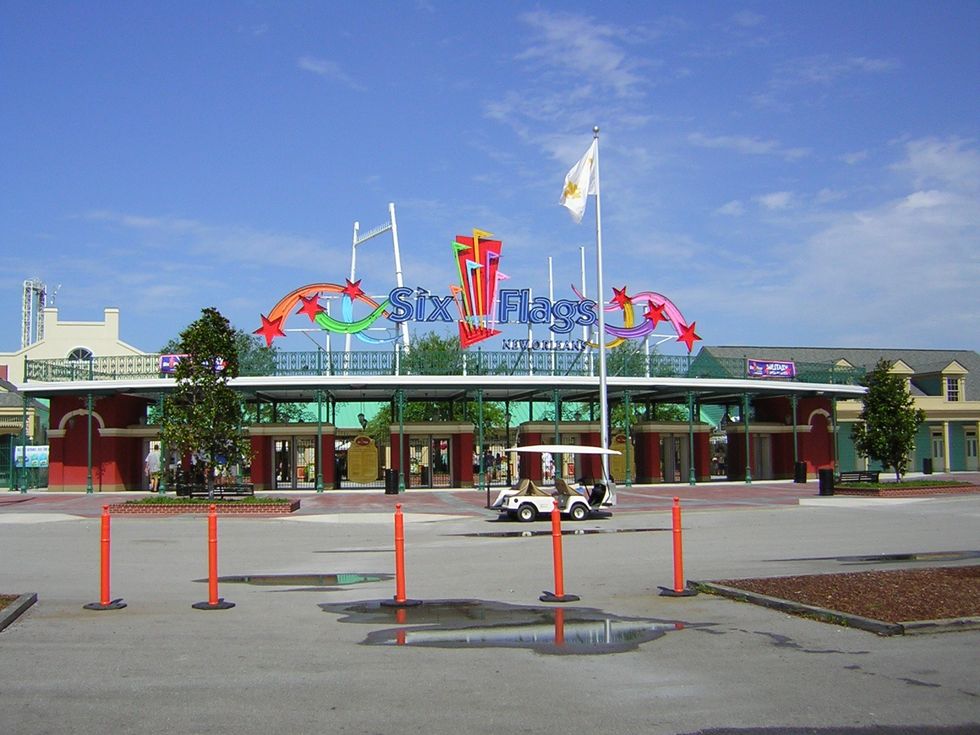
Jazzland later become Six Flags New Orleans, before being abandoned after Hurricane Katrina
On the surface, the idea of building a theme park in New Orleans seemed like a good idea at the time.
The city had, after all, been home to a number of small parks and attractions over the years, including the once-popular Pontchartrain Beach park, which ran from 1928 until it closed in 1983, home to the mighty Zephyr wooden roller coaster for most of those years.
So in 2000, many were glad to see the arrival of Jazzland. The park struggled for a couple of years but showed signs of promise and popularity with the local market.
In 2002, the park was sold to Six Flags, which invested additional capital and rides and reopened it as Six Flags New Orleans in 2003.
Things seemed to go well for a time, until August 2005, when Hurricane Katrina devastated the city, and caused massive flooding throughout the entire theme park site, putting many attractions under water.
The park was never able to recover from the destruction, and Six Flags opted to simply close and abandon the site.
4.The World of Sid and Marty Krofft - Atlanta, Georgia, USA
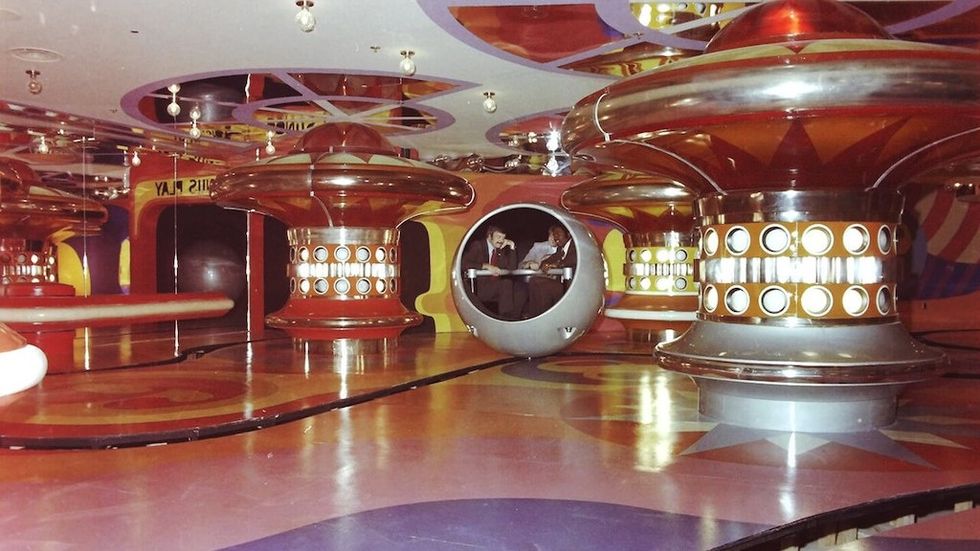
Inside The World of Sid and Marty Krofft
Perhaps one of the most unique attractions ever built is housed in the same building that once served as CNN's headquarters, the Omni International complex.
The idea of building an indoor theme park was new, especially when the plan was to put it inside a massive tower in downtown Atlanta in 1976.
The park’s concept and theme came from the Krofft brothers, at the time known for creating 70’s psychedelic live-action kids' shows like H.R. Pufnstuf, The Bugaloos, Lidsville, Sigmund and the Sea Monsters, Land of the Lost, and more.
The highly ambitious park project, built in a high-crime climate of 1970’s Atlanta, failed to attract the attendance they had hoped for and was suddenly closed down for good just 6 months later.
3.Hard Rock Park - Myrtle Beach, South Carolina, USA
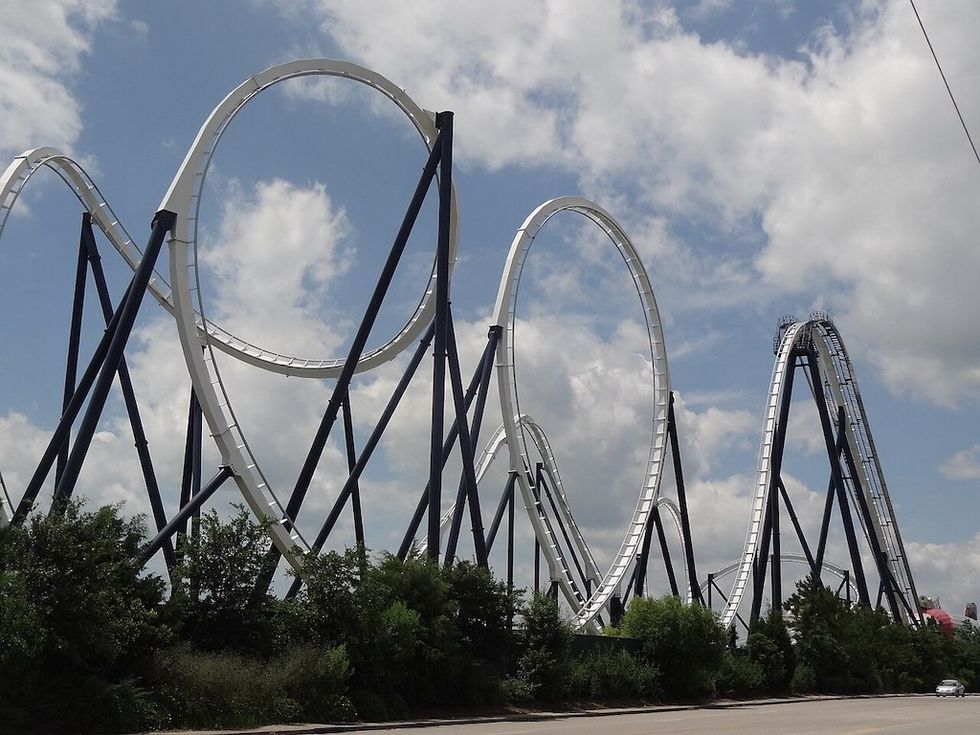
Freestyle Music Park in 2013
Image credit Martin Lewison, CC BY-SA 2.0 <https://creativecommons.org/licenses/by-sa/2.0>, via Wikimedia Commons
A park built entirely around the idea of rock music sounded like a huge hit on paper. Tie it to the well-known Hard Rock restaurant brand, which had also begun branching out into casino and hotel resorts, and this seemed like a concept that would work just about anywhere!
Except it didn’t. The reality was that very poor timing essentially doomed the park before it could even open the doors.
Construction delays pushed back the park's grand opening until 2008, which ran smack dab into the financial crisis of 2008 that began in the US and eventually spread, causing chaos and uncertainty throughout financial institutions around the globe.
Struggling with debt from cost overruns, the park was then met with very weak attendance.
Built in the popular and tourist-heavy coastal city of Myrtle Beach, it seemed like a location that was also perfect, but the normal travel patterns of the tourists visiting the area typically involved visiting the beach, golf, or fishing trips in the morning, breaking for lunch, and then setting off into the town for afternoon and evening adventures.
Unfortunately, a typical high-priced all-day theme park ticket did not work, as many would have preferred to pay half price to visit in the late afternoon or evening instead.
Quickly running out of money, Hard Rock Park turned to the banks for additional loans to keep the park running and to fund some advertising, as it had blown through its advertising funds to finish the park.
Due to the financial crisis, banks turned off the taps and suddenly became unwilling to lend to most projects.
While Hard Rock Park had hoped to stay open into the fall and host a Halloween event, it instead had to close at the end of the summer and file for bankruptcy.
The park itself was purchased by a new foreign interest that had to remove all Hard Rock branding and rename it Freestyle Music Park.
While the park was able to reopen and run for one more season, these efforts were not enough to save it, and it closed down yet again, with all rides and other valuable assets quickly liquidated.
Today, there is very little left of what was once an idea that seemed like it just could not fail.
2.Wild West World - Park City, Kansas, USA
Designed to be a premier themed destination near Wichita that would feature Western-themed rides and roller coasters, the downfall of Wild West World happened so fast that if you blinked, you might have missed it entirely.
The park opened on 5 May 2007, and right from the start, it suffered from attendance issues. Without bodies going through the turnstiles to generate revenue, the park quickly depleted the cash and credit it had left over from the costly construction.
By 9 July 2007, just two months and four days later, the owners of Wild West World had already been forced to file for bankruptcy.
The park’s demise was a perfect story of environmental bad luck mixed with the right amount of catastrophic financial mismanagement.
Over the two-month period, the weather in Kansas could not have been worse.
The day before the park opened was also the day that an F5 tornado essentially leveled the town of Greensburg, located just about 100 miles away from the park.
This left the local citizens in a grim, bitter state of mourning, in which visiting a new theme park was not really on most people's agenda.
If that wasn’t enough, of the park’s first 60 days of operation, it has been said that 50 of those days featured rain or other severe storms passing through the area.
Perhaps the most “scandalous” reason behind the park’s failure did not come to light until well after the park had closed for good.
It was revealed that the park's owner, Thomas Etheredge, was also a convicted felon who had served time for securities fraud in the 1980s, and that he had raised about $800,000 for the park from his church congregation.
By 2010, Etheredge had been convicted of seven counts of securities fraud related to the failed theme park and sentenced to five years in prison.
Given just how new everything in the park was, all of the equipment and features were quickly auctioned off, and the site was cleared, leaving no trace of the former theme park that once stood there.
1.Star Wars: Galactic Starcruiser - Orlando, Florida, USA
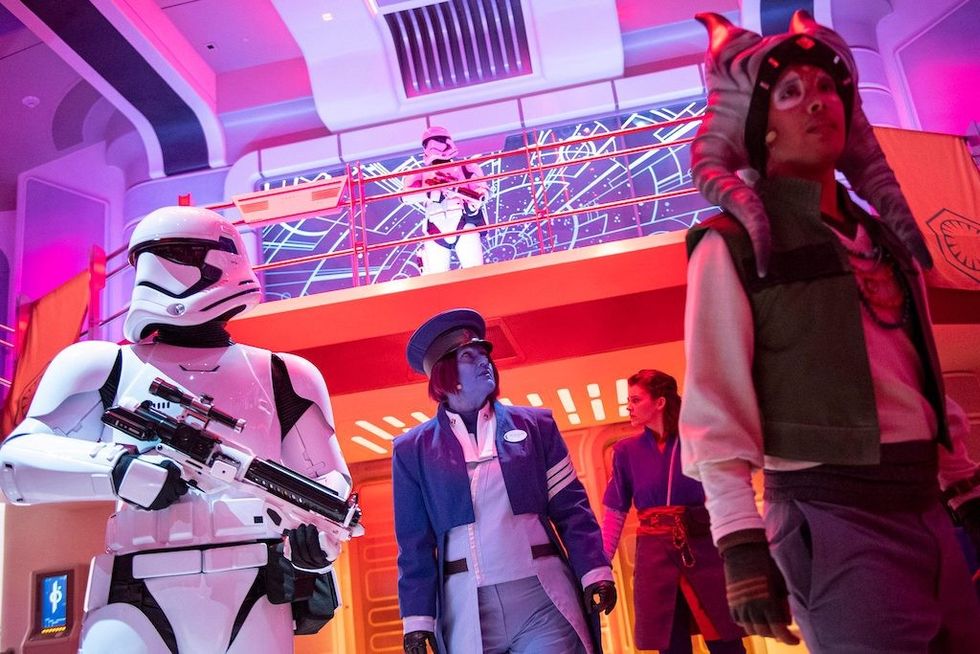 Star Wars: Galactic Starcruiser
The closure of the Star Wars: Galactic Starcruiser after just 18 short months (March 2022 to September 2023) remains one of the most significant and expensive "failures" in Disney’s modern history.
While the experience itself received high marks from most participants, the business model collapsed under the weight of its own ambition.
There were several major factors that led to the sci-fi faux-cruise experience not succeeding as Disney had hoped, but perhaps the most obvious was the staggering cost. A standard two-night "voyage" for a family of four typically started around $6,000.
This cutting flaw was one that even most of Disney’s most loyal fans were unable to overlook.
Once the “die-hard” wealthy fans and influencers had visited the Galactic Starship over the first year, attendance died down, and the attraction no longer had a sustainable queue of customers (repeat or new) able to justify the expense.
The numbers required to keep the Starship running compared to the actual guest capacity didn’t quite work out in the end. The Starship was designed to operate more like a giant immersive theater production rather than the hotel that it was.
As a result, it required a massive cast of actors, as well as basic “crew members,” to maintain the “living story” atmosphere running 24/7.
Meanwhile, the Starship had only about 100 actual guest cabins, while real-world cruise ships today often have between 1,000 and 3,000 cabins, which limited how much revenue could be generated per “voyage” while still requiring a very high fixed cost to operate as designed.
In the end, Disney chose to close the Galactic Starcruiser and use it as a tax write-off to claim accelerated depreciation benefits, which were reported as worth upwards of $250-300 million.
In short, it became far more profitable for Disney to shut it down for good and take the tax write-off now, rather than wait and let it slowly dwindle away.
So what lessons have been learned from these failures?
The old adage that “timing is everything” holds very true. Hard Rock Park and Evermore Park didn’t fail entirely because the concepts were flawed.
Hard Rock folded because it opened during one of the world’s most severe economic collapses. Evermore Park ran smack into the COVID pandemic, and Six Flags New Orleans had the misfortune of being wiped out by one of the most devastating hurricanes to make landfall on the continent.
Had any of these projects opened at a different time, they might still be operating today.
Ironically, failure in this industry is a common event… but when one project falls, the others typically learn from their missteps, making the projects that follow far less likely to fail.
Otherwise, when a theme park falls, they typically leave behind a rather large mess, millions in lost expenses, and many lessons that the industry ignores at its own peril.