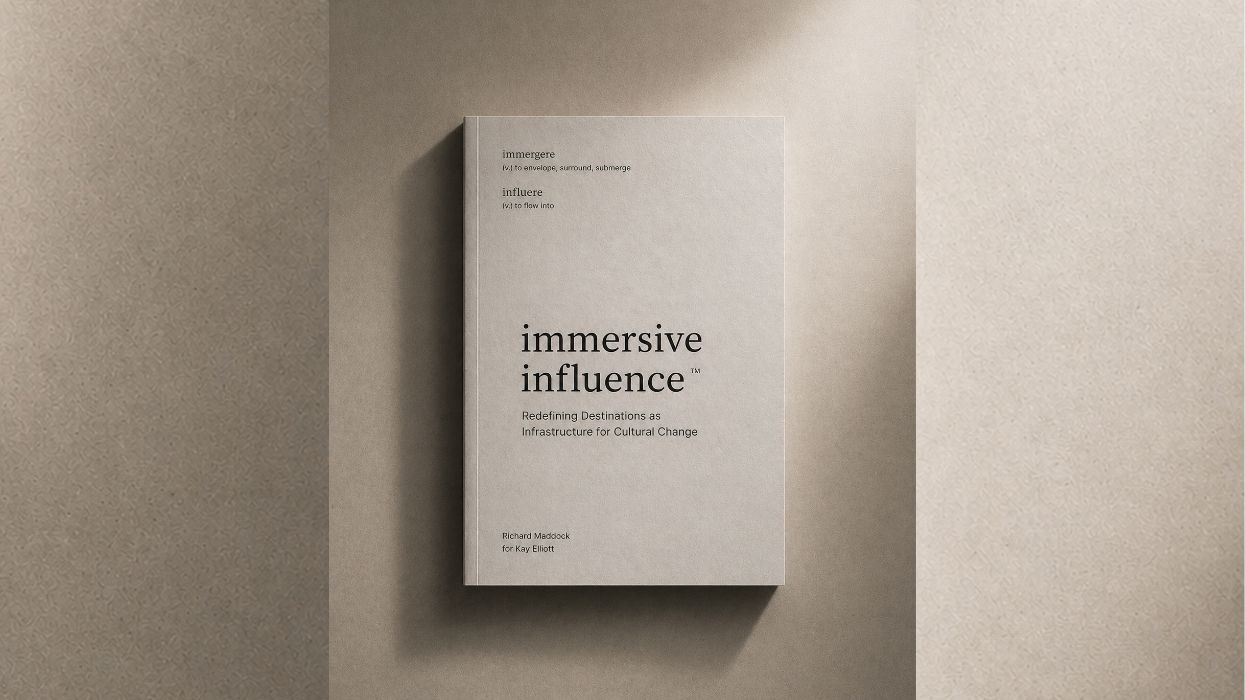
Kay Elliott, destination architect and masterplanner, has published Immersive Influence, a whitepaper by director Richard Maddock.
This paper argues that experiential destinations occupy a unique position: the meeting point of the highest forms of economic value, the deepest leverage for systemic change, and the primary mechanisms through which culture spreads.
The case is built on three independent bodies of thinking, each of which describes what experiential destinations fundamentally are from a completely different direction.
These include Pine & Gilmore, who identify experiences and the transformations they can produce as the highest forms of economic value, and Donella Meadows, who considered paradigm shift — changing what people believe is normal — as the deepest leverage point in any complex system.
It also looks to evolutionary anthropology, and its focus on emotionally resonant, shared, embodied experiences as a primary mechanism through which ideas and behaviours spread through human populations.
Experiential destinations deliver all three, simultaneously, and at scale.
This paper argues that the sector has been operating at this convergence for decades, without ever fully recognising the implications.
See also: The Fulfilment Gap & why closing it may become the defining advantage for destinations
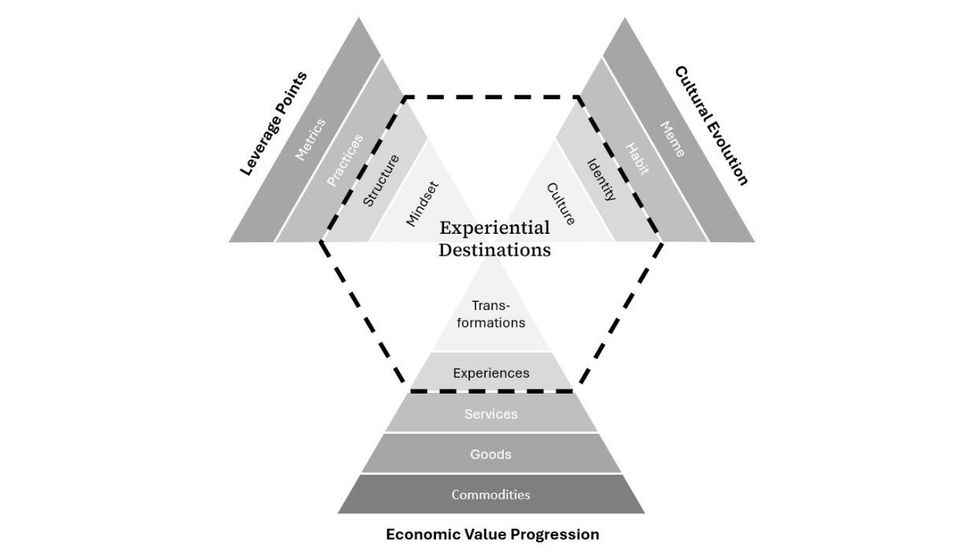 The ‘Immersive Influence’ framework, visualising the convergence of systems thinking leverage points (adapted from Donella Meadows), economic value progression (Pine & Gilmore), and mechanisms of cultural evolution (building on work by Dawkins, Boyd, and Richerson)
LBE alone is projected to grow from $4.5 billion in 2023 to over $73 billion by 2034, nearly ten times faster than the global economy.
A sector scaling at this pace does not simply reflect culture; it actively shapes it. What gets designed into these experiences is therefore not simply an aesthetic decision, it is a strategic one with systemic consequences.
The Immersive Influence whitepaper is available to download here.
The argument
Destinations already change people. Every theme park, zoo, museum, and stadium shapes what guests feel, remember, value, and carry home through story, space, emotion, and shared experience.
That influence is not hypothetical, says Maddock. It is operational, continuous, and real.
This paper argues that the sector has already demonstrated this capability repeatedly — but has rarely framed or applied it consciously. Once it does, what becomes possible?
Immersive Influence moves from proposition to practice, introducing a design sequence and change model tested against real destinations that have already demonstrated the mechanism without ever formally naming it.
The climate crisis is the primary proof of concept, demonstrating both the failure of information alone to change behaviour and the scale of influence possible when immersive environments consciously step into that gap.
The reception
Immersive Influence's launch was hosted by The World Experience Organization (WXO) at London Experience Week in April 2026.
James Wallman, WXO CEO, says: "I founded the WXO not just to connect experience makers, but because I believe experiences can help create a better world — to make good experiences popular, and popular experiences good.
"Richard Maddock’s Immersive Influence puts the intellectual architecture around that instinct. Theme parks, attractions, and immersive destinations are already enormously popular.
"If they can also become forces for positive transformation, they won’t just entertain millions — they’ll help fulfil the deeper promise of the experience economy, and perhaps even the original dream of one of its pioneers, Walt Disney."
The response since launch has been immediate, wide-ranging, and notably cross-sector, spanning design, technology, academia, and government. This breadth reflects something the paper itself argues: that the convergence it describes is structural rather than sector-specific.
B. Joseph Pine II, author of The Experience Economy and The Transformation Economy, says: "As the world shifts from the Experience Economy into the Transformation Economy, Richard Maddock identifies a key element that businesses need to embrace: intention.
"Experiences already have tremendous influence on people, and that transformative power can be used for good or ill depending on exactly what intention — or lack of one — is brought to the experience.
"May your intention always be related to fostering human flourishing in the world."
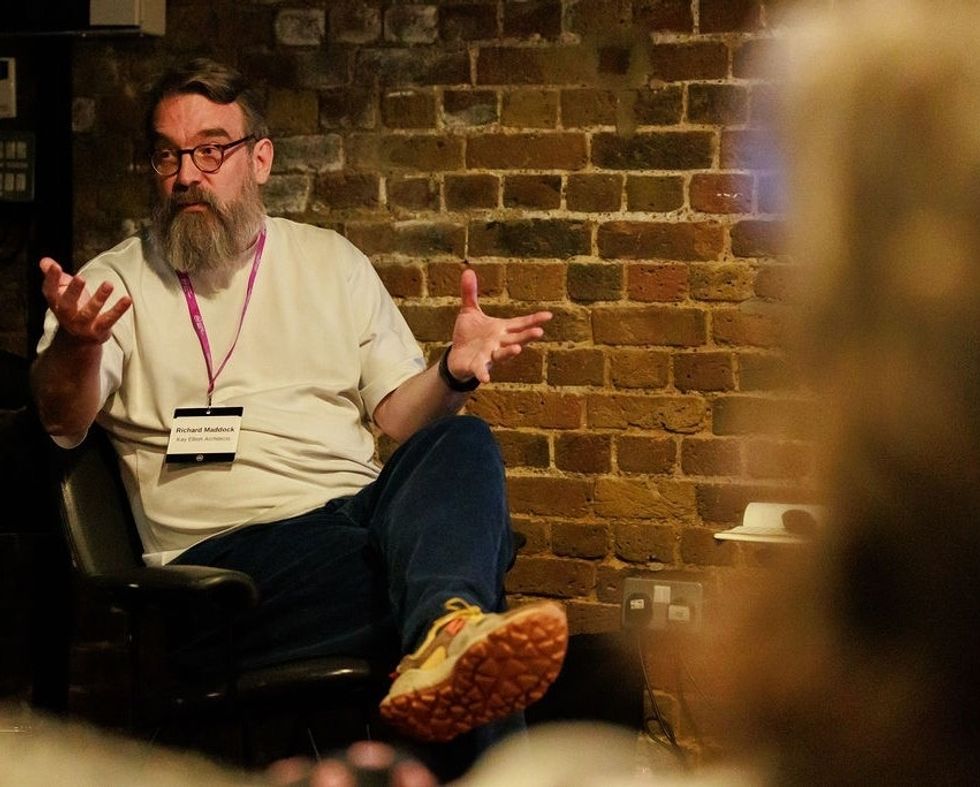
Richard Maddock, Director at Kay Elliott, presenting the Immersive Influence proposition at its launch during London Experience Week, April 2026
Copyright Alistair Veryard
“Destinations don’t need to learn how to move people," says Maddock. "That capability already exists, built and operating at scale across every theme park, zoo, museum and cultural attraction on the planet. What has been largely missing is the intention.
"Growth isn’t the problem. Growth without intention is.”
What comes next
The whitepaper is the third in a sequence of published works establishing the intellectual foundations of this proposition.
Kay Elliott is currently piloting a diagnostic methodology with select operators, building directly on the Immersive Influence proposition. Further details will be shared later in 2026.
Earlier this year, Kay Elliott shared details of its approach to helping operators in the LBE industry deliver more as they face pressures to raise revenue per guest, improve visitor flow, increase dwell times, and demonstrate greater operational resilience, increasingly without significant new CapEx.