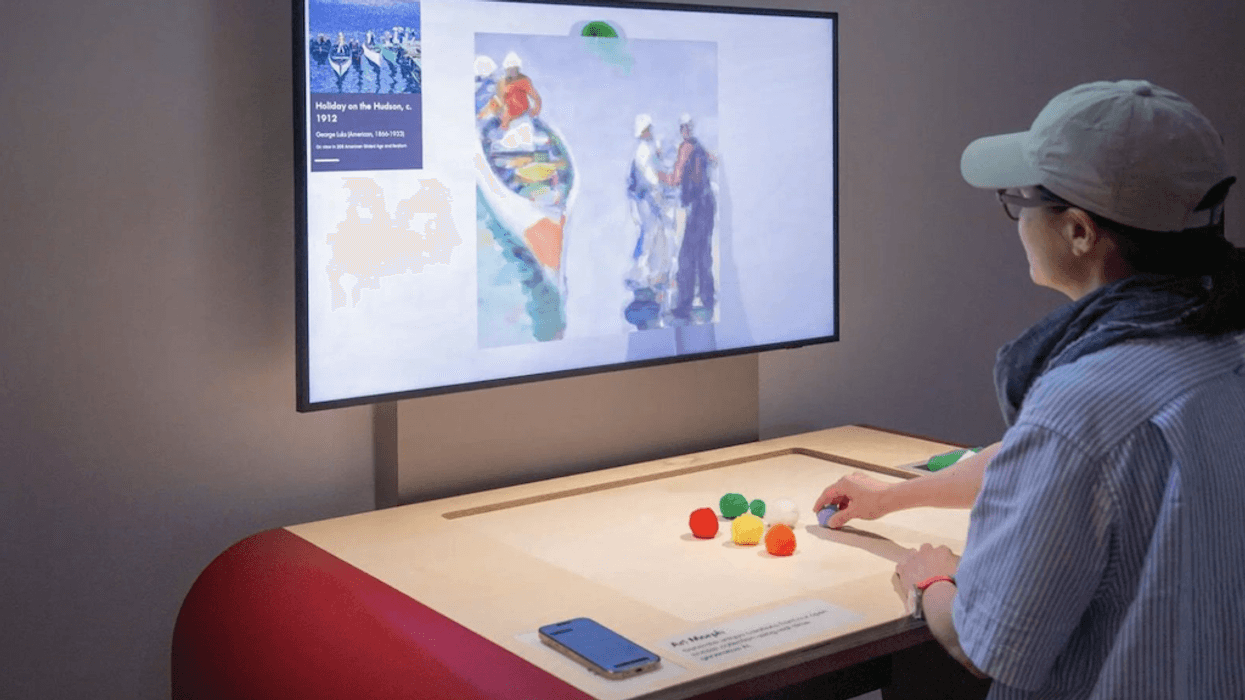

Dpt., an international experiential design and production studio, is sharing insights into Hands-on Hallucinations, an ongoing R&D exploration led by Hugues Bruyère, the company's chief innovation officer.
It started with paper, clay, and objects arranged before a camera, transformed in real time by an image-to-image diffusion pipeline powered by SDXL Turbo. Each gesture prompts an instant visual response, making generative AI a hands-on, responsive medium rather than one guided by text prompts.
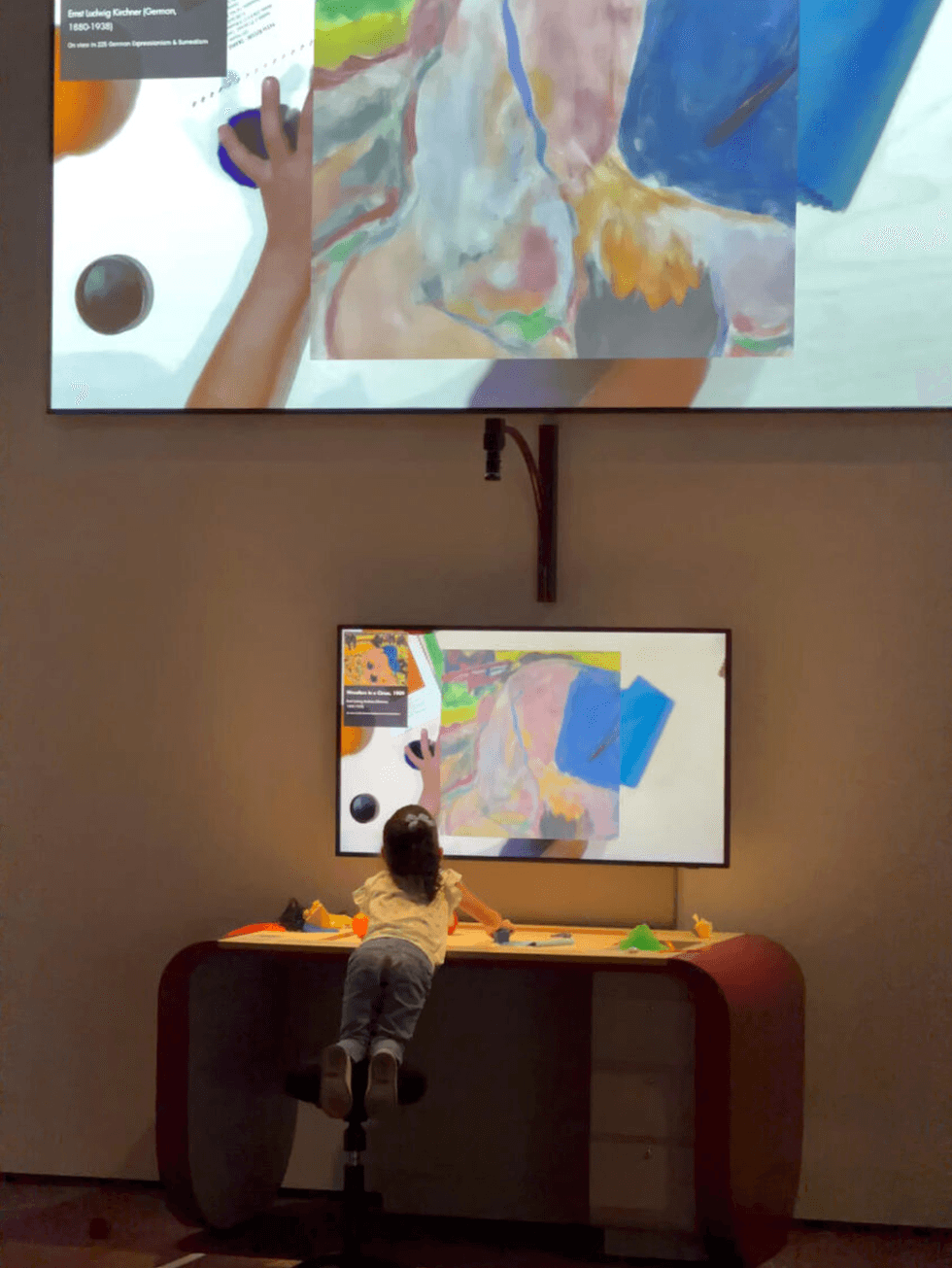
A young visitor getting hands on with Art Morph at Cleveland Museum of Art
Physical interaction is also a form of inquiry: a way to explore how the system behaves and where its limits lie. That research has now led to two museum projects.
“Hands-on Hallucinations started as a very open-ended exploration," says Bruyère.
"I wanted to see what would happen if we moved away from prompting AI with words and instead interacted with these models physically, with our hands and with real objects.
"There was no specific application in mind at the beginning. It was really about experimenting with the technology, understanding how it behaves, and discovering what kinds of interactions could emerge from it.
"What’s exciting is seeing that research now take very different forms, from an artwork at SFMOMA to an interactive experience at the Cleveland Museum of Art.”
Art Morph, Cleveland Museum of Art
The Cleveland Museum of Art has reconfigured its interactive gallery as ArtLens Reimagined, featuring 21 new experiences inspired by its permanent collection.
The museum and Design I/O led the project, and Dpt. collaborated with Design I/O on two of the installations.
Art Morph grew out of Hands-on Hallucinations. Visitors place fabric, paper, or everyday objects on a platform, where AI transforms them in real time into original artworks inspired by the museum's Open Access collection. The image changes with each gesture, and the materials are refreshed regularly to keep the installation evolving.
The Latent Space, SFMOMA
In November 2025, Bruyère collaborated with Mexican photographer Alejandro Cartagena on The Latent Space, a live performance artwork projected on a large scale at SFMOMA. The work begins with a question: What does it look like to dream of a home?
Custom LoRAs trained on Cartagena's photographs of homes and suburbs shape the pipeline’s aesthetic, while visitors influence the images by handling objects.
The work examines representational bias in training data and contemporary Mexico’s ideal of homeownership.
What's next?
For museums, this creates new possibilities for technological mediation. Rather than relying on screens to explain a collection, visitors can immerse themselves in it—handle materials, explore a style or period, and interact with responsive environments—then leave with a world they helped create.
Generative AI can bring people into the creative process behind the works, rather than serving as mere spectacle.
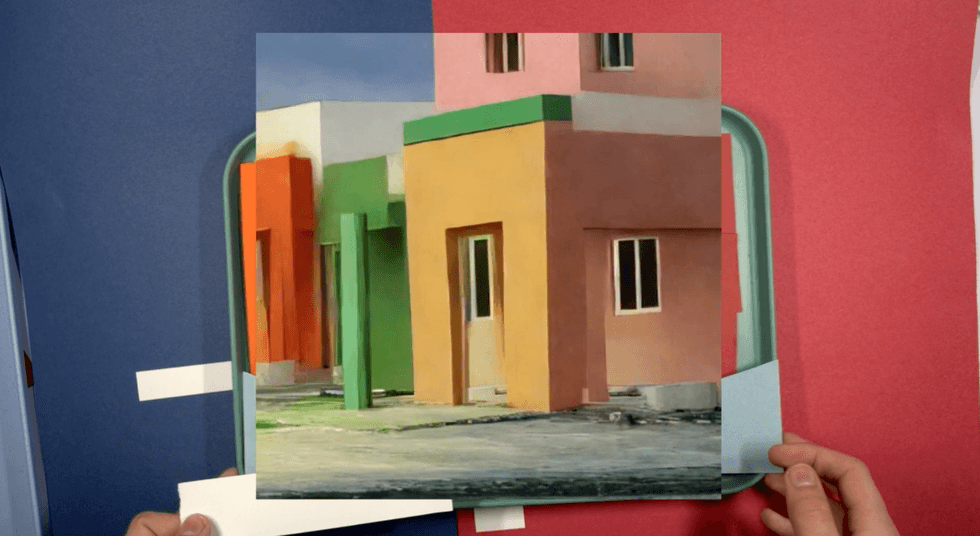 The Latent Space, SFMOMA
As these tools evolve, they can support collection-based experiences, workshops, and educational programmes that make art more accessible to all audiences.
Hands-on Hallucinations is an ongoing research project, and the team at Dpt. will continue to explore new models, interactions, and output formats, investigating how these technologies can feel more immediate, tangible, and intuitive.
"Art Morph and The Latent Space are two very different projects built on the same foundation," the studio adds.
"That is also part of the value of doing open-ended R&D: you don’t necessarily know where an exploration will lead when you begin, but the knowledge and tools are there when the right project, artist or institution comes along."