To understand Dream Garden Amusement, founder and CEO Stefan Zhang (Yucun Zhang) says it is necessary to begin not with a factory floor, a product catalogue, or a list of international projects, but with Wenzhou itself.
The city, located near the East China Sea, is part of China's coastal region. Yet it is not a conventional port city like Ningbo, nor does it possess the provincial capital's resources and deep historical-cultural profile of Hangzhou. Wenzhou is surrounded by mountains, with limited flat land.
For Zhang, that geography has shaped a particular temperament: pragmatic, self-reliant, and willing to take risks.
Many Wenzhou people left to start businesses elsewhere. Many others stayed and built industries locally. What emerged was not a top-down industrial story, but a dense private-sector ecosystem driven by small companies, family workshops, flexible capital and entrepreneurial instinct.
“Many things had to be achieved through self-reliance,” Zhang says. “It was against this background that Wenzhou developed a highly concentrated private-sector industrial ecosystem.”
The Wenzhou model
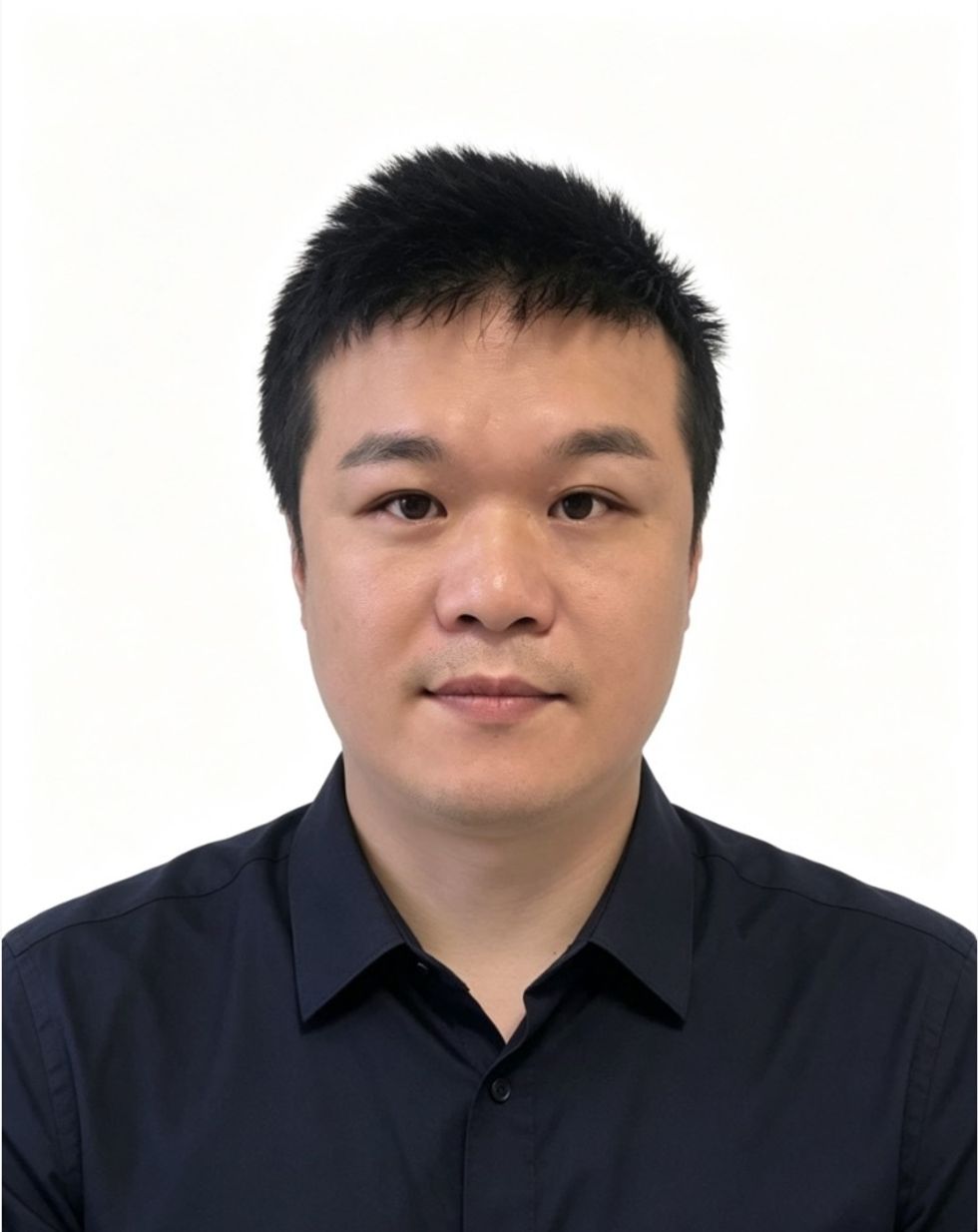
Dream Garden's founder and CEO, Stefan Zhang (Yucun Zhang), says the company has been shaped by its origins in Wenzhou, China
This context is important because Dream Garden's story is also part of a broader economic history.
During the early period of China's reform and opening-up, Wenzhou became associated with what came to be known as the “Wenzhou Model”. In the early 1980s, before China had fully established a market economy system, the region saw the emergence of large numbers of small enterprises and individual businesses.
The Wenzhou Model differed from two other major regional models of early reform-era China. The Southern Jiangsu Model relied more heavily on collective economic structures, while the Pearl River Model was driven by foreign investment.
Wenzhou, by contrast, depended on private capital, grassroots market vitality and a culture of mutual support among entrepreneurs.
In 1985, the term “Wenzhou Model” first appeared in Jiefang Daily.
It has also been described as a “fishing-school economy”: countless small factories and workshops that grow flexibly, move quickly, and form complete industrial chains through collaboration.
Qiaoxia Town developed within this environment. Over time, it became one of the most concentrated areas for China's amusement and play equipment industry, with a complete ecosystem spanning manufacturing, components, accessories and supply chains.
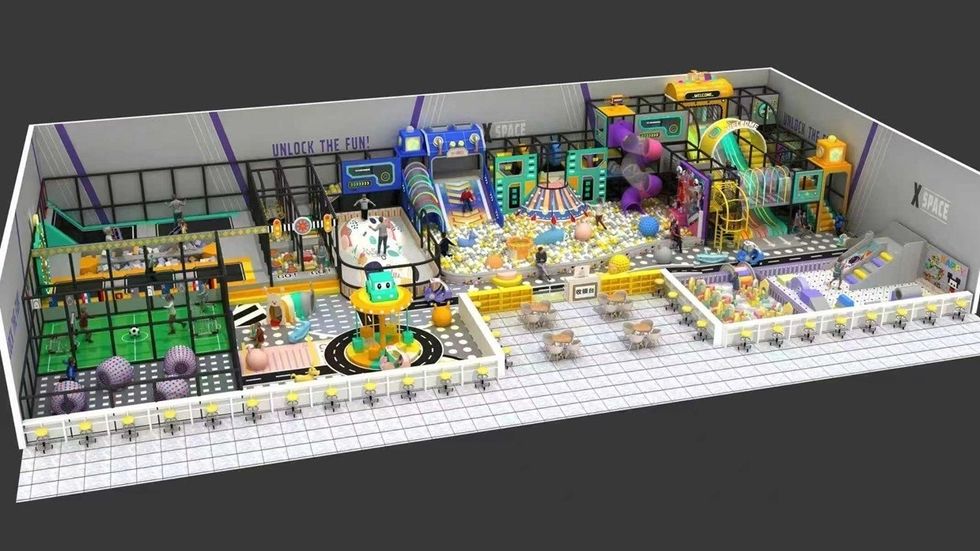
Dream Garden designs and produces all of its indoor and outdoor playground equipment at its advanced in-house facility
Image courtesy of Dream Garden
Dream Garden grew from this same background. Its roots go back to Zhang's parents' generation, beginning with small children's toys such as rocking horses and fibreglass products.
At that time, there was no e-commerce infrastructure and no mature online sales channel. Products were sold through persistence: carrying catalogues, visiting potential clients and building relationships one by one.
“It can be understood as starting from a very small family workshop,” Zhang says.
From family workshop to international business
As the local industry developed, many family workshops gradually became companies. Local government support helped establish markets and promote greater standardisation.
Companies began to develop their own platforms and, crucially, their own sense of brand.
For Dream Garden, this was a formative moment.
Zhang says the company began to realise that Chinese manufacturing could do more than supply products. It could build international relationships, communicate its value, and participate more deeply in global projects.
At the time, some larger companies in the sector had already begun going overseas.
Their methods were often direct: setting up distributors in specific regions, establishing branches in markets such as the United States, or hiring local teams.
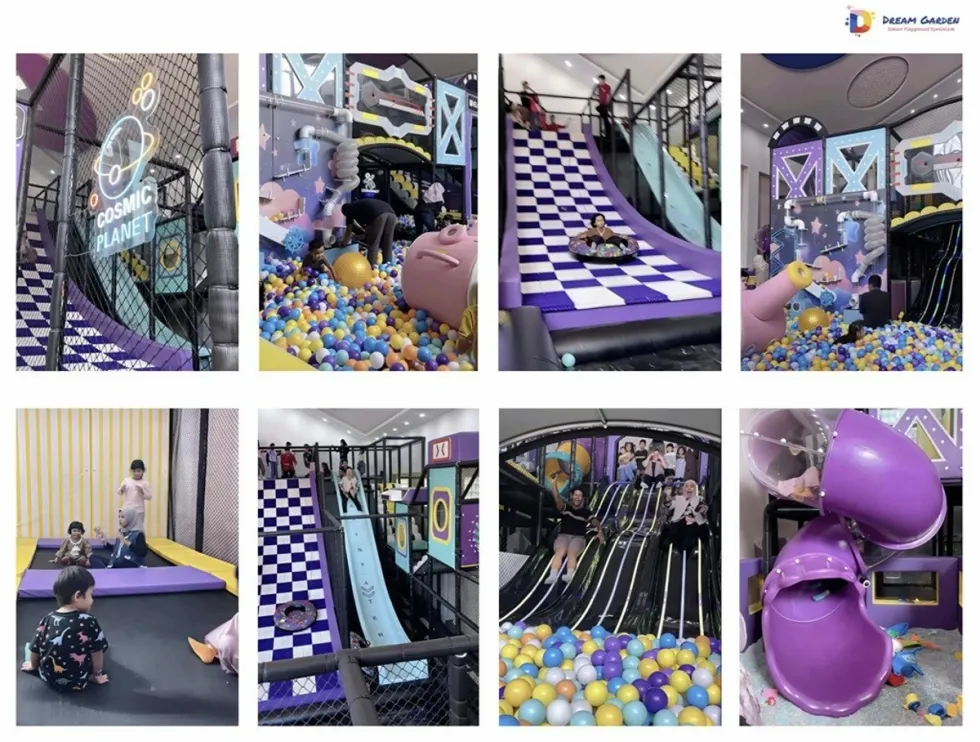
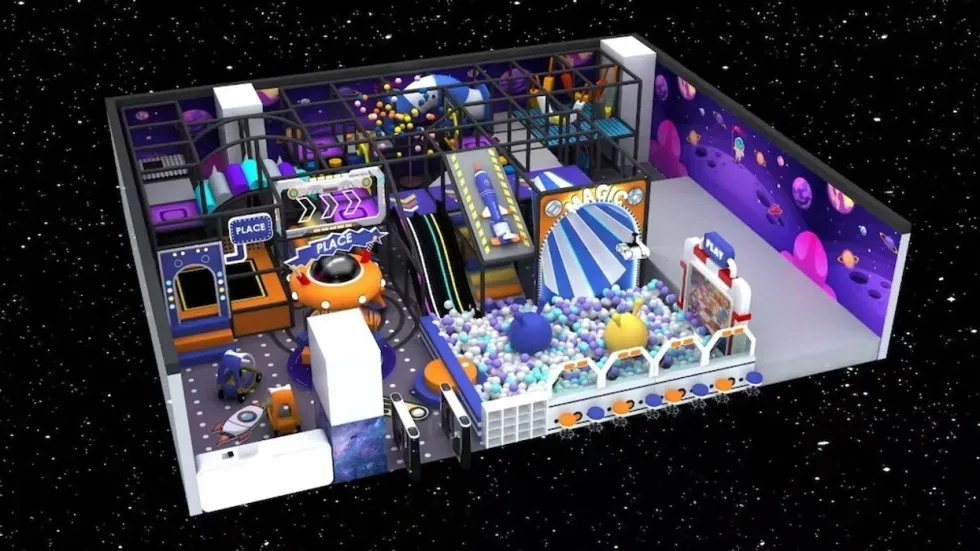
Cosmic Planet in Indonesia is a space-themed indoor playground with futuristic aesthetics and engaging soft-play elements
These early trailblazers helped create an industry-wide awareness that Chinese manufacturers could not remain dependent on the domestic market alone.
“Gradually, a consensus formed within the industry: Chinese manufacturing had to go global.”
Dream Garden also recognised the vulnerability of relying too heavily on China's domestic market, which could be affected by economic cycles and changing conditions.
After a period of hesitation and exploration, the company began to build its foreign trade capabilities, completing export procedures, improving certifications and developing an international business system.
In 2017, Dream Garden officially launched its export business. Today, according to company statistics, its business and projects cover nearly 100 countries, with thousands of overseas projects completed.
This is a story of growth. But Zhang is careful not to frame it purely as a story of scale.
For him, internationalisation is not simply about selling more products to more countries. It is about learning what it takes to be trusted in different markets, by different clients, under different expectations.
Beyond Made in China
The phrase “Made in China” has long carried a complicated set of associations.
For some international buyers, it has represented efficiency, scale and cost advantage. For others, it has also carried assumptions about standardisation, price competition or limited brand depth.
Dream Garden wants to challenge that perception. The company describes itself as a “Toymaker in China”, but Zhang's interpretation of that identity is broader than manufacturing.
He wants Dream Garden to represent a new generation of Chinese companies capable of combining production expertise with creativity, safety, service, cultural awareness and long-term responsibility.
In this sense, brand-building is not a decorative layer added after manufacturing. It is part of how a company defines its values and how it behaves in the market.
For Chinese manufacturers going global, this shift is increasingly important. Cost advantage may open doors, but it does not automatically create loyalty. Long-term international business depends on trust, clarity, consistency and reputation.
Zhang argues that many companies still focus mainly on the product itself and pay little attention to brand stories or values. He sees this as a limitation.
Brand values, he says, influence product design, company culture and long-term development. They also help the company better understand different countries, cultures, and users.
“Brand values influence product design and the future development of a company. They become integrated into every aspect of the business.”
The practical work of trust
In international markets, trust is not an abstract term. It is built through daily operational detail.
Dream Garden's projects typically begin through online or offline enquiries, or through clients approaching the company directly.
At the initial stage, the team collects basic information: site size, ceiling height, country or region, and surrounding environment.
It then conducts preliminary market research, examining whether the site is close to residential communities, schools, or kindergartens, whether nearby facilities are well developed, and whether similar venues already exist in the area.
From there, Dream Garden provides initial feedback on themes, positioning and issues the client may need to understand.
Budget is another key part of the discussion, since clients in different countries often have very different cost expectations. Zhang says detailed and transparent quotations help clients understand the cost structure behind different options.
The company also considers the purpose and setting of each project.
A family entertainment centre in a shopping mall requires different thinking from a standalone attraction. A commercial venue differs from a government or public-benefit project.
Dream Garden has worked on projects including rehabilitation centres for children with special needs and play facilities within children's dental hospitals.
In these cases, the emphasis is often less on profit and more on function: whether the product can support children's development and help the client serve them more effectively.
This is where localisation becomes central. Some clients want IP collaborations or the application of their own IP. Others are planning future chain expansion and want to create a scalable branded space from the first location.
Installation can also vary by market. Dream Garden may send teams from China or work with long-term local installation partners in regions such as Portugal, Spain and the United States.
“The most important point in cross-border trade is trust,” Zhang says. “The foundation of trust is whether you are genuinely able to think from the client's perspective.”
That perspective can be highly specific. It includes whether the number of toilets is sufficient, if visitor flow can be managed during peak holiday periods, if F&B provision is reasonable, if fire exits meet requirements, and if the product complies with safety standards.”
Dream Garden works with international standards such as ASTM, TÜV, EN1176 and CSA.
But Zhang stresses that professional capability is not only about naming standards. It is about communicating them clearly, advising clients responsibly, and respecting the final decisions clients must make.
Designing for different cultures
Localisation also means understanding how children and families behave in different markets.
Zhang notes that children in European and American markets often prefer more exciting and thrilling experiences, while children in China and Southeast Asia tend to be more cautious and may prefer experiences that feel safer and less intense.
This observation is not about reducing ambition. It is about designing appropriately.
A successful FEC cannot simply export one model everywhere. It must consider safety, visitor behaviour, age group, operational needs and cultural expectations.
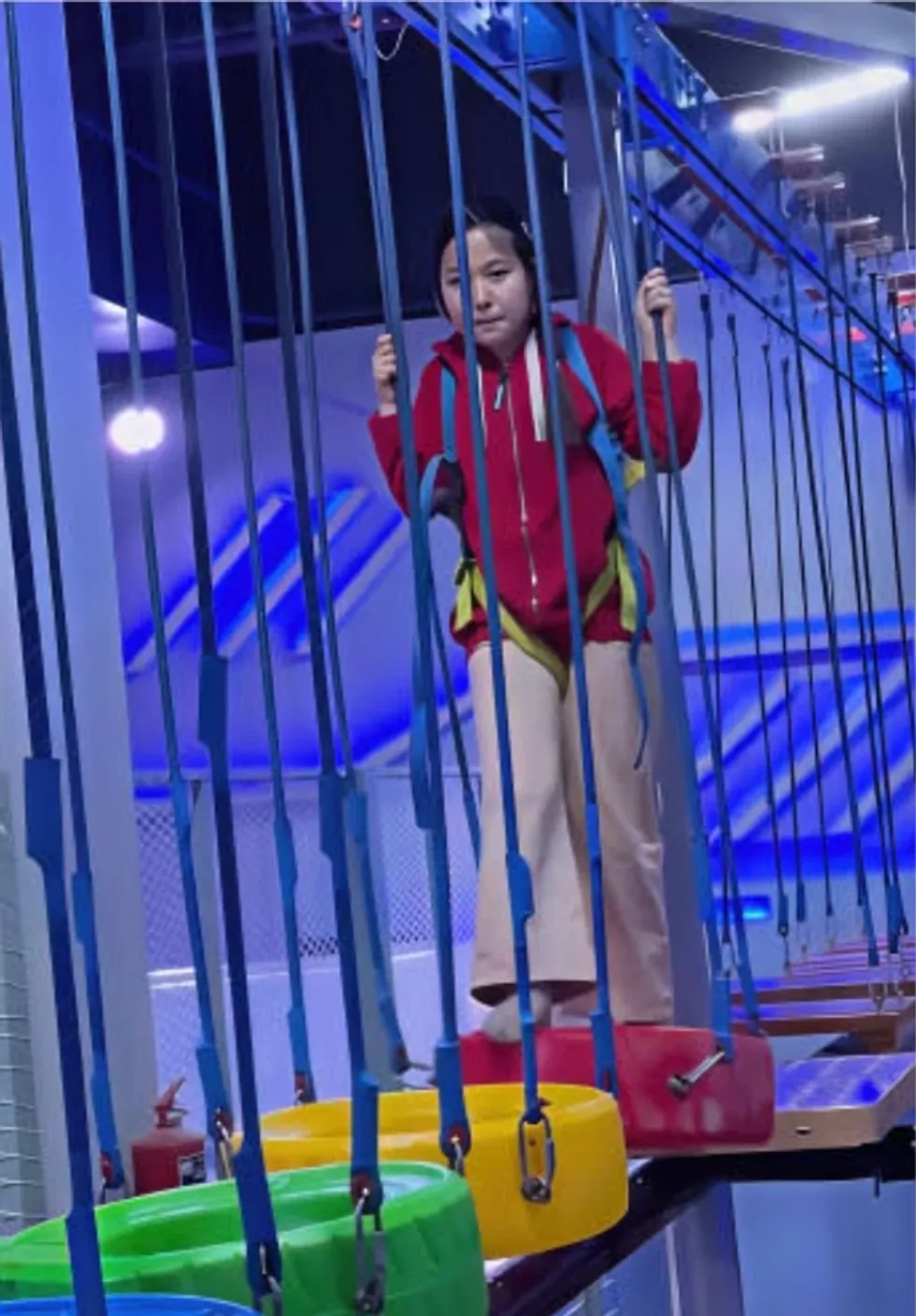
Dream Garden's mission is to bring happiness and creativity to every child through safe and imaginative play spaces
Image courtesy of Dream Garden
“We need to respect cultural differences, rather than forcing our own ideas into every market,” Zhang says.
This philosophy is also present in the company's manufacturing process. Dream Garden does not rely only on conventional quality inspections or spot checks. For large-scale equipment, it conducts full physical trial assembly before final production stages, such as painting.
This allows the team to verify structural accuracy, component matching and installation logic before shipment.
For customised projects, client-provided site dimensions may not always perfectly match real site conditions. Ceiling heights, column spacing or corner shapes can differ slightly. Trial assembly and detailed installation documentation help reduce uncertainty.
For international clients unable to visit the factory, video calls are used to show the assembled product before shipment.
“A design drawing and a fully manufactured product create very different impressions,” Zhang says. “Allowing clients to see the real outcome before shipment helps reduce misunderstandings and avoids gaps between concept and reality."
Manufacturing as an ecosystem
For Zhang, Dream Garden's strength lies not only in its factory but also in the wider ecosystem around it. A complete turnkey service creates a closed-loop system from upstream to downstream.
The tighter that loop becomes, the easier it is for teams to collaborate, control costs and improve efficiency.
This matters because an FEC is rarely a single product. It is a complex system involving hundreds of products and thousands of components. Design, manufacturing, installation, after-sales support, operational logic and supply chain coordination all have to work together.
The Qiaoxia industrial district's scale provides companies such as Dream Garden with access to a broader network of capabilities. Standardisation lowers marginal costs, improves efficiency and strengthens after-sales service.
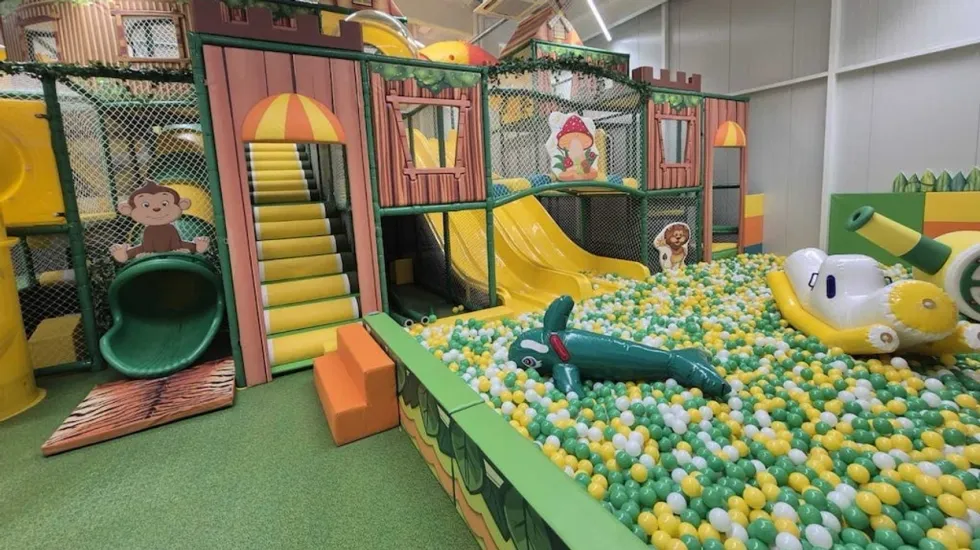
Designed and supplied by Dream Garden, a new indoor playground at Belamionix shopping complex in Zenica, Bosnia and Herzegovina, offers a fully themed indoor attraction that encourages longer stays in the mall
Image courtesy of Dream Garden
It also enables innovation through collaboration, not just within a single company.
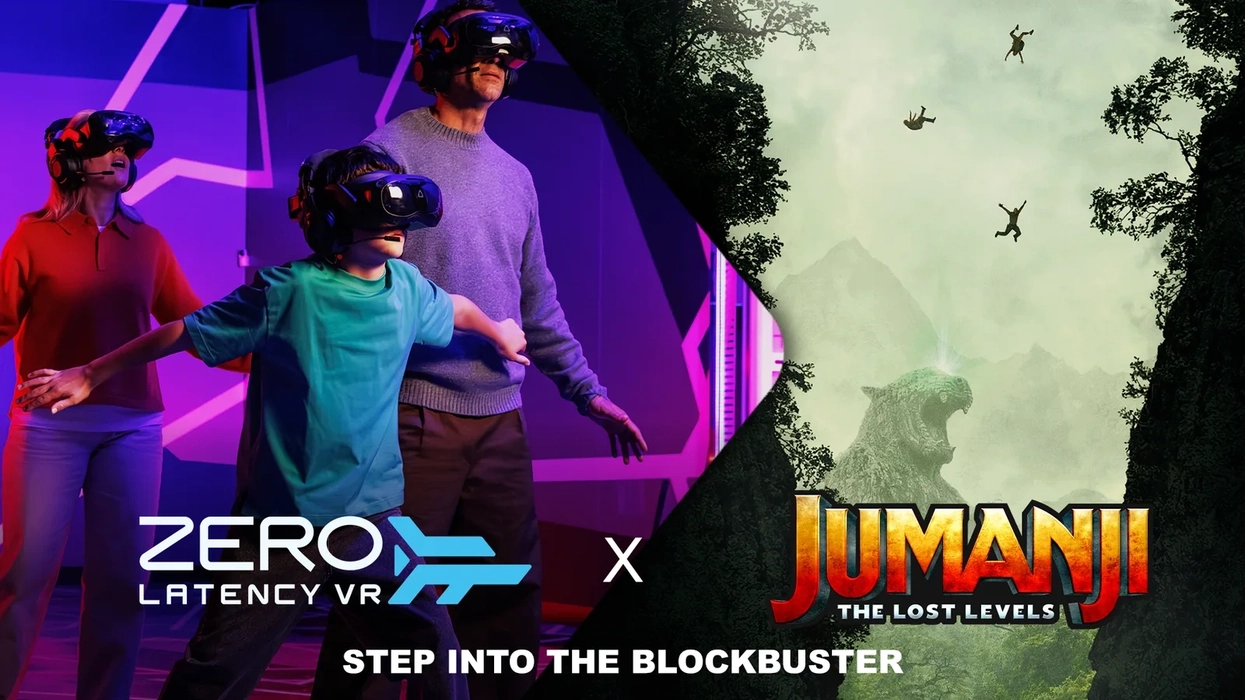
Dream Garden is exploring new technologies and interactive elements, including AR and VR, in line with client needs. It also works with neighbouring companies and wider industry partners to integrate products from other industrial clusters, such as VR wearable equipment from Guangzhou.
“Innovation does not only come from Dream Garden itself,” Zhang says. “It also comes from collaboration, from how different parts of the wider industry ecosystem work together to create better products.”
A brand with warmth
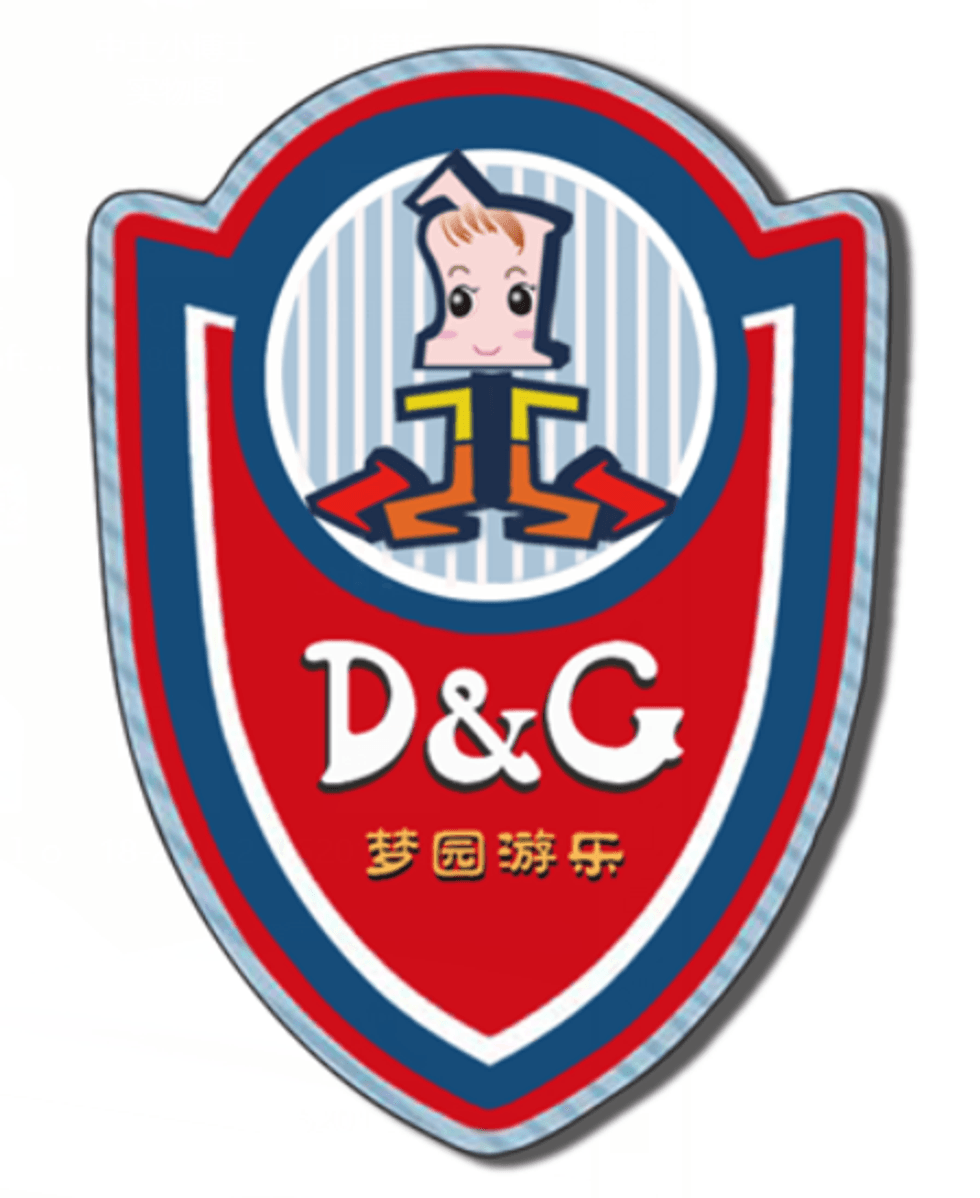
Dream Garden's former logo featured a shield, signifying the protection of childhood
The emotional centre of Zhang's vision is the idea that Dream Garden should become what he calls “a brand with warmth”.
Behind the company's name, he says, is a clear philosophy. Dream Garden once had a small shield-shaped logo, symbolising the protection of children's childhoods.
That idea remains important to the company's self-understanding. Dream Garden does not want to be seen merely as a producer of equipment. It wants to create experiences that support children's physical, psychological and emotional development.
Zhang speaks about this not only as a CEO, but as a father of two children. In a fast-paced and distracted world, he says, genuine companionship has become increasingly difficult. Communication between people has decreased, including between parents and children.
As children grow older, they gradually enter their own worlds. Before they become independent, however, parental companionship remains crucial.
For Dream Garden, a family entertainment environment should not merely be a space for children to expend energy. It should be a place where children and parents interact, where children communicate with one another, and where families create stronger emotional connections.
This is why Zhang does not want revenue to be the first question in the design process.
Commercial return matters, but it should be a natural gain after a good experience. The more fundamental questions are whether the experience is appropriate, whether it suits the intended age group, and whether it contributes to children's development.
“People know that we manufacture playground equipment,” he says. “But we do not want to be seen as simply a cold manufacturer.”
This line conveys the article's broader meaning. Dream Garden is still a manufacturing company. It still competes on product capability, safety, delivery and cost. But Zhang wants it to compete also on meaning.
For a Chinese manufacturer going global, this is not sentimental language. It is a brand strategy.
Resilience, AI and the long view
Dream Garden's future plans are grounded in long-term thinking rather than aggressive expansion.
Zhang says the company has been looking for opportunities to work on projects with greater social value, including potential collaboration with organisations such as UNICEF, where Dream Garden could provide equipment or projects that help children and communities in need.
He also connects the company's outlook with sustainability and industry responsibility.
He says this is an important reason Dream Garden chose to work with blooloop, citing the platform's focus on social responsibility, sustainability and positive industry impact.
At the same time, he is realistic about the pressures facing Chinese companies. The current business environment, international landscape and rapid technological change are creating new forms of uncertainty.
Dream Garden's indoor playground project at Alturas Mall in Guatemala is a fully themed children’s play environment supported by 3D visualisation, video presentations, and a coordinated social media launch.
Image courtesy of Dream Garden
AI is already affecting design, graphics, texture work, copywriting and other parts of the creative and manufacturing process.
The question for Dream Garden is how to adapt without losing its own identity.
“Our core objective is not simply rapid growth,” Zhang says. “What we really want is to establish deep roots - roots within this industry, within our own values, and within the long-term trust we build with our clients.”
For Zhang, resilience is not just about survival. It means continuing to create value, maintaining responsibility, and growing in a healthy, stable and sustainable way.
Dream Garden does not want to pursue superficial scale through short-term aggressive expansion. It wants stability, certainty and a form of growth that can last.
A different kind of globalisation
Dream Garden's story reflects a wider shift in Chinese manufacturing. The first stage of globalisation was often defined by cost, output and delivery capability.
The next stage is more demanding. It requires companies to build trust across cultures, communicate values clearly, understand global markets, and create brands that mean something beyond the product itself.
This is particularly important in the attractions and family entertainment sector, where products are not inert objects. They become places where families spend time, children test their confidence, operators build businesses, and communities gather.
A play structure is also a safety system, a social environment, a design language and a promise.
For Dream Garden, the power of “Made in China” lies not only in manufacturing capacity but in the ability to move from workshop to ecosystem, from supplier to partner, and from product to brand.
The company's challenge now is to make that transformation visible in international markets, to gradually switch the term to “Crafted in China”.
“There is still a long road ahead,” Zhang says. “But if, twenty years from now, we can look back and feel that the things we are doing today were meaningful, then that will be enough.”