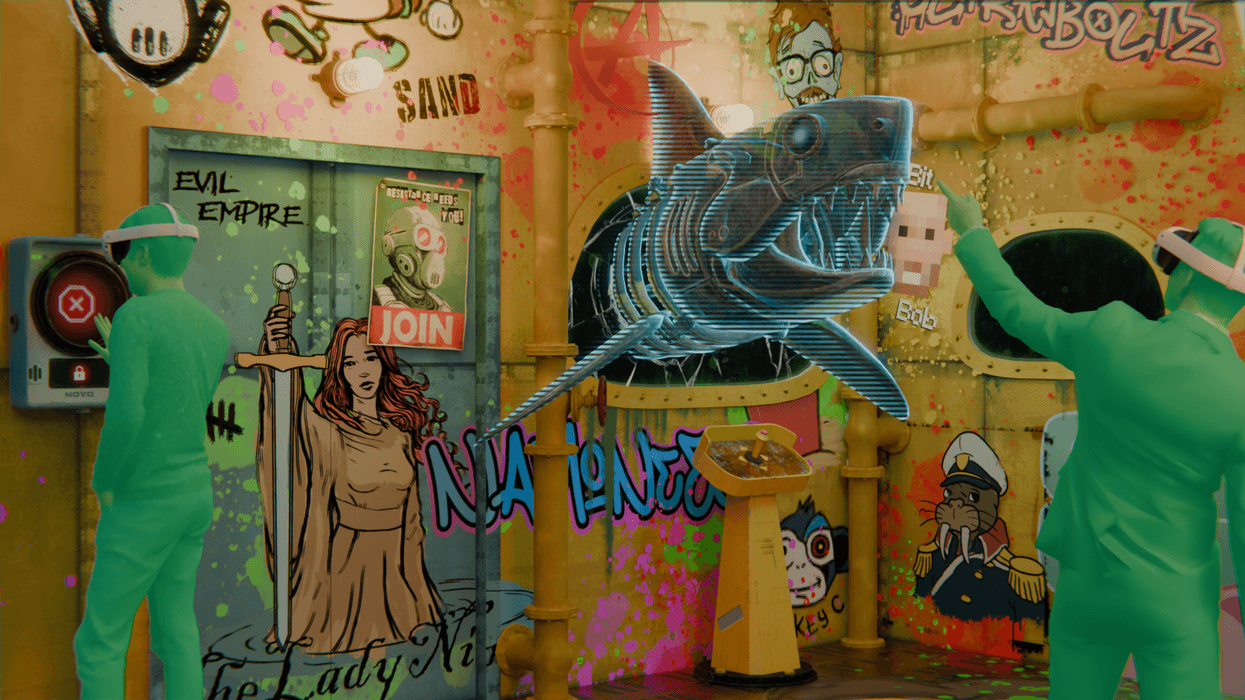

Hololabs Studio, a company specialising in creative technology for interactive attractions and immersive experiences, debuted Atrium at IAAPA Expo Europe in London last month, and now, as VR experts gather in Dallas for the LEXRA summit, founder Mike Wozniewski is explaining the philosophy behind this new format.
Demand for experiential entertainment is growing worldwide. From Las Vegas’s AREA15 to Netflix House’s recreations of popular series, audiences are seeking immersive destinations. Meanwhile, more powerful, accessible VR is available for larger groups and more venues, moving beyond dark arcades into premium experiences.
"Those new destinations need to solve a problem before they can fill their floors," says Wozniewski.
"Creators and operators of immersive experiences have all been circling the same three-cornered tradeoff: we want a high-throughput attraction, in a low physical footprint, with a high degree of immersion & interactivity."
Today’s free-roam VR venues have typically had to choose: they offer a dedicated, square-shaped space for interactive games, but each group occupies it for a long time.
"You can increase the square footage, but it becomes unmanageable unless you force guests through in a prescribed fashion, which can cause the experience to flatten into something that feels more like a tour, and less like an attraction."
Hololabs Studio believe there’s an alternative that keeps the interactive freedom of free-roam exploration, but in a format that encourages guests to move through space to reveal the next part of the narrative.
By incorporating theatrical sets into the experience, the attraction begins in the physical world, making the process of putting on equipment part of the story. Moving from room to room becomes an adventure, with guests eager to reach the next beat, culminating in a motion-based ride at the finale.
"We are calling this format Atrium, and we believe that it creates a new category of experience the industry has been missing," adds Wozniewski.
Beyond free-roam VR
A few years ago, "free-roam VR" wasn't even a phrase. Multiplayer gameplay brought guests together in location-based VR venues, creating a need to distinguish it from “room-scale VR,” where individuals play at home.
The social experience proved powerful and fun, leading to the rise of venues like Zero Latency and Sandbox VR. The category became easier to sell, finance, and build a supply chain around.
"We think we're at that same moment now, largely due to the quality of passthrough video on the newest standalone VR headsets. Guests can now see the physical world with such a high degree of realism that real and fantastical elements begin to blend in exciting ways.
"As creators, we can finally build premium immersive experiences around this technology. Coupled with the growing demand for immersive destinations, the economics are also in our favour as these experiences fit in the retail units that have been eluding warehouse-sized immersive attractions."
Introducing Atrium
Theme parks have solved problems VR still faces: guiding guests through narratives across physical spaces, building believable worlds with sets, props, lighting, and practical effects, and delivering physical payoffs through drops, launches, or precisely timed seat movements.
Atrium aims to bring that theme-park thinking to VR, explains Wozniewski: "It is, in the most useful sense, the dark ride reborn, capitalising on real sets and motion while adding the boundless capacity of VR to transport guests to new worlds.
"We say this as a studio that has, unusually, shipped both halves of this equation. We've built free-roam VR games such as Abyss: Vault, our location-based collaborative adventure for up to six players, and we've also helped build augmented reality dark rides like Mario Kart: Bowser's Challenge at Universal Studios.
"Almost nobody has done both. Atrium lives exactly at the seam between these, which is why it's the format we've spent years quietly preparing to build."
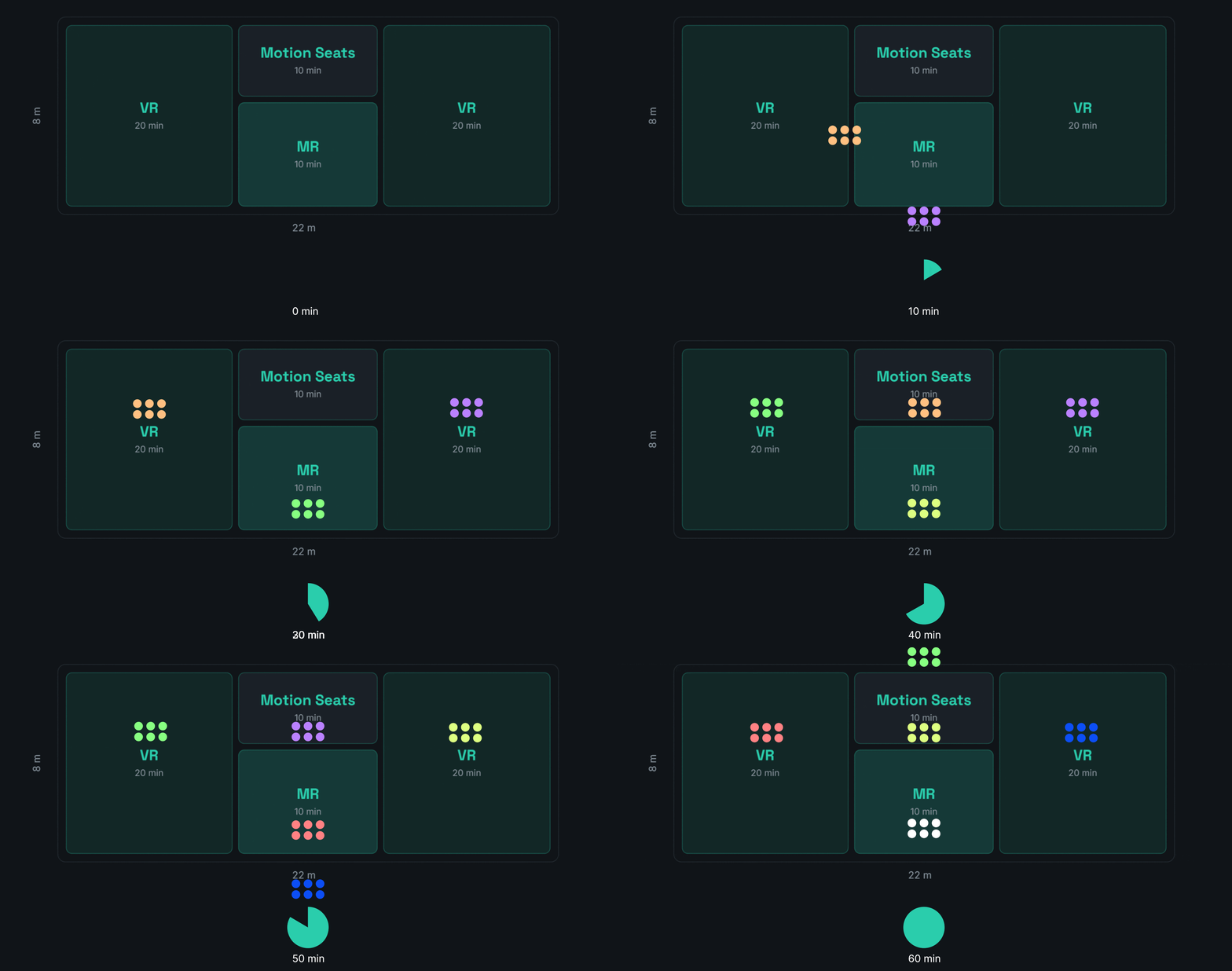 Demo of the room flow for the Atrium experience
Mixed-reality attractions can take many forms, but Atrium standardises the experience with a throughput-tuned room design and a show-orchestration system. Each Atrium deployment includes a four-room plan that fits within an 8-by-22-metre footprint.
The experience’s acts vary in length: its free-roam VR segment lasts about 20 minutes—twice the 10-minute group start interval—so Atrium runs two VR rooms in parallel, but only one room each for the shorter mixed-reality and motion-seat sections.
At steady state, four groups occupy different acts, advancing together every 10 minutes like a continuously loading dark ride. This delivers theme-park throughput in a retail-sized footprint, while giving guests a premium 40-minute experience.
Why mixed reality beats pure VR
"Set the creative argument aside for a moment and look at it as a spreadsheet," says Wozniewski.
"With high guest throughput, a smaller space can generate higher revenue per square metre in retail and mixed-use spaces that a large warehouse can't match.
"At the same time, this format supports a premium ticket, since a 40-minute, four-act journey with real sets and a motion finale is a different product from a typical VR experience. It plays better, too."
Physical sets and props ground guests, heighten presence, and reduce VR disorientation. A motion-seat finale delivers a climax free-roam cannot, while pre-show food and beverage and post-show retail and photos generate more revenue.
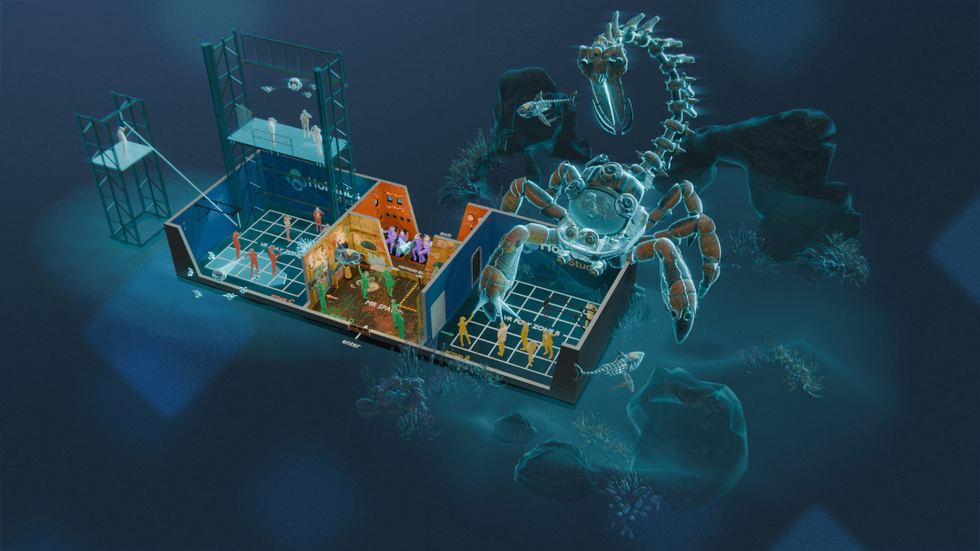 Hololabs Studio's Atrium offers a hybrid experience set across multiple rooms for maximum throughput Image courtesy of Hololabs Studio
"We believe mixed-reality attractions will become as ordinary as free-roam VR is today, but there is a challenge to overcome," adds Wozniewski.
"Building one of these attractions demands creative and technical mastery, including theme-park set crafting, free-roam VR design, motion programming, and a show-orchestration backbone that integrates it all seamlessly.
"The hardest of those is the last, and we provide it as part of the Atrium platform that we’ve built and hardened over years of attraction work. It runs rooms in parallel, group after group, all day, with state-of-the-art operations tools."
See also: Next-gen LBE VR: inside Hololabs Studio’s new attraction format