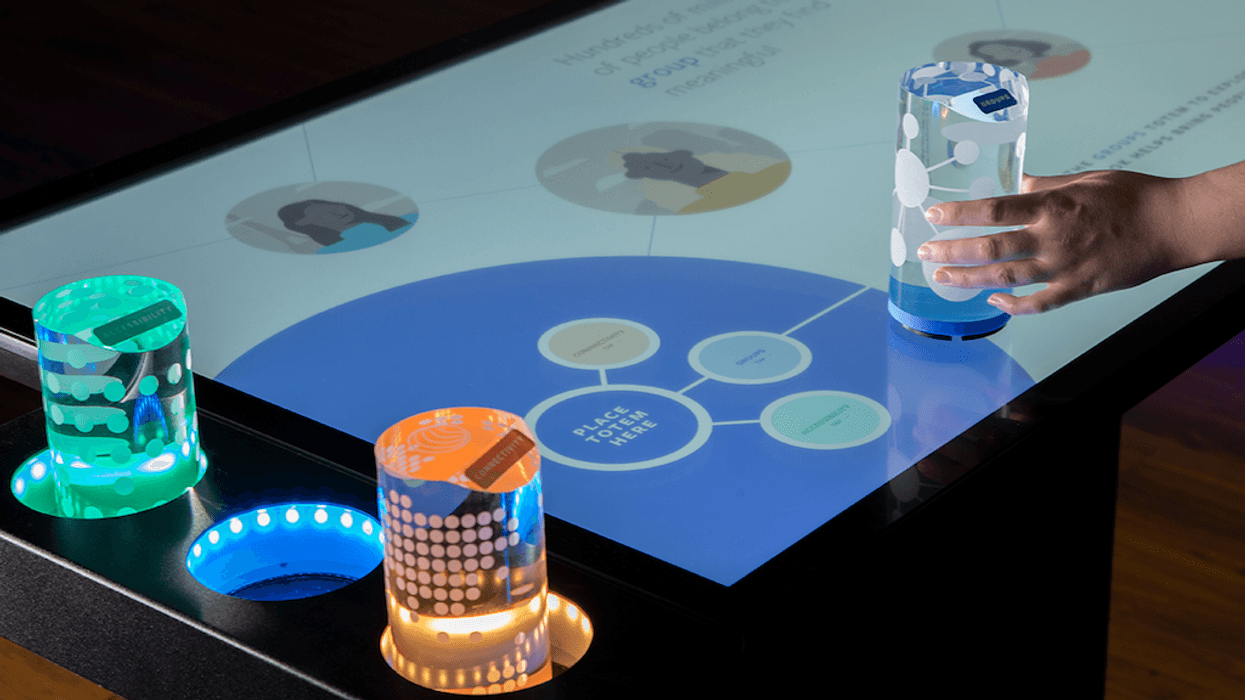

Ideum, an experiential designer of interactive exhibits, is marking Tangible Engine’s 10th anniversary by reflecting on how the object recognition software has developed alongside its users.
Although the core of Tangible Engine has remained relatively unchanged over the past decade, the company has implemented numerous updates and continues to seek new opportunities to enhance and expand the tool.
Tangible Engine 1.0 was released in 2016, however Ideum built interactives like the Interactive Coffee Experience and JCB Tasting Salon earlier, in 2015. These experiments used object recognition to create a hybrid experience that taught about coffee and wine.
The company aimed to develop a tangible marker compatible with projected capacitive (PCAP) touch screens, unlike IR or optical surfaces. After research, it created “pucks” - rubberised, 3D-printed objects with unique patterns recognised on the touch tables without screens, cameras, or optics.
This innovation led to Tangible Engine.
New developments
Version 1 was then updated to support multiple displays and improve tracking, and the team created the Tangible Engine Media Creator, a rapid prototyping tool for designers with limited programming skills to develop mixed-reality apps.
Ideum also published a white paper on tangible user interfaces and their design considerations.
In 2018, Tangible Engine 2.0 was released with major updates to functionality and flexibility of the software development kit (SDK). This update was a full rebuild, enabling a shift to a modular service model and streamlining SDK integration.
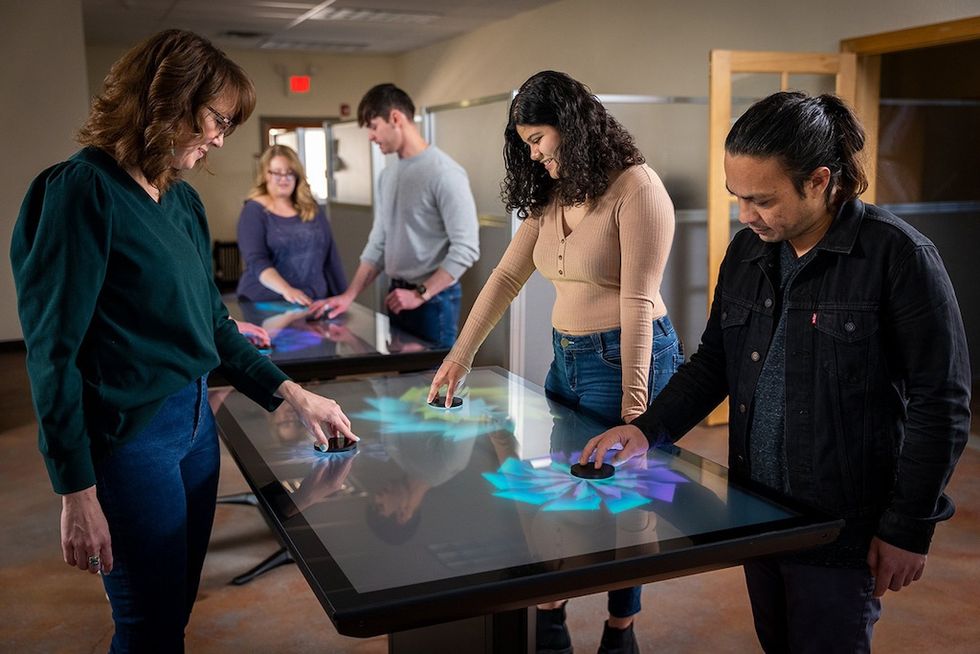
The firm further improved tracking and rotation fidelity and added refinement options, such as sensitivity control and touchpoint recovery. The visualiser utility and object trainer were also added, making it quick and easy to create and modify tangible profiles.
Following updates to version 2, support was added for the extra-large Colossus touch table, which uses a different sensor and provides a large surface area for multiple pucks.
Ideum also added Node.js bindings for web-powered interactives, updated multi-screen support, and reworked the GUI Media Creator into the Rapid Prototyping Tool.
Tangible Engine 3.0
In 2024, Tangible Engine 3.0 was released, improving support for the Colossus touch table, including large tangibles for the 86” display, compatible with smaller ones.
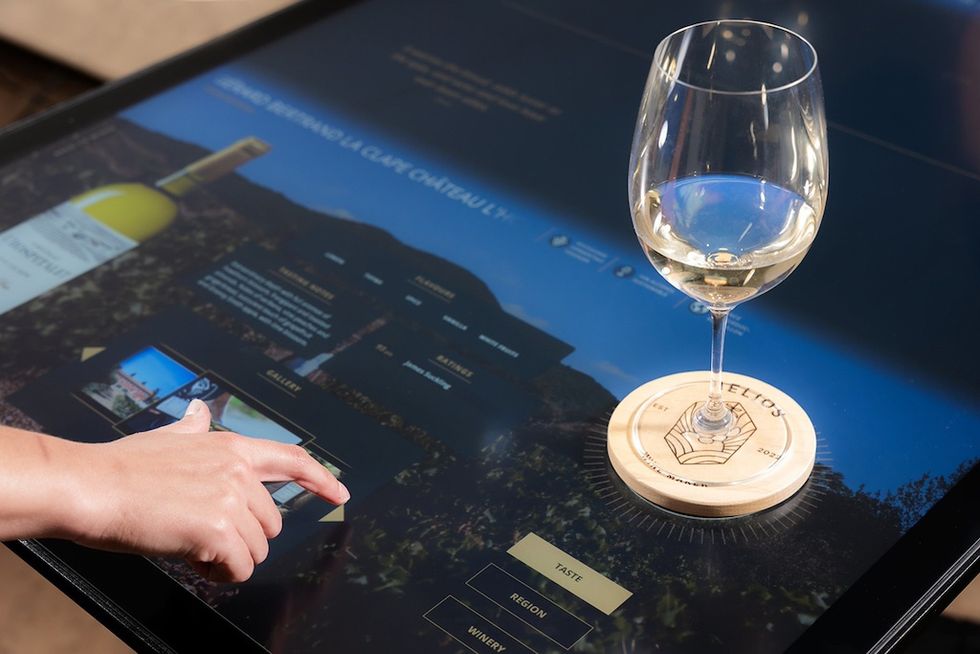
It introduced Beverage tangibles, like those at Helios Wine Bar on MSC Cruises, large 5.25” pucks with wood tops for interactive tasting.
Updates to communication protocols reduced latency, especially useful for complex multiuser projects with many interactions. Tangible profiles for different patterns and sizes were added, simplifying training.
Node.js bindings were also updated to support the latest version.
Earlier this year, Ideum presented the first update for Tangible Engine 3. This introduces a new tangible size to the lineup—the ring, or “donut,” a popular choice for creating highly visual interactives.
It's available alongside the standard pucks, Colossus, and Beverage tangibles. The ring tangibles will have their own profile support in version 3.1, as the others do. Ideum is also exploring additional shapes, testing triangles, and expanding support for custom tangibles.
Jim Spadaccini, founder & creative director, says:
"For museums, touch tables have become a standard form factor for most new exhibitions. They are inherently social and can support multiple visitors. While it depends on software, in many cases, the types of interaction we can expect are similar to those in purely physical tabletop exhibits, which have been around for half a century!
"We are proud to have played a role in the popularization of touch tables, having sold thousands of them to museums and other public venues in North America and around the world over the last 15+ years!
"Tangible objects are also becoming more common as visitors seek new experiences and museums look to connect with visitors through collections and stories. Ideum continues to develop custom tangible user experiences, and we will share some new work with Monterey Bay Aquarium later this summer."
Last month, Ideum released a no-code software builder, TouchStory, that empowers museums to build their own interactives.