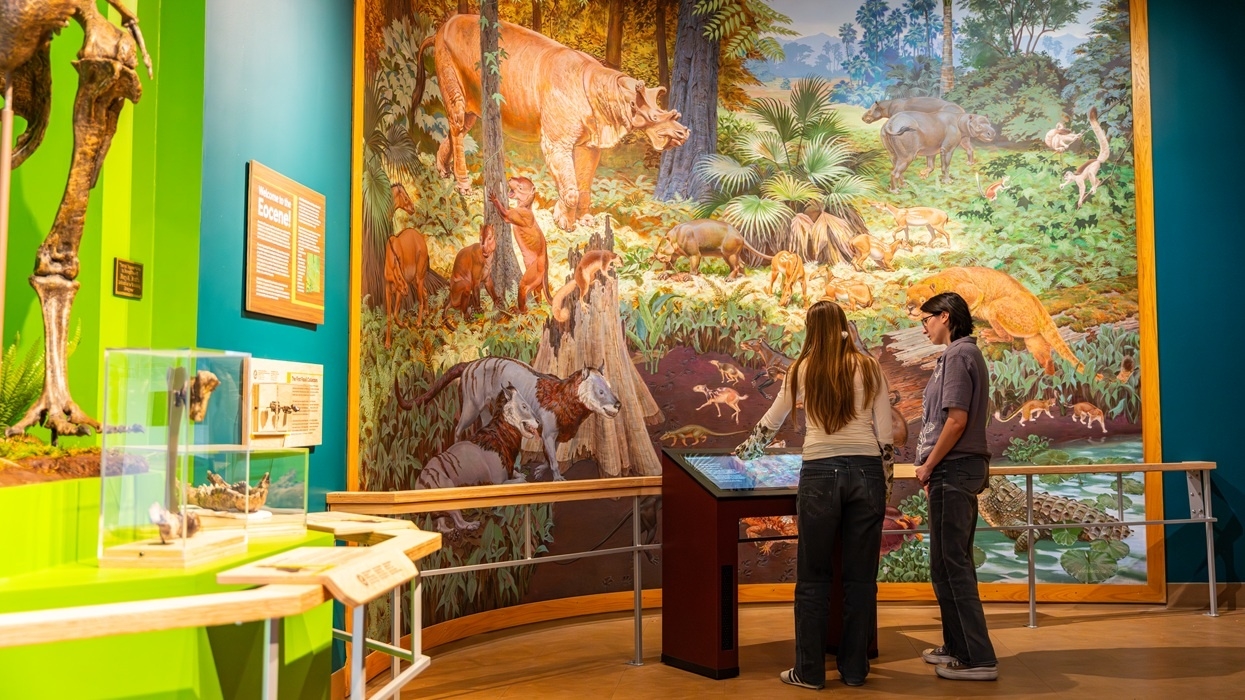
Ideum, an experiential designer of interactive exhibits, has released a no-code software builder, TouchStory, that empowers museums to build their own interactives.
Designed for use with the company's Reader Rail touch kiosk, this scalable interpretive platform replaces one-off interactives with reusable digital storytelling infrastructure, providing lasting cost-effective control and curation for museums.
Rebecca Shreckengast, Ideum CXO/partner, says: "For decades, museums have navigated a persistent tension.
"Digital media has the power to deepen engagement, expand accessibility, and support layered storytelling. Yet the cost of custom software development, often beginning above $25,000 for a single installation on top of hardware costs, has limited adoption for small and mid-sized institutions.
"Even larger museums with substantial exhibition budgets frequently find themselves scaling back interactive ambitions to remain financially responsible.
"TouchStory was developed to address that structural imbalance."
Ideum's development of TouchStory Reader Rail Builder has been informed by extensive research, focus groups, field testing, and beta deployment. Its launch marks a new, long-term strategic approach to planning, funding, and sustaining digital interpretation.
Universal & reusable interpretation builder
"For 25 years, I have worked inside museums and alongside exhibition teams," says Shreckengast. "The pattern has been consistent. Digital interactives are often commissioned as singular projects, tied to a specific exhibition, with limited flexibility once installed.
"What museums truly need is not more one-off technology. They need reusable interpretive infrastructure."
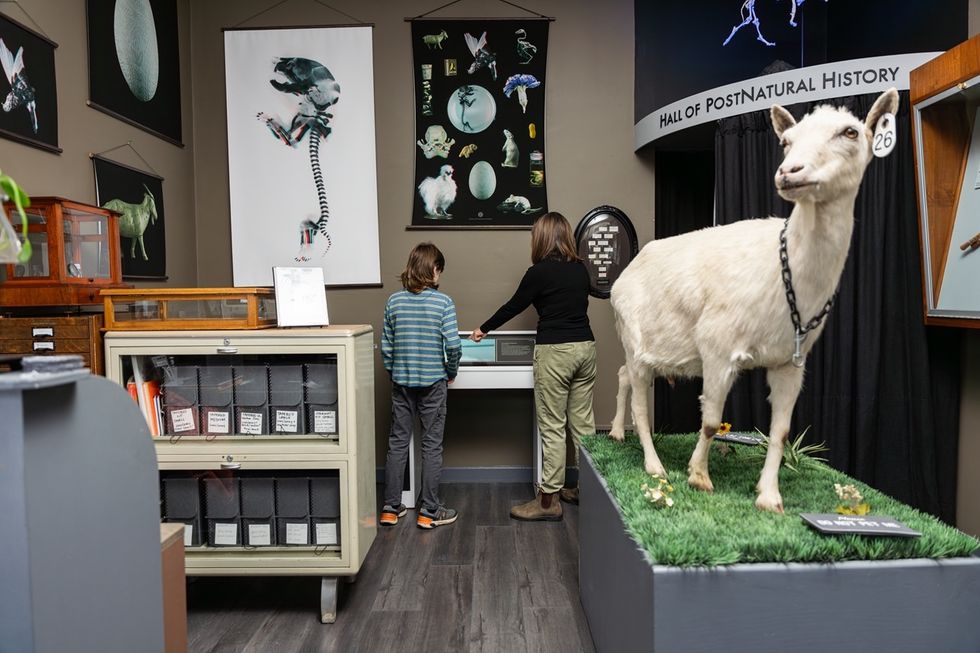 TouchStory Reader Rail Builder at The Center for PostNatural History
TouchStory has been developed to provide this infrastructure. With this professional-quality, no-code platform, curators, exhibit designers, graphic designers, educators, and IT teams can create and update interactive media in-house.
Its approach removes recurring subscriptions and reliance on outside development cycles, while maintaining design standards.
"This is a shift from digital novelty to digital strategy," says Shreckengast.
Created for versatile gallery interpretation, it adapts to projects of any size, from a single object to an expansive mural.
Museums can use it to add group labels, uncover hidden details in artwork, animate dioramas with ecological insights, or build interactive timelines, oral histories, conservation features, and donor recognition experiences.
In combination with the Reader Rail, TouchStory turns static displays into dynamic, guest-focused experiences.
TouchStory's key features include:
- ADA-aligned design, with features such as a wheelchair-friendly design for the Reader Rail kiosk
- A dual-screen mode that links the Reader Rail touchscreen kiosk with a partner screen displaying dynamic signage
- Multi-language toggle capability
- Pinch-to-zoom for high-resolution photographs
- QR code integration
- Rich text formatting and versatile design control
"These features were shaped through sustained conversations with curators, exhibition designers, and museum leaders who identified both immediate interpretive needs and long-term operational sustainability," says Shreckengast.
"This is technology informed by the field, not imposed on it."
Social experience
The TouchStory rapid-prototyping platform has been developed exclusively for the Ideum 34-inch 5K Reader Rail Kiosk. It offers a turnkey solution for museums and other organisations seeking a high-tech addition to display cases and exhibits.
The platform uses projected capacitive touch technology that supports 40 simultaneous touchpoints. Its ultrawide format enables it to be comfortably used by two or three visitors at once, inviting cross-generational engagement and promoting shared exploration.
"At Ideum, we believe digital interpretation should foster conversation," says Shreckengast. "Museums are not solitary experiences. They are social environments where meaning is constructed collectively."
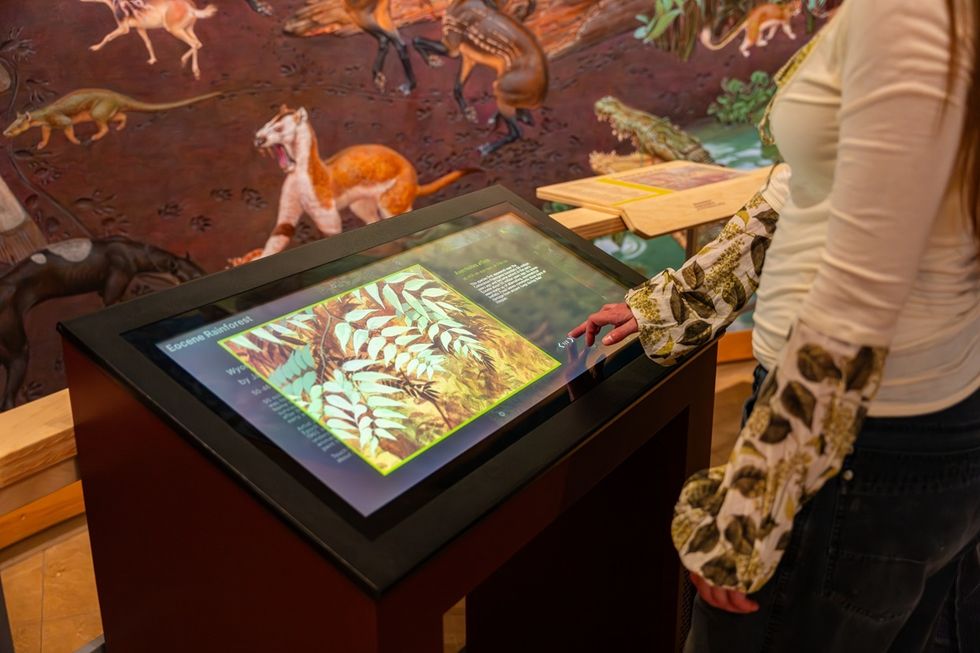 TouchStory at the New Mexico Museum of Natural History and Science
The combination of the Reader Rail with TouchStory demonstrates this philosophy. Guests can follow their own interests while staying physically and socially connected to others.
Accordingly, TouchStory is available only as a free, lifetime, multi-user license bundled with the purchase of the ultrawide Reader Rail touchscreen kiosk. The kiosk comes in white or black as standard or can be fully customised to suit a variety of settings.
As museums seek to stretch their budgets across technology, conservation, programming, and staffing needs, this model offers predictability and long-term value.
Rigorous, rich interpretation
As museums evolve, guests increasingly expect layered information, media-rich storytelling, and self-directed exploration. However, these changing requirements need to remain academically and curatorially rigorous.
With TouchStory, museums can implement a technology that is not merely spectacle-driven but offers an interpretive framework.
Deeper storytelling, improved accessibility and graphic design standards can be achieved without compromising physical space. Museums can both reflect contemporary learning behaviours and maintain institutional authority, while guests can find a deeper connection to the gallery experience.
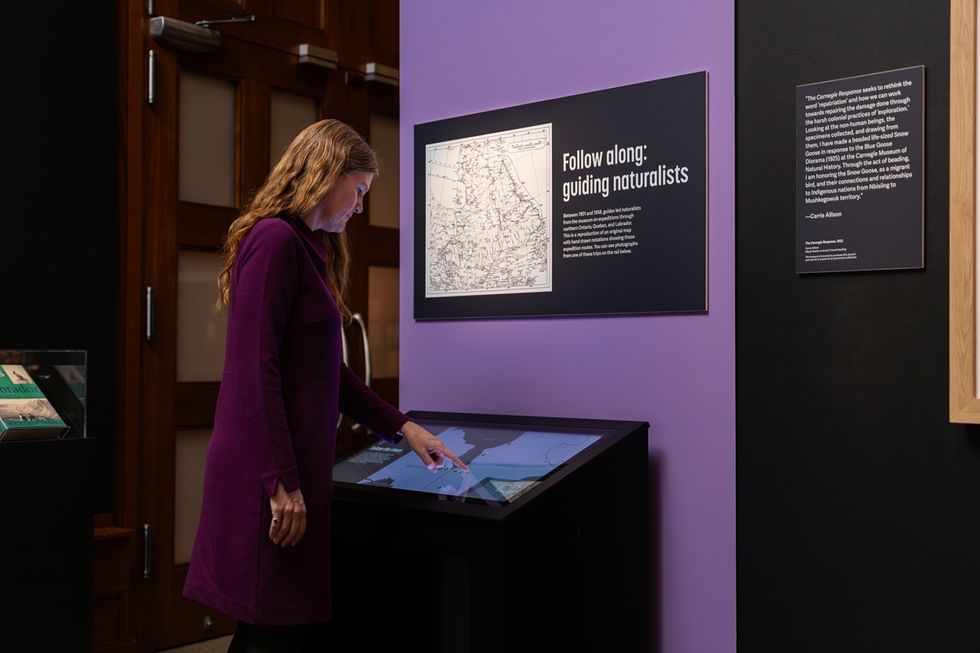 TouchStory Reader Rail Builder at the Carnegie Museum of Natural History
"We believe every museum, regardless of size, should have access to professional, customizable interactive tools," says Shreckengast.
"TouchStory establishes a new baseline for digital labels and gallery exploration. It shifts the conversation from whether a museum can afford custom software to how strategically it wants to deploy digital interpretation across its institution.
"This is innovation grounded in lived institutional realities."
Recently, Ideum worked with exhibit designers, local artists, and curators at the New Mexico Museum of Art, to create a unique introduction for Gustave Baumann: The Artist’s Environment, an exhibition exploring the printmaker’s connections to New Mexico's land and communities.