
The Natural History Museum in London is set to open Jurassic Oceans: Monsters of the Deep, tomorrow, 22 May.
Visitors to the new exhibition will be taken on a thrilling journey through ancient seas, rife with danger and drama.
Supported by the Blavatnik Family Foundation, the exhibition sheds light on the terrifying underwater creatures that lived millions of years ago, with exhibits including razor-toothed marine reptiles, huge fish, and preserved ammonites.
Dr Marc Jones, curator of fossil reptiles at the Museum and lead scientist on the exhibition, says: "Experience the Jurassic like never before in this thrilling encounter with ancient ocean giants, where danger is lurking behind every corner, and predators quickly turn into prey.
"Discover that the sheer variety of life that existed in the seas of the Jurassic is unmatched - from intricate ammonites to giant fish - and that all life is intimately connected and contributes to the balance of the underwater ecosystem."
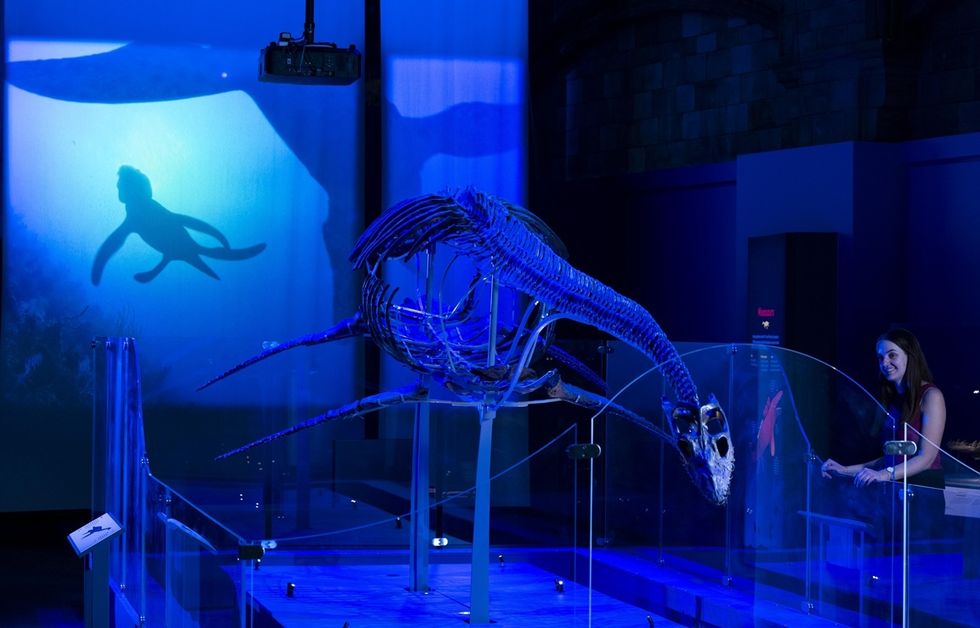 Long-necked plesiosaur at Jurassic Oceans Monsters of the Deep at the Natural History Museum London| ICredit David Parry
Prehistoric predators
Among the specimens on show are enormous ichthyosaurs, with a cast of an ichthyosaur skull available for visitors to touch. These sea predators could grow up to 25 metres long (similar to the museum's iconic Diplodocus, Dippy) and had huge eyes and a keen sense of smell to help them hunt in the ocean depths.
Visitors will also encounter the plesiosaurs, whose distinctive body plan of a long neck and four flippers has not been seen before or since, and are invited to look closely to see shark bite marks.
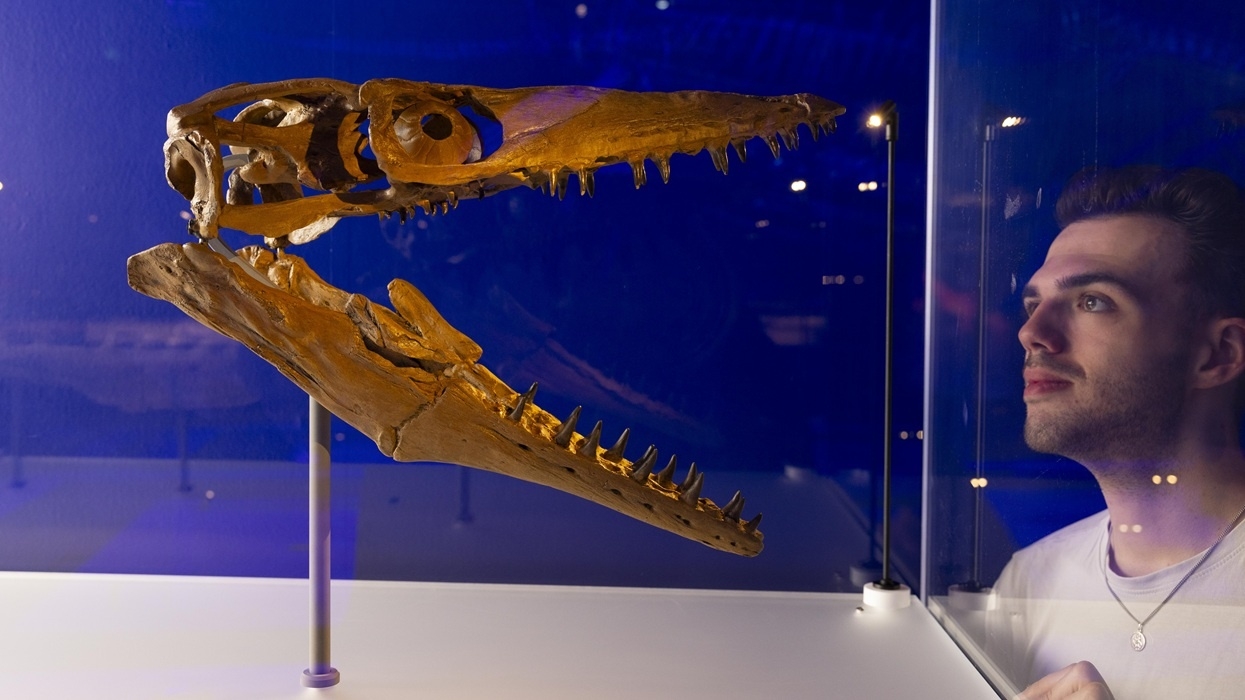
The exhibition also looks to the Cretaceous. The mosasaurs, dubbed T. rex of the sea, could swallow a fish whole. This creature had two sorts of teeth, a double-jointed jaw and a bite built for ripping through its prey. Visitors can see a mosasaur jaw, examine a cast of its skull, and touch a mosasaur tooth dating back almost 70 million years.
"Drawing on the Museum’s world-leading palaeontology collection, Jurassic Oceans highlights how studying the past can help scientists understand a warmer, wetter world and turn the future of our seas," says Jones.
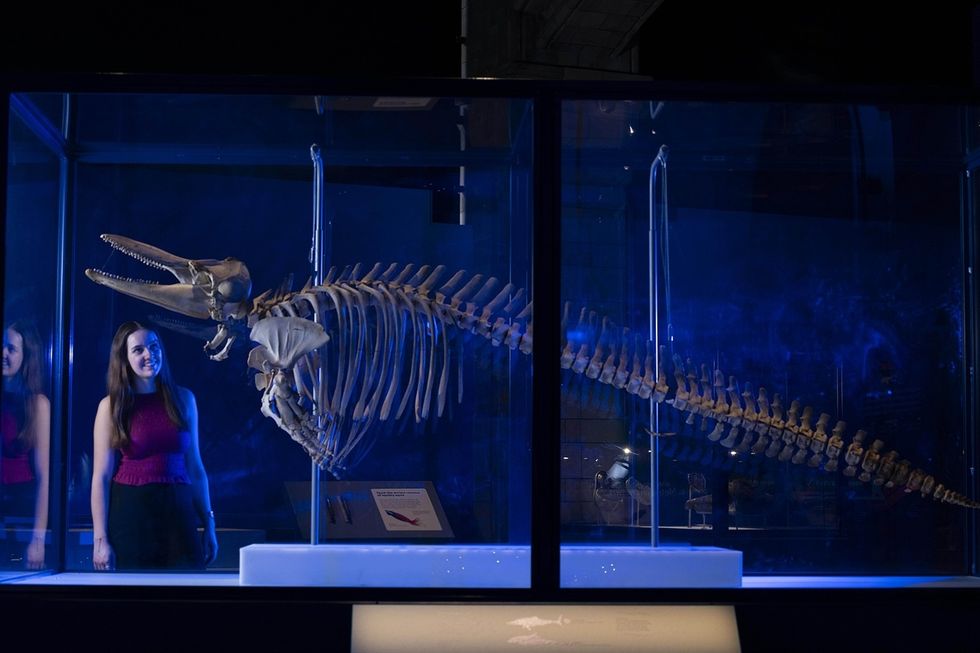 Common bottlenose dolphin at Jurassic Oceans Monsters of the Deep at the Natural History Museum London| Credit David Parry
"As the climate changes, fossils offer vital clues about how marine ecosystems have responded to dramatic environmental shifts in the past, and what that could mean for ocean life in the centuries ahead.
"These animals may seem like monsters, but they tell a powerful scientific story about evolution, extinction and the changing health of our oceans."
Earlier this year, the Natural History Museum in London was named the UK's most popular tourist attraction in 2025 by the Association of Leading Visitor Attractions (ALVA).