
iP2 Group, an international leader in transforming world-class intellectual properties(IPs) into immersive, high-value urban destinations, collaborated with DreamWorks Animation to develop DreamPlay.
This is designed to address a key trade-off indoor family entertainment centres (FECs) face: compromising immersive storytelling or taking on unsustainable capital expenditures (CAPEX). DreamPlay shows that theme-park-grade immersion and commercial feasibility can co-exist within a compact footprint of 3,000 to 5,000 square meters.
Together, the companies have created an urban destination designed for modern cities and evolving demographics that increasingly seek high‑quality, family‑friendly entertainment in accessible, central locations.
DreamPlay established a new category in urban leisure, validated its model in Manila, and is now scaling globally.
The need for something new
The catalyst for DreamPlay was in 2012, when iP2 pitched a family destination concept to Lawrence Ho, CEO of Melco Crown Entertainment, for the luxury City of Dreams resort near Manila Airport. To differentiate it from typical arcade-based FECs, iP2 proposed a high-end, IP-driven indoor attraction with world-class narratives.
After a licensing agreement with DreamWorks Animation (DWA) in late 2013 and a full development agreement in early 2014, iP2 established temporary design studios at DWA's headquarters in Glendale, California. DWA leadership, including co-founder Jeffrey Katzenberg, played a direct, hands-on role in shaping the concept.
Katzenberg’s directive was clear: no traditional rides or off-the-shelf attractions. DreamPlay was designed as an interactive, media-rich play space where children and families actively participate in stories, not just observe.
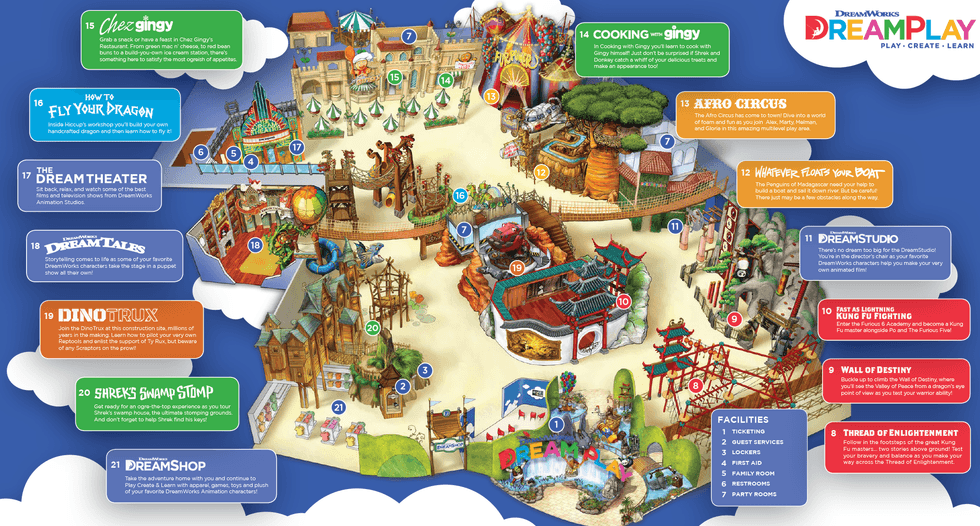 DreamPlay offers experiences based around several much-loved DreamWorks IPs
When it opened in April 2015, it introduced what iP2 is calling a new product category: the Branded Family Entertainment Center (BFEC).
Multi-generational appeal & active storytelling
DreamPlay's primary target is ages 6 to 12, appealing to older children while remaining fun for younger siblings.
DreamWorks franchises including Shrek, Kung Fu Panda, How to Train Your Dragon, and Madagascar have a dual appeal. They offer vibrant, action-packed storytelling for children alongside humour adults appreciate.
Instead of positioning parents as passive spectators waiting on benches, DreamPlay’s attractions promote multi-generational co-play.
This active engagement directly impacts key commercial metrics, including longer average stays (over three hours), increased secondary spending on themed food and beverages and exclusive merchandise, and more repeat visits driven by multi-layered, skill-based challenges.
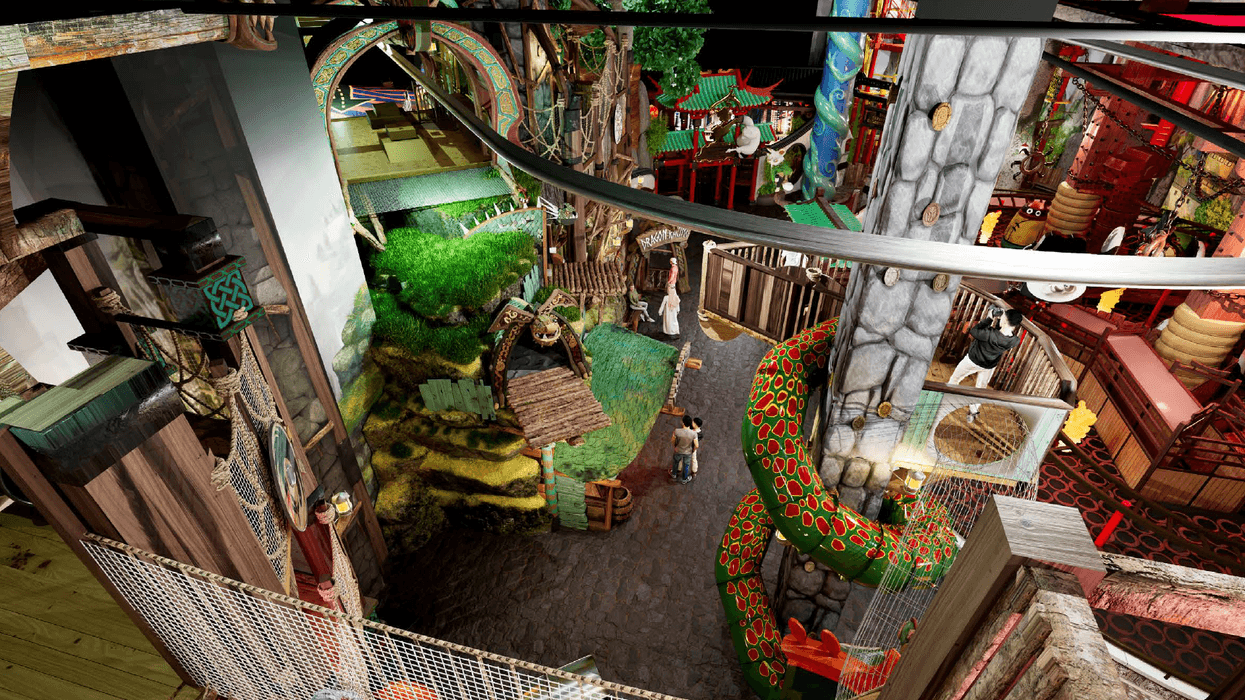
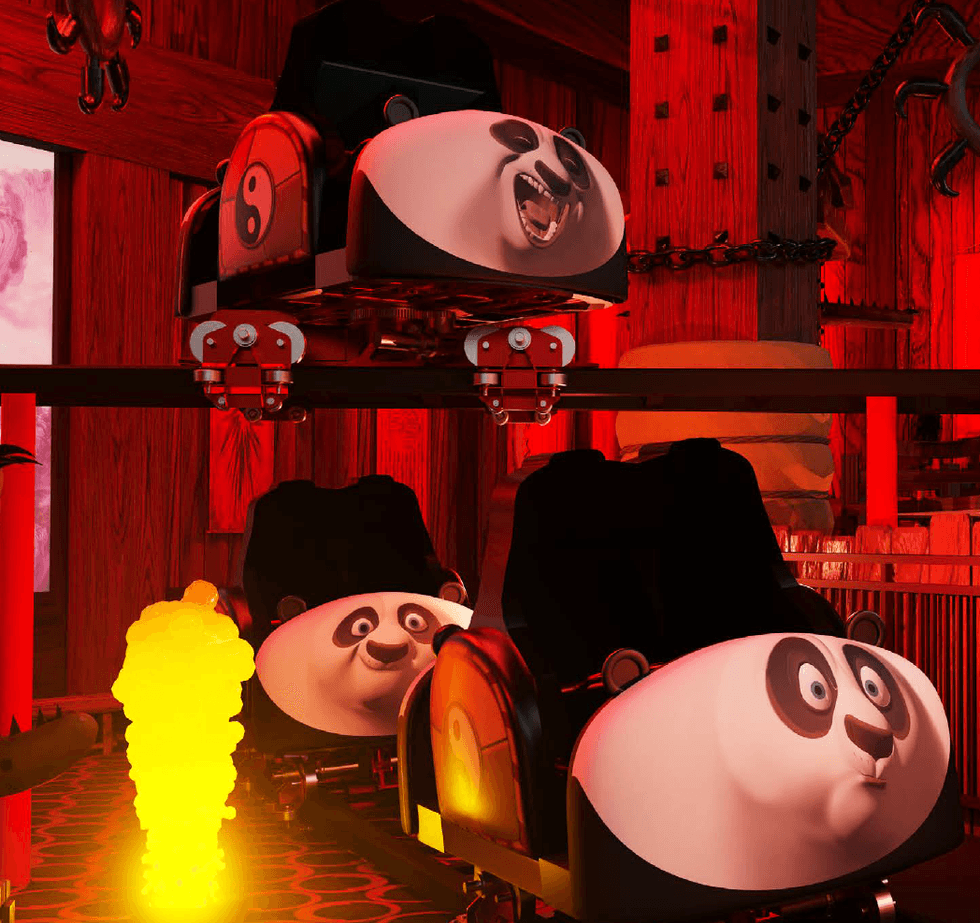 Various worlds come to life at DreamPlay, including Kung Fu Panda
To maintain high guest throughput while ensuring a smooth flow of visitors, iP2 designed the floor plan around three distinct yet complementary experience pillars.
The first is Active Physical Play, which includes high-energy physical challenges that test agility and bravery, such as the multi-level Thread of Enlightenment rope course, Wall of Destiny climbing walls, and Shrek’s Swamp Stomp.
The second pillar is Interactive Content Creation, featuring spaces that foster creativity like DreamStudio, where guests learn stop-motion animation; How to Fly Your Dragon; and Whatever Floats Your Boat, a physics-based boat-building challenge with the Penguins of Madagascar.
The third pillar is Immersive Media & Live Interaction, offering high-tech digital environments such as the Fast as Lightning Kung Fu Fighting interactive arena, a custom 4D Theater, and hands-on culinary classes at Cooking with Gingy.
Every physical structure and digital interface was custom-engineered to weave narrative elements into physical exertion, delivering a high-throughput, low-maintenance guest experience.
Financial feasibility
DreamPlay was engineered from inception to meet strict CAPEX and OPEX benchmarks, guaranteeing target yields for destination developers and venue owners.
Independent feasibility studies conducted by Leisure Development Partners (LDP) established the basic economic viability for the Manila flagship.
Driven by the strong appeal of the DreamWorks intellectual property, DreamPlay attracted over 50,000 visitors in its first two months without any external advertising. In its first year, attendance exceeded 430,000 visitors and has continued to perform robustly.
Additionally, high-margin secondary revenue streams, such as custom food and beverage concepts like Chez Gingy and bespoke merchandise ranges, generated above-average gross margins.
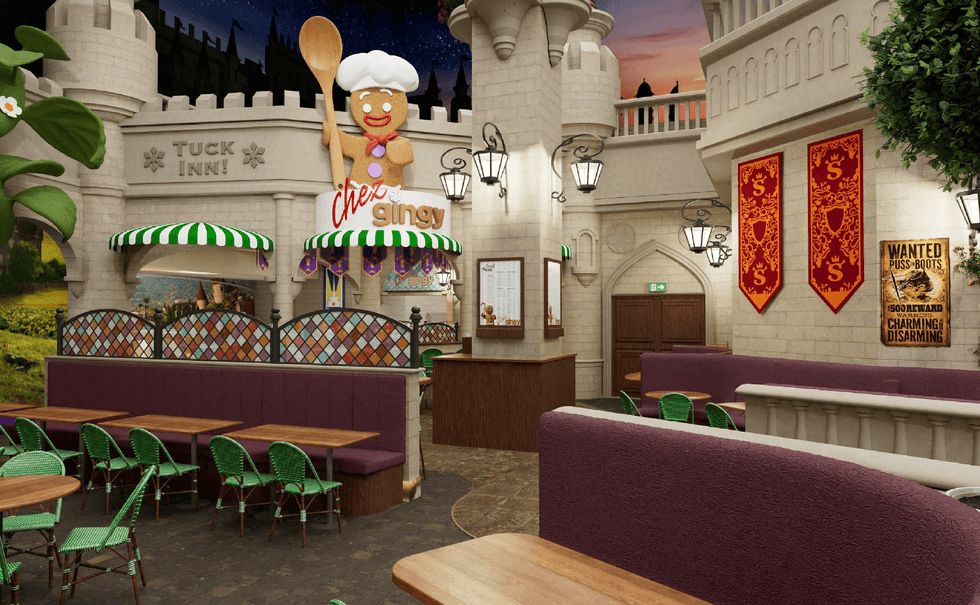 Custom food and beverage concepts like Chez Gingy add to the financial feasibility of DreamPlay
Following NBCUniversal’s 2016 acquisition of DreamWorks Animation, the DreamPlay framework was integrated with Universal Destinations & Experiences' global operational standards, safety protocols, and technical infrastructure.
This integration laid the groundwork for DreamPlay 2.0: a refined, modular evolution of the original concept, designed for rapid global rollout.
Under a major partnership with Alshaya Group, DreamPlay 2.0 is expanding into the Kingdom of Saudi Arabia, with a flagship location in Riyadh. Situated within premier urban developments, these locations align directly with Saudi Vision 2030’s push to elevate domestic entertainment and hospitality offerings.
DreamPlay's success exemplifies a shift in location-based entertainment, showing how high-profile IP, combined with strategic footprint design and operational management, can significantly boost urban foot traffic.
iP2Development implemented this through a comprehensive operational framework encompassing licensing, tailored design, custom engineering, financial modelling, project management, staff training, and merchandise development.
As urban areas seek sustainable, weather-resistant family attractions, compact theme parks like DreamPlay offer real estate owners, operators, and investors an opportunity for strong financial returns and enduring brand value.
iP2Development will be present at IAAPA Expo Europe 2026 in London, taking place from 21- 25 September.