In just a few years, Our Legacy Creations (OLC) has delivered two of the live entertainment industry’s most technically ambitious productions: the rebuild and reimagination of the award-winning The House of Dancing Water (HODW) in Macau and the world's most ambitious 2026 New Year’s Eve celebration in Dubai.
Established in 2023 by five entertainment industry veterans, OLC has rapidly positioned itself within the global live entertainment market through productions that combine storytelling, technical innovation and immersive staging.
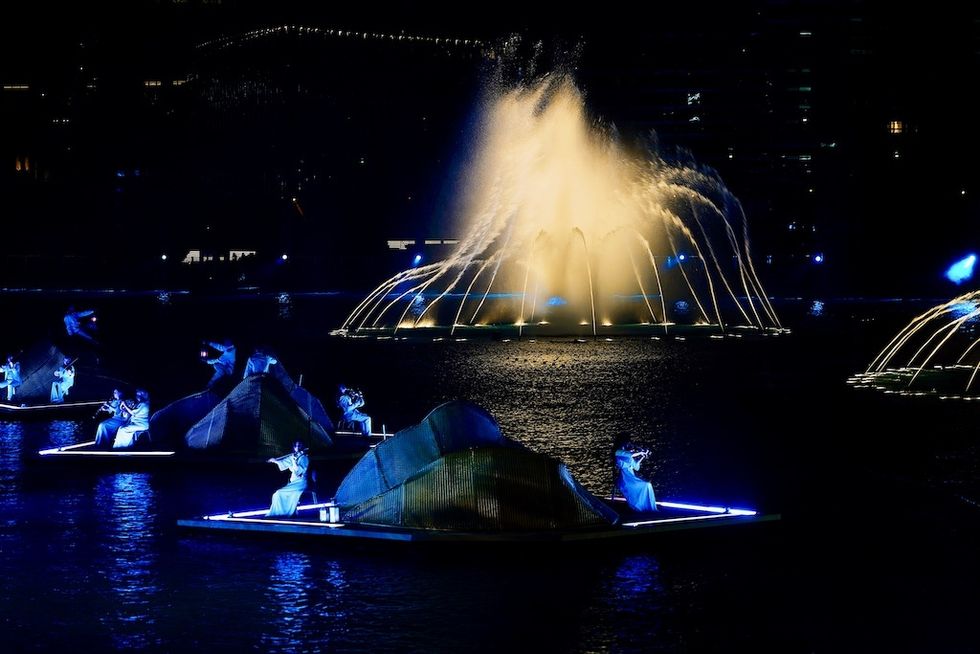 An orchestra performs on the lake during EMAAR's New Year's spectacualr show in DubaiImage courtesy of OLC
While The House of Dancing Water required the company to rebuild and modernise one of the world’s most iconic resident water-based shows, Dubai’s New Year’s Eve celebration transformed the city centre into a performance space spanning water, land, air and architecture.
Telling Dubai’s story in a new way
Every year, the world focuses on Dubai for a New Year’s Eve spectacle to remember. For the 2026 celebration, the Corporate Brand Growth division of EMAAR Properties, led by chairman Mohamed Alabbar, took this tradition to new heights, staging one of the most ambitious urban mega-celebrations to date.
When EMAAR selected OLC to lead the creative execution and production for the 2026 celebration, the brief was to tell the story of Dubai’s past, present and future on an unprecedented scale.
“EMAAR was looking to do something different…the formula was way more ambitious for 2026,” says François Girard, managing director of OLC.
“We're talking about turning the lake into the largest water stage on the planet, while simultaneously creating a world-class parade on the Dubai Boulevard.”
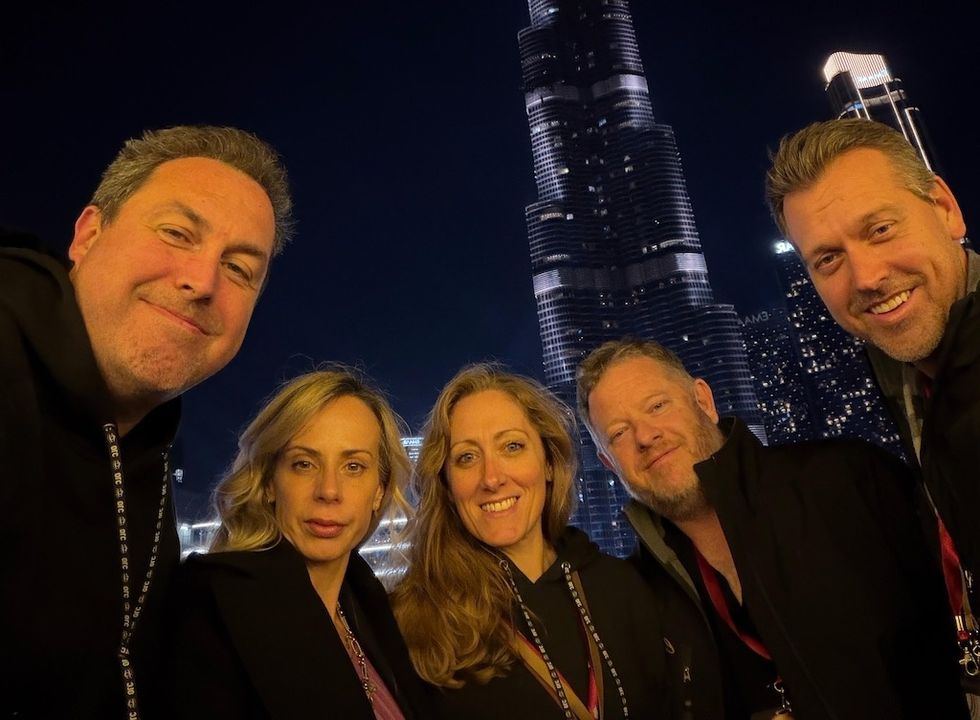 OLC partners in Dubai. L to R: Terrence Williams, Tiziana Pagliarulo, Anna Robb, Damien Long, and François GirardImage courtesy of OLC
The creative heart of the production became a journey through Dubai’s evolution, anchored by a poetic visual thread devised by artistic director Tiziana Pagliarulo.
Pagliarulo created a narrative guided by a solitary tightrope walker carrying the moon, suspended between sky and water.
“We developed a show that began with Dubai as a small village in the desert, then traced its evolution into the international city it is today,” she says.
“But I wanted to add a poetic character to witness this evolution.”
The world's largest water stage
One of the defining achievements of the celebration was transforming the Dubai Mall lake into what was described as the world’s largest water performance stage.
The production combined several 30-metre water screens, special effects, pyrotechnic drones, thousands of lights and lasers, and moving platforms on water, which carried live performers across the lake.
“This changed the approach completely,” says Pagliarulo. “The stage was created by platforms that move on water, powered by drones that operate on water. So, we can create choreography using those platforms to bring the dancers onto the water.”
To reflect Dubai’s origins, the team built moving dune structures onto the floating platforms, creating a constantly shifting desert landscape.
The technical complexity extended beyond choreography. The production had to operate within a dense urban environment filled with mobile devices, communication systems and live public infrastructure.
“It was also very challenging for the dancers, because they had to be stable on a moving stage,” adds Pagliarulo.
The scope expands
As well as the action on the lake and the 300-metre tightrope, the show included a pyrotechnic drone display, real-time control of more than 5,000 lighting fixtures, and a custom lighting installation on the Burj Khalifa itself. All systems were operated live under strict public safety and broadcast requirements.
Implementing these cutting-edge technologies in an active public venue posed operational challenges and required complex temporary rigging and advanced safety engineering. Rehearsals were restricted to overnight windows between 1:00 am and 6:00 am.
The production later expanded with the addition of a 300-metre live parade featuring more than 250 performers and three large-scale kinetic floats themed around the desert, the oasis, and the modern city.
Designed as moving stages rather than static vehicles, the floats incorporated BMX riders, parkour athletes, puppetry and live performance.
Pagliarulo says the parade was designed to maintain the same thematic thread as the water show:
“We wanted to keep the idea of the show, going from the desert to the oasis to the city, and bringing the culture throughout as a reminder of where they come from.”
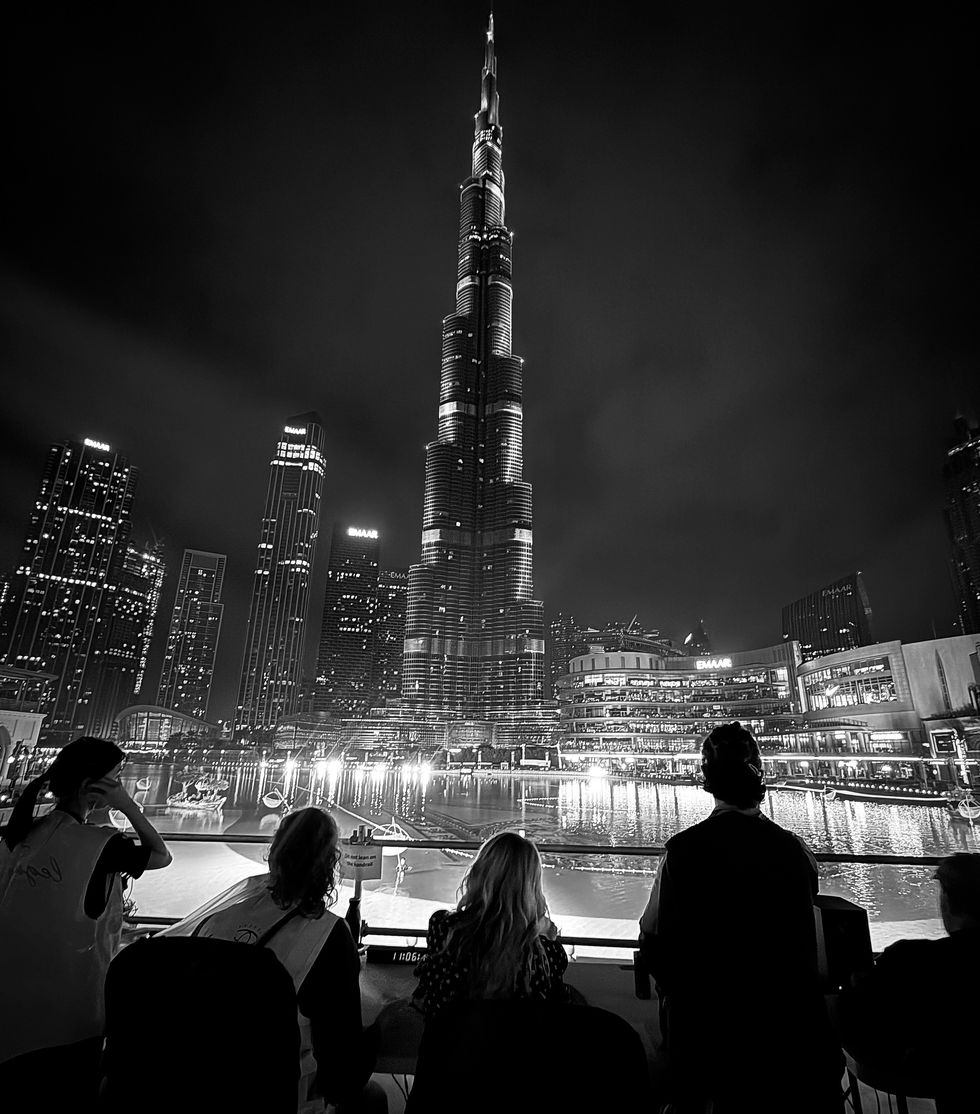 The OLC team programming the NYE spectacular, tellling Dubai's story to bring in 2026Image courtesy of OLC
It goes without saying that it takes hundreds of dedicated, talented, and hard-working staff and vendors to deliver such a project.
As well as the different vendors, Girard praises "the courage that EMAAR chairman Mohamed Alabbar has to bring something new to his city. Giving back like this, and on this scale, requires some serious ambition and vision."
Bringing back a much-loved show
As well as delivering Dubai’s New Year’s Eve celebration, OLC also oversaw the remount of The House of Dancing Water at City of Dreams Macau, one of the world’s most technically complex resident productions.
Unlike a one-night celebration, the resident water-based spectacular required OLC to rebuild systems and operational processes designed for long-term sustainability and repeatability.
Anna Robb, executive producer at OLC, was part of the original 2010 creation team and says that history gave the company a strong foundation for the remount:
“We knew the key people with knowledge of version one to bring back for the remount and what kind of skills we needed in the building.”
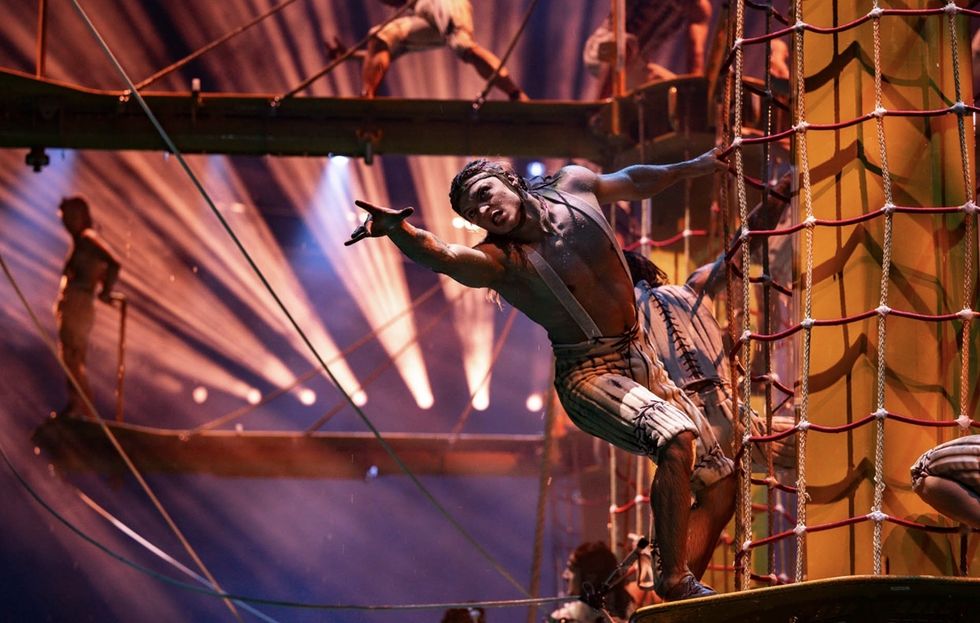 The House of Dancing Water at City of Dreams Macau Image courtesy of OLC
The remount included major upgrades to projection, lighting and stage systems.
“Fifteen years on, even just upgrading these elements was going to give a brightness and a vibrance not seen with the original equipment,” says Robb.
The original show, conceived by Franco Dragone, set a high bar for immersive storytelling. Robb notes that updating a production with such a strong legacy required careful consideration:
“Many people know the original version, so any changes needed to exceed expectations.”
Different challenges
Exploring the creative and technical challenges of reimagining a water-based spectacle of this scale, Robb talks about the addition of a new scene, a breath-holding act called the Aquarium Cage:
“We needed to design a tank that would drive seven metres underwater onto the stage lifts and then figure out how to load the performer inside the tank and transfer her from a regulator breathing oxygen from a tank into an apnea (breath-holding act).”
There were several technical and physiological aspects of this scene to work out. The team brought in expert free divers who had also worked on HODW to establish safe procedures and train the artist for this stunt.
Another significant challenge involved reprogramming every automation cue for the production.
Because the original automation desks and software had become obsolete, all show, training, and technical maintenance cues had to be rebuilt, tested, and validated within Navigator during the remount.
“We assembled a team of highly skilled automation specialists to reprogram over 6,000 existing cues and implement new ones added during the process, a truly monumental task,” says Robb.
OLC and a one-of-a-kind show
OLC’s scope for The House of Dancing Water included recasting all onstage roles in the show, assisting with the hiring of operations staff, bringing in the production team for the remount, overseeing the theatre rehabilitation and systems upgrade, and building and executing all new scenic elements and costumes.
The team was also responsible for reprogramming all the automation cues, managing the remount schedule, driving the recreation, and training all personnel to take the reins of the show once it reopened.
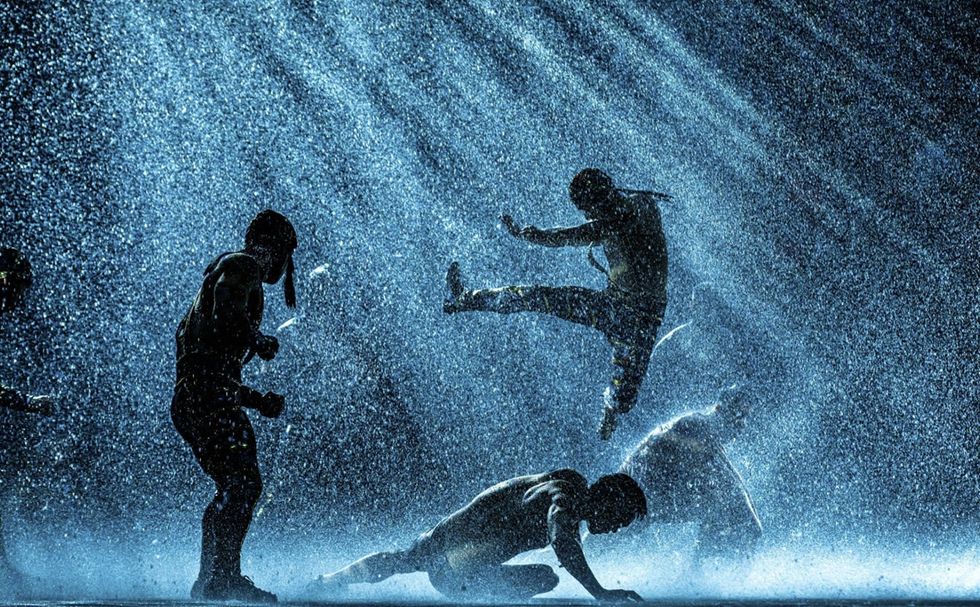 The House of Dancing Water was completely recast for the modern restaging at City of Dreams in MacauImage courtesy of OLC
With a multinational cast and crew and a purpose-built theatre at City of Dreams, challenges were inevitable.
However, Robb says: “House of Dancing Water had very strong operational processes in place in its original 10-year run.
"The remount was about bringing those processes back and bringing new staff into that world, sharing with them how a show of this scale is run safely and efficiently and how to handle situations when things don’t go to plan.”
The resulting show is one-of-a-kind, she adds:
“It represents a level of spectacle that is unmatched in the region. While many integrated resorts currently prioritise more conservative or cost-effective entertainment models, this production stands as a unique benchmark for Asia-Pacific.”
Rising to different challenges
Resident shows like HODW and limited-run events like the EMAAR NYE show are polar opposites in how to approach a project from a production perspective.
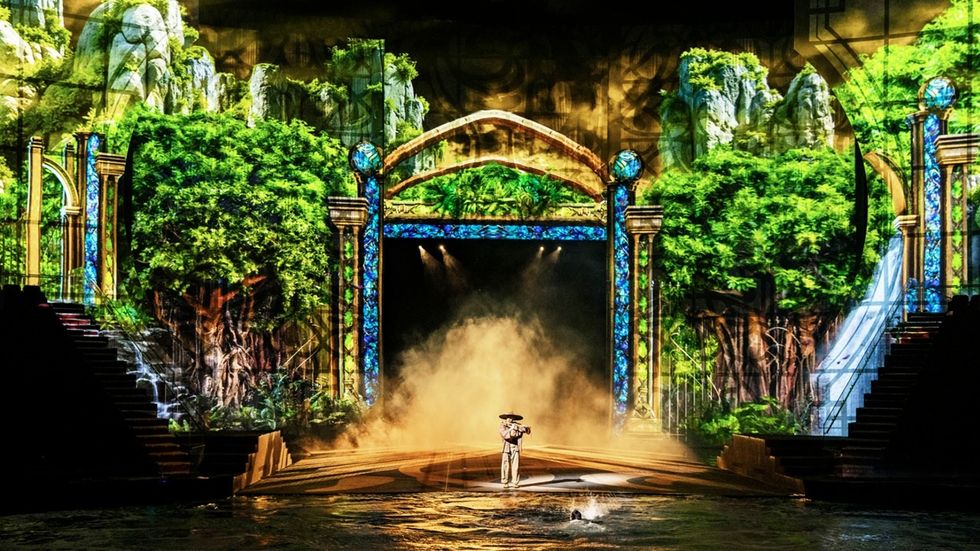 The House of Dancing Water at City of Dreams Macau is designed for repeatability and sustainability Image courtesy of OLC
“Most of the priorities of a resident show are built from the need for repeatability and sustainability,” says Robb.
“That approach applies to the equipment you choose, the materials you use, the people you hire and the standard operating procedures that you create.
“On a limited run, you are looking for a team that can thrive in an unexpected environment, vendors who can support the execution of the idea and talent who know how to create in the moment.
“Fortunately for OLC, our team is well-versed in both environments, as demonstrated by the successful execution of the HODW and EMAAR projects.”
The need for spectacle
Wrapping up the discussion, Girard reflected on the continued demand for large-scale shared experiences.
“We need to learn to celebrate again. We spend so much time being negative about everything that’s going wrong with the world. Sometimes it’s just nice to celebrate together and have a milestone to look forward to.”
“I think this is an important time for large-scale public productions. We saw this firsthand during the week following New Year’s Eve; despite the holiday having passed, tens of thousands of people continued to arrive each night, pushing the boardwalk's crowd-control measures to their limits."
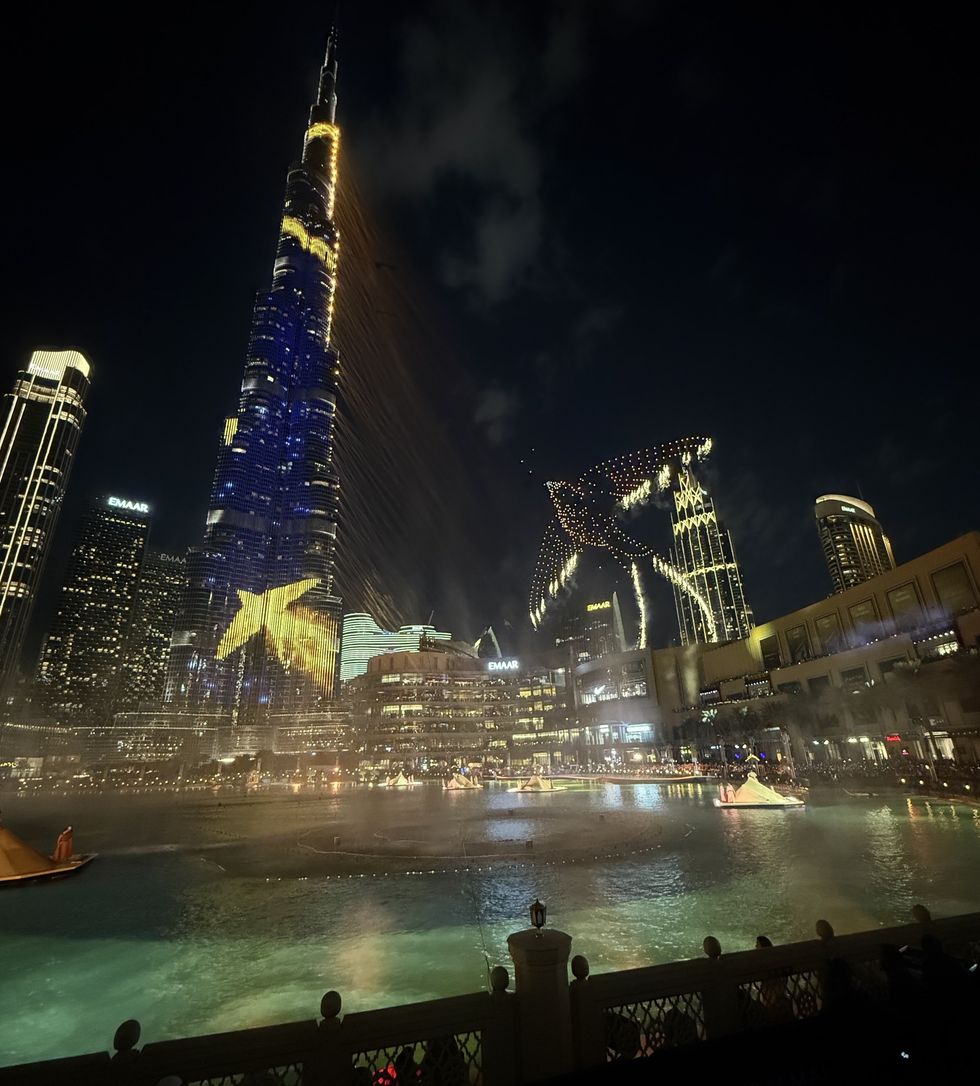 The show included a pyrotechnic drone display, real-time control of more than 5,000 lighting fixtures, and a custom lighting installation on the Burj Khalifa itselfImage courtesy of OLC
"Beyond the spectacle, these events offer invaluable cultural experiences that are accessible to everyone in the community, regardless of socioeconomic status.
“These large-scale shows, they really do create memories that people take with them.”
For Our Legacy Creations, these projects reinforce its position in the global live entertainment market and highlight growing demand for large-scale, water-based and urban spectacles.
“OLC is a young, agile company powered by a team with a history of breaking cultural and entertainment boundaries worldwide. We are proud of HODW and EMAAR NYE, as these projects demonstrate our capacity to deliver, but the industry may be surprised by where we go next,” says Robb.
“We have many plans and ideas across the spectrum of entertainment and certainly do not want to be pigeonholed into one type of genre. We invite partnerships with those who share our passion for disrupting the status quo.”