Recently, I looked at groundbreaking attractions in the theme park industry. Attractions so innovative they did something no one else had done before, either setting a new standard for how things would be done from then on or creating entirely new genres of attraction concepts.
Now we’re going to look at the other side of the spectrum: attractions that seemed to be on the cutting edge, but for one reason or another, they failed.
They often ended because the experience was lacking or, in many cases, the technology just couldn’t achieve the concept's vision. Some fumbled through various operational states for years before closing down forever… and some existed only for a matter of days before the dream came tumbling down.
Listed in chronological order, here are 15 of the world’s most infamous attraction failures.
1.Flying Saucers at Disneyland, USA - 1961 to 1966
One of Disneyland’s early, short-lived attraction concepts, now mostly forgotten, was designed for Tomorrowland and lasted just 5 years.
The basic idea was to seat individual guests on a lightweight disc-shaped “flying saucer” vehicle that would then “float” very slightly up from the field of the attraction that was full of holes from which low-pressure air was coming.
As the saucers floated above the field, guests leaned or shifted their weight in various directions to tilt the saucer slightly and create movement.
In the end, movement was minimal and created little thrill; overall capacity was abysmal, and the air valve system was very maintenance-intensive, so during Tomorrowland's next planned refurbishment, the Flying Saucers were no more.
A fun side note: many assume the inspiration for the Flying Saucers came from tabletop Air Hockey, but believe it or not, the development of Air Hockey didn’t come about until 1969, and the first game tables were not sold by Brunswick Billiards until 1972.
2.The Bat at Kings Island, USA - 1981 to 1983
The story of The Bat at Kings Island needs a little explanation because the park still has a very similar roller coaster in operation today, also called The Bat in honor of its legendary predecessor.
The Bat was technically the world’s first Suspended Roller Coaster from Arrow Dynamics. To describe The Bat accurately, the train was suspended under the tracks, and the cars were designed to swing side to side as the train navigated the course’s twisted track.
Hailed as a revolutionary concept that would change the theme park world, the prototype suffered from serious engineering miscalculations that caused major mechanical issues.
The track was designed almost entirely with unbanked turns, based on the idea that the trains would absorb all lateral forces, creating the intended ‘swing’ action.
The severity of the swinging motion from the fully loaded trains was greatly underestimated, causing the trains to swing to their maximum limits at several moments during the ride experience; the energy left from hitting the end of the arc then transferred back into the vehicles, track, and support structures.
Shock absorption systems were put in place, but were frequently being blown out by excessive force from the ride, resulting in far more maintenance issues than anyone had ever expected, and the trains were in need of constant repairs.
Ultimately, Kings Island decided to give up and retire the coaster.
Arrow learned the lessons it needed to make the design work, passing the concept's success to the next generation, which opened as The Big Bad Wolf at Busch Gardens Williamsburg in 1984.
Kings Island also returned to Arrow to build a functioning version of the ride a decade later, opening it as Top Gun in 1993. Over the years, the park lost the IP license from Paramount to use the Top Gun name, which resulted in the ride eventually being renamed The Bat in memory of the 1981 original.
3.Jaws at Universal Studios Florida, USA - 1990 - 1991
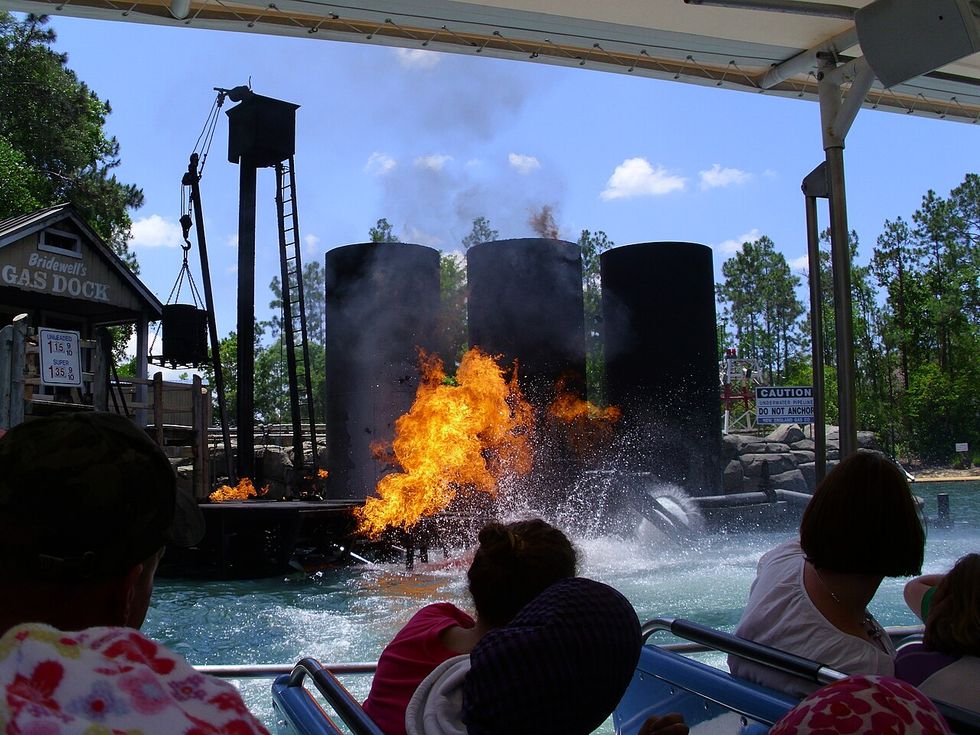
The short-lived Jaws attraction at Universal Studios Florida
Image credit Ross Hawkes from Lichfield, UK, CC BY 2.0, via Wikimedia Commons
Tales of the technical issues that plagued Universal Studios Florida's opening season are well known, but none more than the story of the ambitious Jaws attraction, which designers tried to put guests in a boat with several robotic replicas of Steven Spielberg’s killer great white shark.
Immediately, when the park opened in June 1990, the impressive and highly promoted Jaws attraction proved to be an operational nightmare.
Rushed in order to meet a tight deadline for the park opening, the attraction featured extremely complex and fairly untested technology, all submerged below the water in order to power several massive animatronic sharks that needed to perform high-speed underwater maneuvers, including an actual strike onto the guests' boat.
The original, highly ambitious finale effects sequence had a shark attack and appear to bite down on the front of the guests' boat, dragging them further out into the water.
This was followed by the shark returning for another attack, only for the boat skipper to fire a grenade launcher at it, making the shark explosively return to the water, which was then filled with some ‘meat chunks’ and blood colored dye.
A year later, the ride closed; lawsuits began as Universal spent the next two years trying to save what it could, re-engineer, and recreate new sequences for the parts that failed with equipment that could withstand the harsh water environment.
4.Drachen Fire at Busch Gardens Williamsburg, USA - 1992 to 1998
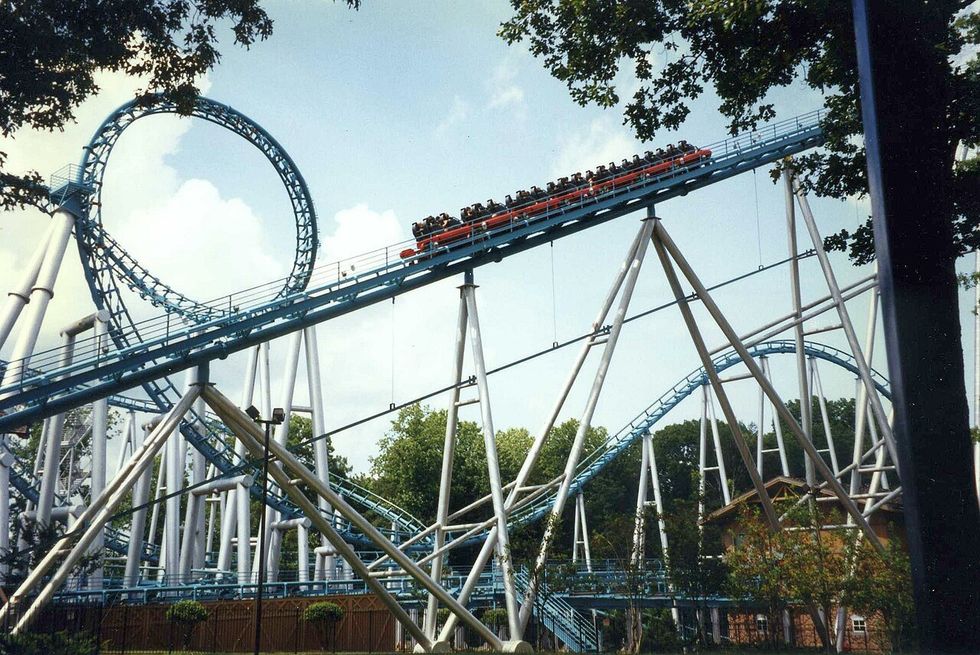
Drachen Fire at Busch Gardens Williamsburg, which closed in 1998 after six years
Image credit Jeremy Thompson, CC BY 2.0, via Wikimedia Commons
According to legend, Busch Gardens Williamsburg had originally tried to contract Bolliger & Mabillard (B&M) to build the Drachen Fire coaster for them, but B&M was unable to meet the desired 1992 deadline, and instead focused its efforts on building Kumba for the sister Busch Gardens park in Tampa that would open a year later in 1993.
Facing increased competition in roller coaster design from the likes of B&M, Arrow Dynamics was tasked with building Drachen Fire and asked to create a layout and elements similar to what B&M had been asked to do.
The result was the creation of the world’s first coaster with a wraparound corkscrew and “cutback” element from Arrow, but the end result was a ride that many reported as being excessively rough and painful to ride, with guests' complaints about neck and back pain rolling in within the first weeks of operation.
At the end of the 1994 season, Arrow was brought back in to modify the layout and removed a “diving corkscrew” element just after the block brake to try and smooth out a pain point.
However, it was not enough to solve the problems, and the park finally shut down Drachen Fire for good in the middle of the 1998 summer season.
5.Deep Earth Exploration at MGM Grand Adventures, USA - 1994 to 1996
This is a very rare credit to have in the world of themed attractions due to the very limited time this attraction was ever open at the short-lived MGM Grand Adventures theme park in Las Vegas.
Fortunately, I can tell you about this one first-hand…
Deep Earth Exploration tried to jump on the simulator ride craze of the early 1990s by offering a new twist no one had tried before.
Themed as a special underground, drilling-powered vehicle, these unique simulators moved on tracks through a show building and opened viewing panels to let guests see into a themed world at three points during the ride.
Intended as an opening-day attraction when the park opened in 1993, technical issues and testing delayed Deep Earth Exploration's opening until 1994.
Riders would watch the vehicle approach the station on the track, where it would stop and open up a side hatch for loading.
Once the door was shut, guests said goodbye to the loading station, and small viewing panels on the sides would slide closed, with a video screen on the front wall offering the only view of the action to come as your vehicle began to dig down on a journey towards the center of the earth.
The simulator would bounce and move for the more physically intense segments of the journey and then would pause for a more peaceful look at three dark-ride-style scenes along the way, showing off crystallized caverns and a deep subterranean ice cavern.
Towards the end, there was an encounter with bubbling hot magma before buttoning up the panels in an attempt to drill back up to the surface and safety.
Deep Earth Exploration met an early demise when the MGM Grand casino decided to shrink its failing theme park to allow future casino and hotel expansion projects.
The entire front third of the theme park was closed and demolished starting in 1996, including Deep Earth Exploration, the park’s original indoor Lightning Bolt roller coaster and the Backlot River Tour attraction.
6.Rocket Rods at Disneyland, USA - 1998 to 2000
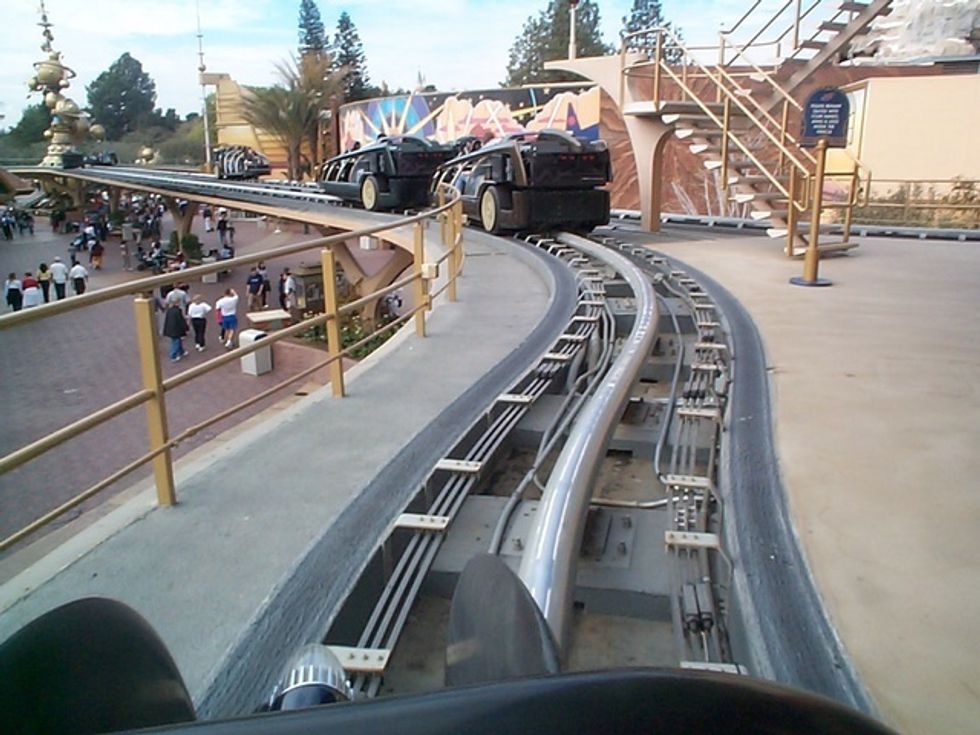
Rocket Rods encountered several challenges before finally closing in 2000
Image credit Rabit, CC BY-SA 3.0, via Wikimedia Commons
When Disneyland set about to open the “New Tomorrowland” in 1998, the centerpiece attraction of the entire project was a replacement for the park’s beloved PeopleMover attraction called the Rocket Rods.
Ironically, for a “New Tomorrowland’ most of the other attractions were going to remain exactly the same (Space Mountain, Star Tours, Autopia, etc.)
This era of Disney attraction development fell into conflict with management that had become more interested in budget cutting and creating “value engineered” concepts that compromised the project at every level.
As such, the development of the high-speed/high-thrill Rocket Rods suffered problem after problem, as it was viewed often as an offshoot of the new technology that was being designed in Epcot for Test Track, and yet the Rocket Rods were so very different and were saddled with a very different set of problems along the way.
A perfect example was the repurposing of the entire existing PeopleMover infrastructure for the new attraction’s layout. The elevated track platforms were originally designed for the slow-moving, gentle PeopleMover trains and thus lacked banked turns.
Re-engineering the layout to allow for more appropriate high-banked turns was not in the budget, so to keep the high-speed Rocket Rods from flying off the unbanked track or throwing passengers painfully sideways, the vehicles had to slam on the brakes before every curve and then aggressively accelerate again on straightaways.
This constant cycle of rapid acceleration and heavy braking not only ruined the pacing of the ride experience, but also put unforeseen stress and heavy wear on both the vehicles and the track.
The attraction suffered greatly from increasing downtime issues and rising maintenance costs, forcing Disney to finally throw in the towel and close it for good in 2000.
Ironically, Disney has yet to come up with a solution to the issues, and the former Rocket Rods track still wraps all over Tomorrowland even today.
7.Son of Beast at Kings Island, USA - 2000 to 2006/2007 to 2009
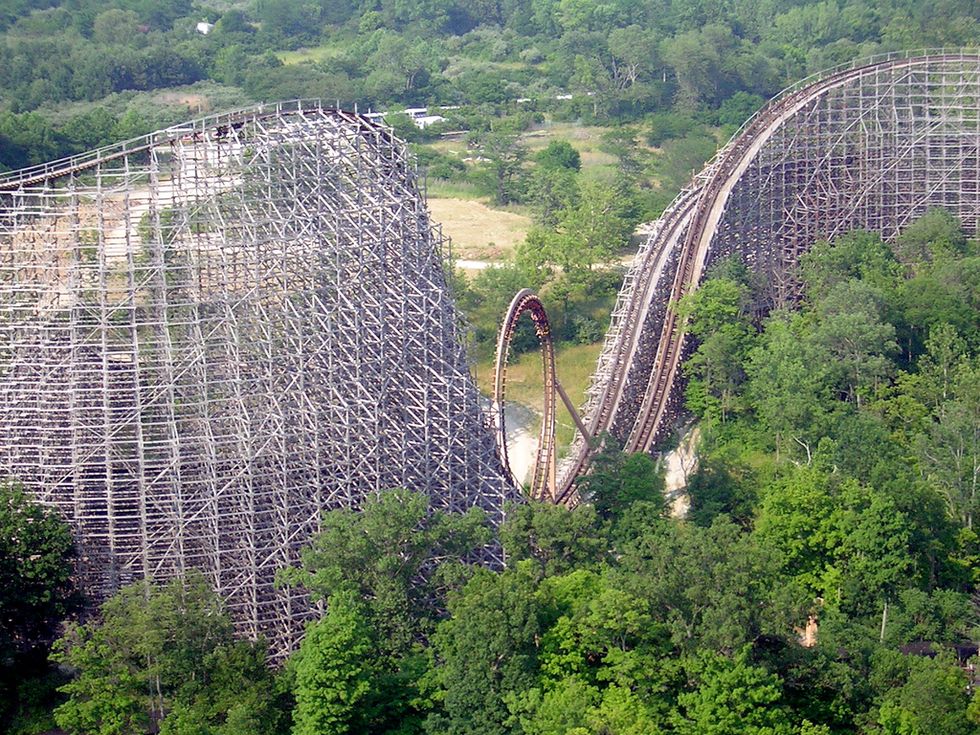
Son of Beast's track layout with the loop, 2005
Image credit Chris Hagerman, CC BY-SA 3.0, via Wikimedia Commons
Creating the epic Son of Beast roller coaster was a monumental undertaking.
Not only was Kings Island trying to create a huge attraction to celebrate the new millennium back in 2000, but it was also trying to create a follow-up roller coaster to the park’s famous Beast wooden coaster, which opened back in 1979 and to this day still holds the record for being the longest wooden roller coaster in the world at 7,361 feet.
Instead of attempting to build something longer, Roller Coaster Corporation of America built a wooden roller coaster that would be the tallest in the world at 218 feet, with a 214-foot first drop, and the fastest wooden roller coaster in the world, hitting a top speed of 78 mph
If that wasn’t enough, Son of Beast would be the only operating wooden roller coaster in the world to feature a vertical loop, which stood 118 feet tall.
It was impressive, it was frightening, it did everything the park promised… and it beat the hell out of the riders.
I can confirm from first-hand experience: one ride on Son of Beast was enough to make you think twice about lining up again, but you know I had to do it. By the end of my second ride, I was hurting in places that I didn’t even know I had.
Ironically, you might think the giant vertical loop was the issue, but it wasn’t. The inversion was as smooth as can be, as it featured a steel backbone and steel coaster-style supports, and just used a wooden coaster-style laminate stack and steel rails for the track mounted to it.
The only major difference was that, to navigate the custom inversion, Premier Rides created a special train, which was said to be quite a bit heavier than a typical wooden roller coaster train.
So when the problems began, they weren’t due to the inversion; the rest of the ride was tearing itself apart from the forces and roughness as heavy train after train ran through the course.
An incident with the track forced Son of Beast to close in 2006, and in an effort to save it, the park opted to switch over to lighter, more traditional wooden coaster trains, which also meant that the inversion had to be removed before it could reopen for the 2007 season.
Unfortunately, this still didn’t solve the mounting maintenance issues as the giant ride refused to be tamed, and Kings Island shut it down for good in 2009.
Over the following three years, options were looked at to possibly save it, including a potential “hybrid conversion”, but in the end the demolition crews were brought out to bring Son of Beast down to the ground in 2012.
8.Hypersonic XLC at Kings Dominion, USA - 2001 to 2007
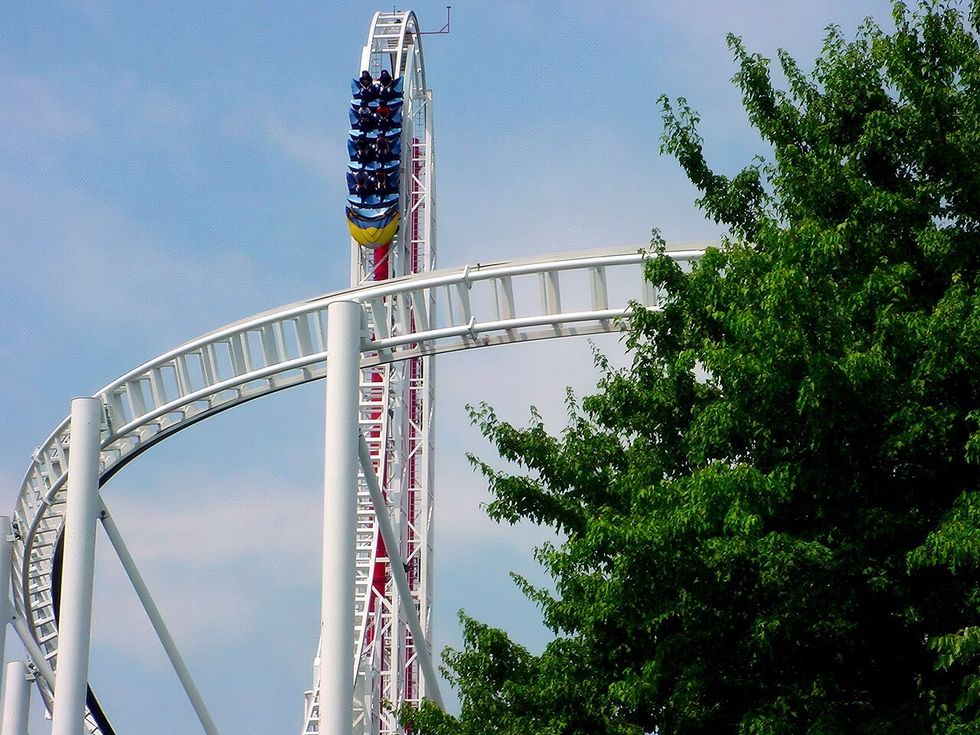
A Hypersonic XLC train climbing the top hat after the launch at Kings Dominion
Image credit ThrillZing, CC BY 4.0, via Wikimedia Commons
After wowing the world with his air-powered Drop Tower rides, the legendary Stan Checketts of S&S Power decided to apply that same technology to the roller coaster world and created a demo ride at the company's Utah headquarters: Thrust Air 2000.
As the legend goes, someone drew the sample track concept on a restaurant napkin one day to shoot a train out on a launch track that would then go straight up, over, and down a massive “Top Hat” airtime hill.
As imposing as the experience looked, the highlight of it all was the insane acceleration that was achieved through the use of S&S’ air-powered launch system, which would launch a train full of riders from 0 to 80mph in just 1.8 seconds.
To handle the concept, S&S built a custom track rail system that featured flat rails rather than round, and the prototype trains used air-filled aircraft-style tires instead of more traditional coaster polyurethane wheels in order to help smooth out the ride experience.
After testing the prototype in Utah, Paramount Parks bought it from S&S for Kings Dominion, where the layout would be extended into a full circuit and open in 2001 as Hypersonic XLC. The result was an experience like no other, but it may also have been a concept a little ahead of its time.
Riding it myself, to this day, it was the most forceful launch experience I had ever had the pleasure of riding, but this wasn’t an experience for everyone.
Many found it a bit too much, and after one ride, they were good… no getting in line to ride it again as they staggered off to find a bench to sit and calm their nerves.
There was nothing unsafe about the experience and no incidents or rider accidents reported. Instead, what did Hypersonic in was a combination of high maintenance costs and bouts of downtime in order to keep the trains running as designed.
By 2007, Kings Dominion had decided that it had spent enough on it, and closed it for good.
9.Tomb Raider: The Ride at Kings Island, USA - 2002 to 2007
Kings Island has made this list three separate times, more than any other park, for pushing the envelope of theme park attraction design a little too hard. Its third strike was something that seemed like a very safe bet at the time.
Kings Island would be home to the world’s first Giant Top Spin, a supersized version of a popular flat ride concept.
Under the Paramount branding of the time, Kings Island was looking to embrace more theming and IPs in its attractions, so it was decided to take this giant-sized Top Spin and fully enclose it in a massive dark building, surrounding it with props and special effect sequences.
There was also a high-end bit of theming to tie into the 2001 release of the feature film, Lara Croft: Tomb Raider starring Angelina Jolie.
The final result was impressive and reportedly cost over $20 million.
Guests would be sent tumbling into the darkness on the massive flat ride, through Hollywood-quality special effects sequences, close to sharp rocky stalagmites and stalactites, and past water, mist, bubbling lava, and a massive six-armed hostile supernatural guardian.
While Tomb Raider thrilled guests for years, the design was flawed. The powerful motors that tossed the ride vehicle around proved too strong for the ride structure itself, and the g-forces from swinging the gondola around and upside down were said to pull the ride right out of the ground.
New, gentler ride programs were created to lessen the issues, but over time the ride was said to be tearing itself apart as maintenance costs grew year after year. As the only Giant Top Spin ever built, parts were also hard to come by and had to be custom-made, creating lengthy periods of downtime when something did break.
In 2006, Paramount exited the theme park industry and sold its parks to Cedar Fair, but without the rights to continue using the various IPs embedded in the parks, so the Tomb Raider identity and most of the theming were stripped from the attraction in 2007.
While the attraction reopened in 2008 as The Crypt, the theming and music were removed, and the ride vehicle and programming were modified, resulting in an experience that was said to be mostly just flipping upside-down in the dark.
While the impressive Tomb Raider experience left for good years before, the ride itself lasted until 2011, when Cedar Fair closed it for good and said that the ride system had simply reached the end of its operational lifespan.
10.Vertigo at Walibi Belgium, Belgium - 2007 to 2008
Doppelmayr, one of Europe’s most respected makers of ski lifts, ropeways, and funicular people-mover systems of the era, decided to try its hand at a unique new attraction concept it called the Mountain Glider.
The Mountain Glider was a gigantic, suspended, roller coaster-style attraction that looked more at home at a ski resort than a theme park.
The first prototype attraction was built for Walibi Belgium and was intended to open in 2007, but severe delays and technical issues during soft-opening tests pushed the full opening to 2008.
Following a major overhaul, the park held a massive VIP grand opening party for the opening of Vertigo, including bringing in Belgium’s own action superstar, Jean-Claude Van Damme, to ride it in front of the cameras.
While the opening event went off as planned, it was said that the Vertigo attraction suffered a major technical breakdown just 11 days later.
After an inspection, Walibi determined the problem was too severe and too expensive to fix, so they had Doppelmayr remove the attraction for good at the end of the season, making one of the world's most unique rides vanish forever without a trace.
11.Luigi’s Flying Tires at Disney California Adventure, USA - 2012 to 2015
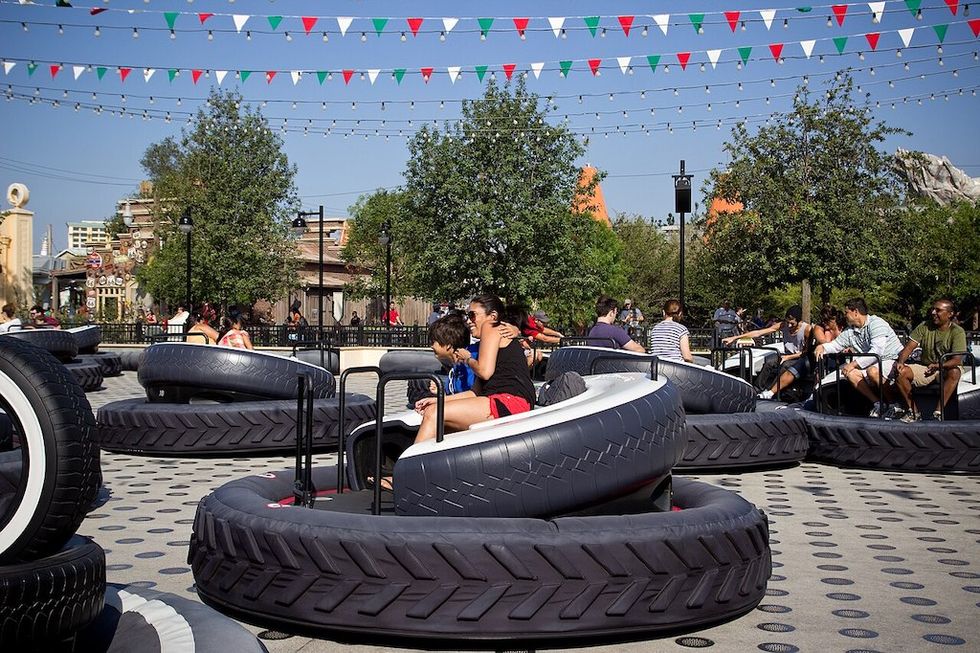
Imagineers tried to solve the Flying Saucers challenge with a new take, but Luigi’s Flying Tires was also short-lived
Image credit HarshLight, CC BY 2.0, via Wikimedia Commons
Stop me if you’ve heard this one before… Disney tried to create an attraction where saucers would float on air not just once, but twice!
Unfortunately, the concept from modern Disney Imagineers failed for pretty much the same reason the original attraction did. It just wasn’t fun enough and was labor-intensive to operate and maintain.
As the tale goes, Disney Imagineers were trying to come up with other attraction ideas for Cars Land at Disney California Adventure. Inspired by the challenge of the old Flying Saucers attraction, they came up with the idea to create Luigi’s Flying Tires, themed to Luigi’s Casa Della Tires shop from the film.
Guests would ride inside giant tires instead of flying saucers that were much bigger, able to hold 2 or 3 guests at a time. The end result was that the tires barely moved, no matter how much the guests struggled to control them.
Disney tried to add a little more fun by introducing music and throwing an assortment of beach balls onto the course, but the Flying Tires were retired even more quickly than the Flying Saucers.
12.Ring Racer at Nürburgring, Germany - 2013 to 2013 (4 days, 31 October to 3 November)
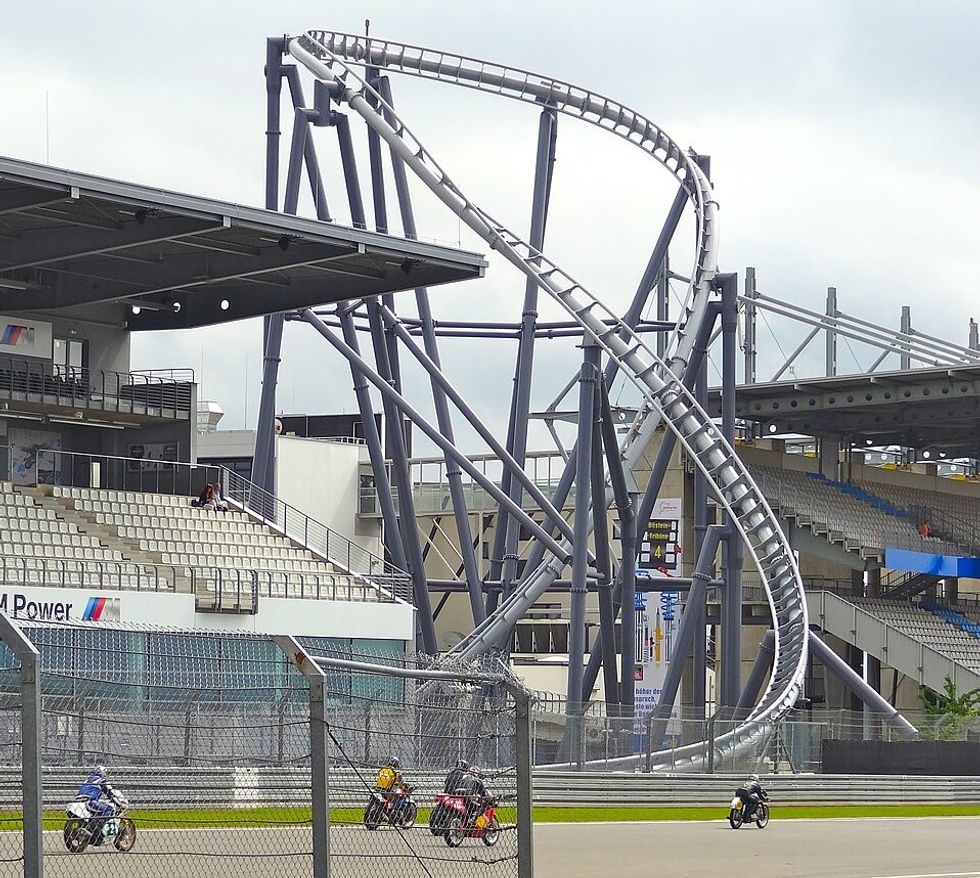
The large turnaround track element at the far end of Ring Racer is still in place for guests to see
Image credit Pitlane02, CC BY-SA 3.0, via Wikimedia Commons
This story may sound a little familiar, too, because it involves another attempt by S&S Power to create a record-breaking air-launched roller coaster. This version of the launched coaster was created to launch right alongside the world-famous Nürburgring race track in Germany.
The racecar-themed trains were to launch in front of the crowds at the track, hitting a top speed of 135 mph in just 2.5 seconds.
During testing of the launch system in 2009 (the intended year it was to open), it was said that one of the compressed air tanks for the launch system exploded with enough force to shatter windows in nearby buildings.
To avoid another incident with crowds present, modifications lowered the launch intensity and top speed to 99.4 mph in 2 seconds. Unfortunately, the Ring Racer coaster ran for only four days in 2013 as part of the RingWerk attraction before they opted to close it for good.
Over the years, many hoped it might reopen, as the track and structure remained in place at Nürburgring for the next 12 years. In 2025, demolition crews finally began removing sections of the coaster track, but even today, the large turnaround track element at the far end of Ring Racer is still in place for guests to see.
13.Twist Coaster Robin at Yomiuriland, Japan - 2014 (1 day, 14 March)
The full story of what happened with Twist Coaster Robin in Japan remains somewhat of a mystery, as it is said the coaster was open to the public for less than a full day before being closed for good.
Built by the Japanese company Sansei, the new coaster concept was said to be based on S&S Power’s designs for the El Loco roller coaster system, which S&S had built six of between 2008 and 2014 at various parks around the world.
Sansei had purchased a 77.3% ownership stake in S&S in 2012 and went on to purchase the rest of the ownership shares in 2014, so it seems they set about making a Sansei-branded version for Yomiuriland.
According to various reports, only a few hours after the grand opening of Twist Coaster Robin, a major incident was said to have taken place. Various reports described the incident as a car on the lift hill detaching from the lift and rolling backwards about 5 to 10 feet down the lift before crashing into a second car sitting in the station.
While passengers were said to be on board, thankfully there were no reported serious injuries from the incident.
Later investigations reported that the incident occurred because of a flaw in the design of a new custom anti-rollback device installed to be quieter than the normal version used on the S&S models.
The ride closed immediately, and though they spent about two years working out possible design modifications to reopen it, Yomiuriland ultimately opted not to reopen Twist Coaster Robin and had it demolished and scrapped in 2016.
14.Submarine Quest at SeaWorld San Diego, USA - 2017 to 2017
This is one of the most curious entries on this list, as this short-lived attraction wasn't high-speed or high-thrill, nor was it cutting-edge. It was meant to be a slow-moving attraction that traveled through a few indoor segments, but most of it ran on an elevated outdoor trackway.
Described as an open-air dark-ride concept, the final version of the attraction seemed to have some design conflict. Concept art shown before building the attraction featured almost entirely views of the ride passing through enclosed segments past aquarium-filled animals, in an attempt to create an educational experience-based attraction.
The final, somewhat value-engineered concept instead featured mostly outdoor track segments and a vehicle loaded with touchscreens that prompted riders to play games on the screens during the ride, rather than asking them to view the scenery along the way for much of the journey.
According to riders, the touch screens not only suffered from frequent glitches, but the glare from the sun in the mostly outdoor layout made them very difficult to see. In the end, most guests deemed the attraction un-fun and un-educational, and it served no real purpose.
With no explanation from SeaWorld San Diego, the attraction was simply shut down for good after running for less than a year. The park removed the attraction's elevated structure entirely by 2021, likely during one of the park’s state-mandated COVID pandemic shutdowns.
15.Do-Dodonpa at Fuji-Q Highland, Japan - 2017 to 2021
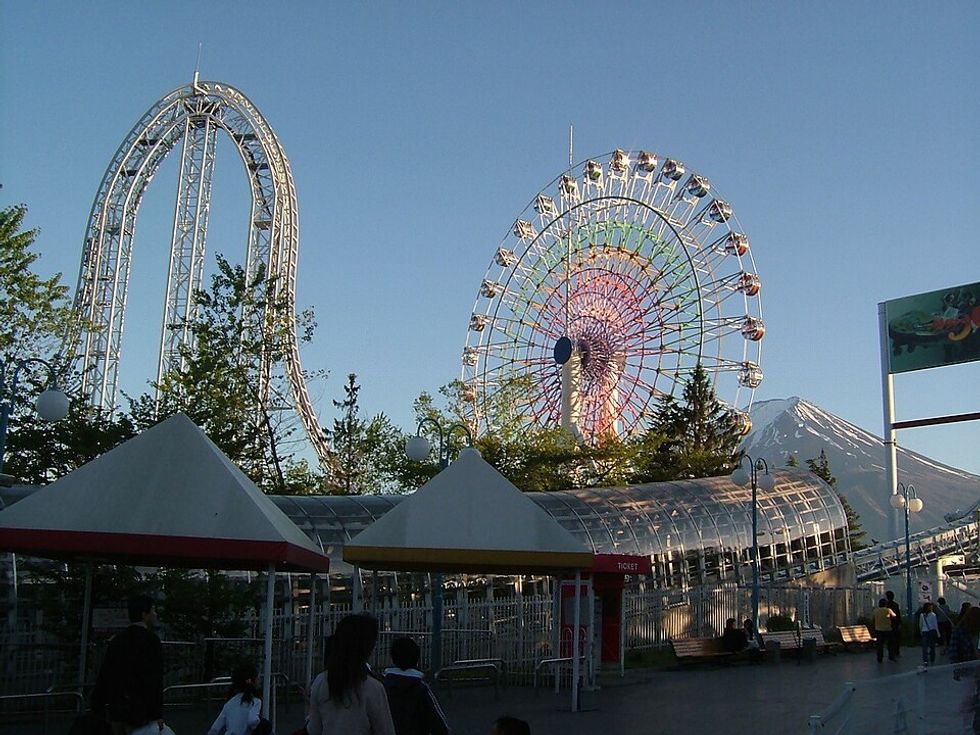
The Dodonpa roller coaster, with Mount Fuji in the background
Image credit Geomr, CC BY-SA 3.0, via Wikimedia Commons
The tale of this ride is long and interesting… Do-Dodonpa first opened in 2021 as “Dodonpa”, the world’s second S&S Thrust Air coaster.
While the Hypersonic XLC ride that opened at Kings Dominion this same year was an expanded version of the prototype test concept, Dodonpa took everything S&S learned from the prototype and refined it into an even bigger and more majestic full circuit launched coaster, able to reach a record-breaking launch speed of 106.9mph (182km/h) in just 1.8 seconds.
Go on…read those numbers again and remember that Hypersonic reached a top launched speed of just 80mph in 1.8 seconds. To this day, I don’t think any other amusement park attraction has come close to Dodonpa's lofty acceleration goal.
In the world of launched coasters, the current king is still Formula Rossa at Ferrari World, which takes nearly 5 seconds to reach its top speed of 149mph, and while the new Falcon’s Flight at Six Flags Quiddia City can achieve a top speed of 155.3 mph, it uses a magnetic launch system to boost the speed of a moving train as it is dropped down the side of a cliff.
So, Dodonpa's power is still considered legendary.
In late 2016, Fuji-Q closed Dodonpa to make major changes to the ride. The well-known top hat element was removed and replaced nearly a year later by a nearly 50-meter-tall vertical loop inversion.
The launch system was also retooled and upgraded in order to reach a new, even faster top speed of 111.8mph (180 km/h) in just 1.56 seconds.
Renamed Do-Dodonpa, the revised attraction reopened in 2017. During the COVID pandemic, reports came to light claiming that the new extreme launch forces had caused a string of rider injuries, including broken bones, between 2020 and 2021.
The park suspended operations for a complete safety review and ultimately decided to close the ride permanently in 2024 rather than try to fix any issues with the revised launch system.