
Something I really love about the theme park industry is the endless drive to create something new, something better, something bigger… something faster! The entire industry is built on this relentless cycle of invention, risk-taking, and concept refinement.
Each year, attraction designers, storytellers, and engineers push new concepts beyond the limits of established technology to create experiences that captivate and thrill guests in ways never seen before.
While there is always something new just around the corner, even in this very competitive field, there are still groundbreaking attractions that have stood so far ahead of the competition that they did not simply entertain or thrill guests, but actually broke through barriers to rewrite the rules of theme park design entirely.
From early mechanical innovations to revolutionary concepts like fully trackless vehicle systems, these 20 attractions introduced breakthrough and crazy prototype ideas that eventually matured into universally accepted industry standards.
Here is a breakdown of the visionary attraction concepts that really shaped the modern theme park landscape over the years, listed in the chronological order in which they were created.
Matterhorn Bobsleds (1959) at Disneyland, USA
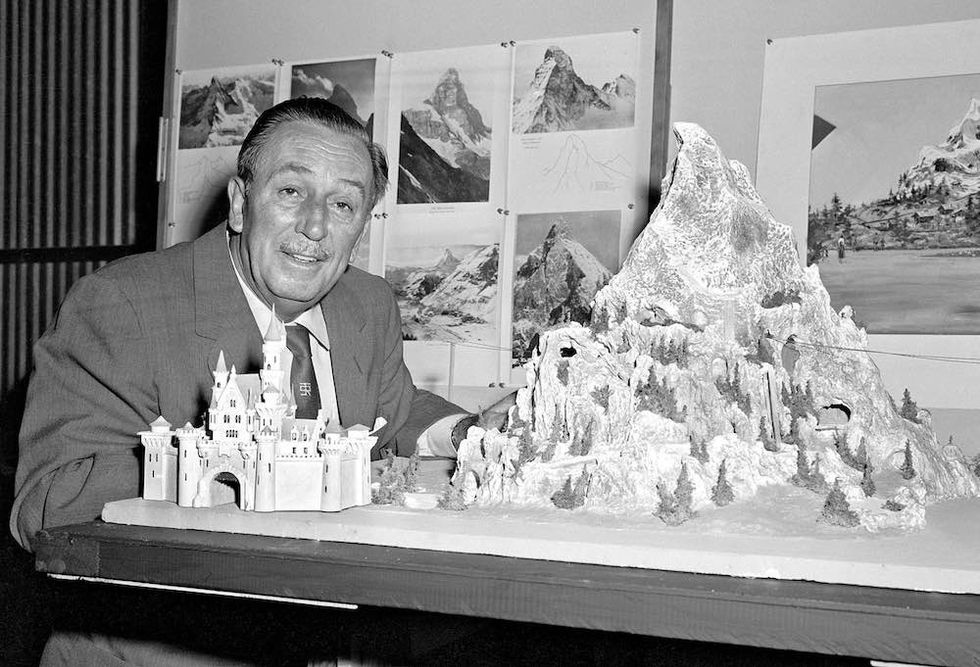 1958: Walt Disney reviews a model for the Matterhorn Bobsleds
 Image courtesy of Disney
The creation of the Matterhorn Bobsleds at Disneyland was huge for a number of technological reasons.
First, it combined two entirely different roller coaster layouts within a 147-foot-tall fake mountain structure that was a 1/100th replica of the legendary Matterhorn in the Swiss Alps.
It was also the first roller coaster to feature a Block Zone Safety System to keep proper separation between all the individual coaster trains operating within the structure at the same time.
However, the Matterhorn’s biggest claim to fame was that, thanks to a collaboration with Arrow Dynamics, it was the first roller coaster to use the modern tubular steel roller coaster track concept now common to virtually every steel roller coaster produced today.
While steel-tracked roller coasters existed before the Matterhorn, they used track systems that looked more like small-gauge train tracks or carefully built track systems made from angle-iron fabrication.
Enchanted Tiki Room (1963) at Disneyland, USA
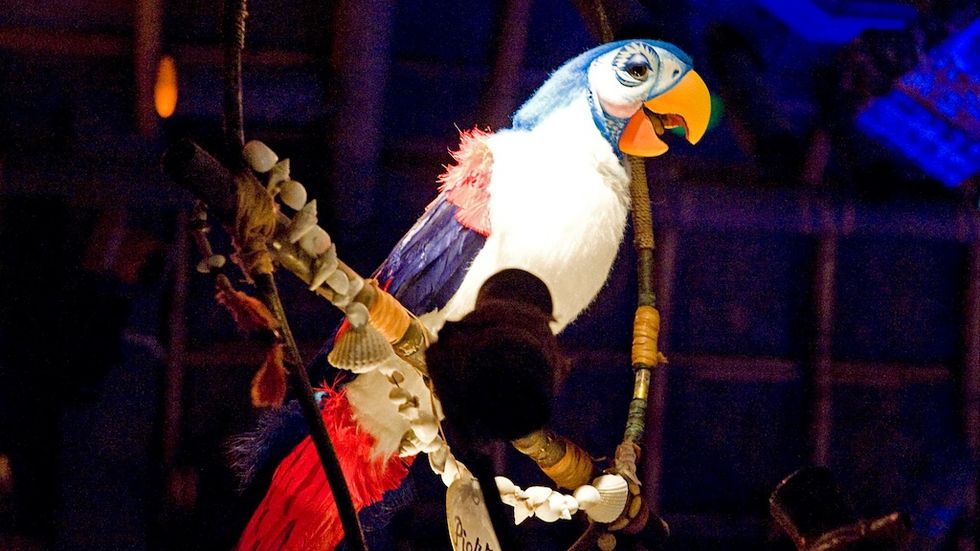
Disney's Enchanted Tiki Room featured the first audio-animatronic figures
Image courtesy of Disney
Although it wasn't the most popular attraction, Disney’s creation of the attraction led to the birth of the first audio-animatronic figures, along with multi-channel sound in an attraction.
Before the creation of the Tiki Room, animated figures in amusement park attractions were very simplistic creations that relied on basic gears, levers, and pneumatic pulses to create the most basic motions.
The Enchanted Tiki Room revolutionized the concept by using audio-tape technology where specific tone frequencies were used to control the motors inside the various tropical bird figures and carved Tiki statues.
Mixed with the use of multi-track audio synchronization, this allowed for dozens of figures to blink and move in perfect sync with the other figures in the room, creating the illusion that they were all singing together to a 14-channel sound system that surrounded the theater.
The concept started here and laid the foundation for how future dark rides and animatronic systems were built.
Pirates of the Caribbean (1967) at Disneyland, USA
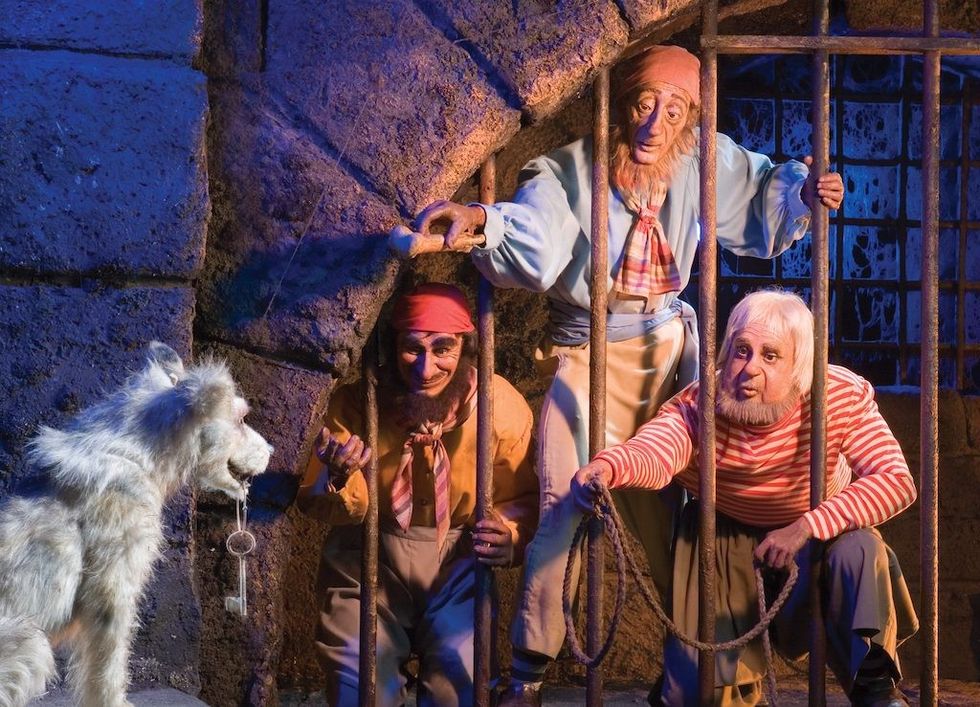 Pirates of the Caribbean at Disneyland was the original version of the popular ride that spawned several new iterations, as well as a film franchiseImage courtesy of Disney
While the Tiki Birds came first, it was the creation of Disney’s Pirates of the Caribbean dark ride a few years later that elevated the concept of the basic dark rides of the era into something more akin to entering a fully immersive and cinematic experience.
Guests rode through a world of audio-animatronic pirates that lived within enormous sets, synchronized effects and music that created a fully fleshed-out storytelling experience that created the template that all modern themed attractions would follow.
It was more than just watching a show full of singing figures; guests could ride through a full movie-like adventure that surrounded them with details in every direction.
The Haunted Mansion (1969) at Disneyland, USA
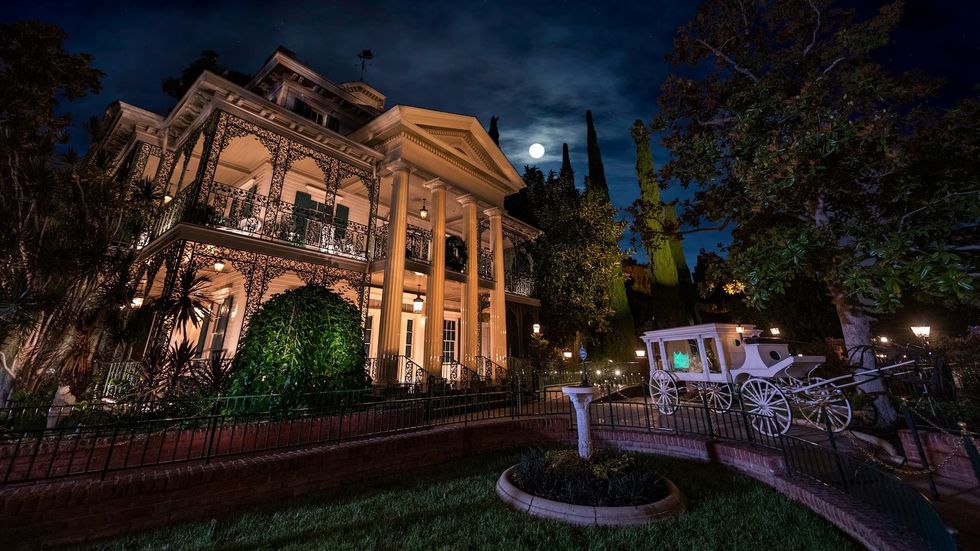
Disneyland's Haunted Mansion features a Pepper's Ghost scene
Image courtesy of Disney
Throughout the 1960s, Walt Disney’s creative team was on fire, creating one groundbreaking attraction after another.
The Haunted Mansion took everything Disney’s WED Enterprises team learned from creating animatronics and a thrilling adventure world and packed it into a creepy new creation that brought full spectral special effects and eerie illusions to life before guests' eyes.
The massive Pepper’s Ghost ballroom scene remains as one of the most famous special effects in theme park history.
They also blended the concept with Disney’s revolutionary OmniMover ride system.
While many are quick to credit The Haunted Mansion as the first use of the OmniMover system (revolutionary as a non-stop ride system able to point riders in any direction to focus on the various scenes as they pass), this is incorrect.
It was first used two years prior on the mostly forgotten Adventure Thru Inner Space attraction that opened in Tomorrowland in 1967.
Space Mountain (1975) at The Magic Kingdom, USA
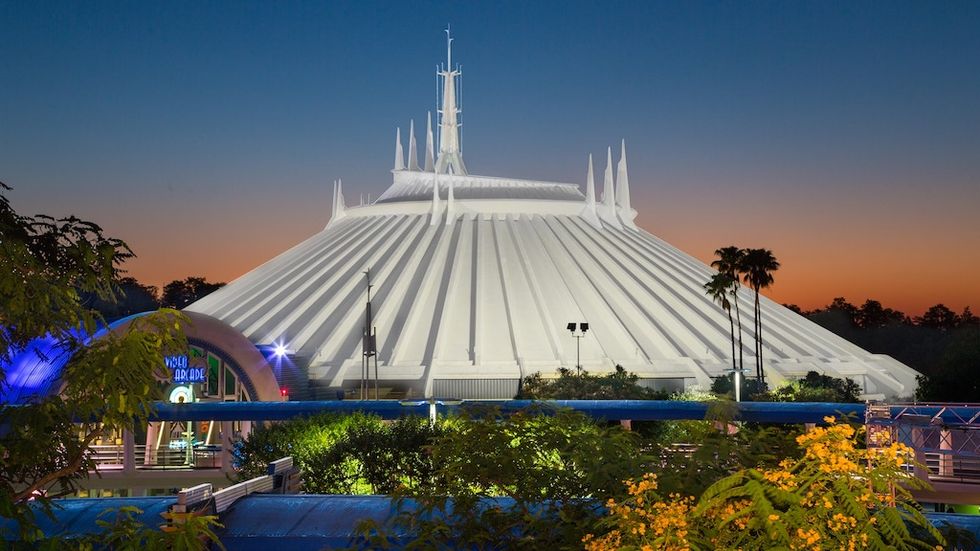
The first Space Mountain at Disney's Magic Kingdom
Image courtesy of Disney
While Walt Disney passed away before Walt Disney World could open, the park laid new ground and created new ride concepts with the creation of the first Space Mountain attraction.
For this attraction, Disney’s designers took the concept of the Matterhorn Bobsleds, but opted to fully enclose two separate roller coaster tracks inside a massive themed structure where they could use darkness and various projection effects to create the illusion of traveling through outer space on a rocket sled.
Space Mountain helped create the genre of indoor themed roller coasters as a major attraction concept that would be replicated across the world in the years to come.
Captain EO (1986) at Epcot & Disneyland, USA
Celebrated as the first “4D” theater attraction that merged a professionally made Hollywood cinematic film experience, shot in 3D, and projected into a theater space that added additional in-theater special effects to enhance the experience such as lasers, smoke effects, theatrical animated lighting effects and more.
The 17-minute film was directed by Frances Ford Coppola, produced by George Lucas, and features performances by Anjelica Huston and the legendary Michael Jackson as the main character, Captain EO, in this sci-fi musical adventure.
The success of this groundbreaking attraction created a whole new theme park attraction genre (the 4D Theater) that resulted in countless variations based around new effects concepts and built around various IPs as well as self-made film concepts, including the addition of live actors, animatronics, and more.
Star Tours (1987) at Disneyland, USA
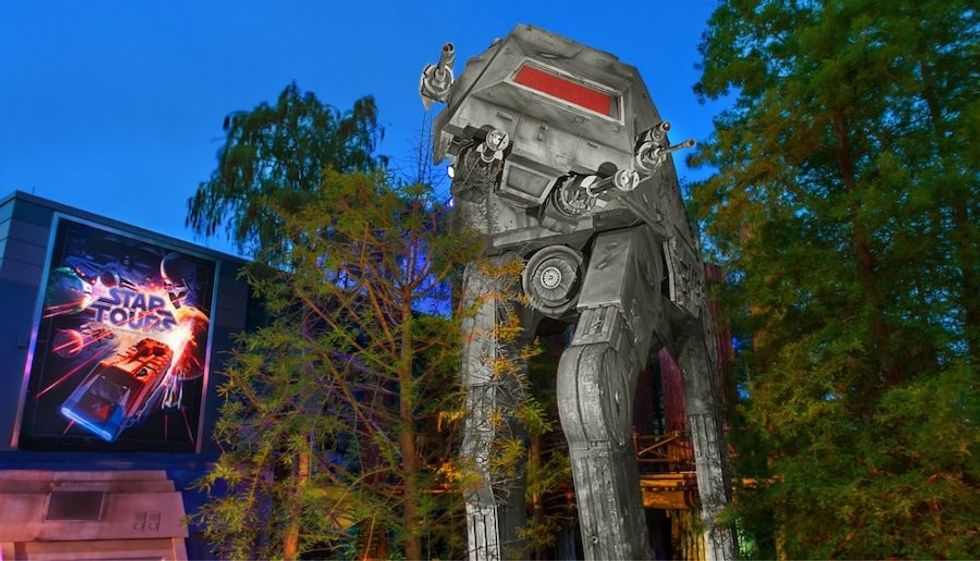 Star Tours, as pictured in 2019
Image courtesy of Disney
Disney Imagineers worked with George Lucas to bring his legendary Star Wars IP to life for Disneyland guests in a way no one had seen before, bringing flight simulator technology to the masses.
Flight simulators were previously a concept reserved primarily for military use.
But when converted for theme park use to give guests a chance to take an intergalactic flight into the world of Star Wars, it proved not only extremely successful but also created an entirely new theme park attraction genre that others quickly tried to copy.
Star Tours also made history again years later when the attraction was upgraded in 2011 to the current Star Tours - The Adventures Continue version.
This replaced the old-fashioned film projectors with cutting-edge 3D digital projection technology, paired with a massive video server that could store dozens of possible footage clips for the ride.
Using a sort of slot machine-style randomised selection process, different clips are selected and put together as a playlist before each ride sequence is launched, allowing for an experience where no two rides are ever quite the same.
Over the years, many new ride sequences have been created and added to the mix, allowing even more random possibilities.
As of the last check, I believe there are over 1750 possible combinations, but since Disney keeps adding things, those numbers continue to grow.
E.T. Adventure (1990) at Universal Studios Florida, USA
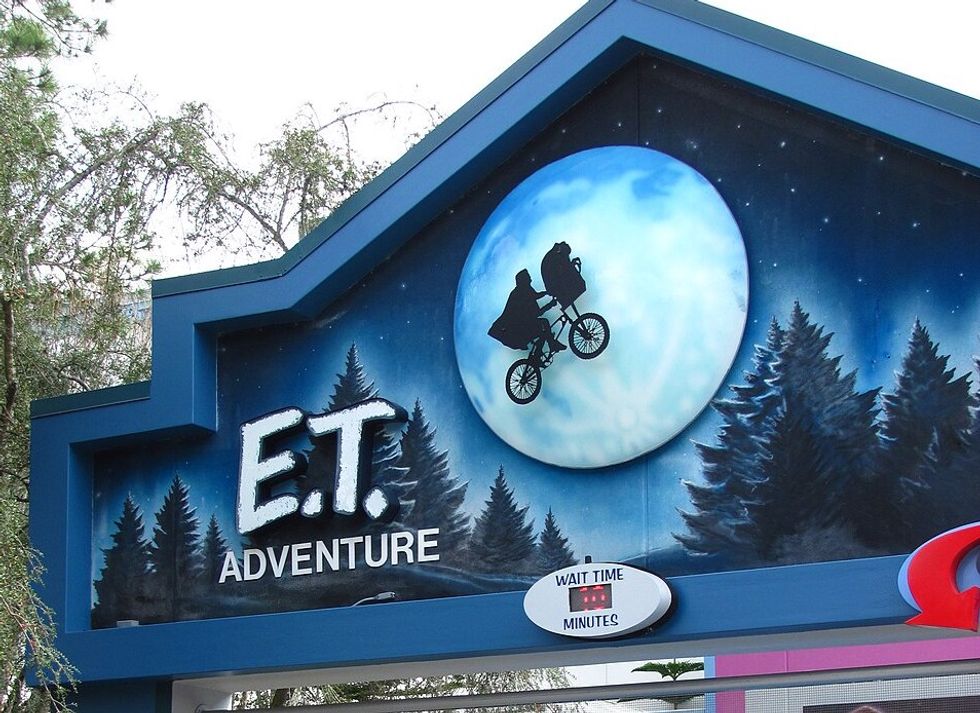
E.T. Adventure was one of the earliest examples of personalisation on the theme park ride
Image credit: Jeremy Thompson, CC BY 2.0 via Wikimedia Commons
While the suspended dark ride system Intamin created for the opening of Universal Studios Florida is exciting, what really set this new experience apart was its top-notch dark-ride environment, built within a soundstage-themed structure by Sally Corp.
This included an indoor portion of the queue that convincingly made it feel like guests were standing in the middle of a forest at night, including the smell of pine trees.
But what really made this attraction stand out as being very different was the addition of a unique feature that provided a very personalized rider experience unseen anywhere else at the time. Guests provided their names at a manned check-in station as they entered the attraction and were each given a passport card.
They then handed these cards to the ride operators as they boarded the vehicle, which were scanned into the ride’s computer system, allowing the E.T. animatronic figure at the end of the ride to speak each guest’s name as they passed by.
This basic concept is thought to be the earliest form of personalization on a theme park attraction, long before the creation of today’s more interactive guest track systems.
The Twilight Zone: Tower of Terror (1994) at Disney’s Hollywood Studios, USA
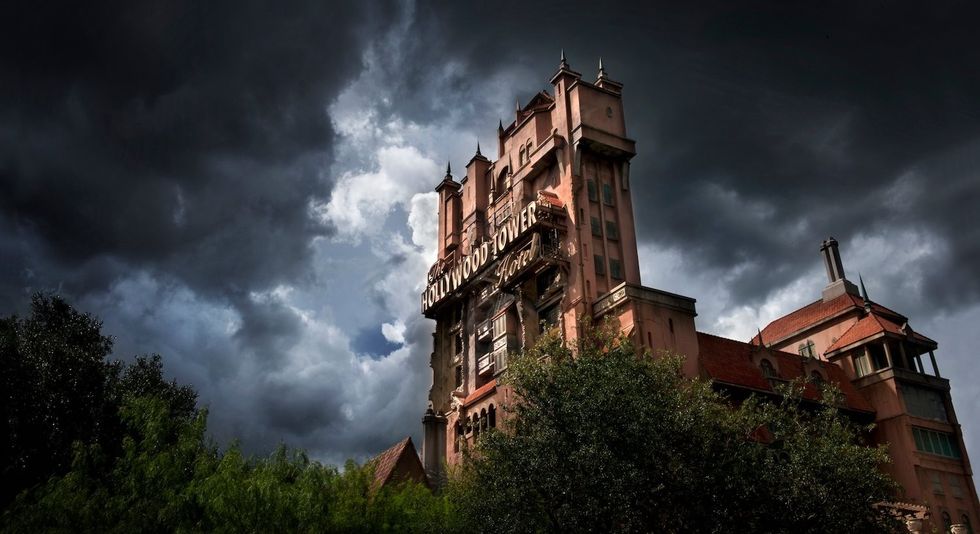
The Twilight Zone Tower of Terror at Hollywood Studios introduced a new type of dark ride
Image courtesy of Disney
In just about every way possible, Disney’s Imagineering team set out to break the rules to create one of the most unique ride systems in the world… one so unique that even Disney has not been willing to create an exact duplicate of the original ride hardware.
Early concepts for the attraction considered purchasing an off-the-shelf Intamin “Freefall” ride and enclosing it, but those limitations didn't give the designers the freedom they wanted to create a truly unique drop-ride experience.
So they turned to the OTIS elevator company and asked them to create something that went against everything that they had strived to achieve in the elevator business.
Instead of a “freefall” style, gravity-powered drop ride, the Twilight Zone uses an entirely powered elevator system that drops riders down an elevator shaft faster than gravity alone would.
This doesn’t even include the custom theming, special effects, wild storytelling, and use of the Twilight Zone IP that together created one of the best themed attractions on the planet.
Then, even that wasn’t enough, as Disney Imagineers went back and revised the attraction several times over the years to create all-new drop-motion profiles for updated versions of the ride that were even more exciting.
Later, they added several possible ride profiles to the attraction that would be selected at random, so guests never knew what to expect at any given moment in terms of motion (up or down), as well as which special effects sequences they would see during their ride.
This created an attraction that was very re-rideable due to the unpredictable nature of the experience.
Indiana Jones Adventure: Temple of the Forbidden Eye (1995) at Disneyland, USA
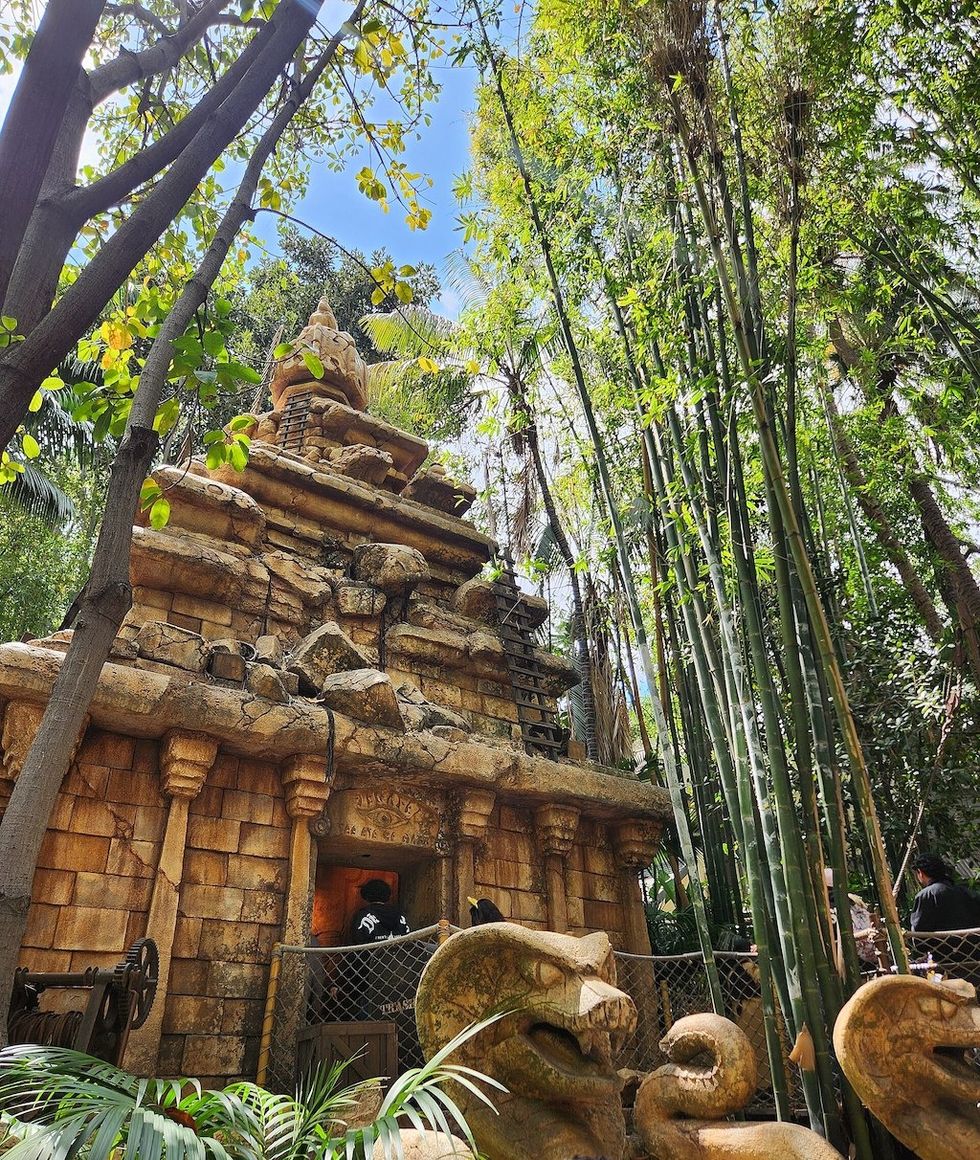 Indiana Jones Adventure: Temple of the Forbidden Eye featured another ride first for DisneyImage credit Contributor19, CC BY 4.0, via Wikimedia Commons
The creation of the legendary Indiana Jones Adventure attraction brought to life an entirely new style of dark ride with the arrival of what Disney Imagineers called Enhanced Motion Vehicles.
The concept elevated what would normally be a standard dark ride vehicle moving along a plain track by adding a full motion-simulator platform to the vehicle itself, providing extra movement for riders.
This new design concept from Disney allowed for three degrees of simulated motion (pitch, roll and yaw) to be synchronized directly with the vehicle's own forward movement and various environmental show scene cues.
This allowed the EMV to offer an off-road jeep-style adventure ride that could simulate sudden braking, violent terrain changes, a bridge collapse, and moments of rapid acceleration, all within a fully immersive dark ride environment.
The final result set a new bar for creating dynamic, motion-based dark ride experiences.
Space Mountain: De la Terre à la Lune (1995) at Disneyland Paris, France
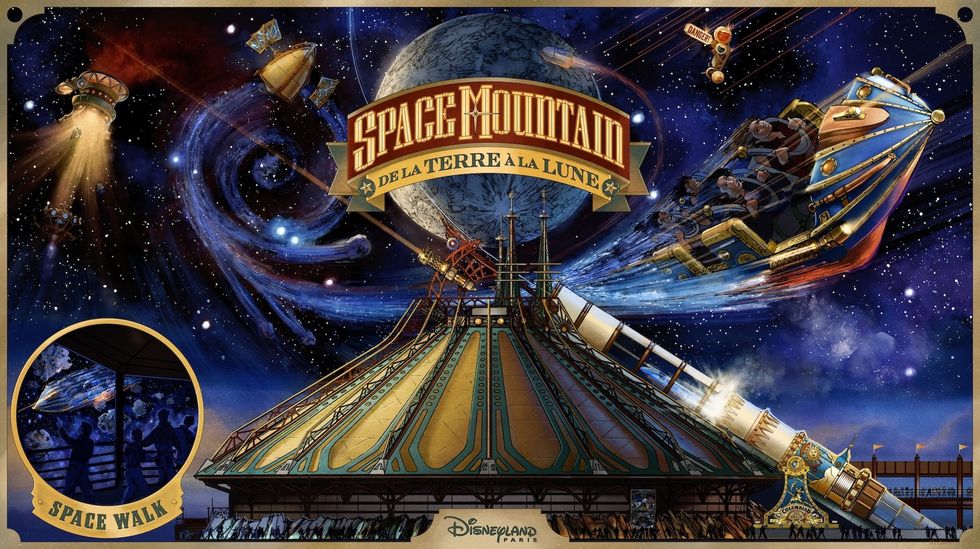
New artwork for Space Mountain - De la Terre à la Lune at Disneyland Paris was revealed at D23, returning to the original theme
Image courtesy of Disney
While this is the second version of Space Mountain to make the list, Disney learned a lot of new tricks in the 20-year gap between the opening of the two attractions.
Tapping Vekoma to build the roller coaster hardware, Disney's latest creation featured the first incline launch on a roller coaster.
This fit the attraction's Jules Verne theming, as guests were loaded into a giant “cannon” and then shot up the side of the mountain before entering the more traditional dark-gravity portion of the ride experience, which also included the first inversions on a Disney attraction.
While the special effects within the dark dome elevated the attraction experience to a new level, what also set this newest version of Space Mountain apart was the creation of the first synchronized on-board audio track on a roller coaster.
Speakers mounted within the roller coaster train played a custom-made orchestral soundtrack that updated to stay musically in sync with the track elements the roller coaster moved through at different points in the layout.
The Outer Limits: Flight of Fear (1996) at Kings Island & Kings Dominion, USA
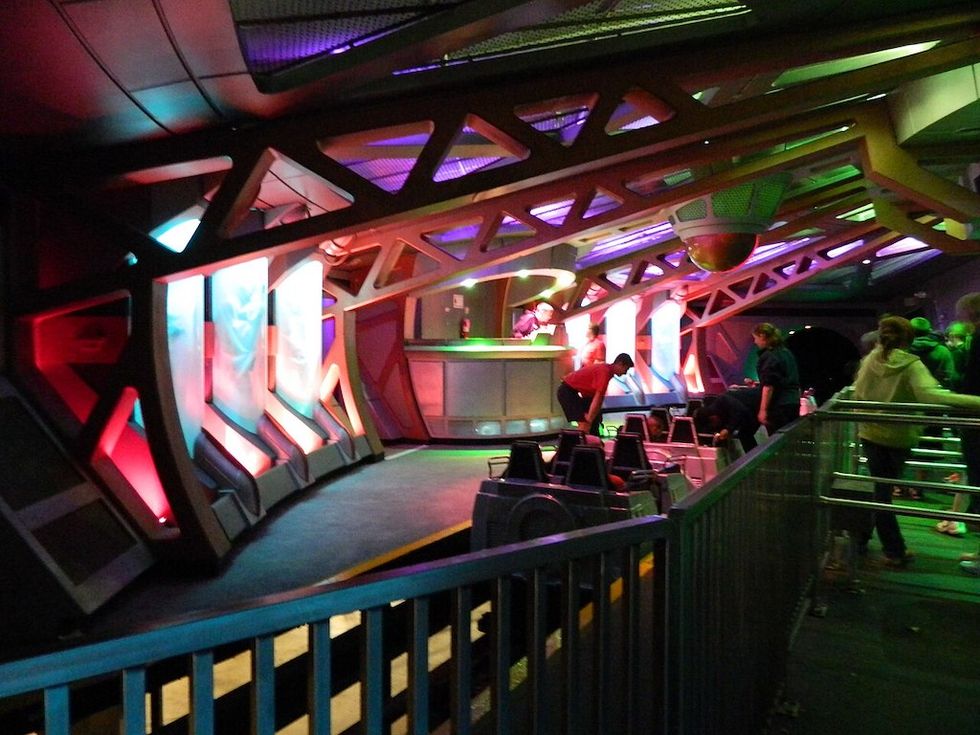
Ride loading for The Outer Limits: Flight of Fear at Kings Island
Image credit Jonathan Goble, CC BY-SA 3.0 via Wikimedia Commons
Using a revolutionary new roller coaster system, Premier Rides tried to create its own version of a Space Mountain-style dark roller coaster experience for the Paramount Parks chain, tying it into The Outer Limits IP at the time.
To make this new ride system stand out, Premier Rides created two identical ride systems as the world’s first magnetically launched roller coasters.
No lift hill required, as riders would pass through a queue inside an Area 51-style hangar, climb the steps up into a UFO and then board the roller coaster train in a station surrounded by chambers showing off other alien-abducted human test subjects.
They were then fired into the darkness using a LIM launch system, creating an experience unlike anything anyone had ever felt.
Today, magnetic launch systems for roller coasters are a common, expected part of a day at a theme park, but it all started here.
Test Track (1998) at Epcot, USA
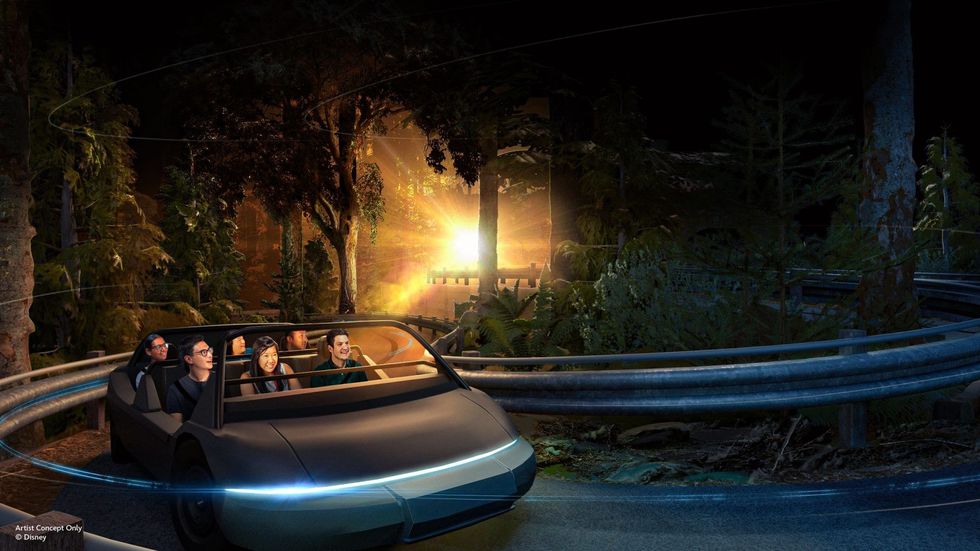
Epcot's Test Track ride officially reopened in July 2025, following a year-long refurbishment that closed it in June 2024
Image courtesy of Disney
The creation of the Test Track ride system is an interesting story: a concept that didn't come to life as smoothly as Disney hoped.
The unique slot-car ride system suffered from extended delays and many years of operation, during which it suffered from frequent breakdown issues and even a failed California cousin, before Disney Imagineers finally figured it all out.
The result is a unique ride system that can offer guests a more traditional, slow dark-ride experience at times, while also rolling out onto an outdoor track for a high-speed, unique ride experience.
Later refinements of the ride concept went on to create the Journey to the Center of the Earth attraction at Tokyo DisneySea in 2001 and later the Radiator Springs Racers attraction at Disney California Adventure in 2012.
This unique ride system has shown that a highly themed attraction can deliver strong storytelling moments while still offering roller coaster-style thrills.
The Amazing Adventures of Spider-Man (1999) at Islands of Adventure, USA

The Amazing Adventures of Spider-Man was a truly innovative take on a dark ride
Image courtesy of UniversalWhat would become the headline attraction of Universal’s brand-new Islands of Adventure theme park, The Amazing Adventures of Spider-Man, caught the attraction design industry off guard as the Universal Creative team behind the project created something many didn't think was possible.
Using an even more robust motion platform mounted to a dark ride track, guests would travel through the comic-book world of Marvel’s Spider-Man, via a mixture of massive real-world physical sets that seamlessly blended into huge 3D projection screens.
Guests are outfitted with 3D glasses before boarding the vehicle, and to prevent visual distortion while the vehicles are in motion, Universal created “squinch technology” to shift the projection imagery's perspective relative to the ride vehicle's real-time position at all times.
All this was combined with 4D theater-style practical effects that would enhance the experience through the use of wind, heat, water, mist, fog and fire.
Through the unprecedented combination of all these concepts, Universal had created an attraction that offered an unparalleled experience that was so far beyond anything else in the world; nothing would even come close for the next two decades.
Pooh’s Hunny Hunt (2000) at Tokyo Disneyland, Japan
The creation of Pooh’s Hunny Hunt at Tokyo Disneyland forever altered the basic architectural needs of dark rides by discarding the need for physical tracks on the ground or overhead rails.
Developed by Walt Disney Imagineering and outside engineering partners, this new ride system used a wireless local positioning system to enable true trackless vehicles.
These vehicles can fully rotate and wander independently through the attraction’s various scenes, pass each other, and adjust their paths dynamically as needed.
This new vehicle concept opened the door to non-linear storytelling pathways and multi-path dark ride layouts, laying the groundwork for future Disney trackless concepts such as Ratatouille and Mystic Manor.
Soarin’ Over California (2001) at Disney California Adventure, USA

Soarin' Over California sparked a new attraction category
Image courtesy of Disney
This is another fine example of how an entire new attraction category emerged from the success of this all-new concept, which premiered with the opening of Disney’s California Adventure theme park in 2001.
Prior to the creation of Soarin', most projected flight experiences involved loading guests into small, fully enclosed simulator cabins, or seating a static audience within a large projection dome screen.
Soarin's unique design allowed seated guests in a dome to be lifted high into the air in front of the screen, completely filling their peripheral vision, while also suspending their legs to hang below them and create the sensation of flight.
The unique seating allows for pitch and roll movements that move in sync with the scenery projected on the screen, and is aided by extra “4D” style effects such as wind and scent, to create the world’s first flying theater attraction.
While the original Disney Soarin' attraction is now on its third ride film this year, the concept has also spawned countless other flying theater concepts that have opened across the globe over the past 25 years.
Revenge of the Mummy (2004) at Universal Studios Florida, USA
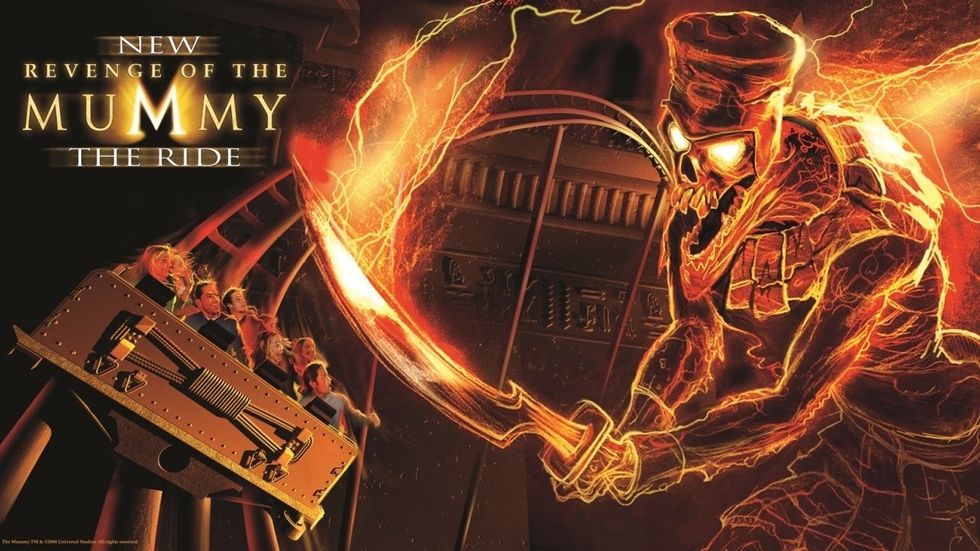
Revenge of the Mummy was replicated in several parks after its successful debut at Universal Studios Florida
Image courtesy of Universal
More than a dark ride, with far more tricks than your typical enclosed dark roller coaster experience, Universal Creative’s Revenge of the Mummy became an instant hit for the chain and was later replicated in several parks worldwide.
To create this unique ride system that brought the supernatural world of Stephen Sommer’s hit film The Mummy to life for theme park guests, Universal worked with Premier Rides, which had achieved early success developing indoor magnetic launch roller coaster technology.
The result was an attraction that was as much a dark ride as it was a high-speed roller coaster, allowing the vehicle to move at just the right speed through various show scenes.
Through the use of innovative track elements, it was also able to stop, suddenly move backwards via track switches, rapidly accelerate forward, and rotate via a unique turntable element, as well as fire guests uphill on an inclined magnetic launch track into a special effects extravaganza full of lighting, audio and extremely hot pyrotechnic fire sequences.
Harry Potter and the Forbidden Journey (2010) at Islands of Adventure, USA
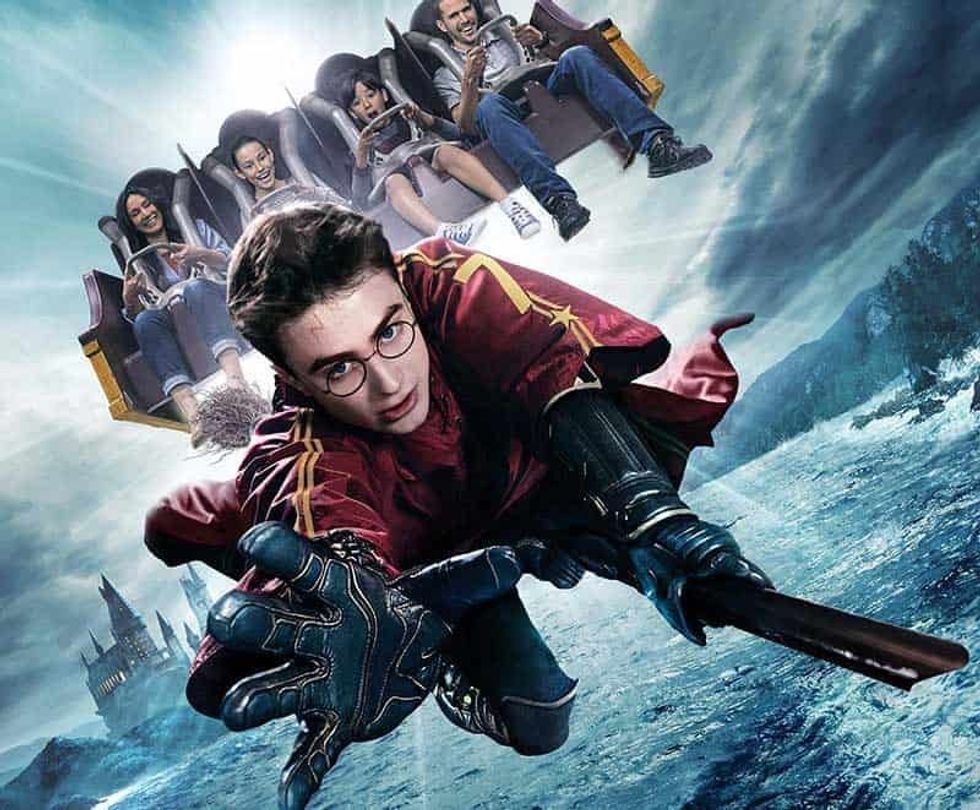
Harry Potter and the Forbidden Journey takes guests on a broomstick tour of the boy wizard's world
Image courtesy of UniversalThe development team behind this revolutionary new attraction system used a clever codename: Project Strongarm, and for good reason.
The basic idea was a huge leap of faith that resulted in something never before seen, as the designers mounted an industrial robotic manufacturing arm from KUKA onto the back of a base fixed to a unique dark ride track system.
The raw concept envisioned a whole new attraction capable of unprecedented movement and maneuverability.
The vehicle could navigate guests through massive physical sets, place them in front of projection domes when needed to create the illusion of simulated flight, and, via the robotic arm, swing them around the form in ways never felt before.
All while they encountered various creatures, characters, and obstacles along their journey through the Wizarding World of Harry Potter. And I haven’t even mentioned the queue itself, which was set within a massive facade of the Hogwarts Castle building.
This was the first attraction collaboration between Warner Brothers and Universal to bring the Harry Potter films to life in a way that was not only true to the IP, but also used the actual actors from the films throughout the queue and attraction.
Harry Potter and the Escape from Gringotts (2014) at Universal Studios Florida, USA
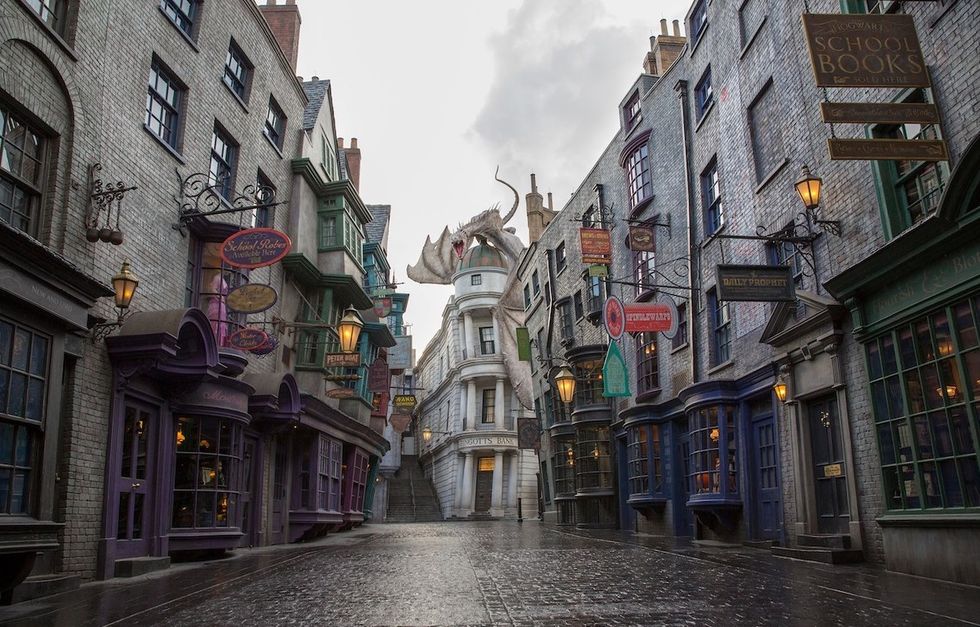
The Wizarding World of Harry Potter: Diagon Alley at Universal Studios Florida, with the dragon-topped ride building for Harry Potter and the Escape from Gringotts
Image courtesy of Universal
Universal Creative was looking to bring another experimental new attraction concept to life with the launch of its second Wizarding World-themed area in Orlando.
As a follow-up to the previous entry on this list, the team knew they needed something just as groundbreaking and breathtaking to do it justice, so they settled on creating the world’s first SFX Coaster system.
In essence, the SFX coaster concept is a “next gen” version of what Universal had already done with the Revenge of the Mummy attraction, mixing the incredible theming and controlled pacing of a dark ride with a roller coaster.
While Mummy used track switches and some unique starts and stops, it was more of a modified roller coaster, whereas the SFX coaster is much more.
The concept would feature trains able to offer controlled rotation so that guests wearing 3D headgear would be able to see various images that were projected onto screens blended in with the scenery, using the same kind of “squinch technology” to modify the projected images similar to how Universal had first created it to use on the Spider-Man attraction.
Add in several unique trick-track features along the way, such as a tilt and drop, or the launch out of a projection dome, and a storyline that puts the riders in the middle of an adventure from one of the films, and Universal had another hit attraction on their hands that was unique in all the world.
While a small handful of other “SFX” coaster attractions have started to appear today, I’m still scratching my head about why Universal has never bothered to copy this attraction in any of their theme parks around the globe.
Star Wars Rise of the Resistance (2019) at Disney Hollywood Studios, USA
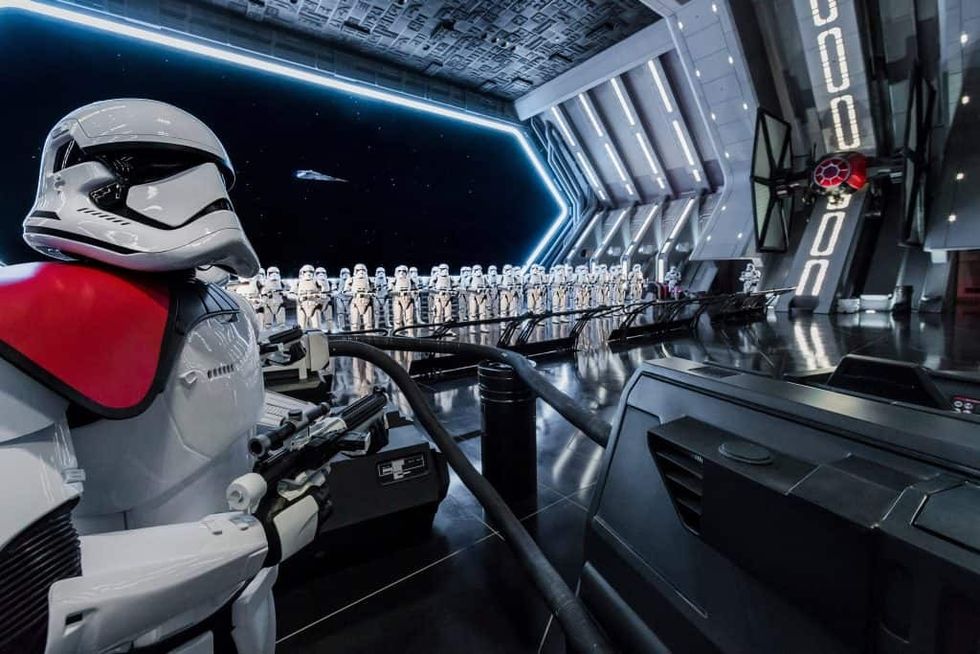 Rise of the Resistance takes riders on a journey with several 'wow' momentsImage courtesy of Disney
This cutting-edge attraction from Disney Imagineering features impressive new innovations and unexpected elements that push the wow factor to another level.
The fact that the adventure and first impressive moments start when guests are still in the queue, long before boarding the actual ride, says a lot about how immersive this concept was.
As guests near what seems to be the end of the queue, they are asked to board a starship that will take them into space.
While normally this would look like yet another pre-show scene on the way to the proper ride, the starship itself is on a giant turntable that slowly spins around, so that when the guests are captured by the Empire via the screens inside the ship, when they are asked to exit, they find themselves transported onto a massive show set.
Here, they are paraded out in front of a garrison of Stormtrooper figures and ordered about by Imperial Officers, who process them as prisoners before depositing them in a holding cell.
Through a very creative jailbreak, the guests climb through a hole in the wall and find themselves ready to board an escape vehicle, which is actually the start of the main ride itself.
This attraction is extremely cutting-edge.
It features new trackless vehicles that are able to take more than one possible path to get through the attraction experience itself, which is loaded with some of the biggest show sets I’ve ever seen on a dark ride, blended with projection screens, practical effects, projection effects, animatronics, screen projections and much more.
The result is a culmination of many different Disney concepts developed over the years, merged through creative storytelling into a multi-phase adventure attraction where the parts before the ride are just as impressive as the ride itself.
Early attractions like Pirates of the Caribbean, Haunted Mansion, and Space Mountain (through the 1970s) established the idea that theme park rides could transport guests into a whole other world.
The attractions that came in the 80s and 90s were more solidly focused on the ability to combine and adapt various forms of technology in order to not only create more sophisticated ride systems, but also bring about a cinematic style of storytelling to the attractions.
From 1999 to 2010, I’d say we saw the rise of complex digital technology being put to use to create better projection systems, 3D imagery, dynamic motion simulation technology and the use of advanced robotics, all to create a much more realistic and sophisticated attraction.
And finally, from 2010 to the present, we’ve witnessed not only the use of all of these to create new and better attractions, but also the push to take these concepts even further, with the goal of creating entirely convincing worlds where guests can not only climb aboard a thrill ride, but also actually enter and potentially participate in the events unfolding within these fictional universes.
In the end, it is fascinating to see not just how these innovations changed the game, but how the entire attraction industry began to look different forever after they arrived.