To understand the anatomy of a successful project, we spoke with five industry leaders: Sander de Bruijn of Efteling; Rob Reijnen of ETF Ride Systems; Laurence Beckers of Alterface; Robin van der Want of Jora Vision; and Christof Zimmermann of Europa-Park.
- Early design decisions (layout, vehicles, building size) are critical and hard to change
- Story should lead, with technology and ride systems supporting it
- Must balance budget, space, audience, and capacity
- Guests expect high immersion, fast pacing, and interactivity
- Operations and maintenance planning are key to long-term success
- Best value comes from strong theming and emotional impact, not just expensive tech
While their specialities range from vehicle manufacturing to creative direction, a consensus emerges from their insights: the success of a dark ride is largely determined by the decisions made before the first track is laid or the first set is built.
Our experts
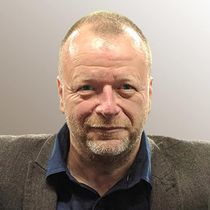
Sander de Bruijn
Sander de Bruijn took on the role of team lead design at Dutch theme park Efteling in 2018, where he has overseen a number of successful projects, including Raveleijn and Baron 1898. Another of de Bruijn's projects at Efteling was Symbolica, which later went on to win a Thea Award for Outstanding Achievement from the TEA in 2018.
Our experts
Rob Reijnen
Rob Reijnen has been with ETF Ride Systems for over three years and is currently Director of Sales for the leading manufacturer and designer of ride systems in the Middle East region. ETF Ride Systems builds on 75 years of engineering heritage, designing and delivering ride systems for nearly three decades to amusement parks around the world. Its portfolio includes attractions suitable for the whole family, including dark rides, suspended rides, elevated rides, and specially customised rides.
Our experts
Laurence Beckers
Laurence Beckers serves as creative director at Alterface, a leader in interactive technology. The company creates products such as interactive theatres, dark rides, erratic rides and walkthrough experiences. Beckers has 20 years of experience at Alterface and has worked on rides including Maus au Chocolat at Phantasialand and Popcorn Revenge at Walibi Belgium, for which Alterface won a Thea Award for Outstanding Achievement in 2019.
Our experts
Robin van der Want
Robin van der Want is project development director at Jora Vision, a leading design and production company. He guides theme parks through strategic decisions on investing in themed attractions such as dark rides, walkthroughs, art experiences, and more. He also oversees the entire procurement and design process. During his career, he has worked on projects at some of the world's leading parks, including Walibi Belgium, Legendia in Poland and Europa-Park in Germany. He also worked on the TEA Award-winning Quake Lisbon Earthquake Experience.
Our experts
Christof Zimmerman.
Christof Zimmerman has been with Europa-Park, Germany’s leading theme park and one of the most visited destinations in Europe, for over 13 years. He oversees the newly established show producing and theming department, which plays a crucial role in bringing new experiences to life across the resort.
Pre-construction strategy: the irreversible technical constraints
All five experts agree that the earliest choices in a project are the most critical because they are the hardest to change.
Robin van der Want says that, contrary to popular belief, the decisions that shape the guest experience the most are not always the "sexy" creative ones, but the technical constraints.
"The building envelope determines how large your scenes can be, how many scenes you can fit, the length of the ride, and how well you can control sightlines, sound, and lighting.
"If the building is undersized, no amount of creative design later can fully compensate for limited scale or missing transitions."
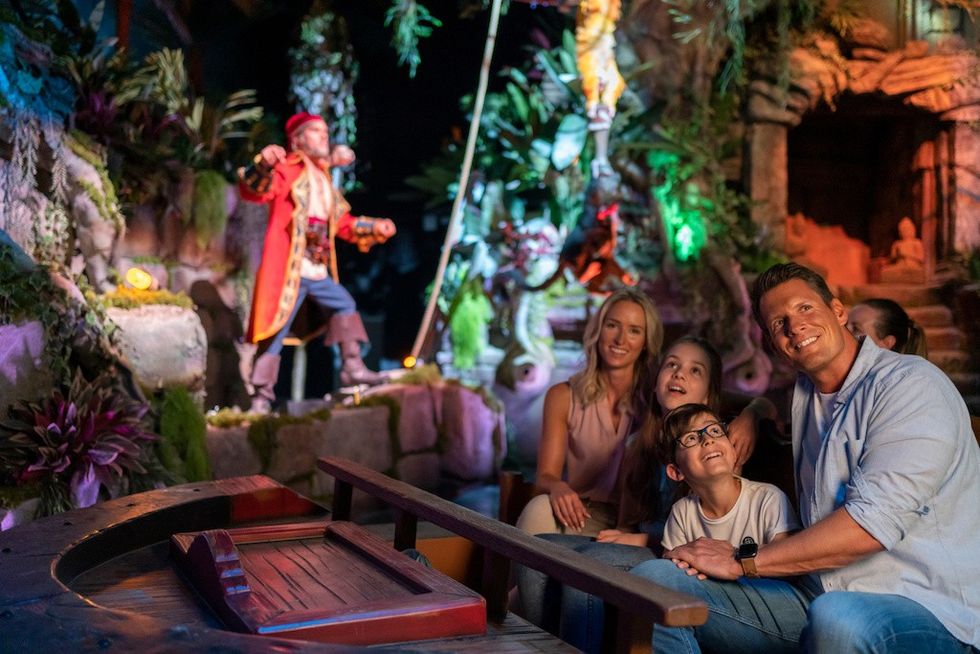
Piraten in Batavia dark ride at Europa-Park
Europa-Park's Christof Zimmermann, agrees, noting that the physical track layout and scene size are the "earliest decisions with the biggest impact." He says that once construction begins, changing these elements becomes the most difficult and costly challenge.
Efteling's Sander de Bruijn says that the combination of theme and ride system is equally foundational:
"The theme, in combination with the ride system, is a decision you make very early in the process, and it has a huge impact on how guests experience and absorb the story", he says. "These choices are fundamental and strongly influence every decision that follows."
The theme, in combination with the ride system, is a decision you make very early....These choices are fundamental and strongly influence every decision that follows.
The vehicle selection defines the physical boundaries of the experience, says Rob Reijnen from ETF. Specific questions must be answered immediately:
"Whether the vehicle must drive in a forward direction only or also backwards or even sideways, allow the passenger cabin to rotate, pitch or roll, must it pass over track crossings? Should the vehicle drive trackless or be guided by a physical track?"
However, Laurence Beckers from Alterface, says that the most critical early step is defining the guest's role. "Designers need to put themselves in the guest’s shoes and ask: 'Who am I in this story? What is expected of me? And why?' Give me a good motivation to act."
Beckers adds that a clear motivation gives meaning to the experience, and without it, retrofitting story logic later is "extremely difficult."
Story vs. engineering: prioritising narrative in dark ride design
When asked how to prioritise story, ride system, and technology, the experts generally align on a "Story First" approach.
De Bruijn says: "The story carries the message you want to convey to the guest. Ideally, you choose a ride system that seamlessly fits the experience you want to create and actively supports the story."
Special effects should only be used to trigger "the intended emotion at the right moments during the ride."
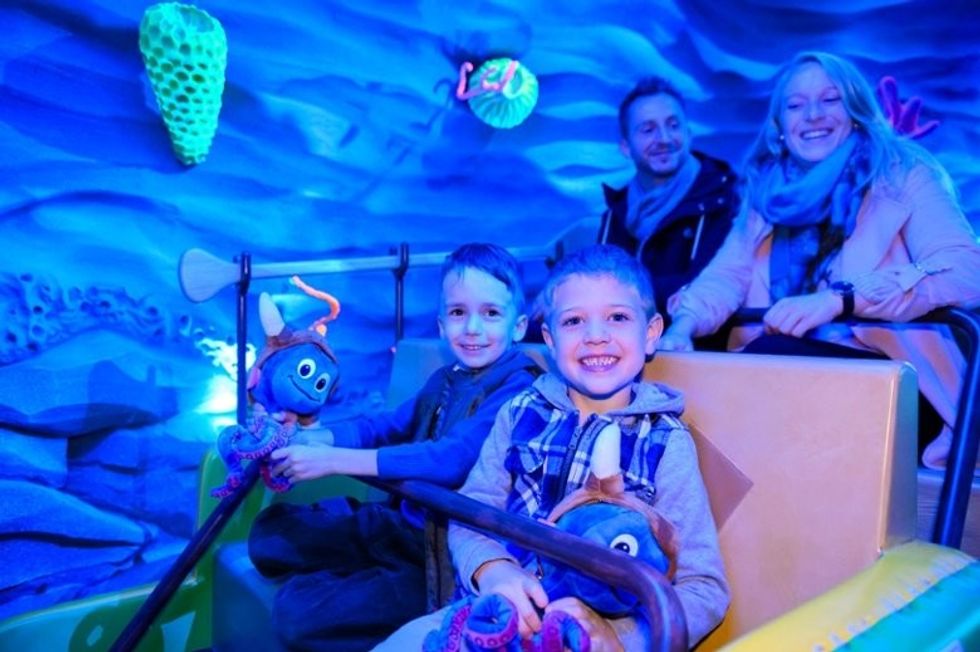
Snorri Touren dark ride at Europa-Park
Zimmerman says that the ride system and the scenes are often the most expensive parts of the budget, which dictates the hierarchy.
For a "little kiddy dark ride," a cheaper system might suffice, but for a "full immersive family" experience, he points to advanced systems like the Mack Rides rocking boat.
He adds a crucial distinction regarding intellectual property (IP): for original stories, the show technology must be "highly fascinating" to encourage repeat rides so guests can "fully grasp the story."
See also: Developing character brand IP is a serious business: Mack's Tobias Mundinger
Reijnen stresses that the hardware should serve the narrative.
"The ride vehicle must always be considered as supporting the show, not vice versa", he says. However, he adds that ideally, all possible vehicle movements—like roundabouts or Y-shapes—should be utilised to their "full extent."
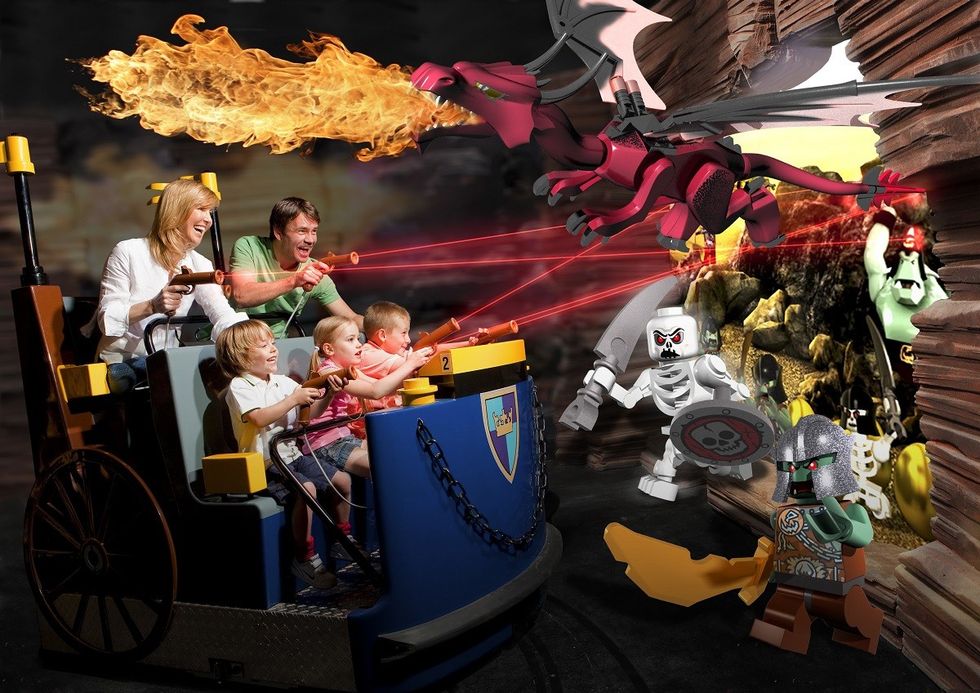
ETF Ride Systems' Mystic Mover at Legoland
Van der Want says there is a strict order of operations:
"The story defines the experience; the ride system dictates how the story is delivered; scenic design creates immersion; technology enhances key moments." He warns that "when this order is reversed, especially when technology or the vehicle leads, the project often ends up technically impressive but emotionally weaker."
Beckers, however, offers a "reality check". While "Story First" is the dream, she says the real foundation is a "4-input equation: footprint, budget, target group, and capacity.
"You have to balance all these criteria", she explains.
Once these constraints are set, "then you build the house, you write the story, and the rest is like a rope that you pull."
Evolving guest expectations: immersion and pacing
Guest expectations have shifted significantly over the last decade, driven largely by gaming and home entertainment.
Van der Want says: "Guests are used to rich visual environments, and they increasingly expect theme parks—and especially dark rides—to deliver experiences that match that level of imagination."
He says this has led to faster pacing and "denser experiences", where modern rides feature "more visual 'moments' packed into the same ride duration."
Zimmerman confirms this, stating that guests now expect "Europa quality," which raises the park’s standards.
He says guests expect "the latest technology, including sophisticated animatronics and interactivity like shooters," and notes that the big American parks often "set the trends" that European parks strive to reach within their budgets.
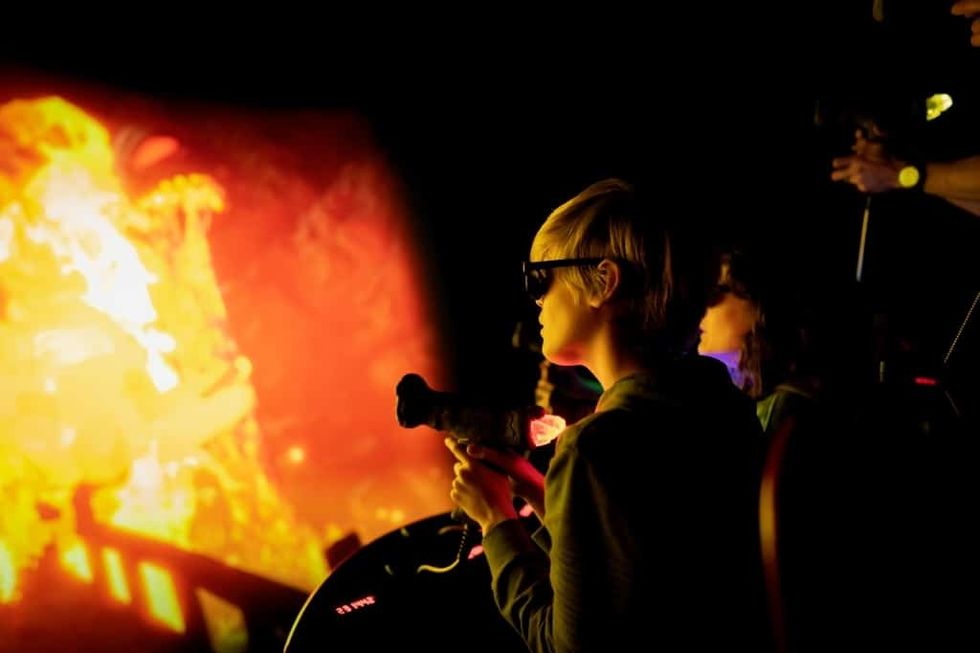 Alterface gameplay for Volkanu dark ride at Lost Island Theme Park
Reijnen agrees. "We clearly notice a trend towards more dynamic dark rides with higher speed and accelerations and faster rotations to provide more thrill to the ride guests."
Regarding interactivity, he notes a shift away from aggressive "gun" designs toward more passive tools, such as wands.
Beckers says that sophisticated guests have higher standards for media and mechanics. "Visitors now intuitively understand how to interact with attractions. This leaves far less tolerance for filler content or unclear mechanics."
Every moment is "expected to carry narrative or emotional weight." De Bruijn says that while guests expect high technical capabilities, the core desire remains a "timeless classic."
Maximising dark ride ROI: maintenance and operational efficiency
A successful dark ride must be as maintainable as it is magical.
Beckers says that if operations aren't considered early—for example, the ride’s throughput/capacity—they can ruin the experience. "If an attraction isn’t well thought through from an operational perspective, it can slow down the pace, reduce throughput, and lead to longer queues, which results in guest frustration."
Zimmerman emphasises that operations and maintenance teams should be involved "from the very beginning."
He says this is vital for addressing crucial details that creatives might miss, such as "maintaining and cleaning scenes, entering the ride, and considering chemical use, especially in water-based rides."
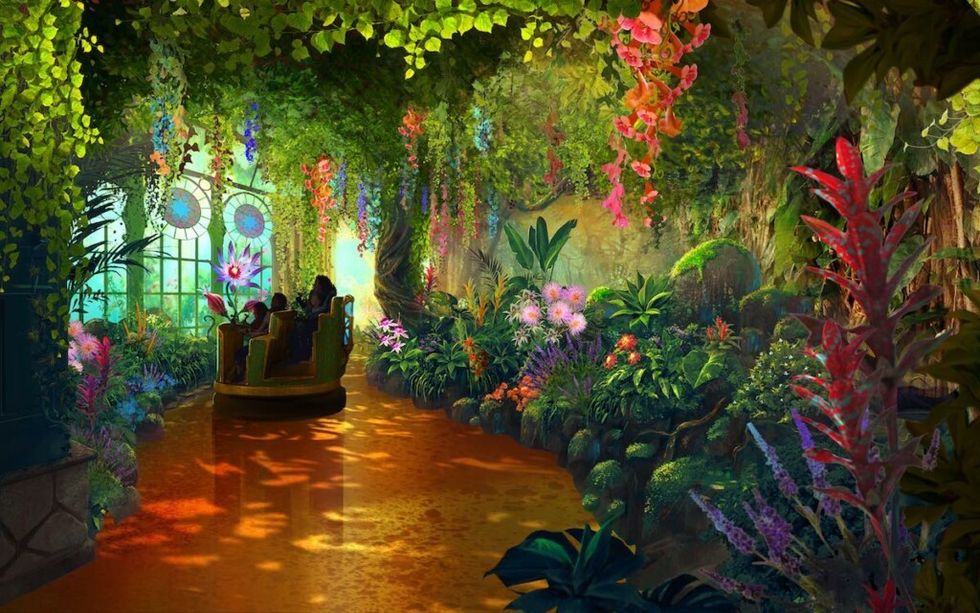
Jora Vision concept art for The Enchanted Greenhouse dark ride at Six Flags Qiddiya City
Reijnen says that smart system choices can alleviate this; from a Total Cost of Ownership (TCO) perspective, a trackless ride system is cheaper to operate and maintain than a track-bound one. "Besides, it is much easier to direct a trackless vehicle to the maintenance area."
Achieving seamless technical integration means these specific needs are integrated into the concept phase, Van der Want adds.
"Maintenance strategy decisions—such as whether elevated maintenance walkways, equipment access zones, or technical rooms are required—can have a major spatial and visual impact on the attraction."
De Bruijn says that these choices are essential "to consistently present the experience at its best, making the right, sustainable choices in operations and maintenance is crucial."
Designing dark rides for most value: from presentation to guest memories
Ultimately, what delivers the most value? Van der Want says it is scenic décor and theming. He believes that well-designed theming often provides the "highest experiential impact per euro."
Zimmerman offers a different perspective on value. He identifies smell and music as the elements that deliver the strongest perceived value relative to cost.
He says that these elements, while not free, are "significantly less expensive than numerous animatronics or high-tech ride systems... and profoundly impact the guests' sensory experience."
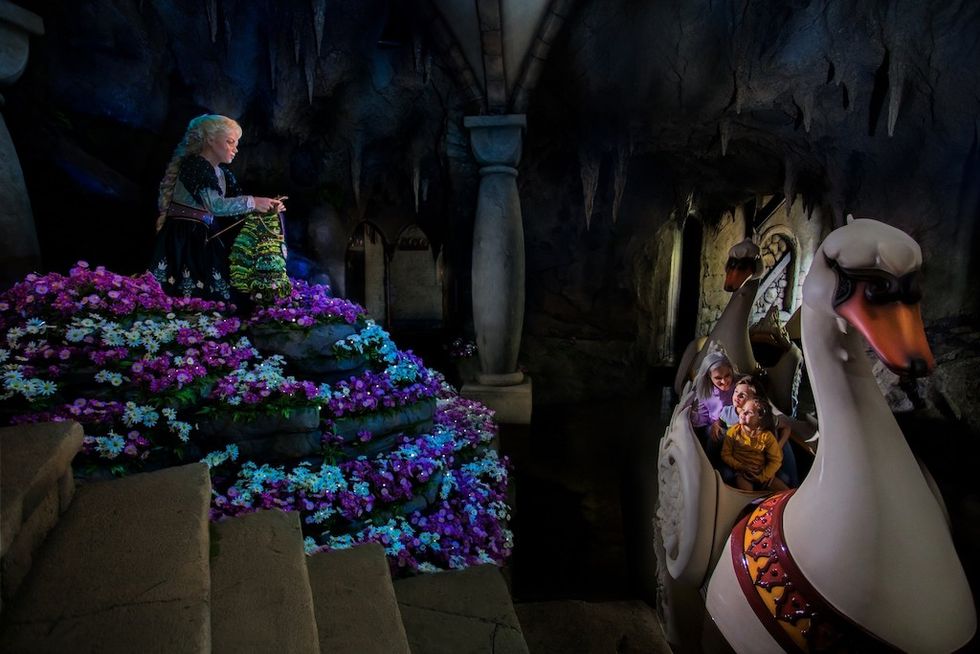
Six Swans dark ride at Efteling
Reijnen says the value is "always the combination of all disciplines closely aligned in order to give the best experience" that brings the guest into a fantasy world.
It all comes down to authenticity, says De Bruijn. "The greatest value for guests lies in the quality and credibility of how we present the experience". He defines success as the moment when guests are "willing and able to fully engage with the story and the worlds we create."
Beckers agrees, noting that the goal is not a physical object, but an intangible one.
"Give your guest a souvenir," she says. "A soul, an atmosphere, some emotion, a shared intense experience. That’s what they will remember."