For many years, mini golf has been a popular attraction, bringing families and friends together with colourful themes, creative obstacles, and accessible gameplay. This traditional format continues to appeal to visitors worldwide.
At the same time, changing consumer habits, increased demand for competitive socialising, and a focus on maximising venue space have created opportunities for a new style of putting experience.
Welcome to the era of premium putting.
Greenspan, a leading creative partner and builder in the leisure space, describes premium putting as a new category of design-led putting attractions.
Unlike a traditional practice putting green, which is primarily designed for golfers to warm up, or a classic mini golf course with themed obstacles, premium putting combines authentic putting surfaces with hospitality spaces and social play.
The concept reflects broader changes across the leisure sector, where operators are increasingly seeking attractions that encourage longer visits, attract a wider demographic, and boost food and beverage spending.
Golf meets hospitality
To understand the rise of premium putting, it's helpful to look at how golf has changed over the past decade.
The sport is no longer limited to quiet 18-hole courses with strict dress codes, and businesses have seen the value in combining golf with upscale hospitality. Businesses such as Topgolf and Puttshack have demonstrated growing demand for golf-inspired social entertainment that combines play with food and beverage.
Within the putting sector specifically, PopStroke has helped demonstrate the commercial potential of premium putting environments.
These new high-end putting venues blend synthetic turf courses with quality food and drink, event spaces, and contemporary design. They embrace the idea that a skilled golfer can use the course to improve their short game, while groups of friends can casually enjoy the same course with drinks in hand.

Jack Branigan, business development executive at Greenspan
Jack Branigan, business development executive at Greenspan, defines premium putting as “A higher-end, commercially focused form of mini-golf that sits closer to real golf, leisure hospitality, and competitive socialising than traditional family mini-golf.”
According to Branigan, people now expect more from their leisure time and increasingly want shared experiences rather than passive nights out:
“A bar or restaurant on its own is often not enough. People want an activity, some competition, something visual, and something that works for groups, dates, families, corporate events, and social media.”
This combination of golf, hospitality and placemaking is one reason premium putting is attracting growing interest from operators. It offers the physical enjoyment and competitive aspect of golf without requiring a large land area, an intimidating skill level, or lengthy playtime.
Benefits for operators and guests
For operators of golf clubs, luxury resorts, and mixed-use entertainment venues, installing a premium putting course allows them to increase dwell time, diversify audiences, and generate additional food and beverage revenue.
Meanwhile, from a guest experience perspective, premium putting can appeal to a broad range of visitor groups. "It works for golfers and non-golfers, adults and families, corporate groups and casual visitors," says Branigan.
"Unlike full golf, it does not require ability, equipment, a long time-commitment, or confidence walking onto a course. Guests can turn up, play, compete, have a drink, take photos, and feel part of the venue.”
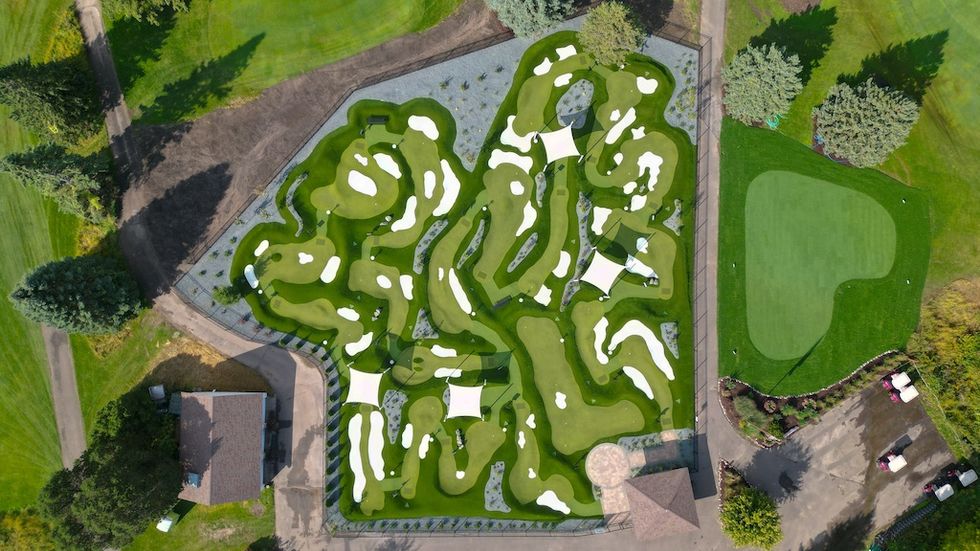
The "Mini Gem" miniature golf course located at Gem Lake Hills in White Bear Lake, MN.
Image courtesy of Greenspan
Commercially, the flexibility of premium putting is a key benefit, he adds.
Unlike a simple amusement attraction that relies on ticket sales, a premium putting environment can drive wider venue spending, with additional revenue streams like paid play and day tickets, food and beverage (often with on-course ordering), group bookings, private hires, and corporate events.
The increased overall dwell time can also lead to secondary spending across the wider venue.
Furthermore, these courses offer operational practicality. Speaking on Greenspan’s Made to Imagine podcast, Rory Farr, head of planning and development at the newly opened Mad Swans resort in the Mendips, UK, notes that a premium putting course is "hyper accessible, low maintenance, [and] easy to operate.”
The relatively low maintenance requirements can contribute to an attractive return on investment.
For traditional golf clubs, adding a premium putting course can futureproof their relevance. Many clubs are actively searching for ways to engage younger demographics, families, and beginners without alienating their core membership or disrupting the main championship course.
A premium putting installation acts as a welcome into the sport: a place where juniors can learn the basics, where members can warm up, and where the local community can gather for a low-stakes, high-fun evening.
Making golf more accessible at Mad Swans
Located in the Mendips, Mad Swans is a brand-new resort built on the bones of an old golf club, reimagined into what Farr describes as a " modern countryside hangout".
Mad Swans aims to break down the traditional barriers to golf participation.
"We're very much trying to make golf much more accessible, both in terms of affordability and in terms of the time spent out on the golf course, which is one of the biggest barriers, and make golf fit for the next century rather than the previous century," Farr explains.
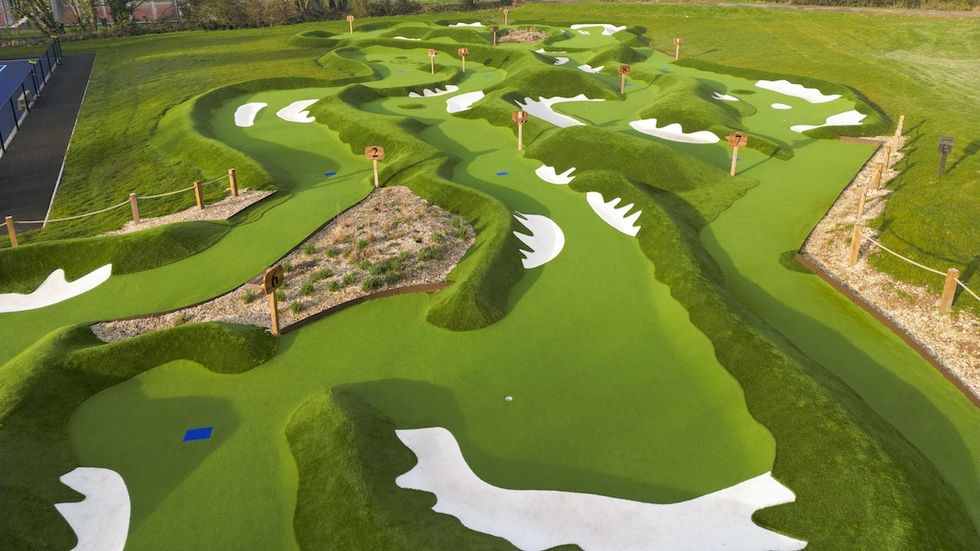
Mad Swans in the Mendips appeals to a broad demographic with its Putt Patch premium putting facility
Image courtesy of Greenspan
The resort includes padel courts, pickleball, gym classes, accommodation, a Swing Bomb driving range (similar to Topgolf), and a bespoke 12-hole premium putting course known as the “Putt Patch”, built by Greenspan.
A key commercial metric for Mad Swans is dwell time. Farr notes that modern attention spans are shrinking, making the traditional five-hour round of golf a hard sell for many.
By offering a 12-hole putting course that takes about 40 minutes to complete, the resort enables guests to build their own flexible itineraries. A guest can play a quick round of putting, move on to padel for an hour, and still have time to sit down for lunch or cocktails.
Farr has already seen the putting course attract a broad audience, noting that the site draws everyone from ages 8 to 80, breaking the traditional mould of middle-aged male golfers.
Adding in hospitality means that guests at Mad Swans can order pizzas and cocktails directly to the putting course while they play.
Mad Swans turns to Greenspan
The Mad Swans “Putt Patch” was designed through a close collaboration between Mad Swans and Greenspan.
Farr and his team insisted that the course needed to feature "high bunds" (mounds) to allow people to sit, lie down, and relax with a cocktail right on the edge of the play area.
While this presented considerable technical and drainage challenges, Greenspan’s expertise brought the plan to life without compromising the playability of the holes.
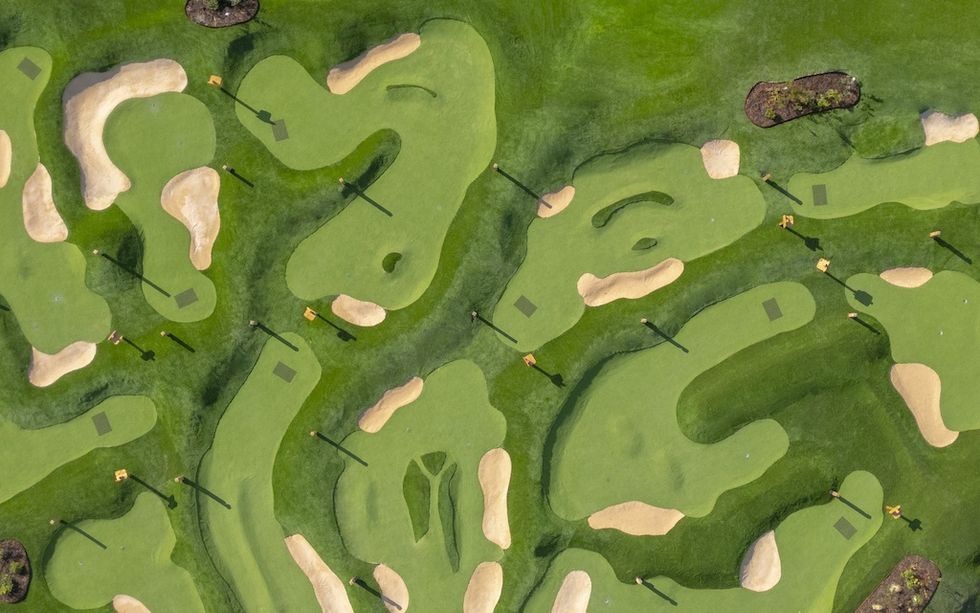
Mad Swans called on Greenspan's premium putting once again for its second site in the South Downs
Image courtesy of Greenspan
The partnership between Mad Swans and Greenspan extends to a second site in the South Downs. The South Downs site, however, had a tighter footprint than Mendips, around 30 percent smaller, yet the playability, challenge, and quality of every hole stayed true to the original standard.
While Mad Swans highlights premium putting in a resort context, Gem Lake Hills demonstrates how the concept can revitalise a traditional, family-owned community golf course.
Adding to the community experience at Gem Lake Hills
Gem Lake Hills Golf Course is a family-owned facility in White Bear Lake, Minnesota.
General manager Matt Greer is deeply embedded in the daily operations of the community-centric facility. The course is a local institution, boasting a large junior golf programme that sees nearly 900 kids playing during the summer.
"We see ourselves as like a member of the community," Greer says, speaking to Greenspan.
"It's not just golf for us. It's about being a place people can gather. It's a place where families can come and make some memories. We want a place for people to come, and it's a highlight of their day.”
The catalyst for the premium putting project was the need to replace a deteriorating cage structure that had previously been used for cart storage. Recognising the global surge in golf interest, Greer and his team began exploring miniature golf options.
However, they knew that the standard tropes of the industry would not fit their vision.
"We didn't want it to be the type of mini golf where it's like a clown's mouth and bricks. We wanted it to be the traditional 18-hole putting course shrunken down so that everyone can play, and we wanted it to feel like a place where kids would have fun out here, but also a place where avid golfers will find a reason to play mini golf too.”
This requirement that the course must appeal equally to a 10-year-old junior golfer and a skilled, low-handicap adult golfer is a key aspect of premium putting. It entails balancing authentic golf aesthetics with engaging gameplay.
After reviewing several vendors who could simply "provide us with turf," Gem Lake Hills chose to partner with Greenspan, drawn in by its detailed portfolio of custom projects.
When Greenspan’s VP of sales, Brook Tuffin, visited the site, Greer says they knew they had found the right creative partner: "When we talked to him about what we wanted to achieve, he had a look on his face that gave me a lot of confidence. I could tell that he was really on board with the vision and our goals.”
The resulting course, he says, exceeded their expectations. "You guys really did pull off exactly what we wanted.", Greer adds, praising the Greenspan team for its execution.
Premium putting calls for intentional design
As the Mad Swans and Gem Lake Hills case studies show, premium putting is not a one-size-fits-all product. It can be tailored to serve as a community hub or an elevated country club amenity.
However, according to Branigan, what separates a successful premium putting experience from a standard putting green or a classic mini-golf attraction is intentional design.
A standard putting green is traditionally just a practice facility, lacking social infrastructure. Traditional mini golf, if not executed properly, often ends up as a novelty. Premium putting bridges this gap by providing a destination experience, engineered to drive guest enjoyment and commercial return simultaneously.
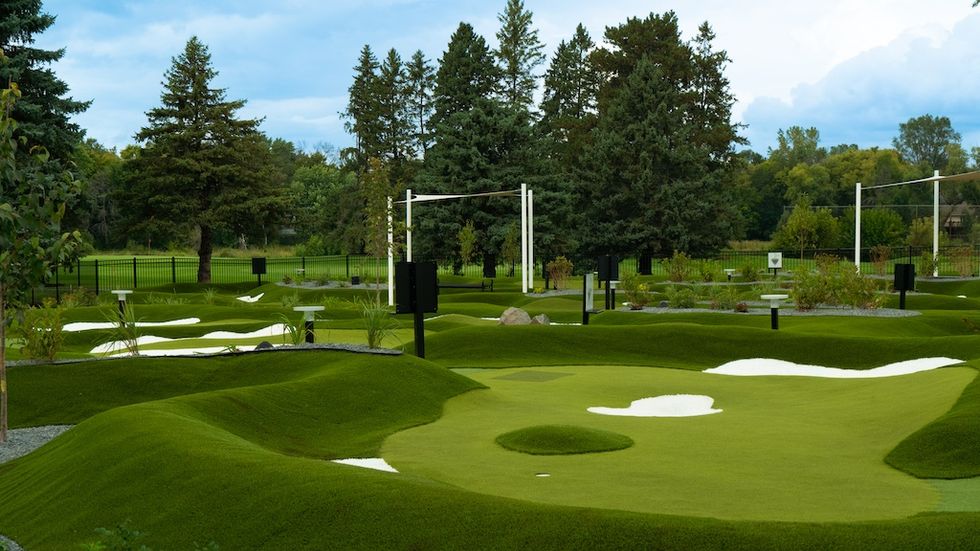
Every detail of a premium putting course, like this one at Gem Lake Hills, counts
Image courtesy of Greenspan
Branigan outlines the core design principles, starting with real putting quality: the installation must feature credible ball roll, accurate pace, considered contours, and realistic hole design. Essentially: “It must feel like golf.”
Additionally, the course needs to balance skill and challenge to keep avid golfers engaged, while remaining accessible and forgiving for absolute beginners and children.
When it comes to creating a sense of place, the design must integrate organically into the host venue, whether it is a luxury resort, a stadium, a cruise ship or a local golf club, and there must be a strong physical and operational connection to bars, terraces, lounges, and event spaces to capture F&B spend.
Every detail matters, from quality synthetic turf and crisp edging to premium landscaping, atmospheric lighting, clear signage, and robust drainage.
Why design expertise matters
As interest in the category grows, operators are increasingly looking beyond basic turf installation. To capture the high-end demographic and maximise commercial return, they require a genuine creative and technical partner.
Greenspan has developed a new “Signature Greens” concept in response to demand for premium putting experiences.
It incorporates the golf architecture design principles Branigan outlines, including authentic ball roll, premium landscaping, and quality finishes, and can be adapted for golf clubs, resorts, sports venues, hotels, and cruise ships.
The value of working with Greenspan is echoed by its clients. For Matt Greer at Gem Lake Hills, the partnership was personal, resulting in a product that matched the location’s unique community needs.
Rory Farr of Mad Swans emphasises that the relationship goes far beyond a standard contractor dynamic.
"The team are absolute geniuses, so we deferred to them for all the technical design and know-how," Farr states, adding that they consistently "deliver on time and on budget, which is a nice thing that rarely happens in the world of hospitality development.”
Tom Mackenzie of Mackenzie and Ebert, one of Europe’s foremost golf course architects and the designer of Mad Swans’ 12-hole executive golf course on-site, reviewed the plans before construction and had very little to change.
As Farr put it: “When Tom Mackenzie is telling you that Greenspan is awesome, it is easy to trust and believe in the process.”
The future of premium putting
Jack Branigan foresees that over the next five years, premium putting will establish itself as an attraction category.
"Courses will become more design-led, more integrated with food and beverage, more event-friendly, and increasingly supported by technology such as digital scoring, group play formats, lighting, media moments and data capture," he adds.
Whether installed at a golf resort, mixed-use development, or any other entertainment venue, premium putting reflects wider changes in leisure.
Operators are increasingly looking for attractions that combine accessible gameplay with hospitality and longer dwell times, while giving guests another reason to spend time together.