Imagine arriving at a destination that understands you. Not because it tracks you or because an app predicted your behaviour, but because the place itself behaves with awareness.
It knows your preferred language without requiring you to set anything. If you have allergies, they are respected wherever you go. If mobility is a challenge, your route changes gracefully. If your child is sensitive to sound, the environment adjusts. If you enjoy football, the venue remembers your team. If you have a nickname you prefer, staff can greet you that way.
This is not science fiction. This is what guests now expect from places that claim to be world-class.
Personalisation is only the beginning
People want personalisation, but that is only the beginning. What they truly want is to be treated as a person. They want destinations that respond to them with the same understanding and continuity that a human host would provide.
They do not want to repeat their preferences ten times. They do not want to explain their limitations over and over. They do not want every restaurant, bar, retail shop, or attraction to treat them as a stranger, asking about allergies.
They want places to feel seamless, coherent, and personal, with privacy foremost in mind.
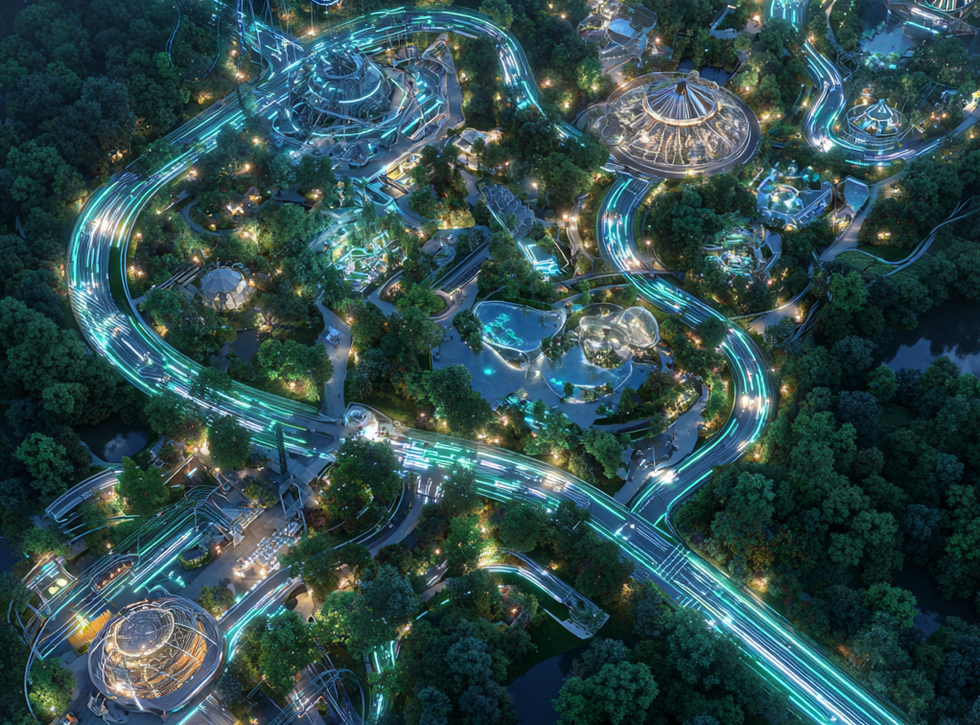
Yet today’s destinations, even the most technologically advanced ones, cannot deliver this with consistency. They are built from isolated systems that know only fragments of the guest.
Ride systems know one thing. Ticketing knows another. Apps know a little more. Environmental systems know almost nothing about guests at all. Lighting has its view of reality. Media servers have theirs.
Every system sees a fraction. No system sees the whole.
This fragmentation is now the biggest operational limitation facing modern destinations. It is the reason personalisation breaks. It is the reason creativity collapses between zones. It is the reason safety systems lack coherence. It is the reason operational complexity increases instead of decreases.
It is the reason mega-projects in the Middle East, Asia, Europe, and the United States are now explicitly asking for one thing: a venue-wide, multi-venue, multi-campus intelligence layer that makes the environment coherent.
The WorldModel and its significance
This is where the WorldModel begins.
But to understand its significance, we must take one step back and acknowledge how we got here.
For years, we have built technologies that solve specific problems and deliver extraordinary experiences.
QuickSilver, based on non-proprietary, off-the-shelf hardware available anywhere in the world, modernised control systems, making AV flexible, modular, IT-based, and rapidly deployable.
CheshireCat brought recognition technology that enabled privacy-safe awareness without storing identities. Alice and Lory delivered personalised media, multilingual content, adaptive storytelling and tailored interpretation, proving that personalisation at the individual level is not only possible but deeply effective.
LookingGlass Concierge tied these abilities together across a venue, enabling lost-child support, progressive wayfinding, visitor assistance and campus-wide continuity.
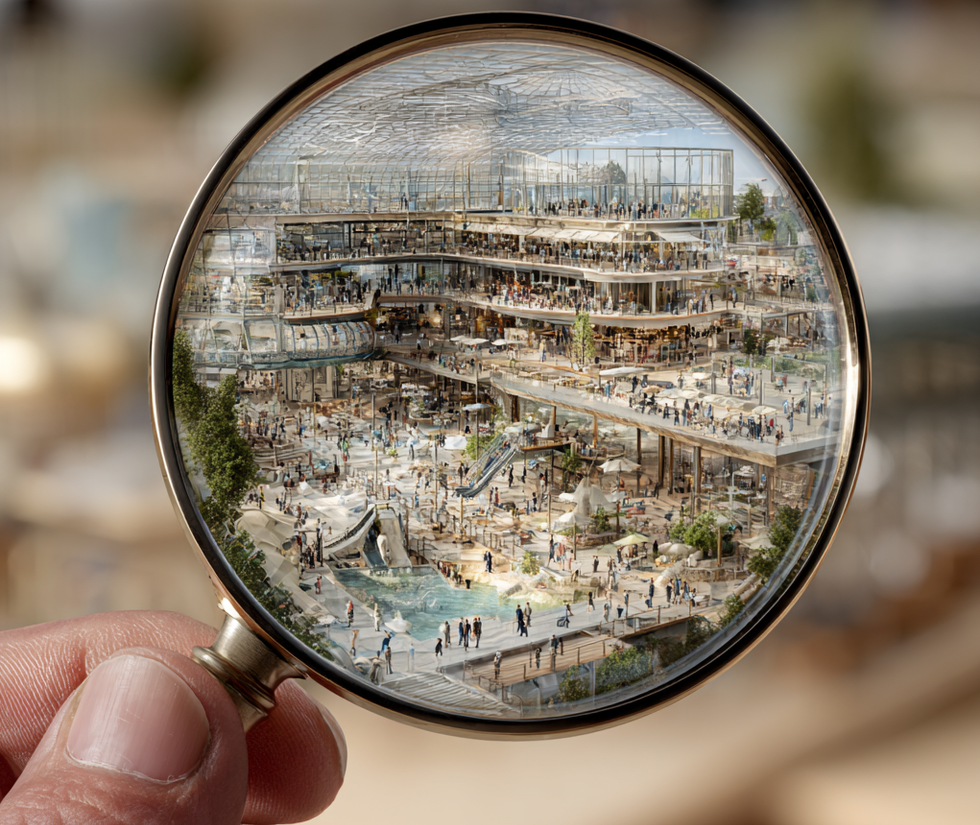
Each of these systems stands strong on its own. Many destinations run beautifully with QuickSilver and TeaParty controllers alone. In those locations, visitor engagement can be extended using CheshireCat recognition, Alice, and Lory as individual, targeted tools. Nothing about this changes.
But something else became visible. LookingGlass Concierge revealed the fundamental truth: to personalise a venue, the venue must understand itself.
A lost child cannot be found by a database. A progressive wayfinding journey cannot be delivered by a room-level system. A campus-wide story cannot be designed if each area has a different understanding of what the place is. Accessibility cannot be meaningful without spatial, behavioural, and contextual awareness.
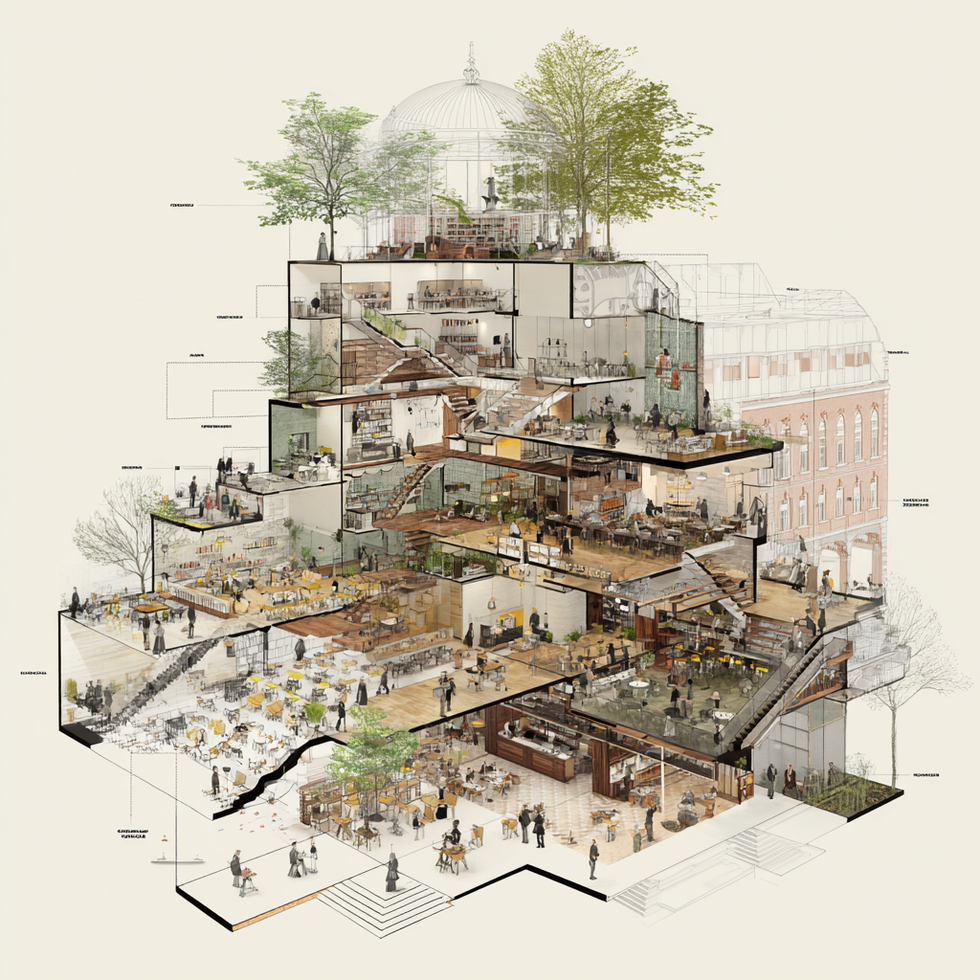
The venue needs a consistent way to interpret itself.
And from that insight, the WorldModel was born.
Not just a digital twin
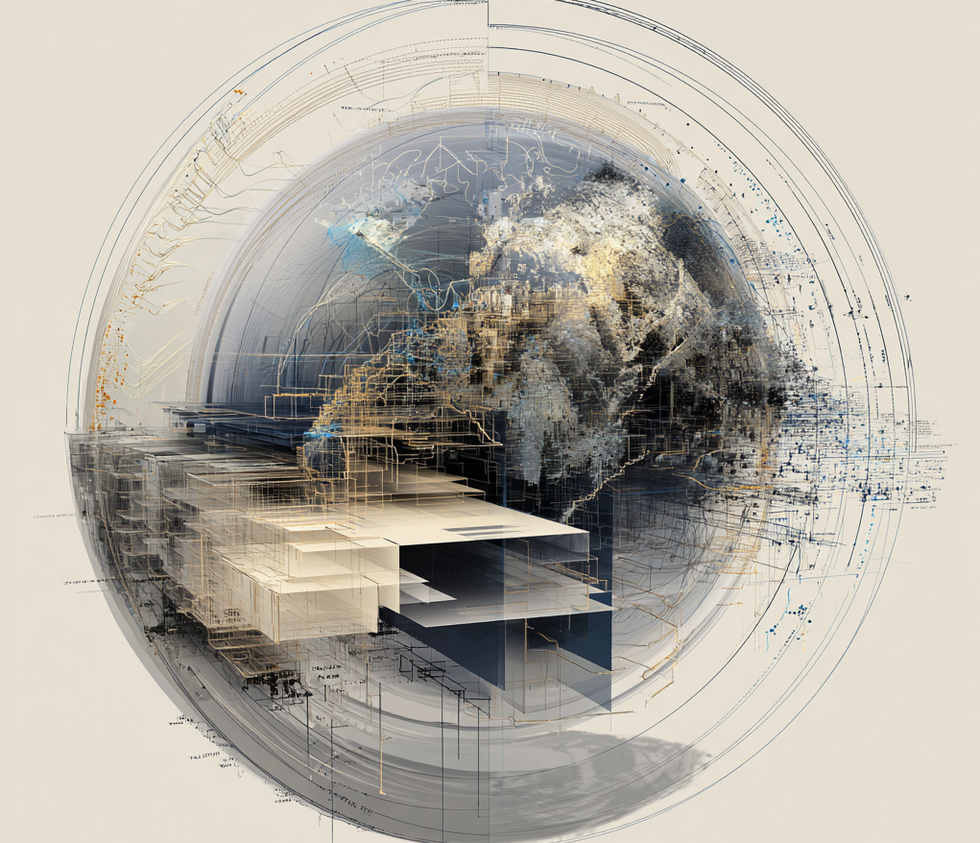
The WorldModel is not just a digital twin. It is not a mapping system. It is not a graph database. It is a dynamic, semantic, behavioural, and contextual representation of the environment itself.
It understands where things are, what they are, why they matter, and how they relate to one another. It understands the flow of guests and the rhythm of the day. It understands the story and its pacing. It understands safety envelopes, operational conditions, and narrative boundaries.
A venue that understands itself can finally understand its guests.
But intelligence without boundaries is dangerous. We learned this long before the current AI debates reached the mainstream. Any system with the ability to interpret the world and make decisions must be guided by values.
This led to the creation of the Value System: a defined set of priorities that ensures the destination behaves correctly when faced with competing goals. Safety above throughput. Accessibility above convenience. Cultural integrity above revenue optimisation. Consistent hospitality above variable staff practices.
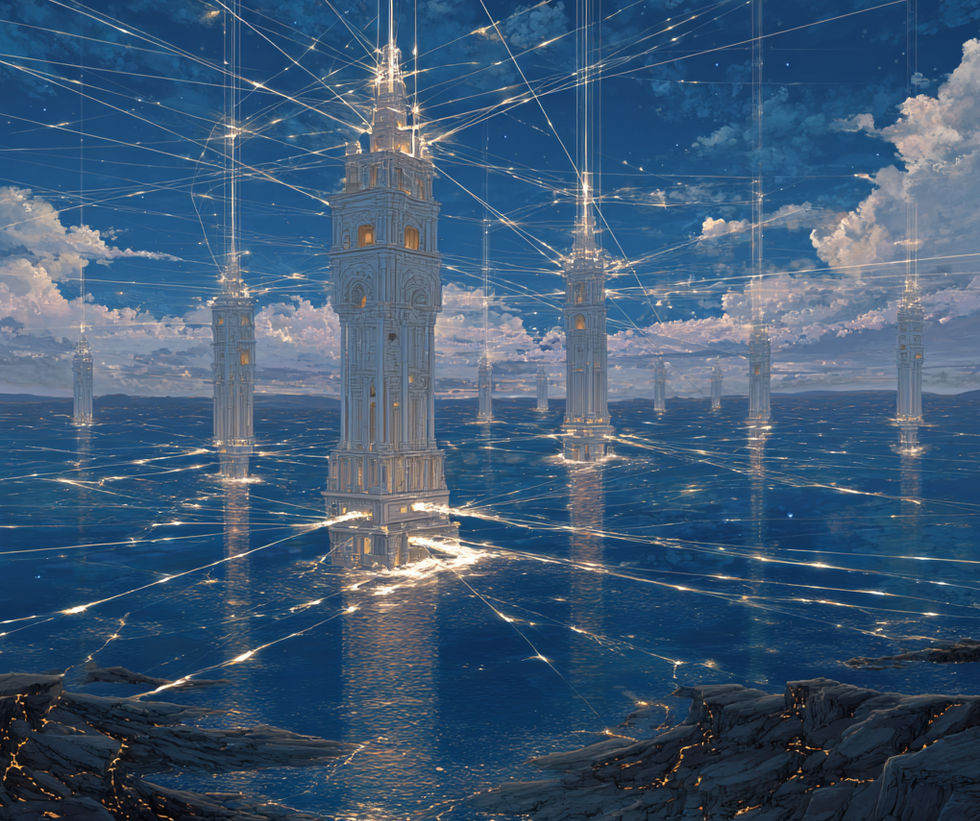
From the Value System came the recognition that destinations also need rules.
Rules grounded in law, ethics, cultural expectations, client-specific requirements and brand identity. These rules form the Constitution. Together, the Value System and Constitution govern the WorldModel, creating the framework for intelligence with integrity.
And the Cognitive Governance Layer sits above them, acting as the mind of the destination. It interprets the WorldModel, applies the Value System and checks every action against the Constitution.
It ensures that the environment behaves safely, consistently and ethically at all times. It does not remove human operators. It empowers them with an environment that finally behaves predictably.
If the WorldModel is awareness, the CGL is judgement. If the Value System is intention, the Constitution is obligation.
Together, they create the operating system for intelligent destinations.
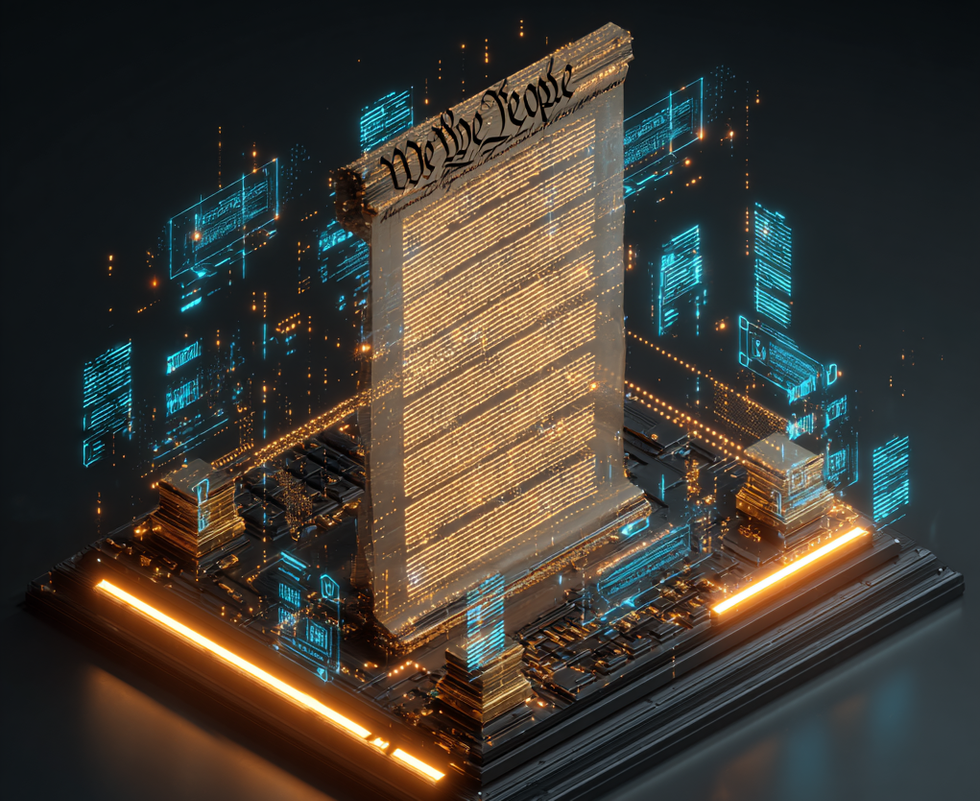
Alongside this architecture, we recognised that identity, privacy, and data ownership must follow the same logic. This is where Web3 comes into play.
The ultimate ecosystem
Decentralised identity (DID) allows visitors to carry their attributes on their own devices. The venue only receives the attributes needed for the moment, not the personal data behind them. Smart contracts enforce privacy-by-design. Visitors choose what to share and when.
Web4 expands this with emotion-aware signals processed anonymously at the edge. Venues can detect sensory overload, stress patterns, and crowd comfort without capturing any personal information.
Prosody becomes a bi-directional tool, allowing environments to respond to human emotional states ethically and without surveillance.

Web5 completes that part of the picture: visitors will soon carry personal AIs on their devices. These AIs will manage preferences, consent, identity attributes, and personal history. The venue will interact with the visitor’s AI, not the visitor’s data.
It is the ultimate privacy-safe personalisation ecosystem.
All of this leads back to one message: WorldModel is not a replacement for our existing technologies. It is the next category that ties them together.
- QuickSilver enables the physical systems.
- CheshireCat enables recognition.
- Alice and Lory enable personalised media.
- LookingGlass Concierge provides the venue-wide orchestration.
- Web3, Web4 and Web5 create the identity and emotional frameworks.
- The Value System and Constitution govern everything.
- And the CGL provides the mind.
WorldModel is the architectural layer above it all, turning a venue into a coherent, intelligent environment.
WorldModel's intelligent environment

The result is a place that finally behaves as one:
- A place where story does not fracture between zones.
- A place where accessibility is structural.
- A place where safety is embedded.
- A place where personalisation is natural and respectful.
- A place where operators have clarity rather than chaos.
- A place where staff feel supported rather than overwhelmed.
- A place where creativity can scale across campuses, districts or entire giga-projects.
- A place where guests feel understood.
This matters because destinations are becoming vast.
Theme parks increasingly resemble cities. Resorts behave like ecosystems. Museums behave like campuses. Cruise lines behave like mobile smart cities. Mega-projects behave like nations within nations.
Once the WorldModel is deployed in one venue, it can apply seamlessly everywhere:
- District-wide parks.
- Mixed-use environments.
- Cultural corridors.
- Multiple resorts under one brand.
- Port-of-call ecosystems.
- Multi-attraction destinations.
This is why giga-project owners in the Middle East have already begun asking for precisely this: a coherent, governed, cross-venue intelligence layer.
We are not just introducing another technology. We are introducing a new category:
- A category that sits above AV, above apps, above AI, above digital twins.
- A category that brings coherence to complexity and humanity to intelligence.
- A category that makes destinations not just functional but personally meaningful.
This is the moment when destinations start thinking. And when they do, something remarkable happens.
They finally become places that understand themselves and the people they serve.