Sound is an integral part of the visitor experience, but it is often one of the least visible elements of attraction design. While projection, physical sets, and animatronics tend to dominate the conversation around immersive experiences, audio can shape atmosphere, guide attention and influence how visitors respond to a space.
For London-based Factory Immersive, that makes sound more than a finishing layer.
The studio argues that the best immersive audio is designed alongside an experience from day one, as a system that can respond to what a guest does, making it an integral part of the experience rather than an addition at the end.
Mike Hill, head of studio, and Steve Lane, audio director, explain how Factory Immersive has evolved from the cinematic and broadcast heritage of its parent company, Factory Studios, and why the shift from linear to interactive experiences is changing the way audio is designed from the outset.
Building on a solid foundation
Founded in 2021, Factory Immersive grew out of Factory Studios, which spent almost three decades working in sound design, mixing, and music production for advertising, film, and television.
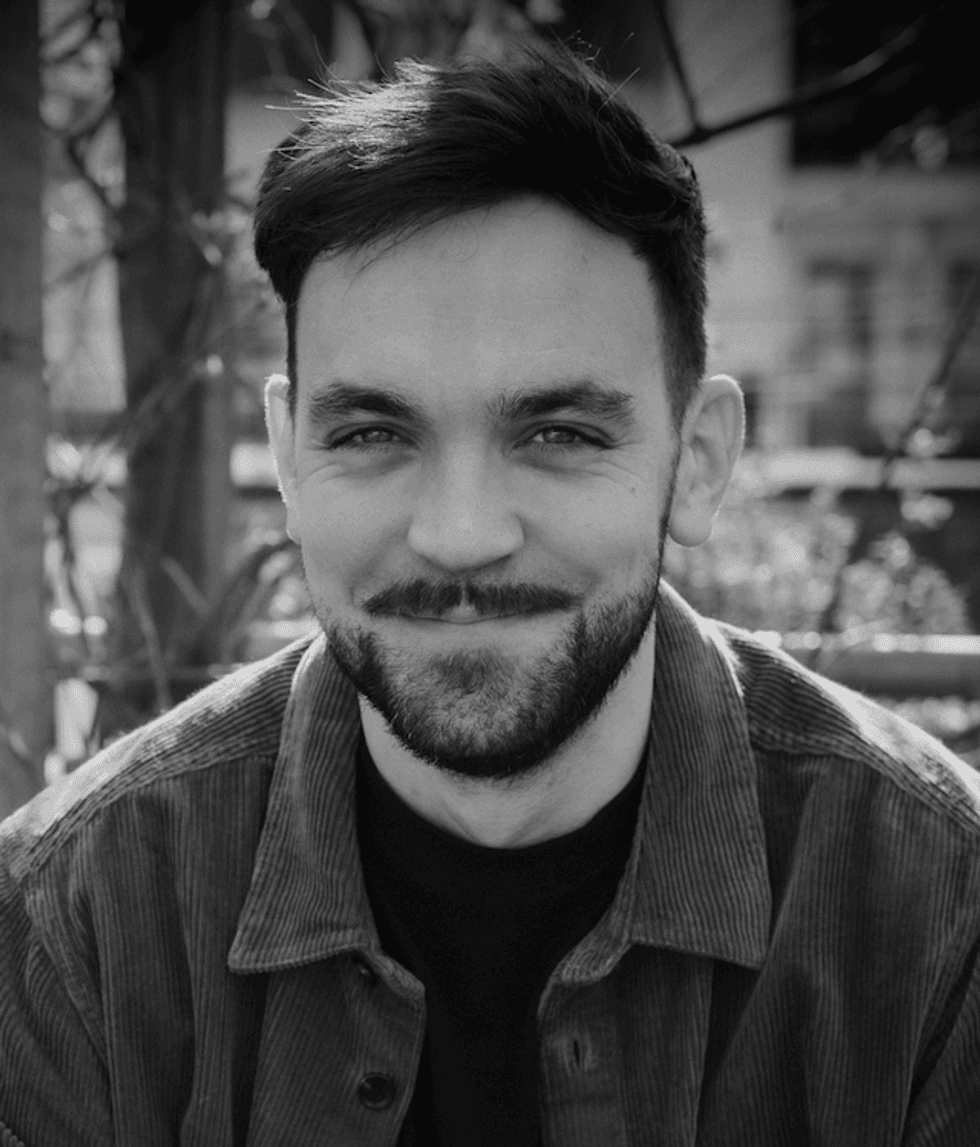
Mike Hill, head of studio at Factory Immersive
That background provided a grounding in both storytelling and technical delivery, says Hill:
“That heritage gave us two things that turned out to be exactly what location-based entertainment needed: a deep bench of composers, sound designers and mixers who know how to build emotion through sound, alongside the technical rigour that comes from working to the tight delivery standards expected within broadcast and cinema."
The challenge, however, was that the methods used for film and television do not always translate directly into physical experiences.

Steve Lane, audio director at Factory Immersive
A film follows a fixed timeline. A visitor attraction does not. Guests move at different speeds, make different choices and interact with an environment in ways that cannot always be predicted.
"What we noticed was that as theme parks, museums and branded experiences became more ambitious (especially when licensing or developing well-known IP), they were reaching for the same cinematic quality guests expect from a blockbuster but delivered through a completely different medium using completely different technology.”
Many studios, Hill says, were strong on one side of that equation but not the other.
“Factory Immersive was set up in 2021 to close that gap, taking the talent we already had and building around it with people who live in Unreal, Q-Sys and audio middleware as comfortably as they do a DAW.”
The opportunity was to bring the storytelling discipline of post-production to spaces where sound must respond, move and adapt in real time. Rather than simply producing finished audio files, the team also works on the systems that determine how those assets behave within an attraction or interactive environment.
The influence of sound
For Lane, one strength of immersive sound is its ability to influence visitors without demanding their attention.
"Great immersive sound does most of its work below the level of conscious attention. Guests often say they remember a visual, a set piece or a jump scare, but it’s often the sound that’s actually driving the emotions in that moment; they just don't clock it as the source."
Spatial audio can also establish a sense of place and extend an environment beyond what has physically been built.
"Done well, immersive sound primes the emotional state a beat before the visuals catch up, so by the time a payoff lands on screen or in front of you, you're already leaning into it. It convinces your body you're actually in an environment, not just looking at it."
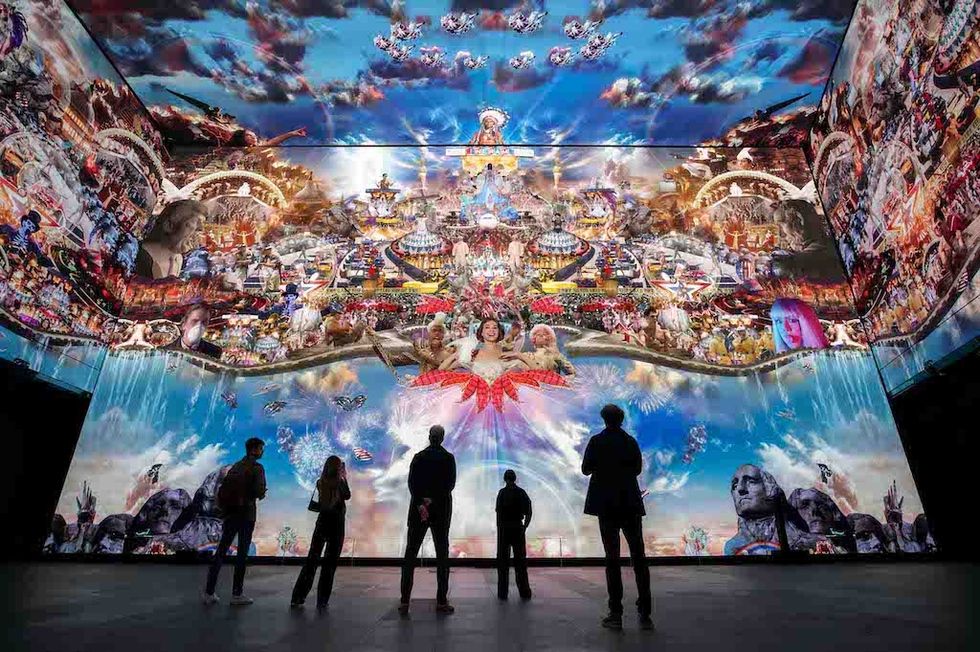
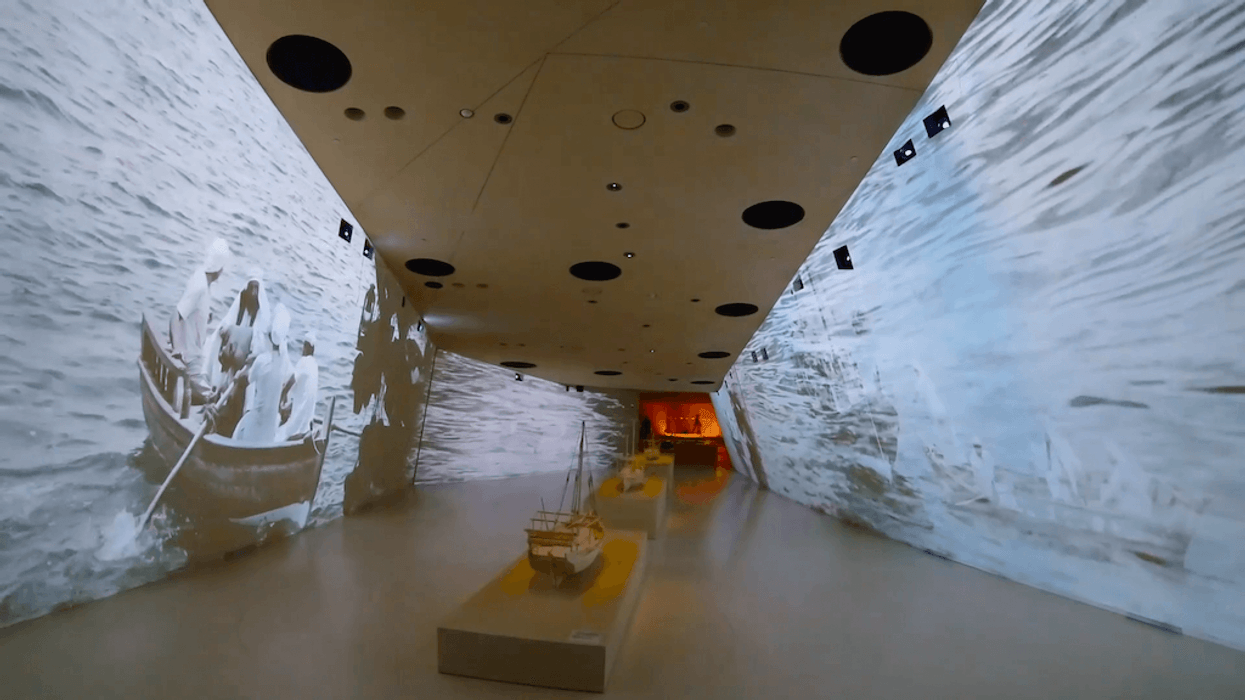
The Heaven's Gate immersive video installation by artist Marco Brambilla, displayed on giant wrap-around screens at Outernet London
“The use of reverb, distance & spatialisation all inform guests that 'this room is large' or 'this tunnel is close' before their eyes have even finished processing it.
"It's an extremely powerful tool for storytelling," Lane continues. "It extends the world past the edge of what's physically built; birds beyond a tree line, machinery behind a wall, crowds around a corner.”
Sound can therefore strengthen environmental storytelling in ways that physical budgets or space limitations may not allow.
“The tell of a great immersive mix is that guests rarely exit going 'wow, the sound.' They exit saying the ride felt real, or scary, or moving.” That emotional response, Lane says, is ultimately the point of the craft.
Designing inside the constraints
For Factory Immersive, that kind of impact doesn’t come from polishing a finished mix. It depends on when and how audio enters the production process, and how the team treats a platform's technical limits.
Timing is one of the most common challenges, says Lane:
“Audio gets scoped and budgeted late, after the creative and technical architecture is largely locked, which forces us into problem-solving mode rather than design mode.”
An additional challenge is translating a linear creative vision into something non-linear. “With almost all of the work we create in Factory Immersive, we’re not delivering a fixed mix. Instead, we’re delivering a system of layered assets and rules that respond to pacing, choice and behaviour."
This requires a different workflow and mix of skills.
Alongside composers and sound designers, Factory Immersive works with technical sound designers and audio programmers using tools such as Unreal Engine, Touch Designer, Q-Sys, Wwise and FMOD.
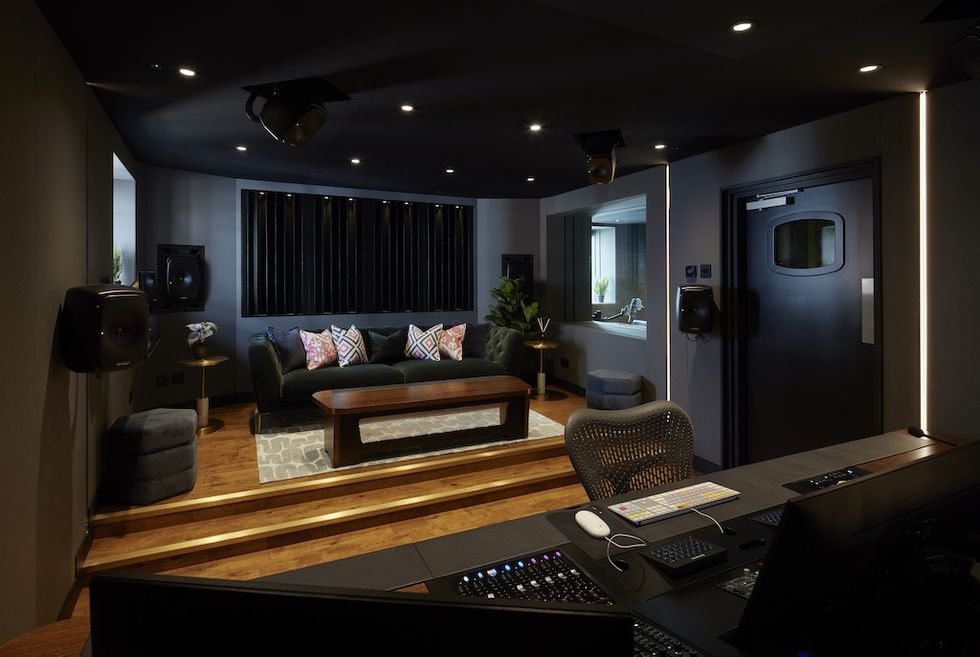
Inside the Factory Immersive studios in London
Image credit Paul Riddle
"Our approach has therefore shifted accordingly," says Hill. "We think in systems rather than single mixes now, and we’ve deliberately built in-house technical capability so our team can speak fluently to both the creative brief and the engineering constraints."
That systems-based approach also changes where audio sits in the development process. Hill argues that involving the team early allows creative, technical and budget decisions to be made in parallel rather than in sequence.
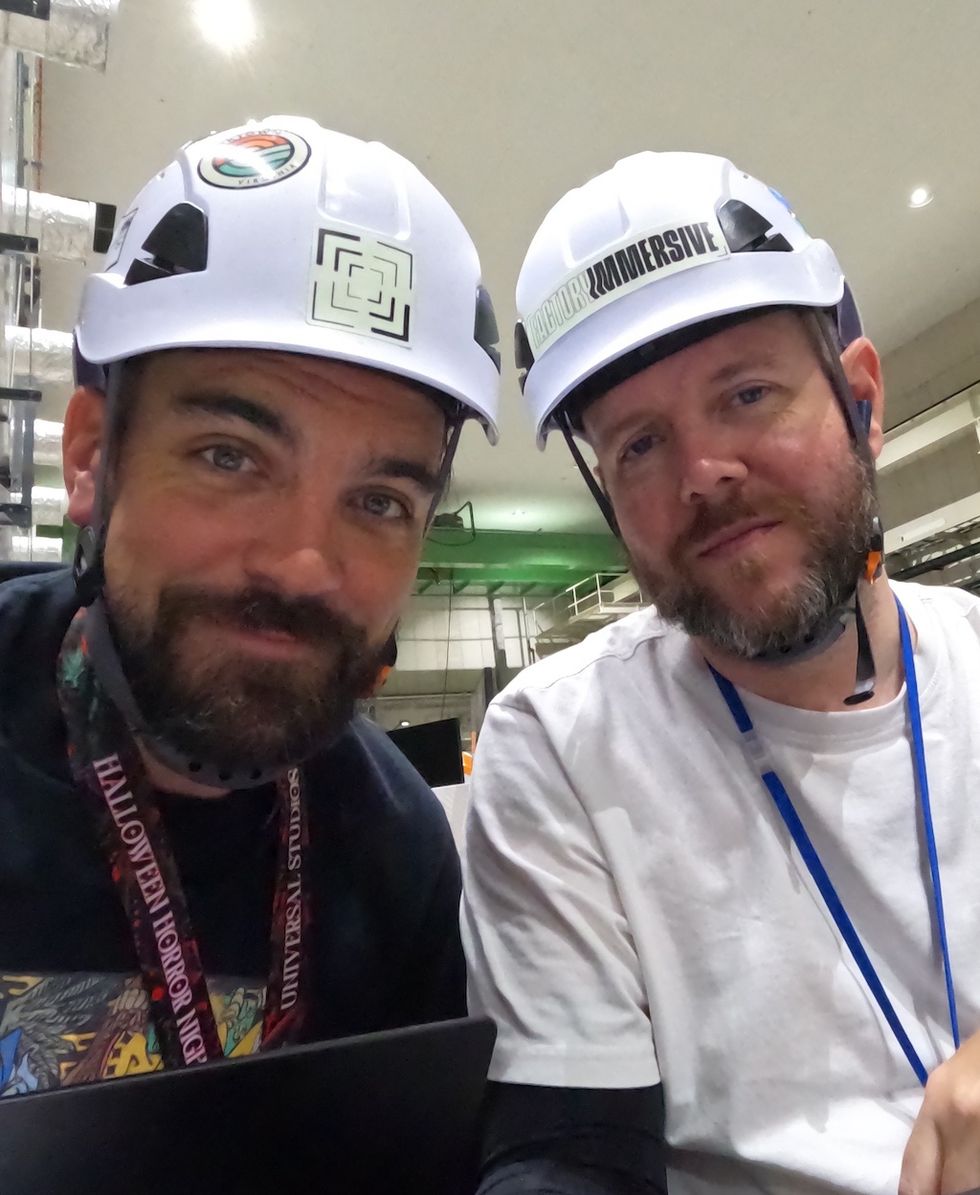
Mike Hill and Steve Lane on-site at an immersive project
"The earliest stages are where the shape of a project gets decided, and being in the room for that means audio isn't reacting to a finished scene; it's part of the reasoning behind it from day one.
“Rather than being handed a scene and told to make it sound good, we are able to help shape what's actually possible early on, in terms of the hardware, the engine, the budget, right alongside the creative vision.”
Lane adds that early involvement means the audio pipeline can be built into the project's development rather than added later:
“We can flag early if a creative idea needs a playback system that doesn't exist yet or spot an opportunity our client hasn't considered because they may not know what a particular rig or spatial format can do.
“That back and forth only works when our teams are there from the start."
Making technology part of the creative process
That early collaboration can also influence a space's physical design, from speaker locations to materials and construction. Rather than treating technical limitations as constraints discovered late in the process, Factory Immersive sees them as part of the creative brief.
"Real-time engines, multichannel formats, custom playback rigs are not obstacles we work around after the fact. They are part of the palette from day one,” says Lane.
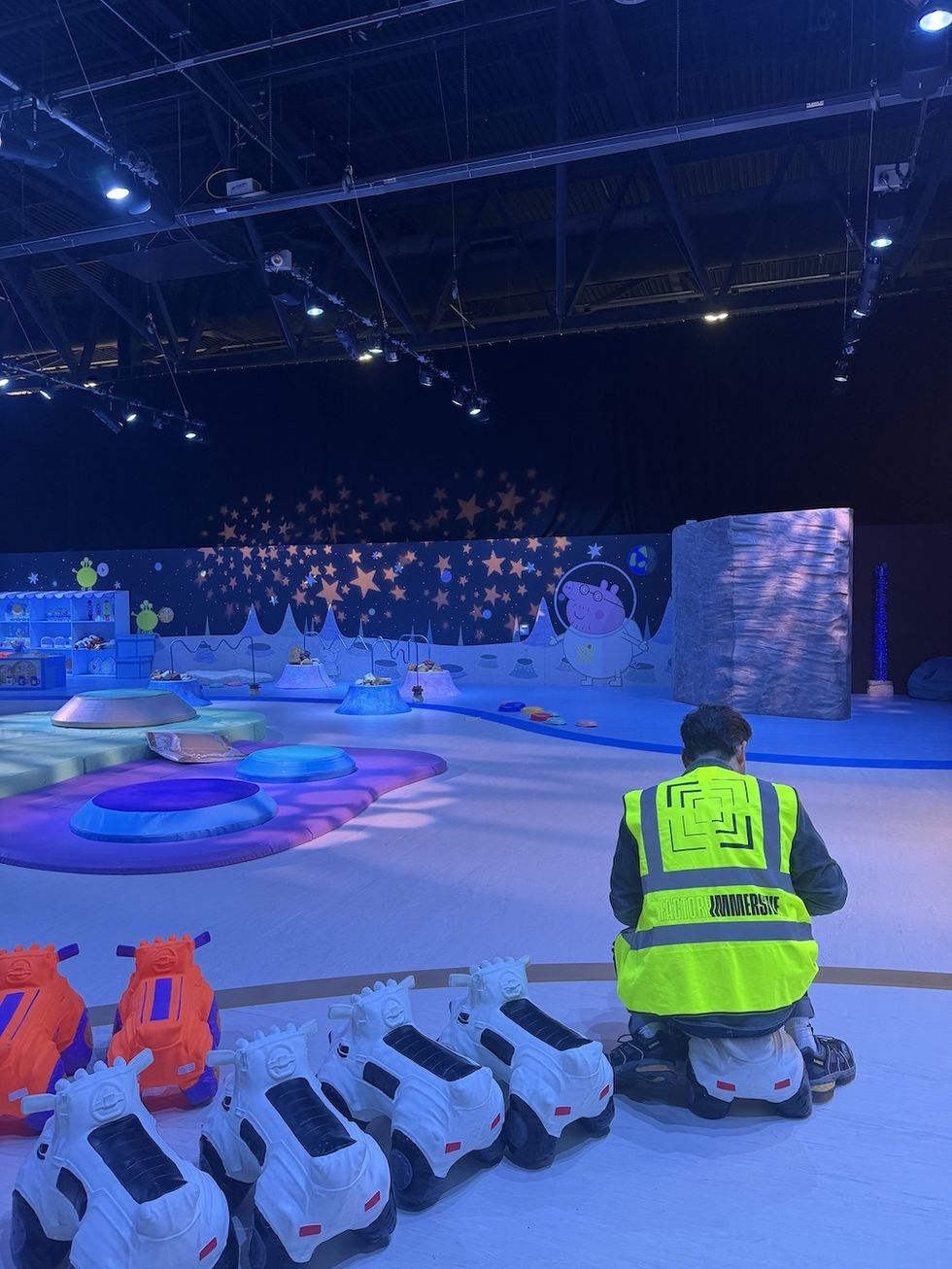
Factory Immersive at work on the Peppa Pig's Space Adventure experience
"At Factory Immersive, we try to understand the platform's ceiling before we even start designing: how many channels are actually available, what the engine can handle in real time, what the hardware on site is capable of.”
"Once that's locked, we do the creative work inside those walls rather than bumping up against them later. It's much easier to be ambitious within a known constraint than to design something beautiful in a vacuum and then have to strip it back."
The same principle applies to advanced spatial formats such as Dolby Atmos, where additional channels and objects can create opportunities for increasingly complex soundscapes, and, Lane argues, for a different kind of discipline:
"The temptation is to think more channels mean more freedom, but we've found the real skill is restraint. Knowing which sounds actually deserve a dedicated speaker or object and which ones would just add clutter. The framework forces that discipline, and the result is usually a cleaner, more intentional mix than if we'd had unlimited resources.
"Where it gets genuinely interesting is when a limitation forces a solution we wouldn't have landed on otherwise. Some of the best moments I've been part of came directly from a hardware quirk or an engine limitation that pushed the design somewhere I wouldn't have chosen freely.
“Constraint is often where the craft actually happens, not where it gets compromised. It’s less about balancing two competing forces and more about treating the technical framework as a creative brief in itself."
Part of a wider ecosystem
Audio also sits within a wider technical and creative ecosystem. It has to work alongside lighting, media playback, show control, AV systems and the physical architecture of a venue.
"Collaboration is genuinely central to how we work, as sound almost never exists in isolation on any of our projects,” says Hill.
Production and creative leads coordinate with designers and producers on the narrative and guest experience, while technical sound designers and audio programmers work with AV integrators and show control engineers to ensure the audio fits the on-site hardware.
The approach has been applied across rides, AR mobile apps and touring exhibitions, with the team contributing throughout the production process rather than simply delivering finished audio.
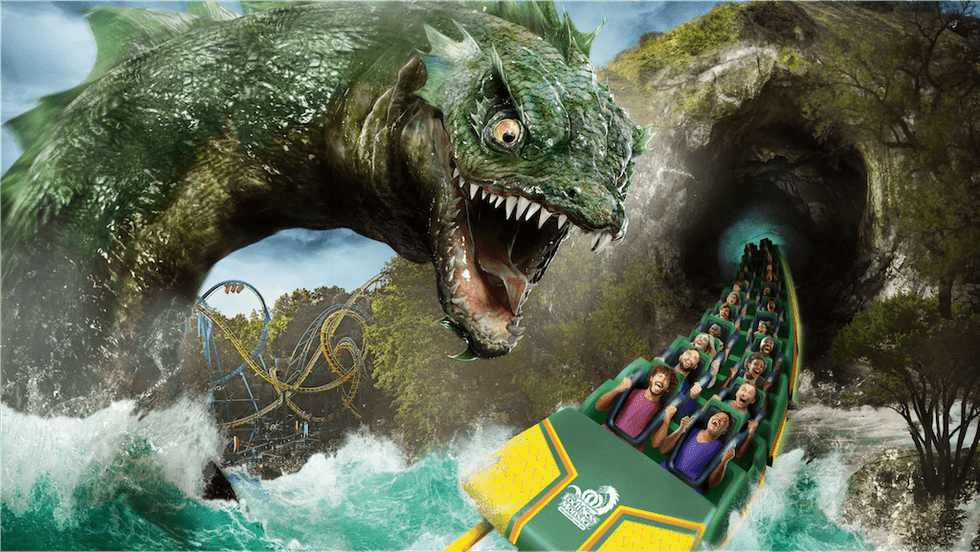
Factory Immersive has worked on theme park rides including Busch Gardens Williamsburg's Loch Ness Monster
The work does not end when the mix leaves the studio. Testing in the venue is essential, particularly because physical environments can introduce reverberation, background noise and sound bleed that cannot be accurately replicated in a post-production studio.
Lane says: "Understanding how differently a mix translates once it's out of the studio and into the venue is essential. A beautiful mix on studio monitors can fall apart in a noisy queue line, a reverberant tunnel, or next to a competing sound source from the ride next door.
“Field testing early and often is non-negotiable, and it's the step I see skipped most often when budgets or schedules get tight."
Lane points to several major attractions where that collaborative, well-tested approach shines through:
"I think of some of my favourite attractions, and there is one common thread. The immersion on Hagrid's, the technical excellence running throughout Rise of the Resistance, the fun and engaging storytelling on Cosmic Rewind – these all are amazing attractions where audio is integral to the overall experience and not just bolted on at the end."
What’s next for immersive sound?
As attractions increasingly draw on the standards of film, gaming and other digital media, Hill expects demand for more responsive audio to continue rising.
"With the influx of IP-branded attractions that our industry is experiencing, it has meant guests now measure experiences against the likes of Hollywood blockbusters and AAA video games. That means static loops and one-size-fits-all soundtracks start to feel dated.
“People expect sound that reacts to them individually, whether that’s a musical score responding to them, or a show character convincingly occupying the same environment."
Generative and adaptive audio could offer another step towards this more responsive approach as the technology matures, Hill explains.
“Alongside that, we expect the line between physical and digital experiences to keep blurring, with game engine technology increasingly layered onto real environments, and the same principles we’ve applied to attractions extending further into museums, branded activations and other forms of immersive entertainment."
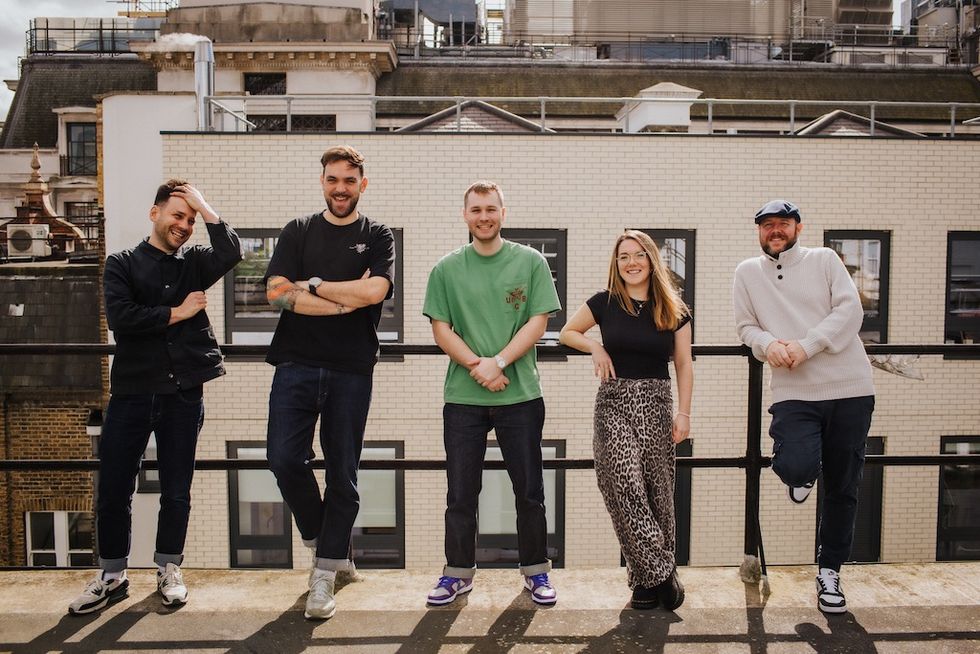
The Factory Immersive team in London
Image credit Binky Nixon Photography
Personalisation is another area Factory Immersive is watching, particularly as wearables and mixed-reality devices become more widespread.
"We're already seeing early experiments at live events where audience members can tune into their own audio mix on a personal device, and I think that logic eventually finds its way into attractions too, although less about a single mix for every guest and more about sound that can flex per rider, per headset, per vehicle.
“There's an expectation from guests to be able to tailor their experience and have something unique to them."
For Factory Immersive, the focus is on continuing to build its team and international presence while developing its work across increasingly interactive experiences.
"We are building on the work already underway across the UK, US, and Asia, and we continue to push the bar higher as an audio vendor that brings genuine cinematic craft to real-time, interactive sound, wherever in the world that experience is being built."
As attractions become more responsive and increasingly blend physical and digital elements, audio will play an expanding role in defining how visitors experience those environments.
With early involvement and the right creative and technical approaches, guests won’t say the sound was good. They’ll just say the experience felt real. And for Factory Immersive, says Hill, that is everything.
Mike Hill and Steve Lane will attend IAAPA Expo Europe 2026, taking place in London from 21 - 25 September. To book a meeting, please get in touch via email.