The global themed entertainment industry is shifting from standalone attractions towards integrated, multi-sensory destinations that combine entertainment, culture, hospitality and placemaking.
This change is particularly visible in the Middle East, where major developments are bringing together cultural, leisure and entertainment experiences at an unprecedented scale.
Delivering these destinations requires more than creative ambition. It demands sophisticated engineering, strategic foresight and a detailed understanding of how people experience and move through spaces.

Matthew McLean, regional market director for leisure and entertainment at AtkinsRéalis
blooloop speaks to Matthew McLean, regional market director for leisure and entertainment at AtkinsRéalis in the Middle East, to explore what is driving this shift and what it means for the next generation of destinations.
With two decades of experience working across the region, McLean has been involved in some of its most complex entertainment and cultural developments.
AtkinsRéalis brings together strategy, design, engineering and advisory expertise, giving its teams an end-to-end view of projects from concept through to delivery.
For McLean, this cross-disciplinary approach is central to what AtkinsRéalis describes as ‘human-centric design’ – a way of bringing creative ambition, human experience and operational reality together from the outset.
The strongest destinations are shaped when these considerations inform one another early in the process. This can help close the gap between a creative architect’s vision and the practical realities of engineering, while making performance and the guest experience measurable from the beginning.
McLean’s observations reflect a broader recalibration underway across the themed entertainment sector, particularly in regions where destinations are being delivered at unprecedented scale and speed.
Alignment from the outset
“The destinations that endure are the ones where creative ambition, engineering and operations are aligned from the first decision,” McLean tells blooloop.
“That is how you create places that open with clarity, perform under pressure and still feel coherent to the people using them.”
“We can be architects, engineers, experience designers or operational specialists, but the work only succeeds when those perspectives come together around the people who will actually use the place.
"The goal is to make sure the experience promised in the brief holds true in the real world.”
McLean notes that this is where a full‑lifecycle perspective becomes critical.
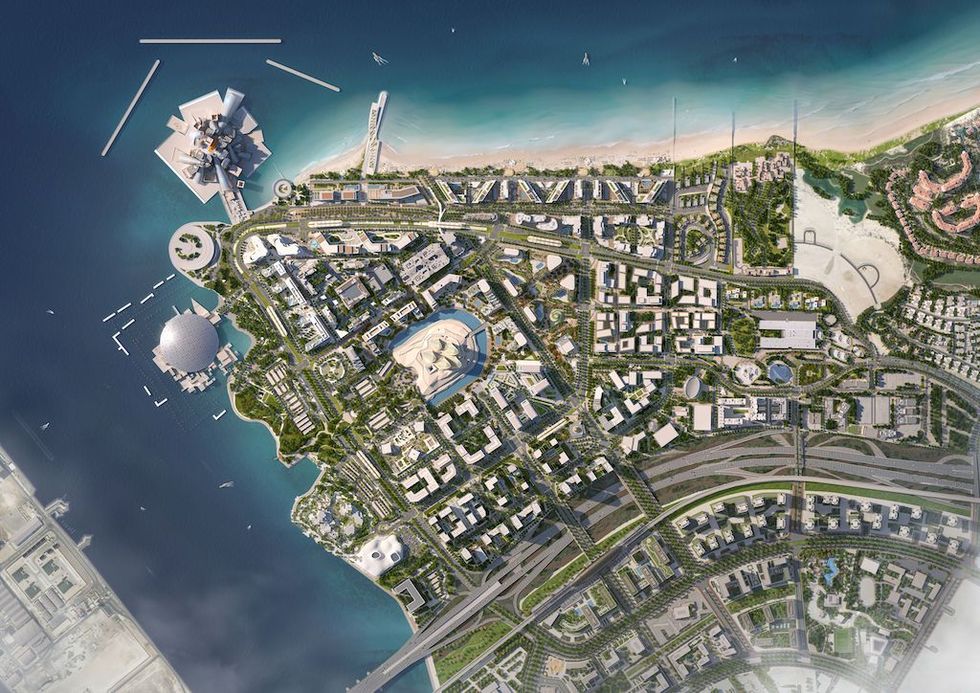
The Saadiyat Cultural District on Saadiyat Island in Abu Dhabi
Image courtesy of AtkinsRéalis
Destinations that perform well over time are typically shaped by an understanding of what follows design, including delivery sequencing, operations, maintenance, and long‑term adaptability, rather than treating those considerations as downstream problems.
Decisions made during feasibility, strategic positioning and early concept definition go far beyond initial direction.
They shape how people arrive, how they move through a space, how capacity is managed and how the destination performs commercially over time.
When guest flow, accessibility, transport integration, and operational logic aren't resolved early, issues compound later through cost escalation, rework, or a diluted experience that never fully aligns with the original vision.
If teams address those fundamentals upfront, they retain the freedom to innovate within a controlled framework.
For McLean, that balance between ambition and discipline lets complex destinations be delivered without compromise.
Human-centric design as a discipline
Human-centric design is often discussed as an aspiration. McLean says it is the discipline that turns complex destinations into places people can understand intuitively, connect with emotionally and return to over time.
That demands cultural sensitivity, storytelling skill and technical accuracy working together from the outset.
“In themed entertainment, emotional connection is built through accumulation,” he says. “The places that stay with people are the ones where narrative, culture and sensory detail are all reinforcing the same experience.”
McLean points to projects such as Six Flags Qiddiya City, where that thinking informed decisions at every level. Narrative structure, ride placement, circulation and even fine detailing were coordinated to reinforce authenticity and emotional connection rather than undermine it.
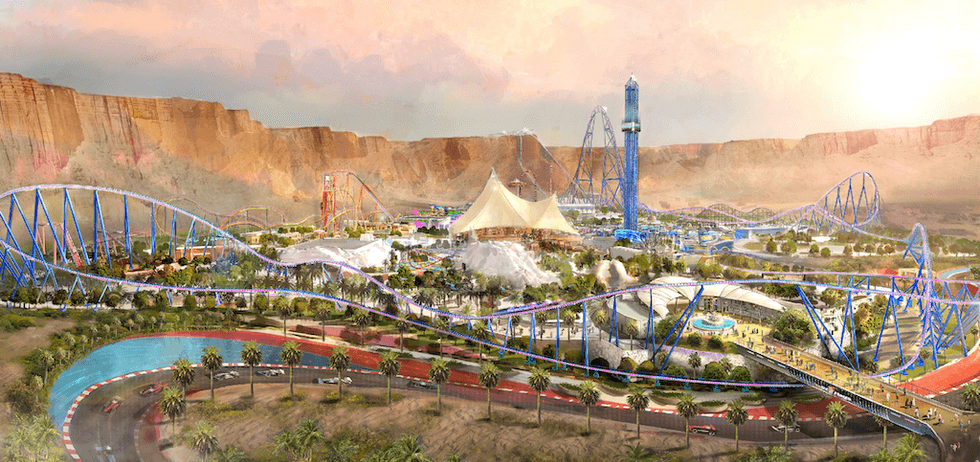
Concept drawing for Six Flags Qiddiya City in Saudi Arabia
Image courtesy of AtkinsRéalis
“The strongest destinations are culturally precise as well as emotionally engaging.
"What makes them memorable is the consistency of the story, from the overall environment down to the details people may not consciously notice but still feel,” he says.
“On Six Flags, for example, it was the design of the doorknobs on certain rides and attractions that evokes that emotion and that connection with that particular story.”
Experience, he says, is reinforced through such cumulative detail.
Individual design decisions that may seem minor in isolation often play an outsized role in shaping how stories are perceived and remembered, particularly when they support consistency across visual, spatial and emotional cues.
That requires translating emotional intent into solutions that can be built and operated.
Cultural context, climate, landscape and social behaviour influence how people move through space, where they pause and how they connect.
“The most effective destinations don’t impose identity. They embed it."
Relevance where experience meets reality
Visitor expectations, McLean says, have moved beyond immersion as a standalone concept.
Experiences are no longer defined solely by what is seen or felt in isolation, but by how they are shaped, sequenced and sustained across an entire journey.
“It’s really about co-authoring the journey from the beginning. The experiences people seek today are more layered, and people want them to feel relevant to who they are and how they move through a place.
"And what’s meaningful for one person won’t be the same for another.”
That emphasis on relevance introduces new layers of complexity for designers and operators alike. Destinations must accommodate different audiences, behaviours and peak conditions without fragmenting the experience or losing coherence.
The strongest environments do this by building flexibility into planning and infrastructure, allowing experiences to evolve over time while maintaining a clear, consistent identity
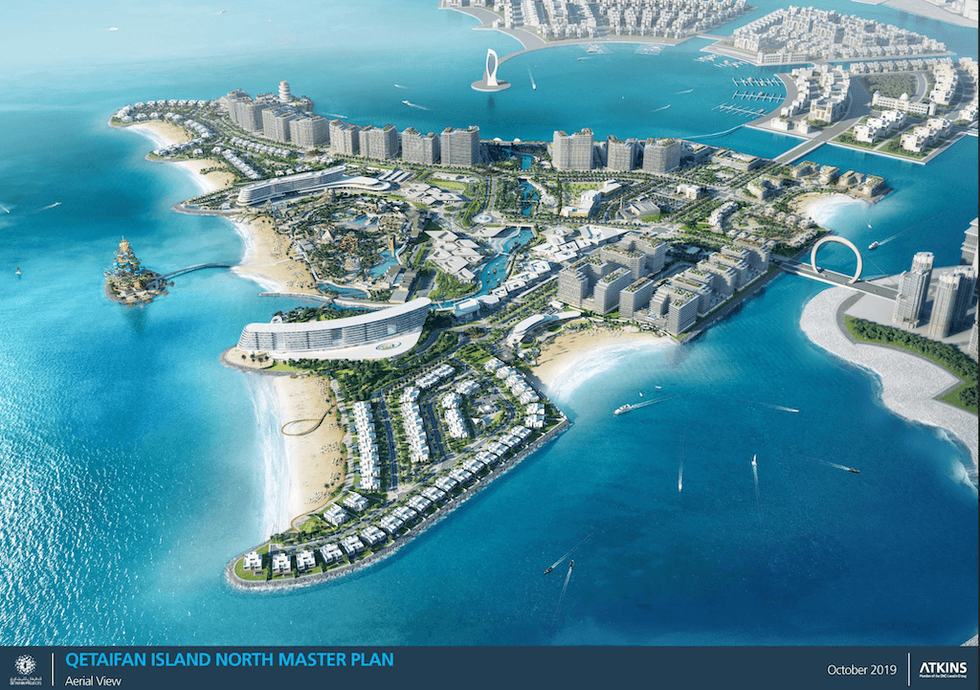
Qetaifan Island North Master Plan: aerial view of future coastal development in Qatar
Image courtesy of AtkinsRéalis
At the same time, McLean adds that this complexity should remain invisible to the guest. Navigation should feel intuitive, and transitions should feel seamless.
“It’s all those things that you must take on board in the physical and, to a degree, the digital experience of how you connect with people.
“What is changing now is the scale at which experience has to be understood. You have to understand how the entire journey performs, from the wider destination down to a single moment within it.”
Many of the challenges that undermine large-scale destinations, McLean says, stem from decisions made too late.
This is where system-level thinking becomes practical, and where digital capability becomes increasingly central.
Simulation and modelling tools let project teams test crowd dynamics, capacity peaks, and operational scenarios early in the process, making it easier to understand how access, movement, servicing, and guest experience interact as one system when change is still viable and cost-effective.
“These tools allow you to test intent against reality early enough to strengthen the guest experience before it is compromised by delivery or operations.”
Operational thinking, however, cannot be treated as a downstream consideration.
McLean says the guest journey does not begin at the gate or end at the attraction. Access, arrival, comfort, clarity and ease all shape how a destination is ultimately perceived.
The operational layer, though largely invisible, is often what determines whether an experience feels effortless or frustrating.
“You can design something exceptional, but if the operational experience doesn’t hold up, the destination doesn’t succeed.”
Engineering places that endure
AtkinsRéalis is heavily involved in projects that challenge traditional thinking around how destinations are planned, designed and delivered.
Working at this scale requires an innovative approach to how people will live, work and play in the future, as well as a willingness to rethink established models of urban and cultural development.
“If you had a blank canvas, how would you create that space and how would it fit into that city?”
McLean sees the Middle East moving into a more demanding phase, where the question is no longer whether destinations can attract attention, but whether they can support long-term use, repeat visitation and deeper attachment.
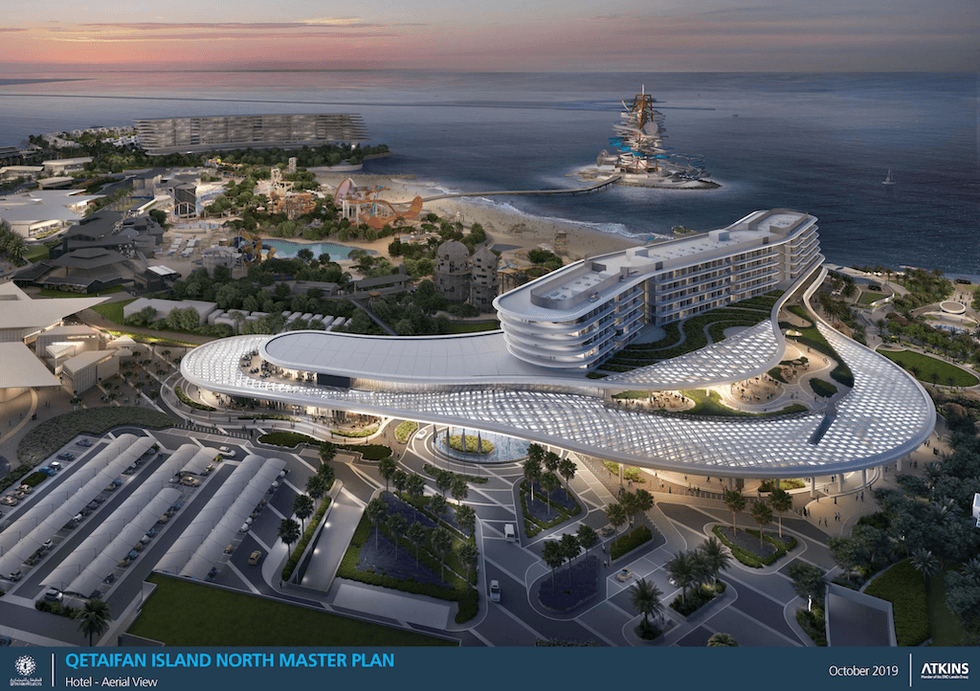
Qetaifan Island North resort master plan, showing the hotel and other amenities at sunset
Image courtesy of AtkinsRéalis
In a region long marked by rapid turnover and transient populations, this trend matters. Destinations are increasingly expected to support day‑to‑day life as well as peak moments, contributing to long-term attachment rather than episodic visitation.
“People want to feel at home. If they are going to live and grow in a place, it needs to offer more than moments of entertainment. It needs to offer connection.”
This reframes the role of themed entertainment within urban development. Destinations are part of wider living ecosystems where culture, work, leisure and community intersect.
McLean says that destinations that endure are shaped by engineering discipline, cultural understanding and long-term operational thinking.
The next phase of growth is already taking shape, with a pipeline of major developments, national programmes and global events putting pressure on project timelines while raising expectations around operational readiness, experience quality and long-term performance.
For developers and operators, that means the work cannot stop at opening. Destinations need to be designed to perform in the real world, with the flexibility to evolve as visitor expectations, technology and operating models change.
In this environment, the differentiator is not simply what gets built, but how well it works over time.
The destinations that stand out will bring creative vision, engineering, and operations together from the outset. They will need to deliver compelling experiences on opening day, while also being practical to operate, resilient over time and capable of giving visitors reasons to return.
For a sector delivering projects at increasing scale and speed, that balance may prove just as important as the ambition behind the destination itself.