On 12 March 2026, Slick City opened its first European venue in Nottingham, UK. The 50,000-square-foot facility marks the international debut of Slick City Action Park, a dry-slide concept that already has over 40 locations in the US.
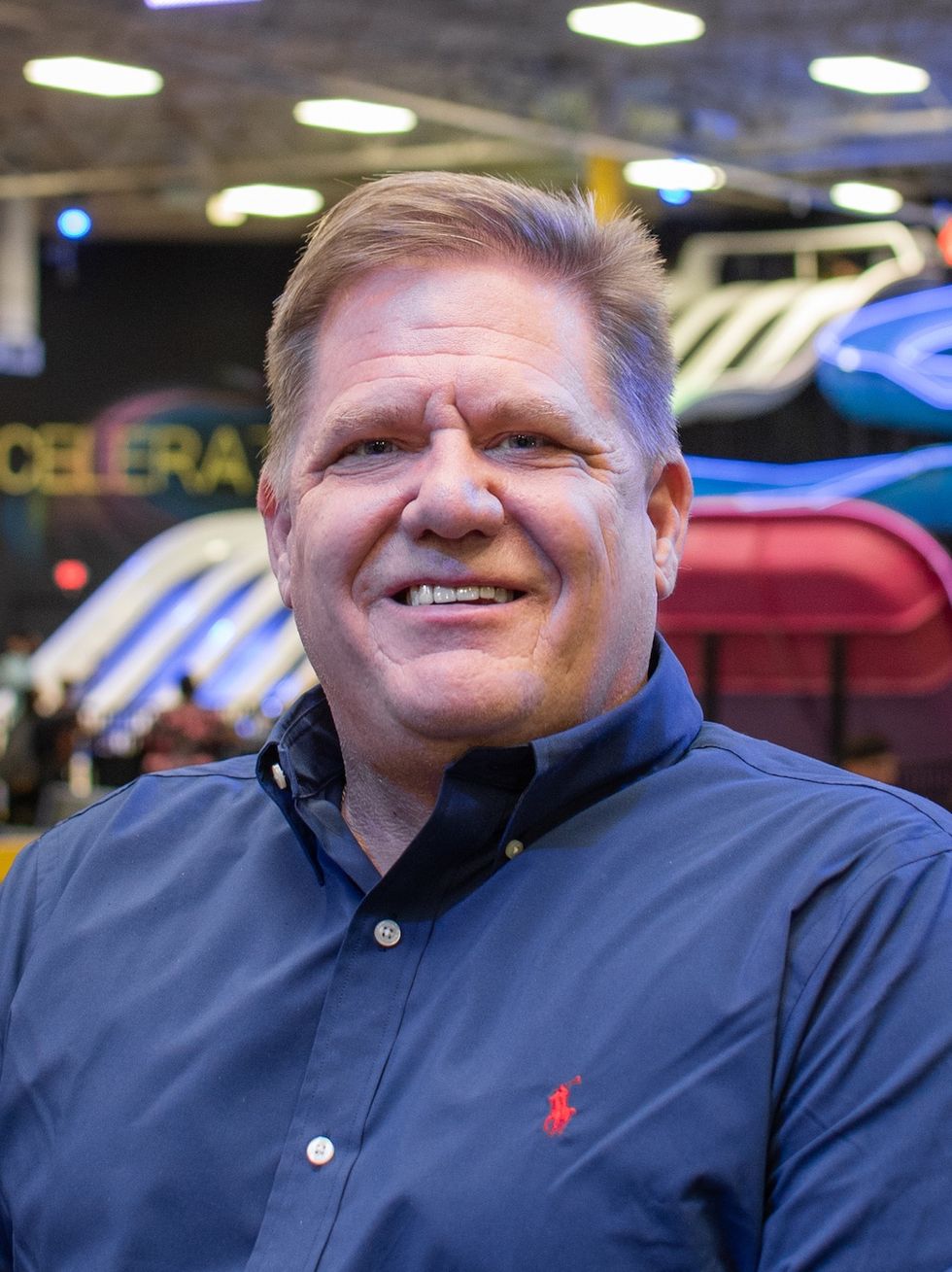
Slick City co-founder and CEO, Bron Launsby
The Nottingham location features 16 high-speed dry slides with drops and twists, as well as the world's first UV AirGlider, a gravity-powered aerial attraction designed to simulate the sensation of flight.
To understand more about Slick City’s rapid expansion, we speak to co-founder and CEO, Bron Launsby. He discusses the genesis of this new category of indoor attraction and what is powering the global rollout.
The origins of Slick City
Bron Launsby previously worked in the trampoline park sector, operating nine locations. “I got involved in that toward the very beginning of the trampoline park space, in early 2012," he says.
For Launsby, the key to navigating the initial boom and subsequent market consolidation was continuous adaptation:
"One of the things that helped me have success was keeping the experience fresh for my guests, and so that was putting in new attractions over time. That was putting in new programmes, memberships, homeschool groups, and glow programmes.”
By 2019, while developing what would be his final trampoline park project, Launsby was looking for something different. "I'd become interested in putting in a dry slide, and there really wasn't a lot around.
“But there was a manufacturer called Slick Slide, which I got in touch with, and we ended up putting the first dry slide into my trampoline park.”
Slick Slide’s co-founder, Gary Schmit, engineered the prototype dry slide, which was installed in 2020.
Despite the global pandemic, the attraction proved popular. "That particular location did really well. The other new attraction I put in, which was called a sports court or an air court—a sealed area that you can play basketball, dodgeball, volleyball, soccer, etc.—also did extremely well.”
The performance of the two attractions prompted Launsby and Schmit to consider whether the dry-slide concept could become a standalone business.
"Gary came up with multiple dry slides. Eventually we both decided it would be a good idea for me to invest in Slick Slide, with the idea that we would continue to make new designs of slides with the end goal of an indoor waterless slide park.”
This investment led to the creation of Slick City Action Park, co-founded by Launsby and Schmit in 2021. The aim was simple: recreate the appeal of waterslides without the water.
"As we got into it, we started to fully understand all the dollars that are spent in Kalahari and all these other big indoor water parks," Launsby adds. "We thought, is there a way to take a lot of that same thrill, take away a lot of the costs and a lot of the risks?"
Compared with indoor water parks, the dry-slide model avoids the need for systems such as water filtration, heating and chemical treatment, potentially reducing both capital and operating costs.
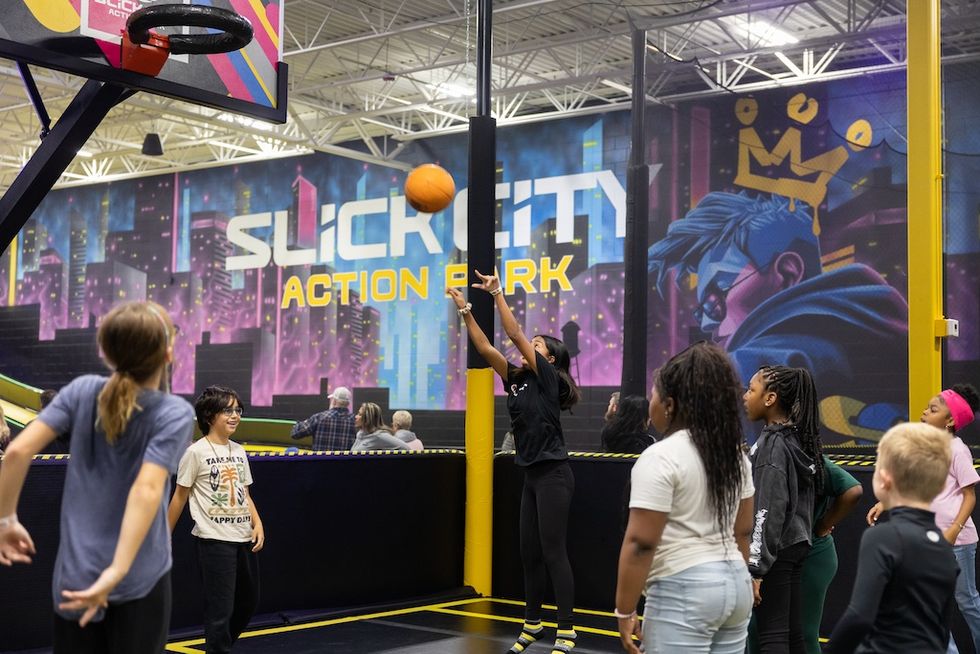
Slick City is also home to "line busters" like the sports air court
Image courtesy of Slick City
However, Launsby also recognised that slides alone would not provide enough capacity or variety for a full attraction. The concept therefore needed attractions that could provide additional capacity and give guests something to do between slides – what Launsby calls "line busters".
"In a water park, you have the wave pool, for example... places where people don't have to wait. In that vein, we knew we needed to have a few other attractions."
So, the sports air court also became a staple of the design. This was complemented by a multi-level soft play unit designed to engage their youngest visitors, alongside other additions like trapezes, swings, and zip lines.
Operational expertise
Launsby’s transition from a franchisee to a global franchisor has shaped Slick City's approach to expansion.
"My operator background has really been a benefit. I remember going to a discovery day, years ago, as a franchisee, not really understanding the concept and trying to believe in something that I really didn't understand.”
That experience influenced how Slick City approached franchising. “What I learned from that process was that your franchisees are ultimately going to be your partners in a lot of ways," says Launsby. "So, you have to learn to collaborate and build trust.”
That meant proving the business model before expanding the franchise network.
Rather than franchising before the model had been tested, Launsby says: "We were very intentional about waiting until we had two locations open—one industrial flex space, one retail space, in different parts of the country, opened for a year or more—before we started to try to get anybody else interested.
“We wanted to prove the concept was strong.”
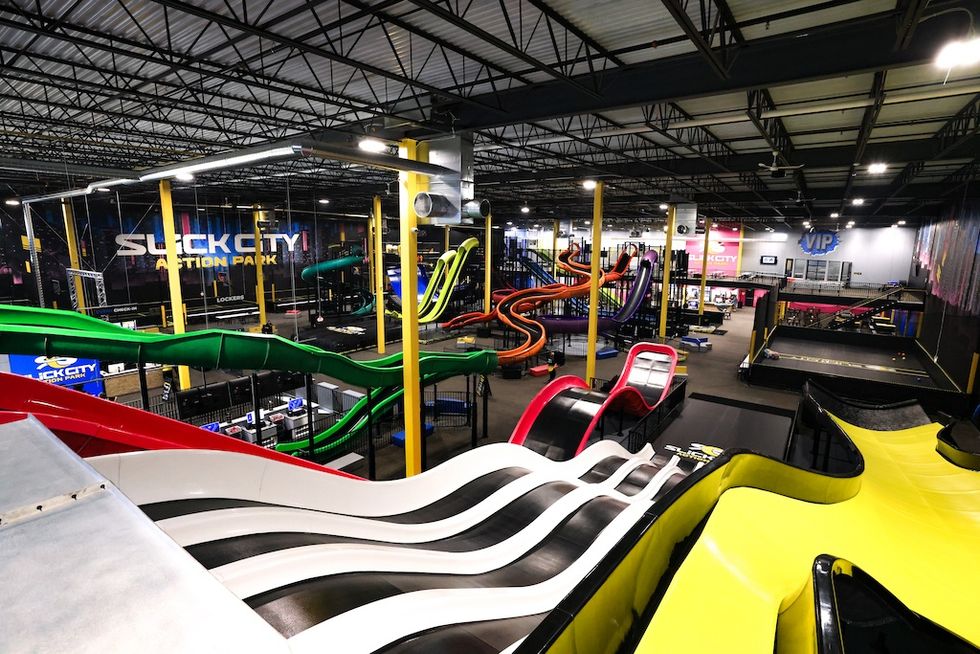
Slick City is a new type of indoor entertainment venue
Image courtesy of Slick City
Slick City opened its first location in Denver, Colorado, in the summer of 2022. The company then tested the concept across different real estate formats, building operational data before expanding the franchise network.
Slick City also sought to give franchisees the benefit of economies of scale. "And because we very much believe in the concept, we were opening and operating many locations ourselves.”
The corporate team therefore centralised sourcing and negotiated materials on behalf of franchisees.
"We sourced the best, made sure we're using our intellectual property, and eventually created a 'Park in a Box,'" says Launsby. "So, not only would a franchisee get systems from us, but they really would get the attractions, the use of our IP, the flooring, the furniture... just about everything for that location.”
As the team developed the brand longer term, they wanted it to look very similar in every location. “A lot of times, when you go into emerging franchise systems, the look could be quite different as you go to different locations. We wanted to be holistic in how our brand appealed to different markets.”
The approach is intended to give Slick City a consistent customer experience across markets.
Growing pains
As Slick City expanded, it also had to address two practical challenges: attracting less confident visitors and finding suitable real estate.
While the larger slides appealed to thrill-seeking guests, Launsby says their scale could also deter some younger visitors.
"One of the things we learned in the beginning was there could be some timid, say, eight-to ten-year-olds, who look at a slide and say, ‘Wow, that slide is just a little too much for me’.”
To avoid alienating families with mixed age groups, Slick City had to expand its portfolio. "Learning how to have some other attractions and have different levels of thrill within our slides was very important.
“We pivoted pretty quickly after our first location... and kept on improving the technology.”

Slick City parks have slides ranging from extreme thrills to kiddie friendly options
Image courtesy of Slick City
Today, Slick City parks feature a progression of slide profiles, allowing less confident children to build up their courage gradually.
The second challenge was finding suitable real estate. "In our first location, we had 30-foot clear heights. But in order to scale it long term, we had to realise the other issue that was going to come was finding real estate.”
Requiring 24-30-foot clear heights significantly limited the number of buildings that could accommodate the concept. Until the Slick Slide engineering team, led by Schmit, came up with an architectural workaround:
"We worked on the ability to create a system where the airbag or the bottom of the slide would be recessed in the concrete. And so that allowed us to get two to four more feet of clear height by going down.”
The approach expanded the pool of potential sites to include more vacant retail spaces, former department stores and industrial flex buildings.
Slick City’s partnership with slide manufacturer Slick Slide has also resulted in a growing portfolio of proprietary technology. To date, Slick Slide has filed 63 patents and patent applications for its proprietary slides and custom-engineered slide mats, with many more in progress.
A multigenerational approach
Traditional family entertainment centres have often struggled to retain older children and teenagers. Children love soft play and trampoline parks, but teen interest is limited.
Slick City, however, has managed to capture a multigenerational audience, says Launsby. "We look at all the data, and the big thing that we're proud of is that 27% of our guests are 18 and above.”
"If you look at high school and above, which is generally where people stop going to adventure parks and trampoline parks, it’s close to 40% of our business.
"We're getting a lot of parents. We're getting a lot of friend groups. We even had a grandmother celebrate her 73rd and 74th birthdays at our location.”
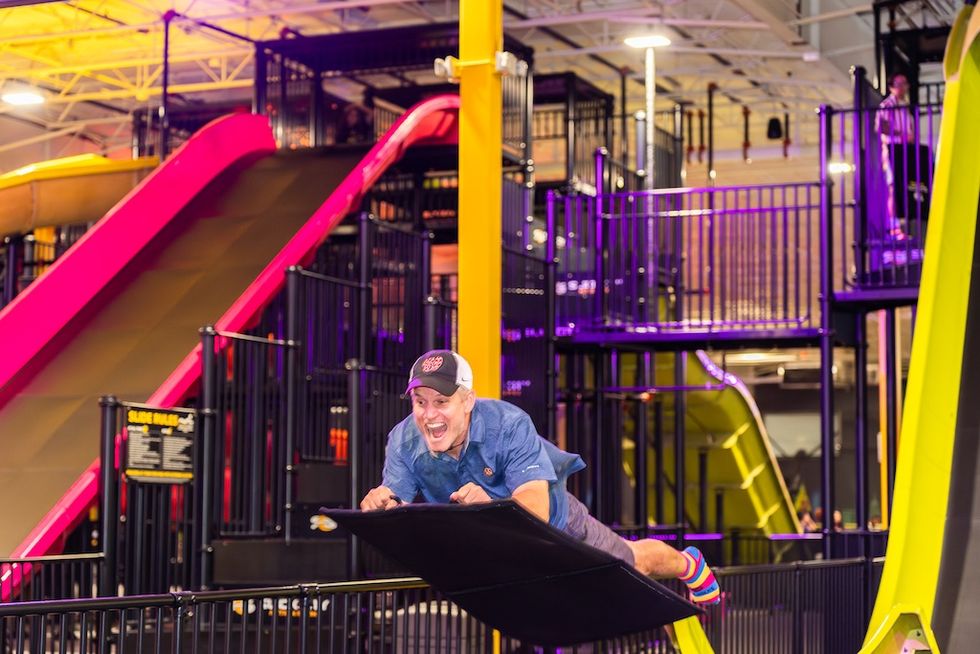
Slick City caters to both adults and children
Image courtesy of Slick City
This intergenerational appeal positions Slick City at the intersection of active play and the competitive socialising trend. From high-tech mini-golf to gamified darts, today’s consumers want shared, active experiences that offer friendly rivalry.
"We're very much in an experiential economy,” says Launsby.
"For groups, whether it’s families, friends, or co-workers, it's about experiencing something with other people. The idea of having a little bit of competition is definitely an important trend for us as we continue to scale.”
Launsby also sees the wider attraction market becoming more demanding. It is no longer enough to install a novel piece of hardware and expect guests to return again and again.
"Going back five years ago, there were a lot of attractions or businesses that relied on a unique attraction.
“What's really shifting, in my opinion, is putting more emphasis on guest engagement, on better food and beverage... we have to up our game on all levels. You can't just have a cool new attraction. You have to reinvest in it. You got to keep the experience fresh.
"You got to keep bringing new things in. You got to keep it clean.”
Slick City’s global plans
Slick City entered 2026 with 25 US locations and is targeting 60 by year-end, according to Launsby. That trajectory is set to continue, too.
"Based on the number of leases that we have signed, the number of franchisees that we have lined up, either in searching for real estate, in permits, etc., we'll open probably 60 locations next year," Launsby says. "So, it'll be another year of doubling our growth.”
Having proven the concept across the US. Slick City turned its attention to Europe, partnering with Activeon, an indoor leisure and trampoline park operator in the region.
Following the Nottingham opening, Launsby expects the European footprint to expand further: "We'll probably open in two more countries within Europe with Activeon by the end of this year, and next year, I believe we will double the number of countries we are in.”
Beyond Europe, the company is finalising its Franchise Disclosure Document for Canada as it prepares to expand there.
The longer-term ambition is to establish Slick City across major international markets. "Five to ten years out, you're going to see Slick City in just about every major market, multiple of them at that point," Launsby adds.
To sustain this pace of development without saturating metropolitan areas, Slick City is also developing a smaller-format concept aimed at markets with populations of around 100,000 to 200,000.
By developing more compact floor plans, the company can deliver the same experience in a fraction of the footprint.
"We have gotten much more efficient with our floor plans... starting to have slides that cross over each other and just make it really look appealing, but also just a much more efficient model.
“If we can continue to work on and modify that experience, I believe we can start putting these in smaller markets in the future. It comes down to return on the invested capital.”
Launsby also sees company culture as an important part of managing rapid expansion. "One of the reasons we've been able to have the success we've had is a really strong culture and a really good team that has a lot of trust," he says.
Slick City’s next phase will test whether its dry-slide model can translate the operational efficiencies it has found in the US into a genuinely global attraction format. Nottingham is the first test of that proposition outside North America.