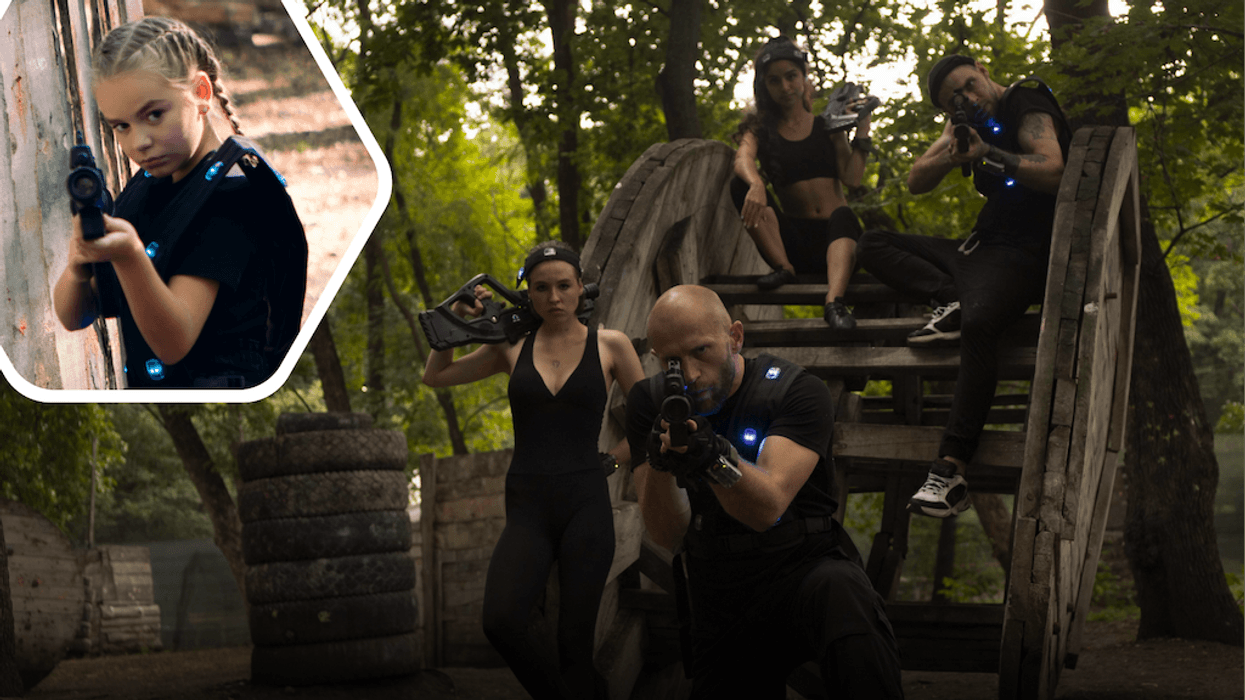

Running a successful laser tag business takes more than buying gear and hoping bookings roll in.
It’s about picking the right model, systems, and customer experience from the very beginning. After almost a decade helping entertainment operators launch and scale, I’ve seen what separates the ones that grow steadily from those that struggle.
A strong example comes from James Goldstein, founder of Laser Tag on the Go in Connecticut.
“We’re 100% mobile. No fixed facility — we go to the event,” Goldstein explains. This choice became the foundation of a flexible, resilient business.
Why a mobile model made sense
Goldstein originally planned to open a traditional indoor arena focused on birthday parties. Then the pandemic hit.
“I’m actually glad we didn’t move forward with a brick-and-mortar location. It would have been a serious problem,” he recalls.
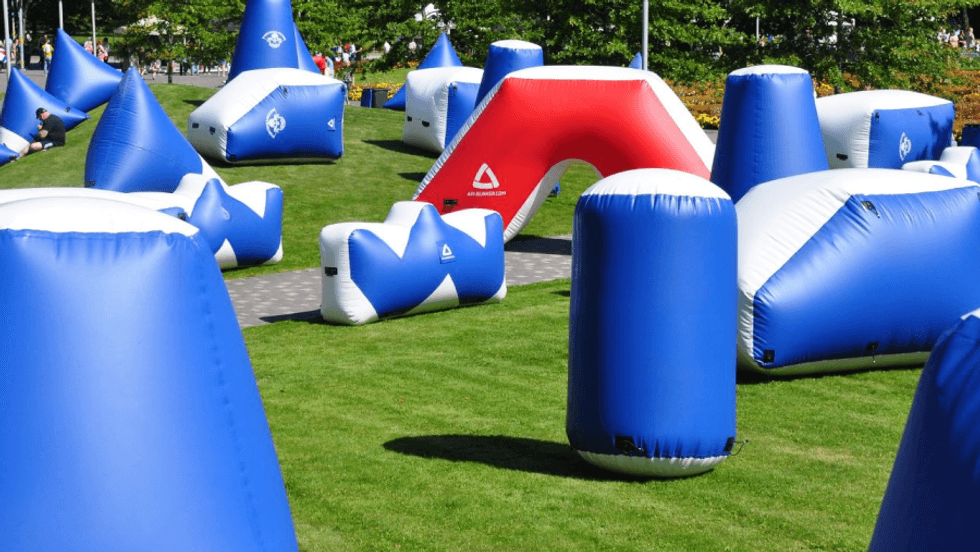 For Laser Tag on the Go in Connecticut, a fully mobile solution was the answerImage credit NETRONIC
Instead, he built a fully mobile operation that sets up in backyards, parks, schools, summer camps, college campuses, and corporate sites. Every game feels fresh because the location changes. There’s no constant need to refresh interiors or décor, as there is in a fixed venue.
At the same time, owners of traditional arenas can add mobile services as an extra revenue stream without major new investment.
Equipment: invest properly from day one
Many new operators try to save money on gear in the beginning. Goldstein did too, and quickly learned it was a mistake. After a short trial period, he switched entirely to professional NETRONIC systems and has never looked back.
“Almost three years in, we’ve had very few issues,” he says. “A battery or trigger might fail occasionally, but we can usually fix it ourselves.”
Key advantages for him included:
- Simple tablet-based software with no bulky PC, cables, or expensive licenses.
- Fast local support and a warehouse in the United States.
- The sci-fi design of the Falcon Lux taggers, which avoids a military look and fits family audiences perfectly in his market.
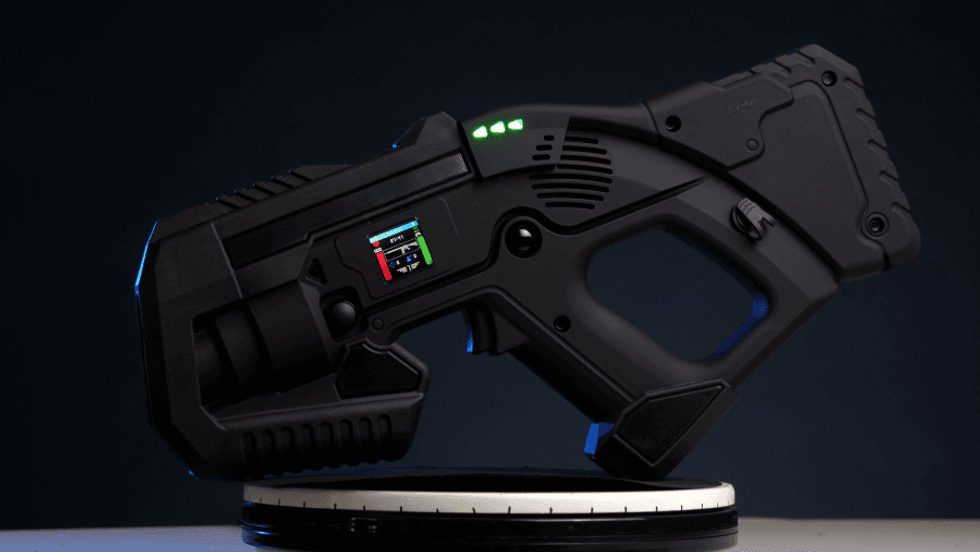 NETRONIC's Falcon Lux taggers have a sci-fi designImage courtesy of NETRONIC
He started with 24 Falcon taggers and now believes he should have doubled that order from the start to comfortably handle multiple events at once.
Game formats that work for real customers
Most of Goldstein’s work comes from kids’ birthday parties, camps, and family groups. That’s why his formats stay simple, energetic, and approachable.
“We went with a Disney Star Wars vibe,” he notes. Kids get fun character names instead of their own, and the language stays light — “health” and “power” instead of bullets or hits.
Core modes that deliver consistently:
- Team vs Team (great warm-up)
- Free-for-all or Battle Royale style
- Juggernaut (one strong player vs everyone)
- Themed Star Wars scenarios
- Objective play like Capture the Flag or Triple Domination using extra devices
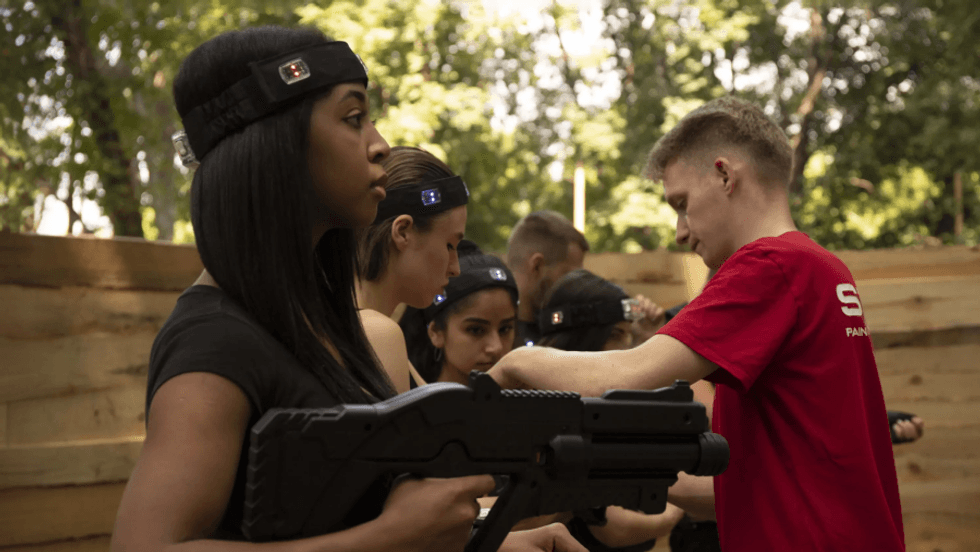 Goldstein's laser tag model is successful because it uses simple, energetic, and approachable formatsImage courtesy of NETRONIC
Birthday kids always get a special moment: a larger tagger and a Nebula grenade that make them feel like the star of the party.
Field setup and safety standards
One of the trickiest parts of mobile laser tag is turning random backyards and parks into effective, safe playing fields. Goldstein’s team always starts with Google Earth to scout the address in advance.
This preparation helps them plan the layout before they even arrive.
Experience quickly taught them that smaller, denser fields work far better than large, spread-out ones. Kids tire fast on big open spaces, so they aim for an area roughly the size of a basketball court. This keeps the energy high and prevents burnout.
They scale the number of inflatable bunkers according to group size, typically 12-14 for smaller parties and 20-22 for larger groups. The mix includes standard bricks, temples, and large center pieces that allow multiple players to hide and maneuver.
Mobile work means dealing with unknown yards, uneven ground, pools, and guests who don’t know the layout. Safety isn’t optional.
Two-handed sensors on the Falcon taggers prevent kids from swinging them one-handed. Every session starts with a clear briefing. Players wear branded gators (neck gaiters) for hygiene and as a souvenir.
Whistles stop the action instantly when needed. If someone breaks the rules, the operator can deactivate their tagger via the software and explain the reason on the spot.
Operations and team management
The company has grown significantly since its early days. “When we first started, it was myself and my two sons,” Goldstein recalls. “We have 14 employees now.”
As the team expanded, keeping operations smooth and consistent became one of the biggest challenges.
To stay on top of everything, they use the Connect Teams app. “It allows me to create forms,” he explains. “If my guys are out there doing an event and something breaks, they can take a picture, send me the serial number, and tell me a brief description.”
The app handles checklists, equipment reports, scheduling, and push notifications for staff.
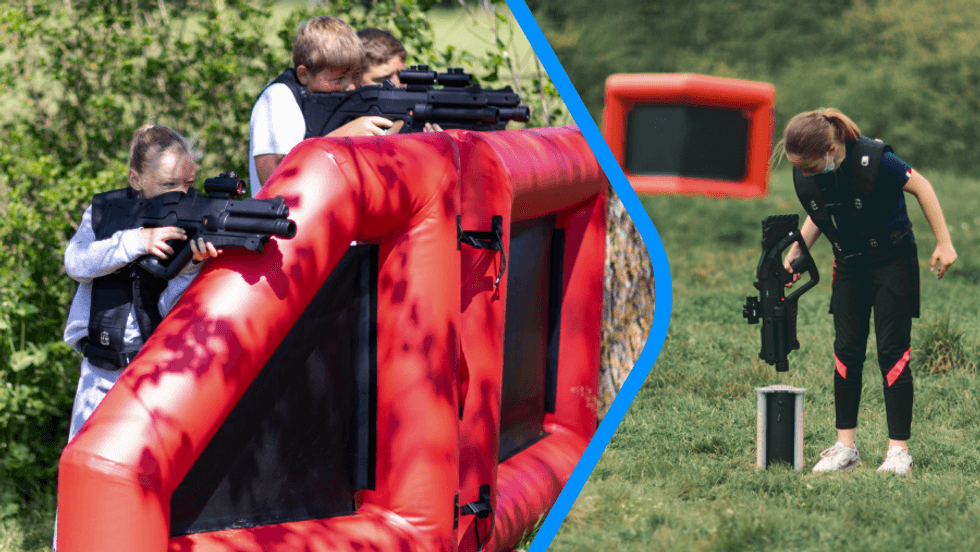 Smooth and consistent operations are also important when it comes to building a profitable laser tag businessImage courtesy of NETRONIC
Every event ends with a disciplined warehouse routine: all taggers and accessories come out of cases and go on charge. Missing even a single tagger charge remains one of the most frequent small issues they face.
Music and content that elevate the experience
Music and video content have become a key part of the experience. Speakers are now standard on every job.
“When we go out, we bring speakers, so we’re playing music in the background,” Goldstein says.
He carefully matches playlists to the audience: epic instrumental and Tron-style tracks for kids’ parties and camps, and high-energy modern hits for college and corporate groups. Sound effects sync with the game scenarios to boost immersion.
Higher-tier packages include short highlight videos.
“We’ll film the event with GoPros or cameras, and then put together a three- to six-minute highlight video and send it to the client." Even simple edits get shared heavily by kids and parents. One of their early videos has garnered nearly 90,000 views and continues to generate leads today.
Experience, marketing, pricing & protection
This content naturally supports marketing. Goldstein spends very little on paid advertising. Instead, he focuses on strong SEO so the company ranks well for local searches like “laser tag near me” and “laser tag birthday party.”
He stays active in parent Facebook groups, posts thank-yous after events, and consistently asks for Google reviews.
Summer camps have turned into one of the strongest word-of-mouth channels. Kids return home excited and frequently push their parents to book private parties.
While birthday parties and camps remain the core, the business has successfully diversified into after-school programs, sports teams’ end-of-season events, corporate team-building, and college activities. This mix significantly reduces seasonality and risk.
Pricing is built around the full reality of each event: travel time (often 30–60 minutes each way), setup, teardown, equipment handling, and staff costs. It’s not based only on game time but on the entire operation.
This approach protects margins in a high-wage, high-cost area.
 As well as birthday parties and camps, this laser tag model is also suited to after-school programmes, corporate team-building, and college activitiesImage courtesy of NETRONIC
Finally, insurance and legal protection are non-negotiable. Schools and camps almost always require a certificate of insurance with additional insured status. Digital waivers signed by parents at the booking stage keep the process smooth and properly documented.
Final thoughts
James Goldstein’s journey shows that a laser tag business can grow quickly and stay profitable, but only if you get the fundamentals right from the start. A flexible mobile model, reliable NETRONIC equipment, strict safety standards, and consistent execution make all the difference.
He didn’t sit around waiting for the perfect fixed location. Instead, he built a system that can show up wherever the demand is and still deliver a high-quality experience every time.
If you’re thinking about launching or expanding your own laser tag operation, my advice is simple: invest in solid equipment and create repeatable processes early.
It will save you time, eliminate many headaches, and give you a much stronger foundation for long-term success.