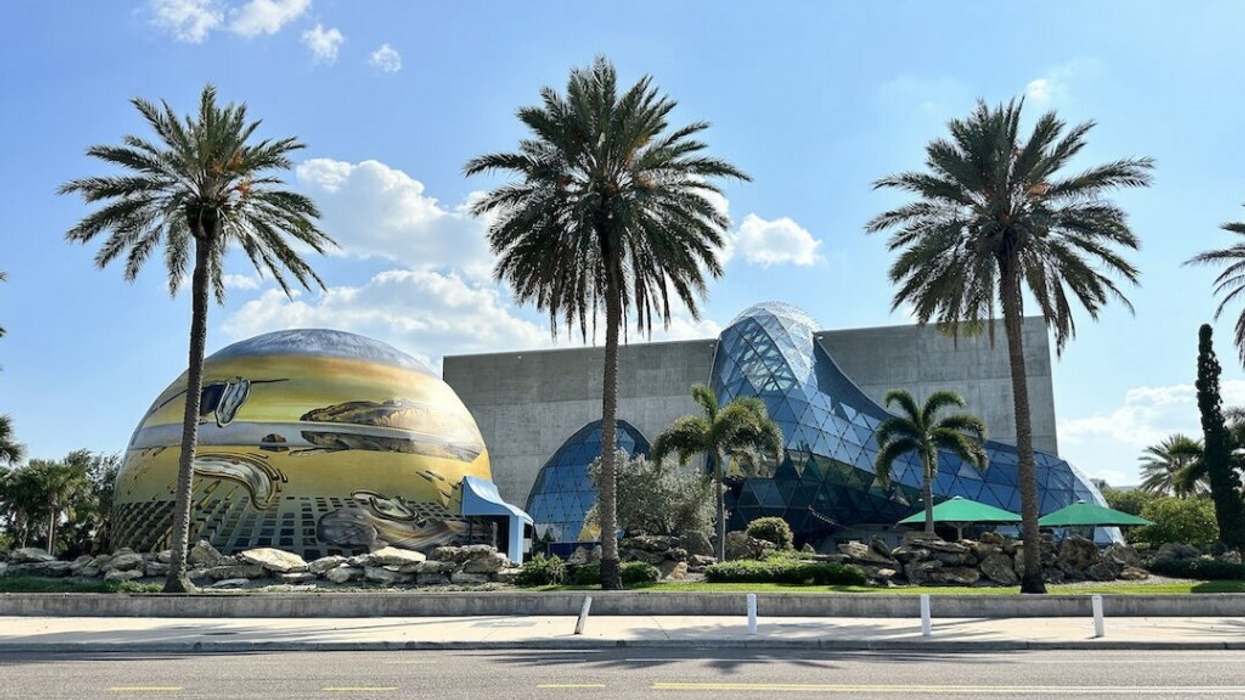
A project led by the psychology faculty at the University of South Florida St. Petersburg is using eye-tracking technology at the Dalí Museum in Florida to examine how curated experiences shape people's perception and appreciation of art.
Participants sit in front of an eye-tracking device resembling a small camera mounted on a computer screen.
Created by the museum in collaboration with Dartmouth University’s Digital Applied Learning and Innovation Laboratory, this technology monitors where and for how long participants gaze as they observe paintings by the Spanish Surrealist artist.
Some participants will later receive details about the painting, some will get biographical information about Dalí, and others will receive no information. They then view the painting again.
Afterwards, participants complete a survey about their demographics and their emotional response to the artwork.
Understanding people's responses to art
The aim is to evaluate how different types of content influence art appreciation, guiding the curation of future exhibitions.
Researchers also seek to understand how demographics, gaze patterns, and emotional responses interact to influence a person's overall museum experience.
Students from the University of South Florida St. Petersburg are participating throughout the research process, from recruiting participants to assisting with data analysis.
Previously, the Dalí Museum presented Dream Tapestry, a first-of-its-kind interactive experience that allows visitors to turn their dreams into artistic visions.
Visitors input their dream using a simple text description in any language. Then AI, leveraging hundreds of millions of images and styles from 'The Shape of Dreams' exhibit, creates a unique digital dream painting.
The museum has also announced plans for a 35,000-square-foot, $65 million expansion, with construction due to start this autumn. Expected to open in 2028, it will feature flexible gallery spaces for experiential exhibitions that blend art and technology, a dedicated learning centre, and community spaces for events and programming.
Charlotte Blanco Coates is blooloop's editor. She is from Brighton, UK and previously worked as a librarian. She has a strong interest in arts, culture and information and graduated from the University of Sussex with a degree in English Literature. Charlotte can usually be found either with her head in a book or planning her next travel adventure.