
FIFA’s 2026 cycle is on track to generate around $13 billion, up roughly 72% on the $7.57 billion it made across the Qatar cycle, the largest year-on-year jump in the tournament’s history.
It’s the kind of number that files itself under a familiar headline: football’s governing body got greedy.
That headline isn’t wrong. It’s just the least interesting thing that happened.
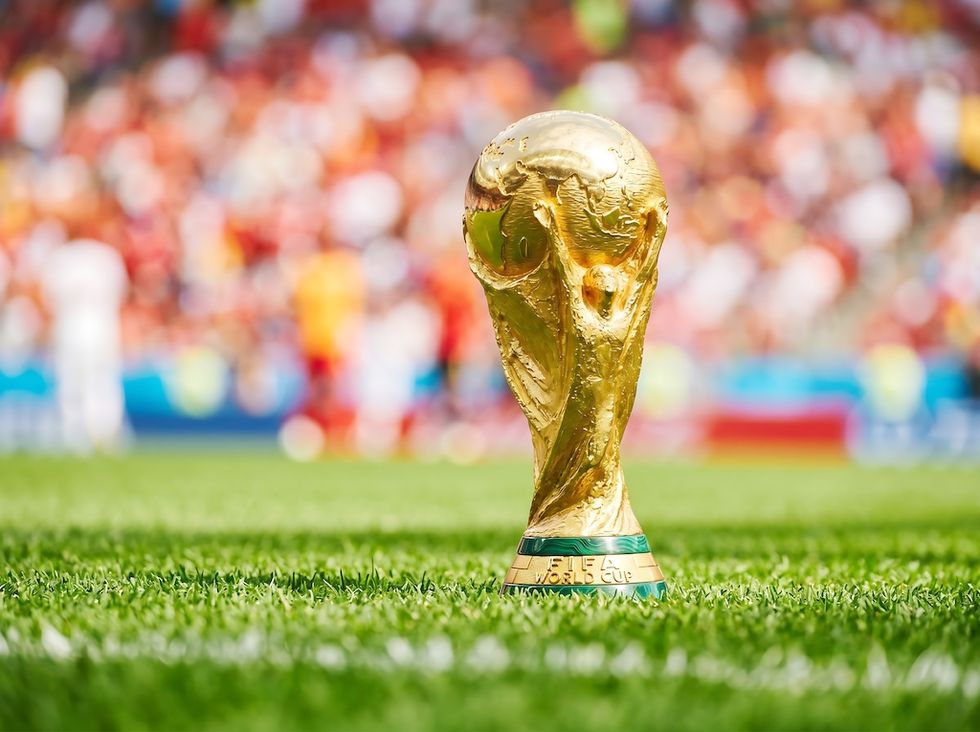
This year's FIFA World Cup saw a shift from selling tickets to monetising experiences
Image credit MDSAIFUR - stock.adobe.com
If you only look at the prices, you miss the actual shift. Yes, the best available final ticket went from about $1,600 in 2022 to as much as $33,000 in 2026, and hospitality costs roughly doubled to more than $2,000 per game.
But charging more for the same product is the most typical move there is, and it isn’t what made 2026 different.
What made it different is that FIFA stopped selling one thing and started selling a dozen, many of which had no price at all four years ago.
Every World Cup sold tickets. FIFA 2026 sold the pause in the middle of each half
A mandatory three-minute break worth an estimated $500–600 million in advertising that didn’t exist in 2022.
A resale market that FIFA operates itself
It scrapped the price cap, launched its own marketplace, and now takes 15% commission from the buyer and 15% from the seller, roughly 30% of every resale, versus a 5% cap in 2022.
The secondary market went from a problem FIFA policed to a product it owns.
The pause in each half
A mandatory three-minute “cooling break” in each half became a brand-new advertising pod, worth an estimated $500–600 million, in a sport that had never sold in-game ad breaks before.
The option before the ticket
Conditional tickets, “right-to-buy” reservation slots and “mystery” city packs let FIFA sell the possibility of a seat, bought, held and resold, before the seat itself existed.
The data
Every entry, purchase and login ran through a FIFA ID, building a first-party database of tens of millions of identified buyers that keeps its value long after the trophy is handed over.
And around all of it
A new host-city sponsorship tier worth up to ten local partners per city, and a blockchain collectibles line that earns a cut on every resale.
Put those together, and the story isn’t “FIFA is too expensive.”
It’s that FIFA unbundled the World Cup into a dozen separately priced products. The ticket became just one item on a much longer receipt, sitting alongside the right to buy it, the resale of it, the upgrade on it, the collectible of it, and the data you generated by buying any of them.
That’s the part worth studying because it’s the more durable growth lever.

The FIFA World Cup showed how to maximise revenue, but not every move was popular with football fans
Raising prices is visible, resented and eventually capped. Inventing new revenue lines is quieter: each one feels like a feature, not a price rise, until enough of them stack up that the customer notices the total.
Which is exactly where FIFA’s experiment gets its warning label.
The same tournament that reached ~$13 billion also drew four state attorney-general investigations, an EU complaint, visible empty seats, and the word “betrayal” from its most loyal fans.
The lesson for any commercial team isn’t whether you can find new things to charge for, and FIFA just published the playbook. It’s which of those new lines deepen the relationship, and which quietly spend it.
Katalyst just published FIFA’s Monetization Playbook, breaking down how 104 football matches became a $13-billion machine. The full paper is available here.
This is an opinion column by Katalyst, written to argue a point of view. It draws on the analysis in FIFA’s Monetization Playbook and on public reporting; figures are estimates, and descriptions of contested matters reflect public reporting and the author’s opinion, not statements of proven fact.
Katalyst is not affiliated with, endorsed by, or sponsored by FIFA. All trademarks are the property of their respective owners.