
Years ago, my wife and I were visiting a theme park with a couple of friends. One of our friends, knowing I had done some work at the park, asked me to point out any sounds I'd built.
“Sure,” I said. “I built that sound there.”
We happened to be standing near a scrappy, sputtering generator engine. It struggled to power the lights that dimmed and surged with its audible efforts.
“That’s a sound effect?” he asked.
What appeared to be an old, weathered engine was actually an elaborate set piece, rock-solid and virtually silent. Of the thousands of guests who walk by this engine every day, most are unaware of the audio element that has been introduced. They simply accept the engine as they encounter it.
My work disappears into the set, exactly as it should in this context.
There is nothing particularly special about the sound I created for the engine, except that it is an effective example of a sound that disappears. It does nothing to draw attention to itself, but if the sound were missing, many guests would immediately notice.
When people talk about sound for these spaces, they often think of it as an embellishment, a theatrical expression, or even as an artistic element that can rise to the level of spectacle. I value and appreciate those sonic roles.
But I would like to draw attention to a different kind of sonic presentation that is frequently overlooked and often underestimated—to sounds that may be far less glamorous but no less powerful.
When sounds are a seamless part of the world
Over my career, there have been many moments, sitting on a ride vehicle, within an attraction show scene, or in front of a set piece, where the sounds I was building or tweaking ceased to be a "sound effect" and became a cohesive part of the environment itself.
Every time, the sensation was that I stopped hearing a sound and started accepting it. These moments consistently changed not only my impression of the sound but my perception of whatever themed element it accompanied.
Notably, the combined perception became more than the sum of the individual parts.
To me, rooms felt bigger, rides felt faster, new visual details were noticed, static props came to life, and environments gained depth. The sounds became a tool to leverage the broader creative objectives of the experience.
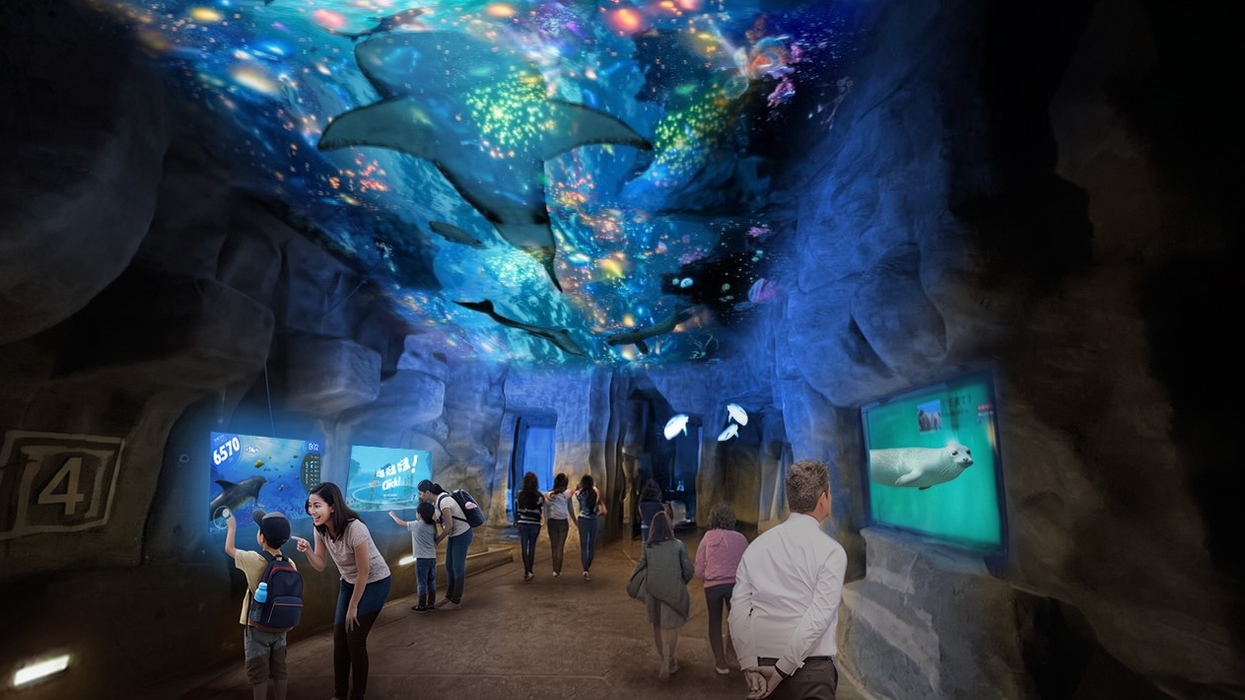
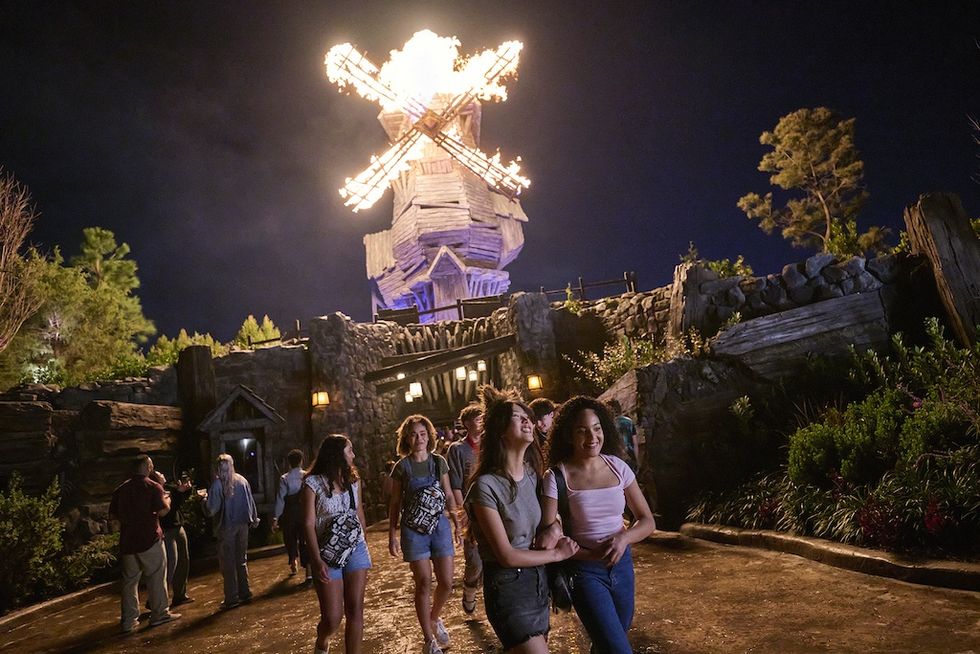 Dark Universe, Universal Epic Universe
The phenomenon is something I consider to be one of the most powerful tools sound brings to these experiences.
The notion that sound can shape a guest’s perception of reality is perhaps the key reason I find themed spaces so inspiring to create sounds for. But what prompts these kinds of results? What factors allow them to surface?
These are complex questions that deserve more depth than I can offer here, but a few key concepts establish the phenomenon as something real.
Illusion and sonic perception
In 2004, Ernst and Bülthoff published the article "Merging the senses into a robust percept," in which they describe how we combine information from multiple forms of sensory input.
The most "precise or appropriate" form of sensory input usually dominates our perception, but it can shift when the dominant form becomes unreliable (such as when a visual object is obscured). Our brains give greater weight to sensory inputs they determine to be most reliable, allowing them to exert more influence on our perception.
To frame these concepts, they begin their article with an example of the strange sensation some of us have experienced when sitting on a stationary train, looking out the window at a neighboring train. When the other train starts moving, our brain may incorrectly determine that we are the ones in motion.
We don't notice the illusion until our brain collects more information (the view out another window or our sense of motion clearly indicates otherwise).
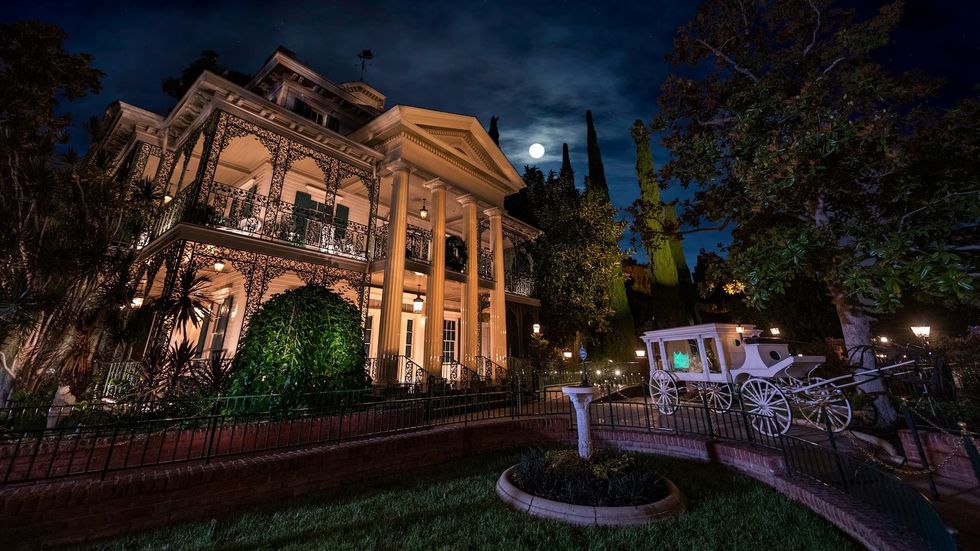 Disneyland's Haunted Mansion queue
The illusion shifts perception of what's true, and it resolves when additional sensory cues are collected. But what if we (as themed environment creators) carefully crafted the additional cues so as not to correct the illusion? Sound has an uncanny ability to sustain and reinforce the illusion.
This may seem fiddly to achieve, but we have one very notable thing helping us out: our guests' brains want this to work and will tolerate a degree of imperfection.
A guest enters the spaces we create, searching for coherence to form a stable model of the new world they have just stepped into. Our task is to give them enough consistent cues to allow that model to form.
Fusion is a key first step. It’s our brain's process of binding sensory inputs into a single perceptual event. Our brains give us a little leeway in how these bind together.
In the book The Handbook of Multisensory Processes, Woods and Recanzone illustrate this concept with a recognizable example: the Ventriloquism Effect. A ventriloquist speaks without moving their lips. Their voice is in sync with their puppet's mouth movements. Audience members perceive the voice as coming from the puppet.
The effect elegantly shows that even when sensory cues don't match perfectly, the brain tends to fuse them into the most plausible explanation.
But consider what happens if we widen the distance between the ventriloquist and the puppet, start to drift out of sync between voice and mouth movement, or begin to see lip movement on the performer. The illusion falls apart.
Sonic plausibility
Sonic plausibility finds its grounding when sounds align with visual, tactile, and contextual cues. Guests weigh them against what they already know, remember, and expect.
But this style of sonic presentation has its limits: when consistency and congruency falter at any of those levels, authenticity begins to break down. Sounds become "effects," or worse, they draw the guest's attention to the wrong things.
Plausible sounds, for their part, must adhere to different rules than embellishment sounds. When they work, they powerfully shift perceptions. When they fail, they spectacularly break illusions.
If the objective of a sound is to make a guest believe that something is true, it should not be in direct conflict with things they are seeing or experiencing that clearly say otherwise. Consequently, successful sounds that disappear are almost always the result of a collaborative, aligned effort between disciplines.
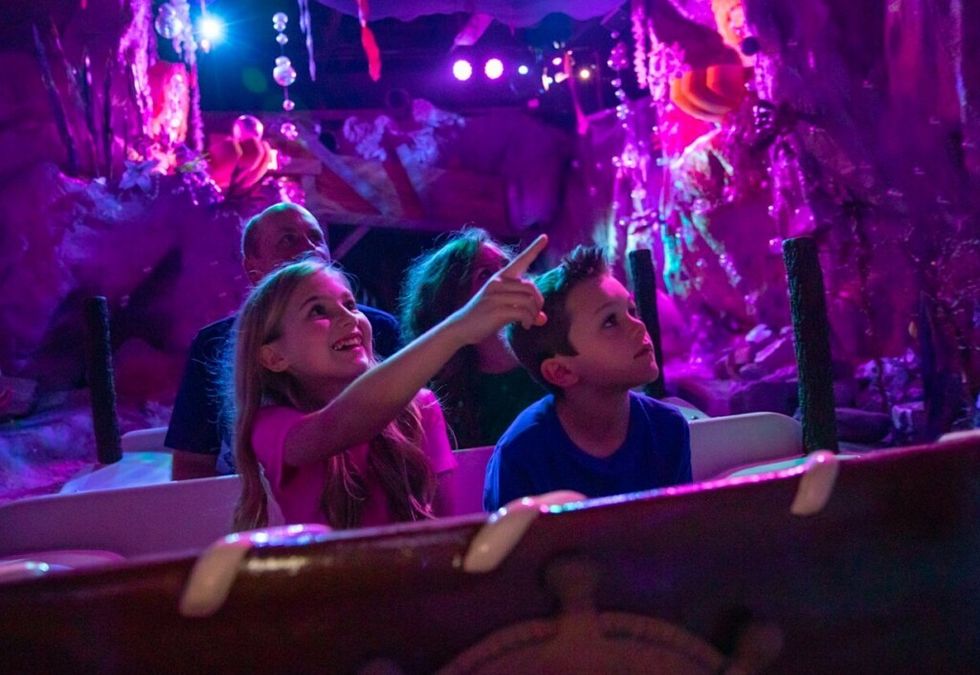 Pirates of Speelunker Cave, Six Flags Over Texas
See also: Sonic storytelling: using sound to enhance the narrative
Years ago, I spent several weeks in a themed environment, tuning and tailoring my soundscape to the room, the show set props, and the guest flow.
Guests walking into the scene immediately formed a sense of the size and tone of the space, and the room’s sonic activity implied a much larger space that extended beyond the lit portions visible to them.
I did not design the sounds to demand the guest's attention; I created them to inform the guest’s perception of the space.
Periodically, while I was working, operations would mute the audio system for facility tests. The sounds' foundational nature became immediately apparent when audio was suddenly muted. Suddenly, so much of what had been informing impressions about the space was sucked away.
The result was a perceptual collapse. It’s an experience I wish I could share with more people, because it is a powerful testament to the importance of this kind of sonic presentation.
Sound shapes the experience
It is a tricky point to articulate. When these sounds are missing, it is difficult to convey what opportunities have been lost. When these sounds work correctly, most will never notice them. To be successful, they require planning and alignment across disciplines.
The effort is worthwhile. Sounds that disappear become something more than content; they become a perceptual building material, shaping how guests perceive every other aspect of the experience.
These are sounds that can convince guests that what they are hearing is the real and authentic sound of that space.
With that objective comes incredible potential: sound’s ability to shape the guest’s perception of reality itself.
This post is the first in a series of three by the president and creative director of Sound Sculpture Inc., exploring sound design in themed entertainment.