
In the last decade, the global attractions and destination-development industry has evolved faster than at any time in its history. The old model, with its exportable concepts, IP overlays, and copy-paste master plans, has given way to an era where place, culture, and climate comfort are the primary drivers of design.
Across the globe, guests are demanding destinations that resonate emotionally because they feel rooted in their cultural, environmental, and social context. More importantly, so are developers, operators, and authorities.
The destinations winning the most recognition, and driving the strongest returns, aren't the ones that arrived first. They're the ones that arrived right.
Three converging forces
Why the shift now? I believe three converging forces are driving this global perspective, and they're reshaping what's possible in destination development.
1. Culture has become a competitive differentiator
Destinations want a story only they can tell, and governments increasingly see tourism as a stage for expressing national identity and heritage.
In the Kingdom of Saudi Arabia, Vision 2030 reflects this push: they aren’t building destinations to replicate Dubai; they’re building experiences that articulate a unique narrative, one grounded in heritage innovation and national ambition.
Travelers feel the same pull. They aren't investing time and money to experience something interchangeable or familiar. They want to arrive and immediately feel, "This could only happen here."
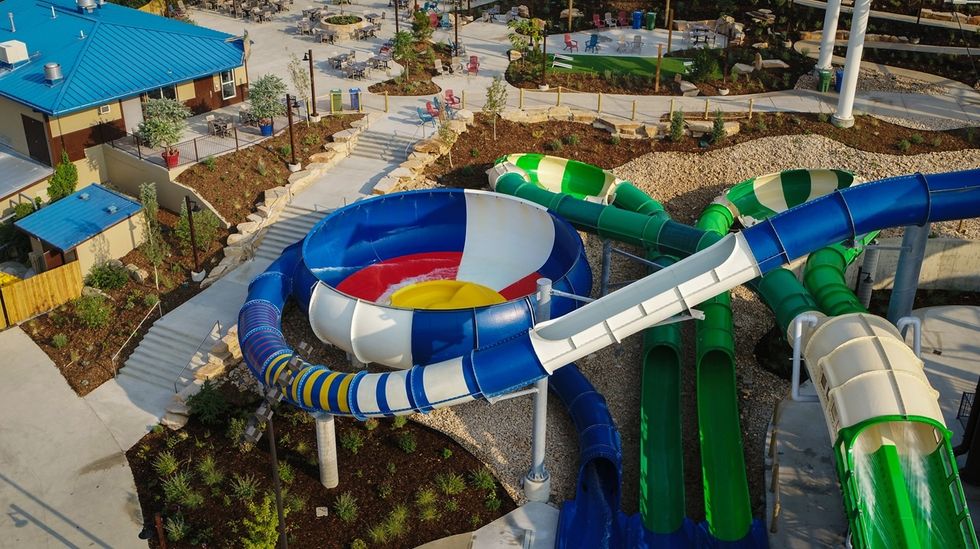 Alpine Springs reflects the spirit of Colorado in a way that feels authentic and unmistakably local. Opened in 2021 at Denver’s Water World, the 3-hectare area pairs native plantings and Colorado-themed visuals with social gathering spaces, anchored by the Colorado State seal featured on the rafting attraction.
It boils down to authenticity; guests expect a destination belonging to its place, not a repeatable template that could be dropped into any city in the world.
Even within an entertainment destination, cultural identity shouldn't disappear at the gate. If an experience doesn't reflect the character of the place it sits in, guests have little reason to travel for it.
I've watched this shift firsthand with clients pivoting toward experiences deeply rooted in local narrative.
The projects that are winning awards, sustaining visitation, and building loyal communities are the ones where cultural specificity wasn't added as an afterthought; it was in the spatial and programmatic DNA from the start.
2. Climate and comfort are shaping guest experience and operational economics
Outdoor destinations in regions like the Middle East, the Caribbean, and Southeast Asia face intense sun, heat, humidity, and seasonal extremes. We don’t look on these as constraints to overcome; they're design inputs that will shape how guests move and what experiences feel possible.
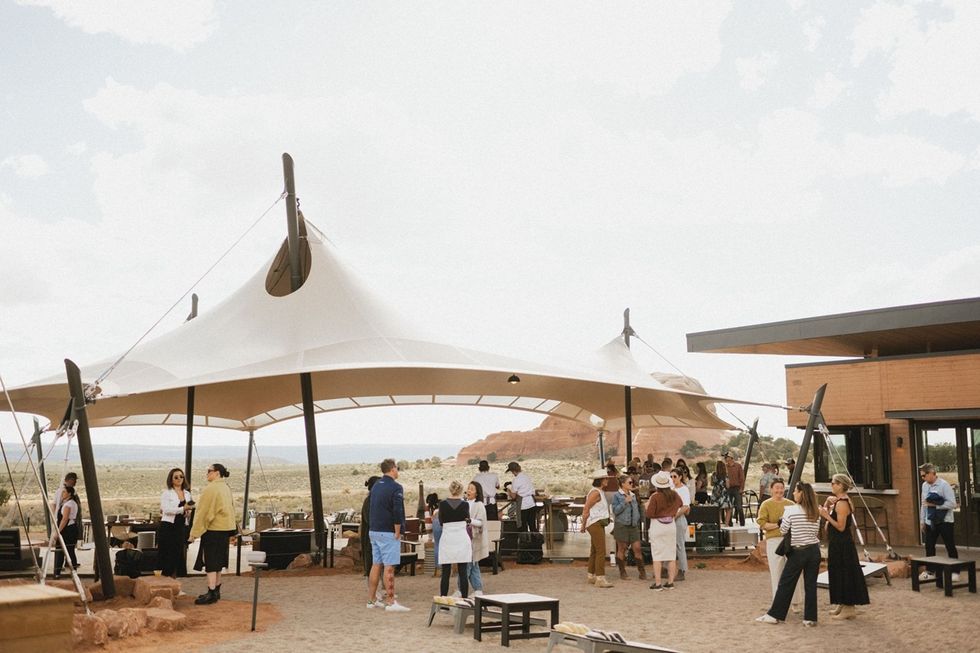 In desert environments, understanding the sun’s positioning through the day and seasons guide shade structure placement to maximize guest comfort.
Microclimate strategies can't be embedded as an afterthought.
Shade, airflow, material choice, water features, and guest-circulation patterns must be integrated into the storytelling itself. In the Caribbean, this means understanding how salt air accelerates material aging and how intense afternoon sun changes when and where guests spend their time.
In the Middle East, it means recognizing that outdoor comfort at 45°C/113°F requires fundamentally different spatial logic than comfort at 25°C/77°F.
In Southeast Asia, it means designing for monsoons, humidity, and the rhythm of seasons, not treating seasonal flow as a problem to minimize but as a story to amplify.
Designing for comfort shapes how long guests stay, how they move, and how deeply they engage. When done right, guests feel energized rather than exhausted, and the environment actively supports exploration rather than limiting it.
And here's the operational payoff: longer stay durations directly drive higher per-capita spending.
3. Operational logic is merging with narrative logic
Developers increasingly expect destinations to deliver measurable performance outcomes, such as longer dwell time, stronger per-capita spending, flexible day/night programming capacity, efficient staffing models, and lower long-term maintenance and climate impact.
The industry's best-kept secret is this: the most successful experiences don't choose between being creatively compelling and operationally sound. They do both.
Creating a strong operational framework should be the foundation for design while weaving in conceptual storytelling and structure at the same time.
Where you place water features, how you sequence program anchors, what shade structures do, and how materials weather become the invisible choreography that guides guests deeper into the experience.
With deeper spatial engagement, staffing is more efficient and every operational metric works harder.
How this shows up in practice
These three forces, cultural authenticity, climate intelligence, and operational integration, aren't theories. They're shaping real projects.
Baha Bay: where cultural identity shapes everything
Baha Bay Waterpark located at Baha Mar in the Bahamas, is as example of context-led design that began with a deceptively simple question: What does Bahamian hospitality feel like in spatial and material terms?
The answer shaped every decision. Island Contemporary and historic Georgian architectural references aren't decorative; they're organizational.
Natural quartzite flagstone sourced locally extends from pool edges into planters, creating visual continuity between water and landscape. Shell patterns are embedded in walkways—not as whimsy, but as a tactile reminder of the Islands' maritime identity.
Custom artwork was completed on-site by local Bahamian artists, turning the park's surfaces into an active gallery of contemporary island culture.
But here's where it gets operationally clever: guest circulation was designed around the natural rhythm of island movement. Food and beverage anchor points where guests naturally pause and are evenly distributed throughout the park.
Additionally, they’re located along an efficient service corridor, connecting staff to the resort’s main BOH network.
The design also responds to Caribbean climate realities. Shade structures are numerous but never uniform; they create rhythm and surprise. Light-colored hardscape and breezeways manage heat without sacrificing visual richness.
The landscape architecture uses specimen planting and lush tropical vegetation to complement Nassau Island's coastal environment while creating microclimates, zones of relief that extend comfortable stay duration throughout the day.
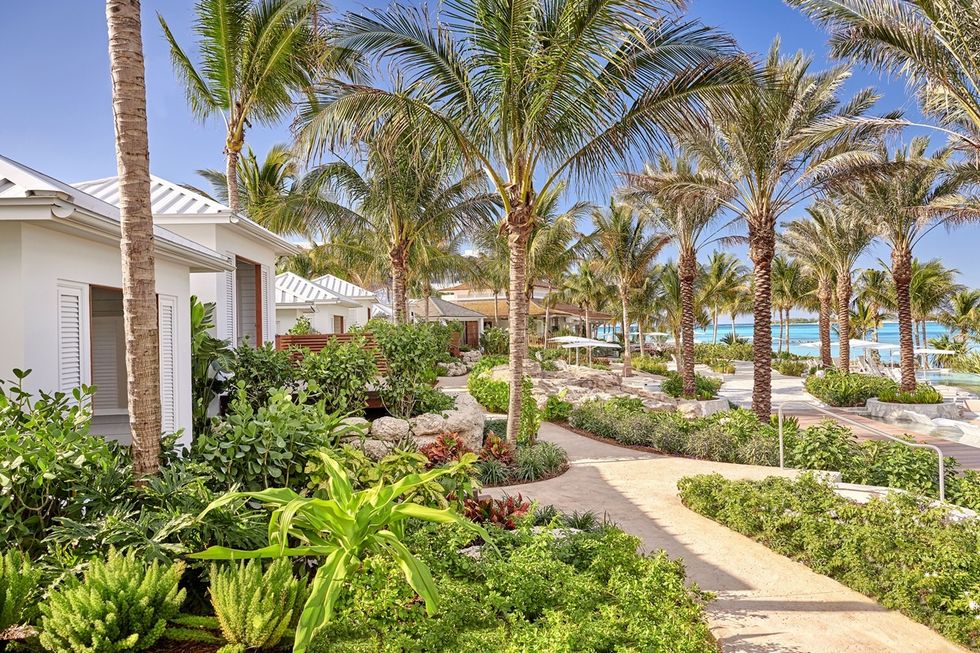 Locally inspired stonework, coastal plantings, and the mix of IslandContemporary and Historic Georgian architecture weave together the story of Baha Bay.
Daydream Forest: nature as story structure
In Zhejiang Province, China, Daydream Forest operates on a different principle, but the same cultural logic.
In a nation where industrialization has accelerated dramatically, and where younger generations increasingly live in urban environments, the loss of connection to agriculture and natural rhythms is real. Daydream Forest doesn't ignore that absence, it makes it central.
The experience transforms farming, wildlife, and the seasonal rhythms of the natural world into spaces of play, exploration, and learning.
A working farm sits alongside immersive attractions, creating an environment where education feels effortless because it's wrapped in adventure. The materiality, natural wood, earth-toned pathways, living plant features, creates visual and sensory continuity with the agricultural narrative.
Water features are designed around natural hydrological patterns, making sustainability visible rather than hidden. Shade structures mimic tree canopies; wayfinding uses agricultural symbols and harvest-season visual cues.
The operational benefit: guests stay longer because there's always something to discover, and the phased, landscape-driven sequence naturally distributes crowds across the park, reducing bottlenecks and staff pressure points.
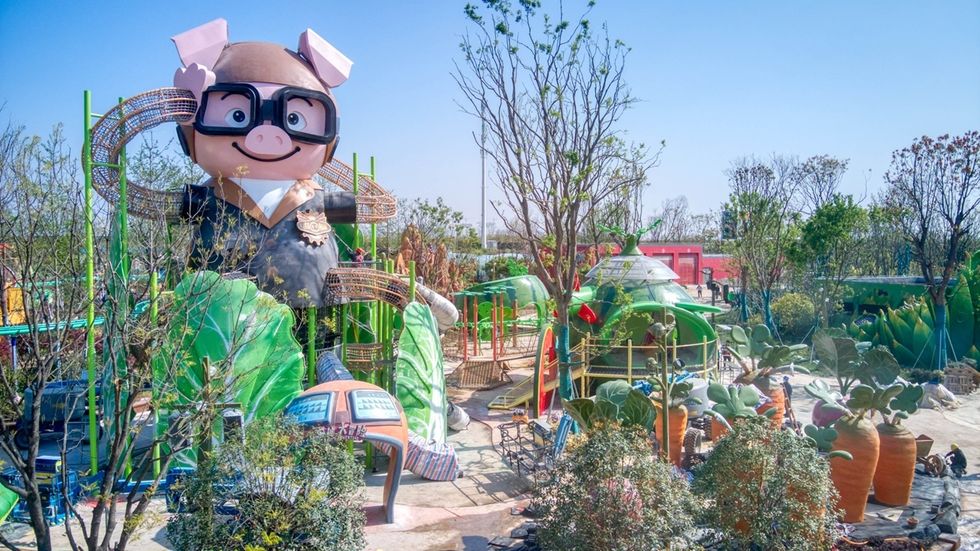 Areas for play and learning are located side-by-side, reinforcing the idea that education doesn’t need to be dull.
The emerging pattern
In the Middle East, Caribbean, and Asia, regions driving the most ambitious destination development right now, we're seeing this play out in massive, long-term investments.
Vision 2030 in Saudi Arabia. Phu Quoc's tourism surge in Vietnam. Caribbean resorts pivoting toward experiential differentiation. Mixed-use entertainment anchors reshaping urban development across Southeast Asia.
Context-led design is no longer a creative philosophy. It's an overarching strategy:
- It reduces risk by grounding design in real market and cultural understanding
- It strengthens brand identity by creating uniqueness that cannot be replicated elsewhere
- It accelerates community and stakeholder acceptance because the experience is of its place, not imposed on it
- It creates places guests want to return to because authenticity builds loyalty in ways templates never can.
The bottom line
The destinations winning sustained recognition, and driving the strongest returns, are the ones where culture, climate, and operational thinking weren't separate conversations.
They were woven together from the first concept sketch forward, informing spatial sequence, material choice, program adjacency, and wayfinding.
For developers and operators evaluating their next project, the question isn't whether to adopt context-led thinking. It's whether you can afford not to. In competitive markets, differentiation through authenticity and climate intelligence isn't a nice-to-have. It's the baseline.