The First Salute, a new exhibition marking America’s 250th anniversary at the Weitzman National Museum of American Jewish History in Philadelphia, offers a fresh, immersive perspective on the American Revolution.
The exhibition is a high-stakes, largely unknown story about the United States’ founding, centred on a tiny Island in the Caribbean, with a profound impact on American history.
Moreover, it’s an exploration of how religious liberty, communal networks, and individual courage positioned Jews to play crucial roles in securing independence and shaping the nation.
To bring this 18th-century Atlantic world to life, The Weitzman partnered with exhibition design and media production agency Lorem Ipsum.
The result offers a contemporary approach to experiential museum design, blending more than 100 historical artefacts with traditional filmmaking, computer-generated imagery (CGI), and cutting-edge generative AI.
The exhibition inaugurates a brand-new special-exhibitions gallery and marks the first phase of a massive, multi-year reimagining of The Weitzman.
To learn more about the creation of this unique exhibition, the delicate balance between authentic artefacts and modern media, and the pioneering use of artificial intelligence in a museum setting, we speak with Dr Josh Perelman, The First Salute’s curator and senior advisor for content and strategy at The Weitzman.
We also talk to Lorem Ipsum’s creative directors, Abigail Honor and Yan Vizinberg, and head of R&D, Chris Cooper.
An untold story
For many visitors, the narrative of the American Revolution is deeply rooted in the thirteen mainland colonies, generally taking place, as Perelman notes, “between Boston and Philadelphia.”
The First Salute breaks through that geographic limitation by transporting visitors to St. Eustatius, then the most significant port in the Western Hemisphere.
There, on November 16, 1776, the American brigantine Andrew Doria, one of the first ships in the American navy, sailed into St. Eustatius’ harbour carrying a copy of the Declaration of Independence. The ship’s guns rang out thirteen times for thirteen new American states.
The island’s Dutch governor, Johannes de Graaff, knowing full well his next action could spark a diplomatic crisis with Britain, responded with his own salute, the first foreign recognition of the United States.
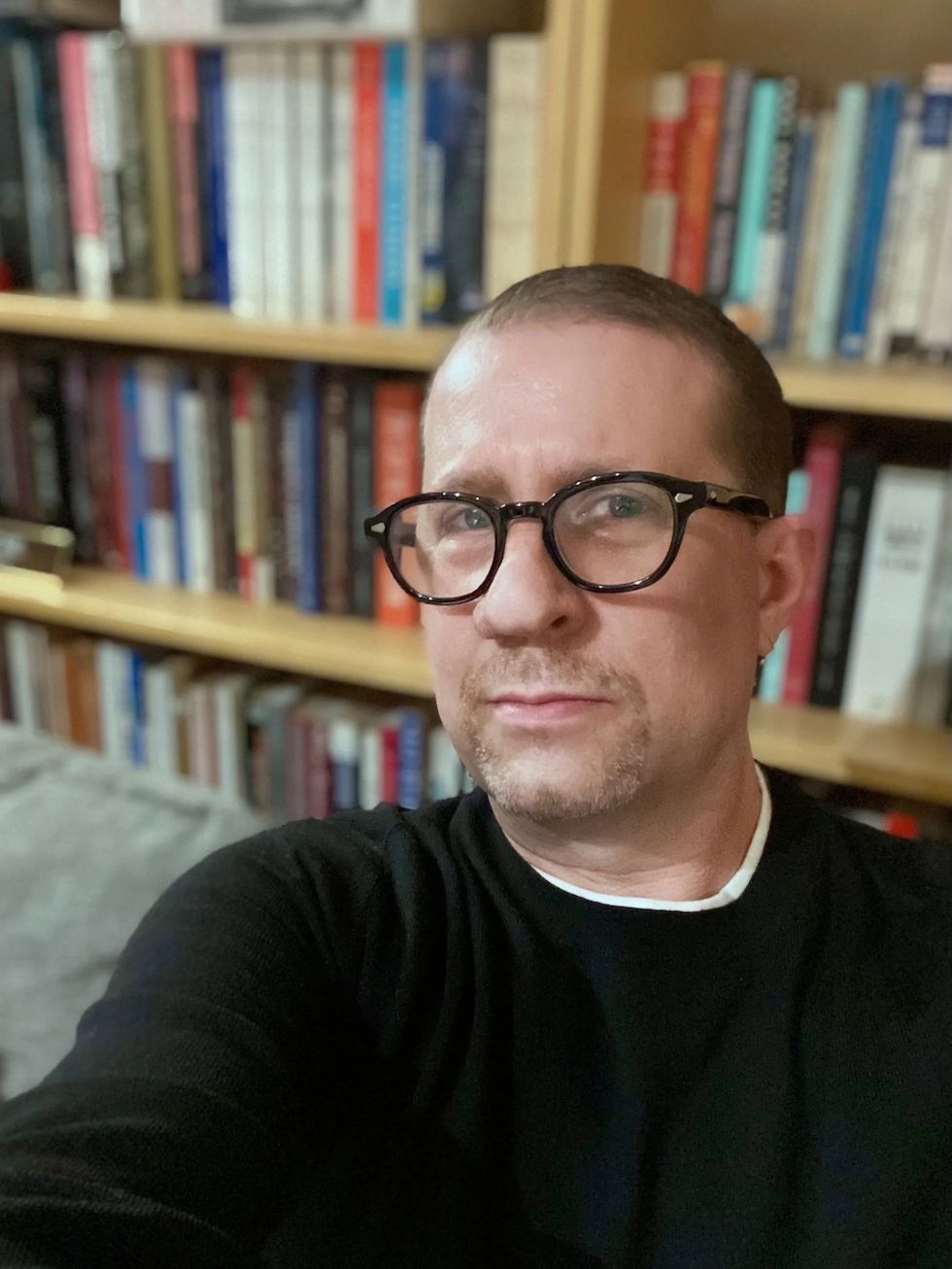
Dr Josh Perelman, The First Salute’s curator and senior advisor for content and strategy at The Weitzman.
Perelman explains the curatorial vision behind reframing this era: “The First Salute sheds new light on the revolutionary period in a couple of different ways.
"Number one, it brings us to a place that most people don’t know and expands our understanding of the geography of the Revolution from what we usually learn into an experience that encompasses the entire Atlantic world.”
In 1776, the island’s European population numbered around 2,000, of which Jews comprised at least thirty percent.
Connected to Europe and North America through commerce, family, and religion, the island’s Jews played a pivotal role in supporting the revolutionary cause by secretly supplying gunpowder and provisions, often disguised as tea and rice.
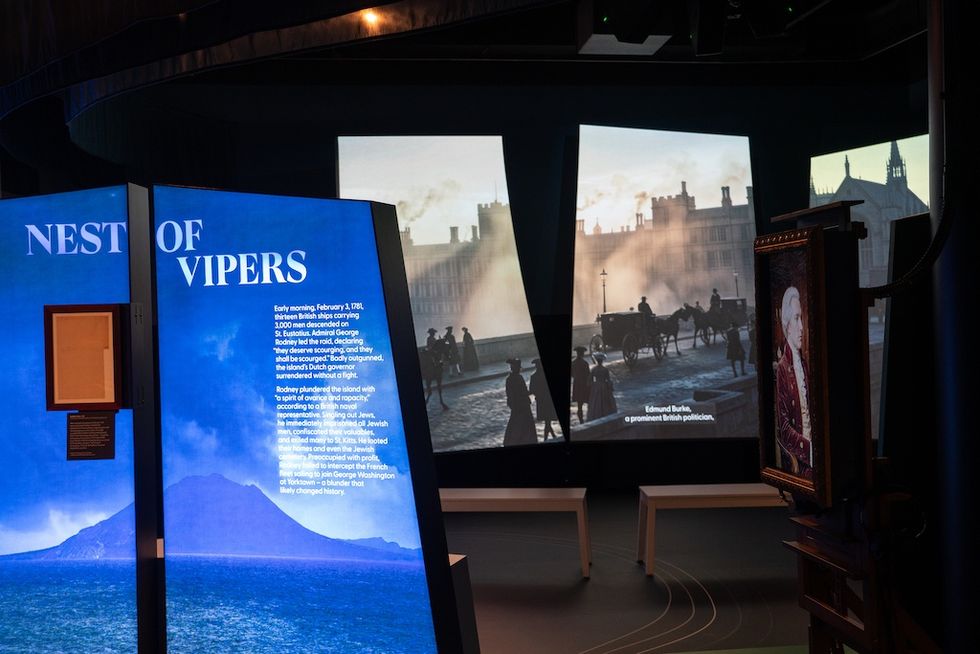
The First Salute details how, during the 1781, Admiral Rodney targeted the island's Jewish community
Image courtesy of Lorem Ipsum
The exhibition also highlights the 1781 invasion by British Admiral George Brydges Rodney. Rodney regarded the island as a major threat, writing that “had it not been for this infamous island, the American rebellion could not possibly have subsisted.”
His first targets upon landing on St. Eustatius were Jews, whom he systematically targeted, looted, and deported.
How to frame the narrative
Telling an unfamiliar story requires careful narrative framing to ensure visitors aren’t alienated.
"In developing the exhibition, it was key to us that we anchored familiar events like the outbreak of the Revolution, the signing of the Declaration of Independence, and then Washington's victory at Yorktown,” says Perelman.
“This helps people feel situated in place and time, and gives them orientation as the exhibition focuses on lesser-known stories. It allows us to connect emotionally and intellectually with people who lived 250 years ago or more.”

Lorem Ipsum creative director Yan Vizinberg
Vizinberg adds: “The story of The First Salute naturally lends itself to that dramatic unfolding. At first, visitors may wonder: Why are we telling the story of a small Caribbean island in a Jewish museum? Once those questions are planted, the audience is drawn into the story’s mystery and complexity.
"In that sense, the visitor is not simply receiving information; they are discovering the story step by step.”
Designing a ‘spatial film’
Translating this complex historical narrative into a physical space was the central challenge for Lorem Ipsum. Working within the new gallery, the team had to ensure the story unfolded cohesively.

Lorem Ipsum creative director Abigail Honor
“Human attention is a finite resource, and one of the central responsibilities of exhibition design is to guide and shape that attention in service of the story,” Honor says. “A museum is very different from a cinema... In an exhibition, visitors have far more agency.
“That freedom is part of the power of the medium, but it also means that the narrative has to be carefully choreographed.”
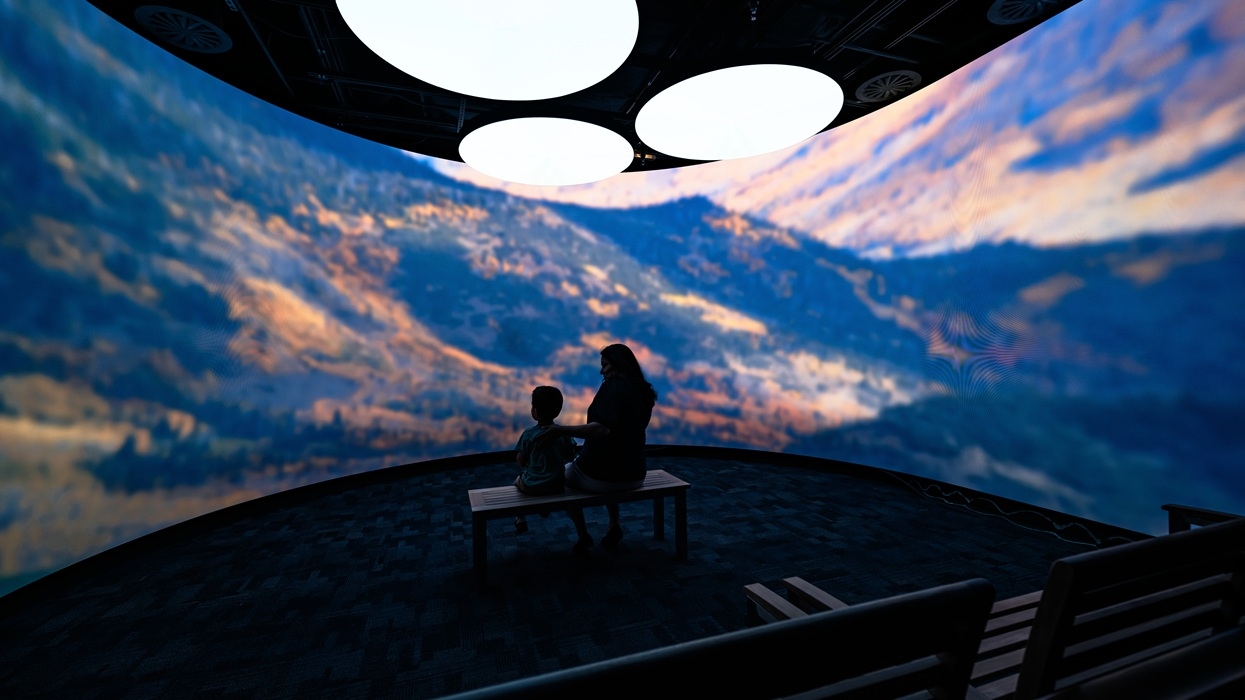
For The First Salute, the team approached the 4,500-square-foot gallery almost like a spatial film.
“Each medium had a specific role to play. The films created emotional momentum and historical atmosphere. The interactive media allowed visitors to explore certain ideas in greater depth. The physical artefacts anchored the experience in material evidence and historical reality.”
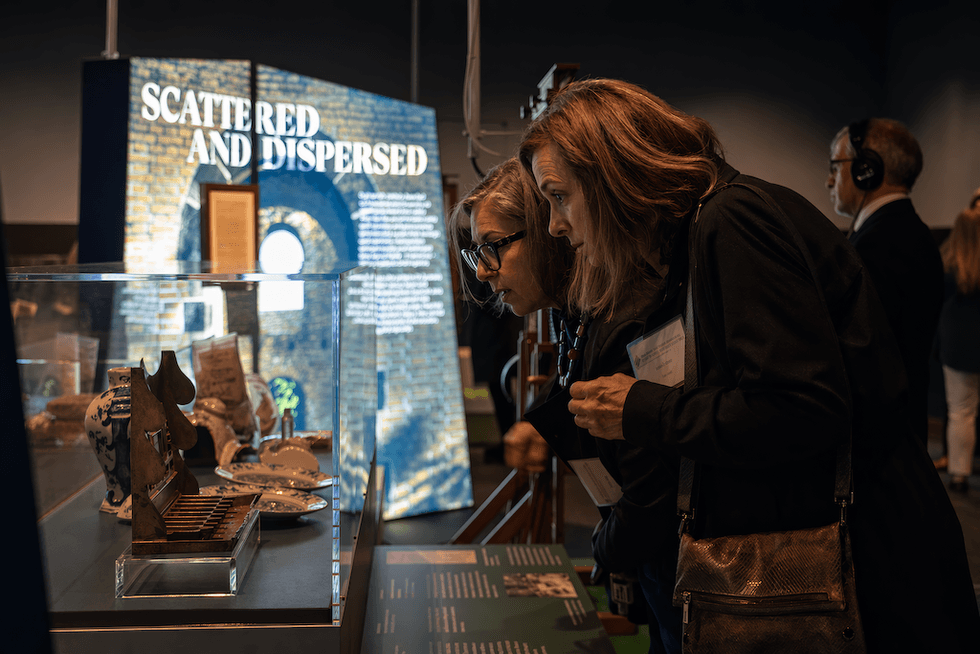
The First Salute incorporates historical artefacts with a modern design
Image courtesy of Lorem Ipsum
To immerse visitors in the Caribbean setting without resorting to historical clichés, the design employed specific spatial and visual motifs.
Honor explains this environmental approach:
“We didn't want this to feel like we’re telling an old story, because St. Eustatius is there, and it looks very similar to the way it used to look. The design is modern, with the fonts we use and the layout, so we try to straddle history while maintaining that modern, contemporary feel.”
Creating a sense of place
The geography of the Caribbean itself inspired the exhibition's physical layout. “The overall design is this idea of islands, so you have these islands of artefacts, mixed between horizontal and vertical design.”
To further evoke the setting, the team integrated subtle nautical details and wayfinding elements.
“We broke up the space with large-scale visual moments to establish the context for each chapter of the story, and that didn’t include only big visuals but also large quotes or callout texts, so that visually, when you're walking around, you can see this nice chapterisation,” says Honor.
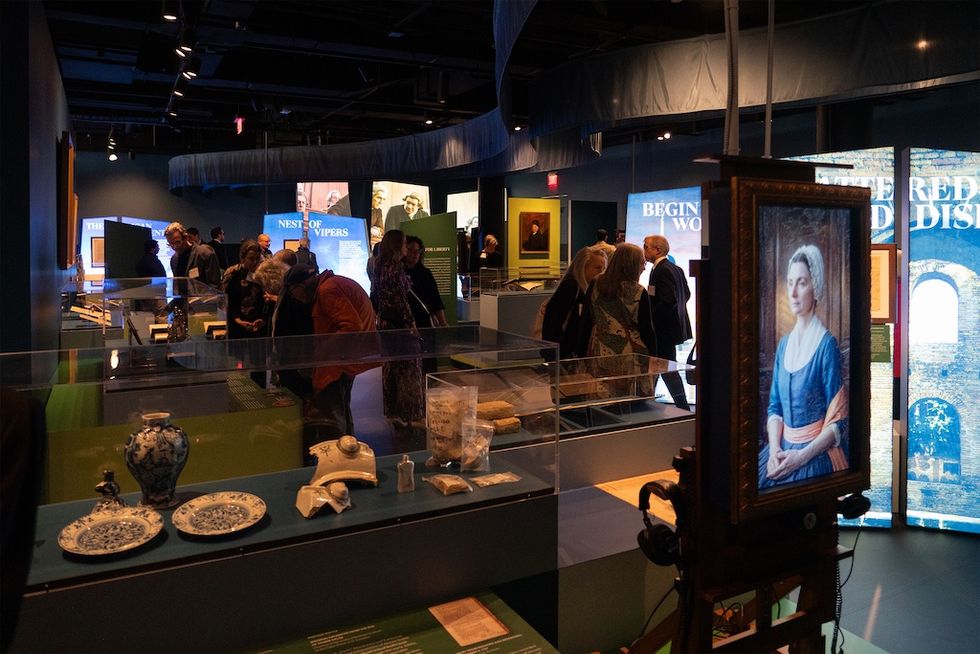
The team brought subtle nautical details and wayfinding elements throughout The First Salute
Image courtesy of Lorem Ipsum
Furthermore, the team incorporated sails into the visual language.
The spatial design is also anchored by a “light blue to dark blue ombre” wall design that creates a ”literal horizon line“ around three walls of the gallery, evoking the feeling of being on an island looking out to sea.
Artefacts and media
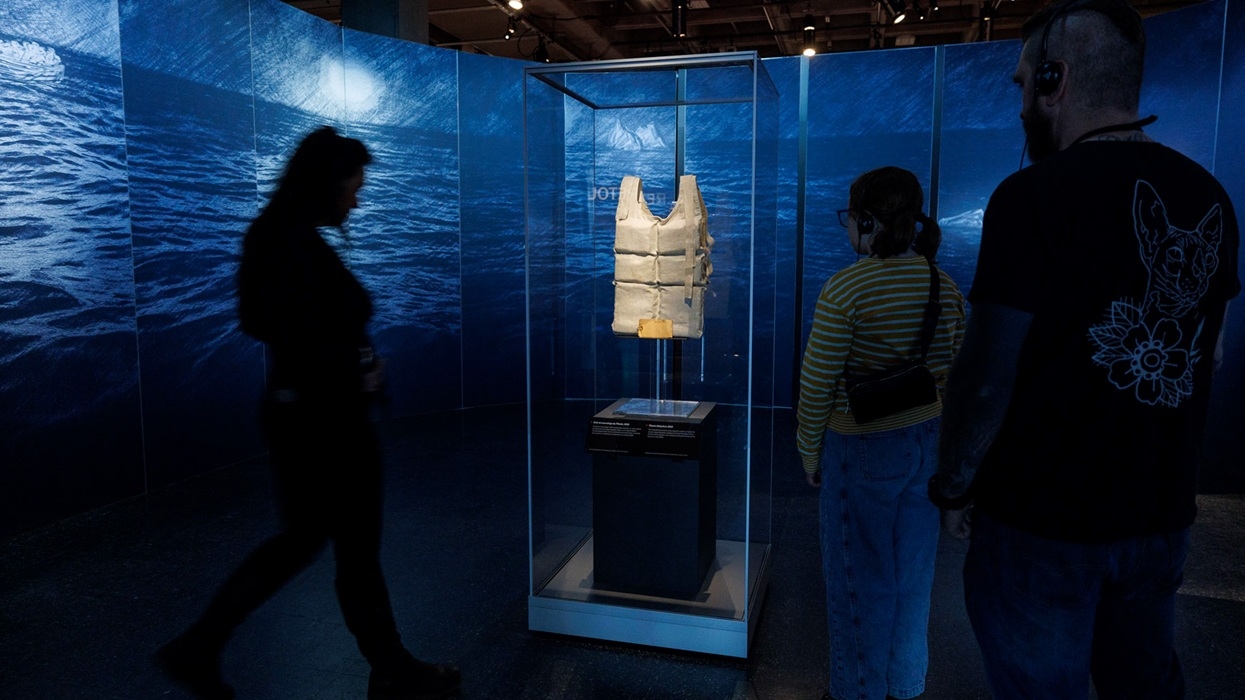
With over 100 historical objects on display, including an original 6,000-pound 18th -century cannon from St. Eustatius, a rare copy of the Declaration, objects from around the Caribbean, and a rare Hanukkah oil lamp from St. Eustatius, the exhibition is rich in material culture.
However, presenting objects to modern audiences requires more than just traditional glass cases and dense text labels. “Unless you’re a curator or a professor or a historian, you don’t know why these objects are important; you’re just being told,” Honor says
Vizinberg adds: “With more than 100 artefacts on display, hierarchy becomes extremely important. It is simply not realistic to expect visitors to give every object the same level of attention.
“We approached media as a way of preparing the visitor for the encounter with key artefacts, rather than competing with them. The films and interactive elements build curiosity. Then, when visitors arrive at the objects themselves, the artefacts have greater meaning.
“The media created movement, atmosphere, and narrative energy. The artefacts slowed people down and made the story tangible.”
For Perelman, the artefacts carry a profound emotional weight that digital media cannot replace. He personally couriered the Hanukkah lamp, believed to be the last surviving piece of material culture from St. Eustatius’ Jewish community:
”There is no longer a Jewish community on St. Eustatius, so the Hanukkah lamp becomes an avatar for their stories. The one artefact that now stands in for hundreds of people who experienced the Revolution and Rodney's invasion. Not only is it historically significant, but it was incredibly powerful to bring it to Philadelphia.
"I felt in some ways like that was transporting with me the voices of generations.”
Generative AI in the museum space
The Lorem Ipsum team embraced generative AI to address specific historical storytelling challenges in the project, most notably the lack of visual representation of the everyday people of St. Eustatius.
“The portraits were a later addition, included as a way for the team to bring more individual stories into the experience," Honor says.
“For example, there were very few images depicting women from the island’s Jewish community. We felt it was important to include their stories because they were integral to the community’s history.
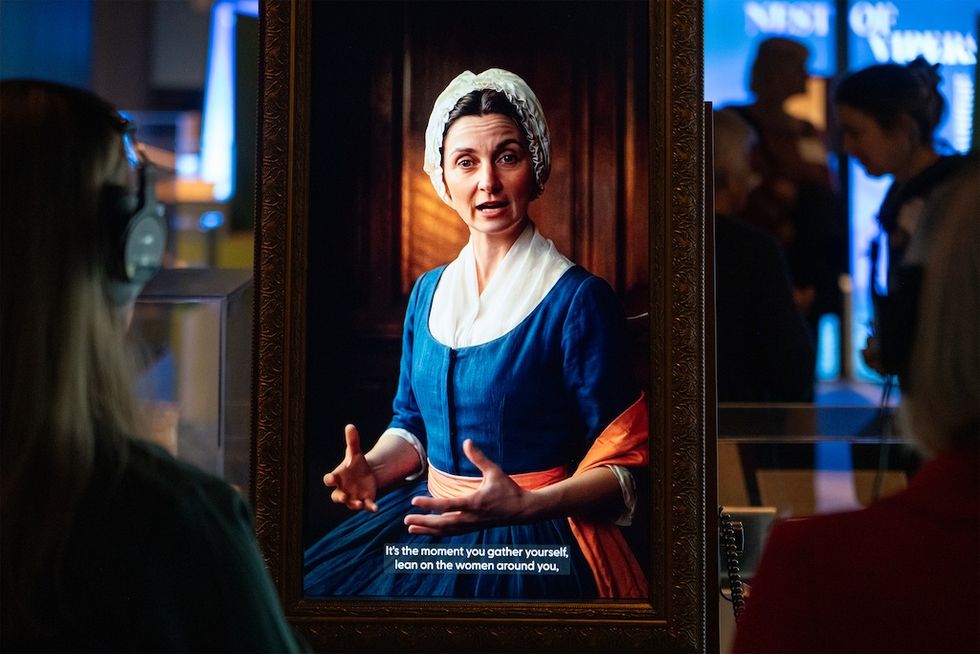
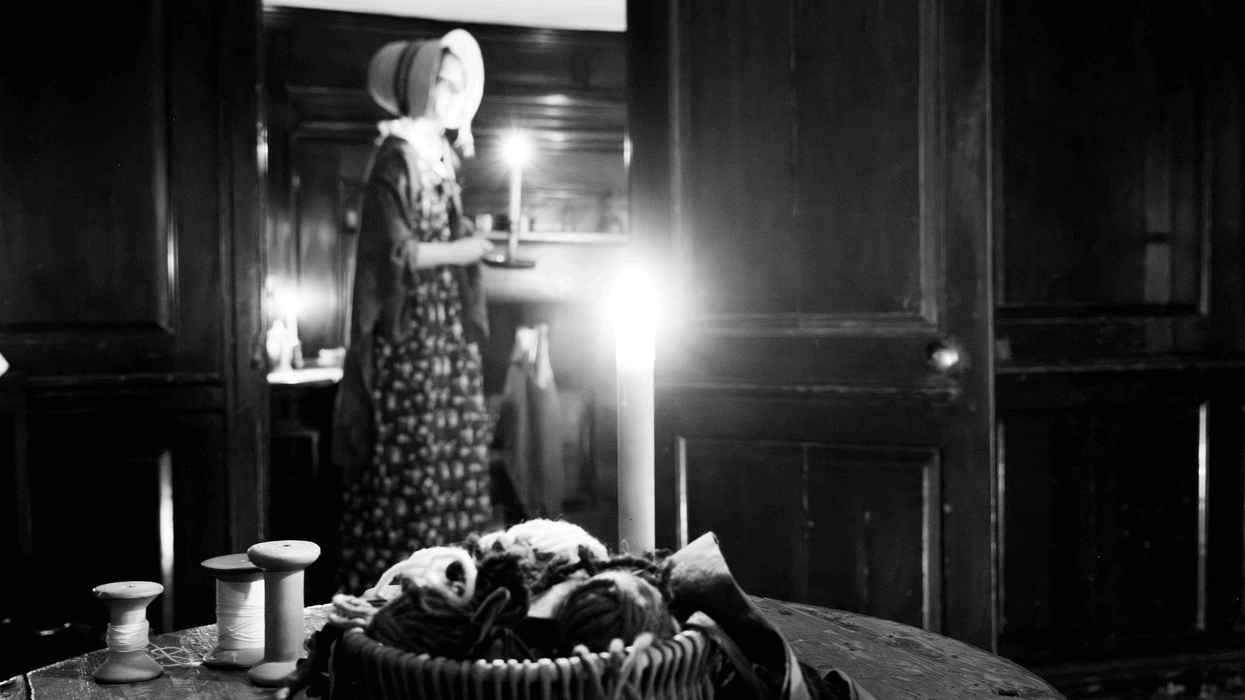
Lorem Ipsum used AI to help create interactive talking portraits for The First Salute
Image courtesy of Lorem Ipsum
The solution was to utilise AI to help create four interactive talking portraits that come to life "a little bit like Harry Potter”.
Displayed in a 9:16 vertical format on “small, modest, at-scale screens,” the portraits feel like intimate encounters and use headphones to isolate the audio, creating a one-on-one connection with the people depicted.
“The interactive portraits were based on research into real inhabitants of St. Eustatius during that period,” says Cooper, who developed and implemented AI production workflows on The First Salute.

Lorem Ipsum's head of R&D Chris Cooper
“They allow visitors to encounter the story through individual lives, voices, and memories. People connect strongly to personal stories, and these portraits function almost like emotional side stories within the larger gallery experience.”
Getting the audio performances right was a major technical and historical hurdle.
”One of the hardest things was trying to get the Dutch accent,” Cooper adds.
“St. Eustatius was a remarkably international place, populated by people from many different backgrounds... To get that right, we trained the models carefully and consulted native speakers to test the authenticity of the accents and speech patterns.
"The goal was not to create a caricature of an accent, but to suggest a believable historical voice. Doing this with generative tools was a unique challenge.”
Using AI responsibly
The visitor response to the use of AI in this case has been overwhelmingly positive. ”People know it's AI, and they don’t mind,” says Honor.
”They're like, ‘Oh, this is a good use of AI. I like this. I can see how you can tell historic stories on limited budgets.’ It is definitely more immersive. And as we're trying to tell these stories in a much more immersive way to engage people, I think it’s a really helpful tool.”
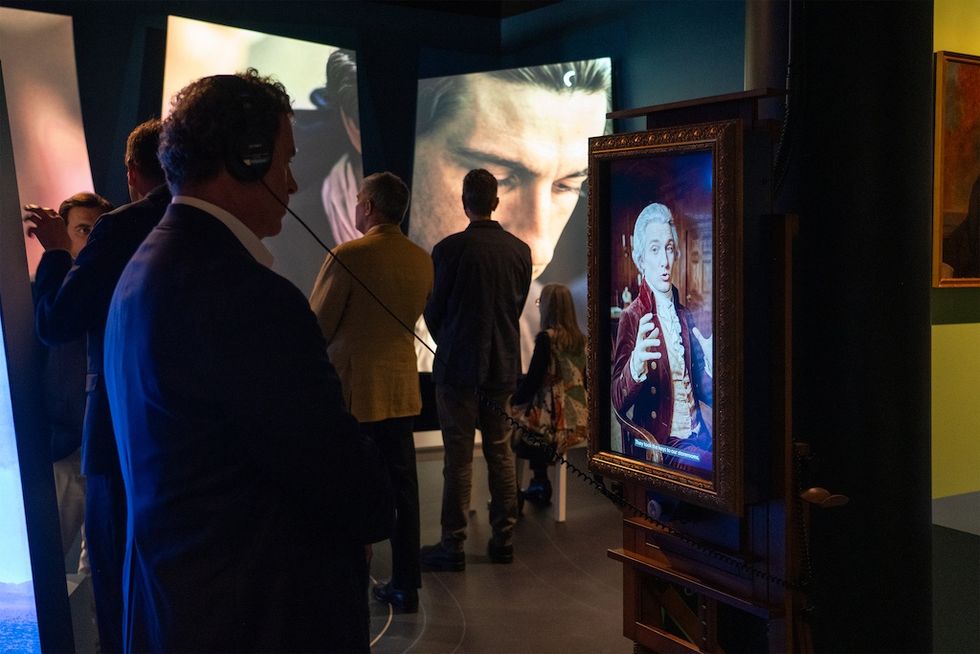
The portraits help guests form a one-to-one connection with the stories behind The First Salute
Image courtesy of Lorem Ipsum
However, using AI in an educational museum setting entails strict ethical responsibilities.
“People come to museums expecting what they see to be true,” Vizinberg says.
“So, when we use generative AI in a museum setting, the responsibility is very high: we have to control the tools carefully and make sure nothing enters the exhibition simply because it looks convincing.”
To maintain historical accuracy, Lorem Ipsum utilised a rigorous hybrid pipeline that combined technology and human expertise.
“Where generative tools were useful, they allowed us to build atmosphere, scale, and cinematic richness very quickly,” says Cooper. “But where accuracy required more control, we relied on traditional 3D modelling and CGI.
“For example, several of the ships seen in the films were first built as 3D models, so that the generative process could be guided by historically informed forms rather than vague approximation.
"AI does not replace expertise, taste, research, or authorship. It increases the need for them.”
The epic scale of "Rodney's Invasion"
While the portraits offer intimate, personal connections, the exhibition also strategically deploys large-scale, cinematic moments to convey geopolitical drama.
The most striking of these is “Rodney's Invasion,” a multi-screen installation depicting the British assault on the island.
To break away from traditional 16:9 cinematic formats, the film is projected onto three curved vertical screens in a triptych arrangement that mimics the sails of a ship. “This format solved a highly complex narrative challenge,” says Vizinberg.
“The challenge with ‘Rodney’s Invasion’ was to tell a very complex story in only a few minutes. The narrative moves across geographies…while also presenting three distinct perspectives.
"The technical challenge was to make that feel natural rather than fragmented. So, the piece had to move between unity and separation: at times behaving like one panoramic image, and at other times allowing the screens to hold different aspects of the story.”
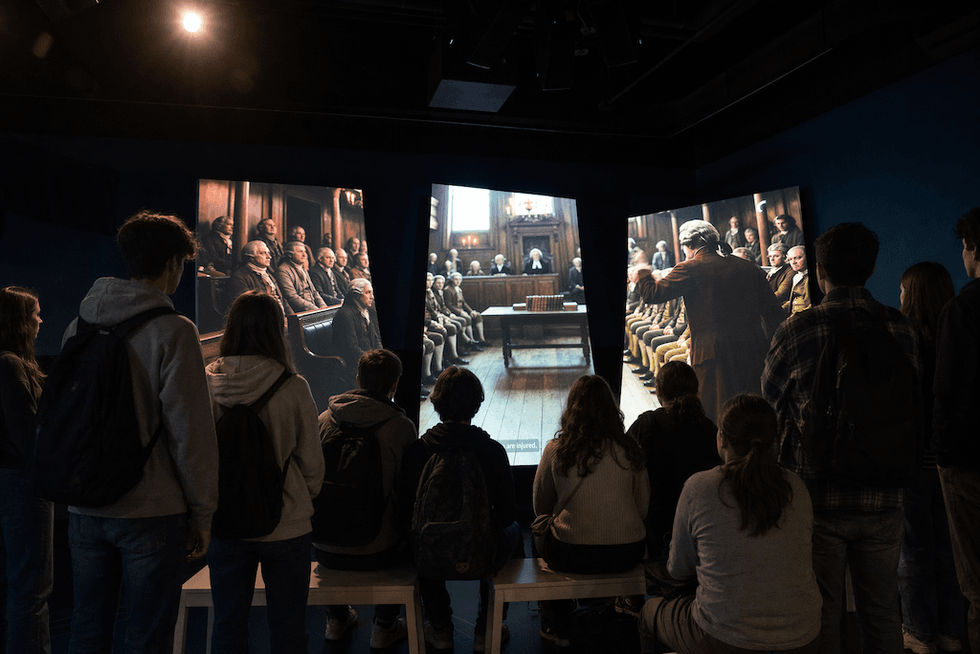
"Rodney's Invasion” is a multi-screen installation within The First Salute, depicting the British assault on the island
Image courtesy of Lorem Ipsum
Crafting this media required adapting to unprecedented technological shifts:
“We were working in a field where the technology was changing almost month by month. When we began creating the film in the fall of 2025, the models’ acting capabilities were still quite limited.
“As the tools improved during production, we found ourselves revisiting and reworking scenes.”
Technically, projecting high-resolution 4K video onto curved surfaces in a gallery space required extensive on-site testing.
“Projecting on curved surfaces is never easy. It’s always difficult in terms of focus and getting your pixels all straight,” says Honor, crediting AV integrator Electrosonic for meticulously aligning the projectors.
To manage the acoustic environment, the team used highly directional stereo speakers aimed down at the audience, minimising sound bleed in the gallery space while still delivering an impactful score.
This contrasts with the introductory film, The First Salute, which uses a rich 5.1 surround-sound mix with a subwoofer to dynamically move the sounds of the high seas around the audience.
Relevance, impact, and the future of immersive storytelling
The First Salute is more than a historical retelling; it is an exploration of foundational themes that remain deeply relevant today. Perelman says:
”Stepping back into the 1770s and 1780s and looking at these experiences through the eyes of Jewish people, we can actually see tangibly what religious liberty and the promise of citizenship meant to communities that risked their lives and livelihoods and lives in the conflict.”
He hopes the exhibition prompts visitors to reflect on the United States’ ongoing, evolutionary journey: “If visitors take away anything in terms of contemporary life, ideally it is to recognise, no matter who you are, no matter what your political perspective may be, the profound ideals upon which this nation was founded.”
The success of the exhibition stems from the close collaboration between The Weitzman and Lorem Ipsum. “He [Perelman] was very trusting…We understood his vision for the visitor and the story he was telling,” Honor says.
“He is so much more than just a curator of objects. He is vested in every aspect of the success and the design of the experience.”
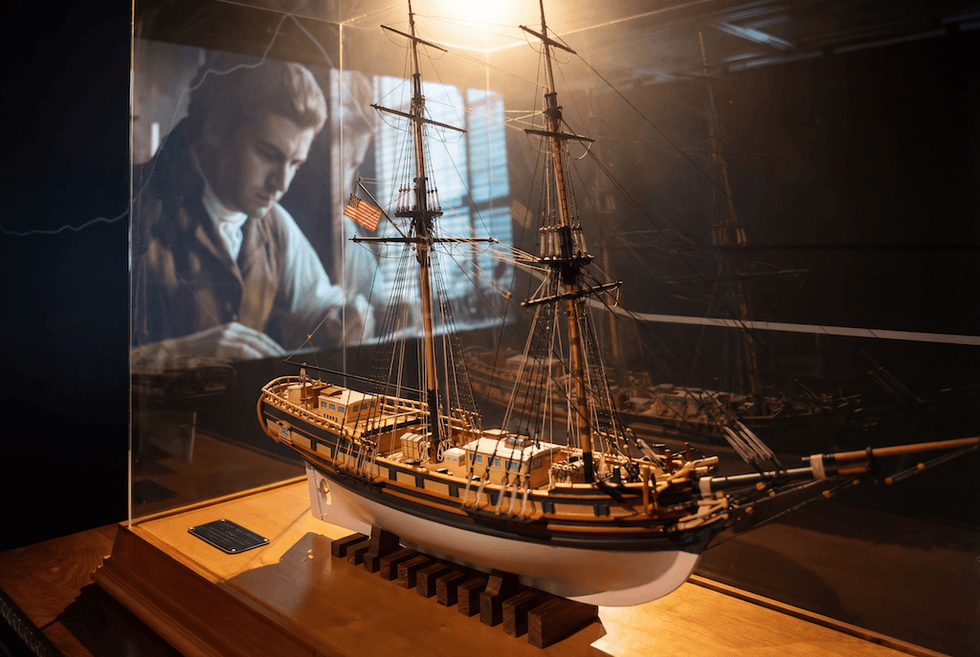
The First Salute shows how careful use of modern technology can create immersive museum experiences
Image courtesy of Lorem Ipsum
Perelman adds that the Lorem Ipsum team “brought the same enthusiasm that we had for expanding the boundaries of what a colonial-era exhibition could look and feel like. We collaborated and challenged each other in ways that made for just an amazing symbiosis.”
As for the future of immersive museum storytelling, both Honor and Vizinberg point to the expanding potential of AI and non-traditional spatial design:
“The more we can move away from a rectangle and build these environments that transport people to other places…being able to go to another place and another time and see it through other people's eyes... I think that that's incredibly exciting,” says Honor.
Vizinberg concludes with a reminder of the human element at the heart of experiential design:
“The future of immersive museum storytelling, for us, is not about replacing the human hand. It is about using new tools to make stories more vivid, more accessible, and more meaningful, while preserving the trust that museums depend on.”
With The First Salute, The Weitzman and Lorem Ipsum have done exactly that, using the latest technology not just for spectacle but as a bridge to the past, giving an unsung island and its people the historical voice they deserve.