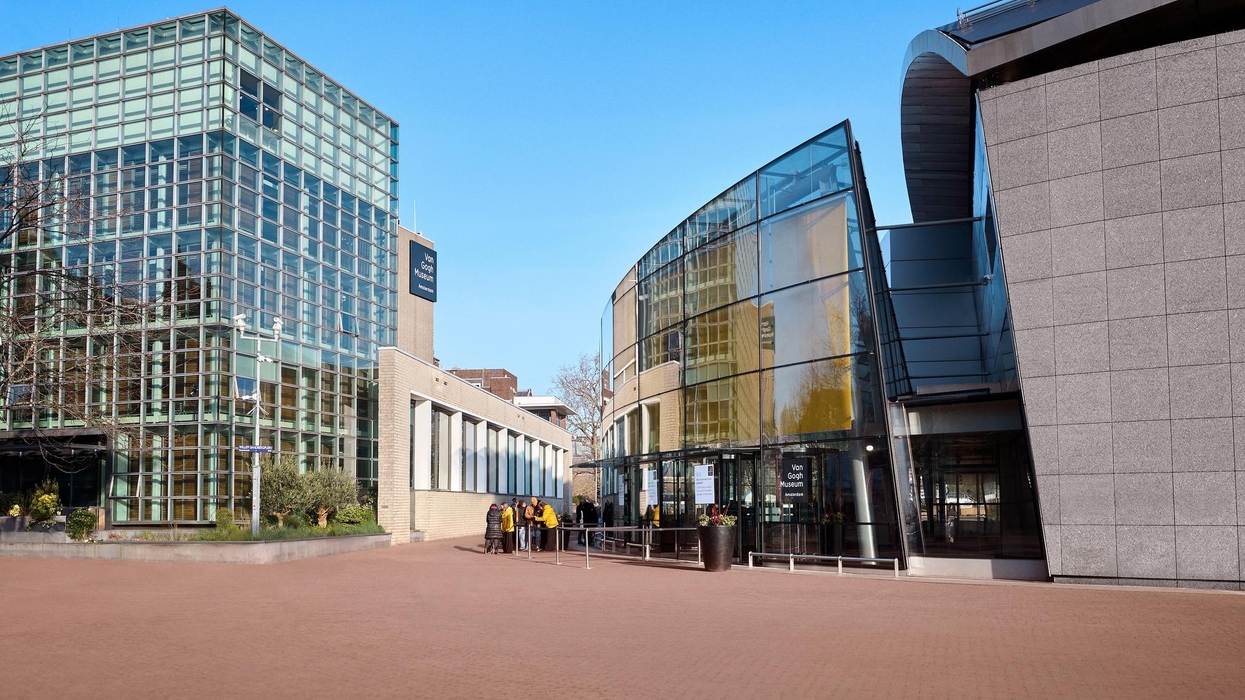
V&A East Museum opened to the public on Saturday 18 April as part of East Bank, the new cultural district in Queen Elizabeth Olympic Park.
Developed with input from young people, local creatives, and residents, workers, and students in East London, the museum highlights the transformative power of making and creativity to inspire change globally.
Set within a bright, spacious five-storey building designed by architects O’Donnell + Tuomey, it is a showcase of creativity and a celebration of makers from East London, the UK, and beyond.
 V&A East Museum
Image © Hufton+Crow
During a preview event, we toured the new museum and its galleries and heard insights from the team that helped to bring the vision to life.
The East Bank partnership
The V&A East Museum is the final piece of the V&A East project, marking one of the UK’s largest museum developments of the decade. It serves as the sister site to V&A East Storehouse, which welcomed visitors in May 2025.
See also: "All of this for all of us": a tour of V&A East Storehouse
Both locations are integral to the East Bank partnership, rooted in East London's diverse communities and embodying the creative spirit and legacy of the London 2012 Games.
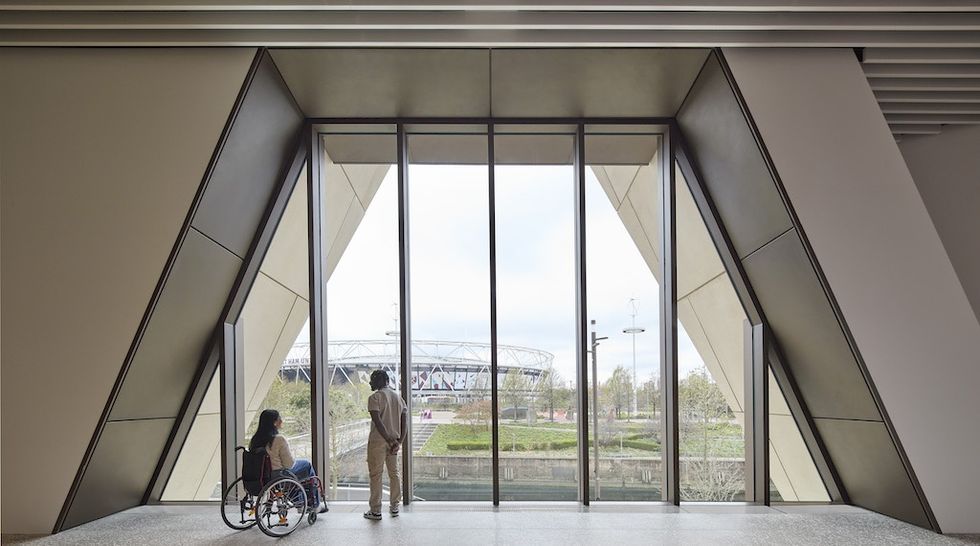
Inside V&A East Museum
Image © Hufton+Crow
East Bank unites some of the country’s leading cultural institutions to enhance the capital's cultural scene, supported by over £600 million in funding from the Mayor of London.
Co-creating V&A East Museum
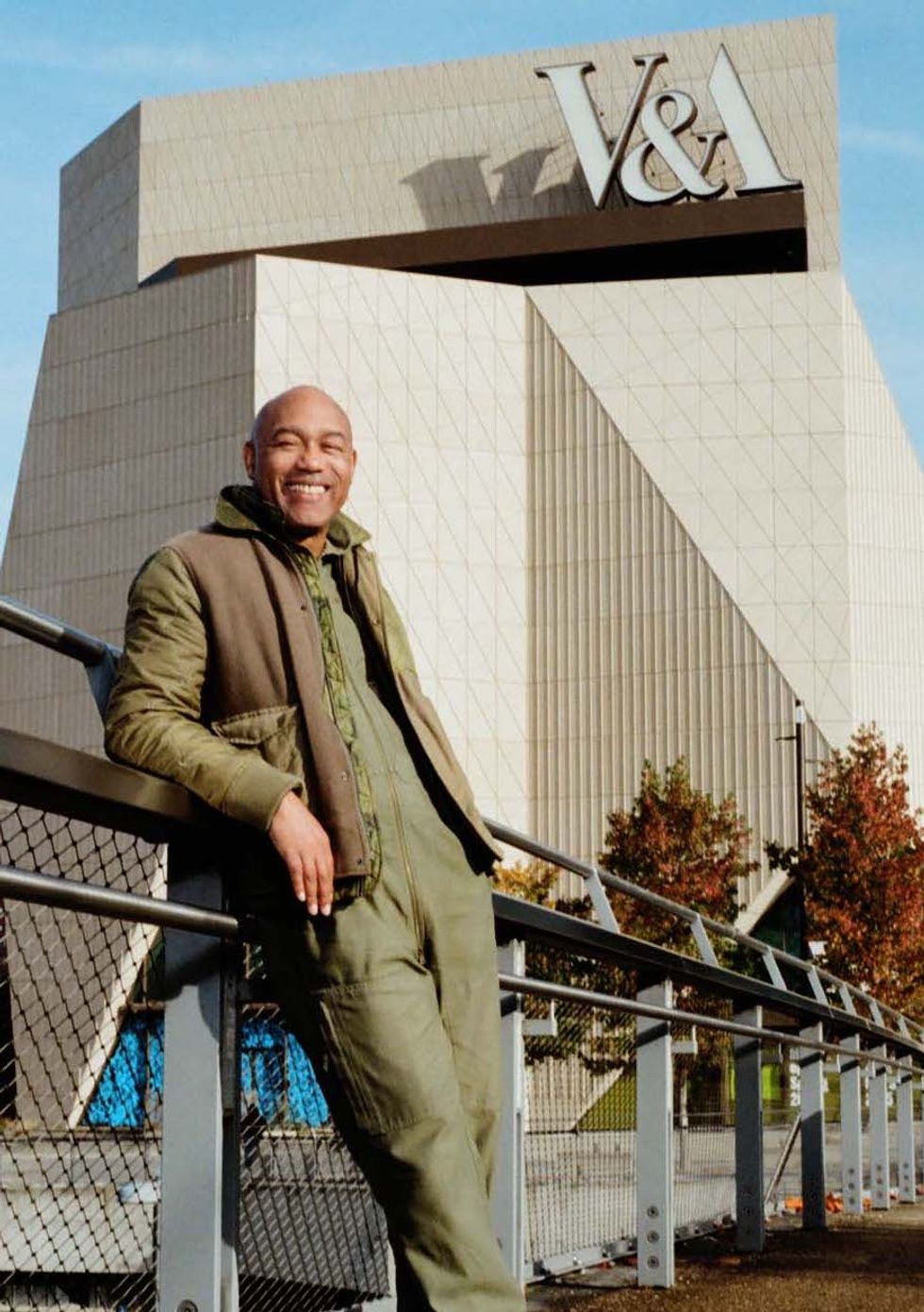
Gus Casely-Hayford, director of V&A East
Image © Lewis Vorn
Co-created with young people, creatives, and East Londoners, V&A East Museum celebrates making and the power of creativity to bring about change.
Welcoming guests to the press preview, Gus Casely-Hayford, V&A East director, said that, from the very beginning, the project has been about people:
"When I came into my role, it was exactly at the time that the pandemic began, and we built a team and vision through remote working" Despite this, the team knew they wanted to create an institution that was emotionally able to connect with the communities around it.
"And so as soon as we were able, we got out there to see those communities, to talk to them about what it was that they would want in a V&A East Museum, and they were really keen to tell us!"
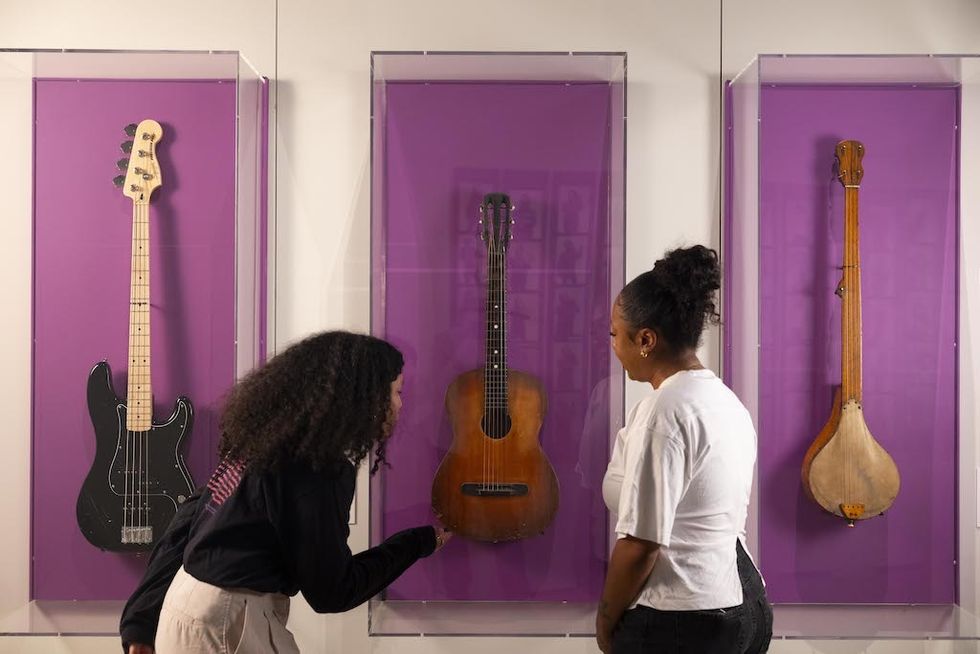
Items including Joan Armatrading’s childhood guitar on display for the first time inside V&A East Museum’s inaugural exhibition, The Music is Black: A British Story
Image © David Parry for the V&A
"I got out on my bicycle to visit more than 100 schools within a bus ride of here, speaking in assemblies and classrooms about what V&A East might have to offer.
"But more than talking to them, it was listening to what they wanted us to deliver for them. Many of them had deep aspirations to work in the creative industries, but with no understanding of how they might do it. So, we saw a desperate need for an institution like V&A East and for young people to engage with it."
More than 30,000 people were consulted across every area of operational and curatorial delivery to create an institution that reflects their needs, aspirations, hopes, and dreams. "You will see that, I hope, reflected as you walk through our spaces."
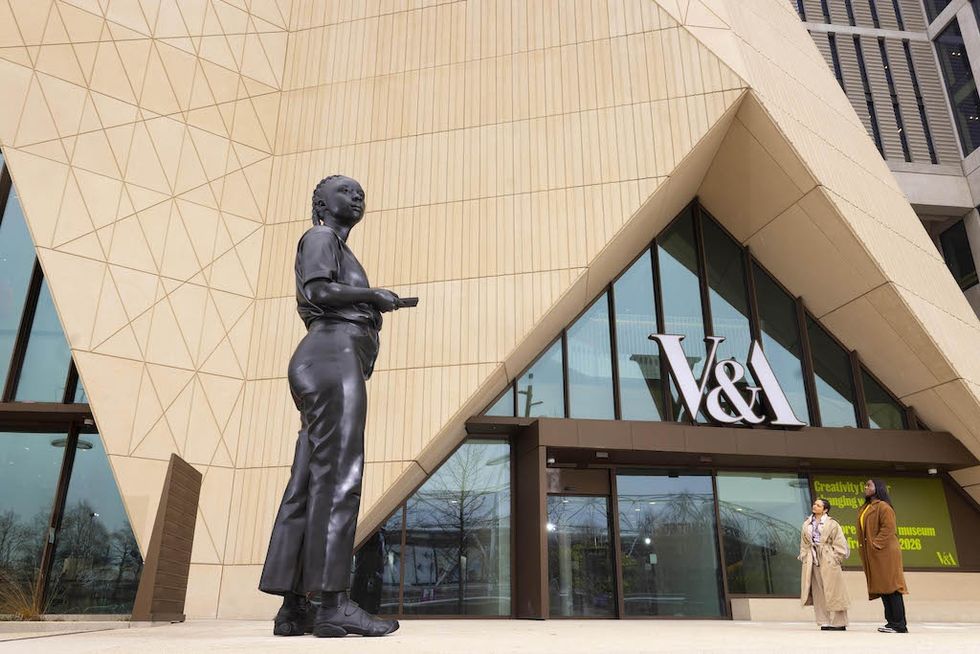
‘A Place Beyond’ by Thomas J Price outside V&A East entrance
Image © David Parry and PA Media Assignments for the V&A
The museum also worked with artists to deliver on that vision, he added:
"One of the most powerful statements is the Thomas J Price [an 18-foot sculpture entitled A Place Beyond] that sits outside our space; a young woman holding her mobile phone, the sort of person that you might sit next to on any tube or bus and maybe not notice. She's looking out toward the horizon full of dreams and hopes.
"I hope, in her view, you see our communal hopes and dreams, because I hope this is an institution that represents the future of the young. We've invested here in thinking about how we could be a platform for their hopes and dreams.
"This is a place of dreams and possibilities, and what it needs now is people to come in and to make them real."
Exploring creativity
Brendan Cormier, chief curator for V&A East, traced a line from the founding of V&A in South Kensington to this new, contemporary iteration:
"The history of V&A is grounded in this idea of applied arts. The founder of V&A, Henry Cole, in putting together one of the most legendary exhibitions ever, the Great Exhibition at the Crystal Palace, laid the DNA for the V&A being a space where you can talk about creativity in so many multifaceted ways, but importantly, about creativity in everyday life."
Cole challenged people to look at the objects around them and understand that creativity and making exist everywhere. "We're all invited to be participants in that creative act," said Cormier.
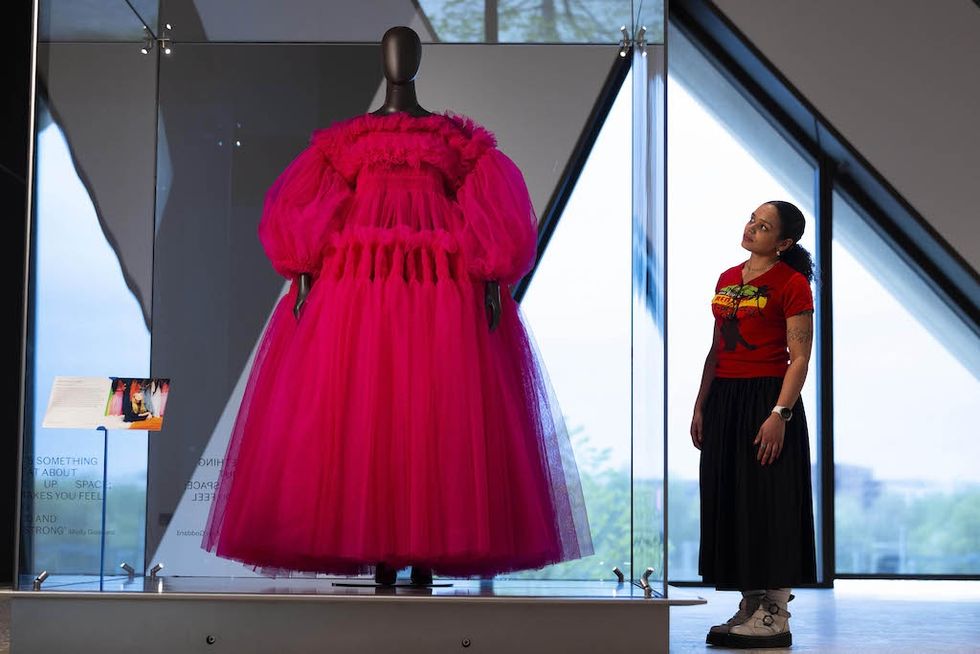
Molly Godard’s 2019 Daria dress and Maud Sulter’s 1989 Urania (portrait of Lubaina Himid), on show inside V&A East Museum’s Why We Make galleries
© David Parry for the V&A
"So, we decided to look at the V&A collection and revive that spirit of the notion of applied art, the existence of art everywhere, on the street, in your homes, in your everyday life, especially as a message to young people to say that this is a space for you as well.
"This is a space that you can participate in."
The name of the permanent gallery, Why We Make, reflects this spirit:
"That speaks to the intention of the gallery. It's saying art, making, and creative practice...are not just a nice hobby. It has intentionality, the ability to have an incredible impact on society.
"Today, especially, we live in an age where...creativity almost itself is an endangered species. We've got tools promising that they can do it all for you.
"We want to re-empower young people to think about creativity."
Why We Make
The two free permanent galleries showcase global culture through a topical lens.
Designed by JA_Projects in collaboration with A Practice for Everyday Life, Larry Achiampong and the V&A East Youth Collective, the galleries hold over 500 objects from the V&A’s collection spanning art, architecture, design, performance and fashion.
Objects are assembled from various times, cultures, and countries, featuring a design inspired by East London. This aims to address issues relevant to the museum's audiences, such as representation, identity, wellbeing, social justice, and environmental action.
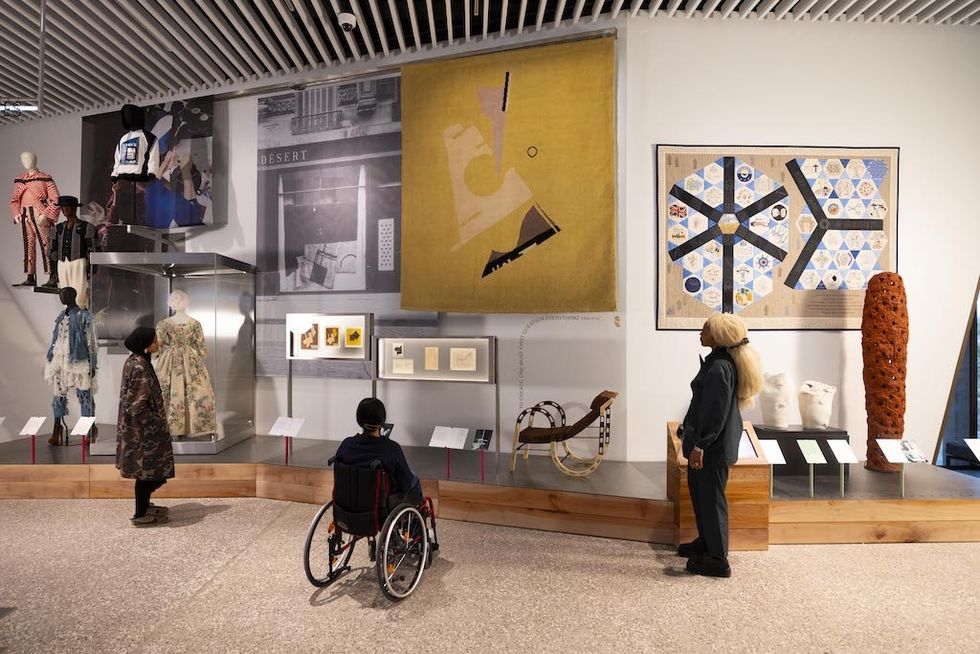
‘Crafting Stories’ section inside V&A East Museum’s Why We Make galleries
© David Parry for the V&A
Senior curator Zofia Trafas White explained:
"The range is both local and global, and it's a true fresh remix of how you can see and experience the V&A collection. We tell stories of 200 makers from diverse cultures and time periods, drawn to new dialogues with one another."
These are not practitioners who normally share a gallery space. There are photographic works by Claude Cahun, Maud Sulter, and Shadi Ghadirian, shown alongside a Renaissance self-portrait by the Italian painter Sofonisba Anguissola and Molly Goddard’s feminist fashion.
Guests can discover furniture by Yinka Ilori, fashion by Alexander McQueen, carnival costumes by Keith Khan, ceramics by Bisila Noha and dance by Akram Khan, and much more.
"We hope each visitor will find names that they know and names that are new," said Trafas White.
"It's about bringing together the unfamiliar and familiar in new conversations... exploring attitudes about how we make our place in the world.
"How do we voice dissent? How do we empower others through design? How do we build creative communities?
"These are all topics and agendas that have been close to the heart of many practitioners, and their voice guides you on the experience. We tell the story, not through our words, but through the words of 200 makers, their agendas, their words, their campaigns for change, their manifestos."
Over 95% of the objects on show have come from V&A's stored collections.
"Obviously, everything is accessible at V&A East Storehouse, but these are things that are actually on the gallery floor for the first time. We have a few firsts that have never been displayed before, since they were acquired by the V&A."
The East London connection
The curatorial team worked collaboratively with and for the audiences of East London to create Why We Make.
Curator Chloe Kellow spoke about some of the objects that illustrate this local connection, including Kehinde Wiley's portrait of Hackney resident Melissa Thompson:
"This was an early acquisition for V&A East and was born out of a commission with the William Morris gallery.
"In Why We Make, this painting is shown alongside an audio piece that we developed with Melissa herself, reflecting in her own words about that experience of being approached to sit for this portrait, and also how it feels for her now to see this portrait come back to East London."
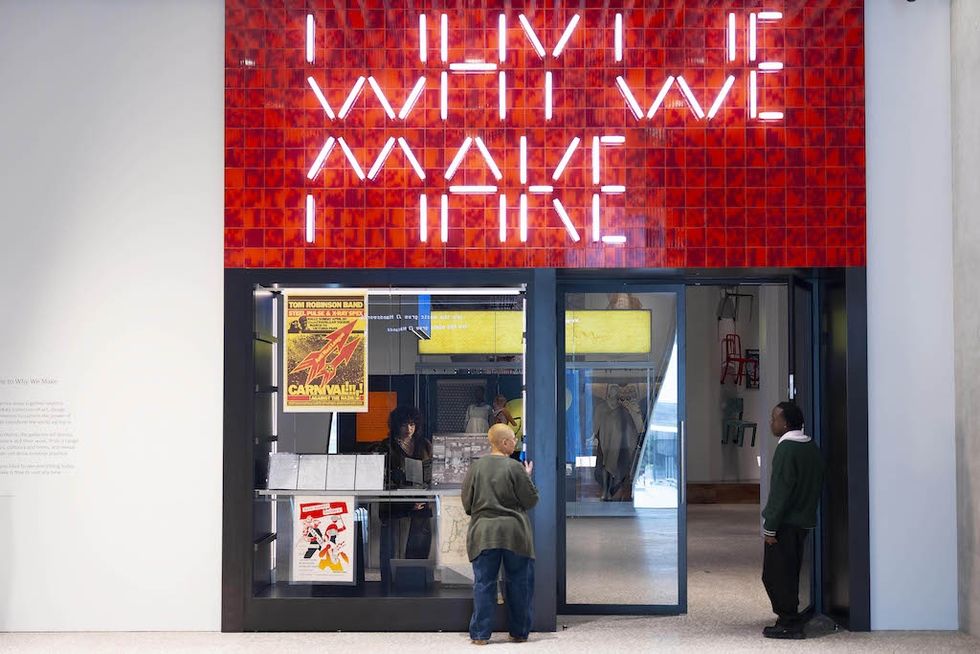
Entrance to V&A East Museum’s Why We Make galleries
© David Parry for the V&A
The galleries also showcase a series of co-produced projects created with east London-based residents, artists and creatives, drawing on the V&A’s collection, including displays by artist and designer Sahra Hersi and Hackney-based photographer Tom Hunter, created in collaboration with the V&A East Youth Collective.
There are also new acquisitions from East London artists and designers, from Hackney resident Ron Hitchens to King Owusu's collaboration with streetwear brand Lazy Oaf.
V&A East Museum also debuts New Work, a biannual programme showcasing fresh creative commissions.
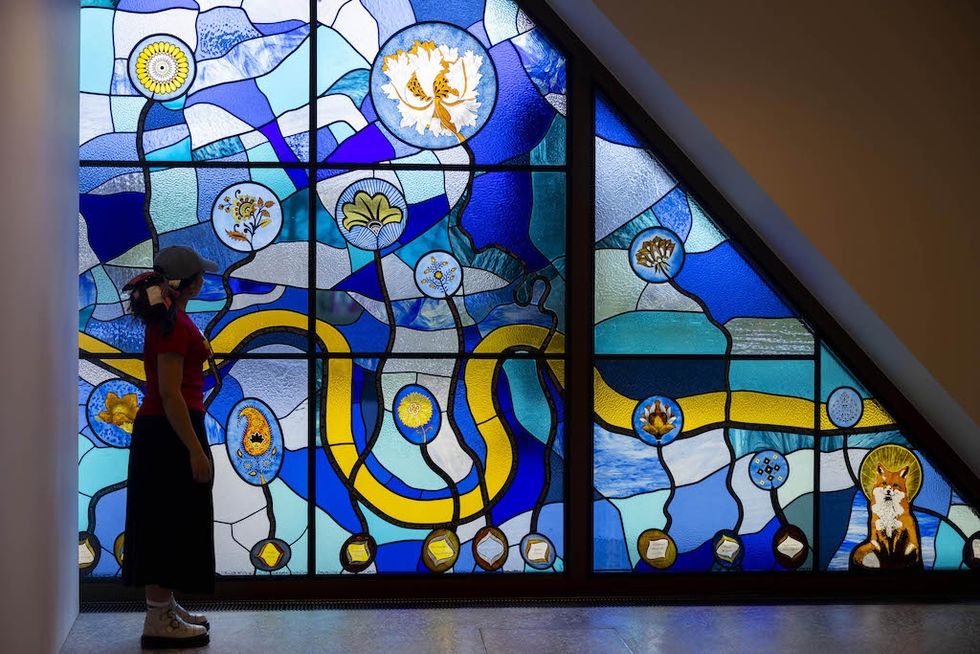
‘Towards A Civic Museum’ by Tania Bruguera, V&A East New Work commission, on display at V&A East Museum
© David Parry for the V&A
The first edition features new works by Tania Bruguera, Rene Matić, Justinien Tribillon, Carrie Mae Weems, and Laura Wilson, all engaging with the theme ‘Making East London.’ This theme explores the area’s histories, communities, and potential futures.
Additional new works by Es Devlin, Lawrence Lek, and Shahed Saleem are now on display at the V&A East Storehouse, expanding the programme to include both V&A East locations.
A new temporary exhibit, Dispersal, features photographs by Marion Davies and Debra Rapp. They documented the people and workplaces of East London facing closure or relocation due to the development of the London 2012 Olympic and Paralympic Games.
The Music is Black: A British Story
The V&A East Museum also opens with The Music is Black: A British Story, the largest exhibition to date on the influence of Black British music in the UK and globally.
Showcasing more than 200 items from the V&A’s collection and key loans, this exhibit highlights the rise of eight unique Black British genres, including 2 Tone, Lovers Rock, Brit Funk, Jungle, Drum & Bass, Trip Hop, UK Garage, and Grime.
Tracing 125 years of Black British music, the exhibition showcases hidden stories of early pioneers and modern artists. It features items such as Winifred Atwell’s piano and Stormzy’s 2019 Glastonbury vest, designed by Banksy and initially sketched on a napkin.
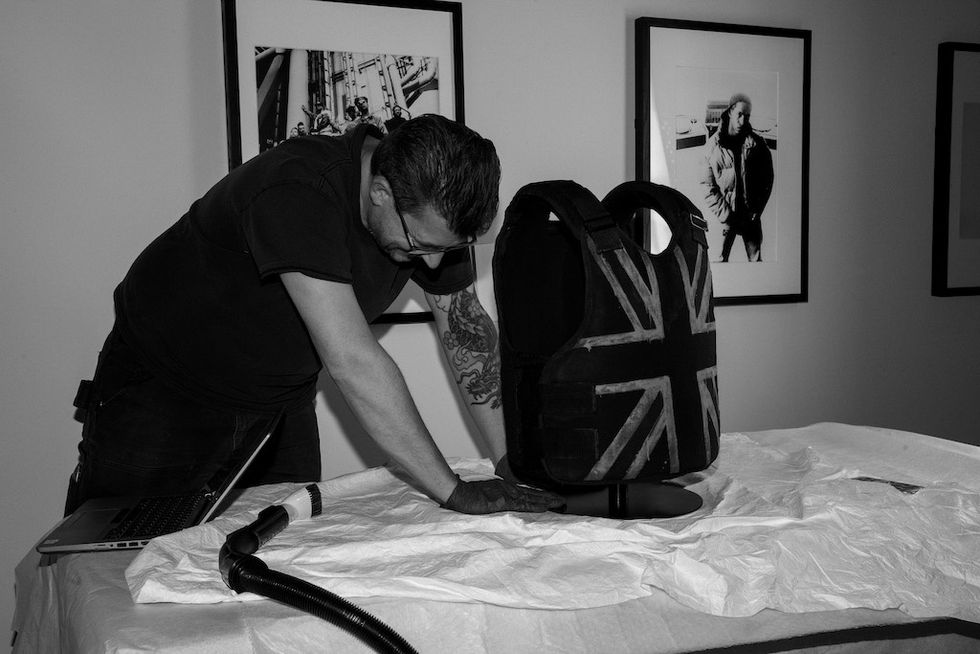
V&A East Museum team prepares Stormzy’s 2019 Glastonbury vest, designed by Banksy. Inside V&A East Museum’s inaugural exhibition, The Music is Black: A British Story
© Adama Jalloh for the V&A
Other highlights include Joan Armatrading’s childhood guitar, equipment belonging to Fabio & Grooverider—such as Grooverider’s first turntable—and the Super Nintendo Jme used during his early music experiments. Additionally, there is fashion worn by Little Simz, Seal, Dame Shirley Bassey, Sade, and Skin.
Speaking at the preview event, lead curator Jacqueline Springer said that the sound experience accompanying the exhibition is designed to make visitors feel that "Music is like air, it's everywhere."
Joy and resilience
She added:
"The use of Black to prefix the word music is both an accepted and a resented form of reference. Black Music is a short, sharp description of the emotive and of the enormous.
"Black Music is global proof of resilience.
"United, these words reflect an honourable acknowledgement of larger histories and deeper truths of the violent cross continental displacement of African men, women and children that created what now constitutes the African diaspora...of the modicums of language, traditions and cultural practices that, integrated with those of others, have contributed the sonic building blocks of the Black Music that we listen to today."
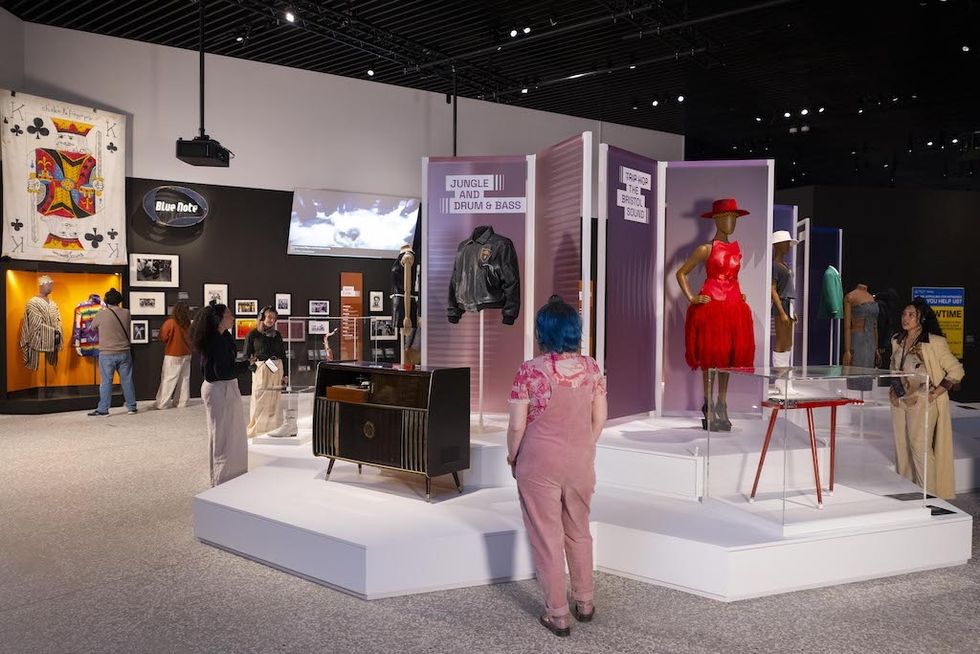
Inside V&A East Museum’s inaugural exhibition, The Music is Black: A British Story
© David Parry for the V&A
"Through the exhibition structure and artefacts, we explore how sound cultivated from African indigeneity adapted and rebelled against Colonial Era traumas and post-colonial politics to triumph in its global dissemination and influence to form the spine of contemporary popular music in the West."
The exhibition also features artworks that highlight the joy, resilience, and significance of Black British art and demonstrate how music moves us.
These include pieces by Dame Sonia Boyce, Zak Ové, Sokari Douglas Camp CBE, Denzil Forrester, as well as new works commissioned specifically for this show by Sir Frank Bowling and LR Vandy.
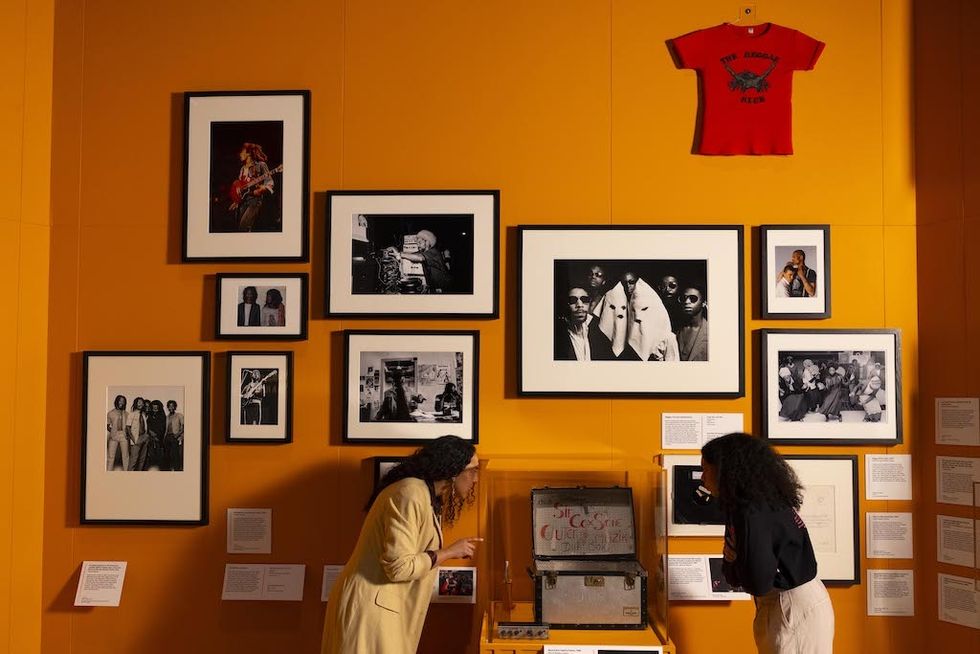
Inside V&A East Museum’s inaugural exhibition, The Music is Black: A British Story
© David Parry for the V&A
The V&A has added more than 50 photographs from the 1960s to 2010s to its collection – many of which are being displayed for the first time in the exhibit.
The exhibition also inspires The Music is Black Festival, a series of events, displays, and performances in partnership with East Bank and other collaborators across Queen Elizabeth Olympic Park and surrounding areas in summer 2026.
Welcome to V&A East Museum
V&A East Museum’s opening lineup of free live events features a takeover by DJ Nia Archives, along with artist-led workshops, discussions, and live performances.
Visitors can also experience Café Jikoni, a collaboration with the restaurant group celebrated for ‘cooking across borders’.
As Casely-Hayford says:
"Everyone is welcome at V&A East Museum....we hope you see yourself, your stories, and experiences represented here.”