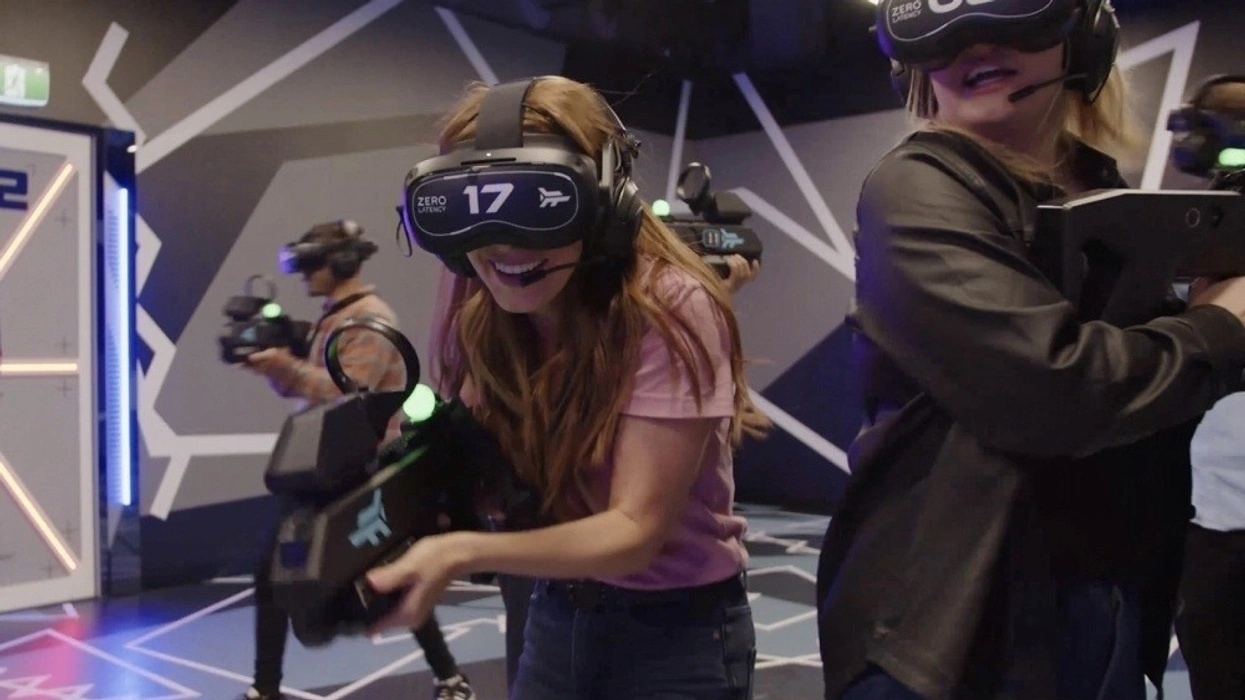

Zero Latency, a global leader in VR entertainment, has revealed the results of the largest consumer study ever run on location-based VR, which found that immersive virtual reality is the most wanted attraction in entertainment venues.
The study, The state of location-based VR 2026, was commissioned by Zero Latency VR and conducted by independent agency Glow. It engaged 2,386 participants across the US, Canada, Australia, France and Spain.
When asked about the attractions they most want, participants ranked virtual reality first at 93%, followed by options like arcades, bowling, escape rooms, mini golf, laser tag, karting, and immersive and interactive game rooms. This finding was consistent across every region surveyed.
However, the attraction guests most want, Zero Latency says, is the one many venues don't offer. This presents a real opportunity for operators.
The full report is available here.
Key findings
Since 2023, VR is the only major attraction to see a rise in pull. In contrast, arcades and karting have lost ground to more social experiences.
The study found that only a third of participants play VR solo, with a preference for the shared experience that cannot be replicated from the sofa. 73% play with friends, 60% with family, and 52% with their partner.
VR's mix of genres and formats serves this appetite. Suitable for different group sizes, a single attraction can welcome friends, families and corporate teams for a larger audience than gamers, bigger group tickets, and a fuller venue across more of the week.
The report also notes that visitors' reasons for booking are shifting.
At 36%, thrill and excitement are now the top reason people book a VR experience. While trying new technology was previously the primary motivator, this has dropped to fourth place.
Visitors judge VR on quality first, says Zero Latency, and value graphics (42%), tech and venue (38%), and great games (36%). Notably, 'great games' has risen three places since 2023, demonstrating that visitors increasingly rate VR by the depth of its content rather than by the novelty of putting on a headset.
Audiences will pay for this level of quality. Research has found that Gen Z will pay a premium for high-quality experiences, such as big licensed worlds like Jumanji and Cyberpunk 2077.
Yet, guests frequently cite the lack of nearby VR venues as a key barrier to visiting. This is evidenced by independent real estate data, such as JLL's 2026 entertainment tenant study of location-based entertainment (LBE) locations across the US and Canada.
This study showed extensive growth in the wider sector, with escape rooms, for example, seeing a +247% increase since 2023, with 721 more locations already planned across the wider sector. Yet of JLL's 4,746 LBE locations, just 83 were VR venues.
Meanwhile, for established family entertainment centres like Chuck E. Cheese or Dave & Buster's, growth has flattened to 10.6% since 2023, with a focus on consolidation rather than expansion.
Zero Latency's own footprint of over 150 installations across 30 countries, the company says, shows where that growth could come from next.
Earlier this month, Zero Latency announced that Jumanji: The Lost Levels is set to launch on 4 December 2026. Developed in partnership with Sony Pictures, the experience will be available at Zero Latency VR locations across the globe.

Rebecca Hardy has over 10 years' experience in the culture and heritage sector. She studied Fine Art at university and has written for a broad range of creative organisations including artists, galleries, and retailers. When she's not writing, she spends her time getting lost in the woods and making mud pies with her young son.