EAG (Entertainment, Attractions and Gaming Expo) has occupied a regular place in the UK amusement and leisure trade calendar for more than 75 years.
The event traces its origins to the ATEI era, but the industry it serves looks very different today, with traditional amusement now sitting alongside a wider range of attractions, entertainment and leisure businesses.
The boundaries between amusement, attractions, gaming, hospitality and leisure entertainment are becoming less distinct. At the same time, newer categories such as competitive socialising and immersive entertainment are changing expectations around what an out-of-home experience can be.
For operators, the challenge is no longer simply finding the latest machine or attraction. It is understanding how different experiences, technologies and business models can work together to create destinations that are engaging, commercially viable and worth returning to.

EAG360: Experience the Smile Economy at Amuse Expo, CompsocUK, and London Gaming Show
That shift is reflected in the evolution of EAG itself. In 2026, organisers announced the rebrand of EAG Expo as EAG360, alongside a new brand architecture incorporating Amuse Expo, CompSocUK and the London Gaming Show.
A broader industry audience
The change matters because EAG360 isn't simply expanding the number of categories on the show floor. Instead, it reflects how the businesses themselves are evolving.
An operator might now combine arcade entertainment with food and beverage, immersive experiences, competitive play or other forms of location-based entertainment, while technology increasingly connects different parts of the customer journey.
The new structure is framed around The Smile Economy, a theme intended to connect the event's different strands around a shared focus on entertainment and consumer experience.

EAG chairman Nick Harding
According to organiser figures, EAG360 attracts representatives from 2,043 businesses, with 86% of attendees classified as decision-makers. International visitors account for 17% of the audience, while the UK also provides a testing ground for products and concepts entering wider European markets.
According to EAG chairman Nick Harding, the move towards a “fit for the future” event has been informed by research and consultations with industry stakeholders, rather than a simple visual refresh.
The aim is to establish a flexible framework that can accommodate new brands and areas of the show as the event develops.
Competitive socialising finds its place in the wider leisure ecosystem
Under the EAG360 umbrella, CompSocUK is the new identity for the Social Immersive Entertainment Expo (SIE), first launched in 2025.
The event was created to reflect the growth of immersive entertainment and competitive play, encompassing areas such as XR, esports, sim racing and competitive socialising. It also brought businesses from these emerging categories into the established EAG audience.
For traditional amusement businesses, meanwhile, competitive socialising offers another route to diversify revenue and attract different audiences. It also shows how venue formats once treated as separate categories are beginning to overlap.
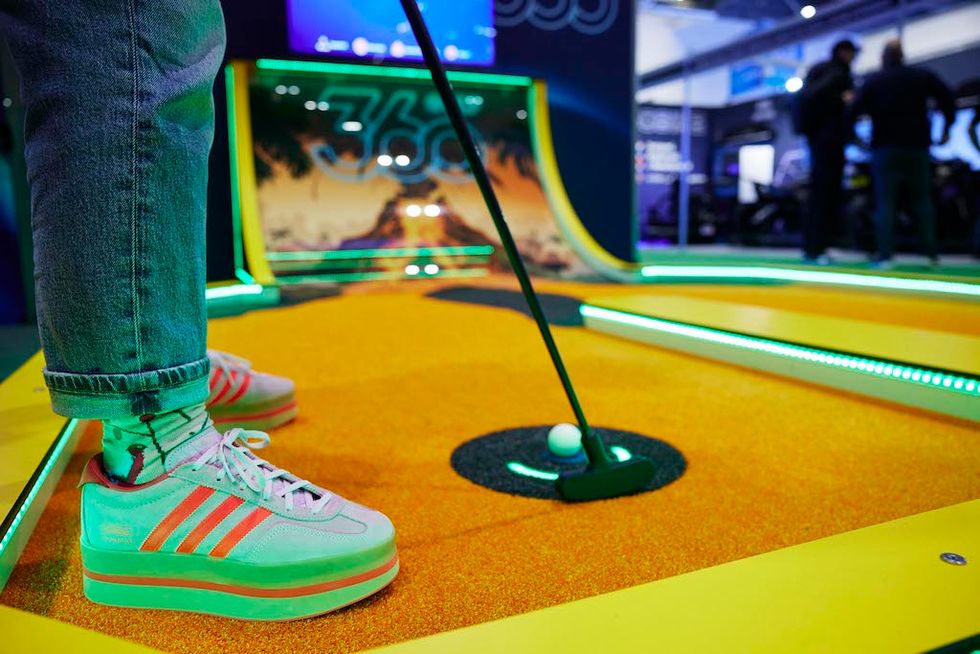
360 Golf on show at last year's EAG Expo
Rather than functioning simply as an additional exhibition area, SIE was intended to connect EAG's established audience with a newer generation of location-based entertainment businesses.
Harding says the move reflects the opportunities emerging as competitive socialising develops.
“With more and more operators wanting to bring competitive socialising into their venues or technology providers creating new and exciting innovations, there’s a lot for everyone in the space to keep learning. And as the only show dedicated to the competitive socialising market, we’re pleased to be able to provide a space for that to happen.
“As the sector carries on this learning and development, we’re only going to see more unique and exciting ways for all our partners, exhibitors and visitors to continue contributing to what we’re calling the smile economy.”
What can visitors expect from CompSocUK 2027?
Harding expects the 2027 edition to reflect the sector's continued development, including a move toward more immersive experiences.
“I suspect much more immersive compsoc offerings will be the talk of the show in January as the market continues growing.
"Beyond interactive game machines in bars, we’re going to see operators wanting to create fully themed, incredibly immersive experiences that use activities, themed immersion, and food and drinks to bring people together.”
Operational technology is another area Harding expects to become increasingly important as venues mature:
“While booking and management systems or ticketing platforms and technology might not seem like the most important part of the landscape, being able to run and manage a venue as efficiently as possible is only going to become more important as the market continues to mature.”
The point reflects another change in the sector: as venues become more complex, the systems supporting the experience become increasingly important to the business model.
Adding new categories, however, is only useful if those experiences make commercial sense.
As the competitive socialising market develops, the questions are becoming less about whether customers will try a new experience and more about how often they will return, how many people a venue can accommodate and how efficiently the space can be operated.
From novelty to repeatability
For operators, the challenge is increasingly to create experiences that sustain interest beyond the first visit. As competitive socialising matures, customers have more choice and higher expectations about what makes an experience worth repeating.
“Customers are increasingly looking for experiences that are social and easy to get into, but they also expect more depth and quality than ever before,” says Mike Knell, founder of Rivals Innovation.
“The strongest products are those that people can understand almost immediately while still giving them a reason to play again.”
That demand for replayability is shaping how new attractions are being designed.
Rivals' Battleball, which it will showcase at EAG360, combines a catalogue of short physical games within a single installation. The model gives operators multiple experiences within one footprint, while giving customers reasons to return, improve their scores and compete again.
501 FUN is also focusing on replayability. “Guests still want experiences that feel new and exciting, but novelty alone isn’t enough to create long-term success,” says Liam O'Donnell, events, brand & partnership manager at 501 Entertainment.
“They increasingly expect games to be social, interactive, competitive and highly replayable, with enough variety that every visit feels slightly different.”
501 FUN is bringing its newest experience to CompSocUK, alongside AR darts, interactive darts, and interactive mini golf. For the company, keeping an experience fresh does not end with installation.
“Alongside launching new products, we regularly introduce new games, content, and software updates across our existing range,” O'Donnell says.
“This gives guests more variety and helps operators create experiences that remain engaging beyond the first visit.”
Making every square metre count
Replayability is only part of the commercial equation. As competitive socialising expands into city centres and other space-constrained locations, operators are also looking closely at capacity and the commercial performance of the space available to them.
Knell argues that throughput is another part of the proposition:
“Space is at a premium in busy city centre venues, and operators naturally want to accommodate as many customers as possible. At peak times, particularly at weekends, demand can significantly exceed capacity, leaving operators unable to take bookings that would otherwise generate revenue.”
This is one of the issues Battleball has been designed to address.
“A product such as Battleball, which can accommodate around three times the number of players as many alternative offerings within a comparable footprint, has the potential to be extremely attractive to operators.”
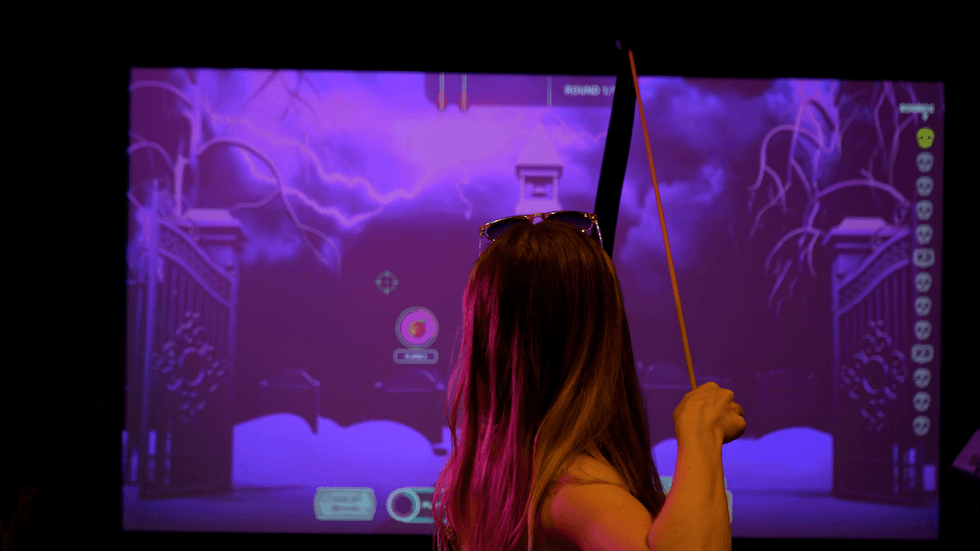
501 FUN's Virtual Archery
501 FUN similarly sees flexibility as increasingly important, particularly for venues looking to “build a broader multi-experience offering, attract different audiences and create additional revenue opportunities without relying on a single attraction.”
The result is a shift towards experiences that need to work harder commercially, whether by accommodating more players, activating underused areas or providing multiple reasons for customers to return.
The technology behind the experience
Technology is also becoming increasingly important, but its role is increasingly to disappear into the experience.
“We believe the next generation of competitive socialising will be defined by technology becoming more seamless,” O'Donnell says.
“Guests shouldn’t be thinking about the technology behind the experience; they should be focused on the game, the competition, and the people they’re playing with.”
It creates a distinction between the technology customers see and the technology operators rely on: the former is increasingly designed to disappear, while the latter is becoming central to how venues manage capacity, bookings and revenue.
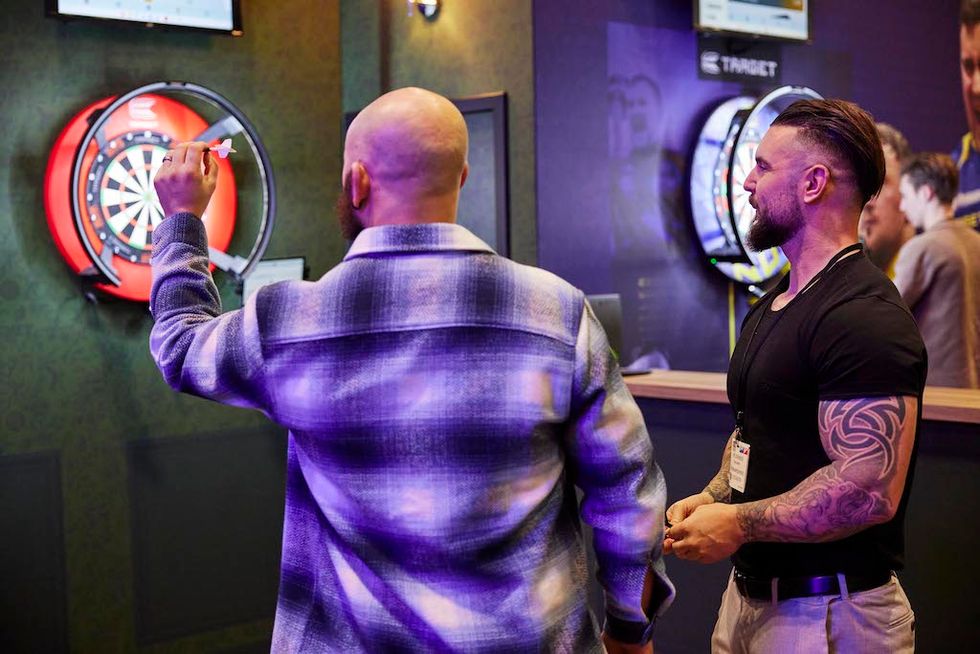
A range of experiences will be on show at CompSocUK 2027, including tech-enhanced darts
Behind the scenes, meanwhile, booking and venue-management systems are becoming increasingly important to how venues operate.
Booked.it director of operations Amy Harris says the market has “matured massively”, with venues now more confident about what they expect from technology.
“Ease of use is a huge priority, for both the customer and the team operating the venue,” she says.
“We’re also seeing a real demand for technology that brings everything together in one central hub, rather than having lots of different systems that don’t talk to each other.”
The shift is from individual systems performing individual functions towards technology that gives operators a more integrated view of the customer journey.
That extends to how operators manage capacity. “Operators want to maximise capacity during those peak periods, but also use pre-bookings, upselling and customer journeys to drive demand during the quieter periods,” Harris says.
“It’s really about getting more out of every available slot, rather than simply trying to fill the venue.”
Beyond the traditional venue
The potential customer base now extends well beyond dedicated competitive socialising venues. Products are increasingly expected to work across different venue types and commercial models, rather than being designed for a single category.
501 FUN says its products can adapt to different spaces and venue models, while Rivals' position as both operator and developer gives it direct experience of the commercial realities involved.
“Because we operate venues ourselves, we understand that a product has to work commercially as well as creatively,” Knell says.
“By the time we exhibit at EAG, we will have first-hand experience of operating Battleball and will be able to have informed conversations about staffing, customer spend, throughput and repeat visits, rather than simply presenting it as a piece of technology.”
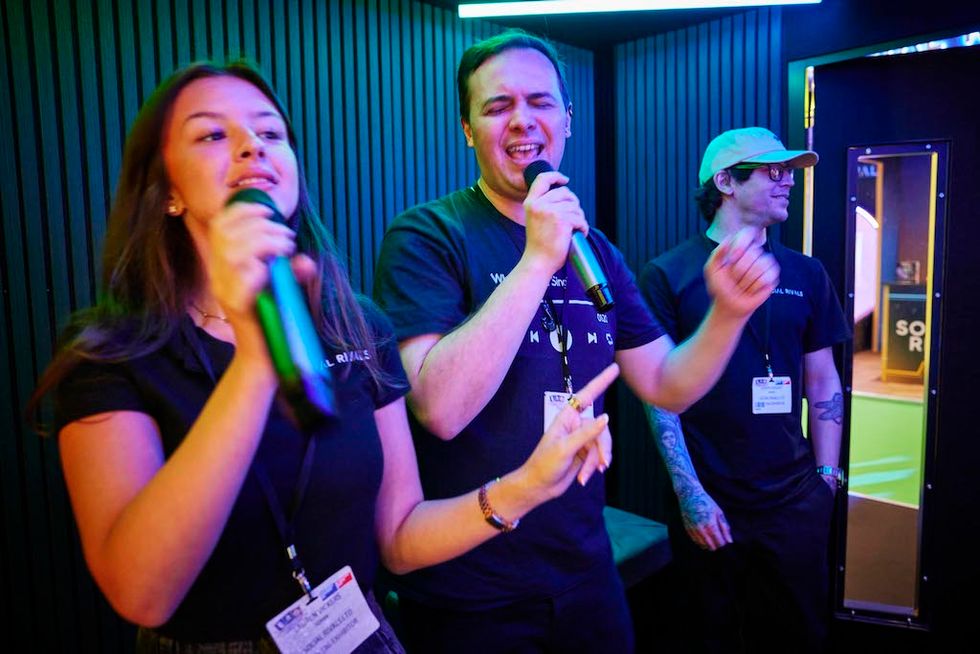
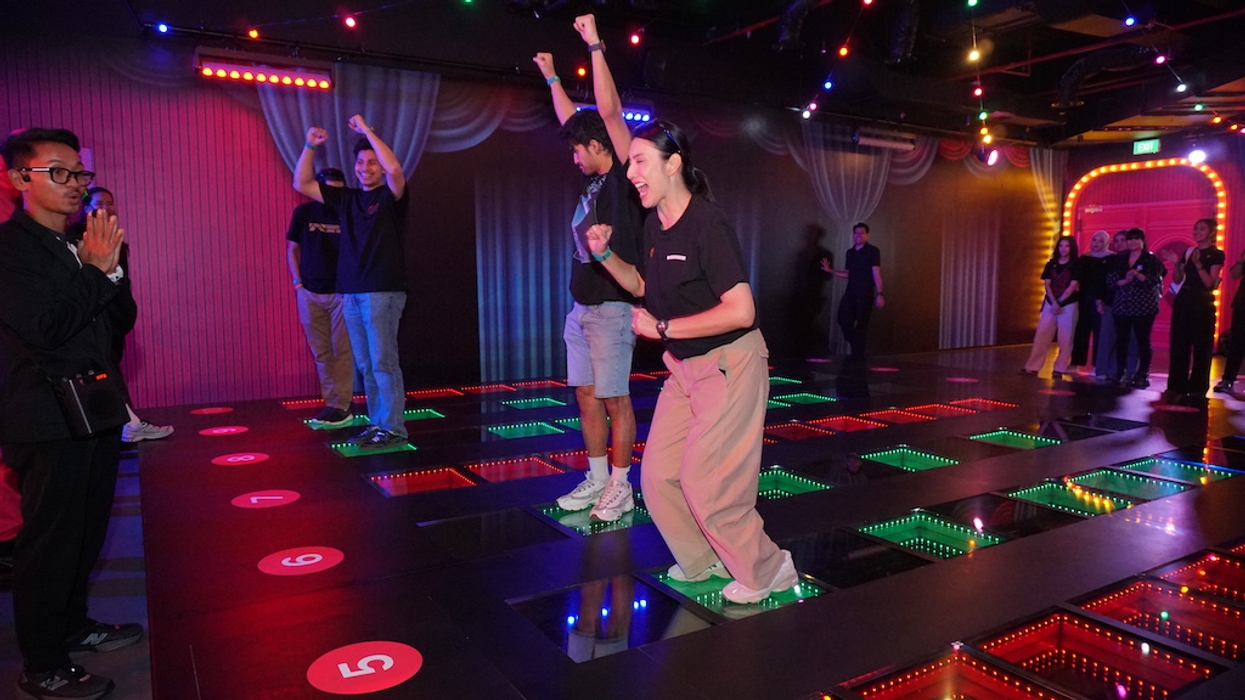
A karaoke experience at EAG Expo 2026
That operator perspective becomes increasingly important as competitive socialising moves beyond its early growth phase.
The next generation of experiences will need to deliver not only an engaging customer proposition, but also the throughput, flexibility and operational efficiency needed to make the business model work.
Looking ahead
Taken together, the discussions around replayability, space and technology point to a broader change in what operators need from location-based entertainment.
Experiences need to encourage repeat visits, venues need to use available space effectively, and technology needs to support both the customer journey and day-to-day operations.
For Booked.it, the value of an exhibition is also in understanding what comes next. “We want to leave the show knowing what’s keeping operators awake at night, where the industry is heading and what we can do next to make their lives easier,” Harris says.
Harding sees discovery as an important part of the CompSocUK proposition:
“If visitors leave CompSocUK having discovered just one thing, I hope it’s not something they expected to find.
“The goal of the show is to provide visitors with a way to discover new concepts they didn’t know were available to them. We want them to meet with our incredible network of exhibitors and visitors, and leave inspired with a clear view of the direction the market is going in and how they can be a part of it.”
To register for EAG360 2027, including Amuse Expo, CompSocUK and the London Gaming Show, please click here.