
I started this topic slightly skeptically.
Our industry has a habit of falling in love with labels before we have properly agreed what they mean. “Immersive” gets attached to almost anything with projection mapping. “Iconic” is used with such abandon that the word often has more ambition than evidence.
So, when I started hearing “social competition” or “competitive socialization” with increasing frequency, my first instinct was that this is just another phrase trying to package something old in language that sounds new.
After speaking at length with Rick Briggs, CEO of FuzionGamz, and Matt DuPlessie, founder and CEO of Level99, I don’t think that anymore. I think the language is unsettled, but data supports that the underlying shift is real.
- Commercial real estate and hospitality research shows that the competitive socializing sector has grown by nearly 400% since 2021 (Cushman & Wakefield)
- Nearly 30% of adults visited a dedicated competitive socializing venue over the past year, with the highest participation concentrated among 16-to-34-year-olds (Mintel Market Report)
Competitive socialization as a term may evolve, but the consumer behaviour it is trying to describe matters
Matt put it plainly: “Of course social competition has always been around, depending how broad of a view you take of it.”
He pointed to sports, card games, bowling, and simply “going out with friends and competing at something” as evidence that the basic human instinct is not new.
What has changed, he said, is that we are now thinking about it “in a more refined location-based entertainment and technologically driven definition.”
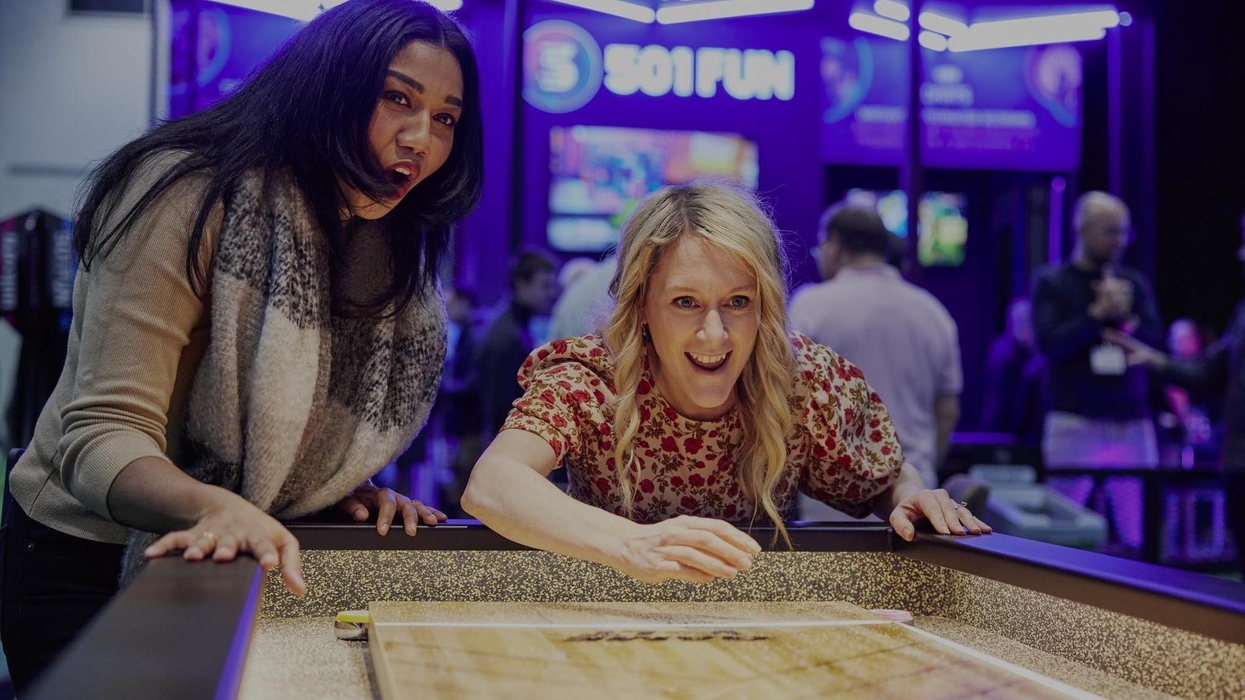
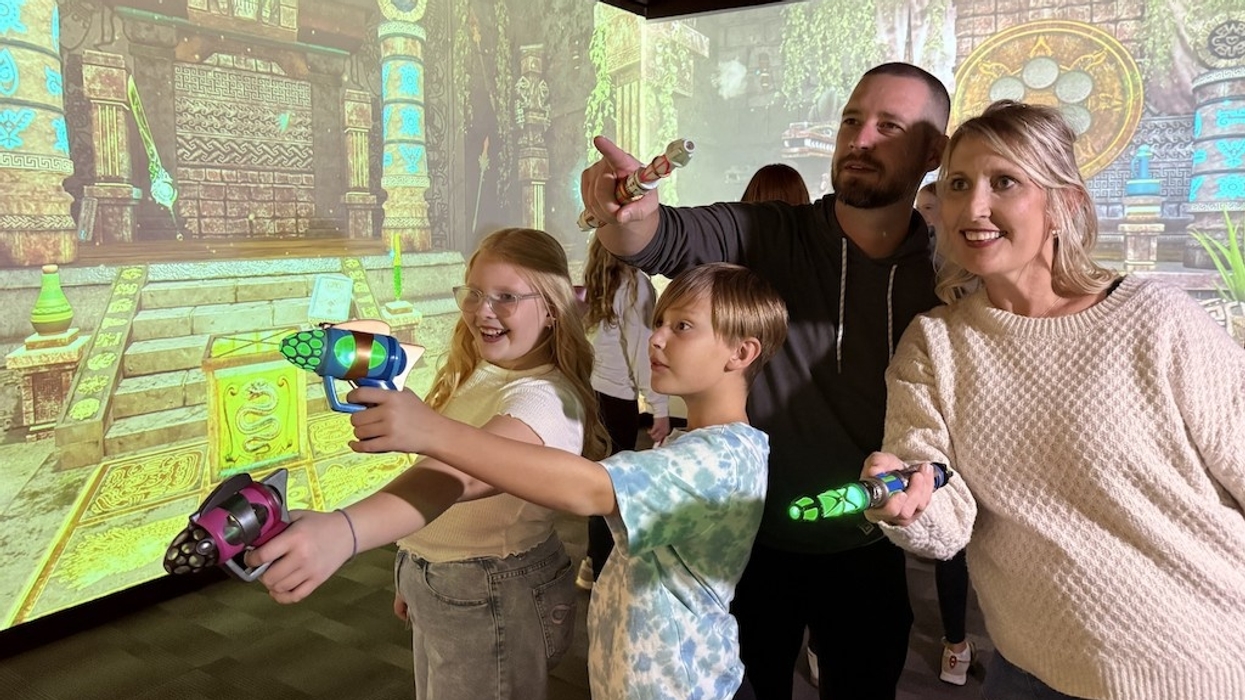
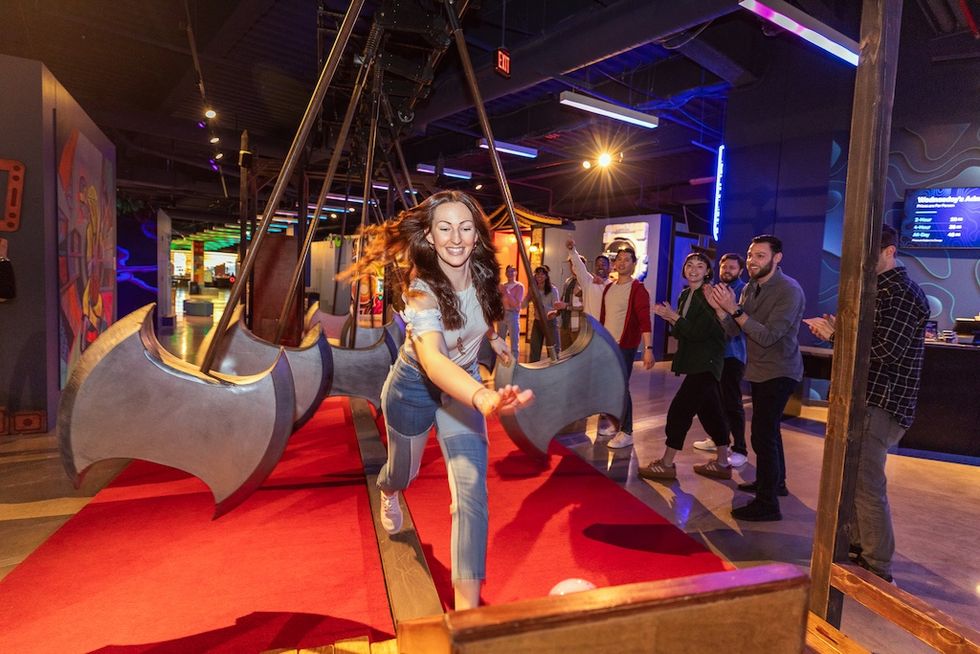 Axe Run is one of the experiences at Level99, designed for groups to experience togetherImage courtesy of Level99
That distinction is important, because we are not suddenly discovering that people like play, challenge or shared activity - we are seeing a new business response to older social behaviour.
Both CEOs described the category as in “a clear growth phase,” with a trajectory that resembles boutique fitness or escape rooms in their earlier years: uneven, rapidly iterating, but clearly moving toward recognition as a category in its own right.
But for me, the interesting part is not just that the category is growing. It is why.
Perhaps the growth isn’t really about competition at all. It is about structure.
A clear initial insight from my conversation with these two founders was when Rick said, “It does give structure to social settings - that’s a very important aspect.”
The more I’ve sat with that idea, the more I think it explains the whole category.
Competitive socialization provides people with a framework for being together. It replaces the uncertainty of “what do we do?” or even “what do we say?” with an activity that carries the social exchange for them.
That matters because I think many people, not just introverts, are less comfortable with unstructured socializing than we like to admit.
The why of competitive socializing
One of the theories I put to Matt was that younger audiences are drinking less and still wanting to connect, but are increasingly looking for settings that don’t require traditional bar culture as the vehicle for that interaction.
He agreed there was truth in that: “Beer sales are down everywhere. Cocktails hold their own. And nowadays you’ve got to have non-alcoholic zero-proof cocktails.”
He added that younger guests will still pay for something that feels “special and elevated,” but “if you’re 22, you may want that without alcohol.” He summarized it memorably: “To generalize, People in their 40s, craft beer. People in their 30s, cocktails. People in their 20s, non-alcoholic options.”
That is more than a food-and-beverage footnote. It suggests that social rituals are changing.
 Quality food and drink, such as this example from Level99, are a key part of the competitive socializing modelImage courtesy of Level99
Matt also pointed to gaming as a major cultural driver:
“When I was a kid, Dungeons and Dragons was for nerds. Now everybody plays. The cool kids play.” He went further: “If you’re not playing video games, you’re in the minority.”
The Entertainment Software Association just published a report that 67% of Americans play video games every week, the gender split is fairly equal, and all ages play weekly, from 50% of Boomers to 80% of Alpha and 71% of Millennials.
In other words, gaming has moved from subculture to mainstream behaviour, and these venues are essentially “physical multiplayer games.” - certainly FuzionGamz is built to feel like that.
These new venues sit right at the intersection of gaming, hospitality and social leisure, which is part of why the addressable market feels broader than a conventional attraction category.
See also: FuzionGamz: reality meets gaming in a dynamic interactive adventure
But I think there is something else going on too, and it is slightly more uncomfortable.
As a mother who had young teens during COVID, I suggested to Matt that I suspect the pandemic had a real impact on how young people learned to interact socially at a formative moment in their lives.
I also think social media has made many people both hyper-connected and oddly under-confident in person. Which leads me to describe social competition as something that gives people guidelines of how to interact … a framework to have a shared experience and then something to talk about.”
Matt agreed, and framed the appeal as a safe way to socialize: “You’re in a curated environment, you’re indoors, it’s been vetted, but you feel a little thrill, a little risk without actually being in danger.”
That is such an interesting idea for our industry: not just fun, but a socially and emotionally managed form of togetherness.
Removing social friction
Matt put it even more starkly when he talked about young people’s relationship with screens.
He described “a hunger to get off the couch … to put down your phone and do something real again with real people in a real space that feels authentic and frankly can’t be replicated on a phone.”
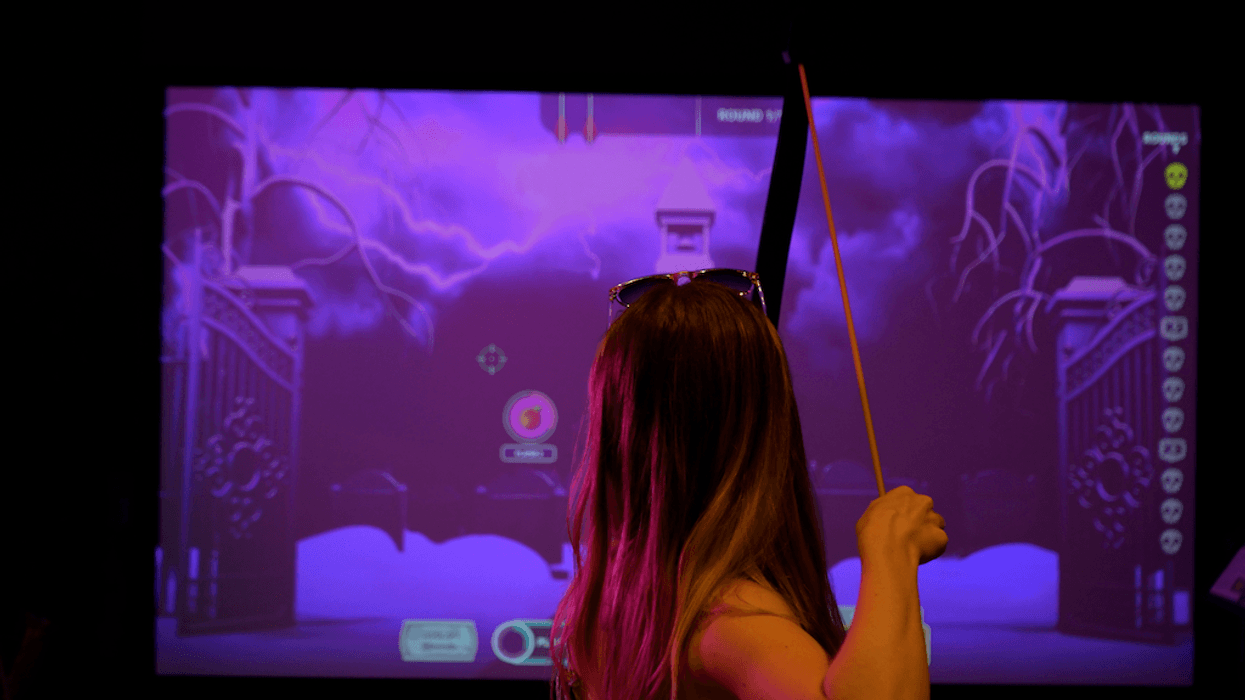
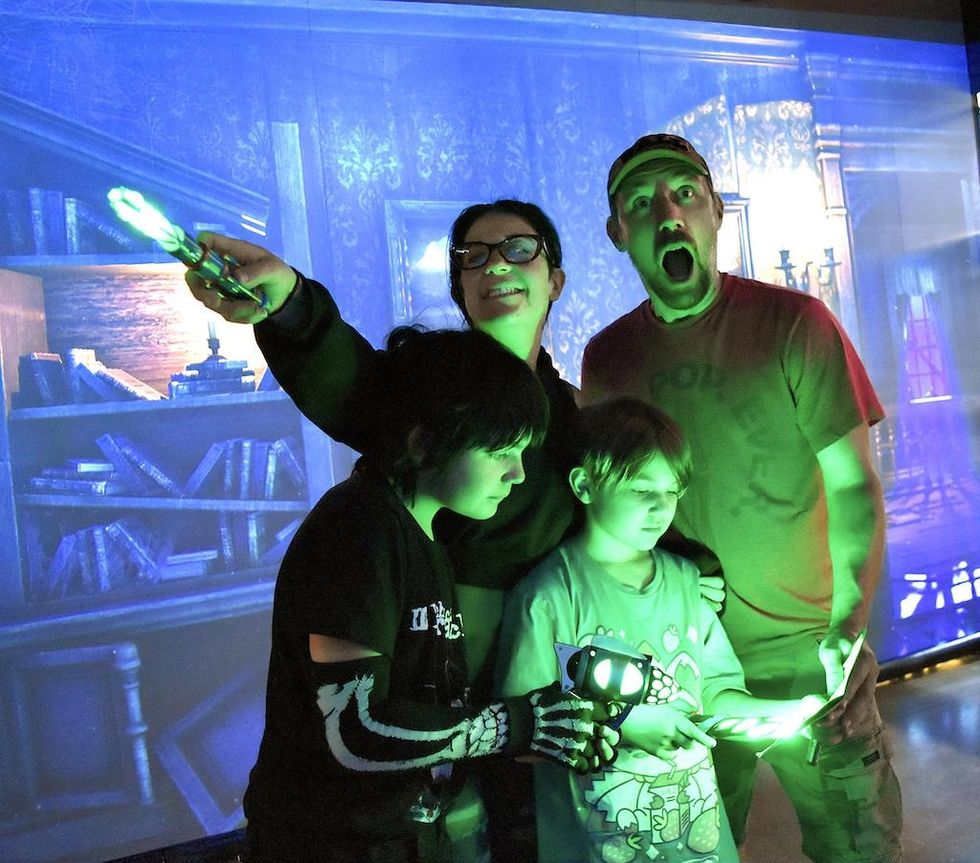 The Huunted Mansion is one of the immersive, spooky-themed environments featured in FuzionGamz, a next-generation dynamic interactive attractionImage courtesy of FuzionGamz
I see the youngest generations changing their relationship with digital media emerging as ‘digital detox’ trends (Ref: Pew research, DemandSage, Narrative Research) in search of real-world ‘authenticity’.
So no, I don’t think competitive socialization is just another over-polished industry term.
I think it is our slightly clumsy way of acknowledging something more significant: people still want connection, but many want more help getting there than previous generations did.
These experiences do not merely entertain. They remove social friction. They give people a reason to gather, a structure for interaction, and a way to engage without the burden of inventing the whole evening from scratch.
Matt pushed back on the idea that this is a trend at all. “A trend implies that it will reach a point where it is no longer trendy and where it goes away,” he said. “And I don’t think that’s the case. I think this is a permanent shift.”
I think he is probably right.
Which means the real question for attractions is not whether this category matters. It does. The question is whether we are stepping up to help create structured social engagement; and doing so in a way that is commercially clever, emotionally astute, and culturally very current.
Rick explained it another way:
“FuzionGamz isn't just something you play. It's something you experience together. Guests watch, cheer, learn new strategies, and become part of the action—creating the same social dynamics that made Discord, Twitch, and esports global phenomena”.
That feels like more than a buzzword to me.
This is the first in the three-part series. Read the next instalment here: Competitive socializing has a repeatability problem