
As I’ve spent more time thinking about competitive socialization, and listening to people building businesses in this space, I keep coming back to a slightly uncomfortable conclusion.
We have proven that people want these experiences, but I’m not sure we’ve proven that we know how to make them last.
There is a lot to be excited about in this category. The growth signals are there, and they are not insignificant. JLL 2026 Entertainment Tenant Study indicates competitive socialization venues are growing at 84% annually, almost eight times the growth of FEC venues in the same 2023-26 period in the US.
New concepts are appearing at pace, capital is starting to move in (for example, Level99 announced a growth financing round of $100M in July), and the format itself is beginning to feel more recognisable – all signs that something real is happening.
But that is precisely the point at which it becomes important to ask a different question. Not “is this working?” but “will it keep working?”
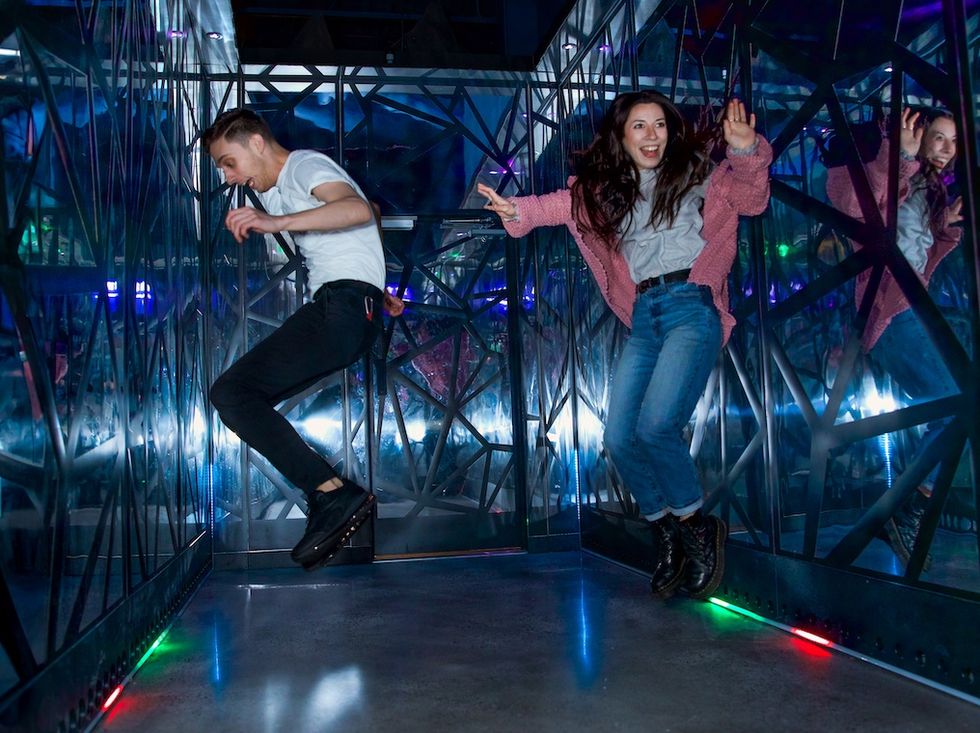 The Crystal Jump challenge at Level99Image courtesy of Level99
In my conversation with Rick Briggs, CEO of FuzionGamz, and Matt DuPlessie, founder and CEO of Level99, Matt answered that question more directly than I expected.
He didn’t talk about creativity, or storytelling, or even guest experience first. He said that in location-based entertainment there are two things you have to solve: throughput and repeat
And then he made the point that matters commercially: if people only come once, there is a limit to how long any concept can last. Creativity and guest experience are mechanisms, and the proof of good design choices is the repeat rate.
Throughput and repeat
That’s a troubling thought because it reframes the entire category. It shifts the focus away from how compelling something is on first exposure to what happens after that. And when you start looking at competitive socialization through that lens, there are indicators of concern.
Rick Briggs described many concepts as feeling like a collection of individual games without a real sense of continuity. You move from one activity to another, enjoying each in isolation, but without a thread that pulls the experience together into something that evolves, or accumulates, or carries forward.
The result, even if well executed, doesn’t yet add up to something people feel compelled to return to.
That in itself is not a problem if your goal is to deliver a great day out. It becomes a problem when your business model depends on people coming back.
Matt made a similar observation, but from a different angle. He talked about the number of concepts in the market that are essentially reimagined versions of familiar social games- bowling, darts, minigolf but enhanced with technology, better design, and more polished environments.
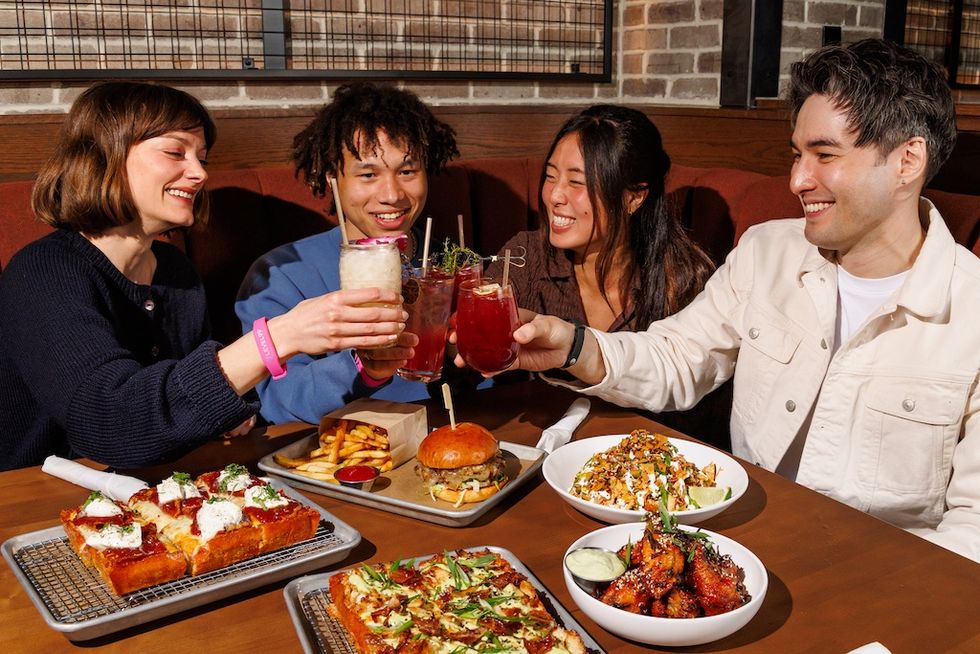 Food and beverage offerings make compettiive socializing venues a popular choice for eventsImage courtesy of Level99
There is nothing inherently wrong with that, but he questioned whether it is genuinely creating something new. At one point he described it as adding digital scoring and LEDs to existing formats, and that phrase landed because it captures the tension very well. It is improvement, but is it transformation?
That distinction matters when it comes to repeat behaviour. Something that is easy to understand and satisfying to participate in can still be something you feel you have “done.” And once you have done it, the question becomes: why would you go back?
Many of these venues perform extremely well as occasion-based experiences. They are perfect for birthdays, for corporate events, for a planned social outing where the objective is to do something new together. In that sense, they solve a very real problem.
But occasions are finite. They are planned, intermittent, and rely on active decision-making.
Habit is different. Habit removes friction. It is what people default to without active decision-making thought. Habits make better business models.
So, the challenge for this category is to create venues and attractions that aren't ‘one and done’ but pull you back in; if they become habit-forming, those would be healthy venues!
See also: FuzionGamz: reality meets gaming in a dynamic interactive adventure
Refreshing competitive socializing experiences
Part of that comes down to how the experience refreshes to drive repeat visits. The need for content refresh is widely understood; Rick made the point very practically that in many concepts, changing the experience means rebuilding physical space.
Physical refreshes are slow, capital-intensive, and difficult to do frequently enough to keep an experience feeling genuinely new - making novelty hard to deliver at the necessary pace to drive habit-forming repeat visits.
To solve this footprint and capital bottleneck, the industry is shifting toward "scaled-down, high-impact versions" that lean heavily on software and digital flexibility rather than raw real estate.
As hospitality analysts point out, by replacing 20,000-square-foot traditional layouts with modular tech, operators are trying to unlock superior unit economics.
According to Capital Growth Fund, emerging, well-executed, tech-forward venues are reaching 20% to 30%+ EBITDA margins, significantly outperforming the 8% to 15% margins of traditional real estate because software can be patched instantly, while physical walls cannot.
Layer on top of traditional physical refresh limitations the realities of throughput and capacity, and the competitive venue model becomes more constrained again. These are physical environments with limits on how many people can participate at any given time. Efficiency matters. Utilisation matters.
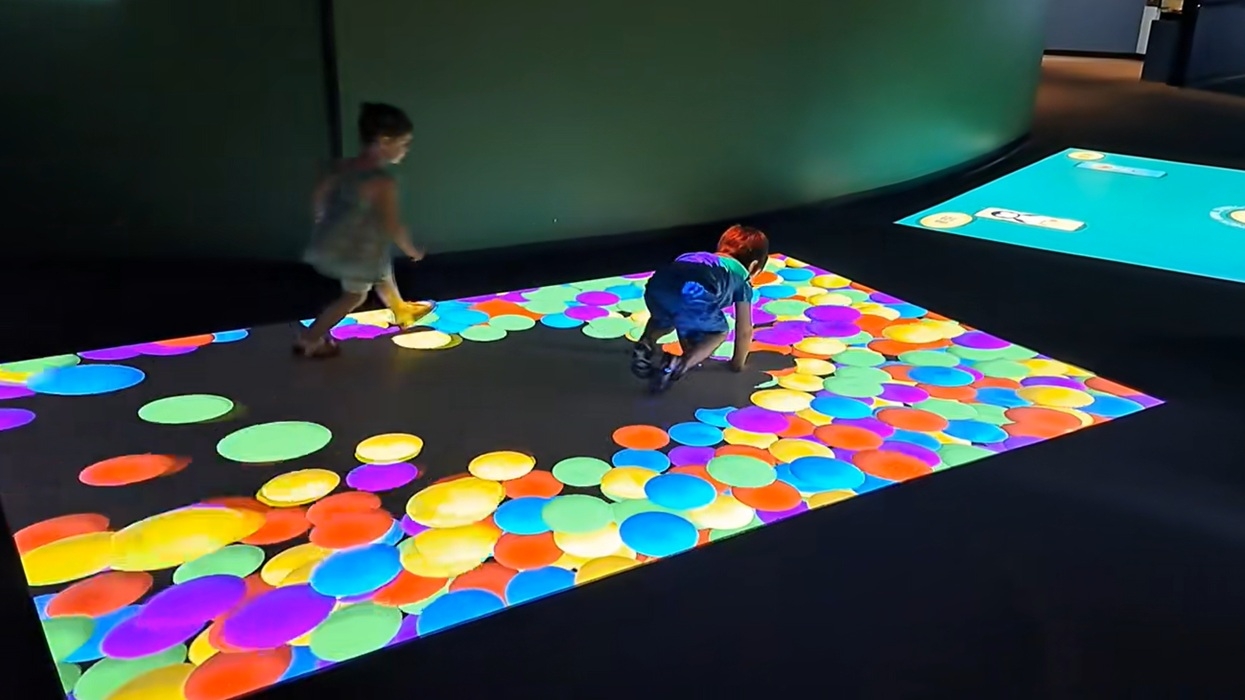
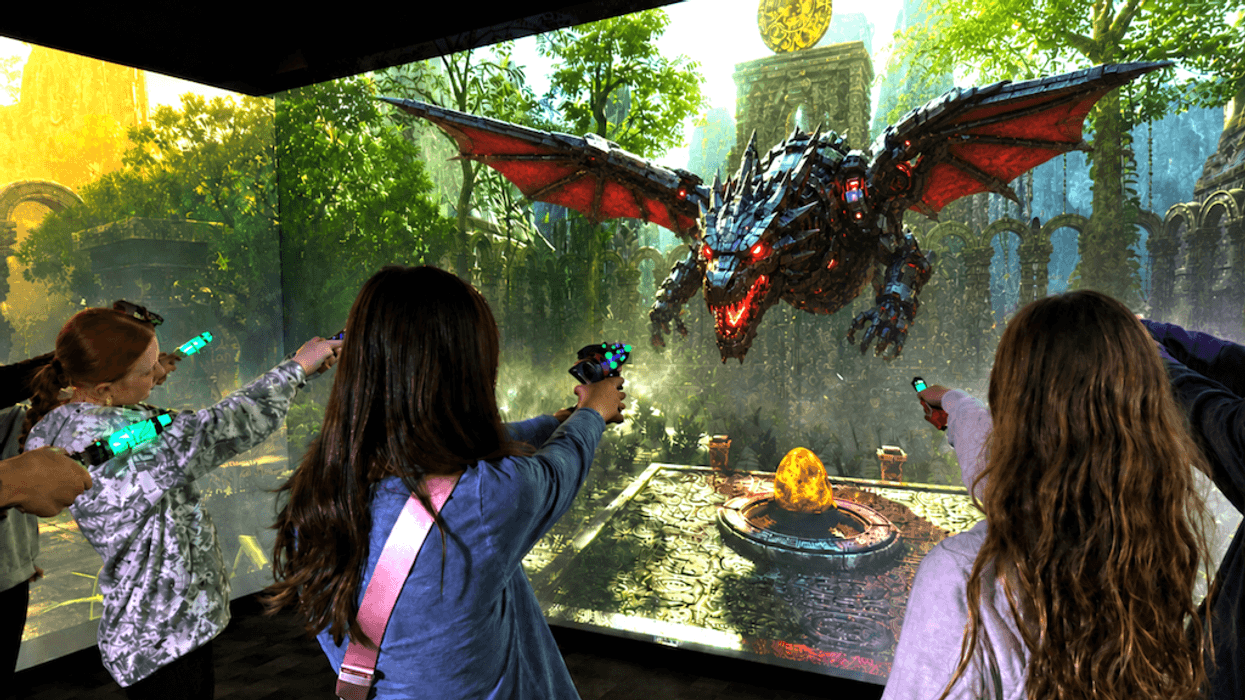
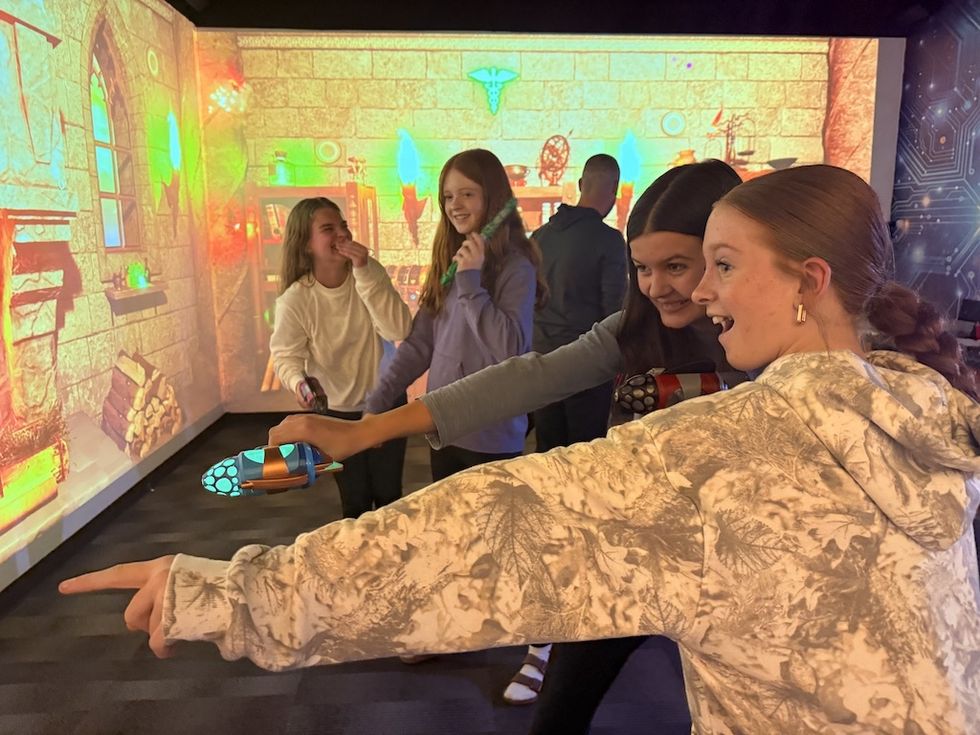 Content at FuzionGamz venue can easily be refreshed, bringing visitors back for more Image courtesy of FuzionGamz
The economics are grounded in space and time, which is why we are seeing more digital-based games in FECs, like Conductr, FuzionGamz and Beat the Bomb.
This is where Matt’s earlier point about solving throughput and repeat becomes more than a neat summary. It becomes how you can assess whether a concept is truly viable. It is not enough to be interesting; nor even enough to be popular at launch.
The challenge is whether the experience's design encourages behaviour that sustains itself over time.
Level99 was specifically designed, from the very inception of the concept, to drive repeat attendance - Matt says in his 28-year career in location-based-entertainment, this is the strongest repeat concept he has encountered.
Money talks, and according to the JLL 2026 Entertainment Tenant Study, location-based entertainment concepts have 16.5 million square feet of active demand in the pipeline across the US and Canada.
However, the data highlights a major bifurcation: traditional, static Family Entertainment Centers (FECs) have seen growth flatten significantly, while modular, tech-enabled "challenge rooms" and replayable formats have exploded.
Beyond the "first date"
When I try to simplify all of this, I come back to a slightly inelegant but useful comparison.
Right now, much of competitive socialization feels like a very good first date. It is engaging, it removes awkwardness, it gives you something to do and something to talk about. It works.
But it does not always give you a clear reason to meet again next week.
And that, ultimately, is the test this category has yet to fully pass.
This is not a criticism of the direction of travel. If anything, it is a sign that the category is becoming more serious. Early-phase growth is always driven by novelty and curiosity. The next phase is driven by retention.
This is where the difference between something popular and something enduring becomes visible.
The growth trajectory of competitive socialization is strong and clear. The key test for our industry is helping it evolve from something people try once to something they build into their lives.
Rick summarized it as:
“We are building something that transforms a single visit into an ongoing community experience. Players come back not just to play, but to continue their story, improve their skills, meet friends, and be part of a living game or experience that is always evolving."
This is the second in a three-part series, following on from More than a buzzword: the real reason competitive socializing is here to stay. Read the third part here: What will it take for competitive socialization to thrive long-term?