The unexplored depths of the ocean hold secrets crucial to the planet’s future, but connecting advanced marine science with public understanding remains a major challenge.
Enter OceanX, a nonprofit ocean exploration initiative, and The Elumenati, a global leader in immersive display technology. Their collaboration utilises advanced projection and LED systems, specifically the GeoDome family and the OmniLED Panorama, to transform complex research into accessible, engaging educational journeys.
We explore the strategic partnership that is bringing the $200 million research and media vessel, OceanXplorer, and its discoveries directly to communities around the world, significantly advancing ocean literacy through immersive educational technology and transforming ocean exploration into an exciting adventure.
An ideal partnership
OceanX is a nonprofit working to unlock the ocean’s sustainable potential through bold science and immersive education.
“We bring together researchers, educators, and storytellers to expand global understanding of the ocean and inspire stewardship,” says TM Lim, APAC regional executive director for OceanX Education.
The OceanXplorer is a sophisticated research and media vessel equipped with advanced laboratories, submersibles, and broadcast capabilities, acting as a floating platform for discovery and storytelling. Through this vessel and its global programs, OceanX strives to build a future where humanity and the ocean thrive together.
 TM Lim and Adam Wales
In designing the OceanX Education Portal, the goal was to let audiences experience the discoveries of OceanX missions in a way that felt immediate and engaging.
“From deep-sea dives in submersibles to close encounters with coral ecosystems, our content requires a format that surrounds people in the ocean and places them at the heart of the journey,” says Lim.
For The Elumenati, OceanX represents a model collaboration, one where technology naturally supports a higher mission. Adam Wales, president and COO of Elumenati, says:
“OceanX is an ideal partner because their mission perfectly aligns with what drives us at The Elumenati, using immersive storytelling to inspire curiosity and connect people more deeply with the world around them.
“Their work bridges cutting-edge science, media, and exploration in a way that demands powerful visualisation tools.”
OceanX wasn’t simply seeking a display, he adds: “They were looking for an experience that could translate the emotion and scale of ocean exploration into something guests could step inside.”
This commitment to integrating technology, education, and emotion established the GeoDome systems as a compelling solution, guiding both organisations in shaping how audiences experience and engage with ocean education.
Bringing guests face-to-face with ocean science
OceanX leverages a family of immersive technologies from The Elumenati. The GeoDome Portal is a portable dome for small audiences; the GeoDome Theater is a larger, fixed dome for full-scale events; and the GeoDome Panorama offers shared, curved-screen experiences.
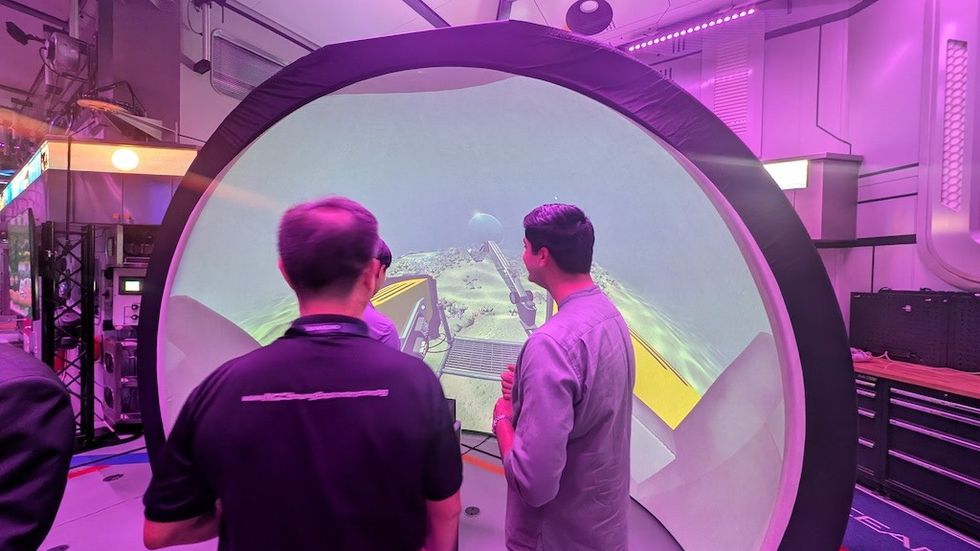
Several GeoDome Portals form the core of the OceanX Portal Experience, offering an interactive, behind-the-scenes view of ocean exploration, including submersible dives and mission planning, bringing learners face-to-face with pioneering research and the people behind it.
“We use the GeoDome system in the OceanX Education Portal to bring our missions directly into communities,” says Lim. “Inside the dome, audiences can look around in every direction and feel surrounded by the ocean, creating a powerful sense of presence.”
This high-impact experience allows visitors to virtually dive with OceanX submersibles, step aboard the OceanXplorer, or encounter marine environments as if they were there themselves.
“By combining real expedition content with advanced imaging and projection, the Portal transforms ocean science into journeys that are vivid, emotional, and memorable,” adds Lim.
A portable solution with GeoDome
A key requirement for OceanX was portability. Elumenati understood that the technology needed to deliver powerful, science-driven storytelling on the move. Speaking about this design challenge, Wales says:
“Designing an experience like the OceanX Portal meant finding the perfect balance. The goal was to deliver a high-impact, science-driven storytelling environment that could travel anywhere in the world and still feel like a permanent exhibit.
“This is the exact purpose of our GeoDome Portal solutions, both inflatable and semi-permanent, that can be set up in just 30 minutes to two hours by one or two people.”
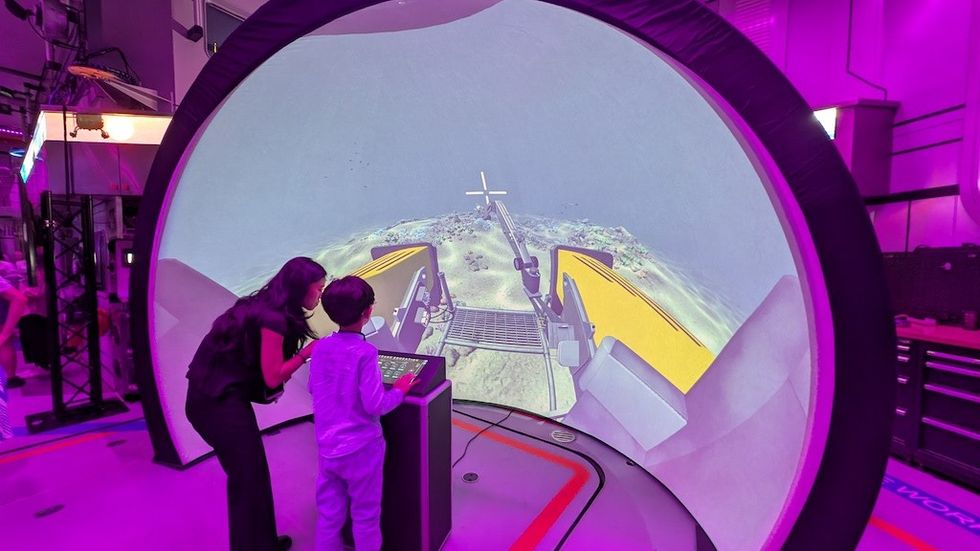
The ease of implementing the system is vital to its effectiveness. “All the technology is integrated into a single, all-in-one projection kiosk, so setup is straightforward and can be done by anyone with the manual.”
However, this simplicity does not compromise performance, offering a cinematic, interactive experience.
See also: The Elumenati: 20 years of immersive design at the intersection of education& entertainment
Powering travelling experiences
The flexibility of the Portals, available in both inflatable and semi-permanent formats, enables deployment across a wide range of venues. These units have demonstrated impressive global reach, travelling from OceanX’s headquarters in NYC to Southeast Asia, including Singapore and, potentially, Malaysia.
Domestically, they have also been featured at high-profile locations, including a recent deployment at the Denver Zoo.
For OceanX, this flexibility is fundamental to its global mission. “We have found great adaptability in using these immersive environments for the OceanX Education Portal and OceanXperience travelling exhibition,” says Lim.
“Our OceanX Education Portal uses the GeoDome Portal to bring deep-sea exploration into diverse cultural contexts, from community spaces and schools to ocean-focused events. The ability to scale them to different venues makes ocean science accessible to audiences who might never otherwise encounter it.”
Beyond the Portals, OceanX also utilises a large 6m GeoDome Theater for outreach and events, offering a fully immersive environment for its 360° educational and conservation storytelling.
GeoDome Panorama offers a shared view
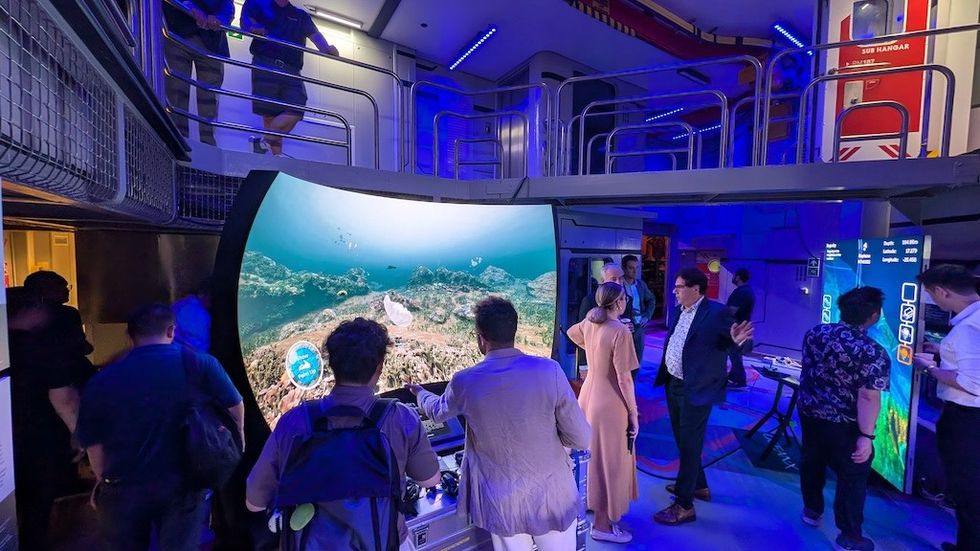
Alongside the portable portals, OceanX features two customised 2.1m GeoDome Panoramas as part of its OceanXperience travelling museum installation.
Inspired by the National Geographic series OceanXplorers, this exhibition immerses visitors within a full-scale interactive replica of the vessel, enabling them to explore ocean environments and simulate deep-sea missions.
Significantly, the Panoramas were integrated to replace legacy VR-style technology. OceanX consciously moved towards a communal experience, moving away from individualised virtual reality setups.
Lim explains the strategic decision:
“In the OceanXperience travelling exhibit, we introduced the Panorama format to create a shared way of exploring the ocean. The Panorama projects expedition content on a large, curved screen that groups can experience together.”
The differences in feedback and engagement after this shift highlight the importance of communal immersion. This projection-based approach eliminates physical barriers.
“This approach makes the content more accessible for visitors of all ages,” says Lim. “It removes headsets and allows entire audiences to react, learn, and discuss in the same moment.
“The Panorama is designed to turn what was once a solitary experience into a shared journey, encouraging dialogue and curiosity that extend beyond the exhibit. Large groups can step inside the same journey together, react to discoveries in real time, and engage in collective dialogue.
“That sense of community engagement turns individual curiosity into a joint commitment, helping us expand our global understanding of the ocean and inspire new stewards across cultures.”
Connected by WorldViewer
OceanX uses a wide range of Elumenati solutions, yet the systems remain seamlessly integrated thanks to a consistent technological platform.
Wales says the true power of the partnership isn't bespoke hardware, but unified software: “All of the systems OceanX uses are actually standard Elumenati solutions, our GeoDomes and OmniLED displays, so the real power isn’t in customising hardware, it’s in how those systems are used.
“The flexibility comes from WorldViewer, our immersive content platform, which lets OceanX create, adapt, and control experiences across any format, from an inflatable dome on a ship to a high-resolution OmniLED installation at the Global Summit.”
This singular ecosystem enables OceanX to focus squarely on storytelling and content delivery.
“Because everything runs on the same ecosystem, their team can focus on storytelling instead of re-engineering each setup. That’s what makes our approach so effective: the technology is turn-key, but the possibilities are limitless.”
The WorldViewer software also ensures consistency across different formats. It allows the OceanX team to update content, run interactive sessions, and integrate live science data, without any coding.
Crucially, adds Wales: “Because it’s the same WorldViewer ecosystem that drives their fixed Panoramas in the travelling exhibit as well as the portals and theatre, the experience remains seamless across every environment.
“It’s a great example of how we design immersive systems that are accessible, scalable, and extraordinary, built for storytelling anywhere in the world.”
Next-gen display technology
Looking ahead, the collaboration continues to push technological boundaries, especially with the deployment of the OmniLED Panorama. This system debuted at an event in Singapore.
The next-generation display technology is designed to overcome a persistent challenge in immersive projection environments: ambient light. Wales highlights the advanced specifications of the new system:
“The OmniLED Panorama in Singapore marks an exciting step forward for us… It was the unveiling of our new 3-meter system, delivering true 4K resolution at a stunning 0.8mm pixel pitch.
“To our knowledge, it’s the smallest-pixel-pitch immersive LED panel available to date. Running at 120Hz with 10-bit colour, it produces incredibly sharp, lifelike visuals that hold up even in bright or ambient-light environments."
“What makes this system truly stand out is how it expands where and how immersive storytelling can happen. With OmniLED, we can bring our immersive environments into brightly lit spaces like atriums, airports and even outdoor events.
The result is the ability to deliver intimate, high-quality experiences for small groups and individuals, whether in a gallery, lobby, or executive setting, without compromising on brightness, contrast, or detail.
Moreover, this high performance is delivered in a semi-portable format, engineered for both permanent installations and temporary events, improving both accessibility and realism in immersive storytelling.
Deepening understanding and impact
For OceanX, this fidelity is critical for presenting scientific detail. Lim expresses excitement about the system’s potential:
"The OmniLED Panorama pushes fidelity, resolution, and detail to new levels. It is the first LED immersive system from Elumenati to match the resolution and visual performance of our projection-based displays, allowing OceanX to move closer to macro-level exploration.
"Every feature of marine life and ecosystems is rendered with exceptional clarity, enabling audiences to experience ocean science in ways they never have before, deepening both understanding and emotional impact.
Furthermore, the technology expands where and how OceanX can operate: “This flexibility gives us the ability to bring high-resolution storytelling into more public spaces and connect with broader audiences.”
Bridging the gap
The core aim of this immersive strategy is to bridge the often-wide gap between complex, behind-the-scenes research and public understanding.
OceanX’s storytelling remains closely connected to real science and exploration. Aboard the OceanXplorer, teams examine ecosystems thousands of metres below the surface using submersibles, ROVs, and advanced laboratories.
The GeoDome systems turn these discoveries into engaging, accessible journeys.
“Immersive experiences allow us to take the science that happens thousands of meters below the surface and bring it directly to people on land,” says Lim.
“Through the OceanX Education Portal and Panorama, those discoveries are transformed into journeys that audiences can step into.”
Visitors might virtually dive alongside scientists, explore coral reefs in detail, or witness the wonder of the deep sea as if they were part of the expedition.
The 180-degree design, combined with advanced imaging technologies, surrounds audiences with the ocean environment and creates a strong sense of presence.
This method of communication is transformative, says Lim:
“This approach bridges the gap between complex research and public understanding by turning scientific data into experiences that feel tangible and relatable. It informs audiences about ocean science while also fostering curiosity, connection, and a shared sense of responsibility for the ocean’s future.”
Immersive tech enhances science communication
Wales provides a wider view on the changing role of immersive technology in science communication:
“Immersive projection has become one of the most powerful tools in science communication because it doesn’t just tell a story, it invites people to step inside it. We see the future of this technology as deeply interactive and emotionally engaging, helping audiences connect with science on a personal level.”
The focus, according to Wales, is less on data visualisation and more on experience design: “When people feel what they’re learning, it sticks.”
That’s what makes OceanX an inspiring partner, he says. “Their dedication to making ocean exploration fun and accessible, often through game-based and interactive variations of learning, aligns perfectly with our philosophy.”
Whether the guest is a student navigating a virtual dive or exploring ocean data, the blend of education, science, and play transforms learning into adventure.
Looking ahead, Lim says: “As the technology evolves, our ability to inspire stewardship and spark global momentum for the ocean’s future grows with it.”
Wales foresees that partnerships like this, alongside the growing Immersive Learning Lab community, will continue to blur the lines between science, storytelling, and entertainment.
Together, they represent a broader movement of educators, technologists, and storytellers using immersive experiences to make learning more engaging, accessible, and emotionally resonant.
“As technology evolves, we’ll keep building platforms that empower organisations like OceanX to connect with audiences everywhere, through experiences that are both enlightening and unforgettable.”
OceanX and Elumenati are building gateways, not just displays. By focusing on immersion, mobility, and high fidelity, they allow anyone to experience underwater discoveries, inspiring future ocean stewards by making science a shared adventure.

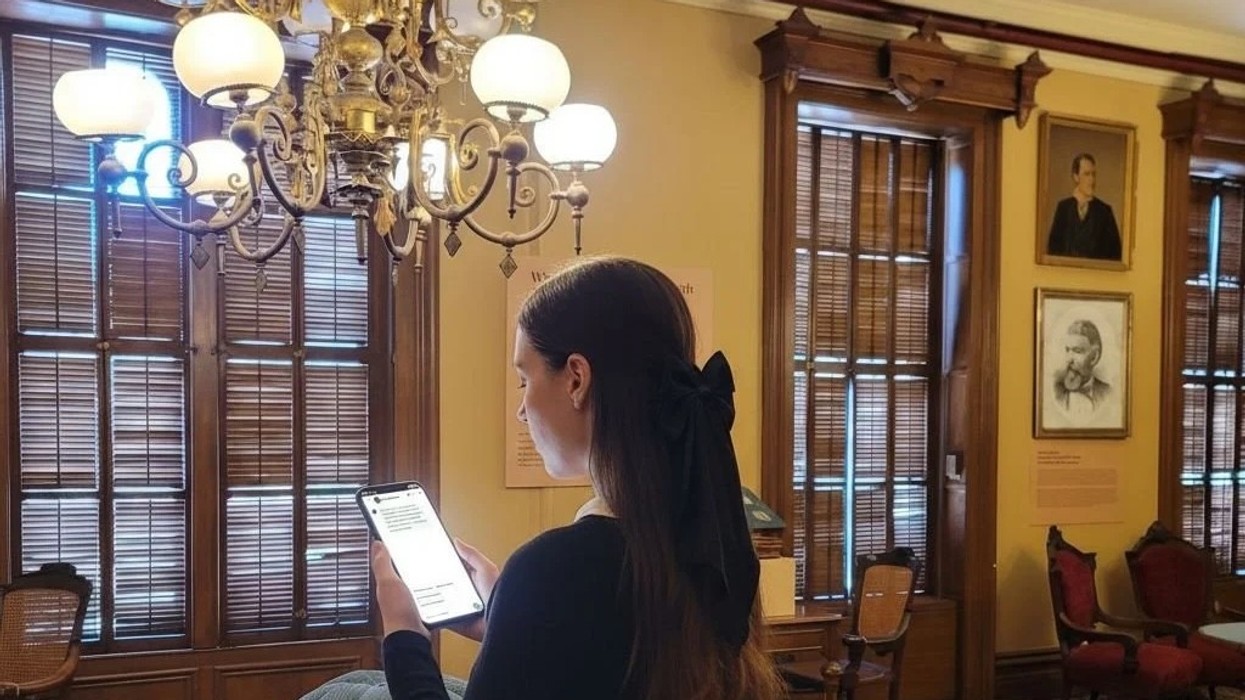



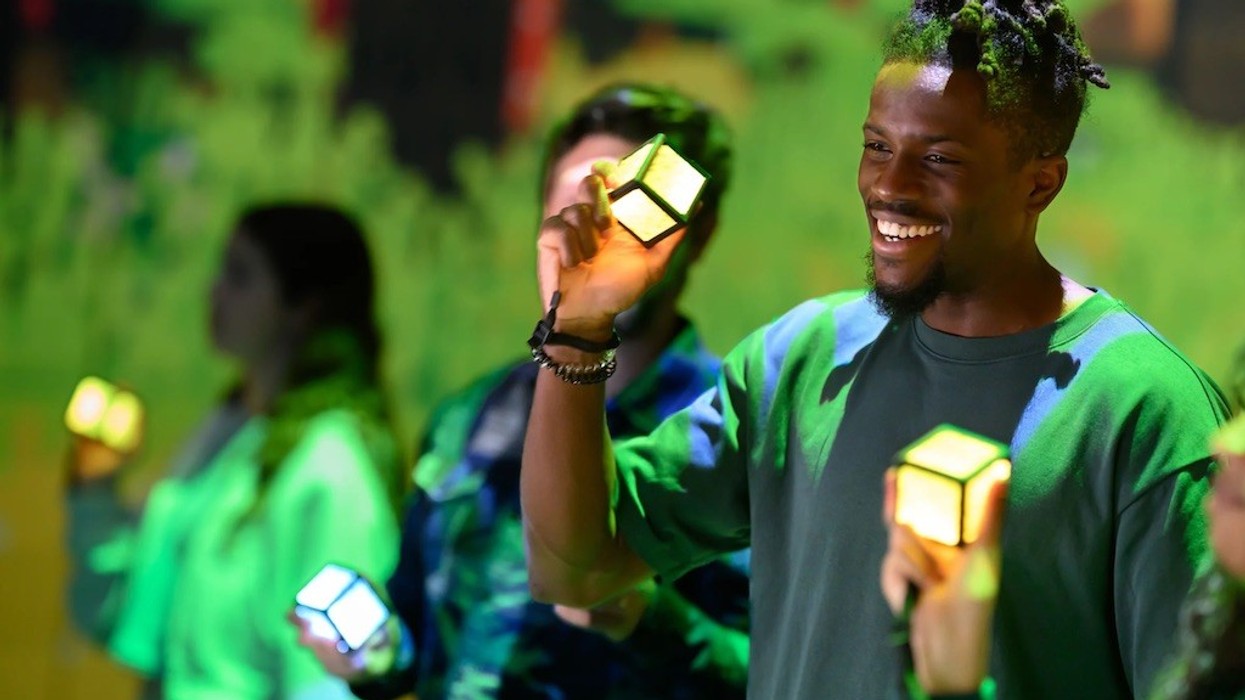
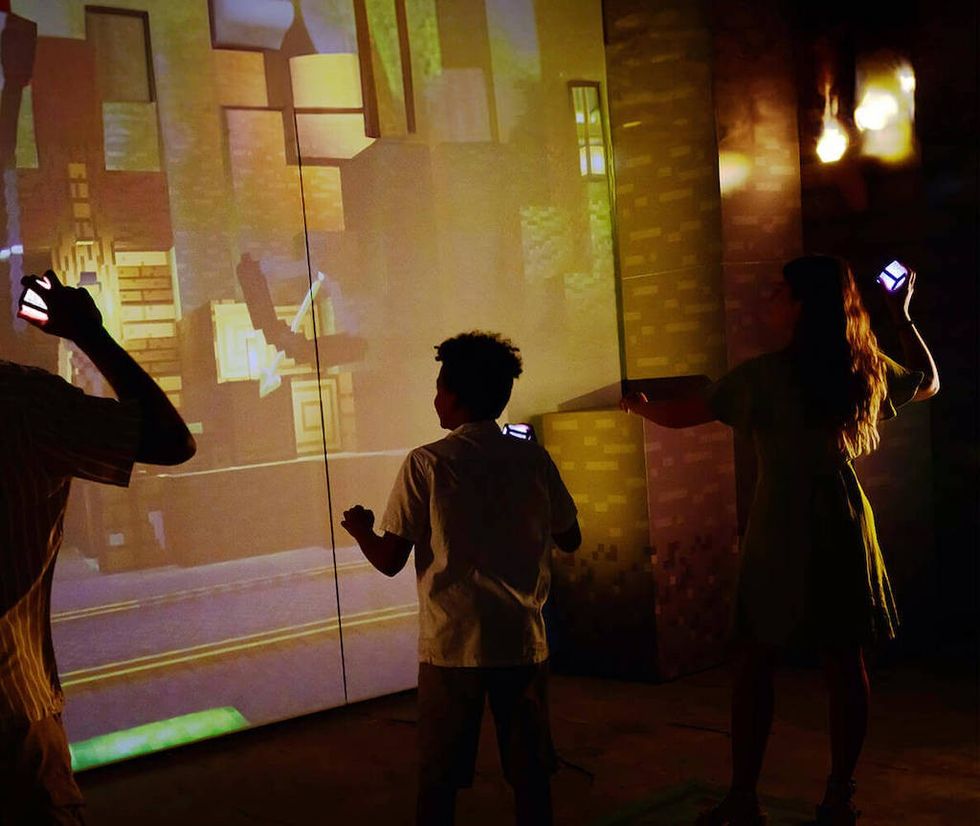 Image credit Minecraft Experience
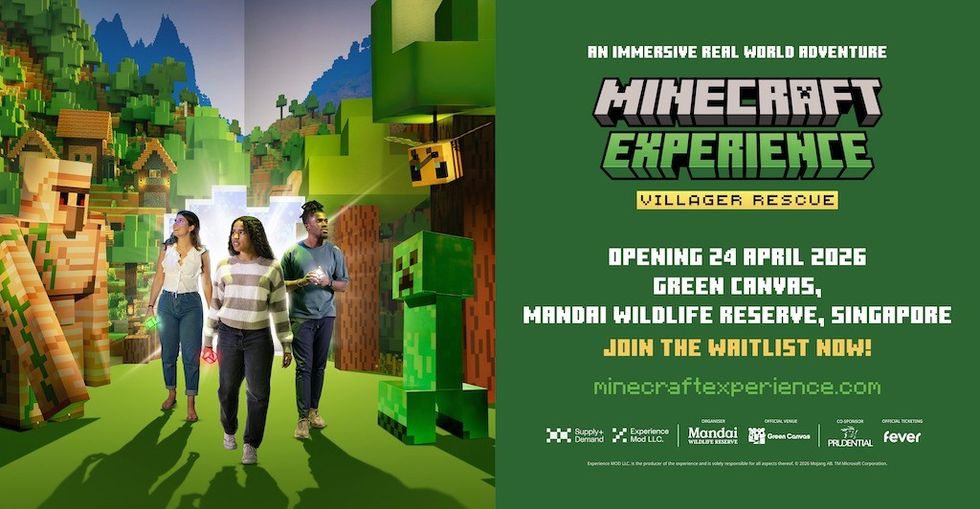 Image credit Minecraft Experience
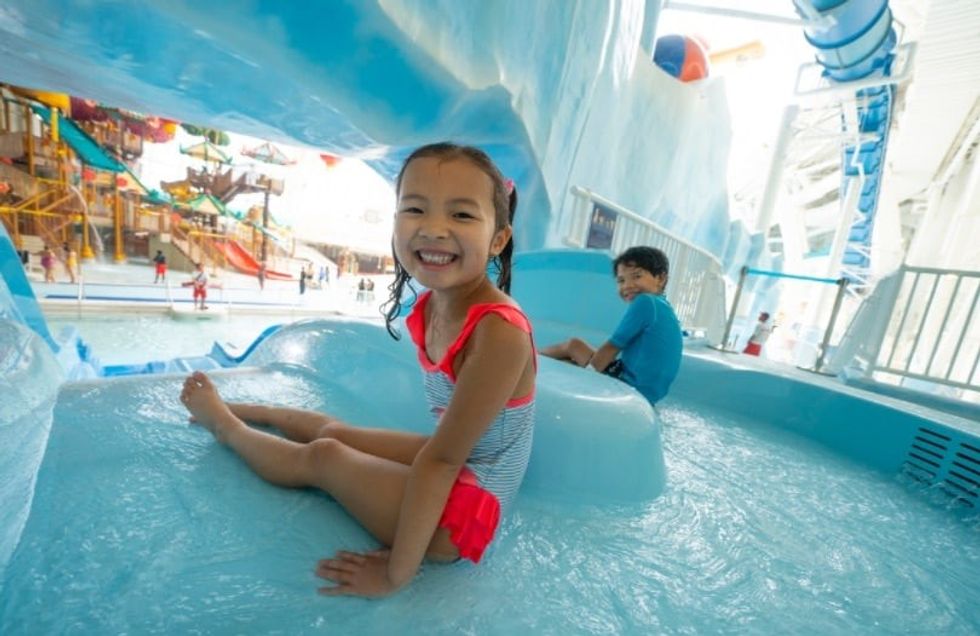 DreamWorks Water Park
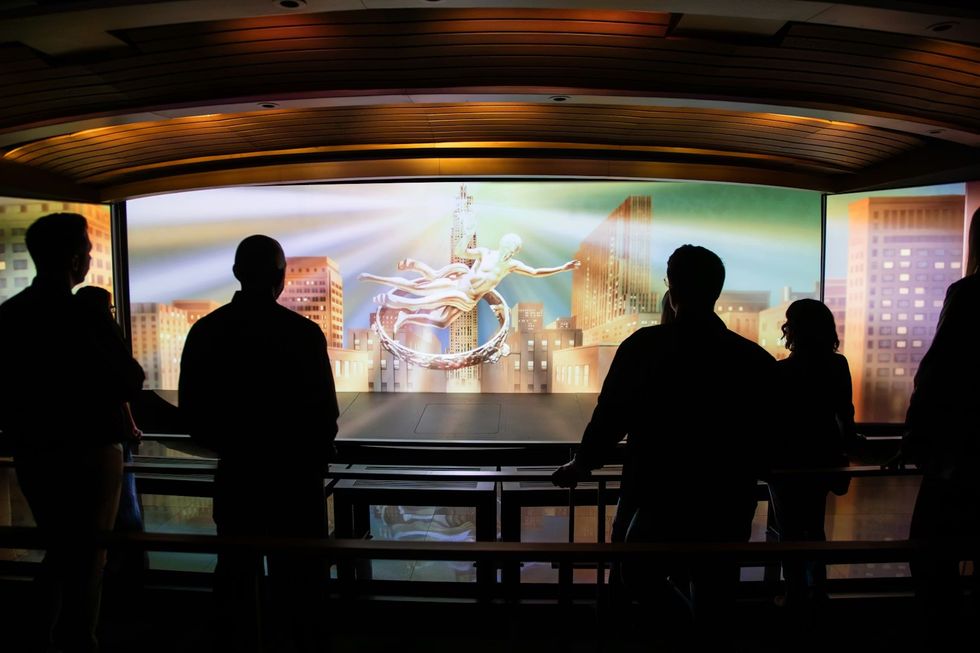
 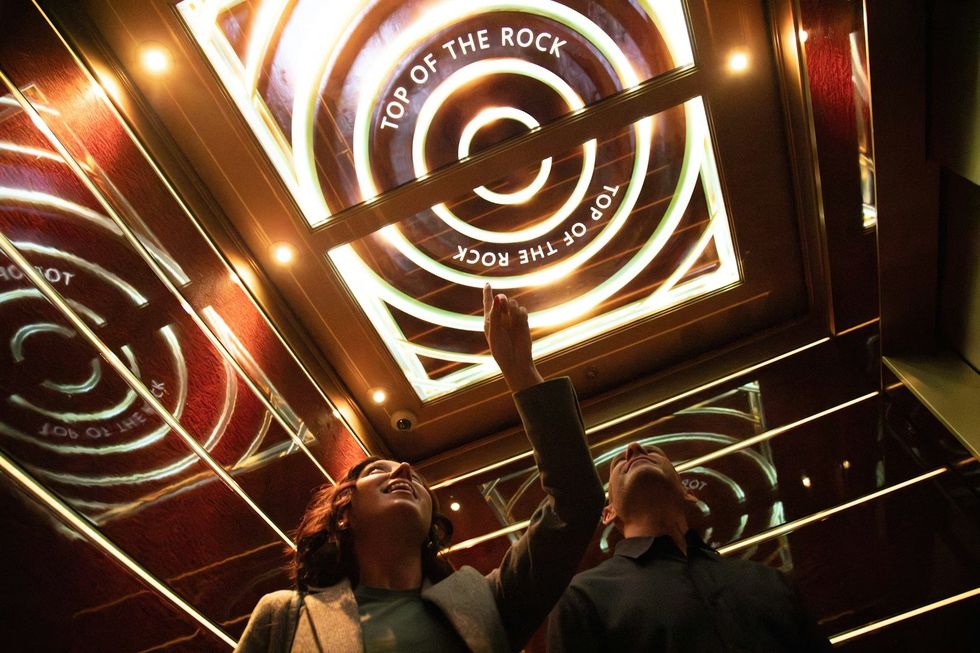 Top of the Rock, Rockefeller Center
 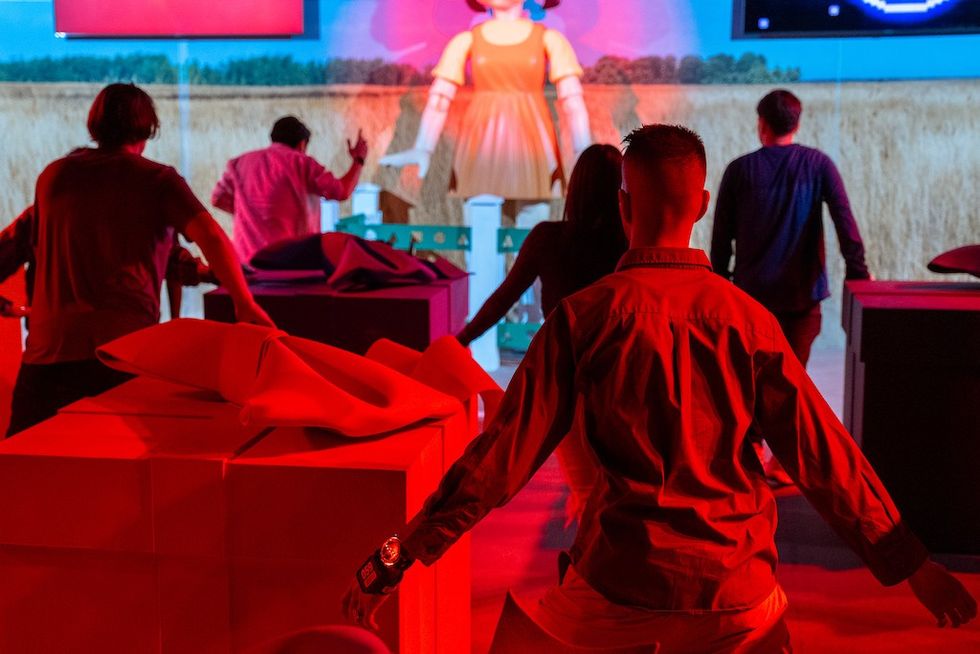 Squid Game: The Experience
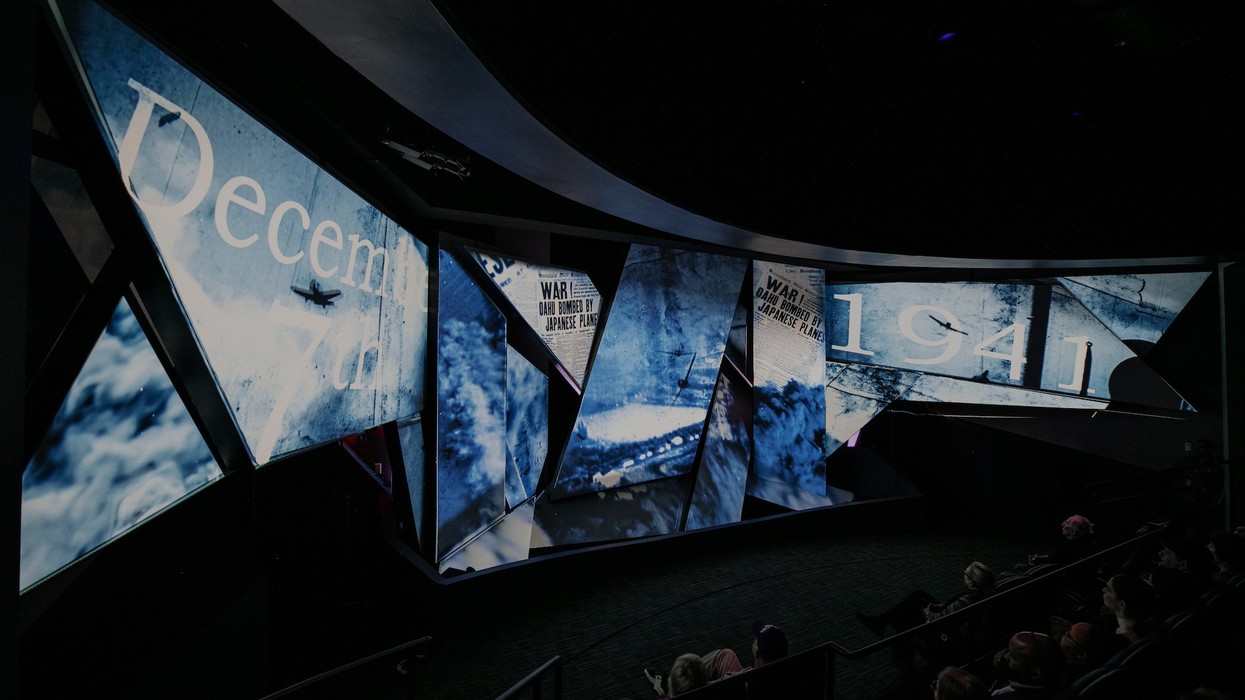
 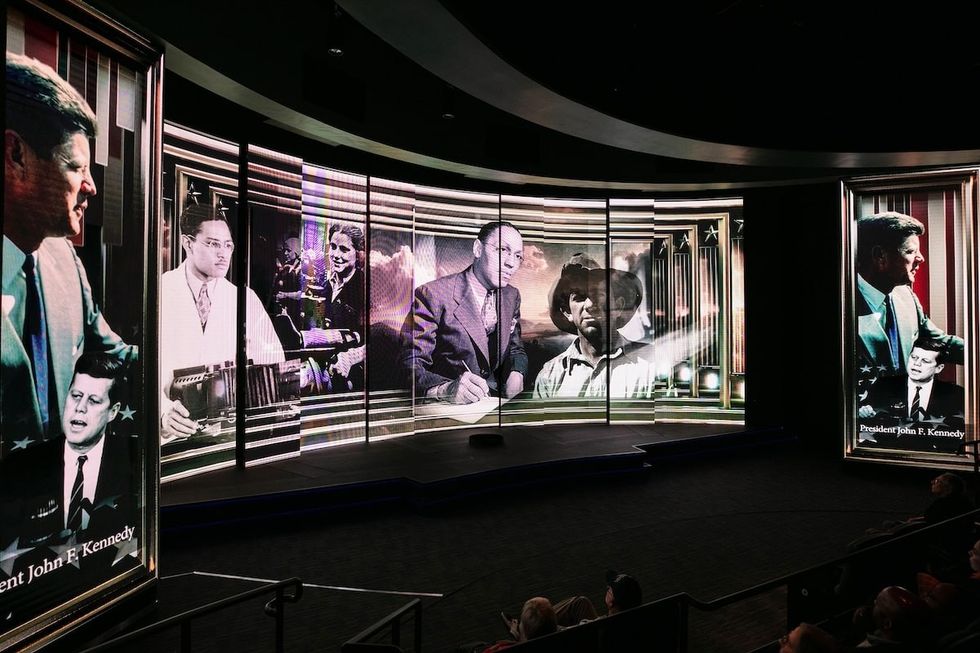 The Priddy Family Foundation Freedom Theater, National WWII Museum
 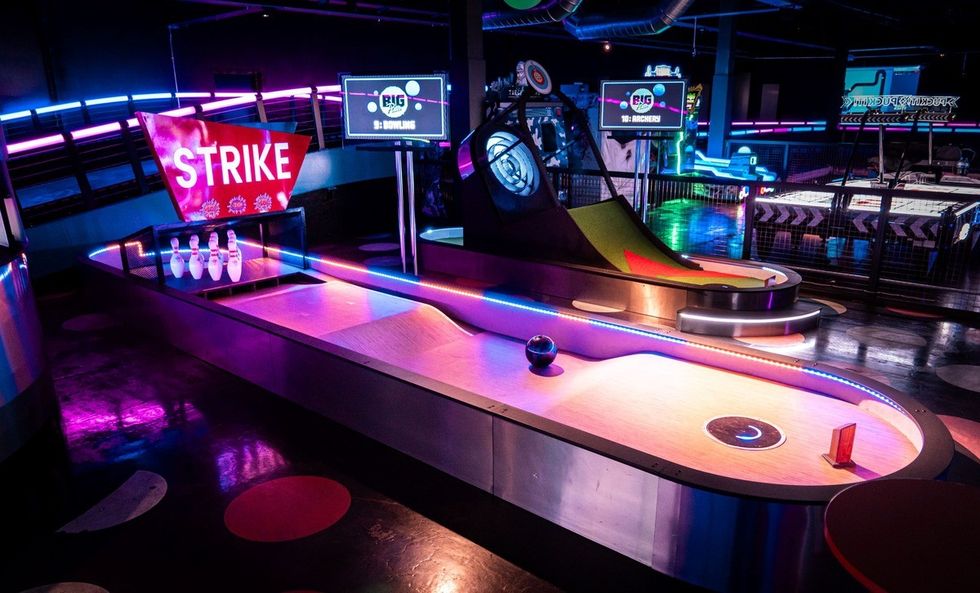 360 Golf from Holovis
 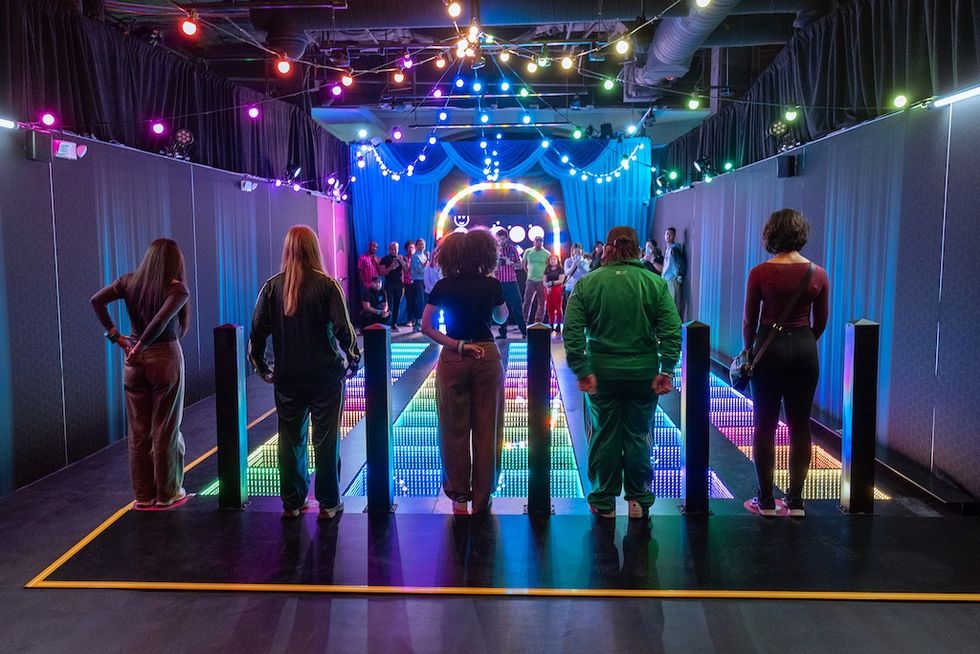 Squid Game: The Experience
 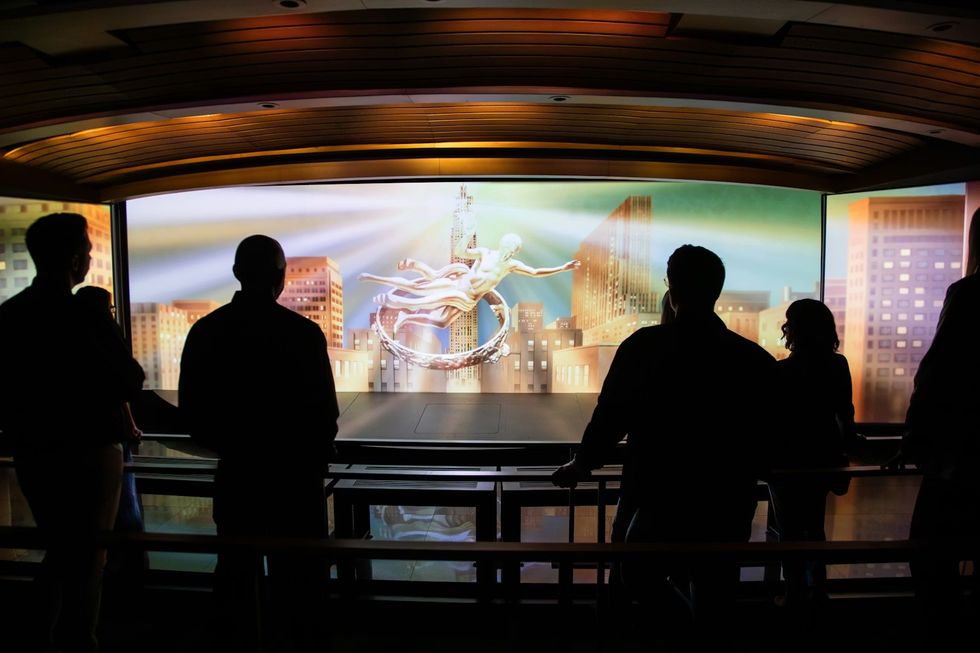 Top of the Rock
 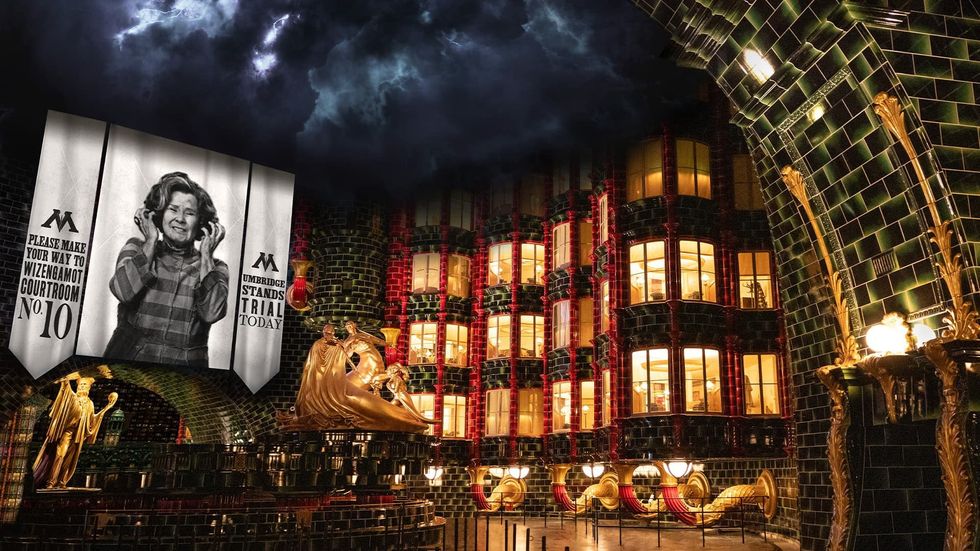 Harry Potter and the Battle for the Ministry at Universal Epic Universe
 Nala and Simba - THE LION KING Abu Dhabi - Photo by Joan Marcus © Disney
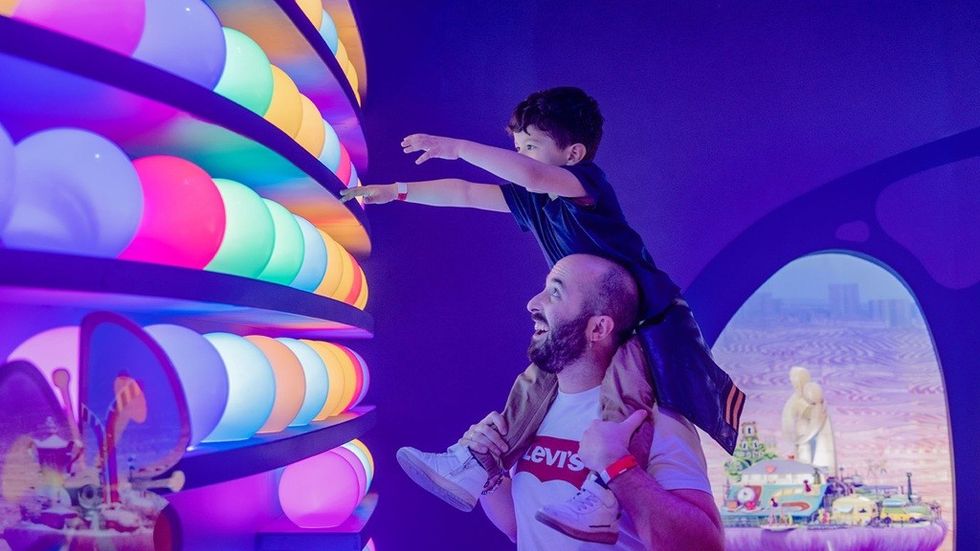 Mundo Pixar
 Mukelisiwe Goba as Rafiki and the North American Tour Company - THE LION KING Abu Dhabi - Photo by Joan Marcus © Disney
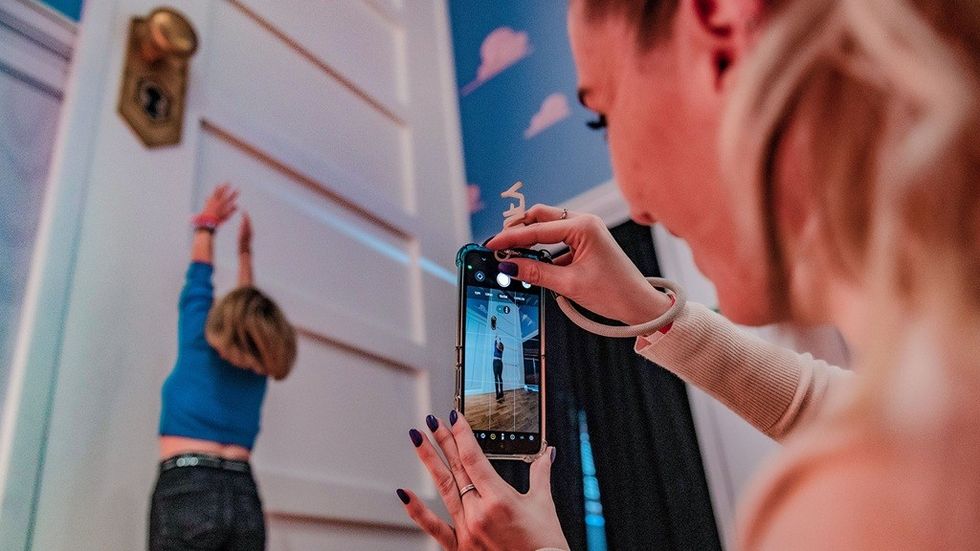 Mundo Pixar