Founded in 1891, the New York Botanical Garden (NYBG) has spent over a century establishing itself as a global leader in plant science, conservation, and horticulture. Yet it is also a dynamic, ever-evolving public attraction in the heart of the Bronx, a borough celebrated as New York City's greenest.
Jennifer Bernstein has been CEO and the William C. Steere Sr. president of the 250-acre institution since 2021.

Jennifer Bernstein, CEO and the William C. Steere Sr. president of New York Botanical Garden
Image courtesy of NYBG
As the 10th leader in the Garden’s 135-year history, she is guiding the organisation through an era marked by challenges such as climate change and habitat loss, while also pushing the boundaries of how a modern botanical garden can engage visitors.
In conversation with blooloop, Bernstein shares her insights into the intersection of attractions, pop culture, rigorous scientific research, and environmental stewardship.
Her vision shows how the NYBG is leveraging its legacy to advocate for the natural world while creating joyful, unforgettable experiences for millions of guests.
Leadership experience and a passion for plants
Bernstein’s journey to the New York Botanical Garden is underpinned by extensive experience in non-profit management, organisational development, and cultural leadership.
Before her appointment in 2021, she spent more than twenty years leading fundraising and development at several non-profit, cultural, and educational institutions.
Bernstein says her connection to her current role feels deeply personal and aligned with her roots. "My entire career has been here in New York City, and this is a place that I deeply love, including our rich cultural community.”
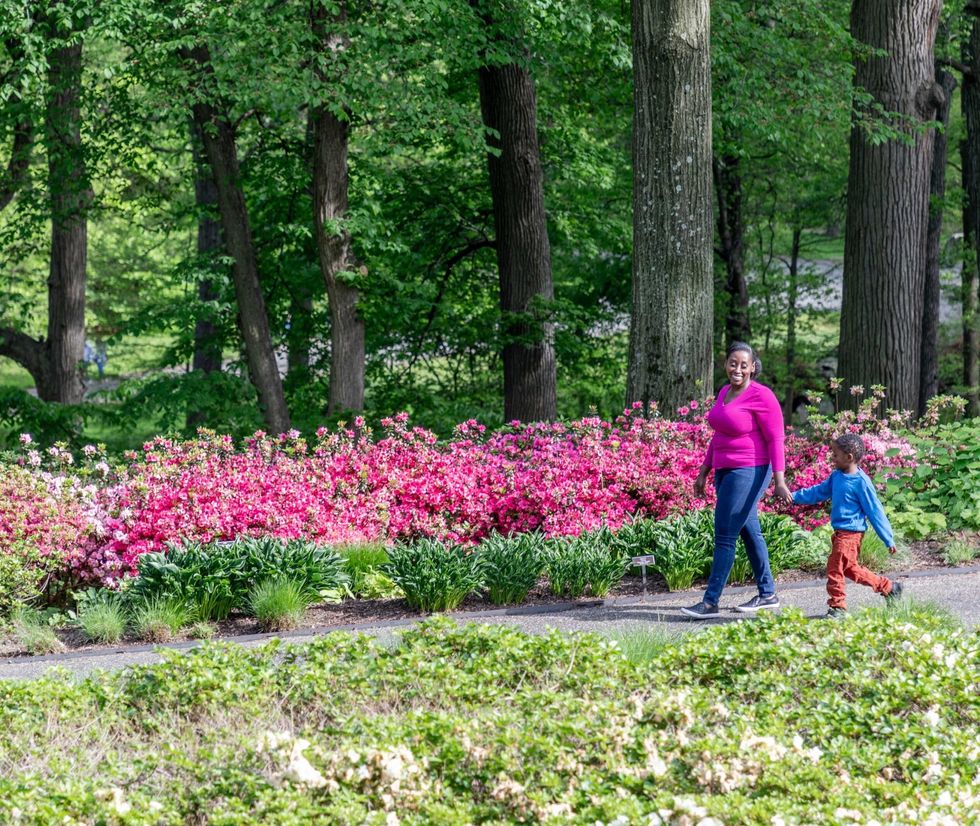
Visitors enjoying the Chilton Azalea Garden at The New York Botanical Garden
Image courtesy of NYBG
However, it wasn't only her connection to the city that brought her to the Bronx. It was a fundamental passion for the natural world.
"I was drawn to NYBG because of the joy that is inherent in what we do and the experiences that we create for visitors and for the extraordinary impact that our work has in the broader world," she explains.
"I'm a lifelong plant person and nature lover, and so the commitment to nature resonated strongly with me. And I also saw how NYBG is an institution that leads with innovation.”
Since becoming CEO, Bernstein has continued this innovative spirit by launching a master site-planning process to preserve the Garden's historic landscape, buildings, and facilities. She has also welcomed new, dynamic Trustees to the Board and strengthened the institution's financial and organisational stability.
Connecting people with nature at NYBG
At its heart, the New York Botanical Garden is an advocate for the natural world. In an era of urbanisation where people often feel separated from the outdoors, NYBG helps connect them to the natural world.
“The New York Botanical Garden brings together people, plants, and the planet, and we're advocates for plants," Bernstein says on the institution's guiding principles.
"That's been true all along, and we're committed to helping nature thrive, so that humanity can thrive. Because, of course, we depend on nature.”
For 135 years, the Garden has inspired millions to make nature a regular part of their lives, offering a sanctuary where guests can find respite, beauty, and joy in the outdoors. However, NYBG is more than just a secluded oasis; it is deeply woven into the city’s cultural fabric.
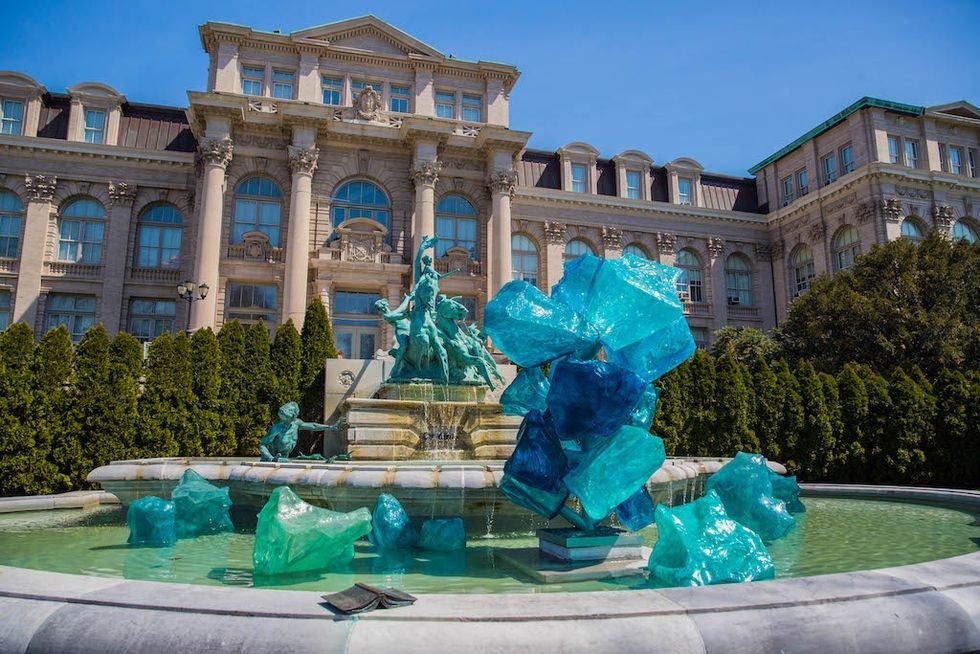
Dale Chihuly's Blue Polyvitro Crystals, exhibited at New York Botanical Garden in 2017
Image courtesy of NYBG
NYBG hosts exhibitions, immersive botanical experiences, and events that gather key figures in plant science, gardening, and the humanities. This multidisciplinary approach ensures the Garden remains a dynamic centre for learning and an international leader in plant science.
In today’s attractions industry, the boundaries between museums, theme parks, and cultural sites are increasingly blurred, and botanical gardens occupy a space where education, entertainment, and engagement intersect.
Bernstein regards this positioning as one of NYBG's greatest strengths:
“Serving as that connective thread between the attraction world and people having an immersive experience that then connects them to the underlying content of the institution, which is our scientific and educational work—that's the unique space that a botanical garden can occupy.”
Where art meets science
This strategy is brought to life through the Garden's robust and innovative exhibition programming.
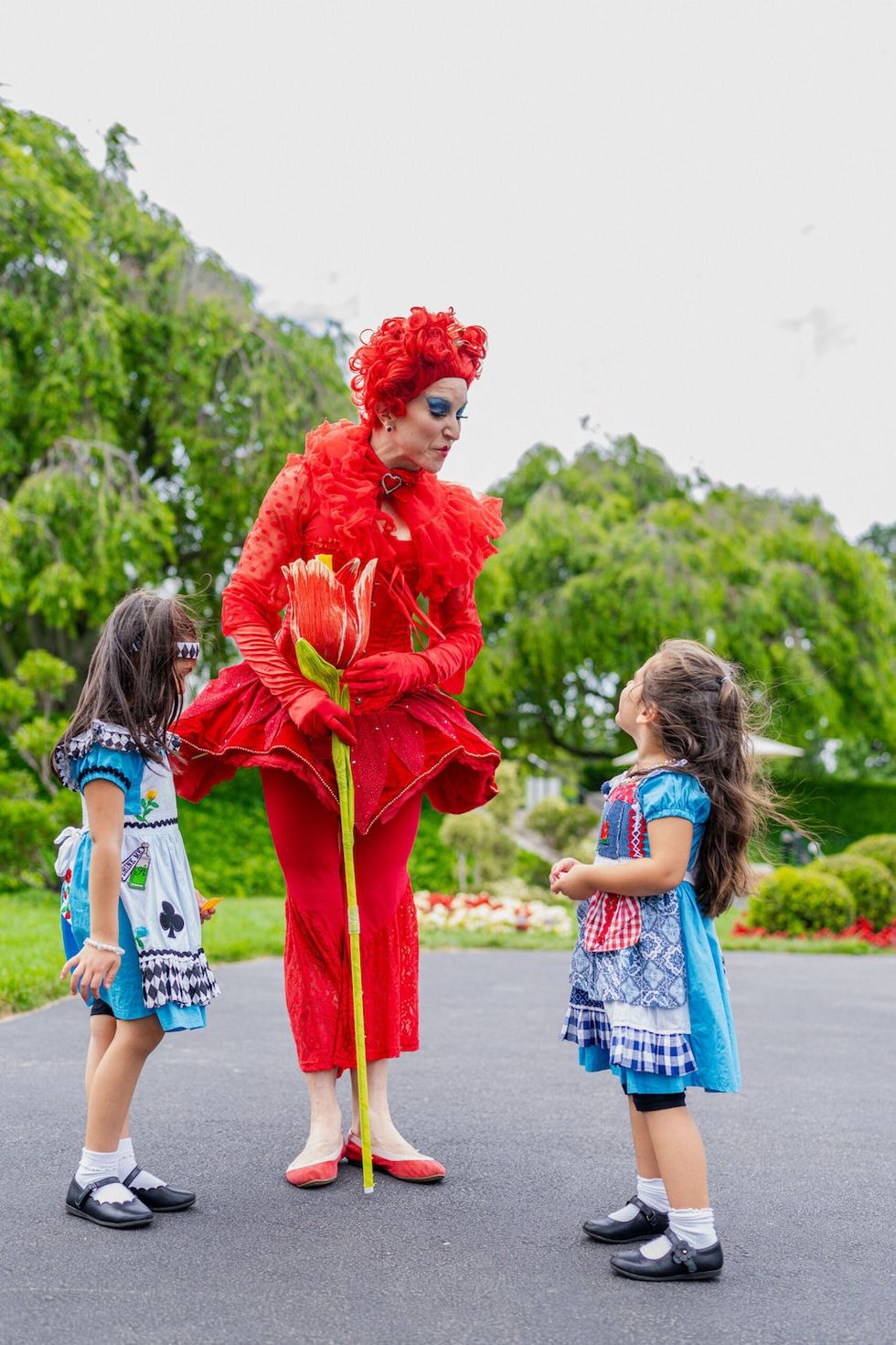
Children dressed as Alice with the Red Queen at Wonderland- Curious Nature
Image by Marlon Co, courtesy of NYBG
NYBG has a long history of mounting large-scale exhibitions featuring legendary artists such as Dale Chihuly and Yayoi Kusama. The site has hosted showcases like Brazilian Modern: The Living Art of Roberto Burle Marx, Impressionism: American Gardens on Canvas, Van Gogh's Flowers, and Wonderland: Curious Nature.
According to Bernstein, the institution is committed to continuously elevating the visitor experience. "We're always raising the bar in terms of what our audiences can expect from us," she says.
For instance, she points to the iconic annual Orchid Show, a beloved tradition that has been running for over two decades.
"This year's Orchid Show was a floral tribute to New York City, designed by a brilliant local artist called Mr. Flower Fantastic. It was our most popular Orchid Show to date. So, we have this capacity to keep things fresh and interesting for our audiences.”
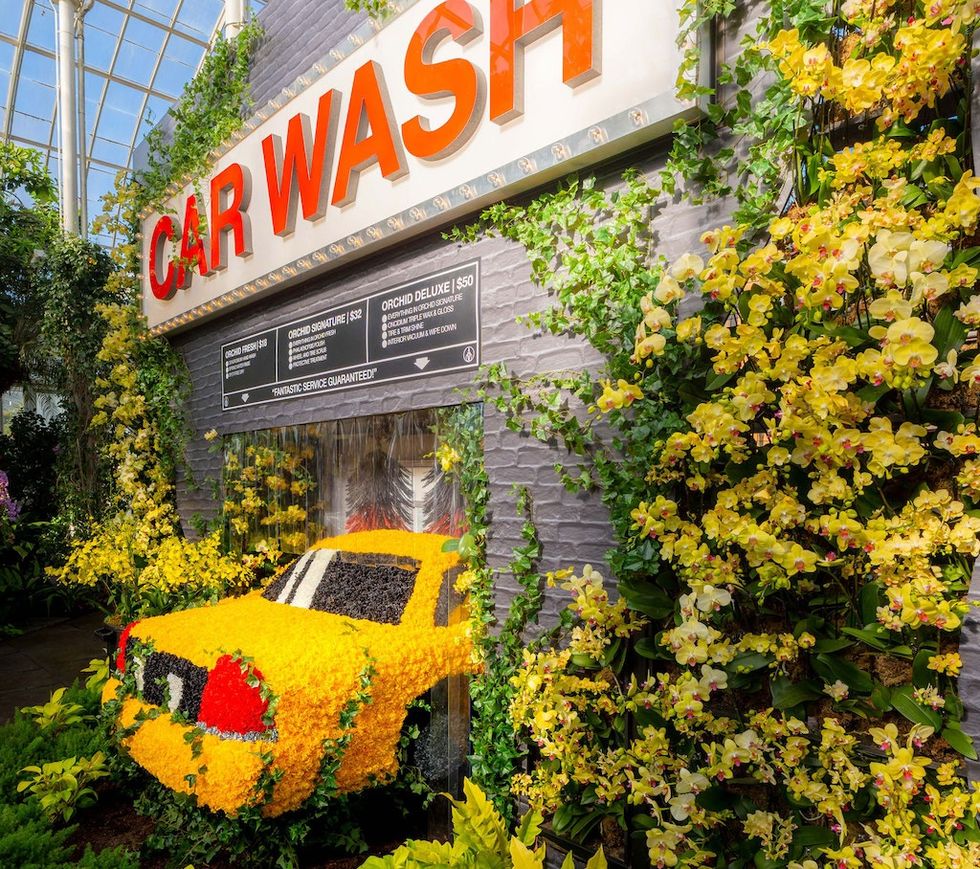
The Orchid Show at New York Botanical Garden: Mr. Flower Fantastic's Concrete Jungle Car Wash and Yellow Taxi
Image courtesy of NYBG
Another prime example is the current summer exhibition, Flower Power. "The show is a celebration of the enduring symbolism of flowers as icons of peace and love, as it was embodied in the 1960s and 70s flower power movement.”
This multi-layered experience encapsulates NYBG's approach, combining "large-scale original art installations, floral displays, [and] outdoor light shows, together with a really in-depth museum exhibit.”
The museum component features historical artefacts and iconic artworks by figures such as Andy Warhol, highlighting the role flowers have played in American cultural history.
"It's a very NYBG show in that it has these dazzling artistic and horticultural displays, but it also brings forward this deep educational content and learning opportunities.
"People can experience the educational content more deeply because they're brought in through that joy and wonder that the displays themselves bring.”
Strategic partnerships and IP at NYBG
To reach a wider audience, NYBG has increasingly turned to strategic partnerships with well-known brands and IP assets, a trend currently seen across the global attractions industry.
By integrating beloved fictional worlds into the landscape, the Garden attracts demographics unlikely to visit botanical institutions.
"To create memorable visitor experiences, we often partner with established and up-and-coming artists, iconic brands and properties, and influential figures in the plant and fungal science world, in horticulture, in the humanities," Bernstein says.
An example of this was the recent collaboration with Disney. "Over the past few years, we've hosted experiences like Disney Tim Burton's Nightmare Before Christmas Light Trail.”
This nighttime outdoor light spectacle immersed visitors in the film's iconic universe through brand-new scenes, music, and video, transforming the Garden's grounds.
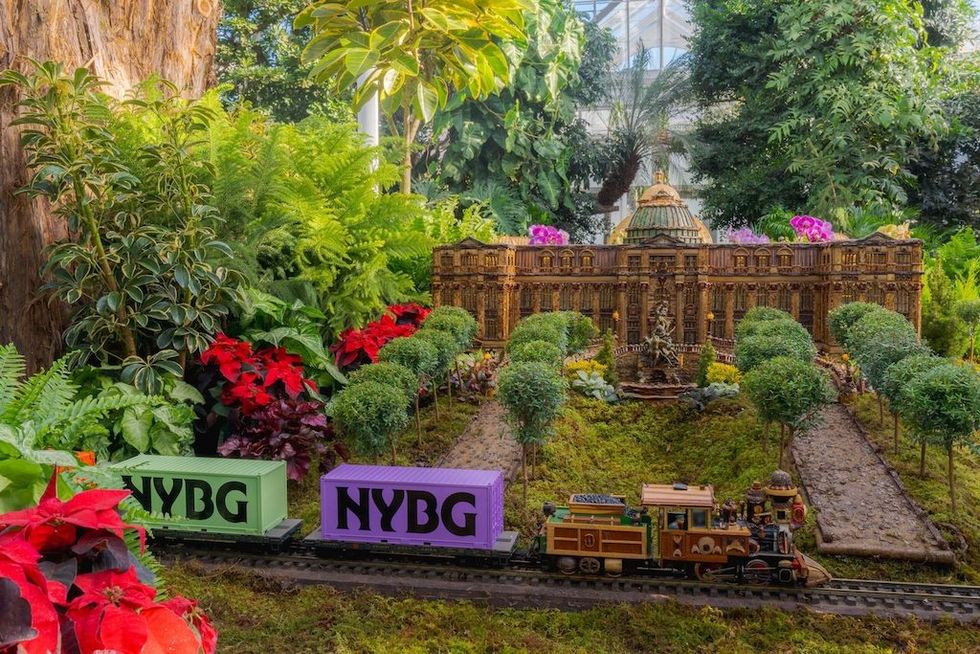
NYBG-branded model train in front of a replica of the LuEsther T. Mertz Library Building at the Holiday Train Show
Image courtesy of NYBG
Similarly, NYBG has mounted its annual Holiday Train Show for 34 years and has hosted complementary public programmes such as Holiday Train Nights, which have become beloved holiday traditions in New York City.
Currently, NYBG is hosting a Summer of Moomin activation in its Everett Children's Adventure Garden. This includes "immersive garden installations, story-inspired activities, crafts, photo moments, and special limited-edition Moomin NYBG merchandise.”
These activations are not just about entertainment; they are strategic pathways to education.
"People might come here for Moomin because they're lovers of the Moomin stories, but when they get here, they're going to get a whole array of content about the natural world that will complement that experience.”
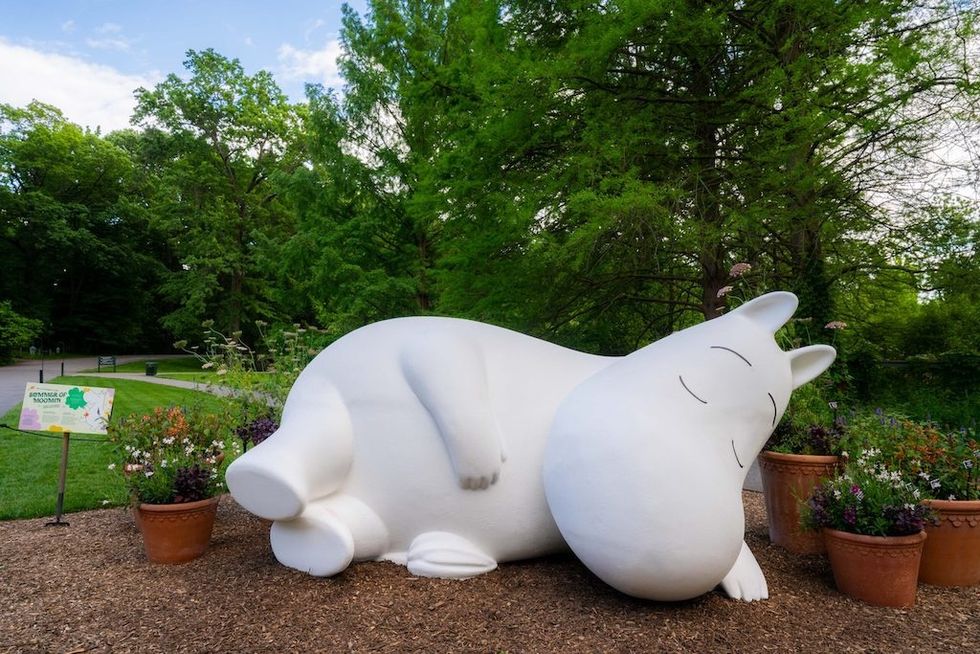
Sleeping Moomin statue at New York Botanical Garden's Summer of Moomin activation
Image courtesy of NYBG
NYBG shows no signs of slowing its ambitious exhibition programme. "Looking ahead, I'm really excited about next year's summer exhibition by the internationally acclaimed artist KAWS, which will be a Garden-wide takeover featuring large-scale KAWS sculptures and installations.
“That will be an exciting way to invite visitors to experience the Garden anew.”
Cutting-edge plant science
While impressive exhibitions attract visitors, NYBG's commitment to using its Science, Education, and Horticulture programmes to promote environmental stewardship is woven into its institutional DNA.
NYBG's Plant Science division covers global research. "At the most fundamental level, our scientists are working to document the biodiversity of plants and fungi, and that includes identifying and documenting entirely new species and preserving specimens.”
She adds that NYBG’s William and Lynda Steere Herbarium "is the largest herbarium in the Western Hemisphere, has nearly eight million specimens from across the globe, and is used by researchers from all over the world.”
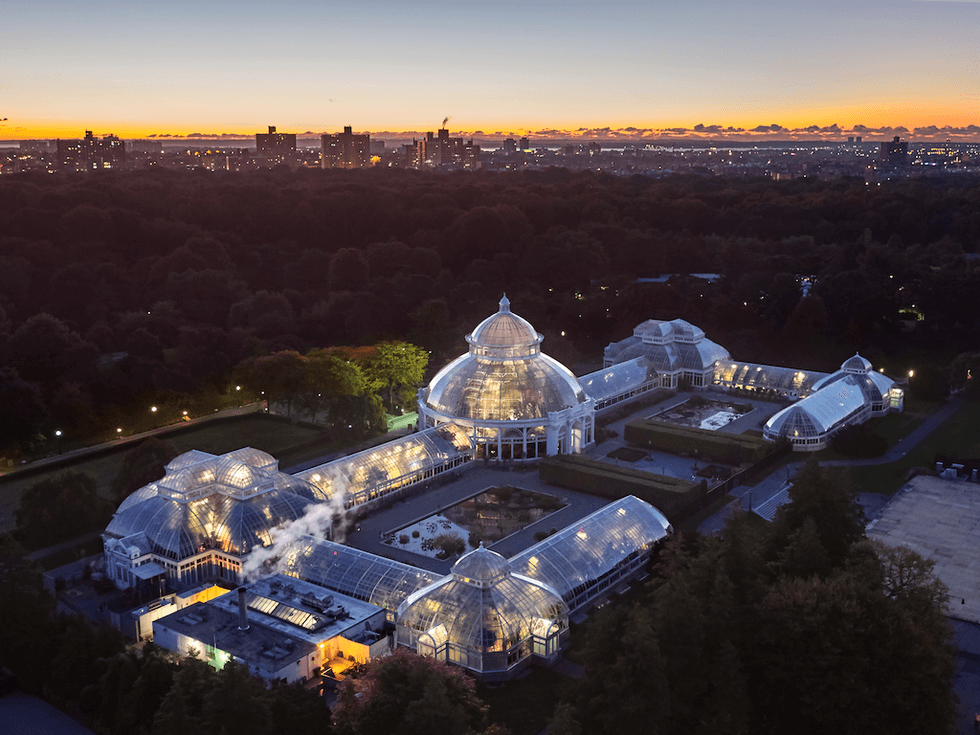
An aerial view of New York Botanical Garden's Enid A. Haupt Conservatory at dusk
Image © Robert Benson Photography, courtesy of NYBG
As biodiversity and climate crises worsen, this data collection becomes increasingly important.
But NYBG isn't just recording the past; it's helping shape the future. "We're also looking to find actionable nature-based solutions to help solve the dual climate and biodiversity crisis.
"We recognise that, to address these problems, plants need to be very much at the centre of our solutions.”
NYBG’s Science Strategy includes "leveraging AI to accelerate species discovery and thinking about plants as tools for climate resilience, as we look at opportunities for ecological restoration or protecting places that are particularly vulnerable,” says Bernstein.
In a world often paralysed by eco-anxiety, the active efforts of NYBG scientists worldwide are a source of hope.
"It's a hopeful part of our work because there's so much that we can do to address these issues. People become overwhelmed when they think about the climate and biodiversity crises, but there are many steps we can take to address these issues, even in our personal lives.
“I feel privileged to work in a place that is proactively addressing these issues; it gives me that sense of optimism.”
Operational sustainability: walking the walk
Advocating for the planet requires an institution to lead by example. Operationally, NYBG’s sustainability strategy covers plant research, conservation, energy, alternative treatments, and stewardship.
Operating a 135-year-old campus poses unique infrastructure challenges, but NYBG is tackling them head-on.
"Sustainability is embedded in everything that we do. We are always working to lead in that domain, improving our decarbonisation and improving our efficiency by modernising our buildings, infrastructure, and technology.”
The Garden’s energy efficiency initiatives include modernising lighting, managing peak loads, optimising HVAC, transitioning to electric and natural-gas vehicles, developing alternative energy sources, and managing stormwater.
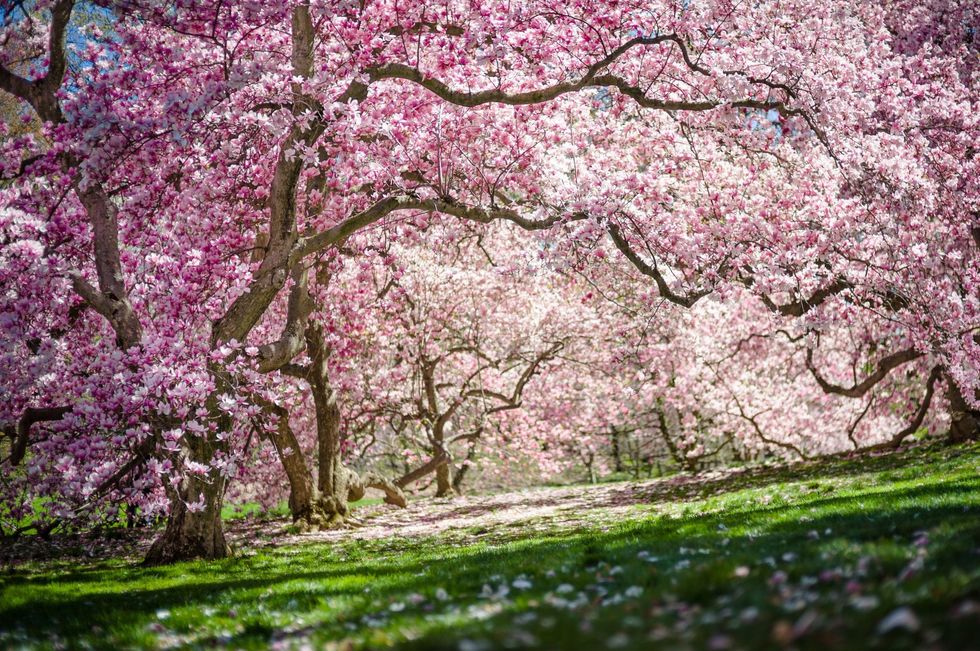
Magnolia trees in bloom at The New York Botanical Garden
Image courtesy of NYBG
Furthermore, it has a dedicated Green Materials Recycling Center, sophisticated pest management, mature tree care, turf care, and strict organic gardening practices.
"We are a historic institution, so we have a lot of longstanding infrastructure, but we've been at the forefront of this in New York City. We are working on a new facility that will be constructed soon, which will be the first net-positive building at a cultural institution in the city.”
These efforts are about more than reducing the Garden's carbon footprint; they also serve an educational purpose.
"I see our moves on infrastructure, not just as meeting our own internal sustainability goals, but also as modelling for the public what the cutting edge in sustainability really looks like.”
The Garden's commitment to green infrastructure extends beyond its gates and directly into the local community.
NYBG runs Bronx Green-Up, an outreach programme that provides educational resources, certificate courses, events, workshops, and technical assistance for community gardeners throughout the borough.
Education for all at NYBG
Education is central to NYBG’s mission, fostering appreciation for nature in visitors' personal and professional lives.
The Garden offers diverse educational programmes, including certificates, self-paced courses, lectures, and symposia. For younger audiences, it provides out-of-school programmes, family events, the Edible Academy, and the Everett Children's Adventure Garden.
"We hope that no matter your age or background, you'll find your kind of plant passion here. We call ourselves plant people, so from the plant curious to the plant serious, you know, there's room for everybody along that spectrum.”

Continuing education programmes at New York Botanical Garden include hands-on training
Image courtesy of NYBG
Each year, more than 300,000 children, parents, and teachers engage in NYBG's Children’s Education programmes to explore plant biology and beauty. For adults, the ongoing education offerings link students with top plant experts both online and on-site.
For those looking to turn their passion into a profession, the NYBG houses the School of Professional Horticulture, which offers hands-on training, licensing, and accreditation. "We are training the next generation of botanists, of course, gardeners, landscape designers, [and] environmental stewards.”
NYBG is also finding new ways to serve as an ambassador for the natural world. "I'm proud to host our award-winning podcast, Plant People. Every episode is aimed at being entertaining but also informative, with a guest exploring a different plant topic.”
This multi-channel approach to education ensures NYBG remains relevant, accessible, and impactful.
Accessible nature
As more people move to cities around the world, green spaces in these places become more important. Located in the heart of New York City, NYBG is well positioned to study and promote urban ecology.
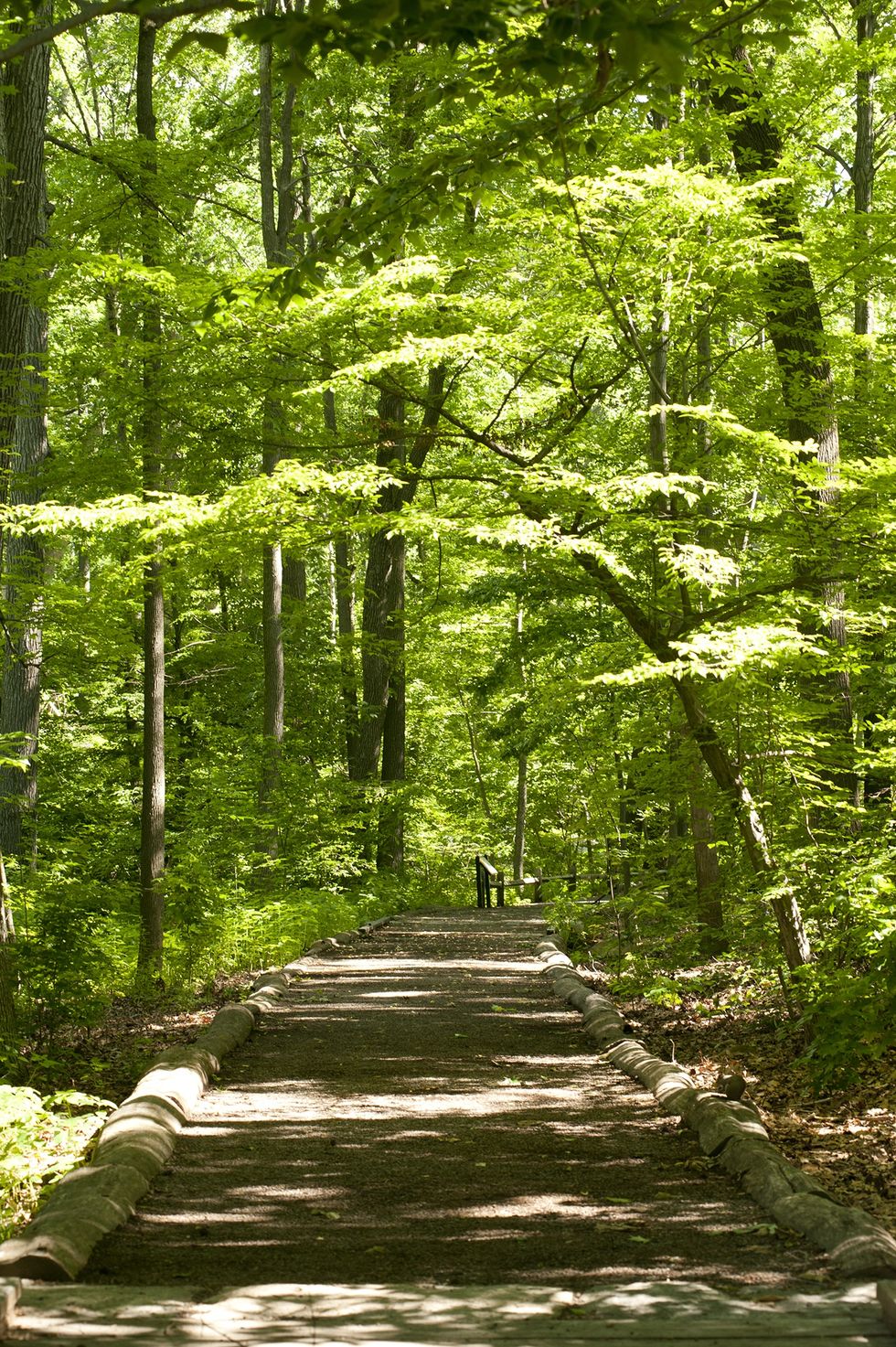
The 50-acre Thain Family Forest, the largest remaining uncut expanse of the city's original wooded landscape
Image courtesy of NYBG
"NYBG is also home to the 50-acre Thain Family Forest, which is the largest remaining uncut expanse of New York City's original wooded landscape," says Bernstein.
"We are, through that unique site, advancing important research and scholarship on urban conservation, showing the importance of nature to cities, and how cities can be an important tool and advocate for reducing human impact on the environment.”
This work is spearheaded by leaders like Dr Eric Sanderson, who guides the Garden's Urban Conservation programme.
The Garden also brings this science directly to the public; Bernstein mentions a current exhibition titled Before New York, "which is about the underlying ecology of New York City, and how that should inform our thinking about the future of New York City.”
NYBG is dedicated to making these green spaces and educational resources easy for the local community to access. The Garden offers free grounds admission to Bronx residents and low- or no-cost admission to broader New York City residents on select days.
"Especially in a place like New York City, we really appreciate how important green space is to the well-being of the city and its future, and to the people who live here.”
Growing a love of plants at NYBG
As Jennifer Bernstein looks to the future of the New York Botanical Garden, her goals are firmly rooted in expansion, innovation, and unwavering advocacy for the natural world.
She envisions an institution that continually raises the bar for visitor attractions while leading the global scientific community in the fight against climate change.
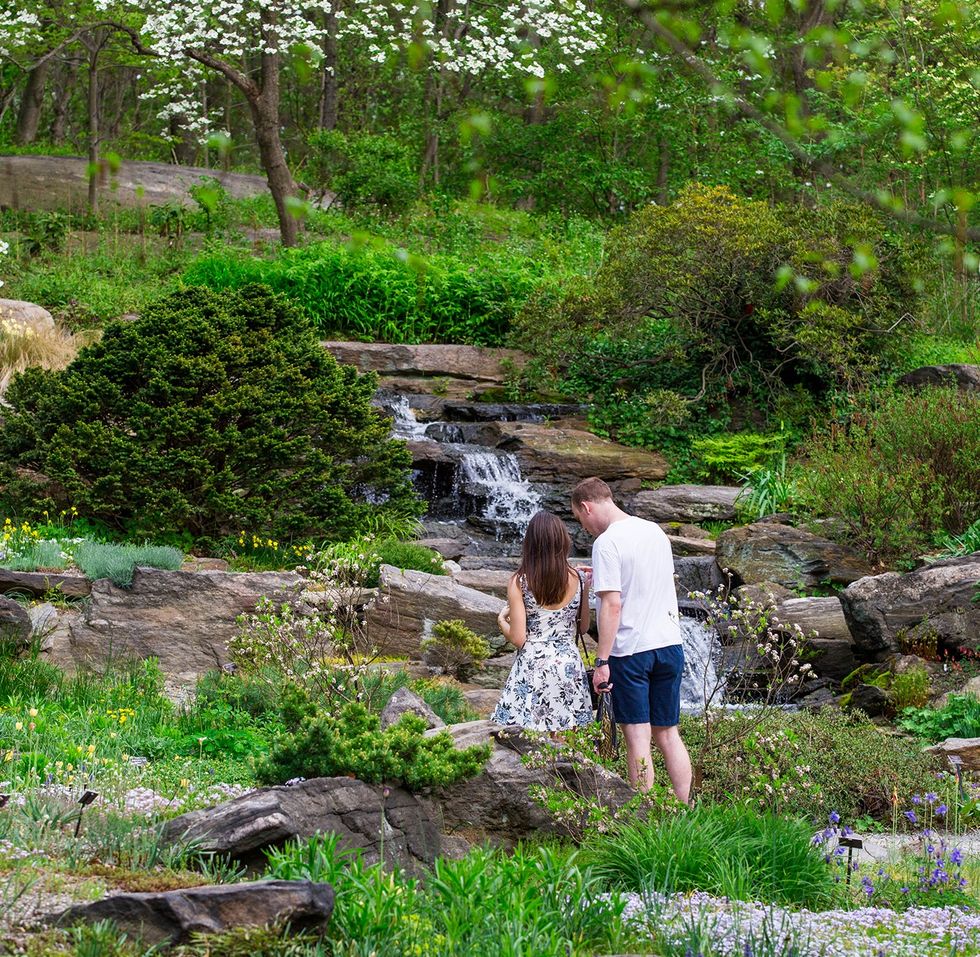
Visitors enjoying the Rock Garden at New York Botanical Garden
Image courtesy of NYBG
"My goal is that NYBG will continue to offer really inspiring and innovative programming and expand our global partnerships to reach even more visitors, both in person and online.
"I'm really proud of the work that we do in NYBG Science, and inspired by the advances that we're making there, particularly on the climate and biodiversity front.”
Ultimately, the measure of NYBG's success lies in the lasting impact it has on everyone who walks through its gates, attends a lecture, or listens to its podcast.
Whether visitors are drawn in by a light trail, a world-class art installation, or a walk through the Thain Family Forest, Bernstein’s wish is that they all leave transformed.
"I hope that everyone who comes here will come away with a deeper love and appreciation of plants, and that seed of appreciation will grow and blossom throughout their lives. Of course, I love a plant metaphor!”
Under Bernstein’s leadership, the New York Botanical Garden shows that even a 135-year-old institution can stay up-to-date.
By mixing top scientific research, engaging art exhibits, fun pop-culture partnerships, and a strong focus on sustainability, NYBG proves what a modern cultural attraction can—and should—be.