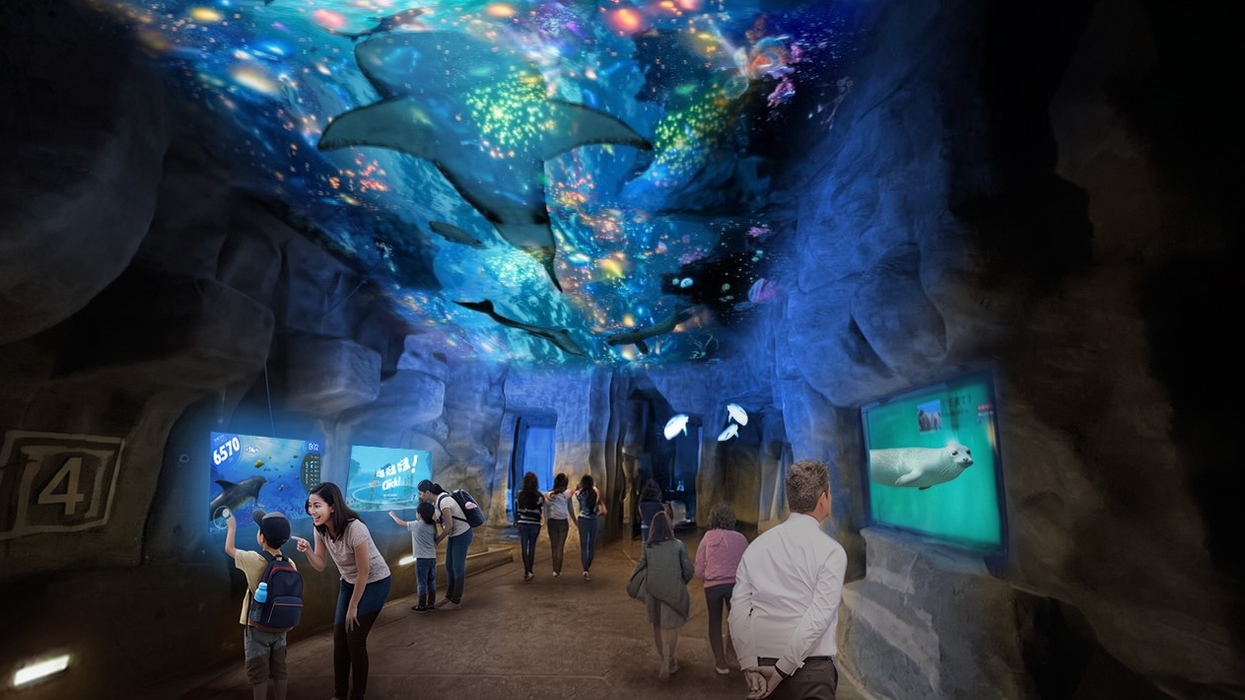

Consider two newly opened destinations; both have similar catchments, demographics and market potential.
Both have sound business cases and comparable capital investment. They draw on intellectual property of similar strength, are realised by designers of comparable pedigree, and are operated to an equally high standard.
One becomes a byword for how the sector should work, while the other quietly underperforms for years, its operators reaching for the usual explanations – the marketing wasn't sharp enough, the location was wrong, the IP hadn't landed with this particular audience – without ever quite finding one that truly explains why.
Perhaps counterintuitively, I believe the discipline best placed to explain the difference isn't experience design or architecture. It's urban design.
Where experience design begins with storytelling and architecture with the building itself, urban design begins with how people move, orient themselves, make choices and experience places over time.
It asks why someone walks rather than drives, takes a cut-through rather than the route provided, or lingers in one place but hurries through another.
At its heart, it is the study of how the built environment shapes human behaviour.
From public life to destinations
A foundational contribution to the study of public life came from the Danish urbanist Jan Gehl, who argued that a place's success is best understood by observing how people use it. He distinguished between necessary activities and optional activities – the latter emerging only when the environment supports them.
Across decades of research, Gehl demonstrated that much of what makes a place enjoyable, sociable and economically successful sits in this second category.
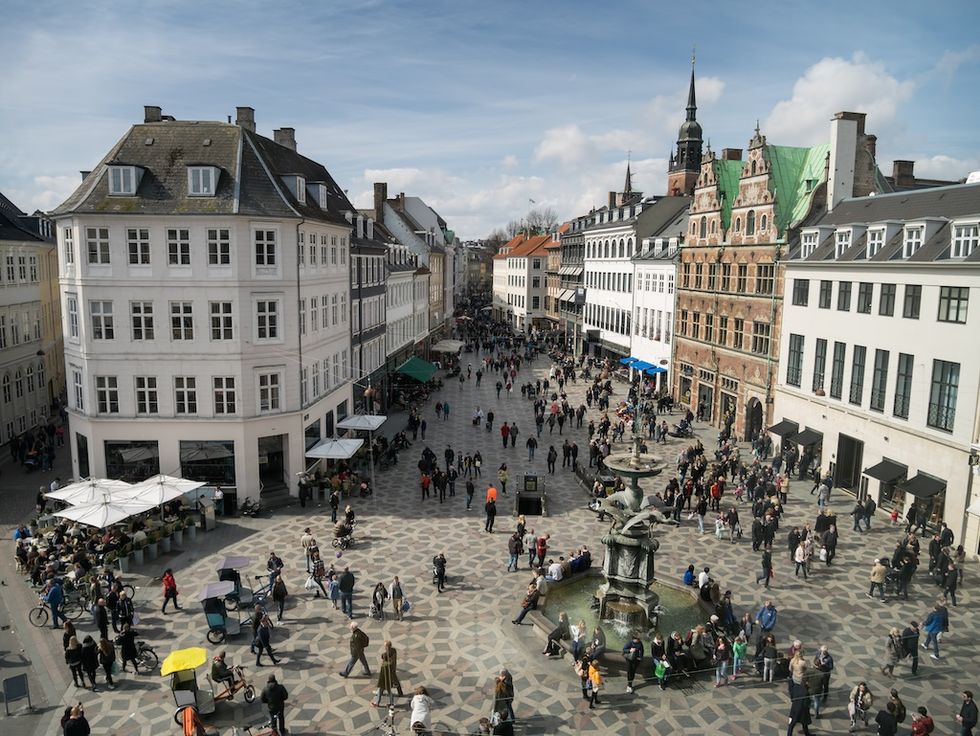 A public square in Copenhagen demonstrates how urban design can encourage people to linger, socialise and engage beyond necessary activities
Viewed through that lens, the destinations we design look rather different.
The distinction between necessary and optional activity appears everywhere: guests moving through necessary activity – queuing, walking, waiting, transacting – or engaged in optional activity – exploring, playing, browsing, lingering and countless other behaviours they choose rather than have to perform.
The connection between urban design and location-based experiences is not new.
Speaking at Harvard in 1963, the American urbanist and developer James Rouse called Disneyland "the greatest piece of urban design in the United States today."
He recognised something our industry has often practised instinctively without ever quite naming: Disneyland was never simply a collection of rides. It was a deliberately organised environment, shaped around how people move, orient themselves, anticipate and choose to engage.
Keeping score
Our industry has become remarkably sophisticated at measurement; we track attendance, revenue per capita, dwell time, Net Promoter Score, conversion by zone, spend by daypart.
Somewhere on every operator's desktop is a dashboard that would have seemed like science fiction twenty years ago.
We've become very good at keeping score.
The question is whether we fully understand the game we're playing.
 The visitor attractions industry tracks a lot of different guest data
The metrics we rely on inevitably shape the questions we ask, and those questions are almost always the same. How do we increase attendance? How do we lift spend per head? How do we improve satisfaction scores?
These are not bad questions. They are simply the wrong questions to ask first, because each describes an outcome that has already happened.
They are, in the truest sense, autopsy metrics: precise, honest and entirely retrospective. They can tell you that less value was realised than expected, and often where. But on their own, they are far less capable of revealing why.
Pattern recognition
Across projects with almost nothing else in common – a theme park in one country, a stadium in another, a zoo, a museum, a mixed-use leisure district – we can see the same underlying pattern recurring, dressed differently each time but recognisable underneath.
Guests weren't running out of interest; they were running out of capacity – a specific, finite, and largely invisible resource shaped not only by the quality of the experience in front of them, but by everything that had already been asked of them before they reached it.
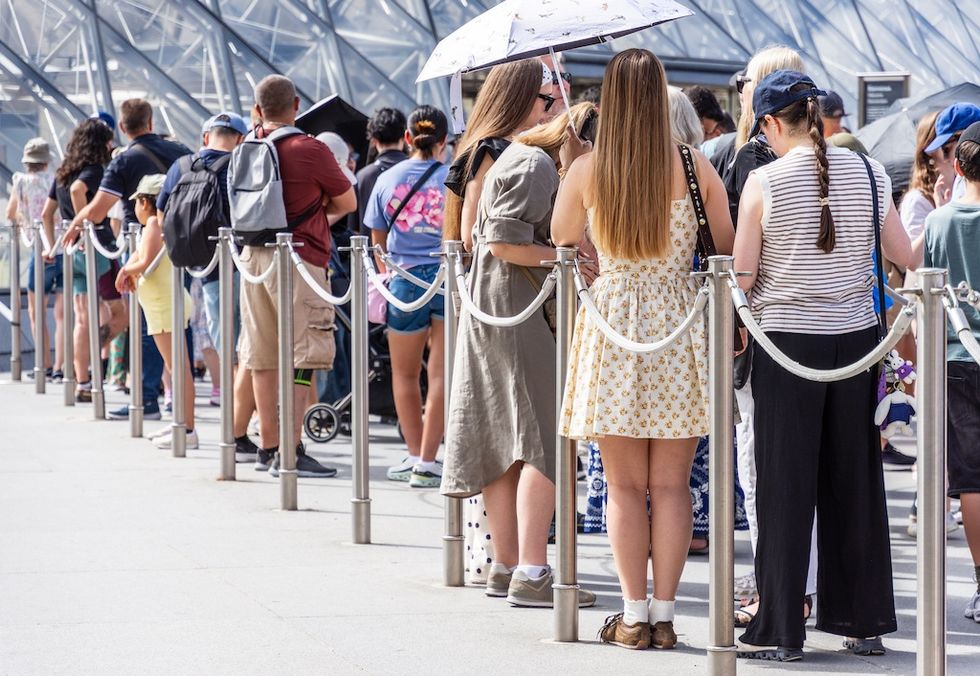 Things like queues can take their toll on guests' enthusiasm and energy
Sometimes the cause was obvious enough to photograph: a queue that eroded anticipation rather than built it, a wayfinding system that demanded unnecessary cognitive effort, a sequence of decisions stacked back-to-back with no opportunity to recover.
The effects were often cumulative rather than catastrophic. A retail moment that should have converted simply didn't. A secondary attraction, perfectly good, was quietly skipped.
By late afternoon, families who had planned to stay until close found themselves back in the car park two hours early, unable to say quite why.
A governing constraint
None of what follows holds if guests never arrive, or if the basics fail once they do.
A destination first needs a brand promise strong enough to bring guests through the gate. Once they arrive, hygiene factors – safety, fairness, legibility, comfort, and operational competence – establish the floor.
Borrowed from Frederick Herzberg's theory of motivation, the term captures a similar asymmetry here: these conditions do not create value, but their absence is guaranteed to destroy it.
Assume, as most established destinations reasonably can, that the promise is working and the basics are holding. One of the most overlooked causes of underperformance then lies in what happens next.
Human capacity
Every guest arrives with three finite resources – time, attention and energy.
Time is strictly finite and non-restorable. Unlike capital, it cannot be borrowed, manufactured or replenished. Destinations compete not for more time, but for a greater share of it.
Attention and energy are dynamic. They can be preserved, concentrated, depleted, redirected and, in some circumstances, renewed – but only within biological limits. Destinations cannot expand human capacity beyond those limits. They can only influence how that capacity is spent.
 Visitors only have a finite supply of energy and attention
Financial capital is downstream of human capacity.
Time, attention and energy determine when, where and whether guests choose to spend. If a guest's energy is exhausted before they reach discretionary decision moments, financial capital leaves the destination unspent.
You cannot re-theme exhaustion
No amount of storytelling can recover a guest who has nothing left to give. No spectacle, however well capitalised, survives contact with a family that is tired, hungry, and quietly out of patience. The most beloved intellectual property in the world can do nothing to extend the limits of human attention.
A destination can only move someone if that someone has anything left to be moved with.
An empirical law
Human capacity is the scarce resource common to every destination. Performance depends less on how much of it arrives through the gate than on how effectively it is converted into value.
Taken together, the evidence points to an empirical law of destination performance:
Realised value cannot exceed guests' finite capacity to engage. When performance conditions exhaust that capacity prematurely, realised value is suppressed.
Like any empirical law, it doesn't prescribe what a destination should do. It describes the governing relationship beneath destination performance, explaining why destinations with similar investment, audiences and intellectual property can produce radically different results.
The implication is simple but profound.
Human capacity is finite.
Performance conditions are designed.
One is inherited. The other is a design decision.
While guests consume their own time, attention and energy, destinations create the conditions under which that consumption takes place – through the physical environment, operations, programming and the guest journey.
The object of destination design is therefore not simply the place, but how the system behaves over time: whether it protects capacity for the moments that matter, or lets it drain away on those that don't.
Realised value
The value human capacity creates is not fixed. In a theme park, commercial yield may be the primary objective; in a zoo built around conservation, success may instead include a lasting shift in how a child understands the natural world.
Every destination defines value according to its own purpose and priorities. Most pursue several forms of value simultaneously, weighting them differently. The Law is indifferent to those choices, but whatever a destination values, the conversion structure remains the same.
The wrong question, asked confidently
This reframes where the useful question sits.
Our instinct, understandably, is to ask: How do we get more out of our guests – more spend, more time, more advocacy. The more useful opening question is almost the opposite: Where are we allowing guests to exhaust their capacity before it has the opportunity to create value?
That's a different kind of inquiry. It has less to do with marketing than with attention – literally, where a guest's attention is drawn, and whether the environment is asking them to look, decide, or simply endure. It is, in other words, as much a design question as an operational one.
Bigger isn't always the answer
Our sector's reflex, when performance disappoints, is often to add. Another attraction. Another food offer. Another land. Sometimes that instinct is entirely correct – genuine new capacity, well placed, is still one of the most reliable ways to grow.
But before reaching for more, it's worth asking whether the capacity already arriving at the gate is being converted as fully as it could be.
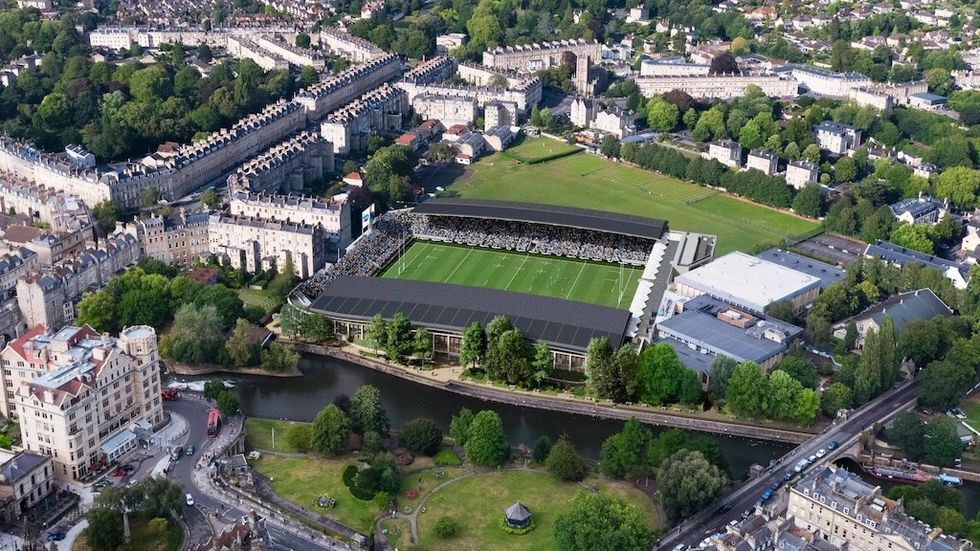 Stadium for Bath demonstrates how a major destination can be designed as part of the wider urban environment, rather than as a standalone venueImage courtesy of Kay Elliott
A destination that hasn't worked out where its existing guests are quietly running dry may not yet be ready to be trusted with a bigger footprint to manage. The next investment might genuinely need to be larger. Or it might simply need to be sequenced differently.
The right question
For years, our industry has asked how to attract more visitors. Then how to raise spend per head. Then how to lift satisfaction scores. Each of those questions was worth asking, and each produced real progress.
But none of them asks the question beneath them all. Converting the capacity guests arrive with is a different problem from attracting them in the first place – and it is one our current dashboards were never built to see.
Destinations do not outperform one another simply because they attract stronger crowds. They outperform because some preserve and convert more of the finite time, attention and energy those crowds bring, while others quietly allow it to drain away.
Perhaps that is the question our industry should spend the next decade answering. Not how to ask more of our guests, but how to ask less of them before the moments that matter most.
The Law of Destination Performance is the fourth essay in an ongoing body of work exploring how destinations create value, following Homo Experientialis, The Fulfilment Gap, and Immersive Influence.
Kay Elliott is currently piloting a diagnostic methodology with select operators that applies the Law of Destination Performance to improve guest flow, operational resilience and realised value. Further details will be shared later in 2026.