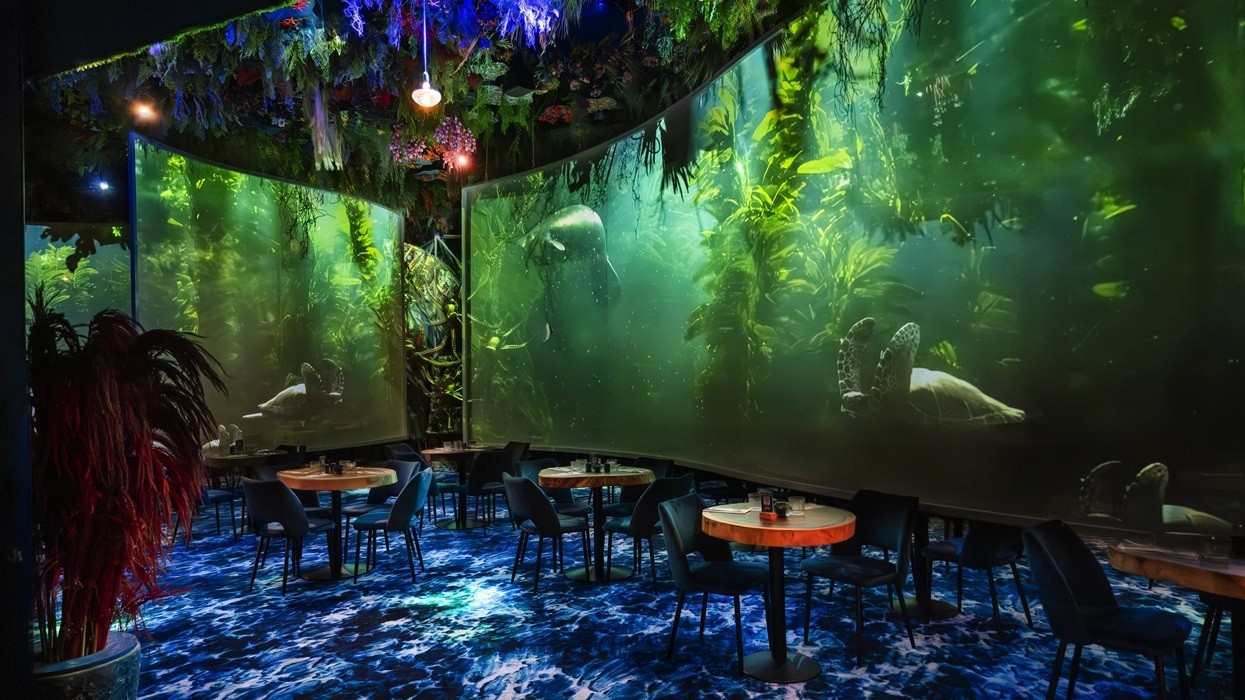
Modulo Pi, a provider of media server solutions with a user-friendly design, has once again provided media servers to Ephemera Group to power video projection at the new Under the Sea restaurant, which opened in Montpellier on 13 February.
Ephemera Group's immersive dining concept offers a culinary experience that takes guests on spectacular journeys from tropical jungles to ocean depths and magical forests.
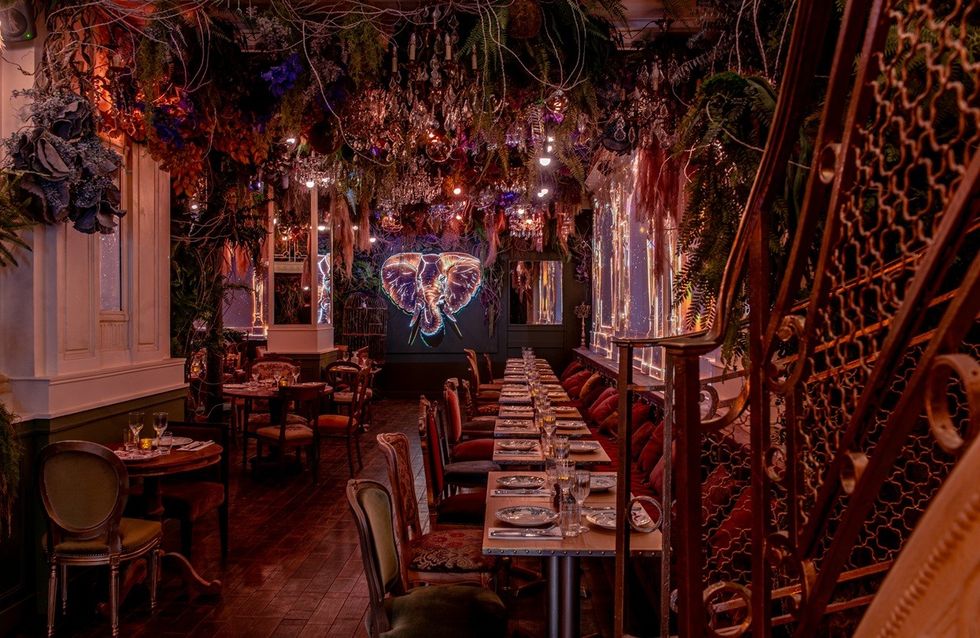
The group utilises an AV system designed and integrated by Fosphor, with Modulo Pi’s Modulo Player media servers, to deliver these multi-sensory environments.
Video projection, sound, and lighting converge in a robust, automated setup that runs continuously to support the immersive experience for thousands of visitors each day.
Immersive experiences and seasonal food
Since its establishment in 2022, Ephemera Group has quickly built a reputation as a pioneer of immersive dining in France. Its concept transports guests into captivating worlds through a mix of physical sets, video projection, sound, and lighting.
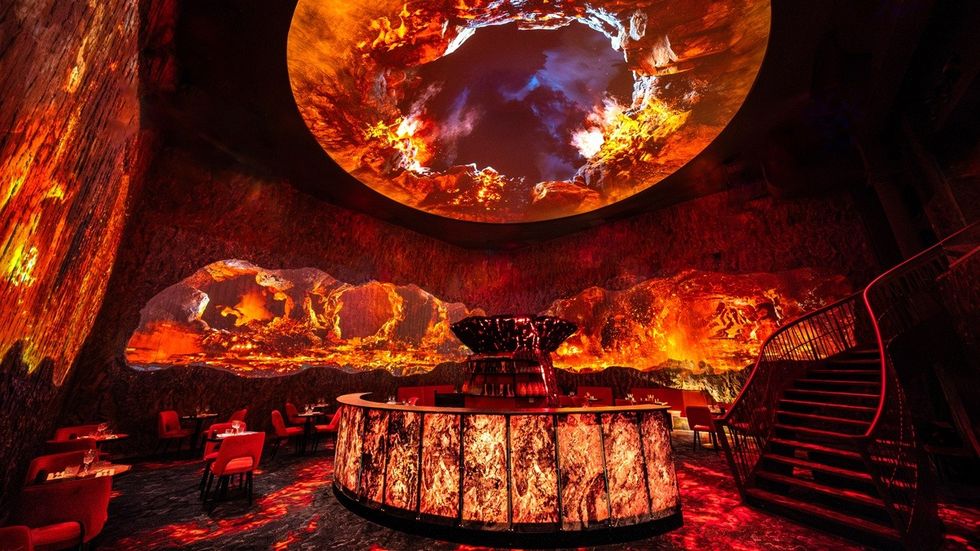
Over four years, the group has launched seven restaurants in Paris and across the country. Each presents its own sensory universe, from journeys into space or a volcano, a tropical jungle, enchanted forests, or an underwater world.
The restaurants welcome over 5,000 people each day to these unique, immersive journeys centred on seasonal, homemade cuisine.
Sixtine Coquereau, the group’s marketing and communications director, says: "We don’t just come to our restaurants to dine—we come to experience something.
"Each venue is designed as a world of its own, with its own set design, storytelling, and atmosphere. The idea is to take guests somewhere else for the duration of a meal."
Although the immersive experience focuses on scenography, with sets, lighting, and sound design, technology plays a vital role in creating these settings.
"Our goal is for the technology to remain discreet, almost invisible to the guest, so that the magic unfolds naturally," says Coquereau.
"At the same time, it is central to our strategy. We pay close attention to innovations that can enhance the experience and allow our worlds to evolve over time."
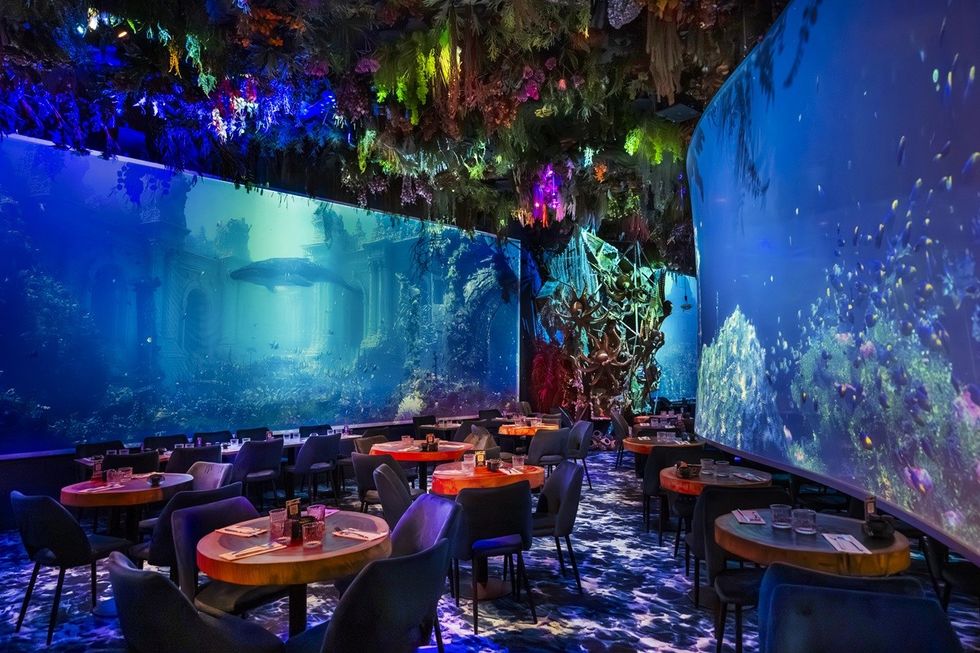
Immersive video projection serves as “a particularly powerful medium” within the restaurants.
"We use it to evolve the décor and adapt the atmosphere depending on seasons, key moments, or specific events," she says.
"It’s a very effective way to renew the experience and surprise returning guests."
Ephemera relies on Fosphor's expertise to deliver these immersive projection systems. Each restaurant hosts an installation of approximately 15 to 20 Epson video projectors, audio speakers, and lighting fixtures.
At the system's core, Modulo Pi’s Modulo Player media server handles mapping, video playback, audio management, specific lighting elements, and overall show control across all sites.
This media server enables the delivery of content across each venue’s specific layout and theme, whether mapping onto vaulted ceilings at Jungle Palace in Paris, projecting onto a huge dome at the Lille venue Magmatic, or onto large semi-transparent fabrics at Under the Sea.
Highly anticipated Montpellier venue
The 750-square-metre Under the Sea restaurant immerses visitors in a mesmerising marine world inspired by the ocean depths and abyssal creatures. This much-awaited seventh location attracted 10,000 reservations within its first 72 hours.
At the centre of the space, marine sculptures created by film set designer Henriette Raz are accompanied by translucent sails, layered transparency effects, and video projection to create a cocooning experience. In total, 14 Epson EB-695 projectors are powered by four Modulo Player media servers, each equipped with four outputs.
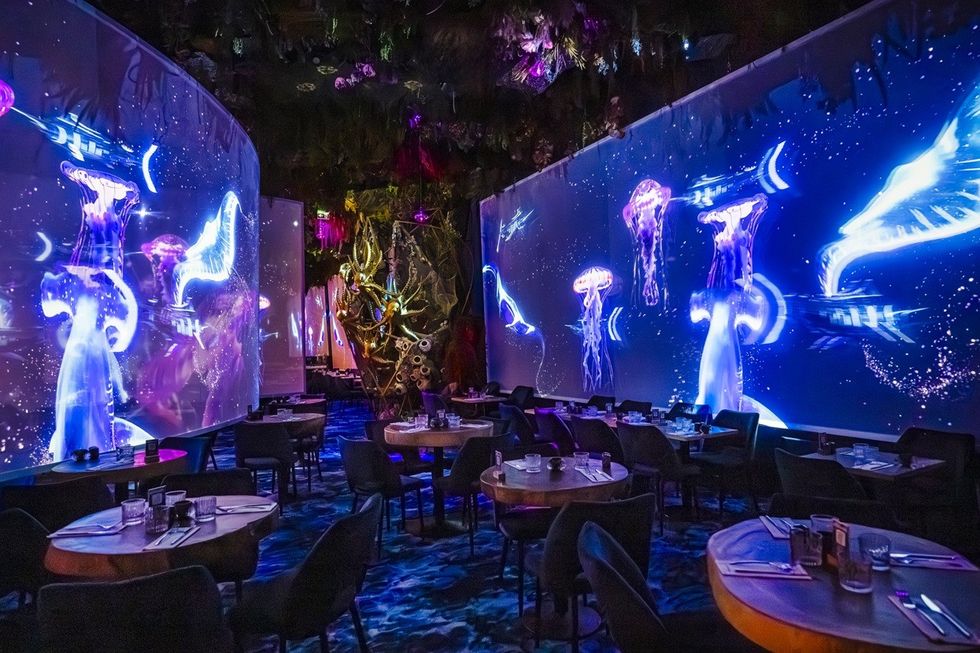
"For this restaurant, we developed video mapping directly onto the decorative sculptures," says Coquereau.
"The projections follow the contours of the set to bring underwater elements to life—octopuses, turtles, and other marine creatures appear to move and evolve within the space. This transforms the physical décor into a living, dynamic environment."
Fosphor’s teams photographed the marine sculptures on site from the perspective of the projectors. Then, designers from Studio C14 could imagine and create the media content used to map and animate these scenic elements.
Furthermore, large sculpted canvases shaped like waves help define the space and enhance the sense of immersion. The total surface area used is approximately 200 square metres.
Coquereau says, "images are projected and distorted by the volumes, recreating effects of currents, aquatic light, and movement that enhance the feeling of being submerged beneath the ocean."
Reliable, versatile system
The teams independently manage the AV system on a day-to-day basis. The Modulo Player media server's show control features have enabled the creation of a custom control panel for each site, with access to a variety of commands and scenarios.
At each restaurant, a touchscreen tablet runs the interface, providing straightforward, intuitive control of the installation.
Nicolas Manichon, head of Fosphor, says: "The key is that everything works—lunch and dinner, every single day. Altogether, we have around a hundred projectors running daily with about thirty Modulo Player servers, and it all works very well."
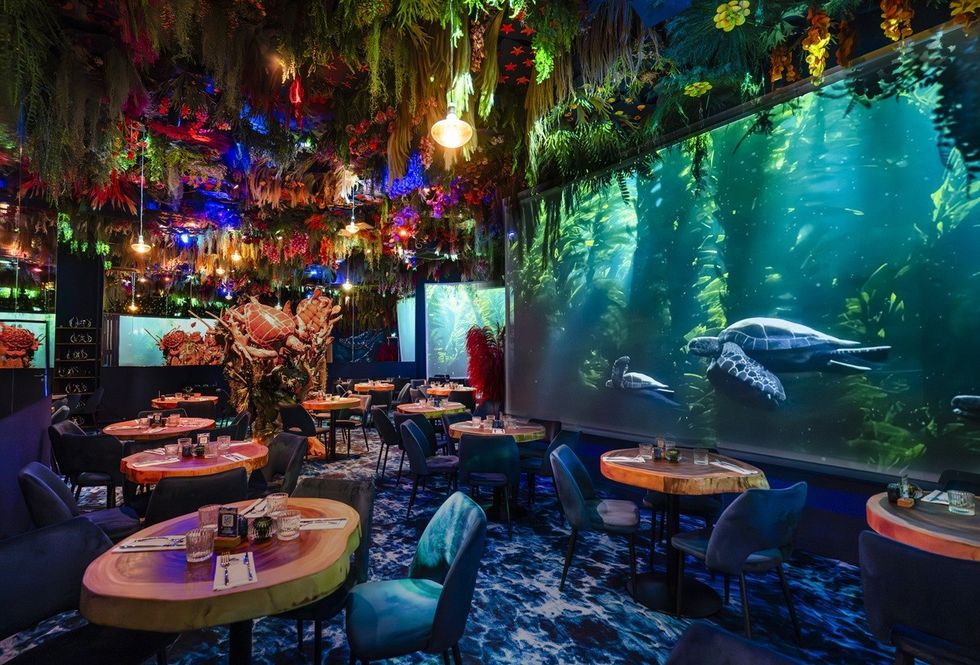
In addition to the daily dining experience, Ephemera’s restaurants also host private events for clients, including major corporations, international brands, and event agencies. Over 1,000 private bookings and group events have already taken place across the seven immersive venues.
At such events, Modulo Player makes displaying presentations or videos easy with NDI. In addition, selected areas can be set up independently for private use, while the rest of the venue continues to operate normally with its standard immersive projections.
Ephemera Group continues to grow, with further openings planned in the coming months.
Last November, Modulo Pi celebrated its 15th anniversary with clients and collaborators at Atelier des Lumières, Paris. The event offered a look back at the media server manufacturer's beginnings and spotlighted its expertise in immersive and interactive projects.