
The Surf Ballroom is renowned worldwide as the venue where Buddy Holly, J.P. “The Big Bopper” Richardson, and Ritchie Valens performed their final show in 1959, before the young musicians tragically died in a plane crash.
While that moment remains a pivotal chapter in music history, Not Fade Away expands the story by exploring the Surf’s origins, its development alongside popular American music, and the role of the Clear Lake community in preserving its legacy.
Not Fade Away is the sole immersive experience in the United States focused on an active rock ’n’ roll landmark.
Created by Trivium Interactive in partnership with the City of Clear Lake, the Surf Ballroom, Electrosonic, Available Light, and Natalie Zanecchia Design, it honours the artists, fans, and community that have kept the Surf Ballroom culturally significant for nearly a hundred years.
A journey organised by chapters
The 40-minute timed experience unfolds through a series of chapters that blend cinematic storytelling with interactive exploration.
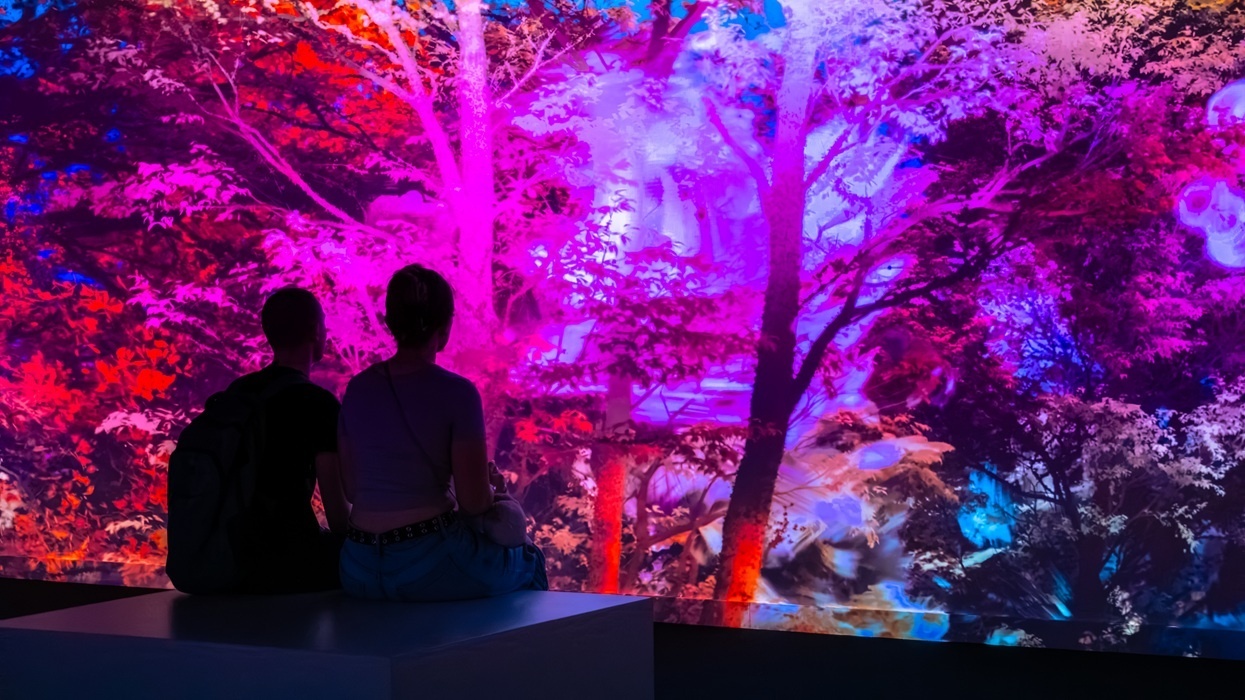
It starts with an immersive film. Large-scale projections cover a curved feature wall, surrounding side walls, and the floor, all accompanied by surround sound. At key moments, the entire room synchronises to enhance immersion.
When the Surf is rebuilt after a tragic fire in 1945, the new venue’s tropical beach club design is brought to life with projections that reflect the murals inside the ballroom, while projected water flows across the floor.
As rock ’n’ roll gains popularity, dance-floor lighting illuminates the space, and visitors are enveloped in archive footage of teenagers dancing in the 1950s.
An interactive exploration
After the film ends, the experience shifts from linear storytelling to an open-ended, interactive space for visitors. The curved main wall transforms into a large digital interface with animated portals.
Through gesture-based controls, visitors can delve into deeper stories related to the Surf Ballroom and American music heritage, including love stories that started on the dance floor, its significance in rock ‘n’ roll history, the emergence of outlaw country, Chicano rock and Ritchie Valens’ impact, the Bo Diddley beat, rockabilly, and more.
Not Fade Away began with 130 stories, with new content added regularly. This scalable design encourages repeat visits and remains accessible to both music experts and casual fans.
Interactivity extends to the floor, which responds dynamically to movement with musical notes and evolving patterns. The system caters to a wide range of physical abilities, creating moments of joy for children running through the space as well as older visitors or those using mobility aids.
Connecting past, present, and future
During the interactive segment, the side walls transform into a Surf Ballroom Hall of Fame. A large video collage displays numerous artists who have performed at the Surf from the 1930s to today, covering big band, rock ’n’ roll, and country music.
Selected moments animate footage of historical performances, highlighting the Surf Ballroom’s role as a lively live-music venue rather than a static museum.
At its core, Not Fade Away shows how projection, responsive environments, and evolving content systems can support heritage preservation and engage contemporary audiences. Music acts as a universal link, ensuring every visitor encounters a song, image, or story that resonates personally.
By connecting past, present, and future, the experience ensures that the legacy of the Surf Ballroom continues to grow.
Trivium Interactive has delivered a broad range of award-winning projects across the museum, cultural, immersive, zoo, and aquarium sectors. Highlights include work with the Cincinnati Black Music Walk of Fame, the Museum of Science Omni Theater pre show, and Norway House's Saga Center.