Before I had seen a single image, I was given two devices.
One rested across my shoulders like a small yoke.
Refik explained it matter-of-factly: the device would release scents as I moved through the galleries. Twelve rainforest-inspired fragrances, developed in collaboration with L'Oréal Luxe from Refik Anadol Studio's Large Nature Model—an AI trained not on human language or internet text, but exclusively on nature.
The second was a small biometric device fastened around my wrist.
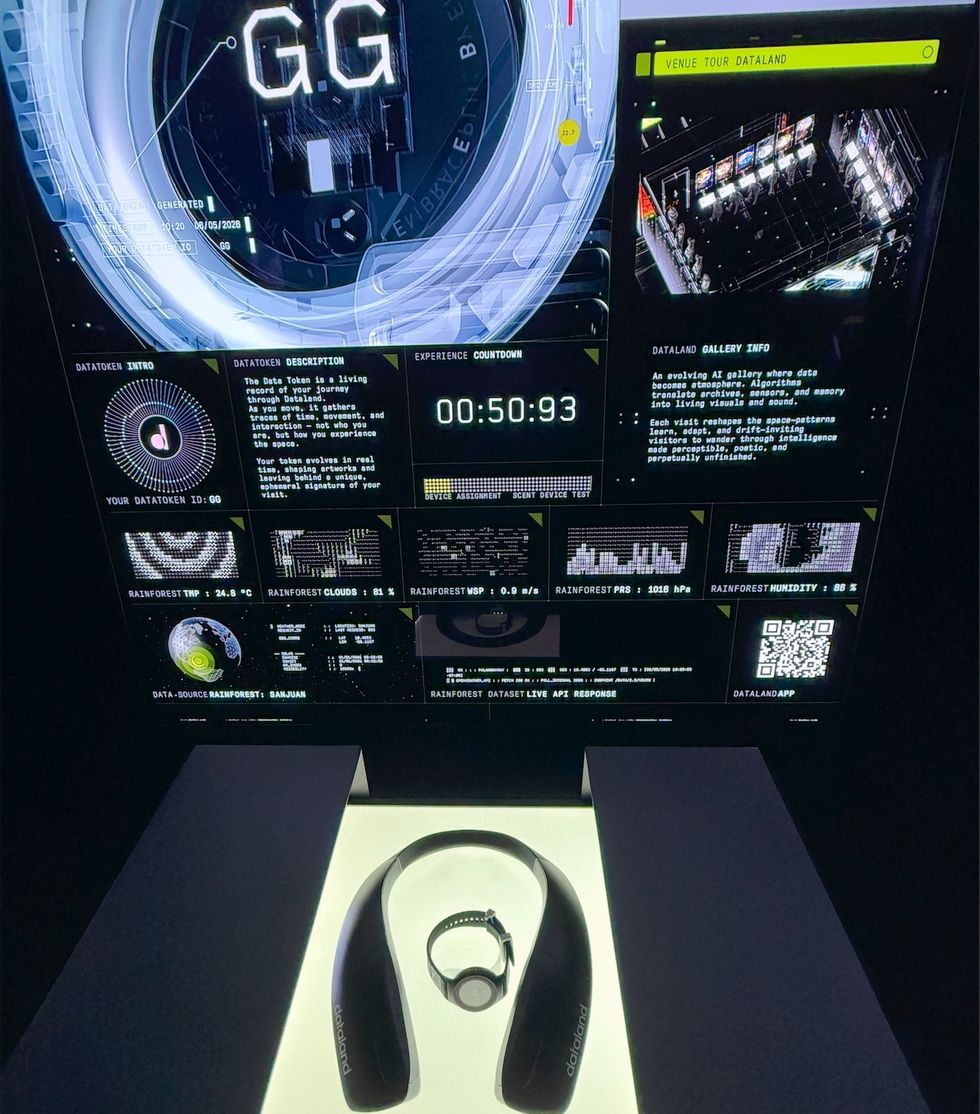 A set of wearables at Dataland tracks the guest's movements and their body's reaction to the exhibitionsImage credit Lou Pizante
While the first tracked where I went, the second tracked my body's reactions to what it found there. Heart rate. Skin temperature. Subtle physiological signals would be fed back into the exhibition itself, allowing the artwork to respond not only to its audience but also to the audience's emotional state.
I had come to Dataland expecting to observe the art. It appeared the art had made other arrangements.
What followed was, among other things, 25,000 square feet of machine intelligence operating at full roar.
Enough processing power to make a moderately ambitious data center feel like a TI-84, and some of the most extraordinary immersive production I have encountered in more than two decades of watching this industry find and lose itself.
The long history of making a big deal out of things
Yet the thought that followed me out of the building had very little to do with artificial intelligence.
The more time I spent inside Dataland, the more I found myself thinking about something considerably older than machine learning: the oldest habit our species has.
Wherever human beings have found something they could not stop thinking about, eventually they have built a place to hold it.
We did it for our gods and called the places temples and cathedrals. We did it for our dead and called them tombs and memorials. We did it for knowledge and called them libraries and universities; for memory and called them museums; for the heavens and called them observatories.
Whatever else these places may be, they are also declarations.
Every civilization has its obsessions. The interesting part is which ones it decides are worth the real estate. Show me what a people put their best architecture around, and I will show you what they could not stop thinking about.
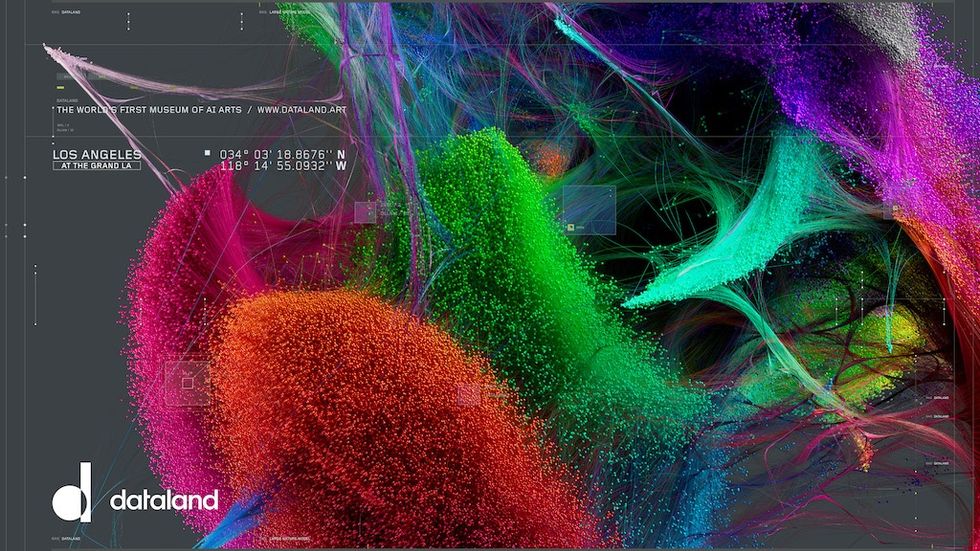 Dataland, the world's first Museum of AI Arts, opens to the public on 20 June in Los Angeles, CaliforniaPhoto: Refik Anadol Studio
Which is why Dataland unsettled me in a way I did not expect. Not because of what it contained, but because of what its existence implies.
Artificial intelligence is usually discussed as software. It lives in servers, cloud infrastructure, APIs, chat windows, and earnings announcements. It is fluid, distributed, and difficult to point at.
Most conversations about AI revolve around capabilities, ethics, creativity, labor, or economics—the vocabulary of a tool.
Dataland introduces a different proposition. Instead of asking us to interact with a technology, it asks whether that technology deserves to be enshrined.
So the most interesting question at Dataland is not whether artificial intelligence can create compelling art. Refik Anadol answered that years ago.
The more intriguing question is what it means when a society begins building institutions around artificial intelligence.
Because institutions are where ideas go when a civilization decides they matter.
See also: Refik Anadol's Dataland: imagination meets machine intelligence
From software to somewhere
Dataland is hardly the first place to transform technology into spectacle. The immersive industry has spent the better part of two decades filling rooms with projections, sensors, and increasingly persuasive reasons to stare at large glowing surfaces.
The technology improves. The vocabulary grows more elaborate. And yet most of these experiences remain, at their core, exhibitions. They arrive, they draw a crowd, they leave. They are destinations, sometimes even landmarks, but rarely institutions.
Dataland is attempting something more ambitious.
Consider where it has chosen to stand. Dataland occupies a permanent home in the middle of Los Angeles' civic and cultural core, among institutions like Walt Disney Concert Hall, The Broad, MOCA, The Music Center, and the Dorothy Chandler Pavilion.
These are not accidental neighbors. They are the places the city long ago decided were worth building, funding, preserving, and returning to.
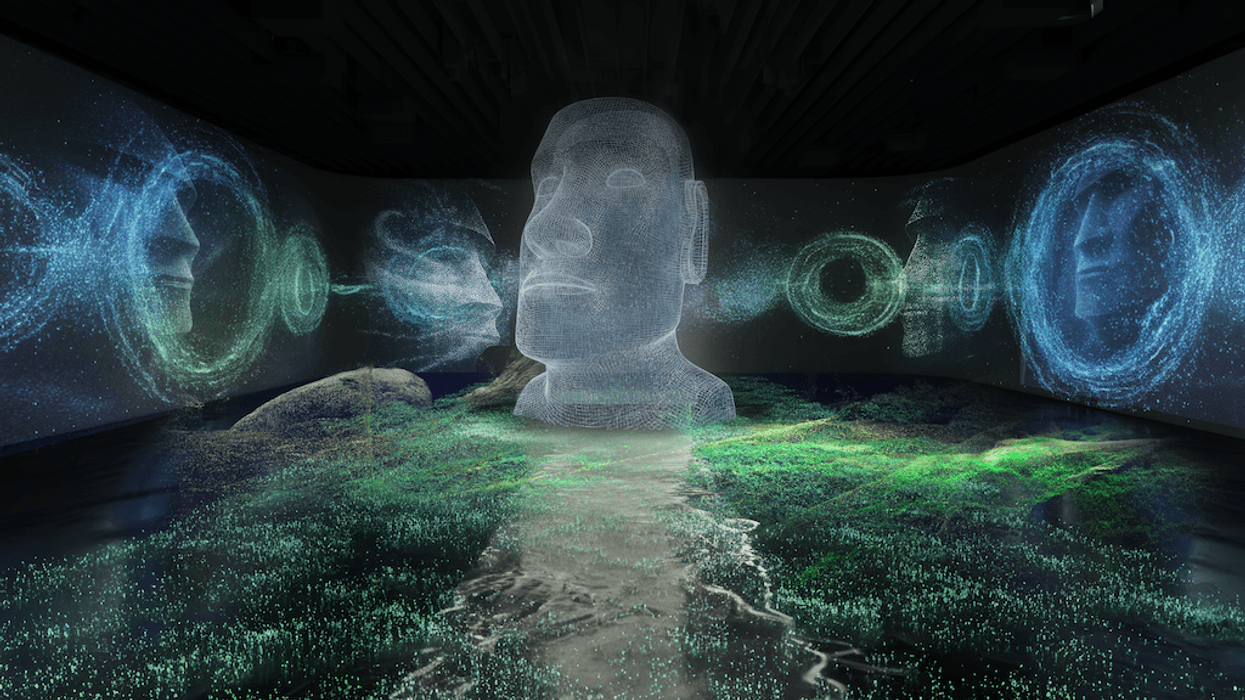
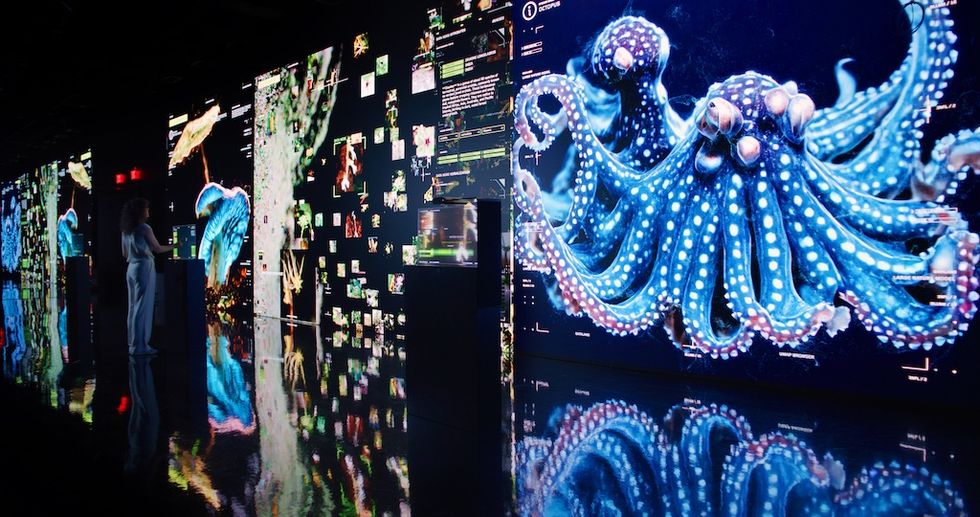 Installation view of Machine Dreams: Rainforest, Dataland, Los Angeles, California, 20 June 2026 to 31 January 2027© 2026 Refik Anadol Studio on behalf of Dataland. Photo: Refik Anadol Studio
To take a place among them is to make a claim. Dataland has not rented a room near the cathedrals of the city. It has asked to be one of them.
Whether it succeeds is a different question. Institutions inherit responsibilities along with prestige. Every cathedral, museum, library, university, and cultural landmark eventually has to answer the same questions:
Why here? Why should people come? Why should they come back?
Those questions are unusually hard in Dataland's case, because the thing it is built around does not naturally belong to a place at all.
Artificial intelligence belongs to networks. It exists everywhere and nowhere at once. Most technologies are content to remain technologies. They live inside devices, software, and infrastructure. They are used, but not gathered around.
To give artificial intelligence a permanent home is to make a different claim. It is to suggest that AI belongs not merely in products and platforms, but among the institutions through which a society understands itself.
That is either a profound idea or a category error.
Dataland is betting that it is the former.
The audition for permanence
And this is why Dataland feels more consequential than a typical exhibition, regardless of what one ultimately thinks about the artwork itself.
Dataland is asking whether machine intelligence belongs in that lineage.
Not whether AI is useful. Not whether AI is profitable. Not whether AI can generate convincing images.
Those questions are already being debated everywhere from boardrooms where mentioning AI on an earnings call can add several billion dollars of shareholder optimism, to social media comment sections where it is increasingly difficult to determine whether anyone involved is carbon-based, to conference panels where everyone agrees the technology will change everything and nobody can quite agree on what "everything" means.
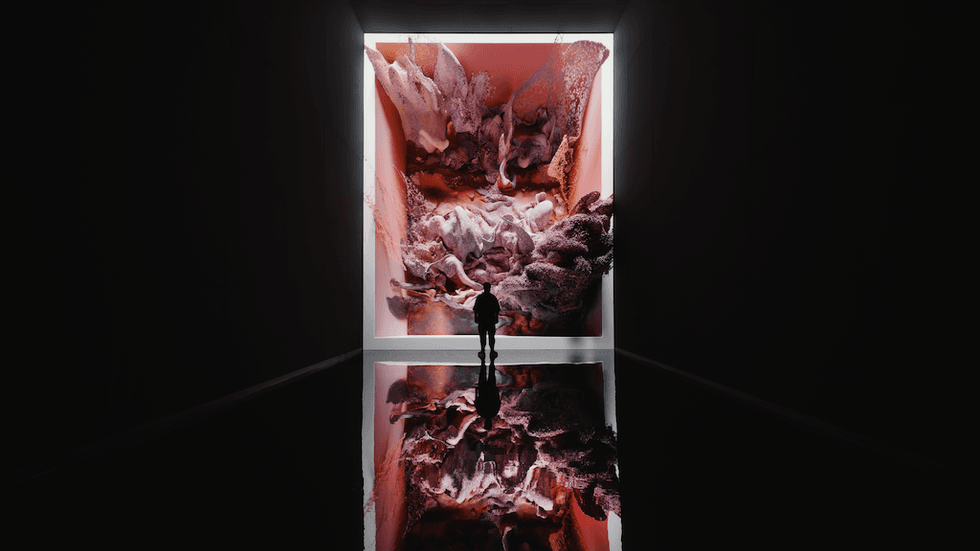 Installation view of Machine Dreams: Rainforest, Dataland, Los Angeles, California, 20 June 2026 to 31 January 2027© 2026 Refik Anadol Studio on behalf of Dataland. Photo: Refik Anadol Studio
The question Dataland poses is more fundamental.
Has artificial intelligence become one of the things we cannot stop thinking about—important enough to build institutions around, the way earlier eras gathered around the ideas, memories, stories, and beliefs that defined them?
Dataland does not leave that question unanswered. It makes a case, and, to its credit and occasional peril, it makes the case in production.
The numbers are the kind that usually make me suspicious.
Five galleries across 25,000 square feet. 1.5 billion pixels—eighty-four 4K Epson projectors in the main pavilion alone, plus 1,577 custom LED panels covering walls, ceilings, and floors. A 250-speaker audio ecosystem from L-Acoustics, delivering spatial sound in three dimensions with a resolution that has no precedent in any permanent museum anywhere in the world.
Specs like these are normally a tell; the thing an attraction brags about when it has nothing else to say. Here they mostly disappear into the work, which is the only honest test of whether production is in service of something or standing in for it.
Cathedral builders understood this too: the gold leaf and the flying buttresses were never the point, only the means. Spectacle in service of reverence is architecture. Spectacle in service of itself is a casino.
The better evidence was hanging around my neck and strapped to my wrist.
The devices contained FDA-cleared biosensors reading my heart rate, skin temperature, and electrodermal activity in real time. Those signals, anonymized, unrecorded, and used only during the experience, were fed back into the Large Nature Model, reshaping what I was seeing and smelling in response.
The artwork was not broadcast to me. It was addressed to me.
Whatever else Dataland is, it is a rare immersive experience that pays attention to the person inside it, which, when you think about it, is the same intimacy a great cathedral was engineered to produce. You were meant to feel that the space had noticed you.
Then there is the conservation question, which anyone paying attention to artificial intelligence is entitled to raise. The critique is well-founded: data centers are thirsty, and much of the industry treats environmental cost as someone else's spreadsheet.
Dataland treats it as a design constraint. The Large Nature Model runs on a Google Cloud server in a low-carbon zone in Oregon, on 87% renewable energy, and a visitor's entire stay costs roughly one phone charge.
This is the part I expected to be greenwashing, and wasn't.
Anadol's framing is blunt: “Sustainability,” he says, “is not a constraint DATALAND works around but a condition it builds from”—which is a meaningful thing to say in an industry that usually files green commitments under marketing.
A civilization reveals itself not only in what it builds, but in what it is willing to spend to build it honestly.
What happens when the walls change?
For all the discussion surrounding artificial intelligence, remarkably little attention has been paid to what happens after the technology works.
That may be the most fascinating aspect of Dataland. The project is not merely asking whether artificial intelligence can generate images, environments, or experiences. It is asking what artificial intelligence should be pointed toward.
Having been inside it, I think the answer matters more than the technology itself.
Dataland is not a demonstration of what machines can do. It is an argument about what they should care about.
The Large Nature Model was trained exclusively on nature: rainforest ecosystems, coral reefs, birdsong from the Cornell Lab of Ornithology, and data collected firsthand from sixteen rainforest environments around the world.
The machine has not been taught to mimic human culture. It has been taught to remember the natural world.
"We know that artworks can make us feel," explains Anadol. "While developing Dataland, we asked ourselves, 'Is it possible for artworks to feel us back?'"
The obsession this place has chosen to build itself around, in other words, is not the machine. It is what the machine has been asked to hold.
That curatorial choice is what separates Dataland from spectacle.
It is worth being precise about what I am praising. Machine Dreams: Rainforest is the inaugural exhibition, not the building's permanent state. It runs through the end of January, and then the galleries will hold something else.
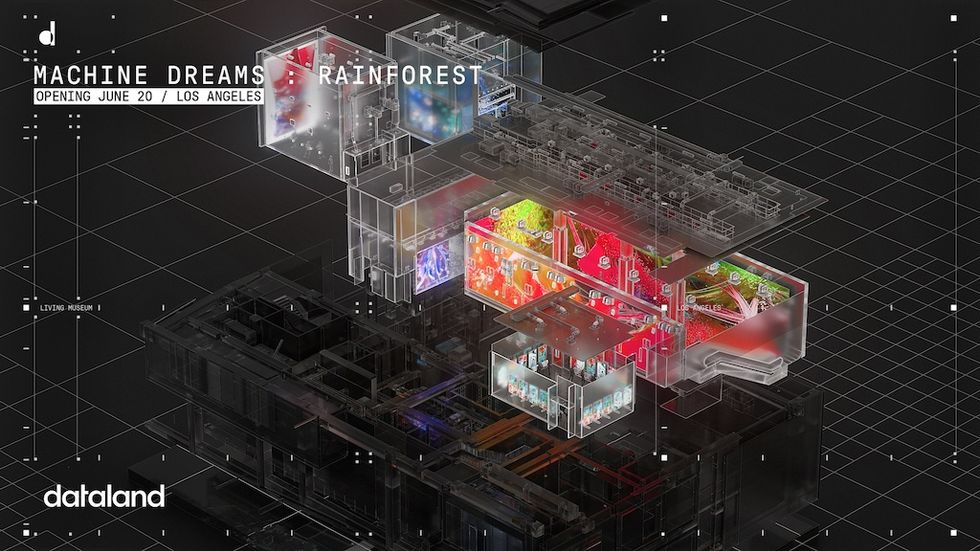 Installation view of Machine Dreams: Rainforest, Dataland, Los Angeles, California, 20 June 2026 to 31 January 2027© 2026 Refik Anadol Studio on behalf of Dataland. Photo: Refik Anadol Studio
Dataland is engineered to change—an artist residency, a growing collection, shows yet to be made. So the question a lasting institution must answer is not whether it can enshrine something once, but whether it can do it again, and again, every time the walls change.
Cathedrals managed it across centuries. Museums reinvent their galleries and remain, somehow, themselves. Whether a place built around artificial intelligence can develop that kind of enduring identity is genuinely unknown.
That is the threshold the immersive business has never quite crossed: plenty of touring spectacles have drawn a crowd, but almost none have become institutions people return to the way they return to a museum, a place woven into how a city understands itself.
Dataland is betting the medium is ready to make that jump.
The inaugural show is the test case. What follows is the open question.
Which brings us to a bird
When I left Dataland, the thought that followed me out of the building had very little to do with artificial intelligence.
It had to do with a bird.
More specifically, it was a moment in the Infinity Room that I have been unable to stop thinking about.
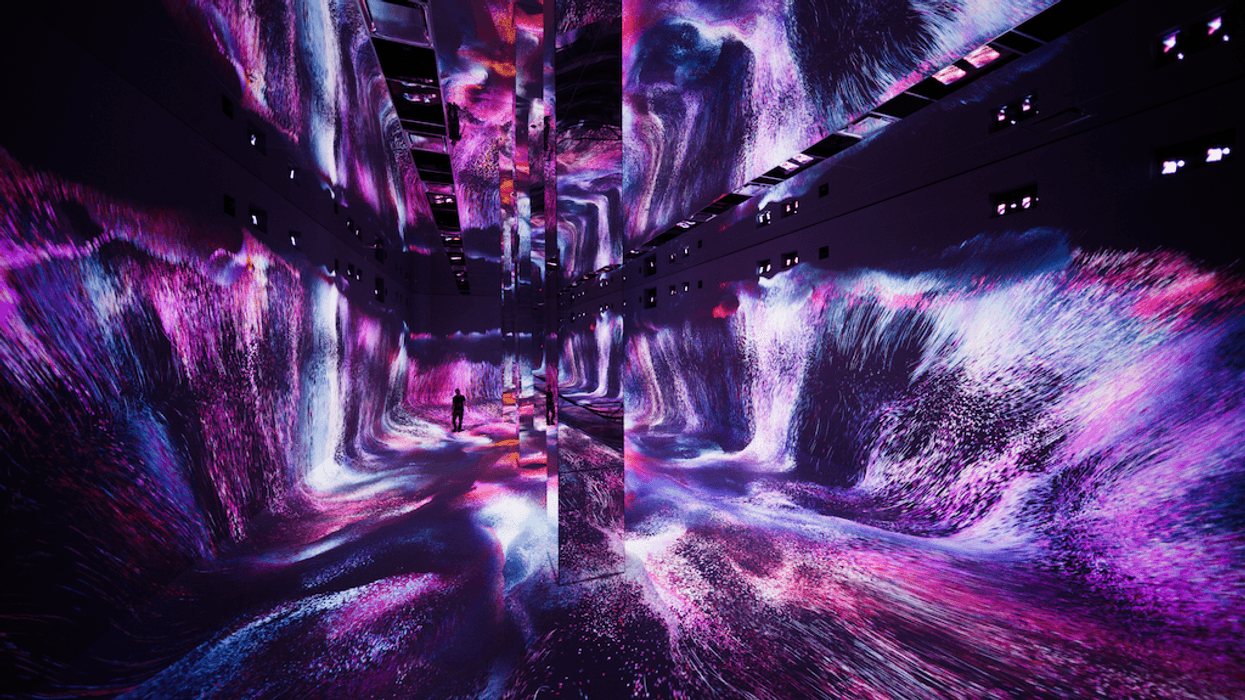
The room is a three-dimensional LED cube—walls, ceiling, floor—running on World Models, an advanced generative AI that understands the dynamics of real-world physics. It is, by any measure, an extraordinary technical achievement. But the moment that stayed with me required almost none of it.
In 1987, a biologist recorded the last known Kauaʻi ʻŌʻō, a Hawaiian bird that would be declared extinct three years later. The recording captures the male calling for a mate that would never answer.
That call plays in the Infinity Room.
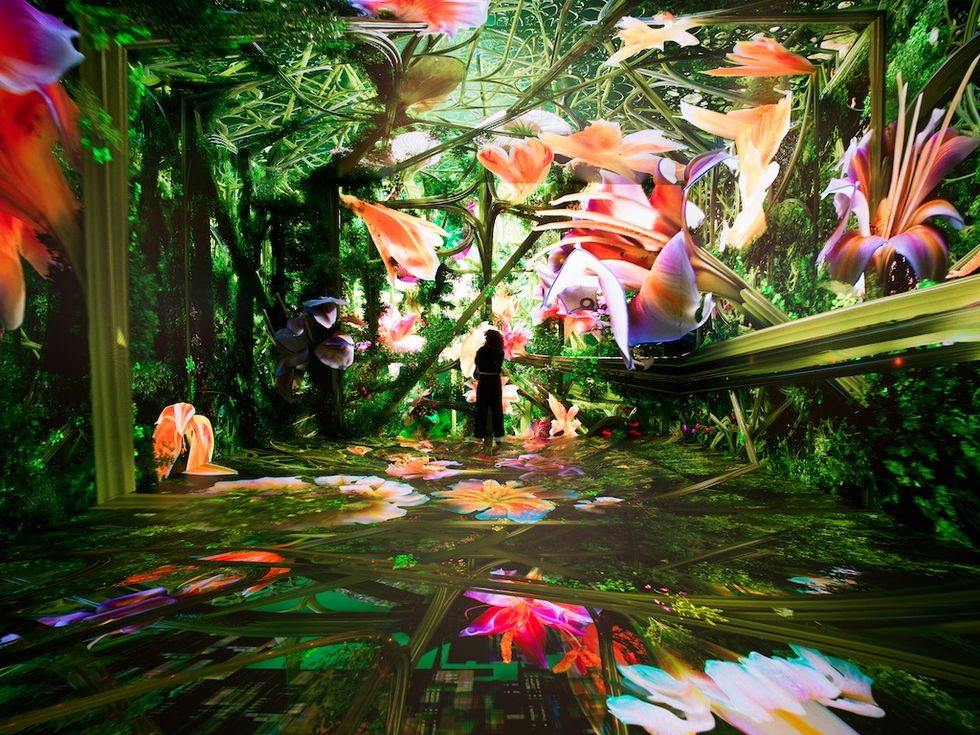 Installation view of Machine Dreams: Rainforest, Dataland, Los Angeles, California, 20 June 2026 to 31 January 2027 © Refik Anadol Studio on behalf of Dataland. Photo: Refik Anadol Studio
And then the Infinity Room goes dark. The 1.5 billion pixels disappear. The spatial audio disappears. The room abandons every trick it possesses.
What remains is a single bird calling into the darkness.
For a moment, it is the only voice left.
Dataland may earn its place in the lineage. Not because of what its machines can generate, though they generate extraordinary things, but because of what they turn that capacity toward.
The spectacle establishes the stakes. The silence delivers the meaning. You need the machine at full roar so that one dead bird's unanswered call can land with the weight it deserves.
That is the move.
Dataland does not enshrine artificial intelligence. It uses artificial intelligence to enshrine something else—a vanished birdsong, a rainforest's memory, the record of what we are losing while we argue about chatbots.
In the oldest sense of the word, the building is a reliquary: a place built to hold what a people refuse to let disappear.
The machine is not the subject. It is the vessel.
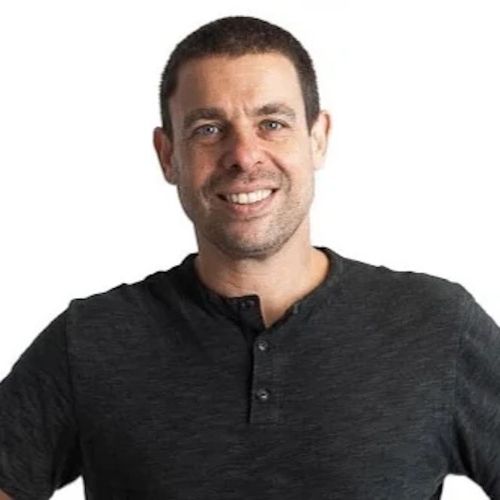
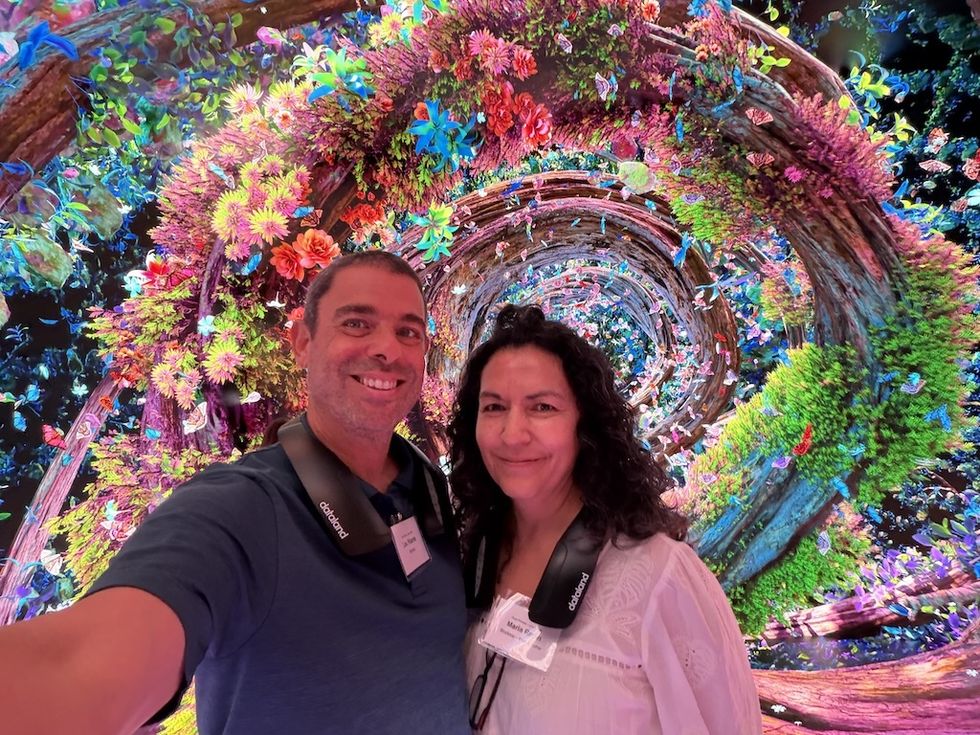 Lou Pizante and Maria Redin at a preview of Refik Anadol's Dataland in Los AngelesImage credit Lou Pizante
Whether Dataland can keep doing that show after show, long after the rainforest comes down in January, is the thing none of us can know yet. But I have seen it clear the bar once, in a room I had to travel to, stand inside, and fall quiet within alongside strangers who had gone quiet too.
Which is, when you strip away the technology, the same thing that has happened inside every cathedral, every memorial, every great museum: a group of strangers, gathered in one place, made briefly silent by the same thing.
Every era reveals itself through the places it builds. The cathedral told you what the medieval world could not stop thinking about. The museum told you what the modern one wanted to keep.
And ours, it seems, has begun building places where machines remember what humans are in danger of forgetting, which is not where I expected this story to end either.
That may tell future visitors more about this strange, anxious, AI-haunted moment than any of our articles about it ever will.
And that, it turns out, is worth enshrining.
This article is part of an ongoing exploration of the evolving immersive landscape—how we lost our way, who’s fighting to bring meaning back, and why it matters.
For more on what this column is all about, start with Is this article immersive?, where I lay out the mission: reclaiming immersion from the gimmick merchants and giving it back to those who create experiences worth disappearing into.