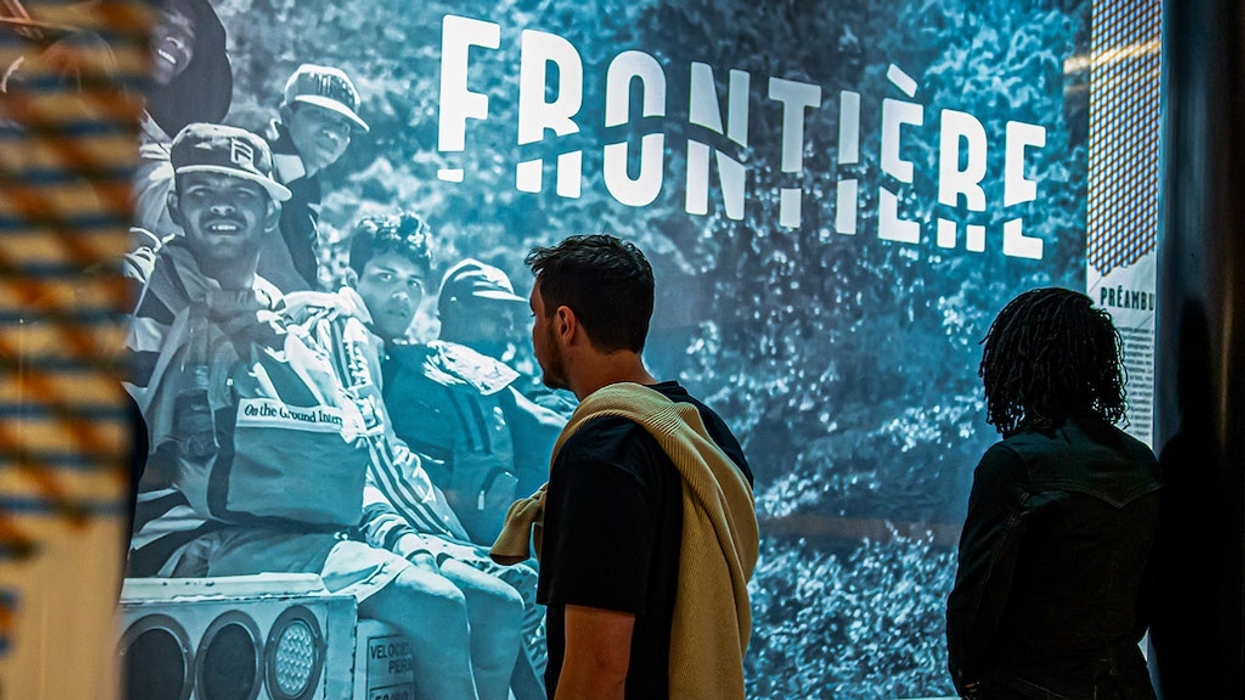

Universcience, an organisation that works to make science accessible to all, has created a new exhibit that combines the fields of geography, cartography, ethnography and geopolitics, which has just opened at Cité de Sciences et de l’Industrie in Paris, France.
Challenging stereotypes and proving that science exists in places visitors would never think of, Border features nine examples of borders that stretch from North America to Asia to cyberspace. It is designed to prompt audiences to reflect on and rethink their relationship with space, others, and the world.
Notably called Border, not the plural Borders, this exhibit is not an encyclopedia of borders around the world. While it features examples of different borders, the exhibit is crafted to showcase what a border is, where they exist, and the socio-political phenomena that arise as a result of this concept.
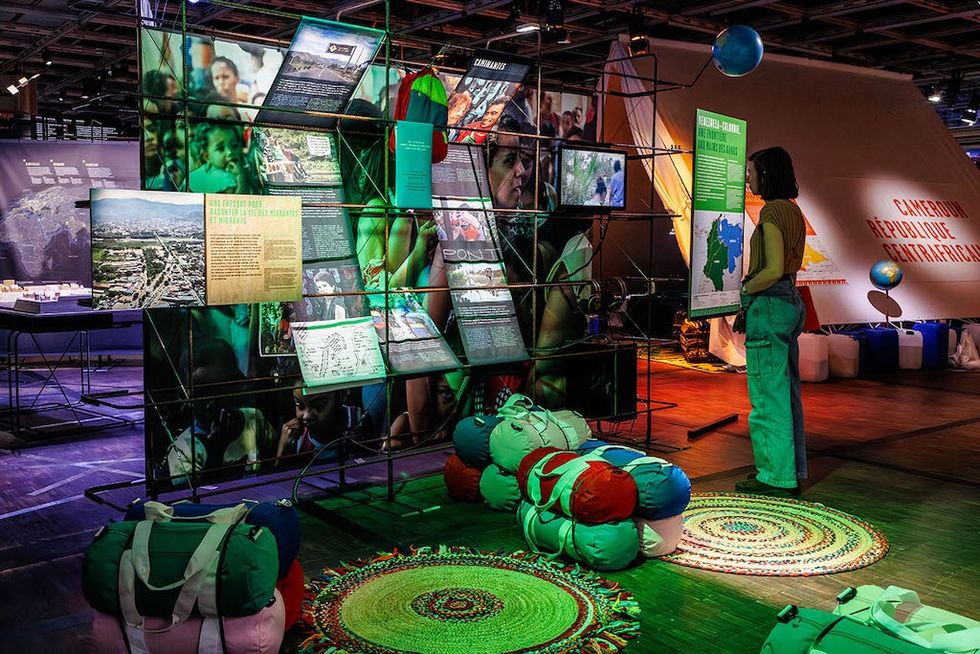 Border is a new exhibit exploring the fields of geography, cartography, ethnography and geopoliticsImage courtesy of Universcience
Curator Maud Gouy says: “The exhibit is named Border without an s. We decided to remove the s because we did not want to create an encyclopedia of borders. We wanted to show the singularity of each one.”
Borders are artificial and often arbitrary, with little to no physical significance. "While it is practical to put a border along a mountain or a river, you could also put it to the side of one. It's always the outcome of a decision," says curator Astrid Aron.
Viewers will discover that there is no single definition of a border and that no two borders are ever the same.
“Borders are not necessarily barriers, and in fact we chose borders that are sometimes considered to be like walls but are not at all like the border between Mexico and the US, which is an actual wall," adds Aron.
"Borders are not necessarily the perimeter of territories. If you go to the Gare du Nord in Paris, for example, you are at a border.”
The exhibit also highlights borders in cyberspace and how they affect the abstract concept of digital information exchange.
The science of geography
Border also aims to highlight the lesser-known science of geography. Often combined with the science of cartography, or map-making, geography provides us with a way to analyse and represent societies on a spatial level.
Universcience worked closely with geographers to develop this exhibit so that visitors would learn to scientifically analyse the borders they hear about in the news. Visitors learn about map bias, how different representations of our planet work better for different circumstances, and how the lines that divide our world are constantly in flux.
"A border is a key concept of geography, the field that allows us to study societies that exist on either side of a border, and understand that a border is an artificial object, a concept, in fact," says Aron.
Through multimedia and interactive elements, visitors discover just how complicated it is to visually represent the world we live in.
Border tackles the subject in an immersive manner. For instance, to tell the story of the humanitarian border between Cameroon and the Central African Republic, visitors enter a tent to watch a video projected on a canvas.
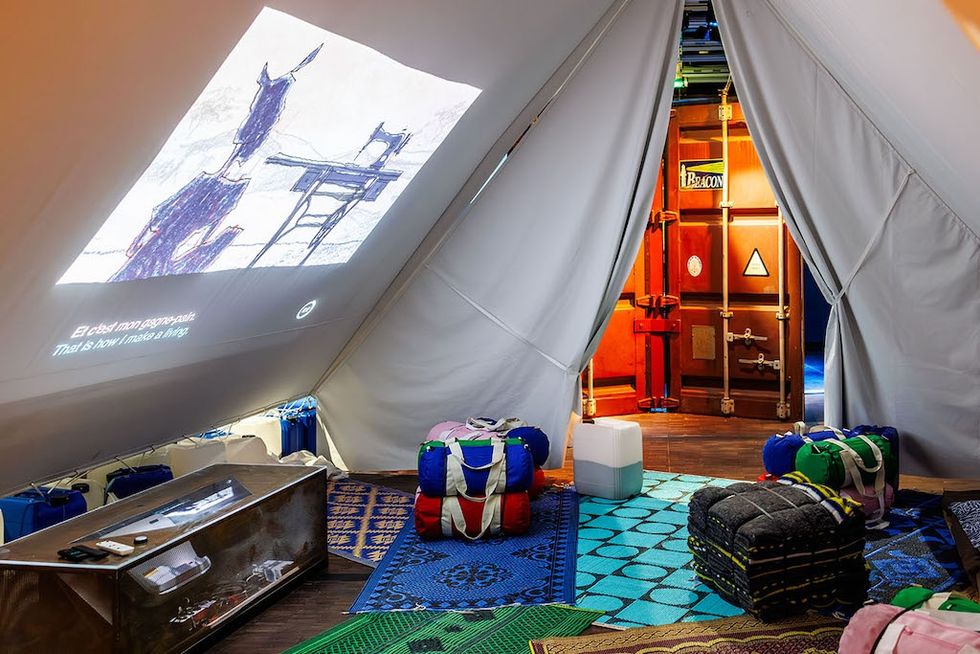 Visitors step into a tent as the exhibition explores the story of the border between Cameroon and the Central African RepublicImage courtesy of Universcience
Duffel bags, similar to those used by people actually crossing and living at this border, are scattered throughout the tent, and visitors sit among them to learn about the refugee camps there. Another portion of the exhibit on the border between Niger and Algeria features sand dunes that immerse visitors in the Sahara Desert.
These immersive scenographic elements persist even when presenting borders that we know very little about, like the border between North Korea and South Korea, where the exhibit was designed to highlight the yin/yang quality of the two sides of the demilitarised zone.
In addition, each part of the exhibit features a globe highlighting where the border runs, and the walls of each section depict landscape scenes that further orient and immerse the viewer.
An immersive, international exhibit
Border is an international exhibit that features stories from all corners of the world. Scenographic elements help visitors better connect with and resonate with each topic.
A key goal is to break stereotypes. While it addresses issues like immigration struggles, border violence, and the hardships refugees face when crossing without proper authorisation, it also highlights that borders can be peaceful agreements between nations and often go unnoticed in person.
Even at more problematic borders, scenes of commerce thrive as people create livelihoods between two different worlds.
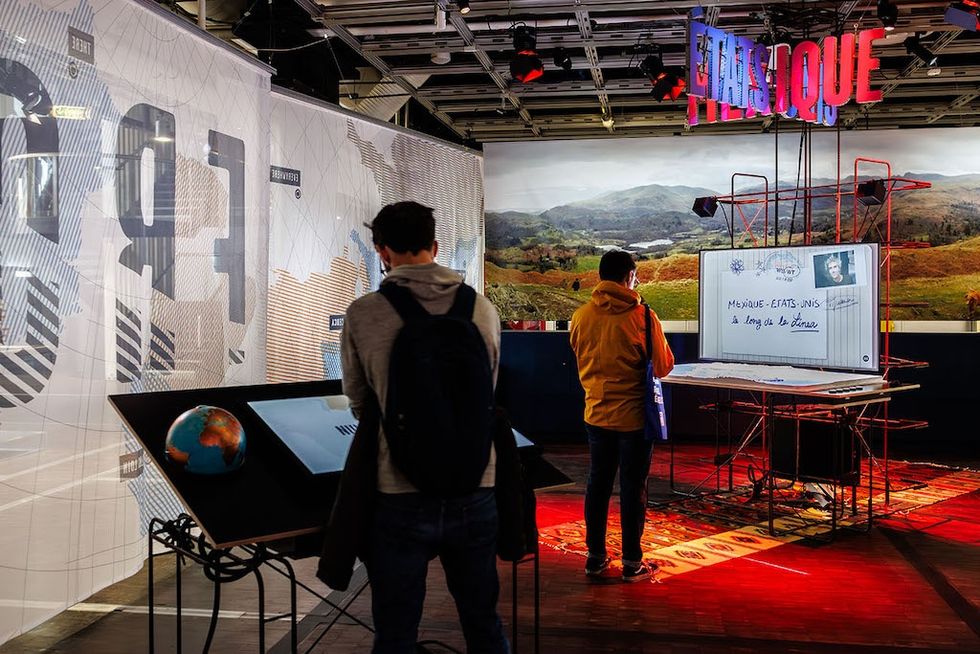 Border is an international exhibit that looks at stories from across the globe, bringing together science and sociologyImage courtesy of Universcience
The exhibition prompts introspection about personal biases and challenges individuals to think critically, much like geographers, fostering essential skills for becoming open-minded global citizens.
With games, films, art installations, multimedia, and text, Border offers an engaging and educational experience. Centred on the science and practice of geography, it highlights the connections among science, sociology, and the ways we represent our world.
Universcience also recently presented a new touring exhibit, Danser (Dance in English).
Created as a collaboration between Universcience and the Centre national de la danse, the Dance exhibit takes visitors into the world of dance, exploring the natural human compulsion to move through joyful, feel-good activities that people of all ages will enjoy.