When planning new attractions, knowing the ‘catalogue’ price of a ride is only part of the equation for theme park and amusement park operators. And when it comes to roller coasters and dark rides, there’s rarely such a thing as an ‘off-the-shelf’ construction.
The cost of site preparation work, getting the hardware to your venue, installing, commissioning, theming, landscaping, the marketing campaign, and so much more can add significantly to the project budget. Sometimes they can almost double it.
The introduction last year of trade tariffs on exports into the US added a new cost for parks seeking new attractions from abroad.
Arguably the birthplace of the theme park industry and the world’s first water park, the US boasts several notable homegrown ride manufacturers, industry suppliers, and world-class attraction design firms.
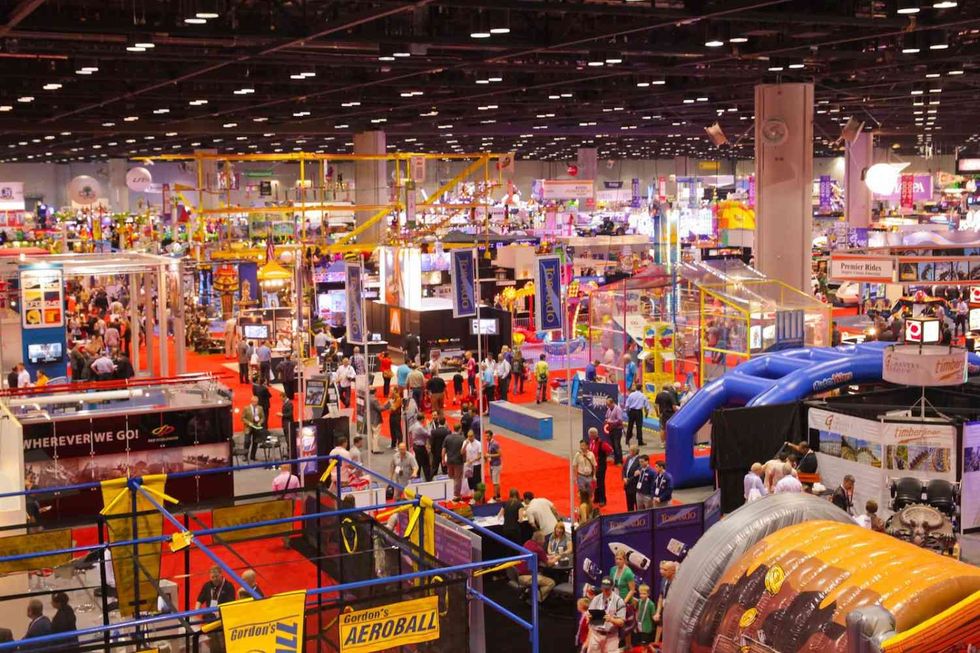
The busy trade show floor at an attractions industry trade show, where suppliers from across the globe converge
Yet walk the floor of the annual industry trade show each November in Orlando, and you’ll find European manufacturers offering everything from playgrounds and family attractions to thrill rides, water rides and roller coasters of all shapes and sizes.
Meanwhile, Canada enjoys a world-leading reputation when it comes to the supply of waterpark attractions.
Let’s talk tariffs
It was on 2 April 2025 that US President Donald Trump announced tariffs would be imposed on goods imported from more than 90 countries.
Suspended for 90 days, they have been revised on several occasions since, with various countries and trading partners striking individual trade deals.
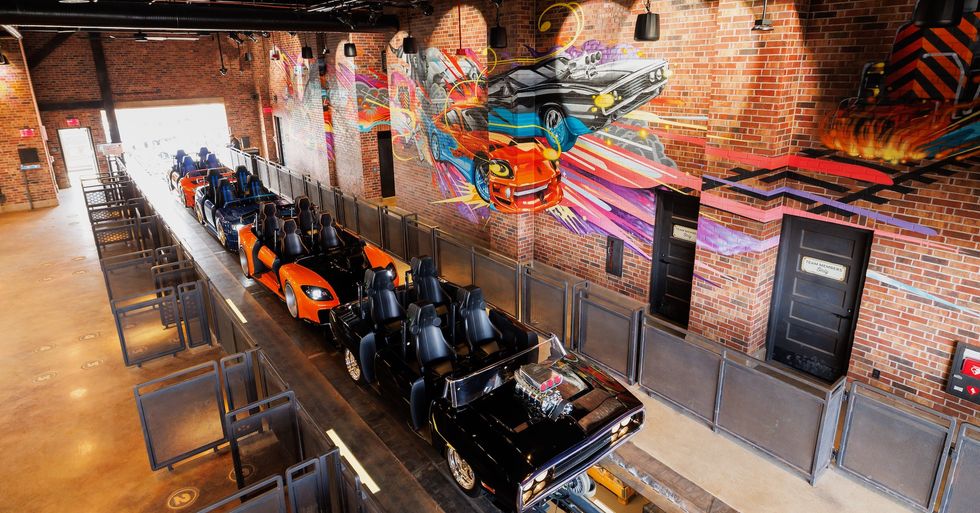 Fast & Furious: Hollywood Drift, featuring a ride system by Intamin, will soon open at Universal Studios HollywoodImage courtesy of Universal
 Last July, the European Union (EU) negotiated a 15% baseline tariff. Many other nations pay 10%. US neighbour Canada, initially clobbered with a 35% tariff, now benefits from exemptions under the revised Canada‑United States‑Mexico Agreement (CUSMA).
The sting in the tail for some ride manufacturers is the additional steel tariffs, which can be as high as 50% on certain components.
This article has been in gestation for some time. With ongoing changes and threats to US tariffs, there was a risk that it would be out of date before publication.
Yet whilst the individual rates levied on different nations remain in flux, more than one year on from so-called “Liberation Day”, trade tariffs seem here to stay under the current US administration.
So, now seems as good a time as any to quiz several amusement industry suppliers about their experiences.
What the manufacturers say
"Steel tariffs can affect material costs across the construction sector, while broader import tariffs can impact components or finished products moving across borders,” says Greg White, chief operating officer at ProSlide in Canada.
“General import tariffs can also affect the operational and maintenance budgets of parks, for example when replacement parts must be imported. Labour and visa restrictions can also affect installation schedules or technical.
"In practice, the challenge is not one single policy but the combination of factors.”
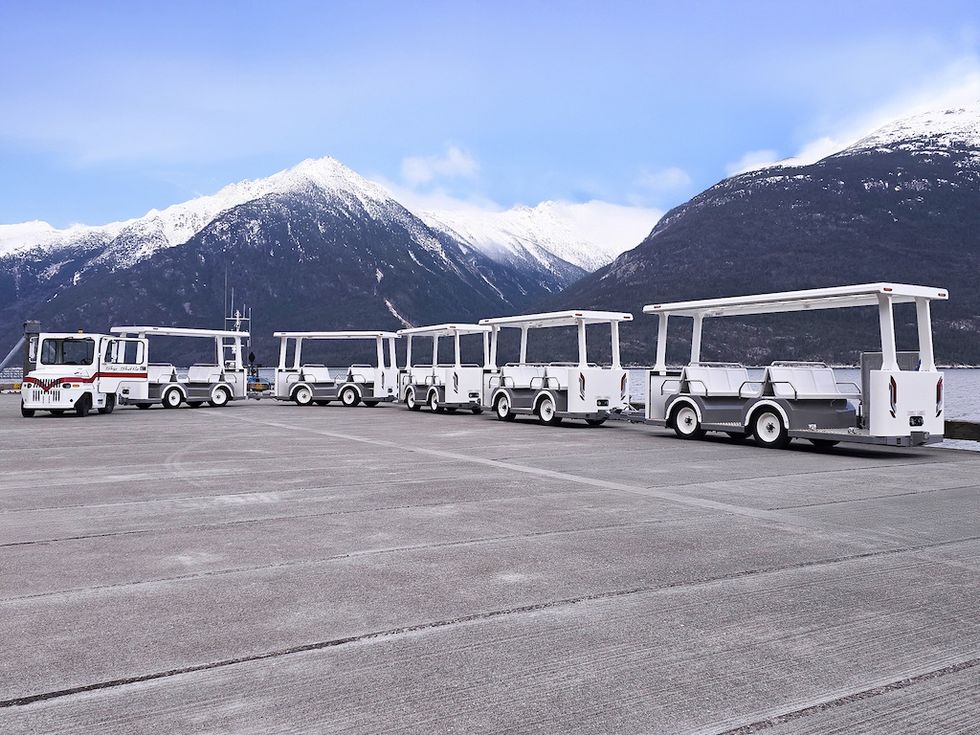
Severn Lamb recently delivered this road tram to Survey Point, Alaska.
Image courtesy of Severn Lamb
“Any trade restriction that increases cost, complexity or uncertainty can influence investment decisions on capital projects,” adds Patrick Lamb, managing director of UK-based leisure transportation specialist Severn Lamb.
“Equally, trade agreements that improve market access and make cross-border trade more predictable are always beneficial for specialist manufacturers serving an international customer base.”
No longer an EU member, the UK ‘benefits’ from a 10% baseline tariff on exports to the US and 25% on steel.
Switzerland, which has never been part of the European Union, was initially subject to a 39% baseline, but now has the same 15% rate as EU nations, with 50% on steel.
A challenge for the small country’s not inconsiderable ride manufacturing sector.
Like Lamb, Intamin’s executive vice-president Sascha Czibulka is somewhat sanguine: “We’ve always acted globally. Things balance out unless there is a global event/impact concerning all markets,” he tells blooloop.
Long sales cycles and longer-term value
Fabio Martini is CEO of the Italian ride manufacturer Technical Park. “For a company like ours, general import tariffs have had the strongest impact,” he says.
“Steel tariffs affect us indirectly, but we are not a mass producer of standardised steel products. If we are honest, the ‘perfect storm’ has been less about the tariff percentages and more about the simultaneous weakness of the dollar.”
“The projects we deliver are often highly specific and bespoke,” adds Lamb.
“This naturally leads to long sales cycles. If a project is delayed or jeopardised by tariff increases, it is difficult to quickly replace our forecast revenue elsewhere. Keeping track of changes is challenging because the landscape shifts so frequently.
"Balanced against the relative volume of transactions we have with the US, it remains manageable.”
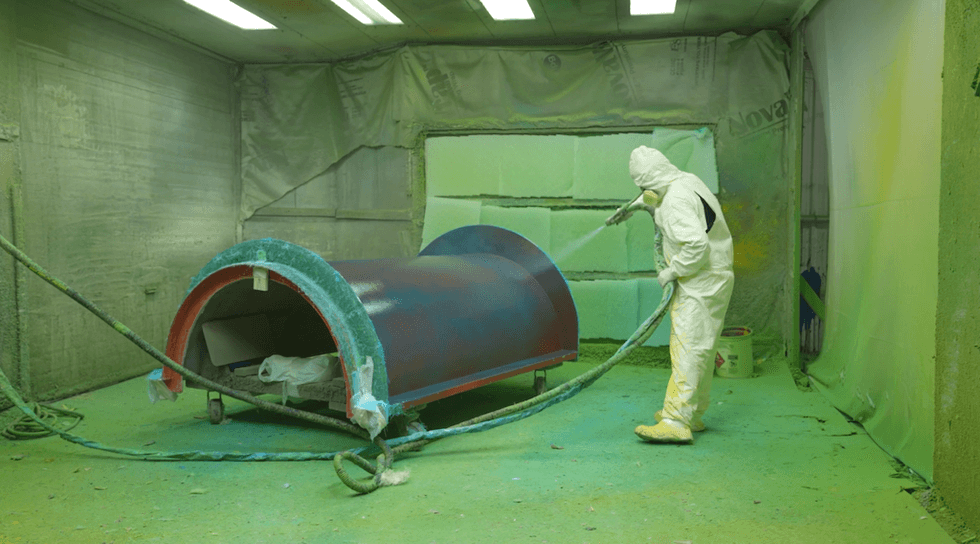
A member of the ProSlide team applying the first layer of gelcoat to a flume part
Image courtesy of ProSlide
“Trade policies evolve frequently, so staying informed is part of operating in a global industry,” says White. “Tariffs ultimately represent additional costs within a project, and those costs are borne by the client.
"Because of that, it can be advantageous for park operators to pursue any relief programs or policy support that may be available through their own governments.”
Yet he offers this caveat: “Water parks are built with decades of operation in mind. So operators and suppliers alike focus on stability and long-term value rather than short-term policy cycles.”
US parks exercise caution
Since trade tariffs were introduced Stateside last spring, do our interviewees have any anecdotal evidence that operators in the US are becoming more cautious about importing rides and attractions from abroad?
“It’s definitely on their mind,” says Czibulka. “Some parks have been dissuaded from new investments or moved decisions to a later time, but many are still proceeding with their enquiries and plans.”
Martini echoes these sentiments: “There is certainly a higher level of caution in the market. Some operators, especially carnivals, have told us that tariffs combined with currency fluctuations have made budgeting more complex.
"That said, we would not describe the situation as a collapse in demand.”
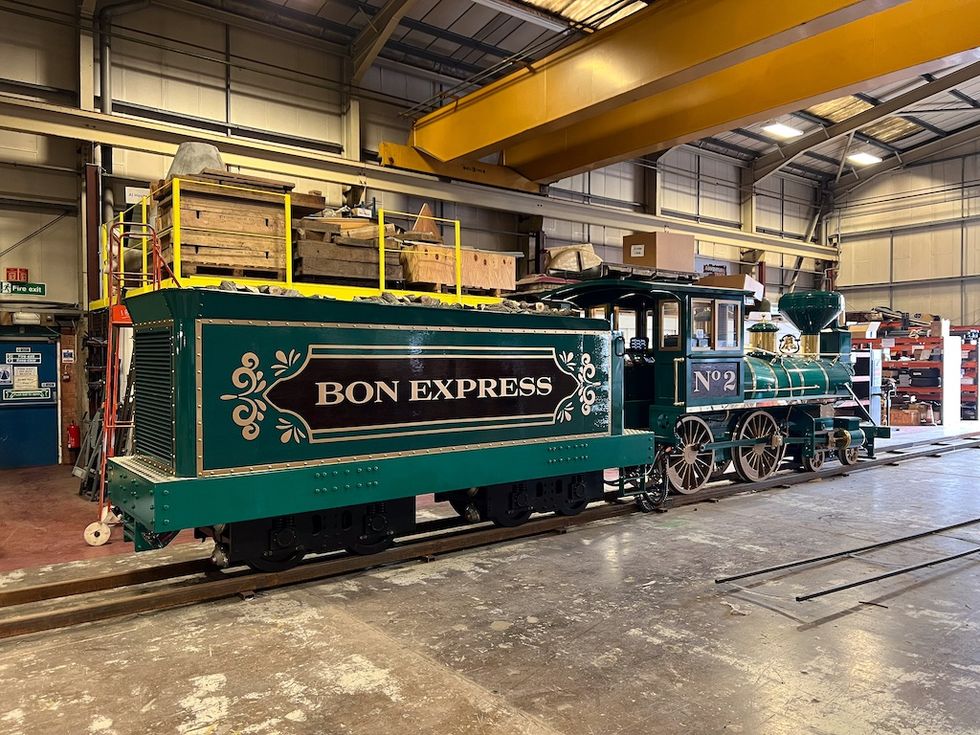
The Severn Lamb team working on a project in its UK warehouse
Image courtesy of Severn Lamb
“From what we have seen,” says Lamb. “Tariffs are certainly causing operators to reconsider and review purchasing decisions. That is not surprising given the added financial impact of importing goods.
"We have not seen a complete withdrawal from overseas suppliers, but we are seeing greater scrutiny and caution much earlier in the decision-making process.”
Why opening a factory in the US is easier said than done
To avoid import tariffs, President Trump has encouraged foreign firms to open factories on US soil. It’s not as simple as that, argues Martini:
“Opening a manufacturing facility is not something that can be done overnight. We are not a large industrial group with automated production lines like a food-processing plant. As a company with a strong ‘Made in Italy’ identity, a US factory would not align with our business model.”
“Rather than opening our own factory,” says Lamb, "we would be more inclined to work with suitable and appropriately aligned US partners.
"We are already doing that with selected companies whose products complement and broaden our own offering. Such as our Compact Mobility and Utility ranges, street-legal, low-speed electric vehicles manufactured in Anaheim, California.”
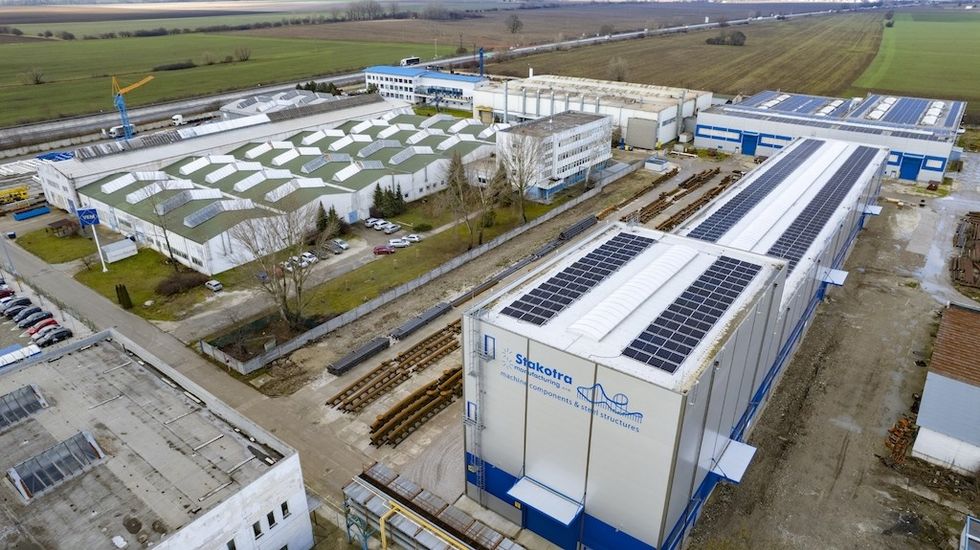
The rollercoaster track manufacturing plant used by Intamin in Switzerland
Image courtesy of Intamin
Whilst fellow Swiss company Bolliger & Mabillard has had track for its coasters fabricated for many years in the United States, Intamin has no current plans to open a factory in the country, confirms Czibulka.
It’s worth noting at this stage that the US is not the first nation in the world to levy import tariffs.
“We export to many countries that have historically operated with higher import duties as a normal condition of trade,” says Martini. “Those markets have remained dynamic and profitable for us because they value customisation and European manufacturing know-how.”
The Brexit effect
In the UK, “Brexit has added another layer of administrative and commercial complexity to international trade,” says Lamb. “Particularly around documentation, logistics and longer-term planning.
"As with tariffs, the biggest issue is often uncertainty rather than one single cost factor. Businesses can adapt, but reduced predictability inevitably adds pressure to international projects and supply chains.”
When it comes to exporting to the UK, “We haven’t seen any significant change in sales,” reports Jeroen Nijpels of JNELEC, who represents several EU-based suppliers.
“That includes two Zierer projects we did this season with Merlin at Alton Towers and Chessington World of Adventures.”
However, one British amusement park operator we spoke to has certainly experienced increased costs and effort in keeping his existing rides up and running since the UK left the European Union.
"Getting spare parts has become dreadful,” says Marshall Hill at Funland on Hayling Island. “Everything has to have a product code now; there’s a lot of paperwork you didn’t have before; it’s a minefield.
"We once had a €15 part from an Italian manufacturer that ended up costing nearly €100 by the time we’d done everything we needed to do. Other companies will refuse to supply you, so you have to look for alternative suppliers of parts."
Obstacles (and opportunities) elsewhere in the world
Whilst he doesn’t go into details, Czibulka says restrictions in China have impacted his company’s activities there of late. However, he sees promise in other parts of the world:
“We hope that the free trade agreements between the EU and, respectively, India and the Mercosur [South American common market] countries will have a positive impact for our business in the mid to long term.”
“India’s amusement and leisure market is growing rapidly,” notes Martini.
“Easier access through reduced tariffs and harmonised certification standards would make European rides more financially viable for local operators.”
Prospects for the US and the long term
Whilst it may be easier and cheaper to buy from domestic manufacturers, US parks and attraction operators will continue to seek certain products from overseas suppliers, despite the added obstacles now in their way.
“The US manufacturing and supply community is generally strong and diverse,” says Lamb.
“However, there are still specialist ride and experience elements, particularly from Europe, that offer characteristics not always available from domestic suppliers.”

ProSlide brought its HIVE 20 water ride to Zoombezi Bay in Ohio, US
Image courtesy of Zoombezi Bay
“Despite current challenges, the US remains one of the most dynamic amusement markets worldwide,” adds Martini. “Parks still prioritise quality, reliability and uniqueness over purely short-term cost considerations.
"Meanwhile, our order book for carnival rides remains robust even in the face of tariffs. However, the world is large. A balanced portfolio reduces dependence on any single country.”
"Ultimately, the attractions industry tends to take a long-term view,” concludes White. “In conversations with clients, the focus is less about where attractions are manufactured and more about ensuring projects remain financially viable.
"Tariffs can affect project timelines, procurement strategies and overall budgets, but parks still want the best attractions available to drive attendance and guest satisfaction.”