





The world's best cruise attractions & experiences
Alongside restaurants, pools, and entertainment, many cruise ships now include a wide range of attractions designed to fill days at sea with a variety of experiences. These can range from large-scale water parks and thrill rides to immersive entertainment, interactive games and family activity spaces.
For cruise operators, attractions serve to attract different age groups and travel preferences, especially as ships become larger and itineraries feature more onboard leisure time.
For designers and suppliers, ships present a unique environment: attractions must operate safely and reliably at sea while fitting within limited space and complex ship layouts.
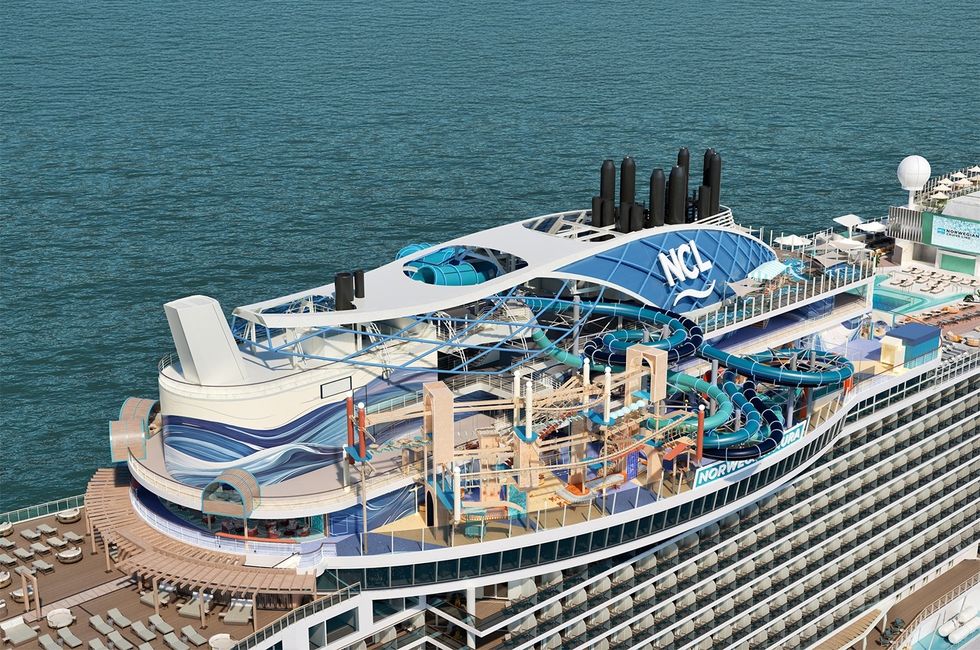 Norwegian Aura
And, similar to theme park attractions, operators are constantly striving to offer rides and experiences that are bigger, better, and more memorable than ever.
In this article, we examine some of the most notable examples currently at sea, highlighting the variety of concepts in the cruise market and how they contribute to the overall guest experience.
In no particular order, here are some of the world's best cruise attractions and experiences.
Category 6 Waterpark on Royal Caribbean's Icon Class ships
Category 6 is the largest water park at sea, found on Icon of the Seas (2024) and Star of the Seas (2025) from Royal Caribbean. It features six record-breaking water slides and immersive theming.
Highlights include Hurricane Hunter, a family raft slide with 360° spins extending over the ship’s edge; Storm Surge, a raft slide with a cantilevered acrylic “lotus” section over the ocean, creating the feeling of sliding off the ship; and Frightening Bolt, the tallest drop slide at sea at over 14 metres (45 feet), with a trapdoor start and near-vertical drop.
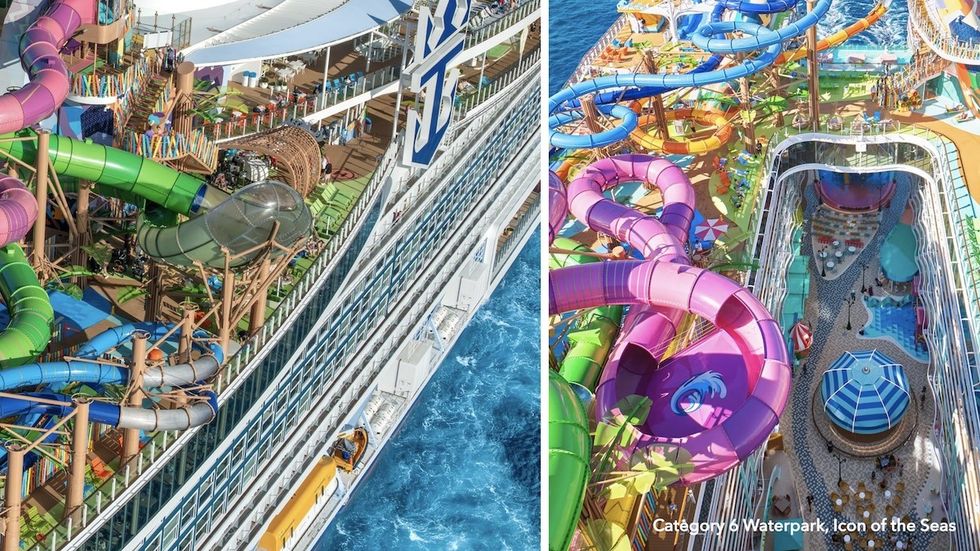
Guests can also experience Storm Chasers, the cruise industry’s first duo mat-racing slides, letting guests race side-by-side, and Pressure Drop, the first open free-fall slide at sea, featuring a steep 66° drop.
Water, lighting, sound, and thunder effects simulate storms that activate periodically throughout the park, and speakers inside the slides play music and sound effects matched to the ride’s speed and theme to intensify the experience.
The water park aims to push cruise-ship entertainment further, combining record-breaking slides, engineering innovations, and immersive storytelling to create a theme-park-level attraction at sea.
Partners included Martin Aquatic and wiegand.waterrides.
Cliffhanger Swing on MSC Cruises' MSC World America
Created exclusively for MSC World America (2025), Cliffhanger is the only over-water swing ride at sea, towering above the top deck in the Family Aventura district.
Cliffhanger's four seats start off close to the deck before the ride's arms lift them up and out over the edge of the ship. Riders are then propelled back and forth above the water.
"This unique, edge-of-your-seat experience will have you feeling the wind in your hair as your breathtaking view alternates between the water below and the sky above," says MSC Cruises.
In addition to the Cliffhanger attraction, MSC World America includes seven districts, a water park, and an 11-deck dry slide.
See also: Sailing into innovation: exploring the future of onboard attractions with CSI & MSC Cruises
North Star on Royal Caribbean's Quantum and Quantum Ultra Class ships
North Star holds the Guinness World Record for the tallest observation experience on a cruise ship, lifting guests more than 100 metres (328 feet) above sea level for 360-degree views.
The clear pod, resembling a smaller version of the London Eye capsules, is mounted on a large mechanical arm that moves it vertically and extends it out over the ship's side.
The experience lasts approximately 15 to 20 minutes and can hold up to 14 passengers. It is also accessible for wheelchair users.
The North Star ride is offered on Quantum of the Seas (2014), Anthem of the Seas (2015), Ovation of the Seas (2016), Spectrum of the Seas (2019), and Odyssey of the Seas (2021).
Aqua Slidecoaster on Norwegian Cruise Line's Norwegian Aqua
Norwegian Cruise Line (NCL) introduced the world's first hybrid rollercoaster and waterslide, the Aqua Slidecoaster, to Norwegian Aqua (2025).
With three levels of twists and turns around the ship's funnel, it features dual slides and a magnetic lift that carries guests through two distinct courses.
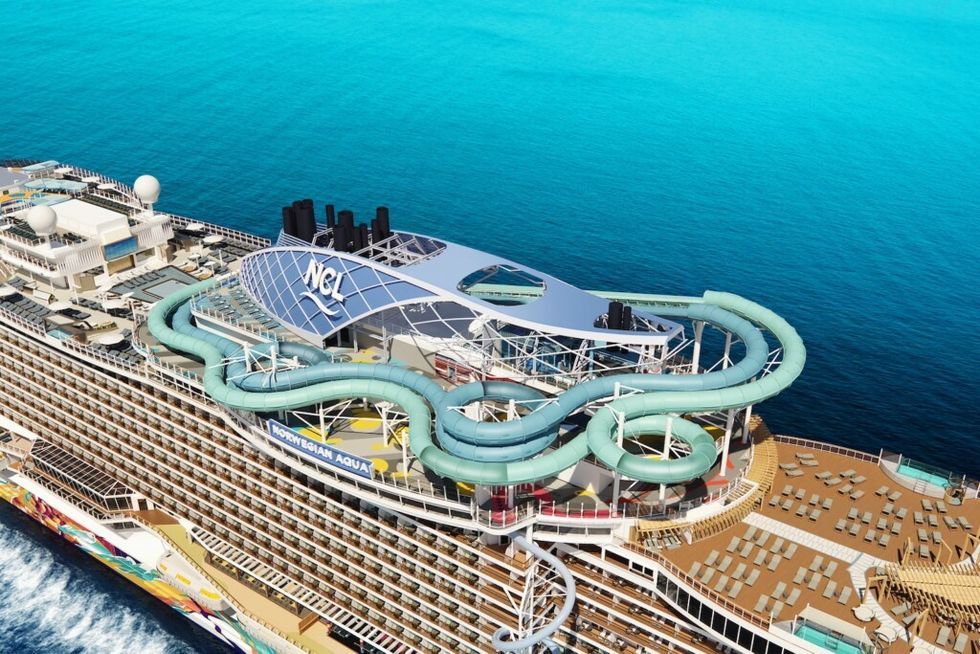
The ride's launch mechanism uses contactless linear synchronous motor technology, which is also employed in major accelerated roller coasters. It launches the boats on both waterslides simultaneously. With two 2-person rafts, the SlideCoaster can accommodate 720 people per hour.
The waterslides are the longest ever constructed on a cruise ship, and the slide tubes are filled with colour and daylight effects to intensify the high-speed race through the course.
The award-winning SlideCoaster concept comes from wiegand.waterrides.
Magic Carpet on Celebrity Cruises' Edge Class ships
Magic Carpet is the world’s first cantilevered, floating platform that reaches heights of 13 stories above sea level.
The Magic Carpet features comfortable seating, a full bar, and space for live music, making it a destination in its own right, but its mood and purpose vary depending on its position, offering new venues, views, and experiences on each deck it visits.
At the top of the ship, the Magic Carpet transforms into a sky-high venue, offering experiences like Dinner on the Edge. Moving down to Deck 14, it functions as an extension of the main pool area. On Deck 5, it becomes an open-air dining space.
Finally, at Deck 2, at the bottom, the Magic Carpet connects smoothly to The Destination Gateway.
It is available on Celebrity Cruises' Edge Class ships, including Celebrity Edge (2018), Celebrity Apex (2021), Celebrity Beyond (2022), Celebrity Ascent (2023), and Celebrity Xcel (2025).
Robotron on MSC Cruises' MSC Seascape
The MSC Seascape (2022) features a distinctive robotic thrill ride called Robotron, offering an interactive experience. Robotron is a coaster-style attraction with personalised music and lighting, and when it launched in 2022, it was the first of its kind for a cruise line.
Riders use a pre-ride touchscreen to select their preferred music while soaring 53 metres (173 feet) above the sea, and can also choose their thrill level.

Partners include RWS and German robotic manufacturer KUKA. The KUKA robot arms were also used as the basis for Universal’s Harry Potter and the Forbidden Journey dark ride.
Haunted Mansion Parlor on Disney Cruise Line's Disney Treasure & Disney Destiny
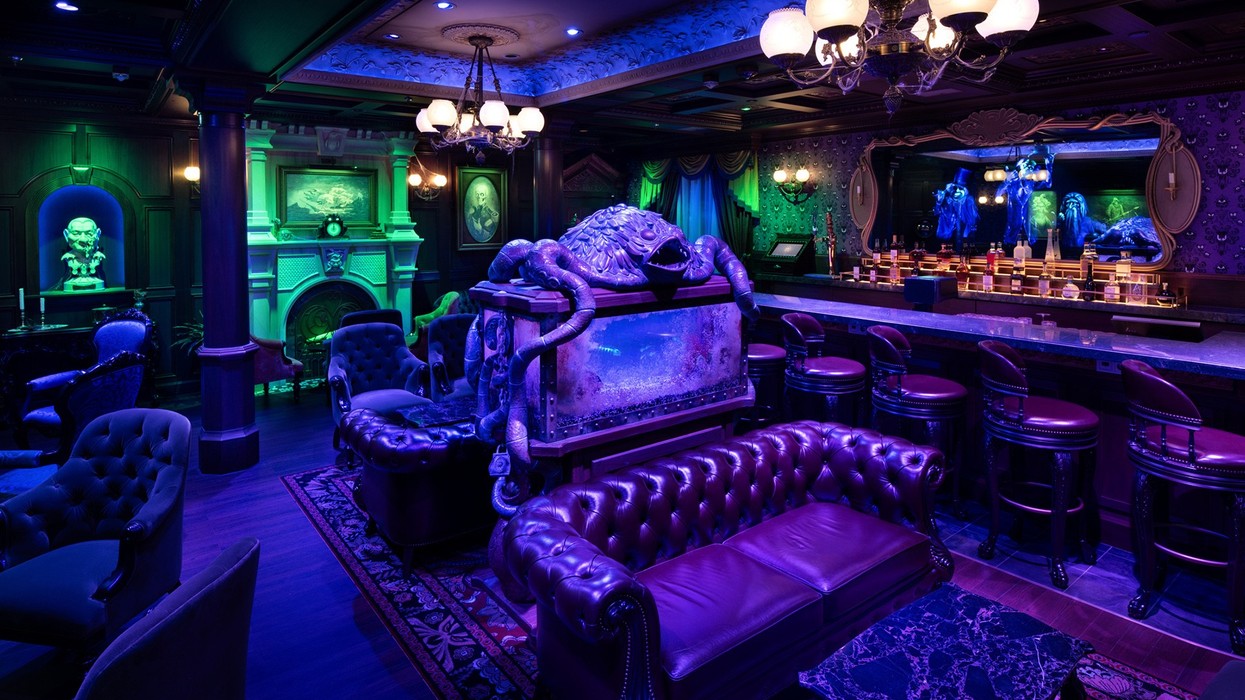
The Haunted Mansion Parlor, crafted by Walt Disney Imagineering, is a themed lounge aboard the Disney Treasure (2024) and Diseny Destiny (2025) inspired by the classic Haunted Mansion.
It is the first bar experience themed around this attraction, where guests can relax, socialise, and engage with the mansion’s ghostly characters in an immersive environment.
The concept is a haunted, séance-like lounge where guests mingle with spirits in a “swinging wake” hosted by ghostly characters. The story introduces a sea captain who died before marrying his fiancée, expanding the Haunted Mansion lore.
It resembles a luxurious early-20th-century cruise liner drawing room with dark wood, chandeliers, purple wallpaper, and eerie decorative details.
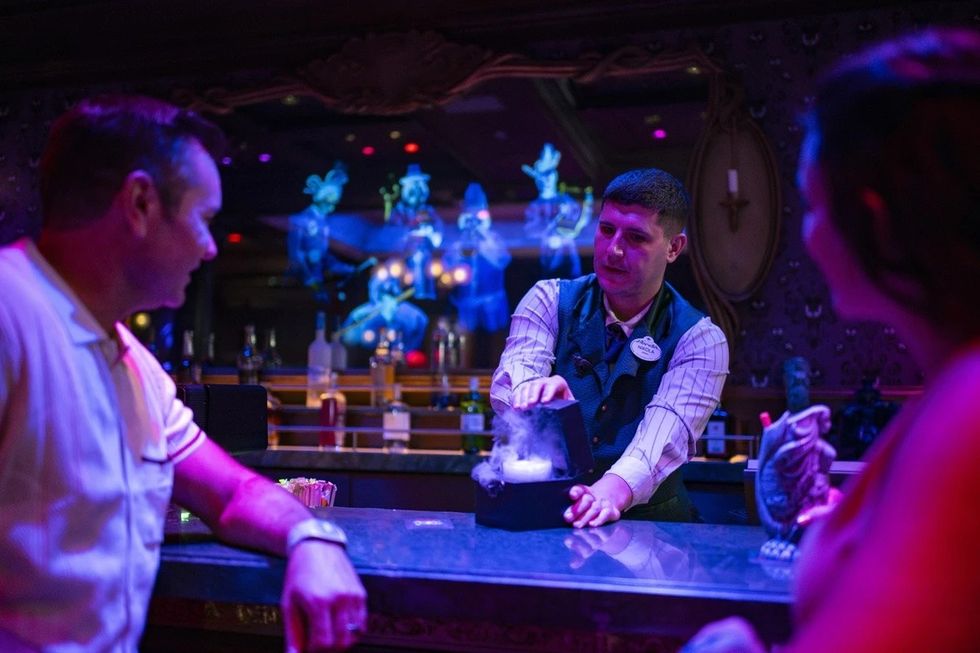
Guests experience illusions and special effects such as portraits that transform into ghostly versions during lightning flashes, a clock that strikes 13, ghostly figures appearing in a mirror behind the bar, a fish tank with skeletal fish, a music box, and other cursed artefacts tied to the story.
There is also a 45-minute looping sequence featuring a séance led by the medium Madame Leota, with appearances by famous characters like the Hitchhiking Ghosts and Singing Busts.
The venue serves themed cocktails and non-alcoholic drinks with visual tricks and surprises, continuing the illusion-based storytelling.
This experience from Disney Cruise Line blends themed dining, storytelling, and classic Haunted Mansion illusions to create an immersive bar experience that extends the attraction’s universe onto a cruise ship.
360: An Extra-ordinary Experience on Princess Cruises' Discovery Princess & Enchanted Princess
360: An Extra-ordinary Experience is an immersive dining attraction created by Princess Cruises, available on Enchanted Princess (2021) and Discovery Princess (2022).
It combines storytelling, technology, and fine dining to create a multi-sensory journey around the Mediterranean for a small group of about 20 guests.
Guests follow a narrative travel journal hosted live by a fictional traveller portrayed by Brooke Shields.
The journey virtually visits destinations such as Greece, Italy, Spain, and France, while technology, including curved LED walls, sound design, scents, and interactive tabletops, creates a fully immersive environment engaging all five senses.
Each destination corresponds to part of a seven-course tasting menu inspired by local cuisine and ingredients. Wines served match those shown in the storytelling visuals, linking the food with its cultural origins.
The experience blends culinary art, technology, and storytelling to connect guests emotionally with places and cultures. It aims to inspire curiosity about travel and create memorable, shareable experiences.
Speedway on NCL's Breakaway Plus & Prima Class ships
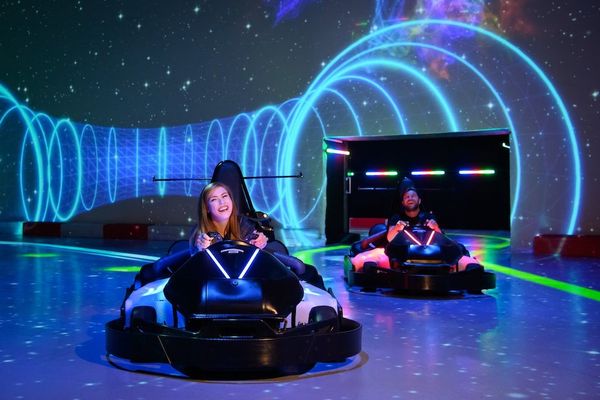
NCL's Speedway features multi-level, electric go-kart tracks on select ships, reaching speeds up to 30 mph on the top deck.
The go-karting experience is available on Norwegian Joy (2017), Norwegian Bliss (2018), Norwegian Encore (2019), Norwegian Prima (2022) and Norwegian Viva (2023).
Norwegian Joy was home to the first-ever race track at sea, and now Norwegian Viva sports one of the longest at sea.
The electric race tracks are designed to provide an authentic racing experience, including race-car engine sounds played through speakers in the car's headrest. They also have a viewing platform for spectators, a covered pit lane, floodlights, and a timing system to enhance the racing atmosphere.
The karts can reach speeds of up to 30 miles per hour (48 kilometres per hour).
Tee Time on NCL's newest ships
While mini-golf is not new to the cruise industry, NCL is pushing the concept further with its latest offerings. Tee Time is an interactive, high-tech, themed mini-golf experience located on the open deck of newer ships like Norwegian Prima, Viva, Aqua, and Luna (2026).
Unlike classic mini-golf, the tech elements track play, so guests can just enjoy the experience.
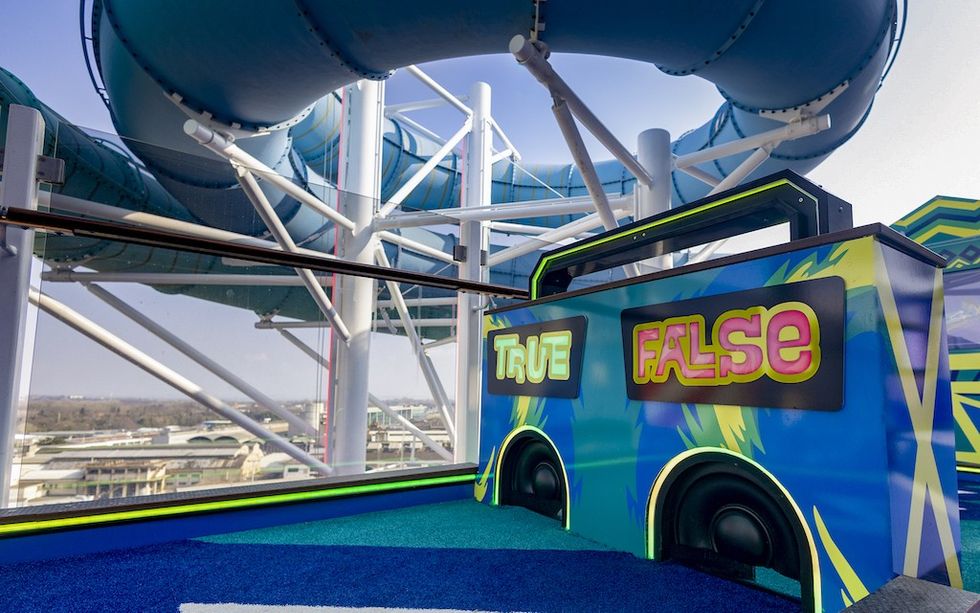
The Tee Time attraction on NCL's Norwegian Luna is the most innovative yet. An outdoor experience spanning two decks, it features 12 interactive, high-tech holes featuring a Wonders of the World theme. Partners include Greenspan Projects and Holovis.
See also: Designing attractions for the high seas with Greenspan Projects
FlowRider on Royal Caribbean's Oasis, Quantum, Freedom, and Voyager-class ships
Over 20 Royal Caribbean ships feature WhiteWater's FlowRider surf experience in either single- or double-configuration.
This stationary surfing attraction creates a thin sheet of fast-moving water over a specially engineered ride surface, enabling guests to surf or bodyboard in a controlled environment.
The technology uses powerful pumps to push water up a sloped face, forming a continuous wave that riders can carve across, perform tricks on, or simply balance against.
Bolt: Ultimate Sea Coaster on Carnival Cruise Line's Mardi Gras, Carnival Celebration, and Carnival Jubilee
The first rollercoaster at sea, offering an 800-foot-long, rider-controlled, all-electric ride around the top deck, Bolt debuted on Mardi Gras (2021), and can also be found on Carnival Celebration (2022) and Carnival Jubilee (2023).
Bolt utilises Maurer Rides' Spike technology, providing an acceleration of 1.2 G, allowing riders to reach speeds of up to 38 miles per hour (60 kilometres per hour), experience drops, dips, and curves, and enjoy panoramic views across the ocean.
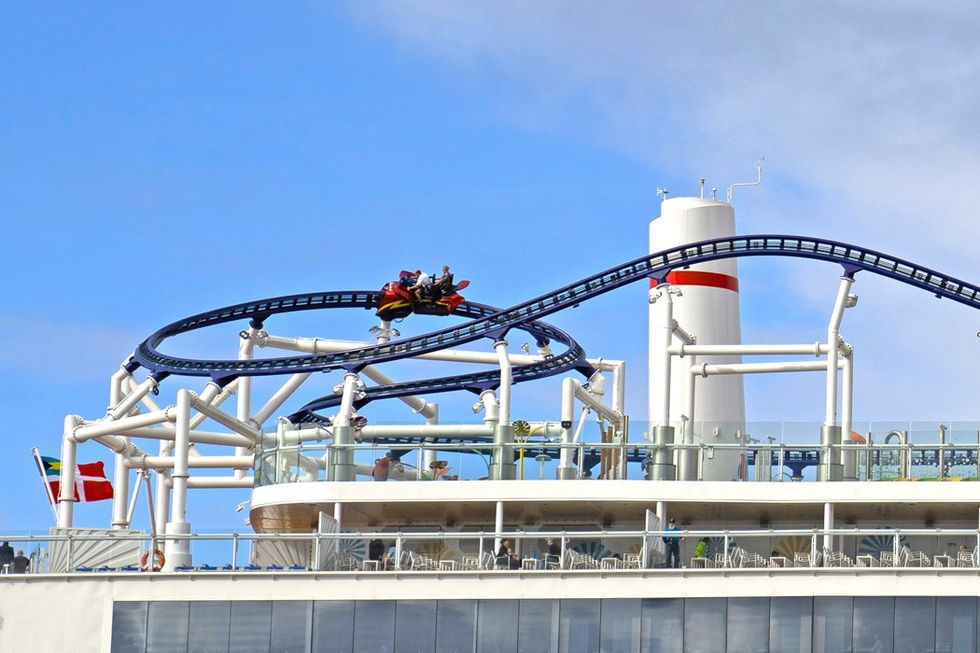
The coaster also offers guests an interactive experience by allowing them to control braking and acceleration during the ride.
AquaDome on Royal Caribbean's Icon Class ships
The AquaDome is an innovative, enclosed neighbourhood on Royal Caribbean's Icon-class ships, Icon of the Seas (2024) and Star of the Seas (2025).
It boasts a 16+ metre (55-foot) waterfall and the AquaTheater, an enhanced, enclosed theatre which hosts high-diving shows, aerialists and more. It's also home to the AquaDome Market, a first-of-its-kind food hall with a variety of different stalls, as well as restaurants and lounges.
- YouTube youtu.be
Situated at the ship's top, it serves as a peaceful retreat with 220-degree ocean views by day, transforming into a lively entertainment hub at night with dining options and bars.
The AquaDome is also an impressive engineering feat, as the largest, single glass-and-steel structure ever lifted onto a cruise ship
Currents on Carnival Cruise Line's Carnival Jubilee
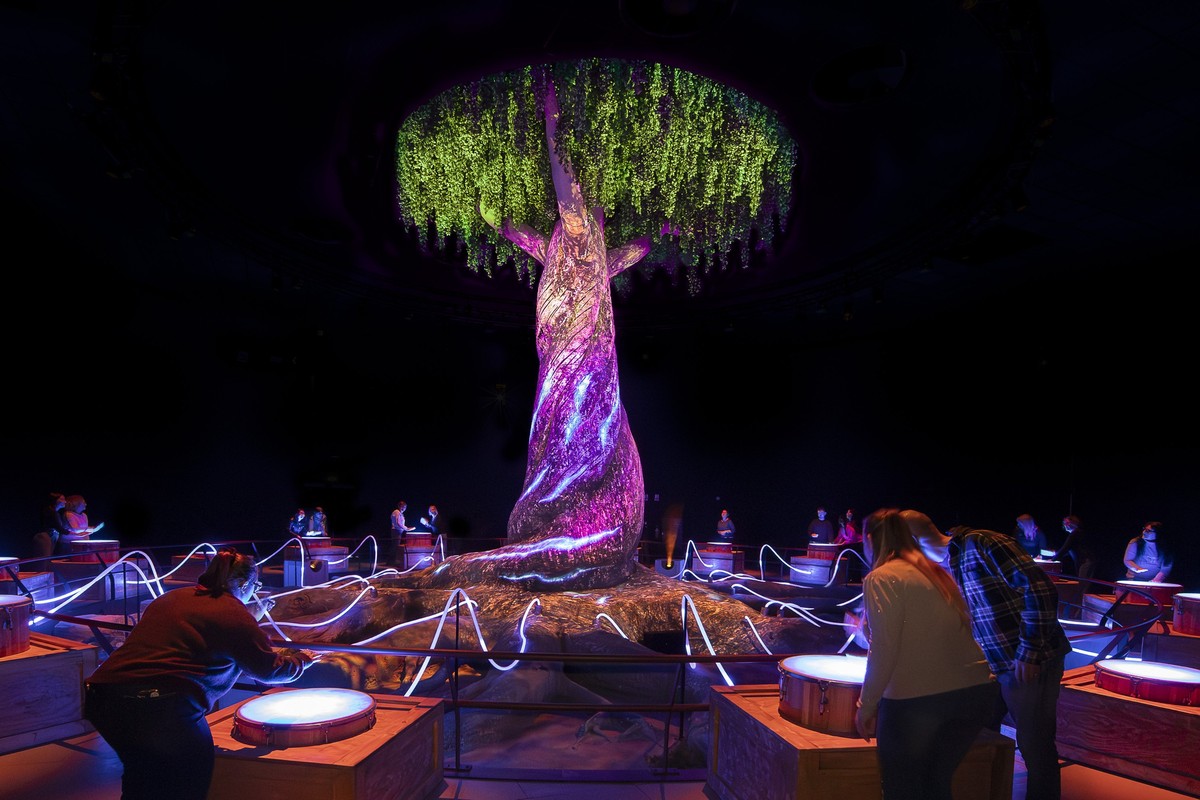
Currents is an immersive, underwater-themed entertainment zone on the Carnival Jubilee (2023) cruise ship, designed to transform a previously unused space into an engaging interactive environment for guests.
The goal was to attract more guests into the area by combining interactive technology, digital media, lighting, and sound to create a dynamic underwater world that changes throughout the day.
Interactive experiences include a virtual aquarium that invites guests to design their own sea creatures and watch them appear on large screens, swimming in the digital ocean, and an interactive spotlight activation with media, music, lighting, and animated characters such as ducks or sea-life performers.
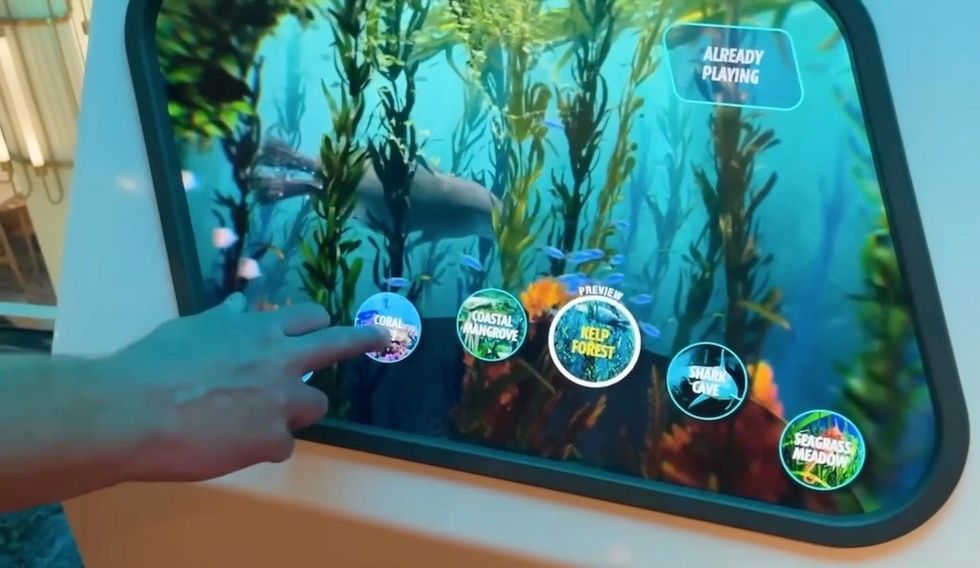
SoundWaves is an interactive nighttime show where guests choose songs and pair them with custom visual effects and lighting to create a personalised dance-party experience, while Change the Currents allows visitors to select between six underwater scenes that transform the whole space with different visuals, sounds, and lighting.
There is also the Jubilee Atlas, a touchscreen map showing real-time locations of Carnival ships, destinations, and ocean-related educational content.
The project, created with Beaudry Interactive, won third place in the Experiential Technology category at the 2024 blooloop Innovation Awards.
Glow Court on NCL's Norwegian Aqua and Norwegian Luna
Glow Court is a high-tech, interactive LED sports floor from CONDUCTR that serves as an immersive activity zone during the day and transforms into a lively nightlife venue, featuring digital walls and vibrant lighting. It offers a variety of activities, including basketball, darts, table tennis, and other interactive games.
It integrates LED walls and floors with advanced tracking technology to create a combination of sports games and immersive media experiences. The court can switch sports types instantly with a press of a button. One moment, it serves as a basketball court; the next, it transforms into a football field.
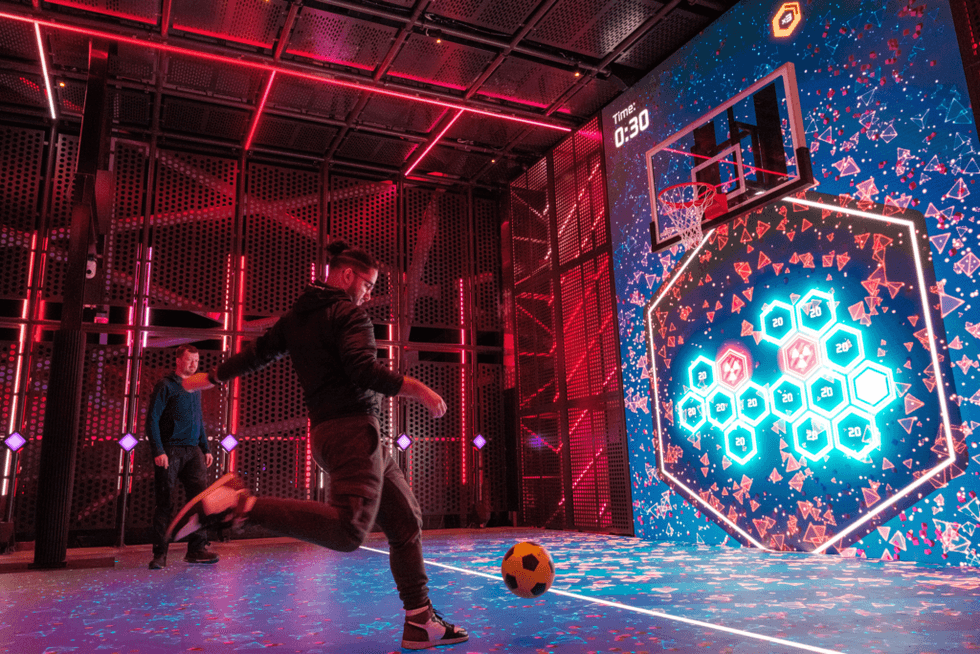
It also features competitive social game modes like 'Stomp'.
Nighttime activations may feature an interactive digital art exhibit, a dance floor, or even an aquatic wonderland where visitors can engage with bioluminescent plankton.
See also: Game on: Glow Court brings immersive entertainment to Norwegian Aqua
Beyond the cruise ship: private island destinations
Many cruise lines also host visits to private islands, with popular destinations including Half Moon Cay for tranquil beaches, Perfect Day at CocoCay for an exciting waterpark, and Castaway Cay for a touch of Disney magic.
These destinations offer bespoke experiences, from serene, unspoiled nature to thrilling adventures, catering to a wide range of passenger preferences.
Carnival offers Half Moon Cay with sandy beaches, turquoise waters, and a relaxed, tranquil atmosphere. It is celebrated for its natural beauty rather than being heavily developed.
Carnival also introduced a new destination in 2025, Celebration Key, which offers a family lagoon and beach, home to a splash pad with a shallow pool, a games pavilion with basketball, volleyball, pickleball, and more, an adults-only beach club, and the Suncastle, featuring water slides and an observation deck.
The island includes Blue Mar Basins lagoons from Martin Aquatic.
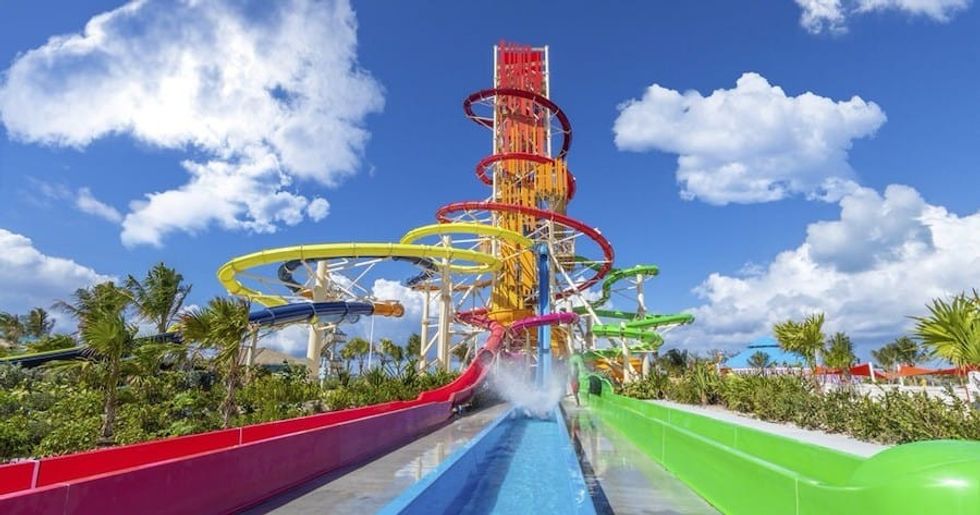
Meanwhile, Royal Caribbean offers Perfect Day at CocoCay, featuring the Caribbean's largest freshwater pool, a water park, and various beach clubs. There's also a 485 metre long (1,600-foot) zip-line course and the opportunity to float above the island in a tethered helium balloon.
Perfect Day at CocoCay's Thrill Waterpark is home to 14 water slides, including Daredevil's Peak, the tallest slide in the Caribbean, side-by-side racer Duelling Demons, and Splash Summit, which offers seven different slides. Partners include WhiteWater and Martin Aquatic.
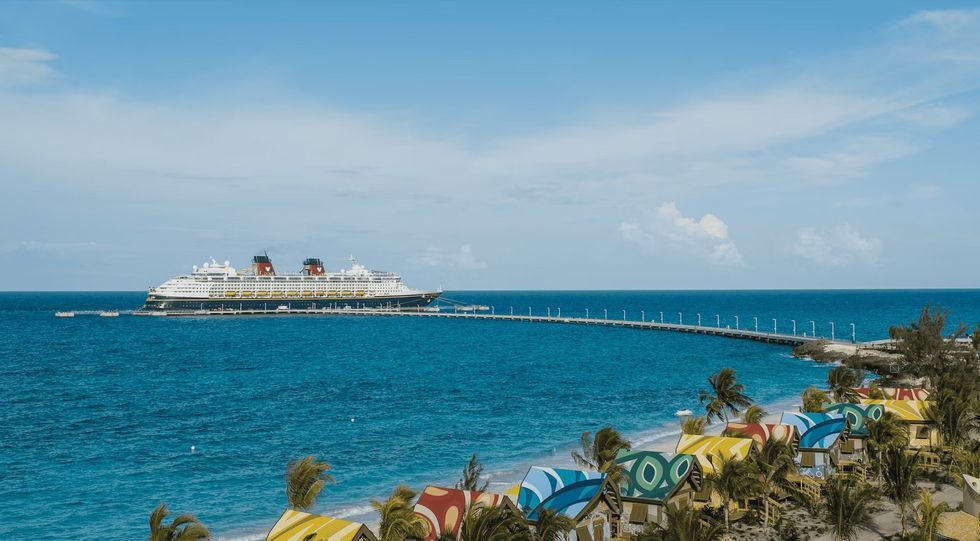
Castaway Cay is a private island from Disney Cruise Line. Highlights include the Pelican Plunge water play area and floating platform, with two twisting water slides, as well as a family beach, adults-only beach, and a snorkelling lagoon. And, of course, there are Disney character appearances throughout the day.
Disney also offers Lookout Cay at Lighthouse Point, featuring a spacious family beach, an adults-only beach retreat, and an island-inspired playland for children.
Ocean Cay MSC Marine Reserve is an MSC Cruises offering focused on eco-credentials and sustainability. Designed for nature lovers, it features marine restoration, snorkelling, kayaking, and a nightly lighthouse show
Harvest Caye from Norwegian Cruise Line features a 1,440-square-metre (15,000-square-foot) pool, a saltwater lagoon for watersports, and a large beach, as well as a variety of ropes courses, suspension bridges, and ziplines.
NCL is also upgrading Great Stirrup Cay, with the Great Tides Waterpark, expected to be completed in 2026. This will include slides and play structures from WhiteWater and is masterplanned by Martin Aquatic.