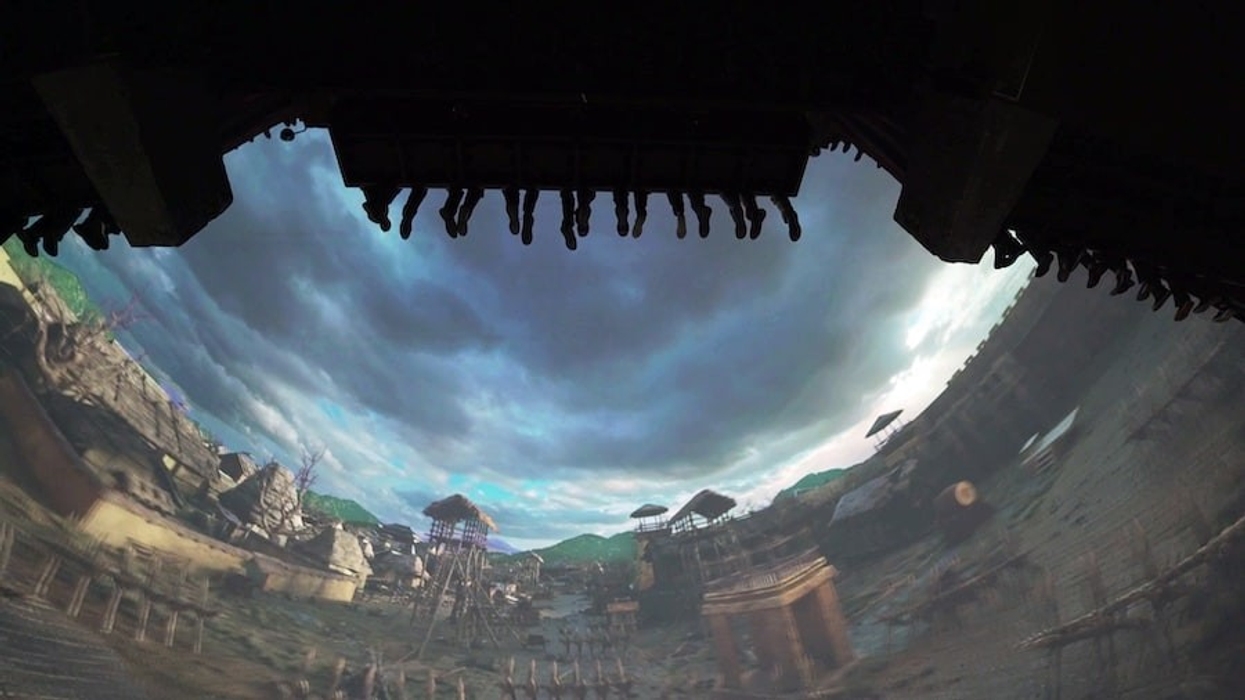
There is a number that appears in almost every RFP for a dome theatre, flying theatre or immersive space we receive: 8K. Sometimes it is 12K. Occasionally a tender simply states “the highest resolution available.”
Almost never does the same document specify the brightness of the image on the screen, the contrast the system will achieve in its actual operating environment, or how image quality will be maintained in year five of operation.
This is the resolution trap: specifying an attraction by the one number that is easiest to compare on a datasheet, and not necessarily correlated with what guests actually experience.
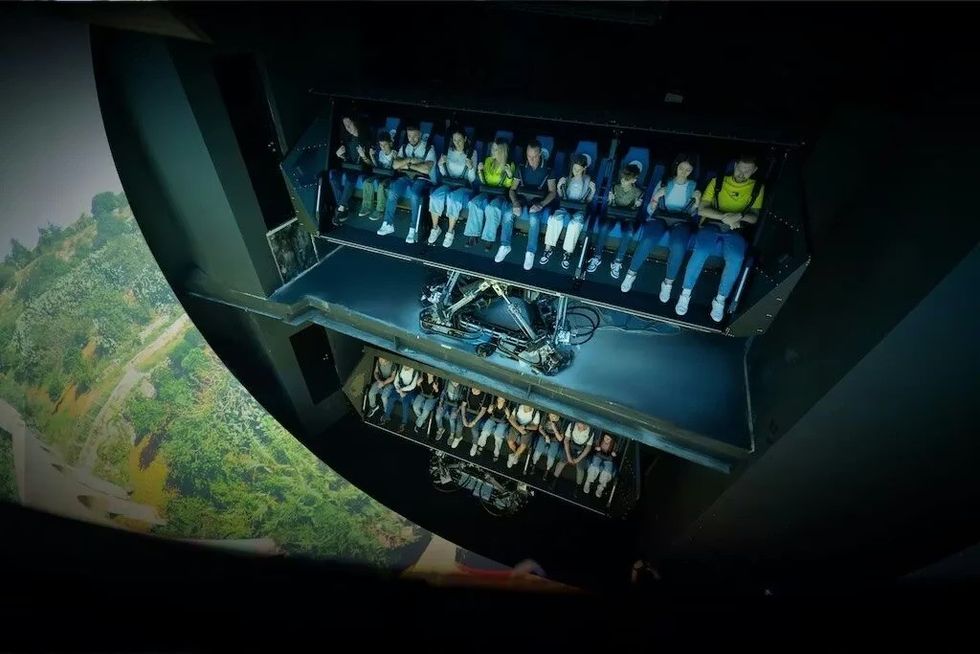 Odyssey Malta, Simtec System's flying theatre in Malta's landmark Mercury Tower development Image credit: Simtec Systems
After over two decades delivering visual systems on both sides of our business — Level D certified full flight simulators, where image quality is a matter of pilot certification, and media-based attractions from a 25-metre flying theatre dome in China to Malta’s first flying theatre with Simtec — we have learned that perceived image quality is a system property, not a component spec.
Here is what actually drives it.
1. Brightness beats pixels
The human visual system is far more sensitive to luminance than to resolution, especially on the large, curved, fully immersive screens that define our industry.
Our rule of thumb: aim for 9–10 foot-lamberts on screen for 2D content, and 5–6 fL for 3D stereo. Guests will consistently prefer a bright, punchy 4K dome over a dim 8K one. They will describe the bright dome as “sharper” because apparent sharpness is largely a function of contrast and luminance, not pixel count.
Every pixel you add divides your light budget. Doubling resolution across a dome typically means more channels, more projectors, more cost, and if the budget doesn’t grow with it, less light per pixel.
Resolution purchased at the expense of brightness makes the image measurably better on paper and visibly worse in the theatre.
2. Contrast belongs to the room, not the projector
A display specified at 10,000:1 contrast in a dark room may deliver something closer to 100:1 in a space with meaningful ambient light.
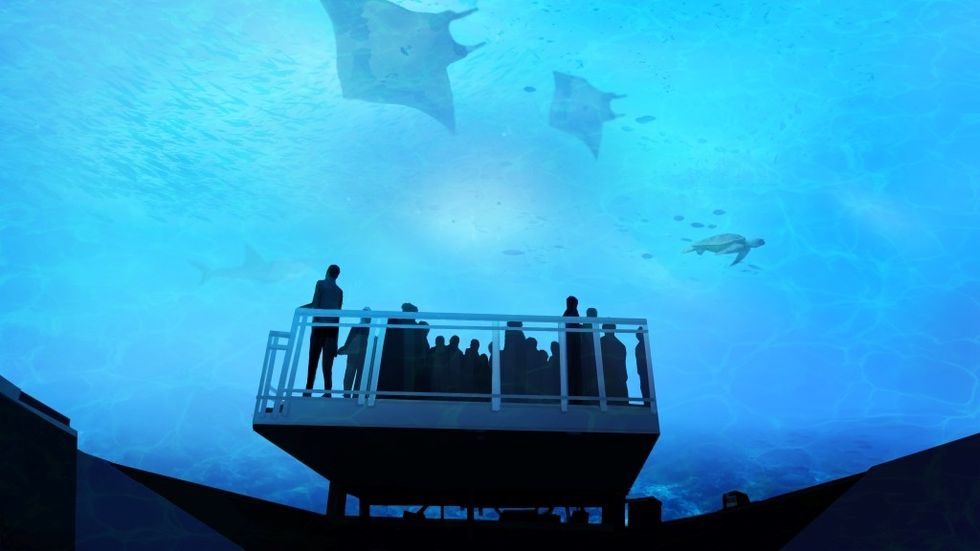 project: syntropy creates dome media experiences
In a dome, the screen also illuminates itself: light from one side of the hemisphere scatters onto the other. Screen gain, coating, port and door placement, even the colour of the handrails influence the contrast guests perceive far more than the projector’s datasheet does.
This is why the same projector can look spectacular in one attraction and flat in another. Contrast must be engineered at the venue level, and it's another reason resolution comparisons between attractions are usually meaningless.
3. Viewing distance does the maths for you
Resolution only matters up to the acuity limit of the eye at the guest’s actual position. For dvLED, the rule of thumb is simple: minimum comfortable viewing distance in metres is roughly the pixel pitch in millimetres times two.
Projection follows similar logic: beyond a certain pixel density for a given dome diameter and seating layout, additional resolution is invisible from every seat in the house.
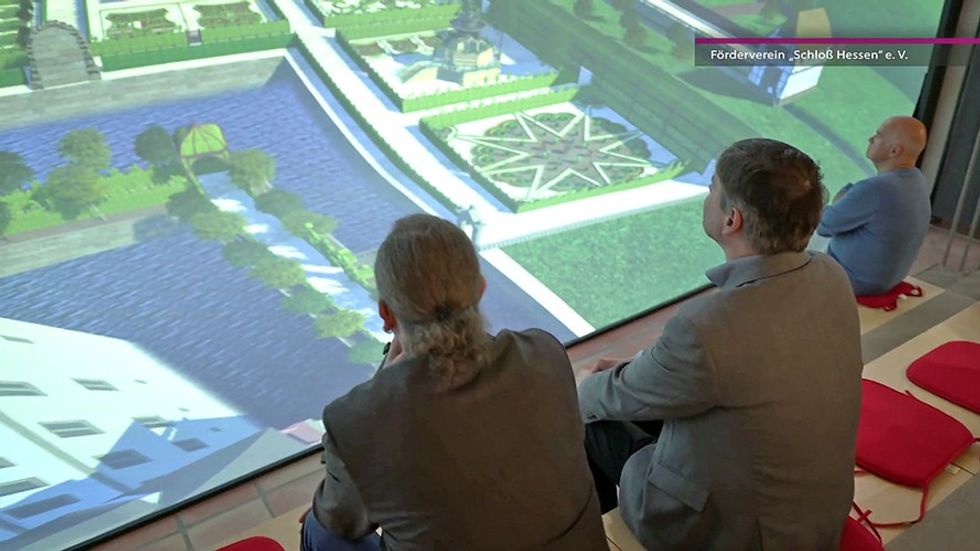 project: syntropy brought an immersive experience to Schloss Hessen
A well-engineered system puts pixels where guests can resolve them, and spends the remaining budget on brightness, uniformity and frame rate. That calculation — channels, lens choice, overlap, seating geometry — is the real design work behind a spec.
4. Motion is the forgotten spec
For flying theatres and media-based rides, frame rate and latency shape the experience more than resolution does.
A ride film at 60 frames per second, played out uncompressed and in perfect synchronisation with the motion system, feels real; the same film in 8K at 30 fps with visible latency between platform and picture feels wrong in a way guests can’t name but instantly sense — and at worst, feel in their stomachs.
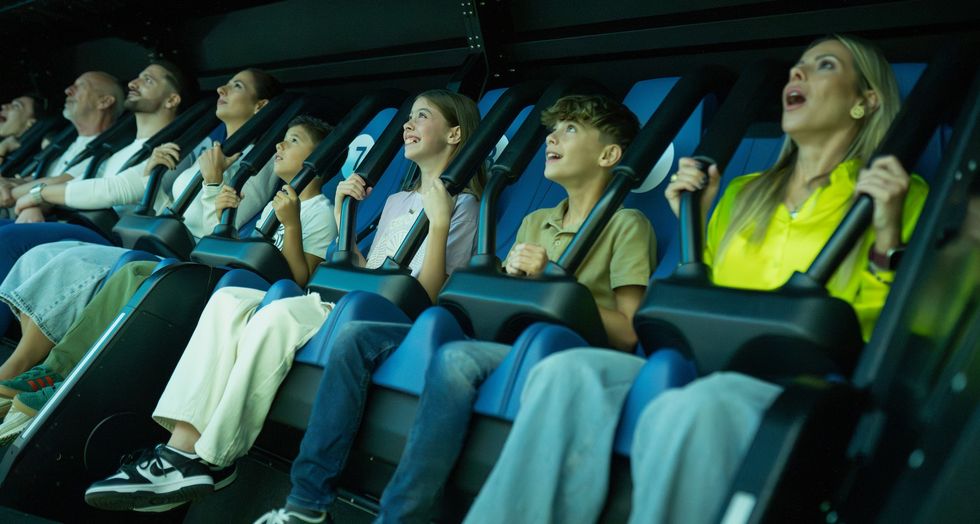 Odyssey Malta at Mercury Towers, an immersive flying theatre experience by Simtec Systems Image credit: Simtec Systems
This is territory we know from flight simulation, where the image must track the motion platform tightly enough to train, not disorient, an emergency helicopter pilot.
At the Mercury Towers flying theatre in Malta, delivered with the great team at Simtec, a high-speed network locks the six-degrees-of-freedom motion system to a four-channel 4K playout for exactly this reason.
None of that appears in a resolution figure.
5. Resolution decays — calibration is what lasts
Whatever resolution you buy on opening day, it degrades the moment channel alignment drifts.
A multi-channel dome that has lost its geometry and blending effectively throws pixels away in the overlap zones; colour drift between projectors is more visible to guests than any resolution difference.
Modern camera-based auto-calibration re-aligns geometry, blending and colour automatically, so venue staff can restore opening-day quality in minutes rather than flying in specialists. Over a 10–15 year lifecycle, a calibrated 4K attraction will outperform an uncalibrated 8K one for most of its service life.
If a tender includes one technical annex, it should be about maintaining image quality, not maximising launch-day pixel counts.
Where resolution genuinely matters
None of this means resolution is irrelevant. It matters where guests stand close to the image, where content contains text, fine architectural detail or data, and where an installation serves expert users as well as visitors.
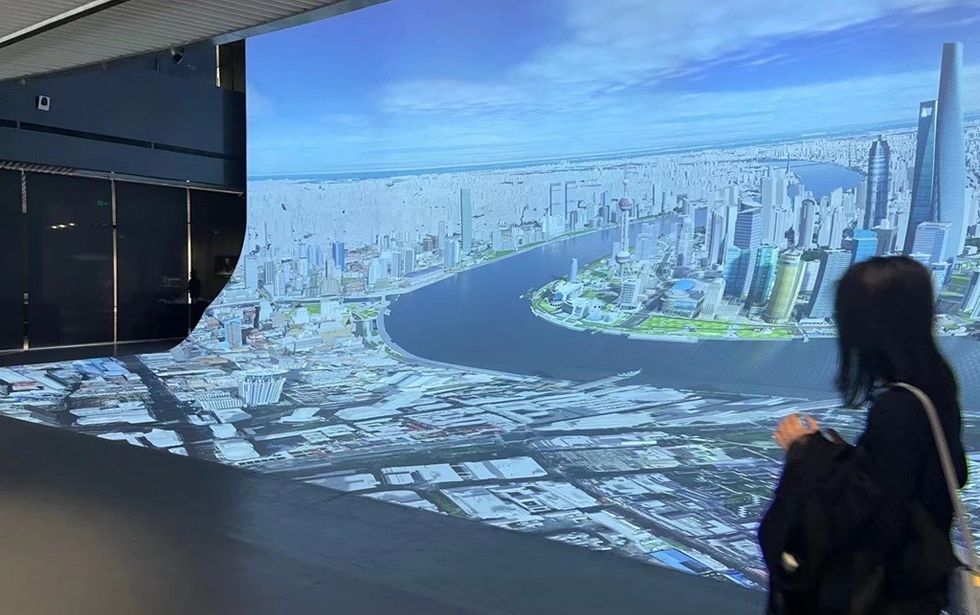 The project: syntropy Digital Twin at SUPEC Shanghai features a 20-metre-wide, 10-metre-high fibre glass projection screen
The interactive 5D city model we built for the Shanghai Urban Planning Exhibition Center — a 20-metre-wide screen carrying a real-time digital twin of the city — runs 23 channels of 4K 3D precisely because planners step close to it and read it, not just admire it. Resolution there is a functional requirement, derived from the use case.
That is the point: derive the number, don’t default to it.
How to write a better specification
Specify outcomes, not components: brightness on screen in fL for your content type; contrast in the actual operating light; uniformity and colour match across the full image; frame rate and motion-to-image latency for ride applications; a calibration and maintenance concept for the full service life.
Then let the integrator determine how many pixels it takes to get there.
Buyers who specify this way get better attractions—and often at lower cost —because the budget flows to what guests see rather than to a number they never will.
The project: syntropy team will be exhibiting at IAAPA Expo Europe 2026 in London, where they can be found at booth #S2743