Skip to content

Winner

About this category
Share this page

Overall winner

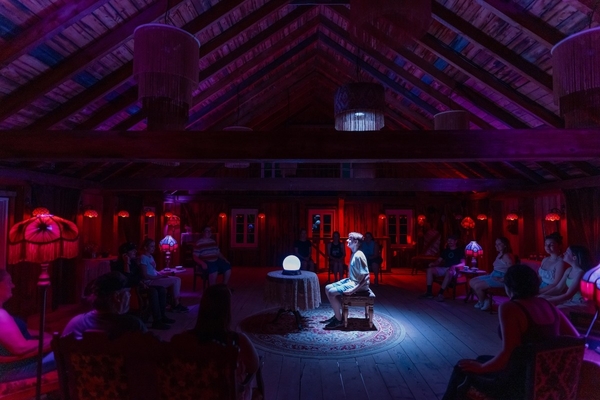
Meow Wolf Omega Mart C Bueno

The rise of the boutique park experience

I find it ironic that while Six Flags is shedding several of its smaller parks to focus on pushing its bigger, more profitable parks to evolve into bigger destination-style experiences, we are also seeing a big push to create more smaller, highly themed regional attractions, often focused on a very specific theme.

For years, the industry has operated on the premise that bigger was better, leading to the creation of massive, ultra-multi-theme park resorts like Walt Disney World and Universal Orlando.

A visit to one of these theme park resorts isn’t something most would consider doing as a simple day-trip, or even for just a quick weekend, as these concepts usually require more of a multi-day guest commitment.

Meanwhile, a new model of attraction type is rapidly taking shape, one that places more priority on creating something with a smaller footprint, requiring lower-cost capital investment, and offering a more hyper-focused experience.

Some have begun to refer to these new regional concepts as being more of a “mini” or “boutique” theme park experience.

area15 Area15

Concepts ranging from the new Universal Kids Resort in Texas, Mattel Adventure Park in Arizona, Peppa Pig Theme Park in Florida and Texas, Netflix House in Texas and Pennsylvania, the many Legoland parks, Area15 in Nevada, Nickelodeon Universe in Minnesota and New Jersey, Meow Wolf, and Universal Horror Unleashed - Las Vegas in Nevada.

Universal at the forefront of a new trend

Yes, you did see Universal’s name dropped twice just now, as no major player has been dabbling more in this concept as of late.

Known for creating some of the most high-concept and immersive theme park experiences worldwide, Universal is also taking a big risk with the creation of two of the most interesting Boutique or Mini park concepts right now.

It opened the first Universal Horror Unleashed attraction in Las Vegas, within the Area15 complex, late last year, and has already announced that a second version will be created in Chicago very soon.

Meanwhile, Universal’s second prototype concept will open this year in Texas, just north of Dallas, under the name Universal Kids Resort.

universal kids resort Universal Kids Resort

While Universal’s new horror project is more of a highly themed stand-alone attraction meant to entertain guests for a few hours, the new Universal Kids Resort is a mini theme park hyper-focused on providing IP-based entertainment experiences that will appeal to younger children.

It offers a built-in resort hotel, so the entire experience can serve more as a great weekend getaway for families with small children.

Set to open in the coming months, the experience will serve up attractions and themed spaces based on popular IPs like the Minions, Shrek, Jurassic World, SpongeBob SquarePants, Trolls and more.

Unlike the other Universal theme parks, the Kids Resort will feature an experience scaled down for the intended audience.

universal kids resort Rendering of rides at Universal Kids Resort in Texas

Don’t look for gravity-defying roller coasters or mind-blowing dark rides there; instead, kids can enjoy a park with a more compact layout, “right-sized” attractions and thrills, along with interactive play zones and characters to meet, all tied in with an integrated hotel at the main entrance to make it an attraction short vacation destination for a night or two.

Perhaps most importantly, families don’t have to make an epic and expensive trek to California or Florida to experience this park… located in the northern side of Texas, right in the middle of the country, Universal Kids’ Resort is perfectly located for those who are furthest away from Universal’s coastal mega-parks.

Why the change?

So how has this come to be? This pivot towards smaller-scale attractions didn’t happen overnight. For decades, players like The Walt Disney Company and Comcast were entirely focused on building destination resorts around the world that could serve as anchors for an entire week-long vacation ecosystem.

However, operating at this scale has come along with an extremely high price tag.

This mixture of escalating operational costs, combined with some interesting changes to consumer behaviors, mixed in with some public outcry from economic pressures, has sort of forced a bit of a rethink into what the future of themed entertainment could possibly have to offer.

Star Wars: Galactic Starcruiser Immersive experience Star Wars: Galactic Starcruiser

This has not been without some bumps in the road, either, as the Walt Disney Company learned the hard way with its own experimental concept, Star Wars: Galactic Starcruiser, which attempted to cram in a 3-day vacation experience into a faux sci-fi cruise ship style experience in a galaxy far, far away.

Unfortunately, as high-end a concept as this seemed to be, Disney chose to price this as a top-tier premium experience. As guest demand began to wane in response to the sticker shock, it opted to shut it down rather than repackage it as a more budget-friendly alternative.

As many were quick to point out, the price of taking an actual, real-life cruise experience was significantly lower than the fake-cruise style experience being offered.

The Legoland model

There have been a few players in the industry who have always focused on creating smaller theme park experiences. Merlin, which operates the Legoland parks, has long been behind the idea of offering a family-friendly day-trip and/or weekend experience.

Legoland properties are located in key locations around the world, from the original in Billund, Denmark, near the Lego toy factory, to Lego-themed mini-parks far and wide.

From California to Shanghai, from Deutschland to Dubai, from New York to Malaysia, there are currently 11 Legoland theme parks operating today, and two more under construction in China (Shenzhen and Sichuan).

While some Legoland theme parks are simply meant as day-trip experiences, where the individual market allows, they have also been able to add Lego-themed resort hotels to some locations, along with secondary attractions such as a Lego-themed water park or a Sealife Aquarium, to create multi-day experiences.

legoland billund Legoland Billund

In the case of Legoland Florida, the mini-resort currently offers three overnight resort options and three extra ticket options: the Legoland Waterpark, a SeaLife Aquarium, and the separate Peppa Pig Theme Park for an even more compact theme park experience for the little ones.

Something new

If Universal Kids Resort represents a family-focused evolution, the past year’s launch of Universal Horror Unleashed signals something a bit more disruptive to the industry.

The 110,000-square-foot attraction is not a traditional theme park at all; rather, it serves as a permanent, year-round home for Universal’s well-known seasonal “Halloween Horror Nights” events.

See also: Immersive fear: the evolution of Halloween Horror Nights

Like a visit to HHN at one of the big parks, this new concept offers a complete immersive experience told through elaborate storytelling while traveling through a series of different walk-through environments.

Along the way, guests also get to pause at a variety of themed bars for a chance to get a drink and a “bite” to eat, before moving deeper into the experience.

universal horror unleashed Universal Horror Unleashed, Las Vegas

Unlike Halloween Horror Nights, which overlays the experience over Universal’s existing theme parks, Horror Unleashed was designed from the ground up for immersion—allowing guests to explore environments at their own pace and interact with characters in deeper ways.

Not unlike what Disney attempted with the Galactic Starship, Universal is seeking to offer a theme park-quality experience… without the actual theme park.

Mattel's micro-attractions

Universal isn’t alone, as toy giant Mattel is making its own push into location-based entertainment with Mattel Adventure Park. The first location has suffered some delays, but is currently finishing up construction in Phoenix, Arizona.

An area that has traditionally been devoid of major theme parks for decades, this mostly indoor attraction will bring Mattel’s most iconic brands to life in the form of new attractions themed to IPs like Barbie, Hot Wheels, Thomas, and Masters of the Universe, in a physical environment.

Mattel announces immersive indoor water parks for US blooloop.com

If that wasn’t enough, planning is already underway for a second location in Kansas. Mattel isn’t stopping there either, as it was announced at IAAPA Orlando 2025 that the company is also pursuing the development of several Mattel-branded indoor water park attractions.

These are to be known as Mattel Wonder Indoor Waterparks, with the first location planned to open in Orlando, Florida, in the next couple of years if all goes well.

Mattel also seems to be approaching its entry into themed entertainment in the same way it does with its toy lines, with plans to replicate these attractions in other markets through a series of expansions.

Immersive Netflix locations

Streaming entertainment giant Netflix has also already entered the market with its Netflix House locations, with two sites already open (Dallas and Philadelphia) and plans to open a third in Las Vegas in 2027.

The concept here is somewhat similar to Universal’s Horror Unleashed, offering a series of experiences themed around some of its most popular IPs at any given time.

Unlike Universal’s attraction, Netflix House is designed more as a series of attractions within a giant box, and guests can choose which ones they want to purchase and experience, and skip the others.

Netflix House also seems to be designed with a more open structure from the get-go, as early descriptions alluded to the attraction's ability to change and swap in new attractions themed to newer or currently popular programming IPs as they evolve.

Inside the atrium at Netflix House Dallas Inside the atrium at Netflix House Dallas

So while the current offerings at Netflix House may be tied to IPs like Stranger Things, Squid Game, Wednesday, and One-Piece, they could easily be swapped out to offer a whole new experience if you visit again in a year or two.

Of course, some may say that the quality of the experience may suffer if the attractions are designed from the start to simply be temporary offerings, intended to be swapped out or possibly even moved from one Netflix House location to another.

Perhaps one of the most defining features of Mini attractions is that the experience relies heavily on intellectual property. The commonality of almost all of these new expansions is a hard lock-on to a single or small batch of well-known brand IPs.

From Mattel’s toy lines to the latest streaming hits on Netflix… this approach reduces risk by tying the experience to a brand that potential guests may already have an emotional connection to.

This is opposed to the more difficult task of creating something from scratch and hoping it will prove interesting enough in a short period to lure in a new audience.

The heavy use of IPs also enables cross-platform synergy, where the brand recognition of an IP's existing programming, music, merchandise, and other attractions known across mainstream media all reinforce overall brand wellness.

A micro-trend rethinking attraction economics

At the heart of this micro-sized revolution is really a fundamental rethinking of attraction economics.

Creating a traditional theme park today could take 5-10 years to complete and put billions of dollars at risk, hoping you’ve picked the right location and the right mix of attractions. The success of your park will, in the end, depend on the sometimes fickle tastes of the general public.

Sometimes what seems to be a sure hit on paper can end up being a complete failure.

Meanwhile, the development of regional “boutique” style parks and experiences can be done far more quickly, with a significantly lower budget risk.

Plus, it doesn’t come along with the huge headache of securing a couple of hundred acres of land in a location close enough to a large population center, but not so close that the neighbors are going to complain about all the noise and traffic problems that come along with a major theme park.

In fact, some of these micro-attraction concepts may be just the right size to serve as a solution to another growing problem… the ongoing decay and slow death of location-based retail malls.

Mini attractions may be just the right size to serve as a replacement, breathing new life into a former anchor-tenant big-box structure. For every Sears or Macy's store that closes, these structures could live new lives as a Netflix House, Meow Wolf, or Universal Horror Unleashed location.

Area15 in Las Vegas is a prime example of how well these kinds of attractions can play well together. Area15 could best be described as a multi-experience venue that is a massive blend of art installations, attractions of all kinds, and a nightlife spot featuring several bars, food and music options.

Spacecraft near a colorful planet with "Interstellar Arc" text. Felix & Paul Studios' Interstellar Arc

Currently, it is home to several attractions, including Meow Wolf, Universal Horror Unleashed, Interstellar Arc, the John Wick Experience, the Illuminarium Experience, The Escape Game, and a brand-new, unique immersive theater experience called Oddyssey Manor.

Many more attractions are currently under construction right now as well, including what appears to be the arrival of an S&S Space Shot thrill ride tower. Other experiences also announced to be opening within the next year include the Museum of Ice Cream, The Bowl, Miniso, House Rules, and an iFLY Indoor Skydiving venue.

While each of these venues is technically in competition with the others, they also benefit from the shared foot traffic they generate, as each lures an audience seeking new and different alternative experiences to try for the first time.

What's the catch?

Still, the rise of these boutique-style attractions is not without significant risk.

Smaller size limits capacity and will inherently generate less revenue than a typical mainstream theme park. The heavy reliance on IP licenses will also bring long-term challenges, as contracts evolve over time and other struggles if an IP begins to lose popularity.

Perhaps the worst-case scenario is when an IP is sold to a new owner who may have other plans for it and could even refuse to renew the license.

This is an issue playing out in real time, following Disney’s purchase of 20th Century FOX and Marvel, which had both licensed some of their characters to Universal for attractions such as The Incredible Hulk, Spider-Man, and The Simpsons.

sesame place san diego Sesame Place San Diego

Meanwhile, Sesame Workshop has been in the news as of late amid a legal dispute with United Parks over the use of Sesame Street characters, with Sesame seeking to have this long-term license deal terminated so it can pursue other interests with the IP.

While the rise of these mini-sized attractions and micro theme parks may mark a turning point for the theme park industry, it certainly doesn’t appear to be a threat to the mega resort parks right now.

If anything, these are designed for a different purpose. In a world where time and convenience matter and audience attention spans have grown short, mini attractions may succeed simply because they are the option that lies closest to home.

At the same time, they will serve as a potential funnel towards the bigger theme parks. After all, once guests have enjoyed a small taste of fun at their local mini park, many will be ready to see what the bigger parks have to offer.