For nearly a quarter of a century, Los Angeles-based Romaire Studios, Inc. has worked largely behind the scenes, delivering world-class live-action creatures, characters, and animated props to the entertainment and attractions industry.
Founded in 2000 by Emmy Award-winning artist Lee Romaire, the company has spent 25 years creating live-action creatures and characters known for their realism and performance.
Guided by the ethos “Art. Engineered for Performance,” the studio has helped fundamentally change the way leading theme parks approach physical character design and fabrication.
Today, as Romaire Studios emerges from years of relatively unknown yet influential work with major theme parks to embrace a wider, more diverse global market spanning theme parks, museums, visitor centres, and brand activations, its founder reflects on an extraordinary journey of artistry, mechanical innovation, and timeless storytelling.
From Louisiana to the Magic Kingdom
The fascination with realism that defines Romaire Studios began long before Lee Romaire ever set foot in a Hollywood special effects shop.
Born in Morgan City, Louisiana, in 1966, Romaire’s creative journey was sparked by two key childhood experiences: a visit to the Magic Kingdom at Walt Disney World in its opening year, 1971, and learning the art of taxidermy at the remarkably young age of eight.
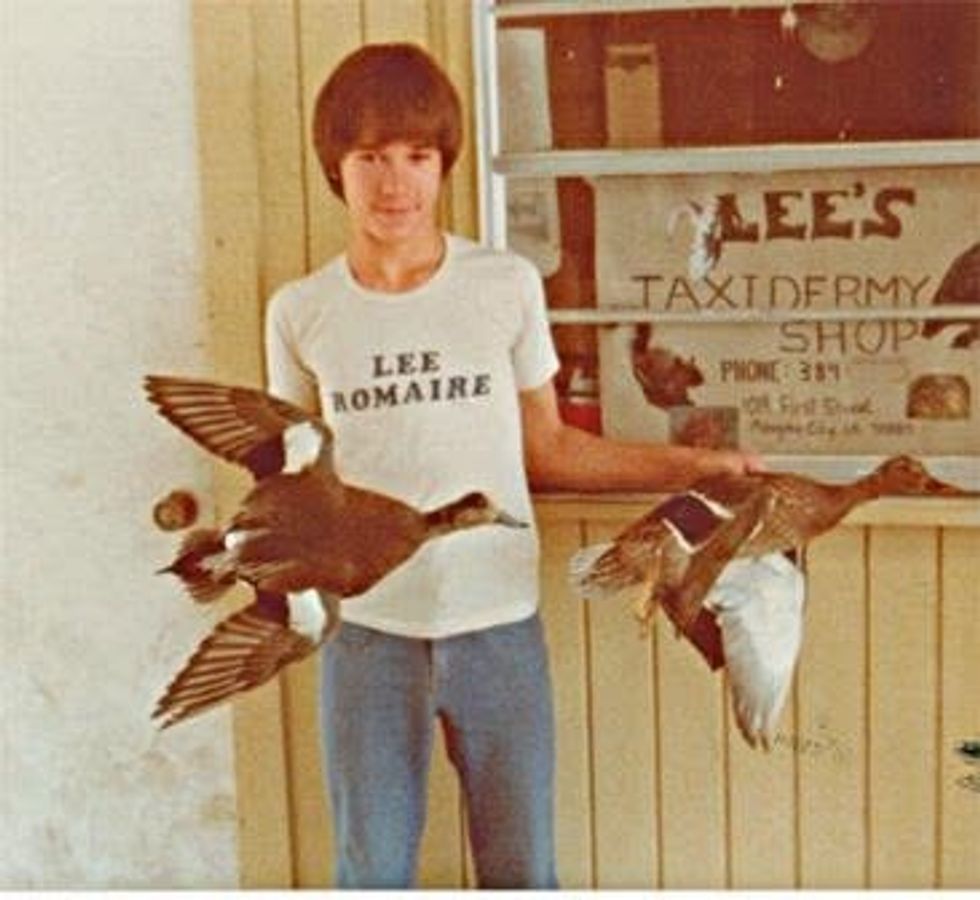
Young Lee Romaire with his high school taxidermy shop
Image courtesy of Romaire Studios
Romaire credits his upbringing for allowing these unique early passions to flourish. "I was fortunate to have parents who were very supportive of me," Romaire explains, reflecting on his early days. "They allowed me to explore all of the crazy things that I was interested in.”
Living in Louisiana, often described as a "sportsman's paradise", provided a unique canvas for a budding artist. "I was fascinated with realism. Coming from a small town in Louisiana where a lot of hunting and fishing takes place... it naturally led me to taxidermy, because everyone had a deer head, fish or duck hanging on their wall at home."
With his parents' support, he even ran a small business mounting ducks, fish and other animals throughout his high school years.
A corporate detour
Despite this early creativity, Romaire’s path to the themed entertainment industry was anything but linear. In 1989, he graduated from Louisiana State University with a degree in advertising and marketing.
Seeking to balance his creative ambitions with his parents' desire for him to earn a stable living, he pursued a career as a copywriter and art director, working for a decade in New York and New Orleans, with clients ranging from banks to tyre companies.
"Advertising was a good compromise between art and business,” he says.
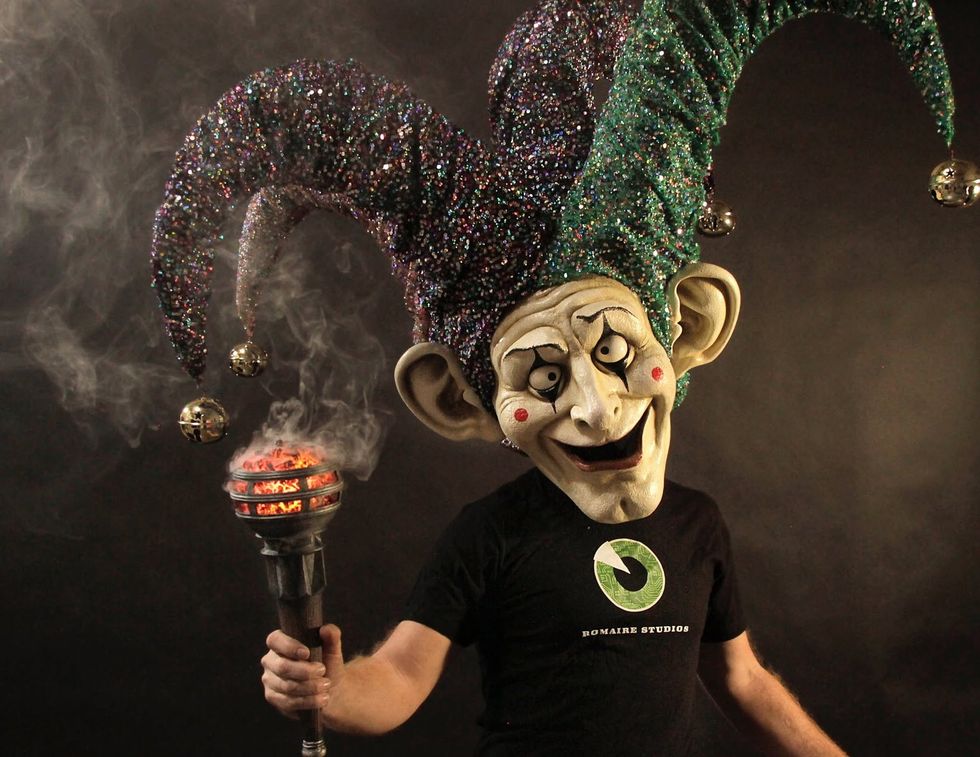
A Mardi Gras Jester mask from Romaire Studios
Image courtesy of Romaire Studios
Despite being successful in this career, the lack of creative fulfilment culminated in a sudden, life-altering epiphany in 1997. "One day it just popped into my head: 'I want to be a special effects make-up artist in Hollywood,' something I was very interested in when I was younger, but had no idea it was actually a thing one could do for a living,” he remembers.
At the same time, Romaire also stumbled upon an issue of Makeup Artist Magazine in a bookstore, which led him to a trade show in Los Angeles. There, he had a serendipitous meeting with the legendary Oscar-winning make-up artist Dick Smith, famous for his groundbreaking work on The Godfather and The Exorcist.
Heading to Hollywood
Despite a tough critique of Romaire's early portfolio, Smith recognised his potential and agreed to mentor him. Romaire immersed himself in the craft, quitting his advertising career and securing work building giant papier-mâché Mardi Gras props to refine his sculpting skills.
"I worked very hard on learning make-up and sculpting in my spare time, mailing progress pictures of my work to Dick. He was very tough, very honest in his critiques, and I just eagerly absorbed everything that he revealed to me.”
He completed Smith's demanding course in just 18 months, which at the time was the fastest anyone had ever gotten Smith’s nod of approval.
 Lee Romaire with one of his lifelike creationsImage courtesy of Romaire Studios
With a refined portfolio, Romaire moved to Los Angeles in 2000, where he secured work at prestigious studios, including Steve Johnson’s XFX and Jim Henson’s Creature Shop. His ascent in Hollywood was recognised when he won an Emmy Award for his sculpting on the hit television series Six Feet Under.
"It doesn't become real for anyone until your name is at the end of a credit list on a movie. Once that happens, then all of a sudden, it’s “he’s not crazy, he really is working in the movie business”. And then… Emmy Award a year after that. So, it all happened pretty fast for me!"
Engineering realism: the Disney era
While Hollywood provided an incredible training ground, Romaire possessed an entrepreneurial spirit. In 2003, he officially opened Romaire Studios in a small garage in downtown Los Angeles, which he says had “holes in the roof.”
Yet, from these humble beginnings, the company began building a reputation in theme park animatronics. During this period, Walt Disney Imagineering (WDI) was undergoing a shift in its attraction technology, moving from traditional hydraulic and pneumatic figures to all-electric mechanisms.
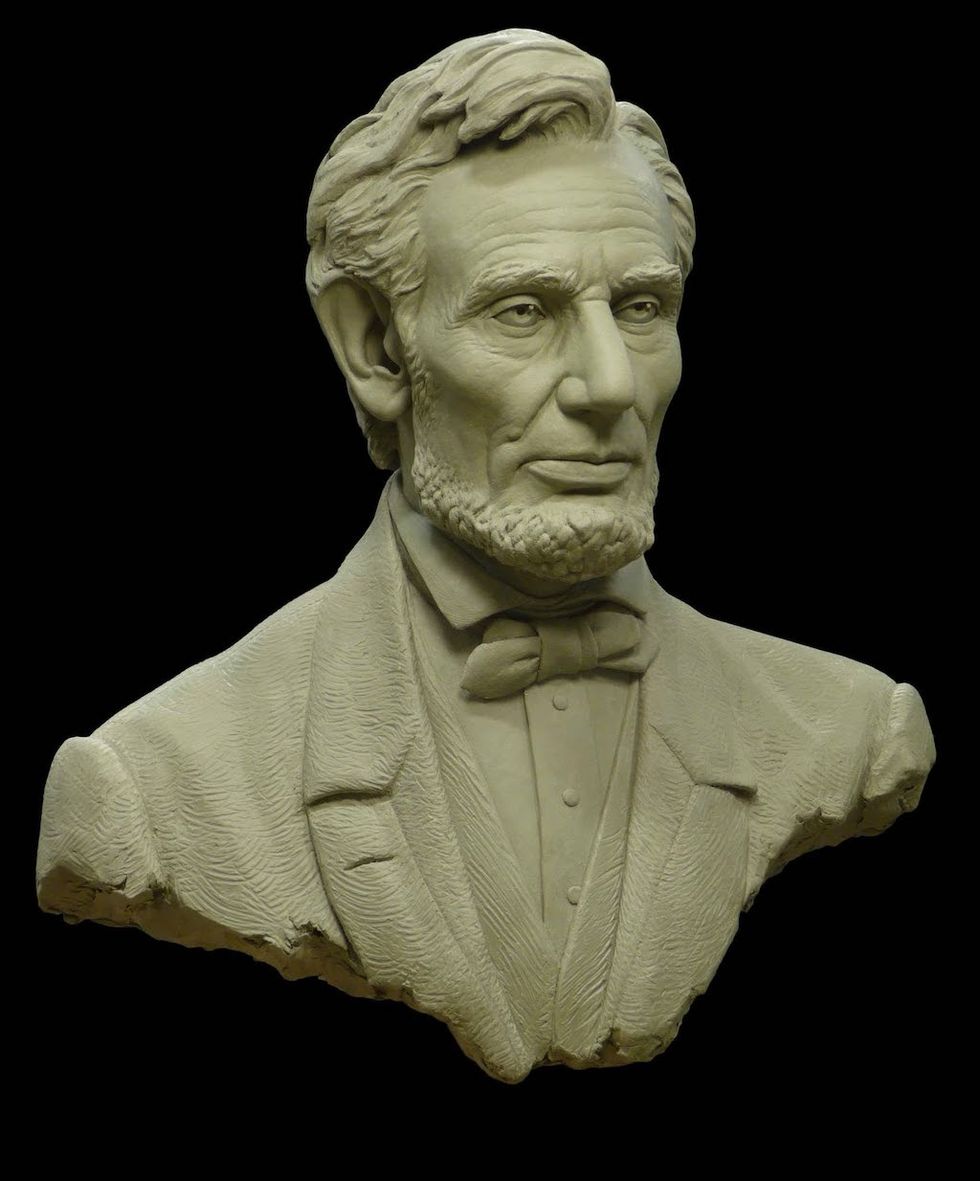
Romaire's likeness of Abraham Lincoln
Image courtesy of Romaire Studios
Romaire was brought in to assist with sculpting the heads and hands for these new electric figures. This led to one of the most significant milestones of his career: a commission to sculpt a new likeness of Abraham Lincoln for the iconic Great Moments with Mr. Lincoln attraction at Disneyland.
Great Moments with Mr. Lincoln debuted at the 1964 New York World's Fair before opening at Disneyland in 1965. It featured Walt Disney's first human Audio-Animatronic figure. Disney legend Blaine Gibson masterfully sculpted the original face, using an authentic life cast of the 16th President.
Being asked to update this piece of theme park history was an honour; Romaire became the first person outside the Walt Disney Company tasked with sculpting a US President for its attractions, and was allowed to talk about it publicly.
"It was a daunting task because Blaine Gibson sculpted the original Lincoln," Romaire explains. "I was careful to try to honour that sculpt and honour Blaine’s genius.”
The need for cinematic detail
In addition to the sculpt, Romaire pushed WDI to allow him to complete the figure's finish, including the hair and paint. This resulted in the first figure in Disney history to feature a realistic, movie-quality figure finish.
Romaire's studio applied a high level of cinematic detail to the animatronic, adding pores, veins, beard stubble, and even nose and ear hair. The team also developed innovative systems to permanently lock the figure's hair and beard in place, ensuring the character looked identical in every performance, day after day.
"What I realised from that experience is that theme parks really needed that cinematic detail level that we were bringing to movie work," Romaire notes.
"I realised that there was a need, and I decided to devote my company to that work...to take everything that we learned in the movie business and bring it to the theme park world. Disneyland was created by people pulled from Disney’s movie studio. I thought, why not continue that evolution? "
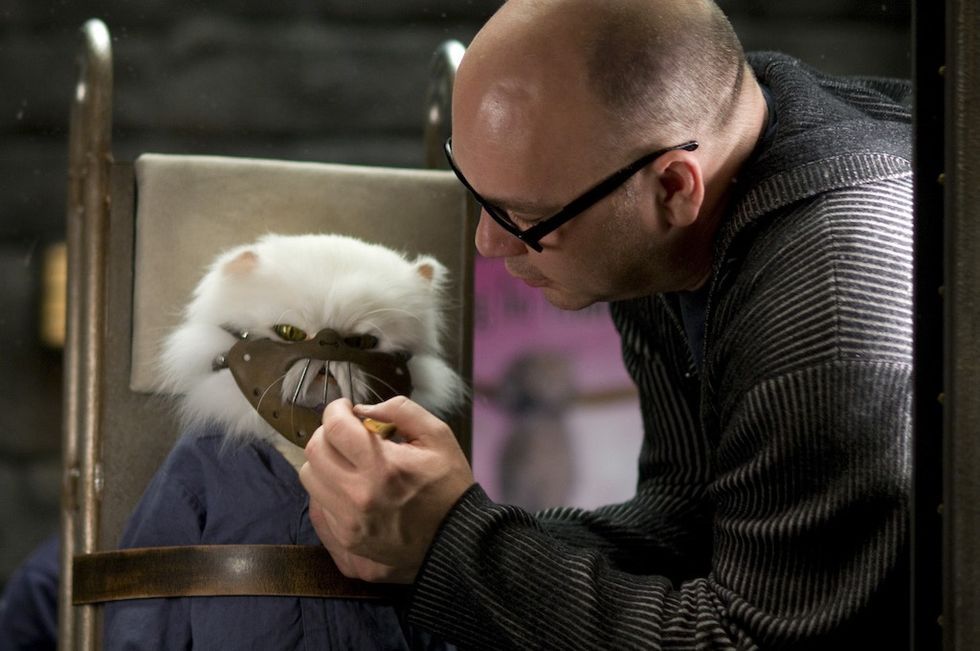
Lee Romaire on the set of CATS AND DOGS 2: THE REVENGE OF KITTY GALORE
Image courtesy of Romaire Studios
This proof of concept led Romaire Studios to deliver figure finishes for numerous E-Ticket-level attractions. But Romaire wasn't satisfied with just applying the aesthetic finish:
"I loved puppets and animatronic characters, and I knew all these amazing artists who do puppeteering and mechanical builds. I started asking my clients, 'Can you give us a chance to build a whole figure?'"
Eventually, one entertainment giant agreed, and commissioned Romaire Studios to build a very complex, small yet expressive figure. 3.5 years and almost a million dollars later, Romaire delivered the first handheld animatronic figure the company ever commissioned, and the smallest expressive head ever created for a theme park.
Art, engineering, and performance with Romaire Studios
As Romaire Studios began taking on full animatronic builds, Lee Romaire quickly realised that surviving the demands of global theme parks required more than just Hollywood-level artistry and clever mechanical design.
"To really do this stuff for the parks, you need to apply engineering design and analysis," Romaire explains. "The mechanisms have to be robust, as they have to run 16 hours a day, every day. So, I invested a lot of effort in building an engineering team.
“That was the final step to being a complete company."
Today, the studio maintains a substantial in-house engineering team, led by a registered professional engineer who oversees makers and electromechanical experts. This integration fundamentally transformed it from a boutique R&D shop into a powerhouse for heavy-duty production work.
"The engineering actually allowed us to take our mechanical designs and make them last," Romaire adds. "When we sign contracts, it's for 20 years and 95% reliability.
“There are some really good people who can do things that look really nice in our craft, but they don't have the engineering chops to develop robust mechanical systems, and you have really great engineering companies that build animatronic figures, but they don't have the design chops to make the character design and finishing look great.
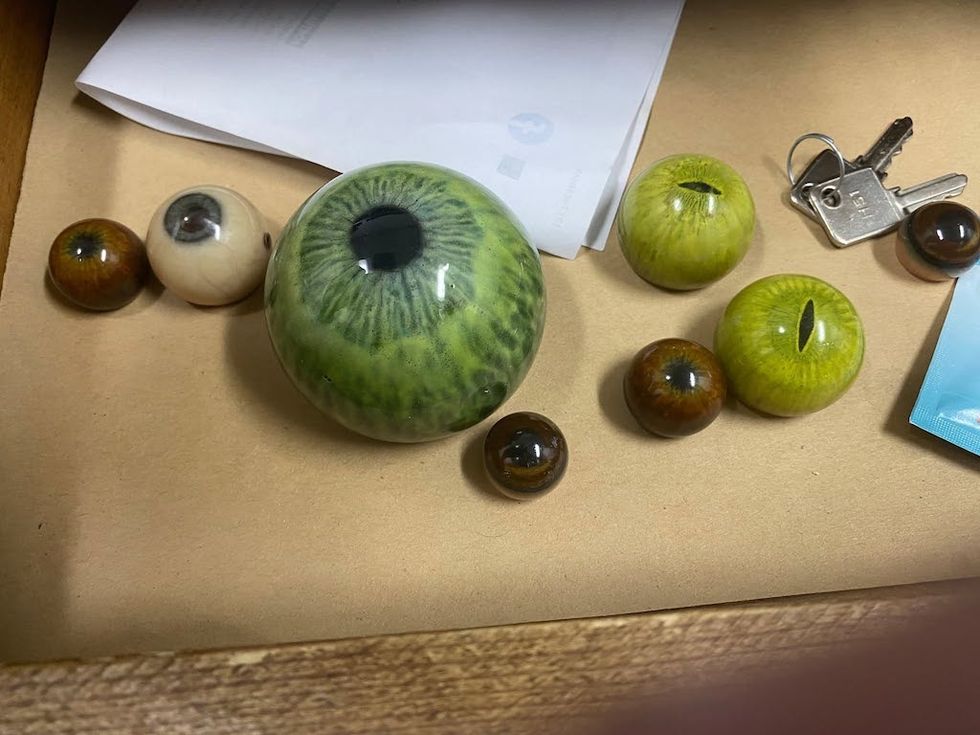
Various character eyes at the Romaire Studios workshop
Image courtesy of Romaire Studios
Alongside art and engineering, Romaire identifies a critical third pillar: performance. Drawing on his deep Hollywood network, particularly his connections at Jim Henson’s Creature Shop, Romaire brings master puppeteers and performance directors into the design process early.
"I bring them in at every chance I can to help us develop the characters and build a performance to bring our characters to life," he explains.
"We can make a beautiful thing, and we can make it move great, but if it doesn't give a believable performance, then we have failed. Performance is half of it.”
This combination of art, engineering, and performance has led to several technical breakthroughs.
Over the years, Romaire Studios has secured multiple patents with one of its clients for proprietary innovations, including an internally illuminated sword device with a retractable blade, technology recognised in the 2023 Thea Awards for Star Wars: Galactic Starcruiser at Walt Disney World (Brand Experience).
Other patents include an Artificial Eye with an Internal Electromagnetic Drive, and a Segmented Bending System for amusement park attractions,
Working with more industry heavyweights
Romaire’s reputation for blending aesthetic realism with robust engineering also drew attention from the Themed Entertainment Association, with multiple prestigious Thea Awards, including the 2022 The Secret Life of Pets: Off the Leash! Attraction at Universal Studios Hollywood.
This attraction features seven highly complex animatronic figures of the lead character, Snowball the rabbit.
The resounding success of the Pets dark ride paved the way for Romaire Studios’ contributions to Universal Epic Universe.
Its work across the park, including for attractions like Monsters Unchained: The Frankenstein Experiment and Harry Potter & the Battle of the Ministry, alongside contributions to Isle of Berk and Super Nintendo World, has been recognised with four Thea Awards.
Delivering at this scale was not without its hurdles. The Epic Universe project began just before the global COVID-19 pandemic severely disrupted the themed entertainment industry.
"We went from a lot of work to no work, which was a scary moment for us," Romaire says. "However, the work eventually came back, and we actually got better projects than we had before COVID.”
Viral content and rapid activations
For 25 years, Romaire Studios has operated behind the scenes, heavily constrained by the strict non-disclosure agreements favoured by industry titans.
“We have contributed some of the most mechanically complex figures and animatronics for major theme parks, including recently the smallest animatronic created for any theme park, and three free-roaming characters for a new park experience.”
Now, however, the studio is stepping into the spotlight, bringing its world-class capabilities to independent theme parks, global museums, visitor centres, and experiential marketing activations.
When asked why the company is broadening its reach now, Romaire says:
"We want to grow and stay fresh. There are many interesting projects we could be serving. The companies that we've worked for in the past kind of like to keep us in a silo, because it's advantageous to them, but it is not advantageous to us as a company, creatively.
“We need to grow as people and as creative technologists, and we always want to experience and do new and exciting things.”
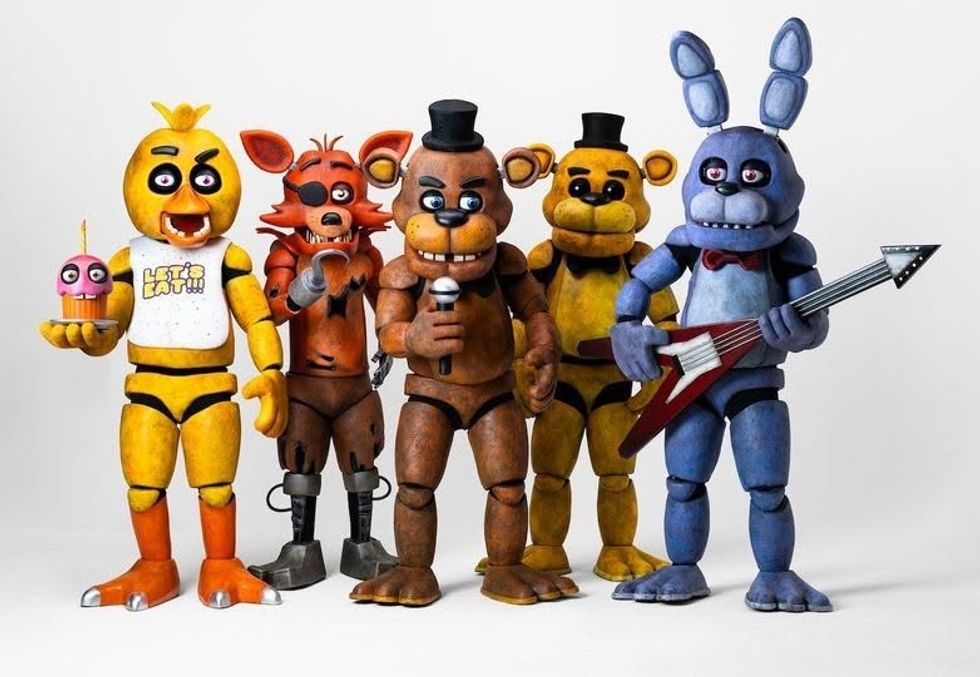
Romaire Studios partnered with the YouTuber "Socks for 1" to create six Five Nights at Freddy’s character suits featuring fully animatronic faces
Image courtesy of Romaire Studios
This desire for creative freedom has led Romaire Studios into the fast-paced digital creator space. Recently, the studio partnered with the YouTuber "Socks for 1" to create six character suits featuring fully animatronic faces based on the hit video game franchise Five Nights at Freddy’s.
Unlike the 20-year lifespans required for theme park figures, these suits needed to look great on camera but only had to survive a video shoot.
"Not everything we've made has to be engineered to last 20 years; it can last for a week," Romaire explains. "What's interesting about that work is it allows you to really be innovative and creative.”
The YouTuber wanted the video to drop in line with the release of the official Five Nights at Freddy's feature film, leaving Romaire Studios just eight weeks to build all six animatronic suits. The effort paid off; the resulting YouTube video has attracted over 50 million views.
“I joke with my friends who helped create the characters for the movie that our YouTube work was seen by more people than their movie work”.
The future: technology and classic storytelling
As Romaire looks towards the future of themed entertainment, he is closely watching emerging trends. However, he remains sceptical of the industry’s current obsession with developing fully humanoid entertainment robots.
"Entertainment companies right now are trying to develop humanoid-type entertainment robots, but I think that’s playing catch-up to the giant tech companies that have already produced amazing humanoid robots.
"I think unique character robots are where it’s at. Disney recently did its Olaf robot character, which is really neat... [and] the little box droids. Those are cool."
Romaire Studios itself earned a Thea Award credit in 2025 for its vendor work on Disney’s BD-X roaming droids.
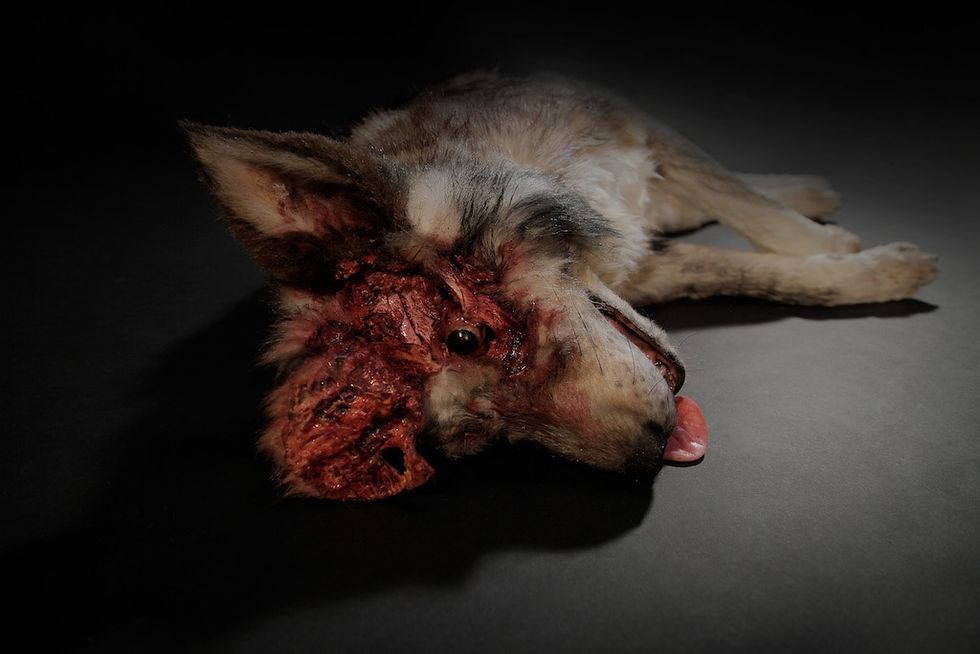
Finished figure seen in Guillermo del Toro’s Academy Award winning feature film Frankenstein (2026)
Image courtesy of Romaire Studios
Ultimately, for Lee Romaire, the core of the themed entertainment industry isn't about chasing the latest, shiniest technological fad. Instead, it’s about utilising impeccable artistry and robust engineering to support timeless storytelling.
“Attractions like A Small World and The Enchanted Tiki Room... those are timeless," Romaire concludes, reflecting on the classic attractions that first sparked his imagination.
"If the show is really good, the story is really good, it can be very simple and have an impact and last for years... there's still so much to be developed there.”
As Romaire Studios enters its next chapter, stepping out of the shadows to offer its expertise to a broader global market, the company says it plans to continue focusing on the combination of art, engineering and performance that has defined its work.
The studio's approach combines cinematic artistry with the engineering demands of permanent installations, a balance that has defined its work for the past 25 years.