
For nearly a century, the amusement park experience has typically reached its emotional climax of the day with a thunderous barrage of pyrotechnics at night, just before closing time.
Fireworks are the industry’s traditional exclamation point, a multisensory finale that signals the end of the day while burning a lasting moment right into the guest’s long-term memories. But how did this all come about?
According to historians, the first fireworks may have originated in China as early as 200 B.C. Gunpowder wasn’t invented yet, but the theory is that the first “firecrackers” emerged when small pieces of bamboo were thrown into bonfires, rapidly heating small pockets of air within the bamboo's hollow interior until they exploded.
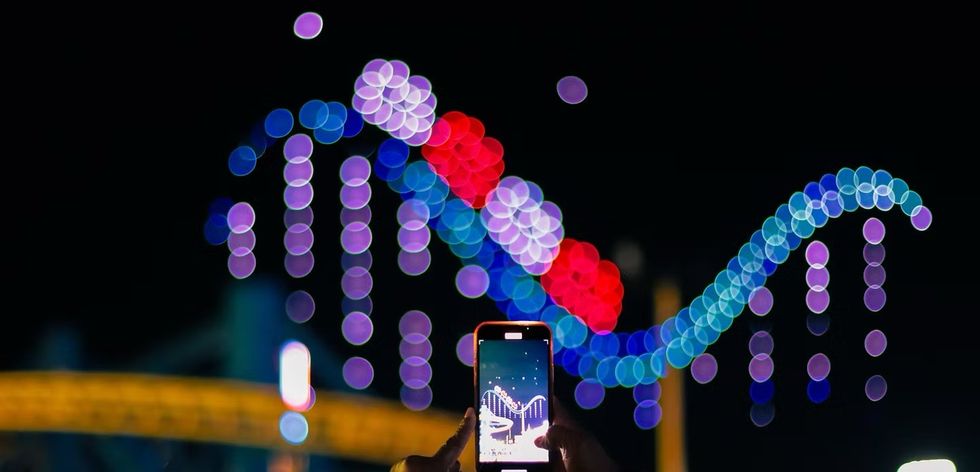
A drone show by Aerial Illuminations, developed for Fun Spot America
Image courtesy of Aerial Illuminations
The earliest chemical powder-based fireworks in China came about much later, thought to be sometime between 600 and 900 A.D. They evolved over the centuries, reaching Europe sometime in the 13th century, and by the 15th century, their use for festivals and celebrations had become an established tradition, especially in Italy.
In the USA, would you believe the first reported use of fireworks being used for a celebration was on 4 July 1777, for the one-year anniversary of the signing of the Declaration of Independence?
As we quickly approach the 250th anniversary of the Declaration of Independence, it would be hard to imagine a 4th of July without fireworks.
And yet, as we quickly move through 2026, a strange “quiet revolution” has been starting to take place in the skies over major theme parks, arenas and resorts.
The familiar boom of black powder pyrotechnics and the hiss of rockets flying through the sky are now increasingly being replaced by the synchronized insect-like hum of thousands of micro-LED-equipped drones taking flight.
The rise of the drone show
This shift is being driven by the collision between economic costs and the demand for greater environmental responsibility. Traditional fireworks, while spectacular, have become more of a logistical and even ethical liability for some.
For starters, putting on a good pyro show isn’t cheap. There is an astronomically high nightly cost associated with creating a pyrotechnics celebration, with the cost of single-use fireworks and explosive reports often exceeding $50,000 for a basic ten-minute show.
Meanwhile, despite centuries of use (and tradition), there is now a large push from those seeking to protect the environment.
Theme parks and pyro operators are now facing mounting pressure to develop more sustainable alternatives, as a typical fireworks display can release significant amounts of particulate matter and heavy metals into local ecosystems in the fallout zone.
And while you may hear theme park industry giants talk about their lofty goals to reduce their carbon footprint towards a net-zero goal, the use of traditional fireworks is something of a move in the opposite direction.
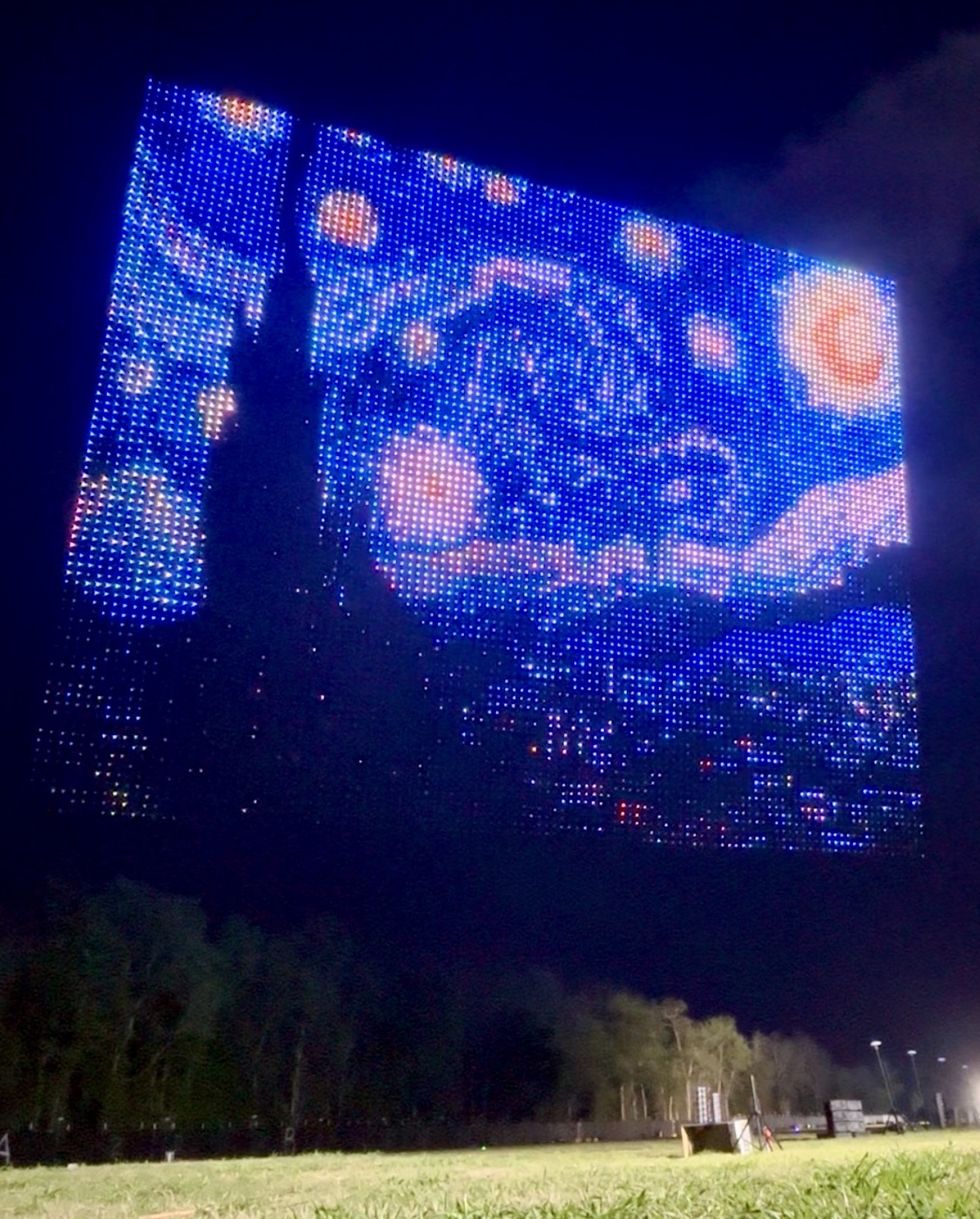
Aerial Illuminations recreated Van Gogh's Starry Night during a drone show
Image courtesy of Aerial Illuminations
Beyond the environmental bullet points, noise pollution from fireworks displays has long been a point of friction between amusement parks and their surrounding communities in many locations.
As such, the creation of technology behind these new drone sky shows has been presented as a superior and “silent” solution to the issue.
Unlike fireworks, which are limited by physics to producing spherical bursts in the air, drones act like literal video pixels in the sky, allowing designers to create 3D figures, full-color brand logos, and even intricate animations with a level of creative control previously impossible.
The full reality is this: drone shows are not just a simple swap-in replacement for fireworks. What we are seeing now is actually the birth of an entirely new medium of nighttime storytelling.
The industry’s embrace of drones is evident in the various press releases for the 2026 entertainment lineup at parks across the world.
This is looking to be a very pivotal year, in which several major park and attraction operators have decided to invest heavily in drone show technology as their new long-term strategic replacement for traditional pyrotechnic shows.
Previously, the use of drones has been promoted more as a novelty or an additional enhancement to an existing traditional fireworks show.
Drone shows at major US parks
A prime example of a company that appeared to be jumping all-in on drone shows going forward is United Parks & Resorts, the parent company of the SeaWorld and Busch Gardens theme parks.
United Parks surprised many with a very aggressive, public shift in its nighttime entertainment offerings this summer, introducing brand-new drone spectaculars at almost every one of its locations.
What is even more interesting is that United is adding a drone show to one of its parks as part of the fallout from legal action against the park.
It was revealed that SeaWorld San Diego’s new Ocean of Dreams show is being added to the park this year as part of a legal settlement with two local environmental activist groups: the Coastal Environmental Rights Foundation and San Diego Coastkeeper.
Both filed a lawsuit against the park in March 2025 under allegations that SeaWorld’s fireworks shows launched from a floating barge on Mission Bay next to the park were polluting the bay from the show’s fallout.
In the new settlement, SeaWorld San Diego has agreed to use aerial drones as a permanent replacement for fireworks at the park, following a one-year test of the drones.
Currently, the park has an approved permit from the California Coastal Commission to conduct up to 110 drone light shows as part of this first year of testing, which began in late May 2026.
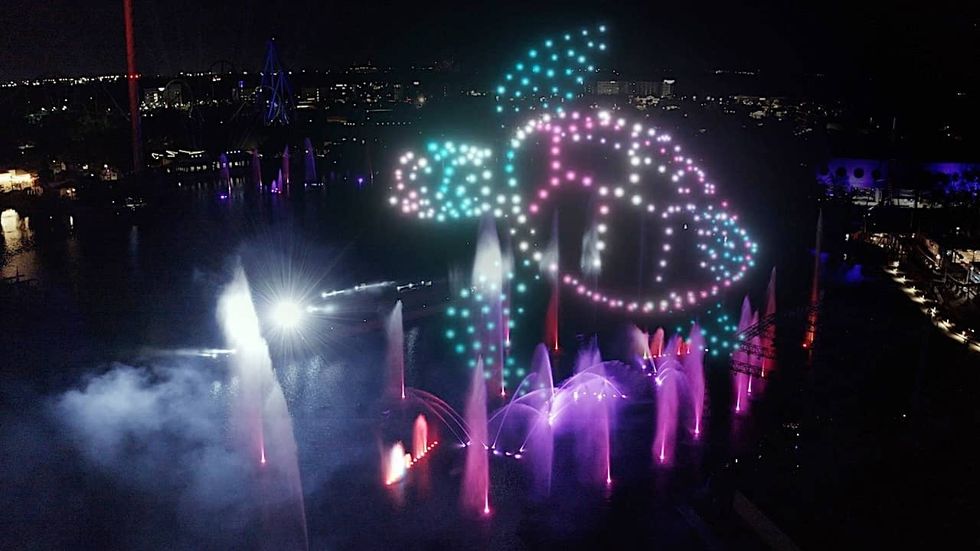
SeaWorld San Diego has introduced drone shows as an alternative to fireworks due to environmental concerns and noise pollution
Image courtesy of SeaWorld San Diego
The new show in question lasts approximately 12 minutes and uses about 600 synchronized drones in the sky over the park to create shapes of different species of marine life, such as dolphins, sharks and killer whales, culminating in a conservation message.
The drone show allows the park to maintain a high-impact nightly spectacle while alleviating concerns about chemical and noise pollution that were raised by surrounding communities.
SeaWorld Orlando instead has chosen to move forward with a new hybrid show concept this year.
The plan is to introduce the park’s new drone show concept as an integration with the park’s existing Ignite Fireworks Spectacular, which just started this month and will run nightly through 15 August.
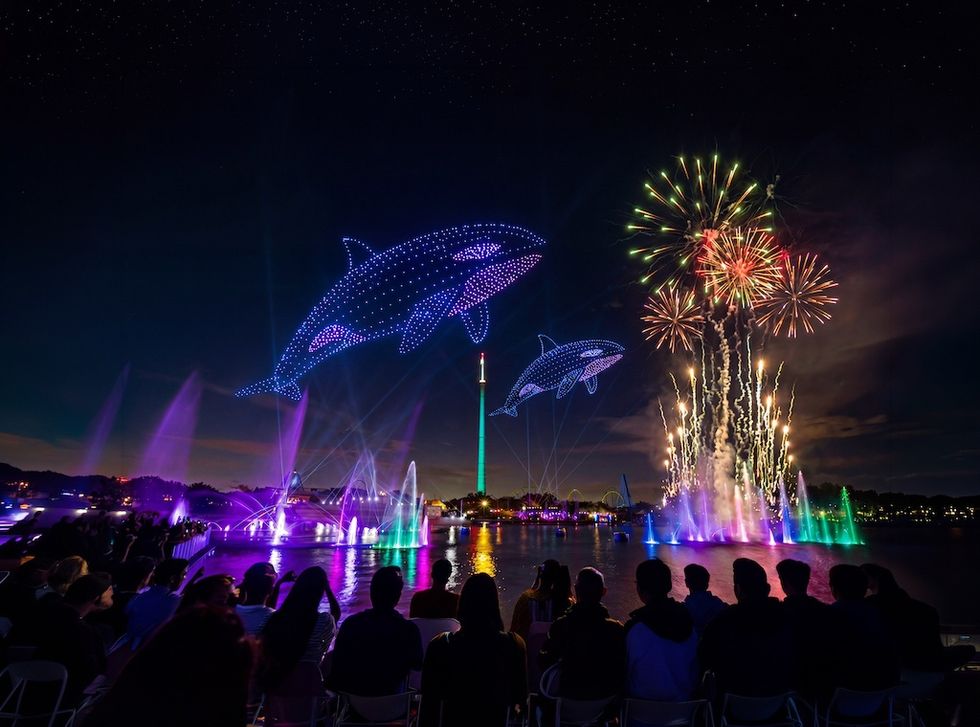
SeaWorld Orlando's hybrid show features both drones and fireworks
Image courtesy of SeaWorld Orlando
The show, set to the anthem Feeling Electric, transforms the sky into an ocean-inspired dreamscape before transitioning the drones into "fireflies" that usher in the traditional pyrotechnic finale.
This hybrid model serves as a calculated transitional step, preparing guests for a drone-led future while still offering the familiar bang of a fireworks display.
In a similar fashion, SeaWorld Orlando’s sister park, Busch Gardens Tampa, launched its new Wild Skies show in May as part of that park’s Summer Nights celebration events. It, too, was designed as a hybrid show concept that begins with drone displays in the sky, leading into an integrated fireworks finale.
Meanwhile, Busch Gardens Williamsburg will premier the park’s first-ever drone show in late June as part of that park’s Summer of Wonder promotion taking place from 26 June to 30 July 2026.
Elsewhere in North America, Six Flags is launching a few drone shows this summer to offer something new to its local markets and potentially drive up season pass sales.
Smaller in scale than some of the new United Parks shows, Six Flags Fiesta Texas premiered its new FiestaLuz drone show in May, featuring 175 illuminated drones. According to reports, the new show is designed to evolve throughout the season.
It will first focus on the park’s different themed areas and attractions, then move towards images of the park’s history and timeline of its evolution, before showing off some preview images of its big 35th anniversary plans for next season, such as the newly announced Werewolf Gorge, a launched family coaster.
The benefits
The ability to reprogram and update any given park’s nightly spectacle as needed to highlight current local events, concert performances, and even limited-time holiday changes gives an aerial drone show a distinct advantage over a traditional pre-choreographed fireworks show.
Making changes to a fireworks show involved more than just the programming of the music and firing sequence; it will likely also involve a complete change to the style and quantity of the pyrotechnics being purchased and loaded for each show, as well as changes to the style, placement and sizes of your mortar tubes and racks at the launch site.
See also: Theme parks become more dynamic after dark
Compared to this, the idea of using several hundred identical drones as an infinitely reprogrammable storytelling device tailored to the needs of any given night seems to offer very enticing advantages.
According to some experts, one of the most striking impacts of drone technology is the “creative liberation” the concept offers to show designers over fireworks.
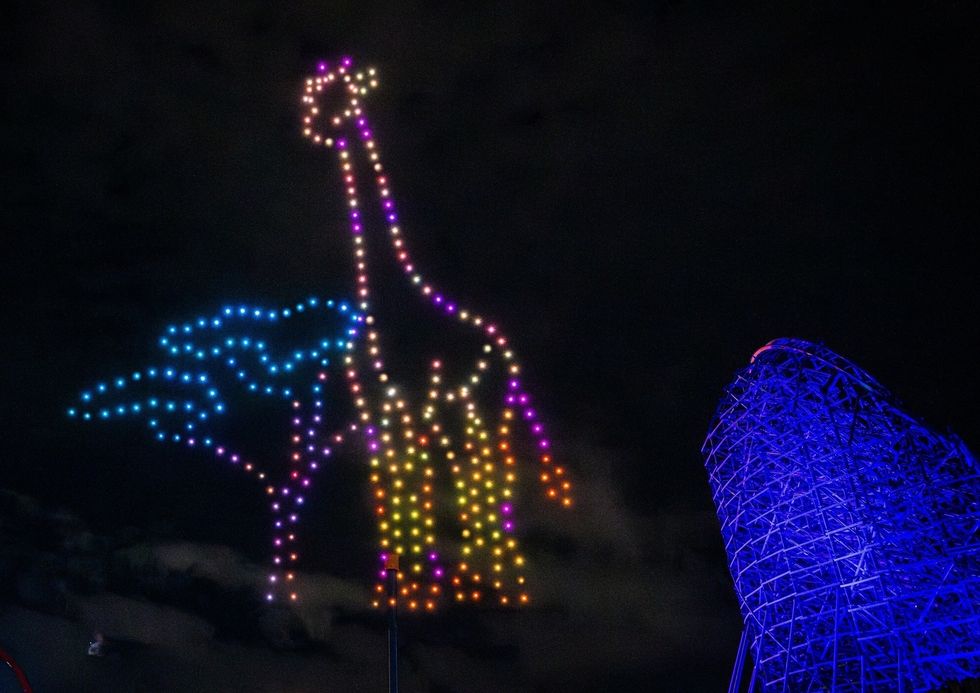
Busch Gardens Tampa Bay's Wild Skies drone show is part of its Summer Nights event
Image courtesy of Busch Gardens Tampa Bay
By nature, traditional pyrotechnics are always constrained by the spherical nature of their aerial bursts.
A firework can be created with timing needs, different explosive colors, and scaled up or down to have an appropriately sized blast radius and even added volume through the addition of reports to create loud bang sounds, but its shape is always limited by physics.
By contrast, drones can act and move like three-dimensional, volumetric pixels as they float across the sky in carefully patterned formations.
Unlike projection mapping, which requires a physical surface on which to project an image for the viewer, an army of drones creates its shapes and forms in the air as needed.
Even better, a sequence of movement that starts off as a school of fish can smoothly morph into a leaping whale, and then transition into a brand logo, a character, or an iconic vehicle.
This ability allows show designers to build narrative sequences that are seamless and emotionally connect with viewers in a way fireworks cannot match.
 Parc Astérix in France is launching a new nighttime show called Asterix et la Potion d’étoiles
Image courtesy of Parc Astérix
Built-in drone safety protocols permit denser formations than are legally allowed in pyrotechnic blast zones. This density creates the illusion of a solid object or detailed animation, enabling unprecedented visual fidelity.
The result is a highly detailed, silent performance that can be enjoyed up close without the need for generous safety setback requirements.
Drone safety
Over the years of fireworks shows performed before live audiences at various public venues, arenas, and theme parks, there has been ample time to develop a comprehensive set of safety procedures and protocols for pyrotechnics.
These not only detail the required standards and safety envelopes for staging a show, based on the size and style of the pyrotechnics to be used, but also provide detailed SOPs for safely transporting, storing, and handling all pyrotechnic devices, from delivery to installation at the launch site.
Drone safety protocols are still something of a work in progress due to the technology's newness. This is not to say they are unsafe, as drones already have built-in safety protocols that automatically kick in during many troublesome scenarios.
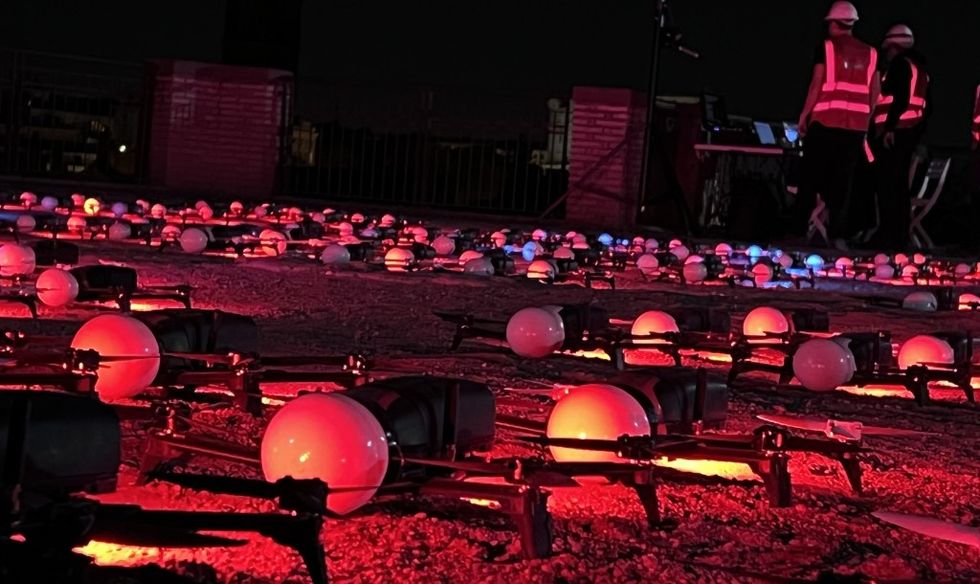
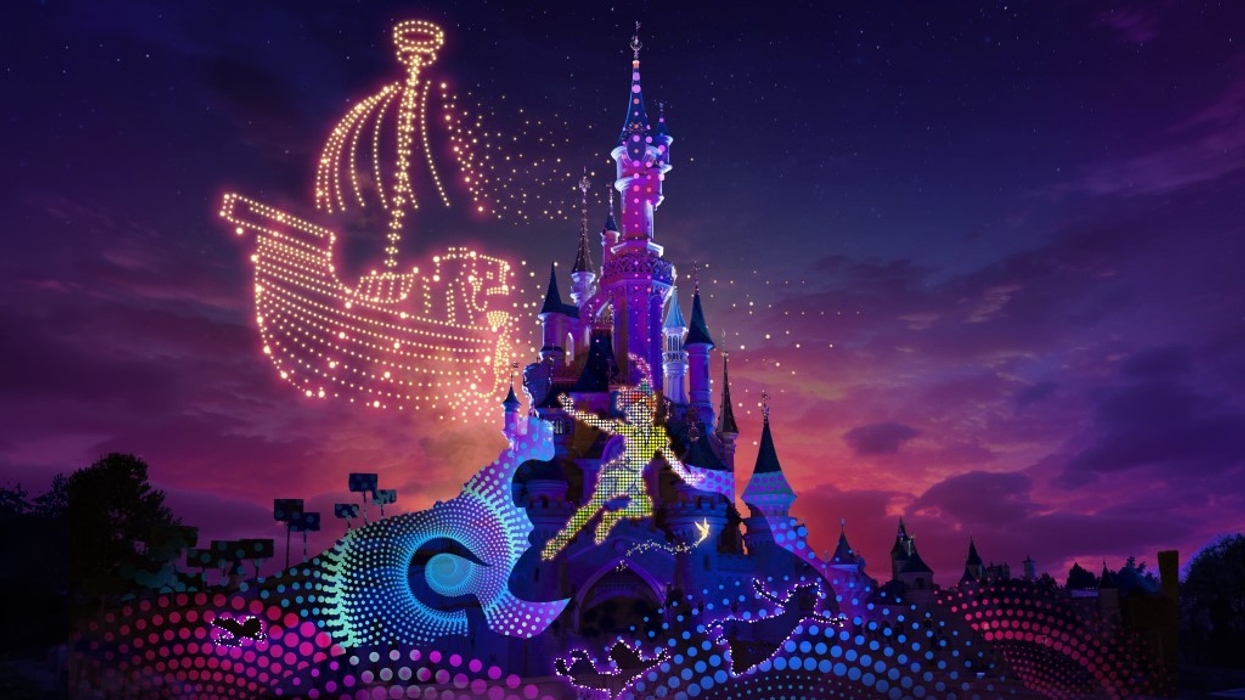
Drones undergoing pre-show checks on the start zone at Disneyland Paris
Image courtesy of Dronisos
For example, even consumer-level drones are automatically programmed to safely return to their origin point upon loss of control signal, or to make a safe, low-speed descent if battery levels become critical.
However, as with fireworks shows over the decades, new rules sometimes have to be made in the aftermath of an unexpected incident.
A good example of this took place a few weeks ago in Australia at the Vivid Sydney festival.
While the Vivid Sydney festival has been taking place since 2009, the first drone show took place in 2024 and received a very popular response from attendees.
During this year’s festival, it was reported that nearly 90 of the drones began falling from the sky, crashing into Sydney’s Darling Harbour right in the middle of a performance.
While the show went off without a hitch the night before, those behind the show described the failure of the 25 May show as being due to “unforeseen technical difficulties” that led the festival organizers to cancel the remaining drone shows planned for the three-week-long festival.
Skymagic, the designer of the show, blamed a “change in radio frequency” for the problem that downed nearly 10% of the show's purpose-built drones.
While the Sydney incident was described as a technical glitch, you have to wonder about what a more serious incident would look like.
Technical glitches
On 2 October 2025, during the Sound of Blooming Flowers pyrotechnic drone show in China’s Hunan Province, it was reported that a “mass drop” of drones, many carrying extra pyrotechnic devices, began to fall from the sky like a meteor shower.
Many of the malfunctioning drones then exploded into fireballs upon impact with the ground, scattering flaming embers across the audience as they attempted to escape the chaos, and causing a number of small fires that had to be put out.
China has seen a few other major incidents with drone shows as well, including a huge performance featuring a reported 2000 drones in Quanzhou that went off the rails in December 2024 when the local wind conditions increased and caused hundreds of the drones to crash into each other before falling from the skies into the ground and nearby lake.
Another video report shows drones elsewhere in China suddenly falling from the sky due to a critical technical glitch believed to have been caused by a potential signal jammer.
This raises the question: is it possible for someone to intentionally sabotage a drone show?
As seen in the media over the past few years, there are now companies that provide official anti-drone countermeasures. The large devices often look more like giant Sci-Fi guns when wielded by a human.
A member of the US Secret Service was spotted carrying one while on duty following the President around a golf course in April 2026. When the anti-drone gun came into view in the camera frame, it went viral for resembling something you might see in a Men in Black film.
Similar devices were also seen in use by the police around Paris during the 2024 Olympic Games.
The methods used by these devices can vary by design as well as the size and scope needed, but they are able to disable drones on the low end by disrupting their control signal entirely.
On the high end, there are laser and microwave-emitting versions that claim to destroy critical electronic systems hardware within the drones, causing them to uncontrollably crash.
While a number of international companies are now producing these kinds of devices, it is worth mentioning that currently the sale of anti-drone guns is restricted to official government, military and authorized law enforcement agencies… in the United States at least.
The future of nighttime spectaculars
For now, it seems clear that the future of skybound entertainment is a shared one, with no one clear winner at the moment. The so-called “quiet revolution” is less about replacing an old tradition and more about elevating the storytelling of nighttime spectaculars to unseen new levels.
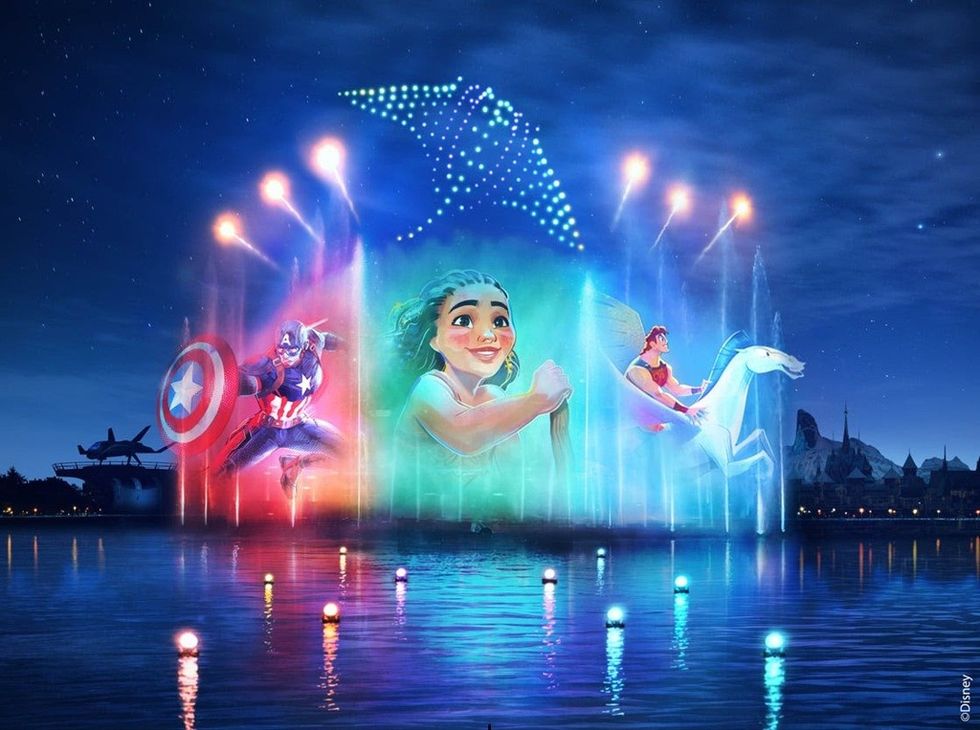
Dronisos used world-first floating drones for Disney Cascade of Lights
Image courtesy of Disney
Fireworks will likely never vanish entirely, because as eye-popping as a drone show can be, they still lack the power of the visceral impact of a traditional fireworks show.
As such, many of the best shows out there currently rely on a mix of drones and traditional pyrotechnics, each doing its part to entertain.
While we seem on track to see more drone shows than ever in 2026, the new technology is still a great example of the theme park industry’s ability to constantly innovate and reinvent itself.
By trading black powder for programmable pixels, parks are not just saving money (and winning over their neighbors and environmentalists); they are unlocking a new dimension of storytelling where the sky itself becomes a dynamic and unlimited canvas for the imagination.