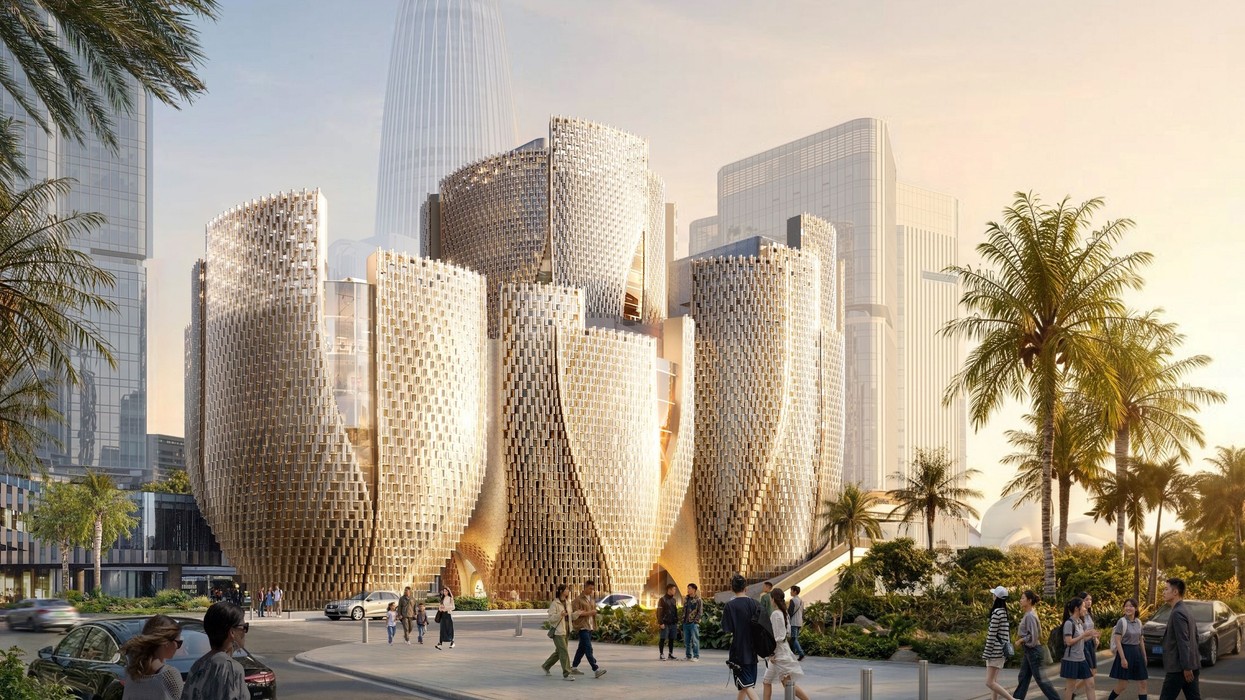
Perched beside the Horseshoe Falls, the Table Rock Welcome Centre has long been the gateway to one of the world’s most iconic natural wonders. However, recently, the historic site has evolved into more than just a viewing platform.
With the opening of Niagara Takes Flight, Niagara Parks has unveiled a groundbreaking attraction that dives deep into the region’s beauty and cultural essence.
As Ontario’s first flying theatre and the only one in the world situated directly within a natural wonder, the stakes were high. It was not just about creating a ride but about replacing a legacy attraction with an experience powerful enough to rival the thundering falls just outside.
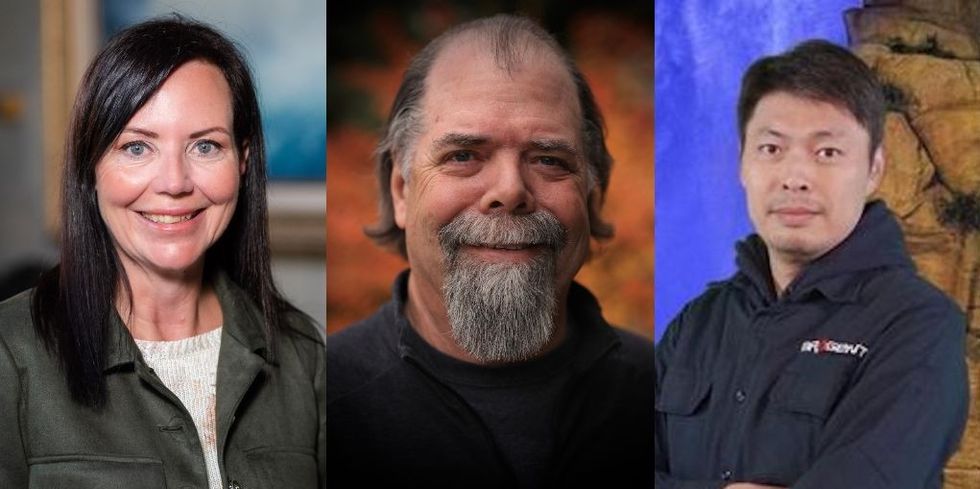 Missy Sauer, Rick Rothschild, and Roger Sun
To find out how this ambitious project was developed, we speak with Missy Sauer, director of attractions and retail for Niagara Parks; Rick Rothschild, founder and chief creative officer at FAR OUT! Creative; and Roger Sun, director of engineering management at Brogent Technologies.
A need to modernise
For Niagara Parks, the journey started with a need to evolve. For 17 years, the Niagara’s Fury 4D attraction had been a fixture for visitors, but the time had come for a new chapter.
"Our mandate is to preserve and showcase Niagara’s natural and cultural heritage and create a memorable visitor experience, first and foremost,” says Sauer.
“We had an immersive attraction that had come to the end of its life. After 17 years of functioning, it was on shaky legs, and it was time to replace it. We went out to IAAPA and had a look at what was in the market at the time, and we decided a flying theatre would fit the bill for us.
“Our vision was to create a truly next-generation immersive experience, one that lets guests soar above Niagara and see its beauty through the eyes of a bird.”
The park's geography dictated the need for an aerial view. Covering 56 kilometres, the parklands contain hidden treasures that the typical visitor often overlooks.
"Niagara Parks is about 56 kilometres in length, so some visitors come and aren’t able to see all of Niagara in their time with us. We thought this would be a way to give guests the ability to see more of Niagara, offering that aerial perspective and showing the region’s landscapes.
“We also really wanted to deepen appreciation for the history of the area, the geology, and the cultural identity.
“Financial sustainability was important to us as well, and we wanted to make sure we were opening an all-year-round attraction that was not weather dependent.”
Nature, culture, and history
To bring this vision to life, Niagara Parks enlisted Rothschild, an industry veteran and a key creator of Disney’s original Soarin’ Over California attraction.
The team also included Mike Quigley, who directed the main flying ride media, and Rio Mitchell, who directed the story content for the pre-show spaces.
For Rothschild, the appeal of the project extended beyond the mechanics of flight; it was about uncovering the deep, often untold stories of the land.
"What really drew me in was the 150-year legacy of the park itself,” he says.
“There’s a fascinating and important history here, one that connects to the conservancy of the land and the focus on allowing this extraordinary piece of nature to be presented to the public without overwhelming it with humanity, which had become a problem in previous centuries."
Rothschild approached the project with what he describes as an "anthropological and archaeological" mindset. He identified what would anchor the narrative:
"It was really this tripod of history: the natural story, the long-lasting Indigenous story, and the more contemporary Niagara Parks story. Once I started to learn about that, I became even more intrigued.”
The aim was to go beyond the postcard image of the falls. While the raw force of the water is central, the experience needed to place that power within the context of thousands of years of human history.
"Humans have been watching this process from its beginning. Fourteen thousand years ago, as the glaciers receded, people followed them, witnessing everything that has happened here and participating in an evolving culture that still exists today."
Immersion in tight spaces
Translating this narrative into a physical sensation was the task of Brogent Technologies. The team faced a unique challenge: installing a state-of-the-art flying theatre system within an existing visitor centre rather than in a purpose-built facility.
"From the very beginning, Brogent’s vision for Niagara Takes Flight was to create more than just a thrilling ride,” says Sun.
“We aimed to craft an immersive, multi-sensory experience that would deepen visitors’ emotional connection to Niagara Falls and its rich cultural heritage.
"As Ontario’s first flying theatre, and the world’s first embedded within a globally recognised natural wonder, the attraction needed to honour the site’s significance while redefining how technology can tell a regional story."
The solution was Brogent’s o-Ride system, chosen for its balance of throughput and spatial efficiency. However, the installation demanded meticulous engineering to accommodate the tight spatial and structural constraints of the Table Rock Centre.
"Our engineers optimised the layout, reinforced structural supports, and carefully planned installation sequencing to minimise on-site disruption.
"Motion, synchronised visuals, and environmental effects were also calibrated specifically for the site, ensuring comfort, safety, and a breathtakingly smooth take-off that feels completely natural within the surrounding environment.”
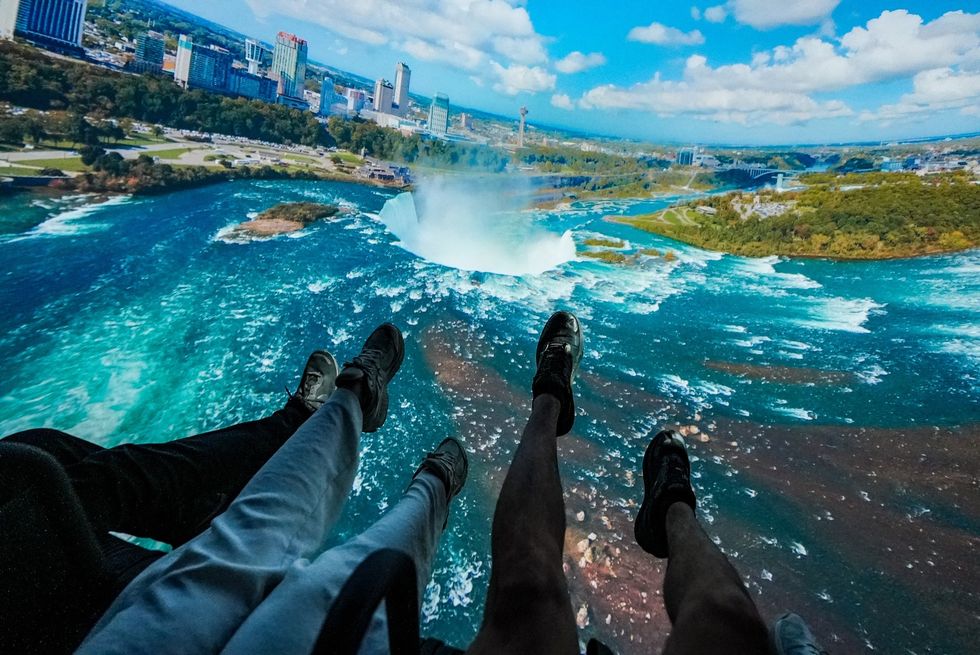
One of its most distinctive features is the 180-degree opening turn, which creates a dramatic reveal as guests are seamlessly lifted from the boarding platform into the heart of the Niagara journey.
The pre-show experience
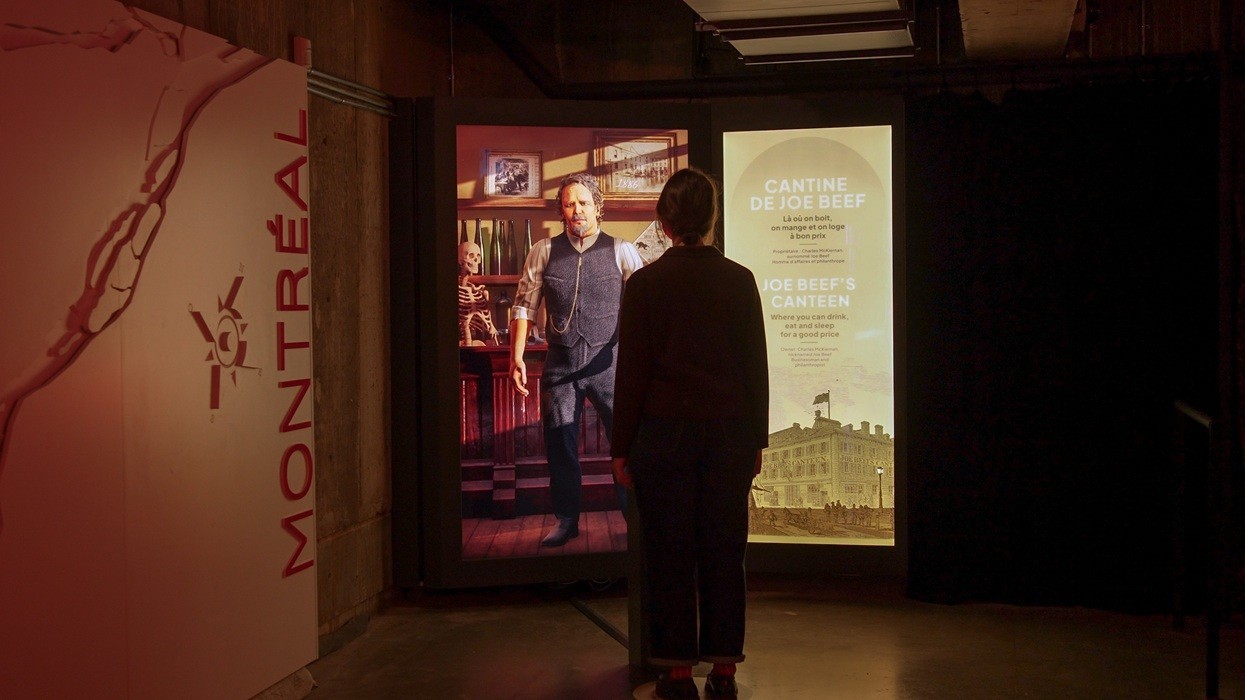
In modern attraction design, the queue and pre-show are not just waiting areas. They are the story’s opening act. Niagara Takes Flight excels here by integrating technology and narrative long before guests are seated.
Sauer says: "We thought about the immersive experience from the doorway all the way through.
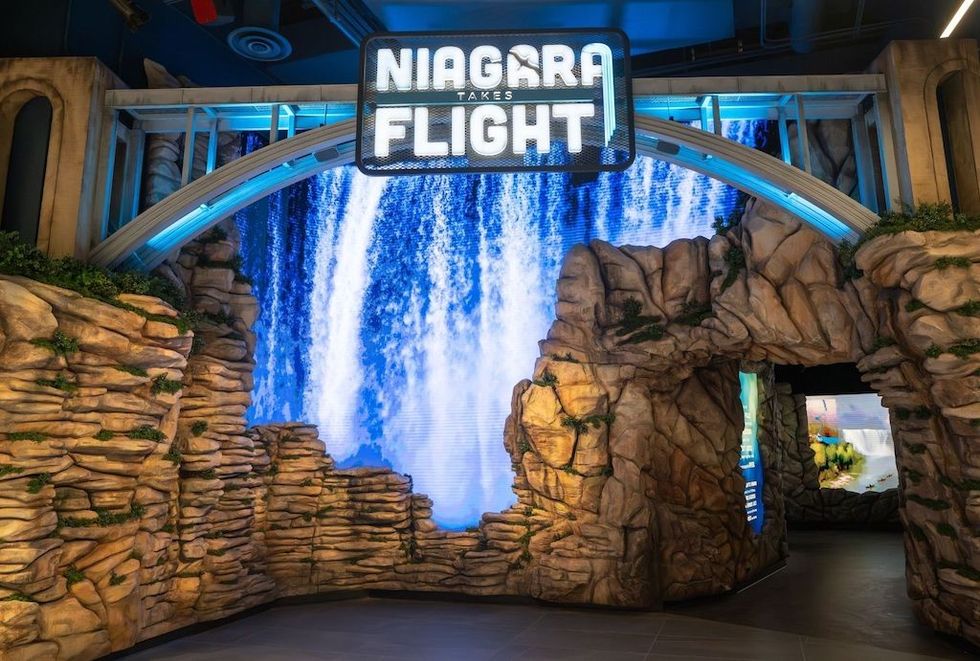
“From the moment you step inside, there’s a real sense of place. We developed a marquee feature that we made a significant investment in, so people immediately know where they are.
“We have a replica Rainbow Bridge with the Falls behind it, which has become a major photo opportunity and creates a real sense of awe."
This commitment to genuine storytelling entailed close partnership with the local community, particularly concerning Indigenous history.
"There was an Indigenous collaboration where we told the stories of the Indigenous people who were here before us. We worked with an Indigenous working group, and there is art, song, and dance incorporated into the pre-show, which carries through into the film."
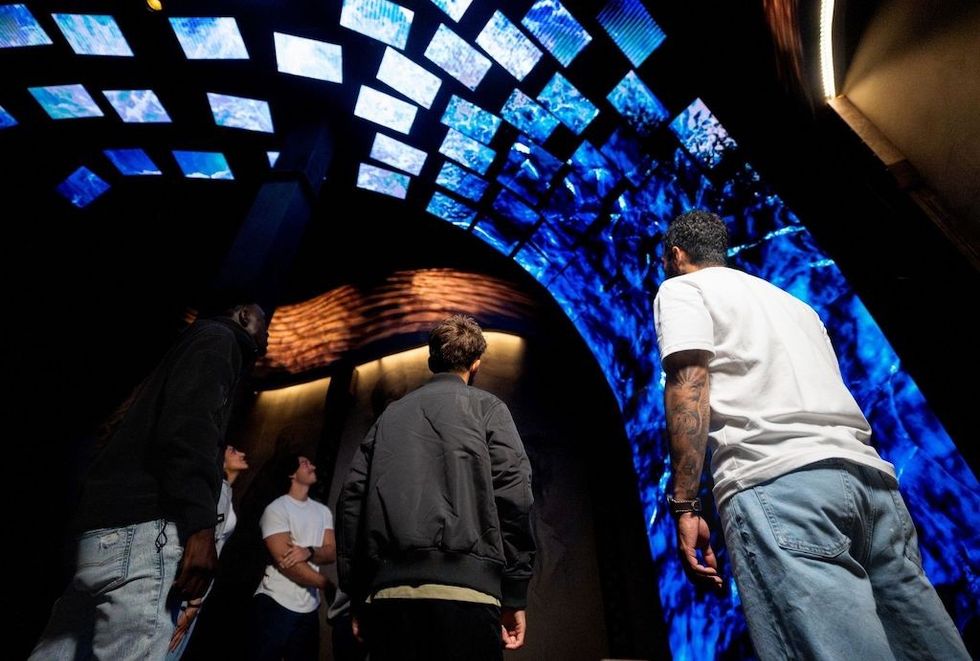
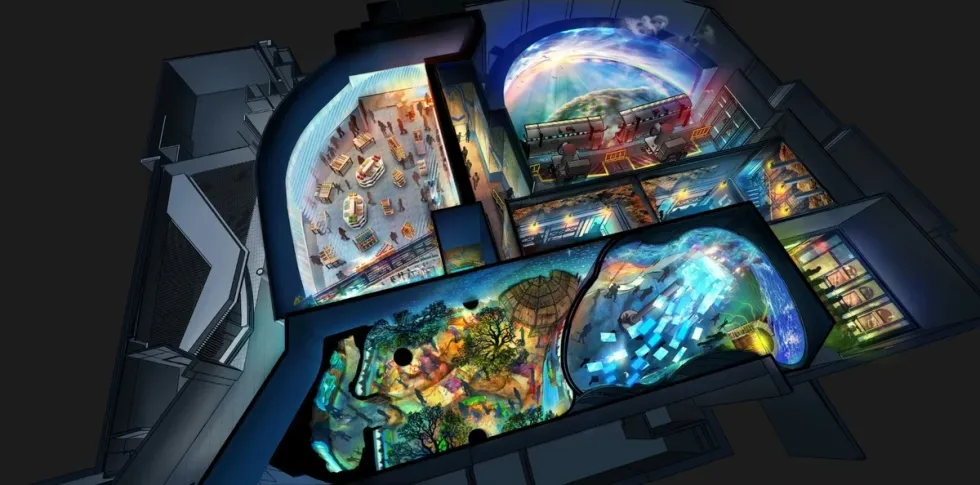
Sun notes how the pre-show spaces, including the entrance marquee, ancestors’ room, and waterfall room, utilise LED lighting and cinematic media to "prepare guests emotionally for the journey ahead."
A highlight of the pre-show is the narration by filmmaker James Cameron, whose involvement was not just a celebrity endorsement, but a nod to his local roots.
"James Cameron flipped hamburgers there as his first job,” says Rothschild. “Everyone involved knows the legacy deeply and cares about it."
FORREC, a leading entertainment design specialist, provided concept, schematic, and design development services for the attraction’s interiors, pre-show experience, and retail spaces. The firm also conducted the feasibility and market study for the project.
Capturing the spirit (and the mist) of Niagara
Filming the media content for the ride posed its own logistical hurdles. When the subject is millions of litres of rushing water, the environment is seldom cooperative.
Rothschild recalls the challenges of shooting outdoors:
"Anytime you shoot outside, Mother Nature is both your friend and your adversary. Like Forrest Gump, you never know what you’re going to get. The weather is always the biggest challenge. Niagara, in particular, is all about water, and water creates mist. Camera lenses don’t like mist!”
Despite these obstacles, the team captured the footage needed to provide guests with perspectives they could never achieve on foot.
"The irony is that the whole reason we were there—the Falls—was also the biggest challenge. But Mother Nature eventually cooperates. We didn’t have to abandon any intended shots.
“We got everything we set out to capture, though we had to be flexible and manoeuvre when needed."
The result is a film that provides unmatched close-up views of the falls and rare glimpses of events. "We also included things like the Fort Erie recreations, which only happen a few days a year and aren’t seen from this perspective.
“So, the experience starts with how the power of water created this extraordinary physical feature, then connects that to thousands of years of human presence and evolving culture, and finally lets guests see things in ways they otherwise couldn’t."
The art of collaboration
A project of this scale, delivered within a tight schedule, required seamless coordination among Niagara Parks, Brogent, Rick Rothschild, FORREC, and AOA, a leading immersive experience design, production, and project management company.
Sauer highlights the intensity of the schedule and the dedication of the partners:
"Niagara Parks went through a formal procurement process, which is how Brogent was selected. That happened in November of 2023, which shows how quickly this project came to fruition. The timeline was extremely compressed, so having the right people was critical.
"The time zones were challenging. But we had people who cared deeply about the project. No one was saying, “I only work nine to five.” People were joining calls at two in the morning or eight at night. Everyone made sacrifices to get us across that finish line."
Sun regards this collaboration as the core of the project, ensuring that technology supports the story rather than detracts from it: "Brogent led the transformation of this creative vision into reality through precise motion design, cinematic media, and environmental effects.
“Guided by Rothschild’s creative leadership, empowered by Brogent’s technology and turnkey expertise, and supported by AOA’s coordination during design and installation, the partnership delivered a seamless, emotionally resonant experience."
Rothschild specifically credits AOA for managing the complex integration of show elements.
"AOA was brought in because what the project really needed was deep show project management. They helped the team understand things they didn’t even realise they didn’t know, which can be awkward, but their approach made it work."
Oksana Wall, AOA’s vice president of strategic engineering, says:
"Guided by Rick Rothschild’s creative leadership, supported by Brogent’s technology and turnkey expertise, and supported by AOA’s coordination pre-show management during design and installation, our role was to help translate a vision into something that could be built, operated, and experienced every day, without losing the heart of the story.
“In a place as iconic as Niagara, protecting that balance between creativity and reality really matters.”
Niagara Takes Flight is a hit with visitors
Since opening its doors in late August 2025, Niagara Takes Flight has surpassed expectations. Although missing the peak July period, the attraction experienced sold-out crowds and rave reviews.
“We sold out almost every single day for the first month,” says Sauer. “We bypassed our forecast by about 30%. Beyond that, the public response has been incredible. People are coming back to ride more than once. Word of mouth has been huge.
“We’re currently at a 4.7 rating on Google. From an operations perspective, that’s something we’re very proud of."
Notably, the attraction was built with inclusivity as a top priority. It features a dedicated accessibility room that allows guests who are unable to transfer to the ride gondola to enjoy the story in full.
"This has been used almost daily and has been very well received. Guests who can’t transfer to the ride gondola can still experience the full pre-show and watch the film. Accessibility is something we’re really focused on, and it was important that all guests could be included."
The future is immersion
The success of Niagara Takes Flight signals a shift in how Niagara Parks engages visitors, moving firmly into high-tech immersion. "This is now our second immersive experience, and we see this as the way of the future,” says Sauer.
“People want to be fully immersed. I think we’ve set a precedent for Niagara Parks. Future projects will always consider how innovation and historical interpretation can be blended in a tasteful way that everyone can enjoy."
For Sun and Brogent, this project is a stepping stone toward the next evolution of flying theatres:
"One of the most transformative trends shaping the next generation of flying theatres is the move from projection-based to LED-based display systems. LEDs deliver self-illuminated imagery with ultra-high brightness, superior contrast, and exceptionally rich colour fidelity.
“This breakthrough allows for more dynamic environments and creative configurations."
For Rothschild, the ultimate measure of success is the spark of interest awakened in the guest. "Ultimately, it’s a journey through time, place, and story. I hope it’s one of the first things people do when they arrive, opening their curiosity and encouraging them to explore more.
“And above all, I hope they have fun.”