Visitor attractions’ mobile apps are often relegated to functional roles like digital maps, scheduling, or, at best, simple games to beat queuing boredom.
While these tools are excellent at ensuring a smooth visit, they frequently fail to achieve their full potential and are often deleted once the guest heads home.
By 2030, it is predicted that there will be 2.5 bn mobile game players worldwide. Attractions are missing a massive opportunity to capture the attention of a global audience that already spends significant time and revenue ($164bn by 2030) in digital spaces.
The games included in even the best apps like Play Disney Parks are generally focused on the visit. They are therefore limited in scope to avoid distracting from the live experience.
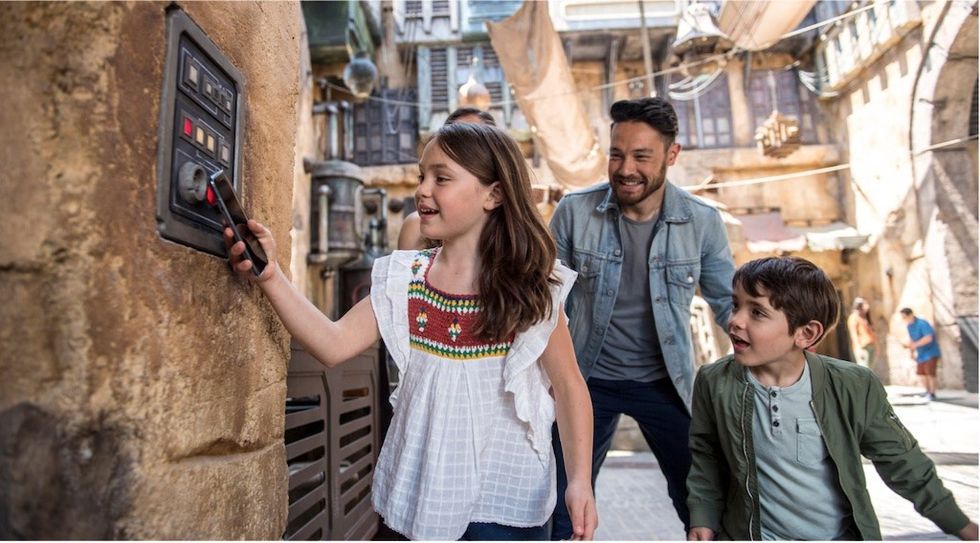 Credit Disney
However, there is an opportunity to create games that also have a rewarding play-at-home mode.
By looking at how the gaming industry addresses issues of difficulty, accessibility, agency, expression, and community, the attractions industry could create a truly special digital experience that keeps visitors engaged between visits.
The difficulty paradox: the intended experience, for everyone
By virtue of age ratings, single-player modes, and toggleable elements, video games have an easier time than attractions at specifying their audience in demographics of age, interest, and skill.
Attractions face a greater challenge: catering to families and groups with a wide range of skill levels makes designing competitive activities a nightmare.
Often, attractions lower difficulty across the board to ensure everyone can participate, but this results in games that are too forgiving or unchallenging, failing to invite a second round.
The lesson
Game theorist Jesper Juul describes games as “pleasure spiked with pain”, arguing in his book The Art of Failure that some level of failure is essential for a sense of accomplishment.
He notes that while players dislike failing, they "dislike not failing even more," as it robs the experience of meaning.
 Credit Game Maker’s Toolkit
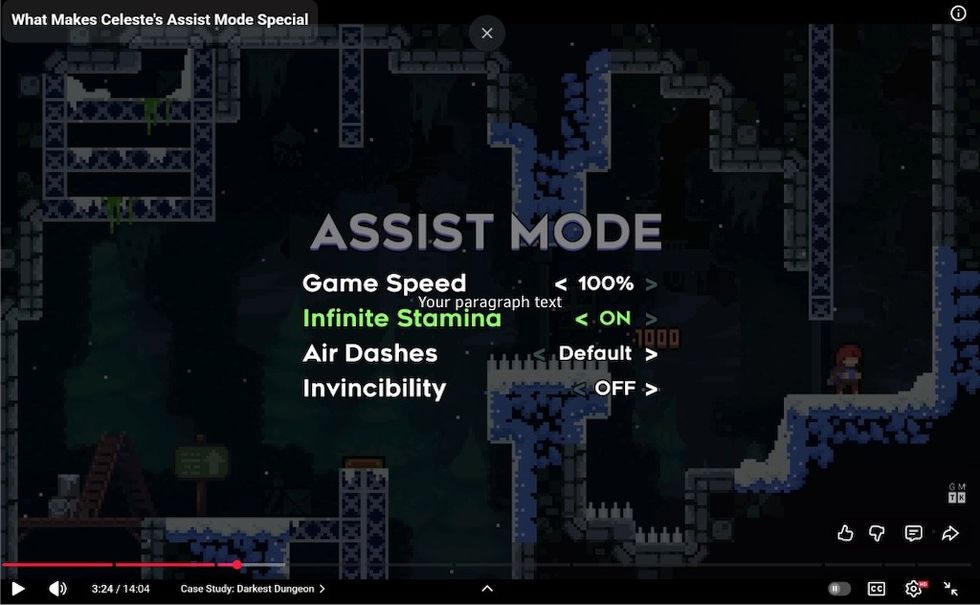
The gaming industry often struggles to navigate a balance between difficulty and accessibility, as seen in the comparison between games like Celeste and Sekiro: Shadows Die Twice.
While Sekiro maintains a fixed, high difficulty to preserve the intended experience perfectly, Celeste offers modular accessibility options that allow players to adjust mechanics like reaction time windows or game speed without removing the core challenge.
The implementation
Attractions should adopt scalable difficulty and "sleight of hand" design tricks to create a sense of accomplishment across different skill levels.
Examples from the gaming industry include:
- Survivability Buffs: Assassin’s Creed and Doom value the last bit of a player’s health bar as more hit points than the rest, creating the thrill of a "close call".
- The Last Bullet: Gears of War makes the final bullet in a magazine deal 25% extra damage to help players finish off foes.
- Coyote Time: many platformers like Hollow Knight or Celeste allow a player to jump for a few frames after they have technically walked off a ledge, ensuring the game feels responsive rather than punishing.
 https://maddymakesgames.com/articles/celeste_and_f...
Pitfalls
Considering accessibility in design should not be done in a vacuum. The best way to account for both fun and ability is to do extensive testing and communicate honestly with your fanbase.
Allowing expression: agency in decision
Agency is defined by game designer Sid Meier (Designer of Sid Meir’s Civilisation game series) as “a series of interesting choices”, and by Bernard Suits (Philosopher and Author of the book The Grasshopper: Games, Life and Utopia) as the “voluntary negotiation of unnecessary obstacles”.
For a visitor attraction, agency is the cornerstone of immersion.
Currently, some attraction games function as simple information collectors where players scan locations to unlock lore. However, collecting tidbits of lore passively is not expressive or engaging for the player.
 Credit Fortnite
The lesson
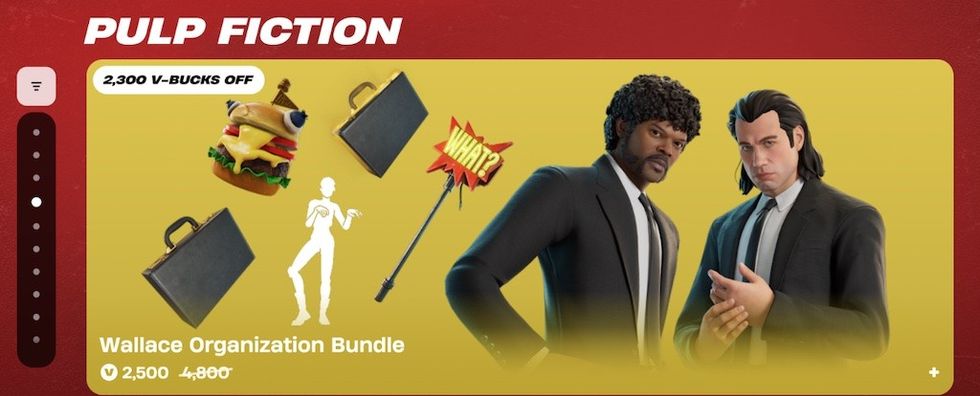
True agency gives the player a "characterising effect"—the ability to influence the world and express their identity.
This is why the "Dress-Up" genre is immensely popular; it allows for character and environment customisation that fosters a deep emotional connection with the IP.
The implementation
Attractions should move away from static minigames and toward customisable experiences.
Utilising player taxonomies like Bartle’s Player Types can help designers cater to different motivations:
- Achievers: want to complete all missions and gain power.
- Explorers: want to discover hidden secrets and lore.
- Socializers: want to interact with others and build relationships.
- Killers: want to compete and dominate others.
A high potential demand for self-customisation can already be found in attractions. At Tokyo Disney Resort, visitors are so keen to dress up - Disneybounding - that there are restrictions against wearing full character costumes at the park.
By providing tools for avatar design, lasting choices, or strategy, an app can become a platform for self-expression, much like Minecraft, VR Chat or Fortnite.
Pitfalls
Many game designers let themselves snowball under the sheer amount of work required to account for player choices and outcomes. It’s a difficult balance to strike, but avoid overscoping - even in dress-up games.
Remember, creativity comes in limitations, for the designer and the player.
Retaining interest: infinite replayability through live service
Replayability is the ultimate pursuit for most games to achieve financial success. The replayability of a game depends on how well it provides still-satisfying content, whether through multiple choices, multiple strategies, or multiplayer elements.
However, consistently updating a game over time with new content can be even more effective at getting players to come back.
 Credit Marvel Rivals
The lesson
Live-service games embody this approach.
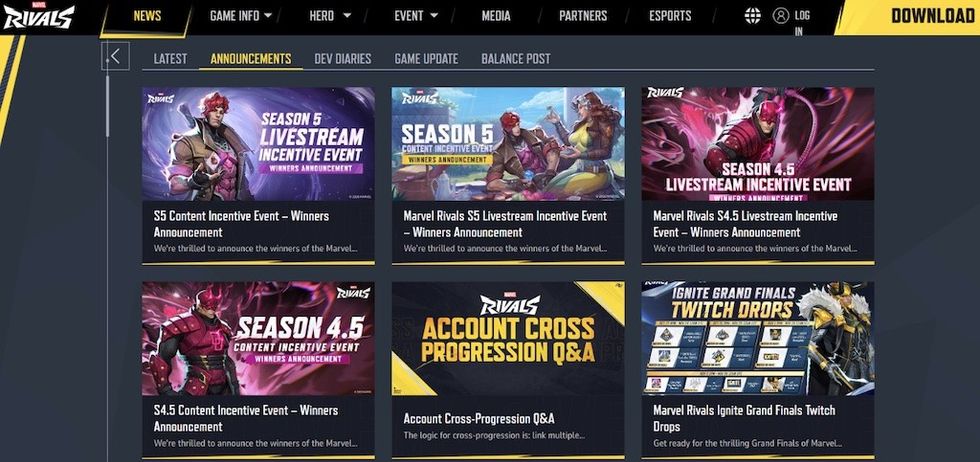
Through constant updates and expansions of content, games like Fortnite or Marvel Rivals keep their player base coming back, either by adding recognisable IPs, changing the competitive scene, or generally catering to new or variant content to the existing game.
One of the most popular mobile game genres in recent years has been the “Gacha” genre - games like Genshin Impact, where players spend earned (or purchased) in-game currency to open a loot box, and have a chance of getting the new playable character they want.
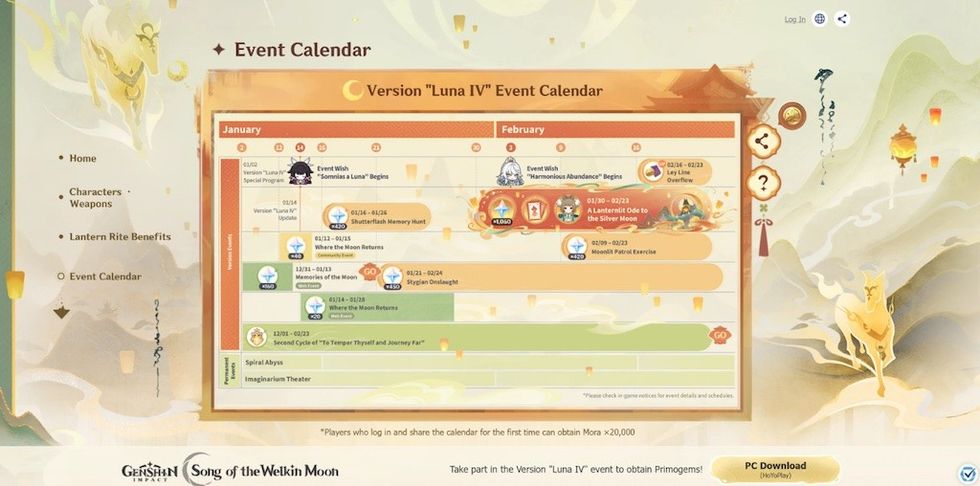
Games like these use FOMO (the Fear Of Missing Out) to encourage players to play more, limiting the time in which players can have the chance to get these rewards from these rolls.
The implementation
Attractions should utilise their existing IPs, drawing on lessons learned from the live-service genre.
- Collectable/tradeable characters and items
- Limited-time events with special art and activities
- Consistent updates with new or variant content
- Consistent live streams or videos communicating changes to the experience
We can see this approach in Universal Studios Japan’s annual Universal Cool Japan event, which combines limited-time experiences with collaborations with popular anime IPs.
For example, fans of “The Apothecary Diaries” can take part in a Mystery Walk puzzle tour, which culminates in a character appearance and includes F&B and merchandise.
Pitfalls
Whilst these tactics have proven effective at retaining a playerbase, they have also been infamous for ethical challenges, especially when real money is involved.
Too many loot boxes or FOMO can create harmful addictions and angry playerbases. Moderation and consistent, clear communication with your players is key to maintaining a positive environment.
Factions and fandoms: fostering a community
Fandoms are the bedrock of modern player bases. Attractions can create these social spaces in advance by implementing faction mechanics that tap into the psychology of group identity.
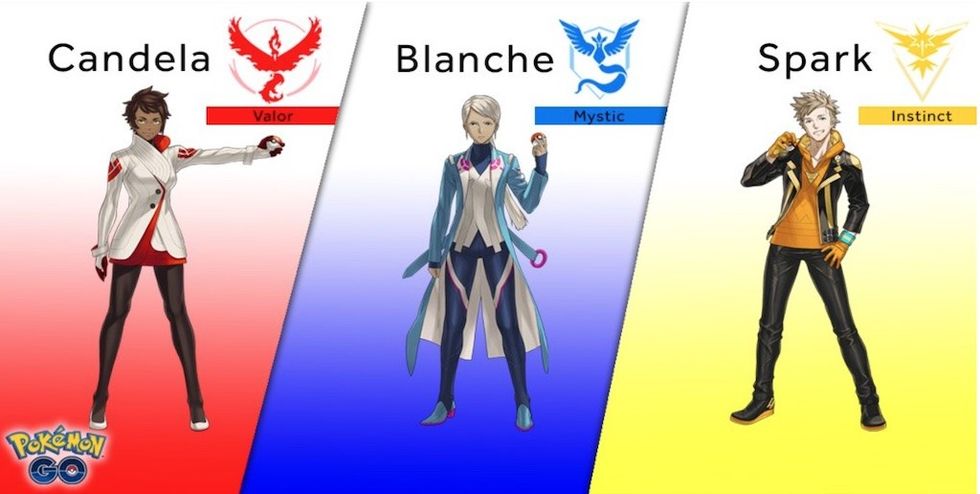 Credit Pokémon Go
The lesson
As seen in Pokémon Go, dividing a player base into teams (Instinct, Mystic, Valor) allows players to create their own narratives, allegiances, and online commentaries based on simple aesthetic choices.
This turns the game into a social event. David Amor, developer of Buzz!, is quoted in A Casual Revolution by Jesper Juul that the goal of a game should be to maximise "off-screen interaction"—giving friends something to talk about long after the game is over.
The implementation
Factions can be tied to physical benefits, such as unique on-site merchandise, theming or events based on which faction is currently dominant. This would encourage player conversation online, maintaining the brand's presence in their daily lives.
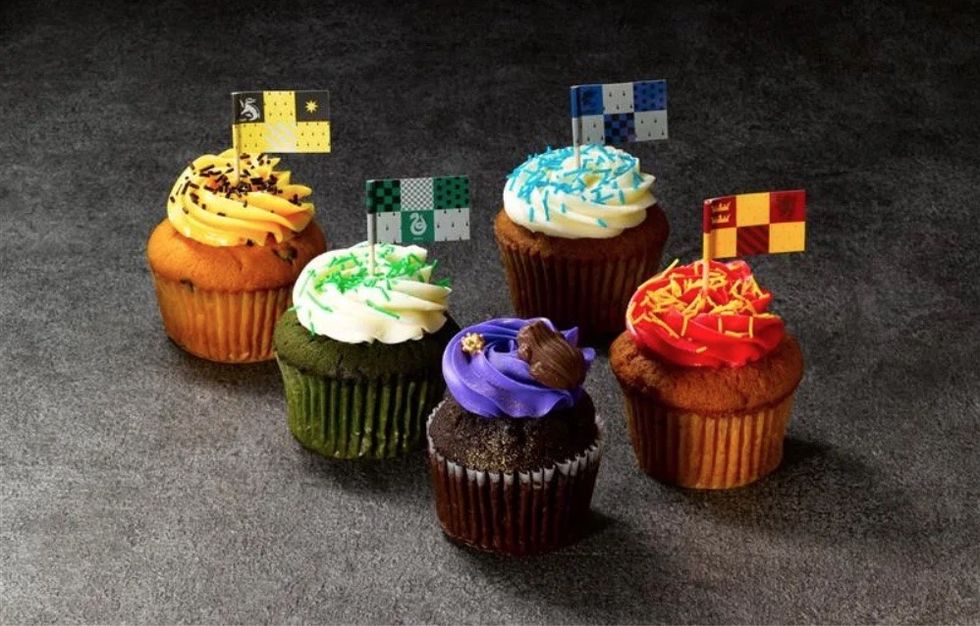 Credit Warner Bros. Studio Tour Tokyo
An example of an attraction where visitors are already looking to engage as members of factions is the Hogwarts House Pride event at the Warner Bros. Studio Tour Tokyo.
Harry Potter fans are encouraged to dress, compete, eat and shop for their Hogwarts house. And the immersive attraction Phantom Peak has a fan-run Discord community that is rewarded with deals and events.
Pitfalls
When intentionally fostering competition and faction dynamics, care must be taken to ensure players feel the system is fair and to avoid unintended negative behaviours.
Game design is about subtlety. Having a ratio of two underdogs to one leader is a great dynamic to ensure the pressure is always on the highest position, not bullying the lowest.
And if the power balance needs to be tweaked, it is best to do so through changes to gameplay, not to the points players earn. Change the shape of the game, and the playerbase will fit that mould.
The untapped potential of live influence
Concepts that only attraction-based games can utilise, i.e., by having direct interaction between the physical location and the game, perhaps hold the greatest untapped potential.
A premier example of this live interaction is the "Fish Doorbell" in the Netherlands. Fish migrating upstream are assisted by viewers of a YouTube livestream.
When viewers see the fish waiting by a river gate, they notify the lock operator using a digital doorbell. The operator then checks the rivercam and opens the gate.
- Engagement: in 2024, the site had 9.3 million visits, and the doorbell was rung over 40,000 times.
- Result: this created a "global fan mail" base and turned a local ecological necessity into an international interactive event.
The lesson
Influencers like DougDoug have successfully gamified Twitch streams, allowing audiences to have direct effects on a game or environment. This gives the player base a "sense of participation and importance".
DougDoug’s simplest and most effective campaign raised $1 million over several birthdays for Rosa the sea otter at Monterey Bay Aquarium.
Some of his other innovative gamifications have included Twitch Chat playing as rock, paper or scissors in a live battle map, a program that punished him in-game if he accidentally said a character’s name.
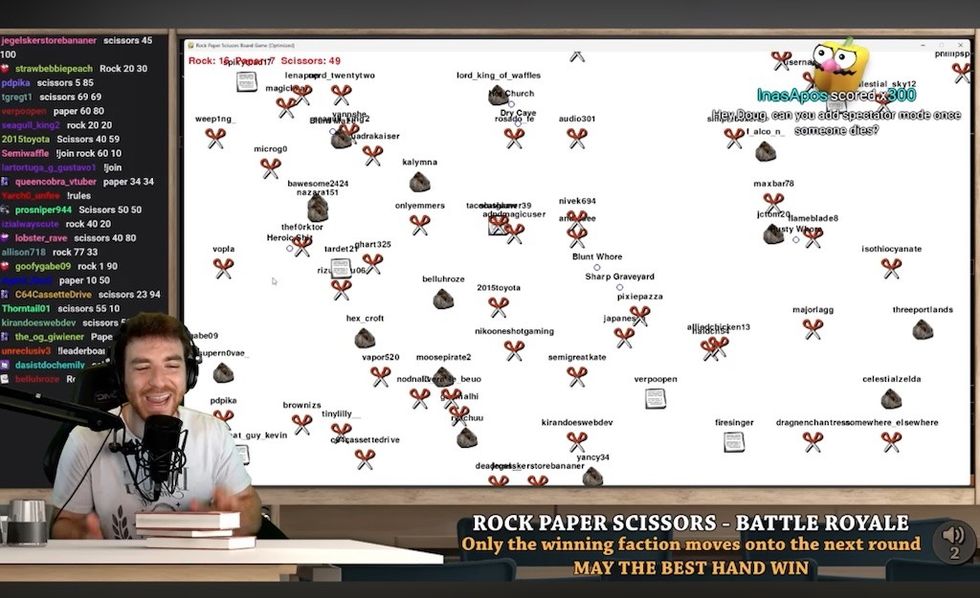
Or him and a Twitch Chat playing Dungeons and Dragons through an AI chat-model dungeon master.
We’ve already seen visitors willing to do rather mundane tasks for just a small reward. Efteling’s talking litter bins - Holle Bolle Gijs - have been gobbling up trash since 1959. And Mall of America's Twitter-activated blizzard made it "snow" indoors when visitors tweeted with the appropriate #Twizzard hashtag.
So, is there perhaps an even sweeter spot? Could theme parks encourage guests not only to play but also to do something operationally useful from home? Theme park fans, used to playing management sims, might relish the opportunity to order a refresh of paper towels or monitor congestion hotspots.
Attractions could use live feeds to allow app users at home to collaboratively or competitively influence the physical park.
Whether it is helping "feed" animals through a remote-triggered mechanism or influencing a light show, giving the audience a tangible effect is a spectacular way to engage a fandom between visits.
Pitfalls
Live streaming or any level of fandom communication will bring about its own fair share of moderation and consent issues. However, we are already seeing livestream from bars over TikTok Live, where viewers, who may never visit in real life, sign in to watch from their homes, and even moderate communities.
It's worth considering that it can be just as harmful to the growth of your community to halt chats as it is to allow all chats. No content moderation on the internet can be foolproof, but a dedicated team of moderators should be good enough, at least for live texts with slow-mode on.
From functional to fun
In conclusion, there is a specific mixed medium space between attractions and mobile games that isn't yet being explored to its full potential as a hybrid online/IRL community experience.
If designed to utilise the brand and physicality of attractions together with the agency, community and creativity of gaming, then some truly innovative game experiences could be made.
The visitor attractions app could evolve from a planning tool to a gaming remote, going from functional to fun.